


×

Cook Islands🇨🇰 | regionsAtiuRing-road scooter rides, swiftlet caves, coffee roastery, makatea sea pools | things to do and best time to go

Explore Aitutaki LagoonExplore Avarua

Backpacking in Atiu
👍 Recommendedregion ranked #4
By Johan Kruseman 🇳🇱 | Updated October 22, 2026

Atiu rewards anyone who rents a scooter on day one, because the island’s best sights sit along a 20-odd kilometer ring road with almost no traffic. It lies in the southern group of the Cook Islands, a short flight from Rarotonga. Roughly 450 people live here, and the old coral cliff (makatea) rings the whole island, so you swim in sea pools and caves rather than on long beaches. Highlights include limestone caves, the coffee plantation, and the birdsong of the kopeka swiftlets. Evenings are quiet: dinner at your guesthouse, lights low early, the odd chat with the two or three other travelers staying nearby. Meeting people is easy simply because there are so few of you. Book accommodation and a rental before flying, and bring cash, since card machines and ATMs are scarce.

Discover everything you want to know in the 📖 Cook Islands Travel Guide.


example page 0 from our offline Travel Guide for Cook Islands
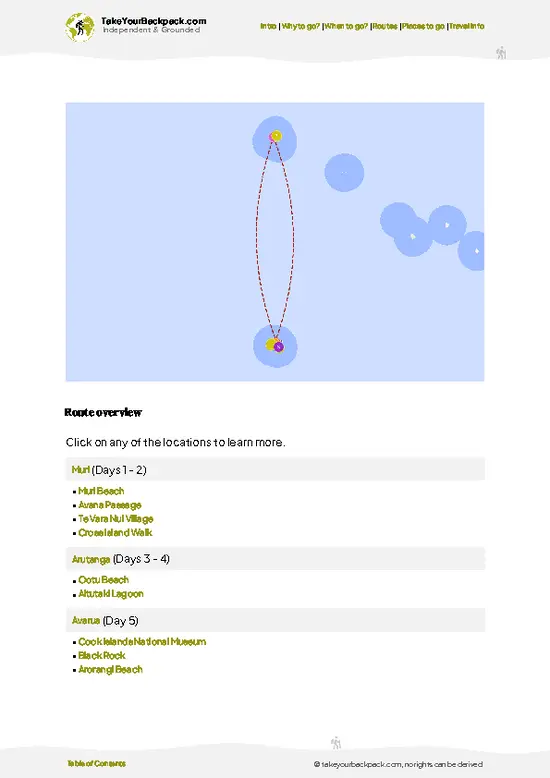
example page 1 from our offline Travel Guide for Cook Islands
example page 2 from our offline Travel Guide for Cook Islands
example page 3 from our offline Travel Guide for Cook Islands
example page 4 from our offline Travel Guide for Cook Islands
example page 5 from our offline Travel Guide for Cook Islands
example page 6 from our offline Travel Guide for Cook Islands
example page 7 from our offline Travel Guide for Cook Islands
Loading the map 🌍
CLICK TO FILTER
towns
villages
landmarks
national parks
hikes
beaches
attractions
festivals
regions
SHOW COUNTRY’S BESTSHOW ALL

✨ Why go?
Ranked #4 region in Cook Islands
What makes it a must-see region

Atiu suits travelers who want an island that still runs on its own rhythm. The draw is the raised coral rim, the makatea, which hides caves, cool freshwater pools and a forest where you can hear kopeka swiftlets clicking in the dark. Few places in the Pacific let you walk into a cave with a local guide and watch birds navigate by echo. Add a working coffee tradition, village churches that sing on Sundays, and a slow pace where the shop closes when it closes, and you get a stop that suits hikers, couples and solo travelers wanting calm. Most people stay three to five nights; some linger longer once the routine of cave, swim and coffee settles in. It is not a party island and nightlife is nearly absent, so it works best as a deliberate pause from busier Rarotonga and Aitutaki.

💡 HighlightsThe experiences that define the visit

  1. Anatakitaki Cave: the island’s best-known cave, with a rainforest-floor entrance, stalactites and a chamber where kopeka swiftlets nest. Go with a local guide, usually in the morning, for around NZ$30 to 60 including a visit to the nearby sites, and plan 2 to 3 hours. Bring a flashlight and shoes with grip.
  2. Atiu Coffee Works: a small roastery and plantation tour where you taste the island’s coffee beans after seeing them dried and roasted. Visit mid-morning on a scheduled day, as hours are limited; the tour costs roughly NZ$10 to 20 and takes about an hour.
  3. Taungaroro Beach and Oravaru Beach: sheltered spots on the island’s edge for a quiet dip, with lagoon pools that suit snorkeling at calm times. Go at high tide for deeper water, free of charge, and allow 1 to 2 hours.
Start with Anatakitaki … read more 👉
  1. Anatakitaki Cave: the island’s best-known cave, with a rainforest-floor entrance, stalactites and a chamber where kopeka swiftlets nest. Go with a local guide, usually in the morning, for around NZ$30 to 60 including a visit to the nearby sites, and plan 2 to 3 hours. Bring a flashlight and shoes with grip.
  2. Atiu Coffee Works: a small roastery and plantation tour where you taste the island’s coffee beans after seeing them dried and roasted. Visit mid-morning on a scheduled day, as hours are limited; the tour costs roughly NZ$10 to 20 and takes about an hour.
  3. Taungaroro Beach and Oravaru Beach: sheltered spots on the island’s edge for a quiet dip, with lagoon pools that suit snorkeling at calm times. Go at high tide for deeper water, free of charge, and allow 1 to 2 hours.
Start with Anatakitaki Cave, since it explains the island’s wildlife and landscape better than anything else here. Other islands such as Mauke, Mitiaro and Aitutaki can be reached by short inter-island flights if you want to extend the trip.
Spotted a mistake or missing something? Contact us.

⌛️ 5 daysWhat you can realistically do in a week

Day 1: Atiu Villages: A slow, wheels-and-wandering morning sets the tone, because Atiu has one ring road and almost no public transport. Rent a scooter or arrange a ride at your guesthouse, then circle the inland villages of Areora, Mapumai, Mapumai and Teenui. The pace here is dictated by your own fuel, daylight and the occasional chicken crossing the tarmac. Stop at the old coral-stone church in Teenui and ask your host about the island’s weekly flight schedule before anything else.
Day 2: Anatakitaki Cave: Spend the day underground and in the forest. Anatakitaki is a limestone cave where the kopeka, a tiny swiftlet, nests and navigates by echolocation. Go with a local guide, who knows the path through the makatea and which pools are safe. Bring a headlamp and shoes you don’t mind soaking. … read more 👉
Day 1: Atiu Villages: A slow, wheels-and-wandering morning sets the tone, because Atiu has one ring road and almost no public transport. Rent a scooter or arrange a ride at your guesthouse, then circle the inland villages of Areora, Mapumai, Mapumai and Teenui. The pace here is dictated by your own fuel, daylight and the occasional chicken crossing the tarmac. Stop at the old coral-stone church in Teenui and ask your host about the island’s weekly flight schedule before anything else.
Day 2: Anatakitaki Cave: Spend the day underground and in the forest. Anatakitaki is a limestone cave where the kopeka, a tiny swiftlet, nests and navigates by echolocation. Go with a local guide, who knows the path through the makatea and which pools are safe. Bring a headlamp and shoes you don’t mind soaking. The cave sits inland, so the route back loops through plantations where coffee grows.
Day 3: Takauroa Beach: Ease into the coast. The makatea ring of raised coral separates the interior from the sea, and a few tracks drop down to the shore. Takauroa is a sheltered spot for swimming and snorkeling, and the reef edge is close. Keep the afternoon free for the Atiu Coffee Factory, where small-batch roasting is done by hand.
Day 4: Detour to Rima Rau and Rangimotia: This is the detour that adds the most without breaking your plans. Take a guided walk to the Rima Rau burial caves and the high point of Rangimotia, which gives a long view over the whole island. Both sit close to the ring road, so you lose no time and need no extra transport.
Day 5: Evening Island Nights: Close with a guided Atiu Fibre Arts Studio visit in the morning, then settle into a relaxed local dinner. Keep your last day short, since flights can shift.

If you can only keep one day, make it Day 2. The cave and the kopeka are what Atiu does better than anywhere else in the Cooks.

🌤️ When to go?When to go for the best experience

  • May to October: Atiu’s drier, cooler months run about 19 to 27°C (66 to 81°F) with low humidity, which suits walking the makatea (raised coral rim) and the cave trails. Days are shorter at roughly 11 hours of light in June and July.
  • November to April: Expect 23 to 30°C (73 to 86°F), thick humidity and heavy downpours that turn the inland dirt tracks to red mud. Cyclone season peaks January to March, and flights from Rarotonga can be canceled or delayed. Daylight stretches to about 13 hours.
  • Crowds and prices: Atiu sees only a trickle of visitors all year, so beds rarely sell out. The exceptions are the Atiu Fibre Arts Studio events and school holidays, plus July to August when Rarotonga’s Te Maeva Nui celebrations in late July/early August bring returning islanders.
  • Birding and caves: Kopeka
… read more 👉
  • May to October: Atiu’s drier, cooler months run about 19 to 27°C (66 to 81°F) with low humidity, which suits walking the makatea (raised coral rim) and the cave trails. Days are shorter at roughly 11 hours of light in June and July.
  • November to April: Expect 23 to 30°C (73 to 86°F), thick humidity and heavy downpours that turn the inland dirt tracks to red mud. Cyclone season peaks January to March, and flights from Rarotonga can be canceled or delayed. Daylight stretches to about 13 hours.
  • Crowds and prices: Atiu sees only a trickle of visitors all year, so beds rarely sell out. The exceptions are the Atiu Fibre Arts Studio events and school holidays, plus July to August when Rarotonga’s Te Maeva Nui celebrations in late July/early August bring returning islanders.
  • Birding and caves: Kopeka swiftlets are in the caves year-round, so there is no bad month for them.
Book the 50-minute Air Rarotonga flight early for June to September, when seats are scarcest.


source: climatestotravel.comJANJanuary: fair for travelingFEBFebruary: fair for travelingMARMarch: fair for travelingAPRApril: fair for travelingMAYMay: highly recommended for travelingJUNJune: excellent for travelingJULJuly: excellent for travelingAUGAugust: excellent for travelingSEPSeptember: excellent for travelingOCTOctober: highly recommended for travelingNOVNovember: fair for travelingDECDecember: fair for traveling
cook-islands-region-atiu
© Google |

✈️ The backpacker research shortcutCook Islands Travel Guide

An offline-friendly backpacking guide with optimized travel routes, ranked highlights, transport advice, and the best areas to stay.
example page 0 from our offline Travel Guide for Cook Islands
example page 1 from our offline Travel Guide for Cook Islands
example page 2 from our offline Travel Guide for Cook Islands
example page 3 from our offline Travel Guide for Cook Islands
example page 4 from our offline Travel Guide for Cook Islands
example page 5 from our offline Travel Guide for Cook Islands
example page 6 from our offline Travel Guide for Cook Islands
example page 7 from our offline Travel Guide for Cook Islands
The digital guide (99 pages) contains:
✅ 24 highlights, ranked by travel appeal
✅ Optimized 2, 3 & 5-day travel routes
✅ Cities, national parks, landmarks, beaches
✅ How to get around
✅ Offline-friendly for travel without Wi-Fi
👉 Click to see all 30+ guide features

📅 Plan smarter in minutes, not weeks
✅ Month by month travel advice
✅ Festivals & national holidays
✅ Budget expectations

🗺️ Go to the right places, skip the overrated ones
✅ Honest pros & cons of destinations
✅ Top hikes, parks & viewpoints
✅ Lesser-known places most travelers miss
✅ Clear “worth it vs skip it” guidance

🛏️ Travel smoothly without rookie mistakes
✅ Best areas to stay
✅ Transport systems explained simply
✅ Common scams & safety advice
✅ SIM cards, money & practical tips

🌍 Understand the country, not just visit it
✅ Culture & traditions
✅ 52 Essential phrases & customs
✅ Festivals worth planning around
✅ Traveler-friendly historical context
✅ Insights that make places more meaningful

📱 Built for real travel conditions
✅ Fully downloadable PDF
✅ Works completely offline
✅ Optimized for phone use
✅ Useful in remote areas & buses
✅ Everything in one place
Stop searching, start planning
Get instant access to your full guide. 30‑day money-back guarantee.
+ Add another guide for just

By proceeding you agree to our terms.
Sent to your inbox immediately after payment • 100% Secure Checkout
Best Backpacking Travel Advisor 2025 tourism awardBest Backpacking
Travel Advisor
2025
What others say about Take Your Backpack Guides:
⭐⭐⭐⭐⭐
Fantastic, amazing amount of information!
⭐⭐⭐⭐⭐
My goodness this is amazing, it's what I've been looking for hats off too you!
⭐⭐⭐⭐⭐
I think this is absolutely BRILLIANT
⭐⭐⭐⭐
Very complete and informative. It's still missing places, but I gotta to commend you
⭐⭐⭐⭐⭐
This is truly amazing, thank you, can't wait to explore it with my kids!
⭐⭐⭐⭐⭐
Awesome resource, thank you!
⭐⭐⭐⭐⭐
This is amazing! Can't wait to explore the ones I haven't seen
⭐⭐⭐⭐
I love this! Well done, great idea.
⭐⭐⭐⭐⭐
Thanks for taking the time to make this gem!
⭐⭐⭐⭐⭐
This might be the best website I've ever seen.
⭐⭐⭐⭐⭐
Congratulations, and thank you so much for your work; it's incredibly valuable.
⭐⭐⭐⭐
In all seriousness I think you did a great job pointing out the important spots
⭐⭐⭐⭐⭐
10/10 very good
⭐⭐⭐⭐⭐
As someone who's only just starting to visit regularly this is awesome, thank you.
⭐⭐⭐⭐
Thank you very much! I'm going to visit my dad, it's going to be very useful!
⭐⭐⭐⭐⭐
This is really cool! We'll be travelling for the first time and this definitely come in handy.
⭐⭐⭐⭐⭐
You are now our minister of culture, congratulations 👨‍💼
⭐⭐⭐⭐⭐
Just wanted to tell you that this is a pearl! Going to follow your recommendations.
⭐⭐⭐⭐⭐
This is so cool. I'll definitely be using the resource for my travels soon.
⭐⭐⭐⭐⭐
This is very impressive! Good work.
⭐⭐⭐⭐⭐
This is an amazing and informative site. Very well done!

🛏️ Where to stay?Choosing the right base

Atiu has no hostels, so budget travelers sleep in small family-run guesthouses and self-catering cottages, mostly scattered along the island’s ring road and priced around NZ$100 to 200 a night. Book ahead, because there are only a handful of properties and owners often meet your flight.

Atiu Villas is the best-known option, with self-contained units set in gardens inland. Kia Orana Bungalows suits those wanting a kitchenette, which matters because restaurants are few and many close at night. Some hosts include airport transfers, and several rent scooters for around NZ$30 to 40 a day. Ask about … read more 👉
Atiu has no hostels, so budget travelers sleep in small family-run guesthouses and self-catering cottages, mostly scattered along the island’s ring road and priced around NZ$100 to 200 a night. Book ahead, because there are only a handful of properties and owners often meet your flight.

Atiu Villas is the best-known option, with self-contained units set in gardens inland. Kia Orana Bungalows suits those wanting a kitchenette, which matters because restaurants are few and many close at night. Some hosts include airport transfers, and several rent scooters for around NZ$30 to 40 a day. Ask about this when booking, since the island has no public transport.

Staying in the central villages, such as Areora or Mapumai, puts you close to the one or two shops and the main tour pickups. Coastal spots near Taungaroro Beach are quieter but mean longer rides on dark roads. Stock up on groceries at the village stores on arrival, as supplies run low between cargo ships. Camping is not an established option.

🚌 Getting aroundHow to get from A to B

Atiu has no real center to walk, just scattered villages (Areora, Mapumai, Mataiti, Te Tautua and Teenui) strung along a 7 kilometer (4 mile) loop of road, and your feet work fine inside a village but give out once you want caves, beaches or the makatea. Most backpackers rent a scooter or bicycle on arrival, and the island is flat enough and quiet enough that both are dependable. Nobody is in a hurry here, and that includes the traffic, which on most days means a handful of vehicles and a lot of waving.
  • Scooter rental: Expect about US$25 to 35 a day, and many guesthouses will hand over a bike at the airstrip pickup. The ring road and the inland tracks are short, so you can see the whole island in a day, and the payoff is arriving at a cave mouth with the jungle hum all to yourself.
  • Bicycle:
… read more 👉
Atiu has no real center to walk, just scattered villages (Areora, Mapumai, Mataiti, Te Tautua and Teenui) strung along a 7 kilometer (4 mile) loop of road, and your feet work fine inside a village but give out once you want caves, beaches or the makatea. Most backpackers rent a scooter or bicycle on arrival, and the island is flat enough and quiet enough that both are dependable. Nobody is in a hurry here, and that includes the traffic, which on most days means a handful of vehicles and a lot of waving.
  • Scooter rental: Expect about US$25 to 35 a day, and many guesthouses will hand over a bike at the airstrip pickup. The ring road and the inland tracks are short, so you can see the whole island in a day, and the payoff is arriving at a cave mouth with the jungle hum all to yourself.
  • Bicycle: Roughly US$10 to 15 a day, and the coastal road is gentle with a few climbs up to the raised coral rim. Start early, before the heat builds, and you roll past roosters, taro patches and church gardens at a pace where you actually smell the frangipani.
  • Guesthouse pickup: Most hosts meet flights from Rarotonga for free or a small fee, around US$0 to 10. You get a lei, a quick island briefing and a ride that ends at your door before the bags are cold.
  • Guided tours: Cave and bird tours run about US$30 to 60 per person, and locals drive you along tracks that rental scooters shouldn’t attempt. The reward is the guide’s stories at Anatakitaki cave, plus a chance of seeing the kopeka swiftlets that navigate by echolocation in the dark.
  • Walking: Fine for the old coral roads and short bush trails, and free. Shoes with grip matter on sharp makatea limestone, and the quiet under the canopy is the whole point.
Flights from Rarotonga take about 45 minutes with Air Rarotonga, usually a few times a week and often with a fare of US$200 to 300 each way. Book your scooter the same day you book the flight, because the island only has so many, and fill the tank when you can since fuel is limited and sold at a few spots.

🚌 Day tripsWhere to go beyond the main area

Atiu is small enough, about 27 square kilometers, that everything is a day trip from wherever you sleep, and there are no overnight transfers to plan. A scooter or bicycle is enough to reach every trip below.

Anatakitaki Cave:
This cave sheltering the rare kopeka swiftlet is a short ride from the central villages, then about 1 to 2 hours on foot with a local guide. Expect to pay around NZ$30 to 60 for a guided visit including the Kopeka chamber. The most common first-timer mistake is showing up without a guide, since the entrance is easy to miss and the cave is hard to navigate. Dry months are best.


Rima Rau Burial Cave:
A short ride and walk leads to the cave where the Atiu ancestral burial history is explained by a guide, and tours often combine it with a coffee plantation stop. Allow … read more 👉
Atiu is small enough, about 27 square kilometers, that everything is a day trip from wherever you sleep, and there are no overnight transfers to plan. A scooter or bicycle is enough to reach every trip below.

Anatakitaki Cave:
This cave sheltering the rare kopeka swiftlet is a short ride from the central villages, then about 1 to 2 hours on foot with a local guide. Expect to pay around NZ$30 to 60 for a guided visit including the Kopeka chamber. The most common first-timer mistake is showing up without a guide, since the entrance is easy to miss and the cave is hard to navigate. Dry months are best.


Rima Rau Burial Cave:
A short ride and walk leads to the cave where the Atiu ancestral burial history is explained by a guide, and tours often combine it with a coffee plantation stop. Allow half a day and about NZ$50 to 70. Wear closed shoes for the sharp makatea limestone, and skip it after heavy rain, when the trails get slick.


Taungaroro Beach:
The island’s best swimming is at this beach on the western side, around 15 minutes by scooter from the villages. Plan on a half day. Reef drop-offs mean the water is calmest on rising tides, and there is shade under the trees but no shop, so carry your own water and food.


Atiu Coffee Plantation:
The island grows its own coffee, and the roastery tours run for about an hour. Budget NZ$10 to 20 for tastings and beans. Visits usually need to be booked a day ahead, so arrange them through your host.

🍲 FoodLocal Flavors for Backpackers

Atiu eats from its own soil and reef, so expect taro, breadfruit, cassava and sweet potato at nearly every table. Ika mata, raw fish cured in lime and tossed with coconut cream, tastes bright and cool after a hot ride. Rukau (taro leaves in coconut cream) is silky and earthy, and coconut crab is the occasional treat. The island is also known for its coffee, grown and roasted locally. It is strong and smoky, and a small coffee plantation visit is a pleasant stop.

Eating out is simple. There are only a few small cafés and a handful of village shops with limited stock, so most backpackers cook at their guesthouse or join a home-cooked dinner arranged with the host, often about US$15 to 25. Bring snacks from Rarotonga, since shelves empty fast between ship deliveries. Sunday is for church, and … read more 👉
Atiu eats from its own soil and reef, so expect taro, breadfruit, cassava and sweet potato at nearly every table. Ika mata, raw fish cured in lime and tossed with coconut cream, tastes bright and cool after a hot ride. Rukau (taro leaves in coconut cream) is silky and earthy, and coconut crab is the occasional treat. The island is also known for its coffee, grown and roasted locally. It is strong and smoky, and a small coffee plantation visit is a pleasant stop.

Eating out is simple. There are only a few small cafés and a handful of village shops with limited stock, so most backpackers cook at their guesthouse or join a home-cooked dinner arranged with the host, often about US$15 to 25. Bring snacks from Rarotonga, since shelves empty fast between ship deliveries. Sunday is for church, and many places close.

It’s polite to accept what a host offers, and sharing is normal. Bush beer, the island’s homemade brew, is part of the social scene, and drinking happens in a friendly, communal way.

FAQCommon questions from travelers

Fly from Rarotonga with Air Rarotonga, which runs the 50-minute flight several times a week, with fares often around NZ$250 to 400 each way. There is no regular passenger ferry, and cargo ships do not carry travelers reliably. Book ahead for June to September, and ask your host to meet you at Enua Airport.
Yes, if you want caves, coffee and almost no tourists. Anatakitaki Cave with its kopeka swiftlets, the Rima Rau burial cave and the makatea ring road are the draws, and two to four nights covers them well. Expect basic services, few restaurants and no beach resorts.
Not practically. Flights from Rarotonga run on limited days, and the schedule rarely allows a same-day return, so you would see very little. Stay at least two nights, which gives you time for a cave tour and a ride around the 20-kilometer ring road.
⚠️ Things can change over time, so always validate details locally before you go.

Expanding your trip beyond this stop

Atiu isn’t the only highlight in Cook Islands. Explore all what Cook Islands has to offer.
Country photo of Cook Islands

We 💚 feedbackSumming up the experience

Most visitors overlook the island’s old coral-stone churches, which are free to enter and fill with rich harmonies on Sunday. I would plan your stay to include one service, wear modest clothes, and sit near the back. Skip rushing the ring road; the best moments come when you stop.

✍️ Help improve this page!
The information on this page is based on in-depth research, insights shared by experienced travelers, and feedback from the local travel community in Cook Islands. While every effort is made to keep the information accurate and current, conditions can change — so if you spot anything incorrect or outdated, please get in touch.


🙋‍♂️ Give feedback

👋 Meet the founderWho’s Behind Take Your Backpack?

Johan, backpacker and founder of TakeYourBackpackHi, I’m Johan (Netherlands 🇳🇱), the creator of TakeYourBackpack. Over the past 3 decades, I’ve backpacked through 90+ countries across six continents, gaining extensive experience with independent travel, long-term trips, and overland routes.

This site is built on a combination of firsthand travel experience and carefully curated insights from other backpackers. Many guides are based on places I’ve personally visited, while others bring together tips, observations, and practical advice shared by trusted travelers I’ve met along the way.

The goal is to provide realistic, experience-driven guidance — not generic itineraries — so you can explore destinations with better context, clearer expectations, and more confidence.