v2.webp)


- Summit ridge panoramas — The narrow crest of Mount Nimba delivers wide, dramatic views you won’t find on ordinary forest hikes: on a clear morning you can see the lowlands rolling away and, if luck’s on your side, the outlines of neighboring Guinea and Liberia. The ridge walk has big drop-offs and long sightlines that make sunrise and sunset worth the climb alone.
- Montane grasslands and “sky island” habitat — Above the tree line the landscape opens into high-elevation grasslands and heath that feel almost alpine, a rare environment in West Africa. These sky-island meadows host plant communities and colors you won’t see in the surrounding lowland jungle, so it’s a cool contrast within a single day’s hike.
- Endemic and quirky wildlife — Mount Nimba is famous for species found nowhere else:
- Summit ridge panoramas — The narrow crest of Mount Nimba delivers wide, dramatic views you won’t find on ordinary forest hikes: on a clear morning you can see the lowlands rolling away and, if luck’s on your side, the outlines of neighboring Guinea and Liberia. The ridge walk has big drop-offs and long sightlines that make sunrise and sunset worth the climb alone.
- Montane grasslands and “sky island” habitat — Above the tree line the landscape opens into high-elevation grasslands and heath that feel almost alpine, a rare environment in West Africa. These sky-island meadows host plant communities and colors you won’t see in the surrounding lowland jungle, so it’s a cool contrast within a single day’s hike.
- Endemic and quirky wildlife — Mount Nimba is famous for species found nowhere else: think the tiny viviparous toad and the elusive Nimba otter-shrew, plus specialized highland birds and butterflies. You won’t have cheetahs or elephants, but the uniqueness and rarity of what you might spot make wildlife encounters special.
- Iron-rich cliffs and geology — The reddish, iron-ore-streaked rock gives the mountain a distinct look and a complicated history — parts of the range have mining scars and conservation tensions. The rocky outcrops, caves and scree slopes are dramatic to explore and tell a geological story you won’t get on a generic forest trail.
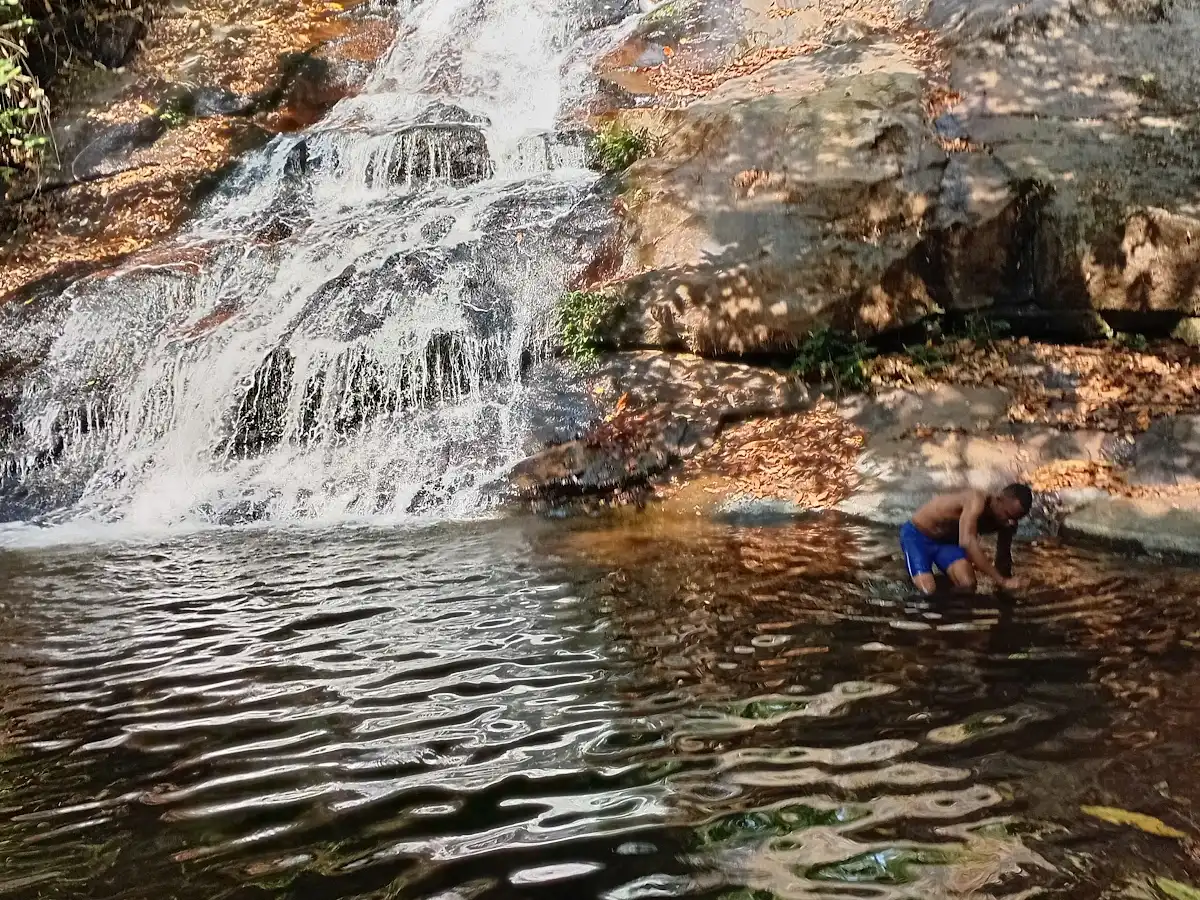
- Forest-to-savanna transition and cool streams — The trail moves through a tight mosaic of habitats: lush montane forest pockets, streaming rivulets and sudden openings into savanna-like zones. Those clear mountain streams and little pools are perfect for a rested break, and the rapid changes in scenery keep the hike feeling varied the whole way up.
Spotted a mistake or missing something? Contact us.
 Best Backpacking
.jpg) Hi, I’m Johan (Netherlands 🇳🇱), the creator of TakeYourBackpack. Over the past 3 decades, I’ve backpacked through 90+ countries across six continents, gaining extensive experience with independent travel, long-term trips, and overland routes.
Hi, I’m Johan (Netherlands 🇳🇱), the creator of TakeYourBackpack. Over the past 3 decades, I’ve backpacked through 90+ countries across six continents, gaining extensive experience with independent travel, long-term trips, and overland routes.