×

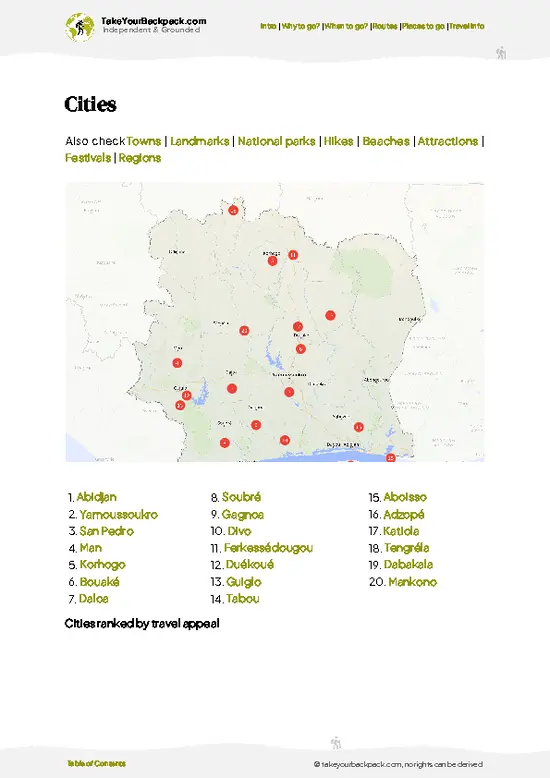
Côte d’Ivoire🇨🇮 | citiesBounasavanna landscapes, Lobi villages, regional markets | things to do and best time to go

Explore BouakéExplore Daloa

Backpacking in Bouna
🌟 Highlightcity ranked #7
By Johan Kruseman 🇳🇱 | Updated June 6, 2026

A decade ago, Bouna was the kind of place where the dust settled slowly after each passing truck, and the only travelers were NGO workers or the rare, map-wielding overlander. Today, you’ll still feel the hush of the savannah at dusk, but there’s a new rhythm—motorbikes, a few guesthouses, and the occasional French backpacker swapping stories over warm beer. Bouna sits in the far northeast of Côte d’Ivoire, close to the Ghanaian border, where the land flattens and the air smells faintly of charcoal and mango. For backpackers, Bouna isn’t a destination for nightlife or urban thrills; it’s a practical, low-key base for exploring the Comoé National Park or pausing between bus rides north and east. The town’s market is lively but compact, and you’ll find more goats than travelers. Getting here means a long, bumpy bus ride—no trains, no shortcuts—but once you arrive, everything is walkable. Social life is slow: expect quiet evenings, not hostel parties. Costs are low, safety is generally good, and compared to busier Korhogo or Bondoukou, Bouna feels more like a pause than a headline act—worth it if you crave space, not spectacle.

Discover everything you want to know in the 📖 Côte d’Ivoire Travel Guide.
Loading the map 🌍
CLICK TO FILTER
cities
towns
landmarks
national parks
hikes
beaches
attractions
festivals
regions
SHOW COUNTRY’S BESTSHOW ALL

✨ Why go?
Ranked #7 city in Côte d’Ivoire
What sets this place apart

Bouna in Côte d’Ivoire is a strategic stop for backpackers seeking a blend of nature and culture. Nestled near the Comoé National Park, it offers access to some of the best hiking trails in the region. The air is thick with the scent of rich earth and vibrant foliage, inviting you to explore.

The town itself is walkable, with small-scale hostels and guesthouses that foster a friendly atmosphere. You’ll find local food stalls serving up hearty dishes that reflect the region’s culinary heritage. This isn’t a place for the party crowd; instead, it attracts slow travelers and solo adventurers who appreciate a more laid-back vibe.

Most backpackers tend to linger for a few days, soaking in the community feel and sharing stories with fellow travelers. The streets buzz with conversation, but it’s … read more 👉
Bouna in Côte d’Ivoire is a strategic stop for backpackers seeking a blend of nature and culture. Nestled near the Comoé National Park, it offers access to some of the best hiking trails in the region. The air is thick with the scent of rich earth and vibrant foliage, inviting you to explore.

The town itself is walkable, with small-scale hostels and guesthouses that foster a friendly atmosphere. You’ll find local food stalls serving up hearty dishes that reflect the region’s culinary heritage. This isn’t a place for the party crowd; instead, it attracts slow travelers and solo adventurers who appreciate a more laid-back vibe.

Most backpackers tend to linger for a few days, soaking in the community feel and sharing stories with fellow travelers. The streets buzz with conversation, but it’s not overwhelming. If you’re looking for a base to recharge before heading to nearby beaches or cultural sites, Bouna is a perfect fit. It’s a place where the journey feels just as rewarding as the destination.
Want to include Bouna in your Côte d’Ivoire route?
Create a personalized Côte d’Ivoire itinerary that includes Bouna and the places that fit your trip — based on your travel style, budget, and available time. Get your route in seconds.

Generate my trip

💡 HighlightsDon't-miss highlights and experiences

  • Palais royal de Bouna (Royal Palace and court compound) — The beating historic heart of the town: ancestral courtyards, traditional chief’s huts and sacred groves where chiefs still hold ceremonies and you can feel the living continuity of the Bounkani kingdom’s customs.
  • Le vieux quartier / quartiers senoufo — Narrow lanes, compact mud-brick compounds and carved wooden doors that show everyday Senoufo architecture and household life; best wandered on foot to catch domestic crafts and oral histories from elders.
  • Marché central de Bouna — A lively, working market where you can haggle for woven cloth, carved masks, spices and fresh produce; a perfect place to see local trade, taste street food and watch traditional textiles change hands.
  • Grande Mosquée de Bouna — A simple but important community
read more 👉
  • Palais royal de Bouna (Royal Palace and court compound) — The beating historic heart of the town: ancestral courtyards, traditional chief’s huts and sacred groves where chiefs still hold ceremonies and you can feel the living continuity of the Bounkani kingdom’s customs.
  • Le vieux quartier / quartiers senoufo — Narrow lanes, compact mud-brick compounds and carved wooden doors that show everyday Senoufo architecture and household life; best wandered on foot to catch domestic crafts and oral histories from elders.
  • Marché central de Bouna — A lively, working market where you can haggle for woven cloth, carved masks, spices and fresh produce; a perfect place to see local trade, taste street food and watch traditional textiles change hands.
  • Grande Mosquée de Bouna — A simple but important community mosque that anchors daily life and Friday prayers; visiting respectfully offers insight into local religious practice and town rhythms (observe appropriate dress and ask before photographing).
  • Rives de la Comoé (within town) — The Comoé touches Bouna and the riverbanks are a living scene of fishermen, washerwomen, kids swimming and great light for photos at dusk—an easy, low-cost slice of local life.
  • Quartier des artisans / ateliers de sculpteurs — Small workshops where Senoufo woodcarvers, mask-makers and metalworkers actually work; seeing lathes, carving and finishing up close is both educational and a good way to buy directly from makers.
  • Cimetière royal et sépultures traditionnelles — The royal burial sites near the palace are meaningful places of ancestry; visiting with a local guide helps you understand funerary customs and the symbolism carved into shrines and grave markers.
  • Maison des jeunes / centre culturel local — Where dance, music and mask performances are rehearsed and sometimes staged; timing a visit with a rehearsal or local celebration gives a front-row seat to living performing arts.
  • Anciennes bâtisses coloniales et la préfecture — Sturdy colonial-era buildings around the town center that tell the story of administrative change; useful for anyone wanting a bit of local history and easier to photograph than the more private compounds.
  • Ateliers de poterie et teinturerie — Small, neighbourhood studios making functional pottery and hand-dyed textiles; hands-on demonstrations happen often and you’ll leave with unique, usable souvenirs made on-site.
A few great day trips just outside Bouna: Parc national de la Comoé (wildlife and savannah/forest mosaics), the traditional mask villages and countryside around Doropo, and smaller Senoufo villages where mask-keeping lineages and seasonal ceremonies can be seen.
Spotted a mistake or missing something? Contact us.

🏘️ NeighborhoodsUnderstanding the local layout

Bouna offers a unique blend of culture and adventure, making it a captivating stop for backpackers. Here’s a breakdown of its neighborhoods to help you navigate like a pro.

Centre Ville: This is the heart of Bouna. The vibe is bustling, with local markets and street vendors filling the air with the scent of grilled fish and spices. It’s walkable, but be prepared for uneven sidewalks. Budget-friendly accommodations abound, making it ideal for short stays. Nightlife is low-key, with a few bars where you can sip a local beer and chat with friendly locals.

Quartier Bolo: A quieter area, perfect for those seeking a more laid-back experience. The atmosphere is relaxed, with tree-lined streets and small cafés. It’s a bit further from the main attractions, so transport is necessary, but the peace … read more 👉
Bouna offers a unique blend of culture and adventure, making it a captivating stop for backpackers. Here’s a breakdown of its neighborhoods to help you navigate like a pro.

Centre Ville: This is the heart of Bouna. The vibe is bustling, with local markets and street vendors filling the air with the scent of grilled fish and spices. It’s walkable, but be prepared for uneven sidewalks. Budget-friendly accommodations abound, making it ideal for short stays. Nightlife is low-key, with a few bars where you can sip a local beer and chat with friendly locals.

Quartier Bolo: A quieter area, perfect for those seeking a more laid-back experience. The atmosphere is relaxed, with tree-lined streets and small cafés. It’s a bit further from the main attractions, so transport is necessary, but the peace is worth it. Great for longer stays if you want to immerse yourself in local life.

Quartier Koko: This neighborhood is vibrant and lively, especially in the evenings. It’s a hub for nightlife, with music spilling out from open-air venues. While it’s not as budget-friendly, the energy is infectious. Walkability is decent, but expect to navigate through crowds. Perfect for those who thrive on social interactions and want to experience the local scene fully.

Each area has its charm, so choose based on your vibe and what you want to get out of your stay.

⌛️ 1 dayA smart one-day plan

Bouna, a town in Côte d’Ivoire, is a tapestry of rich culture and lush landscapes. It’s a place where the scent of fresh cassava mingles with the earthy aroma of the surrounding forest. The vibrant local markets pulse with life, and the warm smiles of the residents invite you to explore deeper.

Start your morning at the bustling market in the heart of Bouna. The sun filters through the colorful awnings, casting playful shadows on the ground. Grab a breakfast of attiéké, a fermented cassava dish, paired with grilled fish. The flavors are bold, and the energy is infectious. After fueling up, wander through the nearby neighborhoods, where you’ll find traditional mud-brick houses adorned with intricate patterns. This is where you can truly soak in the local vibe, away from the typical tourist … read more 👉
Bouna, a town in Côte d’Ivoire, is a tapestry of rich culture and lush landscapes. It’s a place where the scent of fresh cassava mingles with the earthy aroma of the surrounding forest. The vibrant local markets pulse with life, and the warm smiles of the residents invite you to explore deeper.

Start your morning at the bustling market in the heart of Bouna. The sun filters through the colorful awnings, casting playful shadows on the ground. Grab a breakfast of attiéké, a fermented cassava dish, paired with grilled fish. The flavors are bold, and the energy is infectious. After fueling up, wander through the nearby neighborhoods, where you’ll find traditional mud-brick houses adorned with intricate patterns. This is where you can truly soak in the local vibe, away from the typical tourist paths.

In the afternoon, head to the Parc National de la Comoé, just a short drive from town. The park is a haven for wildlife, and the sounds of chirping birds and rustling leaves create a symphony of nature. Take a guided walk to spot elephants and various bird species. The experience is immersive; the air is thick with the scent of damp earth and wildflowers. This is not just a visit; it’s a connection to the land.

As evening approaches, return to Bouna and stroll along the riverbank. The golden light of sunset dances on the water, creating a serene backdrop. Stop by a local eatery for dinner, where you can savor a hearty dish of fufu and light soup. The flavors are comforting, and the atmosphere is filled with laughter and chatter.

Bouna may not be on every tourist’s radar, but its charm lies in its authenticity. Embrace the rhythm of the town, and you’ll leave with memories that resonate long after you’ve returned home.
Turn your Bouna visit into an Côte d’Ivoire adventure
Build a complete Côte d’Ivoire route with Bouna, hidden gems, must-see destinations, and realistic travel times included.

Generate my trip

🌤️ When to go?Weather, crowds, and seasonal trade-offs


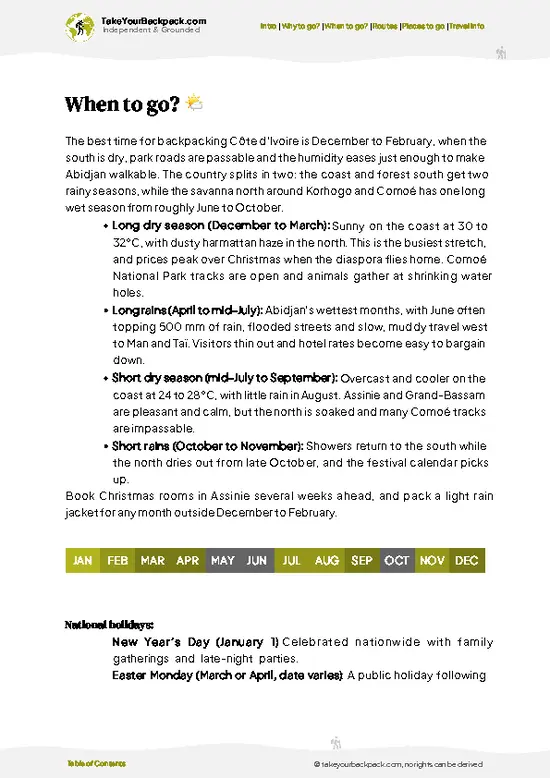
  • Topic: Weather – Bouna’s climate swings between a wet season from May to October and a dry season from November to April. The dry months offer clearer skies and less mud, making trails and village visits easier and more enjoyable.

  • Topic: Temperature – Expect daytime highs around 28-32°C (82-90°F) during the dry season, which feels warm but manageable with shade and early starts. The wet season cools slightly but brings humidity that can sap your energy fast.

  • Topic: Daylight Hours – Near the equator, daylight stays steady year-round, roughly 12 hours a day. This consistency means you can plan hikes and explorations without worrying about early nightfall.

  • Topic: Crowds – Bouna isn’t a tourist hotspot, so crowds are minimal year-round. However, local festivals in the dry season can bring
read more 👉

  • Topic: Weather – Bouna’s climate swings between a wet season from May to October and a dry season from November to April. The dry months offer clearer skies and less mud, making trails and village visits easier and more enjoyable.

  • Topic: Temperature – Expect daytime highs around 28-32°C (82-90°F) during the dry season, which feels warm but manageable with shade and early starts. The wet season cools slightly but brings humidity that can sap your energy fast.

  • Topic: Daylight Hours – Near the equator, daylight stays steady year-round, roughly 12 hours a day. This consistency means you can plan hikes and explorations without worrying about early nightfall.

  • Topic: Crowds – Bouna isn’t a tourist hotspot, so crowds are minimal year-round. However, local festivals in the dry season can bring lively gatherings, offering a chance to experience authentic culture without overwhelming numbers.

  • Topic: Seasonal Activities – The dry season is prime for trekking and village visits, while the wet season showcases lush greenery and fuller rivers, ideal if you’re into photography or birdwatching but prepared for slippery paths.

  • Topic: Price Fluctuations – Accommodation and transport costs dip slightly during the wet season due to fewer visitors, but the trade-off is dealing with less predictable travel conditions.


Pro-tip: Aim for late November to February—dry, comfortable temperatures and vibrant local life combine for a smooth, immersive experience without the hassle of mud or rain delays.


source: climatestotravel.comJANJanuary: excellent for travelingFEBFebruary: excellent for travelingMARMarch: highly recommended for travelingAPRApril: highly recommended for travelingMAYMay: good for travelingJUNJune: fair for travelingJULJuly: fair for travelingAUGAugust: fair for travelingSEPSeptember: fair for travelingOCTOctober: good for travelingNOVNovember: highly recommended for travelingDECDecember: excellent for traveling
cote-divoire-city-bouna v1
© Google |

✈️ The backpacker research shortcutCôte d’Ivoire Travel Guide

An offline-friendly backpacking guide with optimized travel routes, ranked highlights, transport advice, and the best areas to stay.
The digital guide (337 pages) contains:
85 highlights, ranked by travel appeal
Optimized 5, 10 & 15-day travel routes
Cities, national parks, landmarks, beaches
How to get around
Offline-friendly for travel without Wi-Fi
👉 Click to see all 30+ guide features

📅 Plan smarter in minutes, not weeks
Month by month travel advice
Festivals & national holidays
Budget expectations

🗺️ Go to the right places, skip the overrated ones
Honest pros & cons of destinations
Top hikes, parks & viewpoints
Lesser-known places most travelers miss
Clear “worth it vs skip it” guidance

🛏️ Travel smoothly without rookie mistakes
Best areas to stay
Transport systems explained simply
Common scams & safety advice
SIM cards, money & practical tips

🌍 Understand the country, not just visit it
Culture & traditions
52 Essential phrases & customs
Festivals worth planning around
Traveler-friendly historical context
Insights that make places more meaningful

📱 Built for real travel conditions
Fully downloadable PDF
Works completely offline
Optimized for phone use
Useful in remote areas & buses
Everything in one place
Save weeks of stressful planning
Get instant access to your full guide. 30‑day money-back guarantee.


By proceeding you agree to our terms.
Sent to your inbox immediately after payment • 100% Secure Checkout
Best Backpacking Travel Advisor 2025 tourism awardBest Backpacking
Travel Advisor
2025
What others say about Take Your Backpack Guides:
⭐⭐⭐⭐⭐
Fantastic, amazing amount of information!
⭐⭐⭐⭐⭐
My goodness this is amazing, it's what I've been looking for hats off too you!
⭐⭐⭐⭐⭐
I think this is absolutely BRILLIANT
⭐⭐⭐⭐
Very complete and informative. It's still missing places, but I gotta to commend you
⭐⭐⭐⭐⭐
This is truly amazing, thank you, can't wait to explore it with my kids!
⭐⭐⭐⭐⭐
Awesome resource, thank you!
⭐⭐⭐⭐⭐
This is amazing! Can't wait to explore the ones I haven't seen
⭐⭐⭐⭐
I love this! Well done, great idea.
⭐⭐⭐⭐⭐
Thanks for taking the time to make this gem!
⭐⭐⭐⭐⭐
This might be the best website I've ever seen.
⭐⭐⭐⭐⭐
Congratulations, and thank you so much for your work; it's incredibly valuable.
⭐⭐⭐⭐
In all seriousness I think you did a great job pointing out the important spots
⭐⭐⭐⭐⭐
10/10 very good
⭐⭐⭐⭐⭐
As someone who's only just starting to visit regularly this is awesome, thank you.
⭐⭐⭐⭐
Thank you very much! I'm going to visit my dad, it's going to be very useful!
⭐⭐⭐⭐⭐
This is really cool! We'll be travelling for the first time and this definitely come in handy.
⭐⭐⭐⭐⭐
You are now our minister of culture, congratulations 👨‍💼
⭐⭐⭐⭐⭐
Just wanted to tell you that this is a pearl! Going to follow your recommendations.
⭐⭐⭐⭐⭐
This is so cool. I'll definitely be using the resource for my travels soon.
⭐⭐⭐⭐⭐
This is very impressive! Good work.
⭐⭐⭐⭐⭐
This is an amazing and informative site. Very well done!

🛏️ Where to stay?Where staying makes the most sense

In Bouna, the best spot for backpackers is the central district around the market and main square. This area pulses with life from dawn to dusk—the scent of fresh spices and grilled street food hangs in the air, and locals gather here, making it the safest and most social hub. Staying here means you’re never far from the rhythm of daily life, with easy access to small eateries and informal meeting spots where you can swap stories with fellow travelers or friendly locals.

Compared to the quieter, more residential outskirts, the center offers a practical advantage: a handful of budget guesthouses … read more 👉
In Bouna, the best spot for backpackers is the central district around the market and main square. This area pulses with life from dawn to dusk—the scent of fresh spices and grilled street food hangs in the air, and locals gather here, making it the safest and most social hub. Staying here means you’re never far from the rhythm of daily life, with easy access to small eateries and informal meeting spots where you can swap stories with fellow travelers or friendly locals.

Compared to the quieter, more residential outskirts, the center offers a practical advantage: a handful of budget guesthouses and simple hostels cater to solo backpackers, providing a chance to connect without the isolation that can come from staying too far out. The streets are lively but manageable, lit enough at night to feel secure, and the buzz of conversation and commerce keeps the atmosphere grounded and welcoming.

If you stray into the more industrial or suburban zones, you’ll lose that social pulse and risk being stuck with expensive, less authentic options. The heart of Bouna is where the town’s character and your backpacker experience truly meet.

🚌 Getting aroundHow to get from A to B

Bouna moves at the pace of the sun climbing over its red earth streets—steady, deliberate, and a little unpredictable. The town’s rhythm isn’t dictated by clocks but by the ebb and flow of daily life: market vendors shouting their wares, children darting through narrow alleys, and motorbikes weaving through crowds like threads in a tapestry. Here, punctuality is a flexible concept, and the best way to get around is to sync with the local pulse rather than fight it. The air carries the scent of dust and grilled street food, and the heat of the day softens into a cooler, more navigable evening. Understanding this flow means you’ll move smarter, not harder.


  • Walking: The heart of Bouna is compact enough to explore on foot. Walking lets you absorb the town’s textures—the cracked walls, the
read more 👉
Bouna moves at the pace of the sun climbing over its red earth streets—steady, deliberate, and a little unpredictable. The town’s rhythm isn’t dictated by clocks but by the ebb and flow of daily life: market vendors shouting their wares, children darting through narrow alleys, and motorbikes weaving through crowds like threads in a tapestry. Here, punctuality is a flexible concept, and the best way to get around is to sync with the local pulse rather than fight it. The air carries the scent of dust and grilled street food, and the heat of the day softens into a cooler, more navigable evening. Understanding this flow means you’ll move smarter, not harder.


  • Walking: The heart of Bouna is compact enough to explore on foot. Walking lets you absorb the town’s textures—the cracked walls, the chatter spilling from open doorways, the sudden bursts of laughter. It’s free, obviously, and the best way to stumble upon unexpected moments. Just start early or late to avoid the midday heat that can sap your energy fast.


  • Motorbike Taxis (Zémidjans): These are the lifeblood of local transit—cheap, fast, and everywhere. Expect to pay around 200-500 CFA francs for short rides. They don’t run on a schedule; instead, they wait for passengers, so you flag one down when you need it. The ride can be bumpy and exposed, but it’s the quickest way to cover longer distances within and just outside town.


  • Shared Minibuses: For trips to nearby villages or the regional hub, shared minibuses are your go-to. They leave when full, which means timing is flexible but unpredictable. Fares hover around 1,000-2,000 CFA francs depending on distance. The ride is slow and often crowded, but it’s a budget-friendly way to see the surrounding countryside and connect with locals.


  • Bicycle Rentals: If you want more control over your pace and range, renting a bicycle is a solid option. Prices vary, but expect about 1,500 CFA francs per day. The terrain can be rough, so a sturdy bike is essential. Early mornings and late afternoons are the best times to pedal, avoiding the harsh sun and catching the town waking up or winding down.

👛 Costs (as of 21 February 2026)How expensive it really is

Backpacking in Bouna, Côte d’Ivoire, means balancing simplicity with the rhythms of a small town where prices are modest but the infrastructure is basic. Here’s what you can expect to spend daily as an independent traveler navigating the essentials.
  • Dorm Accommodation: Options are limited and basic, often guesthouses rather than formal hostels. Expect to pay around €5 to €10 per night for a shared room. The places are simple—think mosquito nets, a fan, and a clean bed, but don’t count on luxury or consistent hot water.
  • Meals: Local eateries serve up hearty, filling meals for about €1.50 to €3.50. Street food is your best bet for authentic flavors and budget-friendly prices—rice, grilled fish, plantains, and spicy sauces dominate. Western-style or imported foods will push the price higher
read more 👉
Backpacking in Bouna, Côte d’Ivoire, means balancing simplicity with the rhythms of a small town where prices are modest but the infrastructure is basic. Here’s what you can expect to spend daily as an independent traveler navigating the essentials.
  • Dorm Accommodation: Options are limited and basic, often guesthouses rather than formal hostels. Expect to pay around €5 to €10 per night for a shared room. The places are simple—think mosquito nets, a fan, and a clean bed, but don’t count on luxury or consistent hot water.
  • Meals: Local eateries serve up hearty, filling meals for about €1.50 to €3.50. Street food is your best bet for authentic flavors and budget-friendly prices—rice, grilled fish, plantains, and spicy sauces dominate. Western-style or imported foods will push the price higher and are rare.
  • Local Transport: Getting around mostly means shared taxis or bush taxis. A typical short ride within town costs about €0.30 to €0.50. For longer trips to nearby villages, budget around €1 to €3. Walking is often the easiest way to soak in the town’s atmosphere and save money.
  • Basic Activities/Entry Fees: Bouna’s attractions are mostly natural and cultural, with minimal or no entry fees. Visiting local markets, wandering the town, or exploring nearby natural spots usually costs nothing or just a small tip if you hire a guide, which might be around €5 to €10 for a half-day.
  • Miscellaneous Expenses: This includes bottled water, snacks, phone credit, and occasional small purchases. Plan for about €1 to €3 daily. Water quality is a concern, so bottled water is a must, adding a small but steady cost.

Altogether, a realistic daily budget for backpacking in Bouna falls between €10 and €25. This range covers the essentials without cutting corners on safety or comfort, letting you experience the town’s pace without the stress of overspending.


source: cotedivoiretourisme.ci
⚠️ Prices can change and everyone travels differently, so take this as a rough guide. Hope it helps you plan your adventure!

🚌 Day tripsEasy escapes and nearby places

Bouna, Côte d’Ivoire, is a backpacker’s dream base, offering easy access to stunning landscapes and rich culture. The town itself buzzes with life, from the aroma of street food to the vibrant chatter of locals. Here are some day trips that make the effort worthwhile.

Mount Nimba
A trek to Mount Nimba is a must. The journey takes about two hours by shared taxi, and the views from the summit are nothing short of breathtaking. You’ll see lush forests and unique wildlife, including rare species. The trail can be steep and rocky, so wear sturdy shoes. Aim for the dry season, from November to March, for the best conditions. A common mistake is underestimating the time needed; plan for a full day to soak it all in. Expect to spend around $10 for transport and park fees.


Lola Waterfalls
read more 👉
Bouna, Côte d’Ivoire, is a backpacker’s dream base, offering easy access to stunning landscapes and rich culture. The town itself buzzes with life, from the aroma of street food to the vibrant chatter of locals. Here are some day trips that make the effort worthwhile.

Mount Nimba
A trek to Mount Nimba is a must. The journey takes about two hours by shared taxi, and the views from the summit are nothing short of breathtaking. You’ll see lush forests and unique wildlife, including rare species. The trail can be steep and rocky, so wear sturdy shoes. Aim for the dry season, from November to March, for the best conditions. A common mistake is underestimating the time needed; plan for a full day to soak it all in. Expect to spend around $10 for transport and park fees.


Lola Waterfalls
Just an hour from Bouna, Lola Waterfalls is a refreshing escape. The sound of cascading water fills the air as you approach, and the cool mist is a welcome relief. Bring a picnic to enjoy by the water. The path can be slippery, so tread carefully. The best time to visit is during the rainy season when the falls are at their most powerful, but avoid heavy rains that can make access tricky. Budget around $5 for transport and snacks.


Kong Mountains
The Kong Mountains offer a more rugged adventure. It’s about a two-hour drive, but the journey through the countryside is part of the experience. The mountains are less frequented by tourists, giving you a sense of solitude. Bring your camera; the sunsets here are spectacular. The dry season is ideal for hiking. A common rookie mistake is not packing enough water; the trails can be demanding. Expect to spend around $15 for transport and snacks.


Bouna Market
Staying local? The Bouna Market is a vibrant tapestry of colors and scents. Spend a morning wandering through stalls filled with spices, textiles, and crafts. It’s a great way to connect with locals and pick up unique souvenirs. The market is busiest on Saturdays, so plan accordingly. You can easily explore on foot, and it’s free unless you decide to indulge in some local delicacies.
Want to know what more Côte d’Ivoire offers?
The Côte d’Ivoire Travel Guide describes 85 highlights, from cities to national parks, from beaches to hikes

Get the Travel Guide -

🍲 FoodEating & Drinking in Bouna

In Bouna, food is a lively conversation between earth and fire. The city’s signature dish, *attieke*—fermented cassava couscous—often arrives alongside grilled fish or spicy stews, delivering a punch of smoky, tangy, and earthy flavors that linger. Don’t miss *kedjenou*, a slow-cooked chicken stew that’s all about tender meat soaking up a rich, peppery broth, best enjoyed with a side of *foutou* (pounded yam or plantain).

Backpackers find their rhythm in bustling markets and street stalls where the air is thick with the scent of roasting spices and fresh herbs. These spots are where locals gather, making them perfect for soaking in the city’s pulse while savoring authentic bites. Casual eateries offer a no-frills, hearty experience—think generous portions and a chance to practice your French … read more 👉
In Bouna, food is a lively conversation between earth and fire. The city’s signature dish, *attieke*—fermented cassava couscous—often arrives alongside grilled fish or spicy stews, delivering a punch of smoky, tangy, and earthy flavors that linger. Don’t miss *kedjenou*, a slow-cooked chicken stew that’s all about tender meat soaking up a rich, peppery broth, best enjoyed with a side of *foutou* (pounded yam or plantain).

Backpackers find their rhythm in bustling markets and street stalls where the air is thick with the scent of roasting spices and fresh herbs. These spots are where locals gather, making them perfect for soaking in the city’s pulse while savoring authentic bites. Casual eateries offer a no-frills, hearty experience—think generous portions and a chance to practice your French or local dialect.

Drinking culture here revolves around sharing. Palm wine, freshly tapped and slightly sweet, is a social glue, often sipped slowly in groups. Expect to be invited to join a circle, where the rhythm of conversation and clinking calabashes is as important as the drink itself. Respect the communal vibe—refusing a shared drink can feel like turning down friendship.

🛡️ SafetyScams, Hazards, and Annoyances

Bouna, Côte d’Ivoire, is generally safe, but a few practical tips can enhance your experience. Stay aware in crowded markets, where pickpockets might lurk. Keep your valuables close and avoid flashy displays of wealth; a simple crossbody bag works wonders.

If you’re venturing out solo at night, stick to well-lit areas and avoid wandering too far from your accommodation. The atmosphere can shift after dark, so trust your instincts.

Scams are rare, but be cautious with unofficial taxi drivers. Always agree on a fare beforehand to avoid surprises. Locals are friendly, but some might try to sell you something you don’t need. A polite “no, thank you” usually suffices.

Overall, embrace the vibrant life around you, but stay grounded in your surroundings. This balance will help you enjoy Bouna’s charm without unnecessary stress.

Other Ivorian cities near Bouna

Explore more nearby:

  • Tanda—savanna plateau, livestock markets, border proximity| 165 km away
  • Dabakala—mosques, cattle herding, northern savanna| 188 km away
  • Ferkessédougou—Railway junction, cattle markets, Sahelian influence| 244 km away

💡 Not sure where to go next?
Create a personalized itinerary for Côte d’Ivoire including Bouna and the places that fit your trip.

Generate my itinerary

👉 Discover all cities

Or checkout all Côte d’Ivoire has to offer (think cities, towns, villages, national parks, hikes, beaches, festivals)
Country photo of Côte d’Ivoire

We 💚 feedbackFinal thoughts on visiting Bouna

Bouna has a pulse that’s hard to ignore. The air is thick with the scent of grilled fish and spices, and the laughter of locals fills the streets. Don’t miss the vibrant market; it’s a sensory overload in the best way. But be prepared for the heat—hydrate often. The best surprise? The warmth of the people; they’ll invite you into their world. Just remember, patience is key here; things move at their own pace, and that’s part of the charm.

✍️ Help improve this page!
The information on this page is based on in-depth research, insights shared by experienced travelers, and feedback from the local travel community in Côte d’Ivoire. While every effort is made to keep the information accurate and current, conditions can change — so if you spot anything incorrect or outdated, please get in touch.


🙋‍♂️ Give feedback

👋 Meet the founderWho’s Behind Take Your Backpack?

Johan, backpacker and founder of TakeYourBackpackHi, I’m Johan (Netherlands 🇳🇱), the creator of TakeYourBackpack. Over the past decade, I’ve backpacked through 80+ countries across six continents, gaining extensive experience with independent travel, long-term trips, and overland routes.

This site is built on a combination of firsthand travel experience and carefully curated insights from other backpackers. Many guides are based on places I’ve personally visited, while others bring together tips, observations, and practical advice shared by trusted travelers I’ve met along the way.

The goal is to provide realistic, experience-driven guidance — not generic itineraries — so you can explore destinations with better context, clearer expectations, and more confidence.

Get full country guide •
Instant download • 85 highlights • Full Offline guide