×

Côte d’Ivoire🇨🇮 | citiesKorhogoSenoufo art, weaving centers, sacred sites | things to do and best time to go

Explore DaloaExplore Man

Backpacking in Korhogo
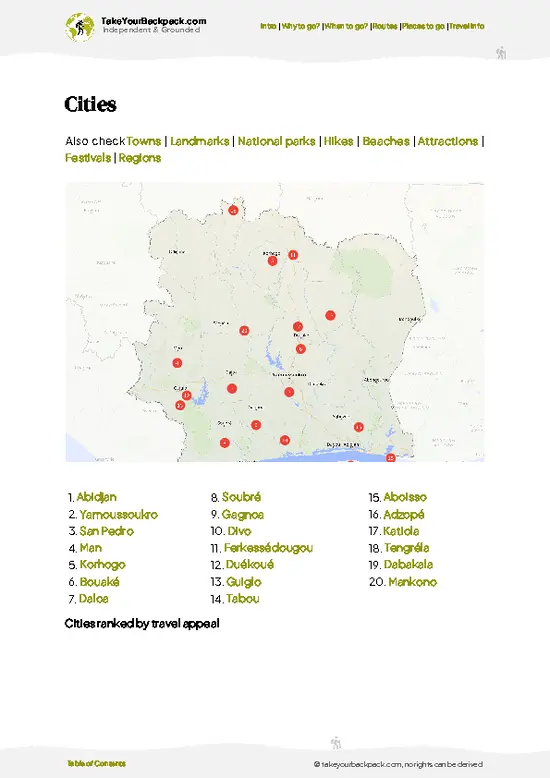
🌟 Highlightcity ranked #6
By Johan Kruseman 🇳🇱 | Updated June 3, 2026

A decade ago, Korhogo felt like a secret handshake among overlanders—dusty, raw, and unpredictable, with more goats than guesthouses and a sense you’d wandered off the map. Today, it’s still gritty, but the edges are softer: a city in northern Côte d’Ivoire where the Senufo culture hums through woodcarvers’ workshops and the Grand Marché’s chaos. Korhogo sits just south of the Burkina Faso border, far from the coastal gloss of Abidjan. For backpackers, it’s a trade: you get authenticity and a front-row seat to traditional crafts, but you sacrifice creature comforts and easy transit. Highlights like the Péléforo Gbon Coulibaly Museum and the sacred Mount Korhogo are genuinely worth your time. It’s affordable, safe by West African standards, and you’ll stand out—don’t expect a hostel scene, but locals are curious and welcoming. Compared to Yamoussoukro or Bouaké, Korhogo is rougher, but richer in character. The vibe? Unpolished, energetic, and absolutely real.

Discover everything you want to know in the 📖 Côte d’Ivoire Travel Guide.
Loading the map 🌍
CLICK TO FILTER
cities
towns
landmarks
national parks
hikes
beaches
attractions
festivals
regions
SHOW COUNTRY’S BESTSHOW ALL

✨ Why go?
Ranked #6 city in Côte d’Ivoire
Reasons people choose to visit here

Korhogo in Côte d’Ivoire is a strategic stop for backpackers weaving through West Africa. It’s not just about the highlights; it’s about the experience. The city offers a unique blend of cultural immersion and affordability. Hostels here are budget-friendly, providing a solid basecamp for day trips while fostering a sense of community among travelers.

You can stroll through the walkable streets, soaking in local life, and when hunger strikes, the street food scene is both delicious and inexpensive. The nightlife, while not wild, has its charm, with local bars offering a taste of Ivorian culture.

Korhogo also serves as a gateway for onward travel, making it easy to connect to other destinations. If you’re looking for a place that balances comfort and value, while still offering a taste … read more 👉
Korhogo in Côte d’Ivoire is a strategic stop for backpackers weaving through West Africa. It’s not just about the highlights; it’s about the experience. The city offers a unique blend of cultural immersion and affordability. Hostels here are budget-friendly, providing a solid basecamp for day trips while fostering a sense of community among travelers.

You can stroll through the walkable streets, soaking in local life, and when hunger strikes, the street food scene is both delicious and inexpensive. The nightlife, while not wild, has its charm, with local bars offering a taste of Ivorian culture.

Korhogo also serves as a gateway for onward travel, making it easy to connect to other destinations. If you’re looking for a place that balances comfort and value, while still offering a taste of authentic Ivorian life, Korhogo is worth your time. Just don’t expect to linger too long; it’s a perfect pit stop on your journey.
Want to include Korhogo in your Côte d’Ivoire route?
Create a personalized Côte d’Ivoire itinerary that includes Korhogo and the places that fit your trip — based on your travel style, budget, and available time. Get your route in seconds.

Generate my trip

💡 HighlightsPlaces and moments you shouldn't skip

  • Grand Marché (Marché Central) — The beating heart of Korhogo: a riot of textiles, Senufo masks, carved stools and fresh produce. Best place to haggle for Korhogo cloth and watch everyday life in action.
  • Musée régional de Korhogo — Small but focused on Senufo culture: masks, costumes and everyday objects with labels you can actually read. Good primer before visiting artisans or seeing a mask dance.
  • Village artisanal / Quartier des artisans — A tight cluster of workshops where you can watch weavers, dyers and carvers at work and buy directly from makers. Way better prices and stories than a gallery.
  • Ateliers de tissage (Korhogo cloth workshops) — See the hand-loom process behind the pale, embroidered fabrics everyone calls “Korhogo cloth.” Photogenic and tactile — they’ll even show how
read more 👉
  • Grand Marché (Marché Central) — The beating heart of Korhogo: a riot of textiles, Senufo masks, carved stools and fresh produce. Best place to haggle for Korhogo cloth and watch everyday life in action.
  • Musée régional de Korhogo — Small but focused on Senufo culture: masks, costumes and everyday objects with labels you can actually read. Good primer before visiting artisans or seeing a mask dance.
  • Village artisanal / Quartier des artisans — A tight cluster of workshops where you can watch weavers, dyers and carvers at work and buy directly from makers. Way better prices and stories than a gallery.
  • Ateliers de tissage (Korhogo cloth workshops) — See the hand-loom process behind the pale, embroidered fabrics everyone calls “Korhogo cloth.” Photogenic and tactile — they’ll even show how designs map to local meanings.
  • Rue des sculpteurs (woodcarver street) — Follow the sawdust and smoke to find carvers turning iroko and other local woods into masks, figures and stools. Watching a piece take shape is oddly addictive.
  • La Grande Mosquée / Mosquée centrale — A local landmark whose simple lines and daily ritual life give a calm, human counterpoint to the market chaos. Respectful observation during non-prayer times is fine.
  • Old Town walk (centre historique) — Wander the older lanes to see colonial-era facades, shady tamarind trees and street vendors. Not a single landmark grabs headlines, but the walk gives the city’s texture.
  • Stade municipal — Catch a football match if one’s on. Loud, passionate, cheap entrance and one of the fastest ways to meet people and feel the city’s energy.
  • Centre culturel et spectacles Senufo — Local cultural centers and community spaces frequently host music, mask dances and storytelling. Timing matters — ask at your guesthouse for upcoming shows.
  • Night food stalls and small local restaurants — The best Korhogo experience is edible: try northern Ivorian specialties from small stalls near the market. Cheap, big portions, and everything tastes like home for locals.
Nearby day-trip highlights worth considering: the towns of Ferkessédougou and Boundiali, plus the surrounding Senufo villages and savanna landscapes where you can see more traditional villages, mask performances and rural craft workshops.
Spotted a mistake or missing something? Contact us.

🏘️ NeighborhoodsWhere things are and how it's laid out

Korhogo, a vibrant city in Côte d’Ivoire, offers a unique blend of culture and accessibility for backpackers. Here’s how to navigate its neighborhoods:

Centre Ville: This is the heart of Korhogo. You’ll find bustling markets and local eateries. It’s walkable, with plenty of budget-friendly accommodations. The vibe is lively, perfect for those who thrive on energy. Nightlife is modest, but you can find bars to unwind after a day of exploration. Ideal for short stays.

Quartier des Artisans: Known for its crafts and art scene, this area is a treasure trove for those interested in local culture. It’s slightly quieter than Centre Ville, making it suitable for longer stays. Transport options are good, with easy access to the main roads. The atmosphere is relaxed, perfect for soaking in the local … read more 👉
Korhogo, a vibrant city in Côte d’Ivoire, offers a unique blend of culture and accessibility for backpackers. Here’s how to navigate its neighborhoods:

Centre Ville: This is the heart of Korhogo. You’ll find bustling markets and local eateries. It’s walkable, with plenty of budget-friendly accommodations. The vibe is lively, perfect for those who thrive on energy. Nightlife is modest, but you can find bars to unwind after a day of exploration. Ideal for short stays.

Quartier des Artisans: Known for its crafts and art scene, this area is a treasure trove for those interested in local culture. It’s slightly quieter than Centre Ville, making it suitable for longer stays. Transport options are good, with easy access to the main roads. The atmosphere is relaxed, perfect for soaking in the local vibe.

Zone Industrielle: This area is more functional than picturesque, but it’s where you’ll find affordable lodging. It’s a bit further from the main attractions, so expect to rely on public transport. The trade-off here is comfort for cost; it’s a good choice for budget-conscious travelers willing to sacrifice some convenience.

Quartier de la Gare: Close to the train station, this neighborhood is ideal for those planning to travel onward. It’s bustling and offers a mix of budget accommodations. The nightlife is lively, but it can get noisy. Great for short stays if you’re on the move.

⌛️ 1 daySeeing the highlights in 24 hours

Korhogo, the cultural heart of northern Côte d’Ivoire, pulses with vibrant traditions and a rich tapestry of history. It’s a place where you can feel the rhythm of daily life, from bustling markets to the artistry of local crafts. Spend a day here, and you’ll uncover layers of experience that go beyond the typical tourist path.

Start your morning at the lively Korhogo Market. The air is thick with the scent of spices and fresh produce. Engage with local vendors selling colorful textiles and handcrafted pottery. Grab a breakfast of attiéké (fermented cassava) paired with grilled fish from a nearby stall. It’s a delicious way to fuel up for the day ahead.

In the afternoon, head to the nearby village of Katiola, just a short drive away. This spot is often overlooked but offers a glimpse into … read more 👉
Korhogo, the cultural heart of northern Côte d’Ivoire, pulses with vibrant traditions and a rich tapestry of history. It’s a place where you can feel the rhythm of daily life, from bustling markets to the artistry of local crafts. Spend a day here, and you’ll uncover layers of experience that go beyond the typical tourist path.

Start your morning at the lively Korhogo Market. The air is thick with the scent of spices and fresh produce. Engage with local vendors selling colorful textiles and handcrafted pottery. Grab a breakfast of attiéké (fermented cassava) paired with grilled fish from a nearby stall. It’s a delicious way to fuel up for the day ahead.

In the afternoon, head to the nearby village of Katiola, just a short drive away. This spot is often overlooked but offers a glimpse into traditional Ivorian life. Visit the local artisans who create intricate wood carvings and textiles. You might even catch a glimpse of the craft in action. This experience is not just about shopping; it’s about connecting with the culture.

As evening approaches, return to Korhogo and stroll through the lively streets of the city center. Stop by the Place de la République, where locals gather to socialize. Enjoy a refreshing bissap (hibiscus drink) from a street vendor while soaking in the atmosphere. For dinner, seek out a local eatery serving fufu and light soup. The flavors are authentic, and the ambiance is warm.

By the end of the day, you’ll have woven together a rich narrative of Korhogo, filled with flavors, sights, and connections that make your visit truly memorable.
Turn your Korhogo visit into an Côte d’Ivoire adventure
Build a complete Côte d’Ivoire route with Korhogo, hidden gems, must-see destinations, and realistic travel times included.

Generate my trip

🌤️ When to go?Seasonal considerations and timing


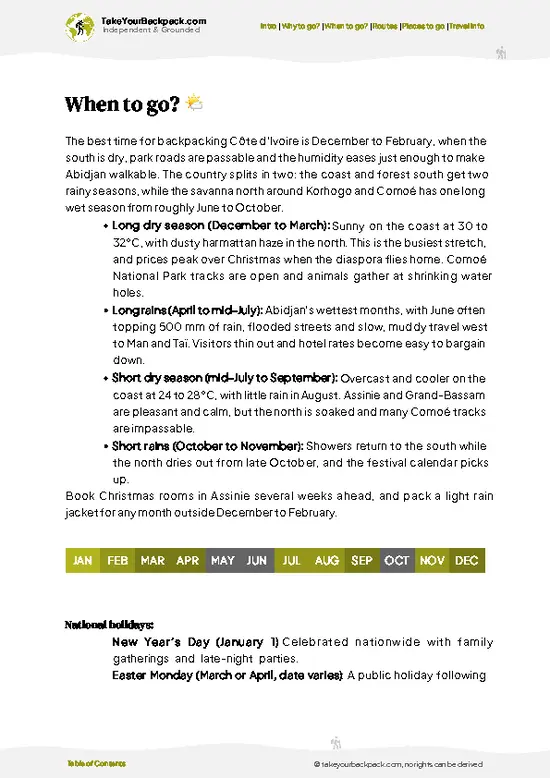
  • Topic: Weather – Korhogo’s climate swings between a wet season (May to October) and a dry season (November to April). The dry season offers clear skies and less humidity, making trekking and exploring more comfortable.

  • Topic: Temperature – Expect highs around 32°C (90°F) during the dry season, dropping to a cooler 24°C (75°F) at night. The wet season is warmer and stickier, often pushing daytime temps above 34°C (93°F), which can sap your energy fast.

  • Topic: Daylight Hours – Near the equator, daylight is steady year-round, roughly 12 hours daily. This consistency means you can plan hikes and market visits without worrying about early sunsets.

  • Topic: Crowds – Tourist numbers peak during the dry season, especially December to February, coinciding with holiday travel. Visiting just before
read more 👉

  • Topic: Weather – Korhogo’s climate swings between a wet season (May to October) and a dry season (November to April). The dry season offers clear skies and less humidity, making trekking and exploring more comfortable.

  • Topic: Temperature – Expect highs around 32°C (90°F) during the dry season, dropping to a cooler 24°C (75°F) at night. The wet season is warmer and stickier, often pushing daytime temps above 34°C (93°F), which can sap your energy fast.

  • Topic: Daylight Hours – Near the equator, daylight is steady year-round, roughly 12 hours daily. This consistency means you can plan hikes and market visits without worrying about early sunsets.

  • Topic: Crowds – Tourist numbers peak during the dry season, especially December to February, coinciding with holiday travel. Visiting just before or after this window means fewer people and a more authentic vibe.

  • Topic: Seasonal Activities – The dry season hosts cultural festivals and traditional ceremonies, offering a rich dive into local life. The wet season, while quieter, reveals lush landscapes and fewer tourists.

  • Topic: Price Fluctuations – Accommodation and transport costs rise during the dry season’s peak months. Traveling in shoulder months like November or March can save money without sacrificing comfort.


Pro-tip: Aim for the shoulder dry season months—Korhogo’s weather is kind, crowds are thin, and your wallet stays happy. That’s the sweet spot where comfort, cost, and experience align.


source: climatestotravel.comJANJanuary: highly recommended for travelingFEBFebruary: highly recommended for travelingMARMarch: highly recommended for travelingAPRApril: good for travelingMAYMay: fair for travelingJUNJune: fair for travelingJULJuly: fair for travelingAUGAugust: fair for travelingSEPSeptember: fair for travelingOCTOctober: fair for travelingNOVNovember: highly recommended for travelingDECDecember: highly recommended for traveling
cote-divoire-city-korhogo v1
© Google |

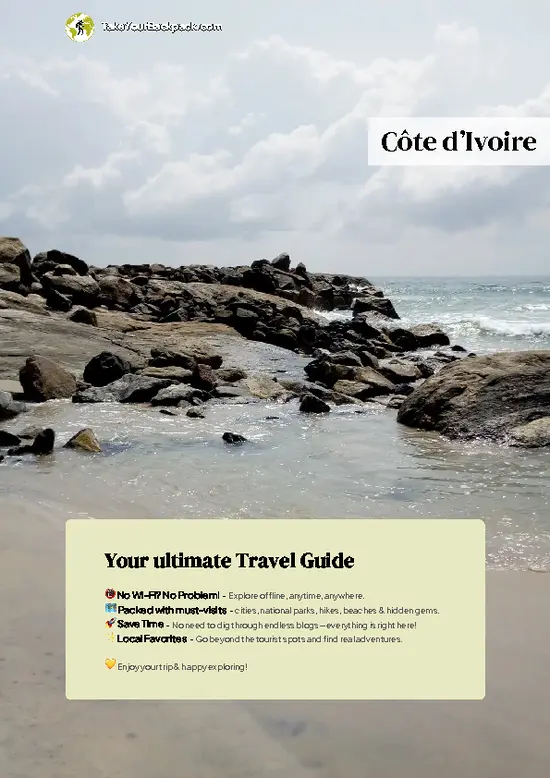
✈️ The backpacker research shortcutCôte d’Ivoire Travel Guide

An offline-friendly backpacking guide with optimized travel routes, ranked highlights, transport advice, and the best areas to stay.
The digital guide (337 pages) contains:
85 highlights, ranked by travel appeal
Optimized 5, 10 & 15-day travel routes
Cities, national parks, landmarks, beaches
How to get around
Offline-friendly for travel without Wi-Fi
👉 Click to see all 30+ guide features

📅 Plan smarter in minutes, not weeks
Month by month travel advice
Festivals & national holidays
Budget expectations

🗺️ Go to the right places, skip the overrated ones
Honest pros & cons of destinations
Top hikes, parks & viewpoints
Lesser-known places most travelers miss
Clear “worth it vs skip it” guidance

🛏️ Travel smoothly without rookie mistakes
Best areas to stay
Transport systems explained simply
Common scams & safety advice
SIM cards, money & practical tips

🌍 Understand the country, not just visit it
Culture & traditions
52 Essential phrases & customs
Festivals worth planning around
Traveler-friendly historical context
Insights that make places more meaningful

📱 Built for real travel conditions
Fully downloadable PDF
Works completely offline
Optimized for phone use
Useful in remote areas & buses
Everything in one place
Save weeks of stressful planning
Get instant access to your full guide. 30‑day money-back guarantee.


By proceeding you agree to our terms.
Sent to your inbox immediately after payment • 100% Secure Checkout
Best Backpacking Travel Advisor 2025 tourism awardBest Backpacking
Travel Advisor
2025
What others say about Take Your Backpack Guides:
⭐⭐⭐⭐⭐
Fantastic, amazing amount of information!
⭐⭐⭐⭐⭐
My goodness this is amazing, it's what I've been looking for hats off too you!
⭐⭐⭐⭐⭐
I think this is absolutely BRILLIANT
⭐⭐⭐⭐
Very complete and informative. It's still missing places, but I gotta to commend you
⭐⭐⭐⭐⭐
This is truly amazing, thank you, can't wait to explore it with my kids!
⭐⭐⭐⭐⭐
Awesome resource, thank you!
⭐⭐⭐⭐⭐
This is amazing! Can't wait to explore the ones I haven't seen
⭐⭐⭐⭐
I love this! Well done, great idea.
⭐⭐⭐⭐⭐
Thanks for taking the time to make this gem!
⭐⭐⭐⭐⭐
This might be the best website I've ever seen.
⭐⭐⭐⭐⭐
Congratulations, and thank you so much for your work; it's incredibly valuable.
⭐⭐⭐⭐
In all seriousness I think you did a great job pointing out the important spots
⭐⭐⭐⭐⭐
10/10 very good
⭐⭐⭐⭐⭐
As someone who's only just starting to visit regularly this is awesome, thank you.
⭐⭐⭐⭐
Thank you very much! I'm going to visit my dad, it's going to be very useful!
⭐⭐⭐⭐⭐
This is really cool! We'll be travelling for the first time and this definitely come in handy.
⭐⭐⭐⭐⭐
You are now our minister of culture, congratulations 👨‍💼
⭐⭐⭐⭐⭐
Just wanted to tell you that this is a pearl! Going to follow your recommendations.
⭐⭐⭐⭐⭐
This is so cool. I'll definitely be using the resource for my travels soon.
⭐⭐⭐⭐⭐
This is very impressive! Good work.
⭐⭐⭐⭐⭐
This is an amazing and informative site. Very well done!

🛏️ Where to stay?Where staying makes the most sense

Korhogo’s backpacker scene is compact but distinct, and your best bet is to anchor yourself near the city center, specifically around the market district and the adjacent neighborhoods. This area pulses with local life—street vendors, small eateries, and a steady flow of people that keeps things safe by sheer presence. It’s where budget travelers naturally gravitate because it offers a social vibe without the touristy gloss. You’ll find a handful of hostels and guesthouses here, modest but reliable, perfect for meeting fellow travelers or locals who are curious and welcoming.

Venture outside … read more 👉
Korhogo’s backpacker scene is compact but distinct, and your best bet is to anchor yourself near the city center, specifically around the market district and the adjacent neighborhoods. This area pulses with local life—street vendors, small eateries, and a steady flow of people that keeps things safe by sheer presence. It’s where budget travelers naturally gravitate because it offers a social vibe without the touristy gloss. You’ll find a handful of hostels and guesthouses here, modest but reliable, perfect for meeting fellow travelers or locals who are curious and welcoming.

Venture outside this core, and the city shifts quickly. Residential zones to the north and east tend to be quieter but less geared toward visitors, which means fewer social opportunities and less infrastructure for budget stays. The southern parts lean more commercial and can feel disconnected from the authentic rhythm backpackers seek.

Choosing the central market area means sacrificing some comfort—expect basic amenities and occasional noise—but you gain immersion and connection. It’s a trade-off: less luxury, more local flavor and interaction. For solo backpackers, this balance is gold. You’re not just passing through Korhogo; you’re plugged into its daily beat.

🚌 Getting aroundHow to get around Korhogo

Korhogo moves at its own rhythm—neither clockwork precision nor total chaos, but a blend where schedules exist mostly as polite suggestions. The city’s pulse is marked by the ebb and flow of people negotiating time and space with a mix of patience and hustle. Here, you’ll find that the real game is balancing your budget against your comfort and how much time you’re willing to spend in transit. The trade-offs are clear: faster rides cost more, slower ones save money but test your patience, and comfort is a luxury that often demands a premium. Understanding this flow lets you hack your way through Korhogo with savvy, turning what looks like a logistical headache into a strategic win.


  • Walking: The ultimate budget option and the best way to soak in Korhogo’s street life. It’s free, obviously,
read more 👉
Korhogo moves at its own rhythm—neither clockwork precision nor total chaos, but a blend where schedules exist mostly as polite suggestions. The city’s pulse is marked by the ebb and flow of people negotiating time and space with a mix of patience and hustle. Here, you’ll find that the real game is balancing your budget against your comfort and how much time you’re willing to spend in transit. The trade-offs are clear: faster rides cost more, slower ones save money but test your patience, and comfort is a luxury that often demands a premium. Understanding this flow lets you hack your way through Korhogo with savvy, turning what looks like a logistical headache into a strategic win.


  • Walking: The ultimate budget option and the best way to soak in Korhogo’s street life. It’s free, obviously, and perfect for short distances within the city center. Expect uneven sidewalks and occasional dust, but the pace is yours to set, and you’ll catch details missed from a vehicle window.


  • Motorcycle Taxis (Zémidjans): These buzzing two-wheelers are everywhere and run from dawn until late evening. Fares start around 200 CFA francs for short trips, making them a cheap, quick option. They weave through traffic with agility, cutting travel time significantly, but comfort is minimal and safety varies—helmet use is spotty.


  • Shared Minibuses: The backbone of Korhogo’s public transit, these run fixed routes with departures whenever full, so timing is flexible but unpredictable. Fares hover around 300-500 CFA francs. They’re slow, often crowded, and the ride can be bumpy, but they’re unbeatable for stretching your budget over longer distances.


  • Private Taxis: More expensive, with fares starting at about 1,500 CFA francs for short trips, but they offer a smoother, faster, and more comfortable ride. They operate on demand, so you save time waiting but pay for the convenience. Ideal if you’re juggling tight schedules or carrying heavy gear.


  • Bicycle Rentals: A middle ground between walking and motorized transport. Renting a bike costs roughly 1,000 CFA francs per day. It’s eco-friendly, gives you control over your pace, and covers more ground than walking, but be ready for Korhogo’s heat and uneven roads.

👛 Costs (as of 19 February 2026)What things cost and how to budget

Backpacking in Korhogo, Côte d’Ivoire, offers a clear trade-off map between time, money, and comfort, with costs that reflect its status as a less-touristed city in West Africa. Understanding these costs lets you plan smartly, knowing exactly what you’re trading off.
  • Dorm Accommodation (High Season): Expect to pay around €8 to €12 per night. High season sees a slight bump due to demand, but options remain basic—think simple rooms with shared facilities.
  • Dorm Accommodation (Off-Season): Prices drop to about €5 to €8. Off-season means fewer travelers, so you can negotiate or find quieter spots, though comfort levels stay modest.
  • Meals: Local street food and small eateries dominate, with meals costing between €1.50 and €3. A full day of eating well on local fare rarely exceeds €6 to €9, but
read more 👉
Backpacking in Korhogo, Côte d’Ivoire, offers a clear trade-off map between time, money, and comfort, with costs that reflect its status as a less-touristed city in West Africa. Understanding these costs lets you plan smartly, knowing exactly what you’re trading off.
  • Dorm Accommodation (High Season): Expect to pay around €8 to €12 per night. High season sees a slight bump due to demand, but options remain basic—think simple rooms with shared facilities.
  • Dorm Accommodation (Off-Season): Prices drop to about €5 to €8. Off-season means fewer travelers, so you can negotiate or find quieter spots, though comfort levels stay modest.
  • Meals: Local street food and small eateries dominate, with meals costing between €1.50 and €3. A full day of eating well on local fare rarely exceeds €6 to €9, but opting for more Western-style or restaurant meals will push this higher.
  • Local Transport: Motorbike taxis and shared minibuses are the norm. Individual rides typically cost €0.30 to €0.60 depending on distance. Budget around €1.50 to €3 daily if you’re moving around frequently.
  • City Transport Pass: Korhogo doesn’t have a formal city transport pass system. Instead, rely on cash payments for each ride, which keeps flexibility high but requires constant small cash handling.
  • Basic Activities/Entry Fees: Cultural sites and local markets often have minimal or no entry fees. Expect to pay up to €2 for museum or craft center entries. Guided tours or special events can cost more, but these are optional.
  • Miscellaneous Expenses: This covers bottled water, snacks, occasional SIM cards, or small tips. Budget around €1 to €3 daily to cover these unpredictable but necessary extras.

In total, a backpacker in Korhogo can expect to spend roughly €15 to €25 per day. This range balances basic comfort with local immersion, letting you decide whether to stretch for a bit more comfort or keep costs lean and flexible. The key trade-off here is simplicity and local authenticity versus the occasional splurge on convenience or guided experiences.


source: cotedivoiretourisme.ci
⚠️ Prices can change and everyone travels differently, so take this as a rough guide. Hope it helps you plan your adventure!

🚌 Day tripsWhere to go beyond the main area

Korhogo, Côte d’Ivoire, is a fantastic launchpad for day trips that reveal the rich tapestry of the region. Here are some high-value excursions that are worth your time and energy.

Sangbile Waterfalls
Just a short 30-minute ride from Korhogo, Sangbile Waterfalls is a refreshing escape into nature. The cascading water creates a serene atmosphere, perfect for a picnic or a quick dip. The journey is mostly on well-maintained roads, costing around 1,500 CFA for a shared taxi. Aim for the rainy season, when the falls are at their most impressive. A common mistake is underestimating the time needed to hike down to the falls; allow at least an hour for the round trip.


Kong Mountains
About an hour’s drive from Korhogo, the Kong Mountains offer stunning views and a chance to connect with local … read more 👉
Korhogo, Côte d’Ivoire, is a fantastic launchpad for day trips that reveal the rich tapestry of the region. Here are some high-value excursions that are worth your time and energy.

Sangbile Waterfalls
Just a short 30-minute ride from Korhogo, Sangbile Waterfalls is a refreshing escape into nature. The cascading water creates a serene atmosphere, perfect for a picnic or a quick dip. The journey is mostly on well-maintained roads, costing around 1,500 CFA for a shared taxi. Aim for the rainy season, when the falls are at their most impressive. A common mistake is underestimating the time needed to hike down to the falls; allow at least an hour for the round trip.


Kong Mountains
About an hour’s drive from Korhogo, the Kong Mountains offer stunning views and a chance to connect with local wildlife. The area is rich in biodiversity, making it a great spot for birdwatching and photography. Expect to spend around 2,000 CFA on transport. The best time to visit is during the dry season, when trails are more accessible. First-timers often overlook the importance of bringing enough water; it’s a long trek, and hydration is key.


Tanda Village
A 45-minute trip will take you to Tanda Village, where you can immerse yourself in the local culture. Engage with artisans and learn about traditional crafts, from weaving to pottery. The experience is priceless, but budget around 1,000 CFA for transport. Visiting during market days, typically Wednesdays, enhances the experience with vibrant local commerce. Many newcomers miss the chance to ask questions; locals are eager to share their stories if you take the initiative.


Ferkessédougou
Just over an hour away, Ferkessédougou is known for its bustling market and vibrant street food scene. You can sample local delicacies while soaking in the lively atmosphere. The trip costs about 2,500 CFA. Weekends are the best time to visit, as the market is at its peak. A common pitfall is not trying the street food; it’s where the real flavors are, so dive in!
👉 Explore Ferkessédougou
Want to know what more Côte d’Ivoire offers?
The Côte d’Ivoire Travel Guide describes 85 highlights, from cities to national parks, from beaches to hikes

Get the Travel Guide -

🍲 FoodWhat to Eat & Drink

In Korhogo, the heart of northern Côte d’Ivoire, food is a vibrant tapestry of flavors and communal experiences. Dive into fufu, a starchy staple made from cassava or yam, often served with rich, spicy sauces. Pair it with sauce arachide, a peanut-based delight that’s creamy and comforting. Don’t miss attiéké, a fermented cassava dish that’s a local favorite, often enjoyed with grilled fish or meat.

Street food is where the magic happens. Stalls line the bustling markets, offering everything from skewered meats to fried plantains. The aroma of sizzling kebabs fills the air, drawing you in. Grab a seat at a casual eatery, where locals gather to share stories over steaming bowls of soup or hearty rice dishes.

When it comes to drinks, try the local bissap, a refreshing hibiscus tea, or gingembre, … read more 👉
In Korhogo, the heart of northern Côte d’Ivoire, food is a vibrant tapestry of flavors and communal experiences. Dive into fufu, a starchy staple made from cassava or yam, often served with rich, spicy sauces. Pair it with sauce arachide, a peanut-based delight that’s creamy and comforting. Don’t miss attiéké, a fermented cassava dish that’s a local favorite, often enjoyed with grilled fish or meat.

Street food is where the magic happens. Stalls line the bustling markets, offering everything from skewered meats to fried plantains. The aroma of sizzling kebabs fills the air, drawing you in. Grab a seat at a casual eatery, where locals gather to share stories over steaming bowls of soup or hearty rice dishes.

When it comes to drinks, try the local bissap, a refreshing hibiscus tea, or gingembre, a spicy ginger drink that packs a punch. Sharing a drink is a social ritual; don’t be surprised if you’re invited to toast with a new friend. Embrace the communal spirit, and let the flavors of Korhogo envelop you.

🛡️ SafetyScams, Hazards, and Annoyances

Korhogo is generally safe for backpackers, but a few situational awareness tips can enhance your experience. Stick to well-lit areas at night, especially if you’re solo. The streets can feel quiet, and while locals are friendly, it’s wise to keep your wits about you.

Common scams are rare, but be cautious around markets. Vendors may inflate prices for tourists, so don’t hesitate to haggle. A friendly smile can go a long way, but stay firm if you feel pressured.

Everyday annoyances include the occasional tout or overly enthusiastic guide. Politely decline if you’re not interested, and keep moving. Carry your belongings close, especially in crowded areas. With a bit of mindfulness, you can navigate Korhogo smoothly and enjoy its vibrant culture without unnecessary stress.

Other Ivorian cities near Korhogo

Explore more nearby:

  • Ferkessédougou—Railway junction, cattle markets, Sahelian influence| 48 km away
  • Tengréla—Senoufo villages, sacred rocks, weekly market| 143 km away
  • Katiola—pottery workshops, train station, central plateau| 158 km away

💡 Not sure where to go next?
Create a personalized itinerary for Côte d’Ivoire including Korhogo and the places that fit your trip.

Generate my itinerary

👉 Discover all cities

Or checkout all Côte d’Ivoire has to offer (think cities, towns, villages, national parks, hikes, beaches, festivals)
Country photo of Côte d’Ivoire

We 💚 feedbackKey takeaways before you go

Korhogo has a pulse that’s hard to ignore. The vibrant markets buzz with life, and the warmth of the locals can turn a simple chat into a memorable exchange. Don’t miss the chance to try attiéké; it’s a delightful surprise that’ll elevate your culinary experience. Just a heads-up: the roads can be rough, so brace yourself for a bumpy ride. Embrace it; it’s part of the adventure. You’ll leave with stories that linger long after you’ve returned.

✍️ Help improve this page!
The information on this page is based on in-depth research, insights shared by experienced travelers, and feedback from the local travel community in Côte d’Ivoire. While every effort is made to keep the information accurate and current, conditions can change — so if you spot anything incorrect or outdated, please get in touch.


🙋‍♂️ Give feedback

👋 Meet the founderWho’s Behind Take Your Backpack?

Johan, backpacker and founder of TakeYourBackpackHi, I’m Johan (Netherlands 🇳🇱), the creator of TakeYourBackpack. Over the past decade, I’ve backpacked through 80+ countries across six continents, gaining extensive experience with independent travel, long-term trips, and overland routes.

This site is built on a combination of firsthand travel experience and carefully curated insights from other backpackers. Many guides are based on places I’ve personally visited, while others bring together tips, observations, and practical advice shared by trusted travelers I’ve met along the way.

The goal is to provide realistic, experience-driven guidance — not generic itineraries — so you can explore destinations with better context, clearer expectations, and more confidence.

Get full country guide •
Instant download • 85 highlights • Full Offline guide