
×

Cuba🇨🇺 | festivalsFestival Internacional de Coroschoral ensembles, sacred music, cathedral acoustics | things to do and best time to go

Explore Festival de la Música Alternativa Ciudad MetalExplore Festival de la Rumba Cubana

Backpacking in Internacional de Coros
👌 Worth visitingfestival ranked #11
By Johan Kruseman 🇳🇱 | Updated September 4, 2026

Your throat vibrates before you even realize you’re singing, packed shoulder-to-shoulder in a dim colonial church while forty voices above you slam into a single, perfect chord. Wax drips, fans creak, someone’s kid giggles off-key, and the whole room smells like sweat, old wood, and cheap cologne. This is the Festival Internacional de Coros in Santiago de Cuba, way out on the island’s eastern edge. It’s a choral festival—sacred pieces, Afro-Cuban rhythms, experimental arrangements—drawing local choirs, music students, and a surprising number of hardcore choir nerds from Europe. The vibe is intense but welcoming, spread over several days in churches and plazas. For backpackers, it’s low-cost, high-soul: you trade glossy production for raw, goosebump sound and late nights walking home through a city that still hums in harmony.

Discover everything you want to know in the 📖 Cuba Travel Guide.


Get your Cuba guide
121 ranked highlights, routes & tips, works offline (450 pages)
Loading the map 🌍
CLICK TO FILTER
cities
towns
villages
landmarks
national parks
hikes
beaches
attractions
festivals
regions
SHOW COUNTRY’S BESTSHOW ALL

✨ Why go?
Ranked #11 festival in Cuba
Why visitors keep coming back

Backpackers flock to the Festival Internacional de Coros in Cuba for a reason: it’s a cultural explosion that transforms the ordinary into the extraordinary. This festival isn’t just about music; it’s a temporary community where you’ll find yourself surrounded by fellow travelers and locals, all sharing the same vibrant energy. Imagine singing along with strangers, feeling the rhythm pulse through the crowd, and connecting over shared experiences.

Planning your route around this festival means you’re not just visiting Cuba; you’re diving headfirst into its soul. The affordability of the festival compared to similar events worldwide makes it a no-brainer. You’ll save cash while soaking up authentic Cuban culture, all while enjoying performances that resonate long after the last note fades. … read more 👉
Backpackers flock to the Festival Internacional de Coros in Cuba for a reason: it’s a cultural explosion that transforms the ordinary into the extraordinary. This festival isn’t just about music; it’s a temporary community where you’ll find yourself surrounded by fellow travelers and locals, all sharing the same vibrant energy. Imagine singing along with strangers, feeling the rhythm pulse through the crowd, and connecting over shared experiences.

Planning your route around this festival means you’re not just visiting Cuba; you’re diving headfirst into its soul. The affordability of the festival compared to similar events worldwide makes it a no-brainer. You’ll save cash while soaking up authentic Cuban culture, all while enjoying performances that resonate long after the last note fades.

Integrating the festival into your travel plans allows for a dynamic itinerary. You can explore Havana’s streets, then lose yourself in the festival’s celebration. This isn’t just a stop; it’s a highlight that fuels your journey, keeping your energy high and your budget intact for the moments that truly matter.
Want to include Festival Internacional de Coros in your Cuba route?
Create a personalized Cuba itinerary that includes Festival Internacional de Coros and the places that fit your trip — based on your travel style, budget, and available time. Get your route in seconds.

Generate my trip

💡 HighlightsEssential experiences to have while celebrating the Internacional de Coros

  • Massed choirs in colonial plazas and churches — Hearing dozens (sometimes hundreds) of voices fill a sunlit plaza or an old cathedral is the kind of audio-architecture moment you don’t forget. The stone and wood amplify and color harmonies in ways a concert hall can’t, so simple arrangements turn cinematic and intimate pieces feel cathedral-big.
  • Afro-Cuban and folk choral repertoire — The festival isn’t just Western choral staples: choirs arrange rumba, son and Yoruba-influenced pieces for voices, often with percussion and call-and-response sections. That fusion of sacred, secular and local rhythm makes performances feel rooted in Cuban culture, not just imported choral tradition.
  • Hands-on workshops and intercambios — Conductors, arrangers and community choirs lead workshops where visitors
read more 👉
  • Massed choirs in colonial plazas and churches — Hearing dozens (sometimes hundreds) of voices fill a sunlit plaza or an old cathedral is the kind of audio-architecture moment you don’t forget. The stone and wood amplify and color harmonies in ways a concert hall can’t, so simple arrangements turn cinematic and intimate pieces feel cathedral-big.
  • Afro-Cuban and folk choral repertoire — The festival isn’t just Western choral staples: choirs arrange rumba, son and Yoruba-influenced pieces for voices, often with percussion and call-and-response sections. That fusion of sacred, secular and local rhythm makes performances feel rooted in Cuban culture, not just imported choral tradition.
  • Hands-on workshops and intercambios — Conductors, arrangers and community choirs lead workshops where visitors can join in, learn local songs, and swap choral techniques. It’s the best way to go home with a song in your head and a handful of new friends — practical, noisy, and very human.
  • Late-night casa de la trova and street sing-alongs — After the official concerts end, music spills into casas, cafés and sidewalks: small ensembles, impromptu harmonies and sing-along sessions over cheap rum or coffee. It’s raw, social and unpredictably brilliant — my personal favorite for feeling like you’re part of the celebration rather than just watching it.
  • International exchange and surprising collaborations — Choirs from around the world bring different languages, styles and arrangements, and the festival encourages joint pieces. Those cross-cultural mashups—Spanish harmonies meeting Eastern European polyphony or West African rhythms—create moments that are musically fresh and culturally generous.
Spotted a mistake or missing something? Contact us.

🌤️ When to go?When is the celebration of Festival Internacional de Coros?


  • Topic: Weather – Cuba’s dry season from November to April offers clear skies and low humidity, perfect for pounding the pavement between concerts without melting into your backpack. Avoid the wet season (May to October) when sudden downpours and sticky heat can sap your energy.

  • Topic: Temperature – Expect daytime highs around 25-28°C (77-82°F) during the festival months, with cooler nights that invite late-night strolls. This balance keeps you comfortable while soaking in the festival vibe.

  • Topic: Daylight Hours – With roughly 11 to 12 hours of daylight, you get ample time to explore Havana’s streets and catch multiple performances without rushing.

  • Topic: Crowds – The festival draws a mix of locals and international visitors, but it’s not a crush-fest. Arriving early in the dry season
read more 👉

  • Topic: Weather – Cuba’s dry season from November to April offers clear skies and low humidity, perfect for pounding the pavement between concerts without melting into your backpack. Avoid the wet season (May to October) when sudden downpours and sticky heat can sap your energy.

  • Topic: Temperature – Expect daytime highs around 25-28°C (77-82°F) during the festival months, with cooler nights that invite late-night strolls. This balance keeps you comfortable while soaking in the festival vibe.

  • Topic: Daylight Hours – With roughly 11 to 12 hours of daylight, you get ample time to explore Havana’s streets and catch multiple performances without rushing.

  • Topic: Crowds – The festival draws a mix of locals and international visitors, but it’s not a crush-fest. Arriving early in the dry season means fewer tourists and better access to venues.

  • Topic: Seasonal Activities – The dry season aligns with Cuba’s cultural high season, so you can pair the festival with salsa nights, art walks, and beach escapes without weather interruptions.

  • Topic: Price Fluctuations – Prices for accommodation and flights spike during the dry season and festival dates. Booking early locks in better deals and keeps your budget intact for experiences that count.


Pro-tip: Aim for late November or early December—weather’s solid, crowds manageable, and you’ll catch the festival’s full energy without the premium price tag.


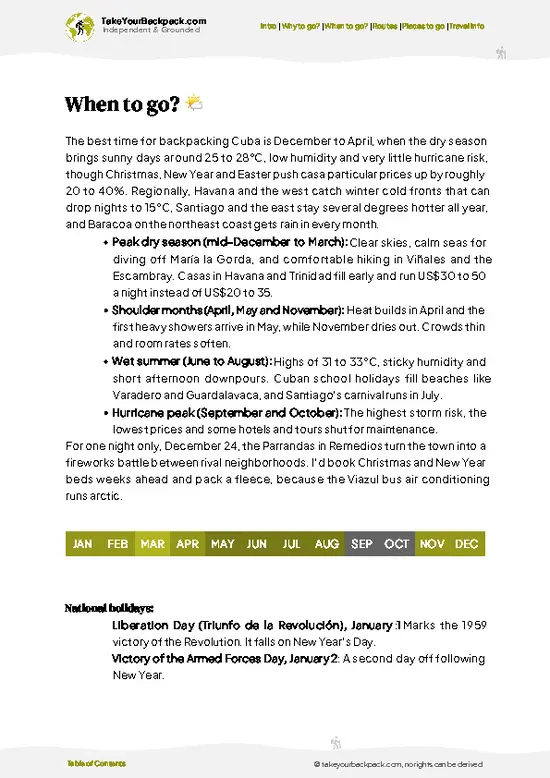
source: climatestotravel.comJANJanuary: not recommended for travelingFEBFebruary: not recommended for travelingMARMarch: not recommended for travelingAPRApril: not recommended for travelingMAYMay: not recommended for travelingJUNJune: not recommended for travelingJULJuly: not recommended for travelingAUGAugust: not recommended for travelingSEPSeptember: not recommended for travelingOCTOctober: not recommended for travelingNOVNovember: excellent for travelingDECDecember: not recommended for traveling

✈️ The backpacker research shortcutCuba Travel Guide

An offline-friendly backpacking guide with optimized travel routes, ranked highlights, transport advice, and the best areas to stay.
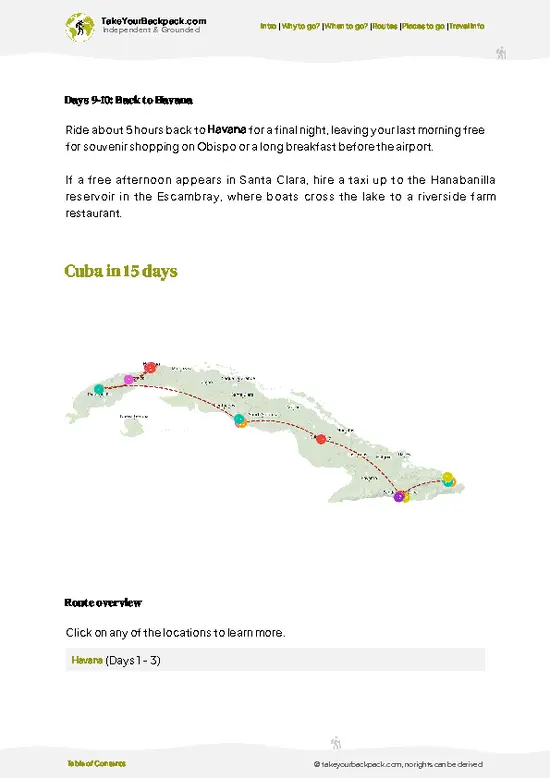
example page 0 from our offline Travel Guide for Cuba
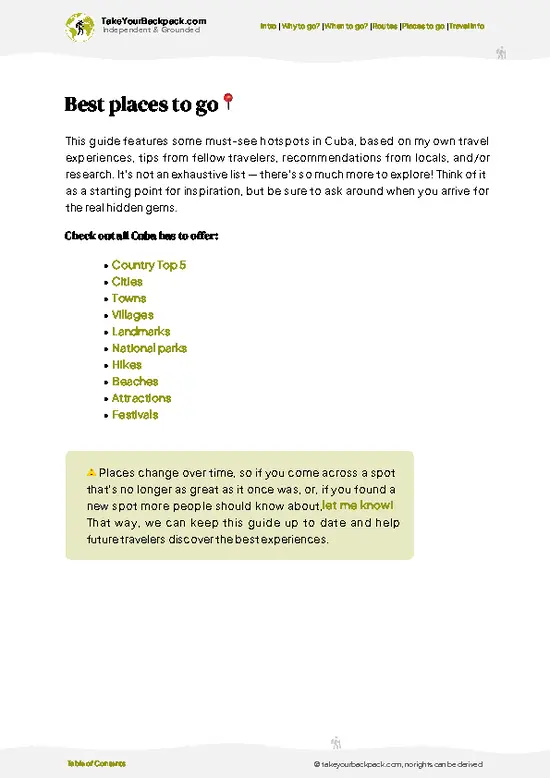
example page 1 from our offline Travel Guide for Cuba
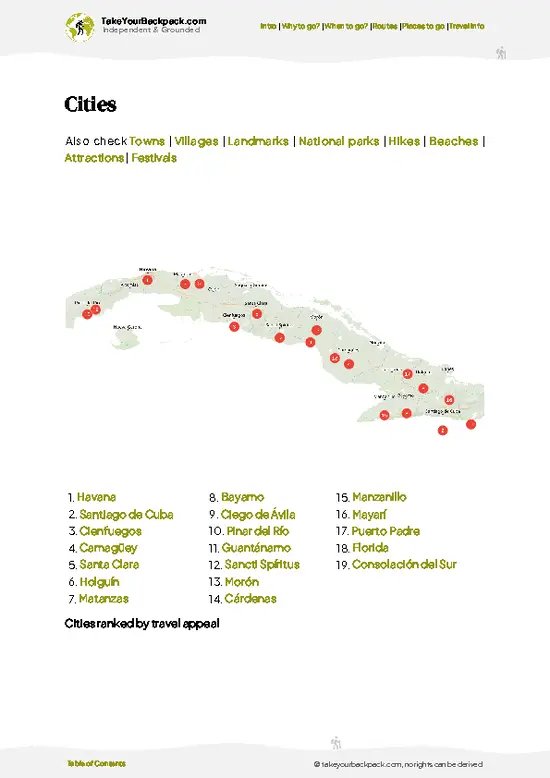
example page 2 from our offline Travel Guide for Cuba
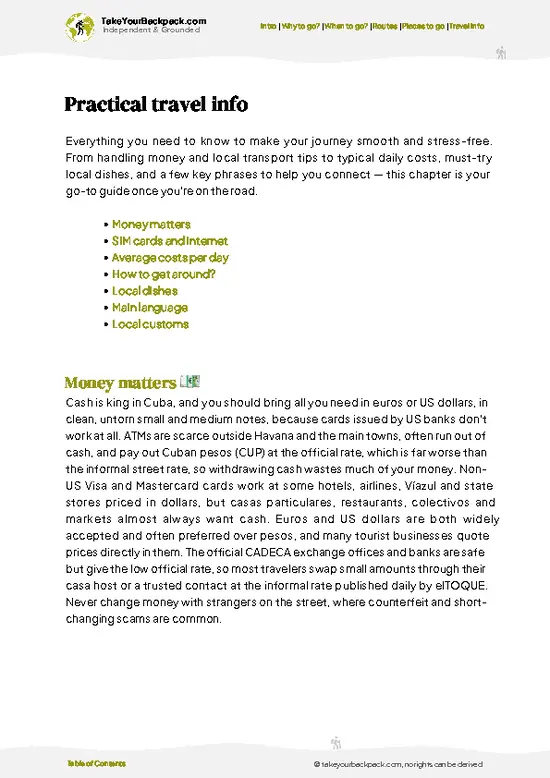
example page 3 from our offline Travel Guide for Cuba
example page 4 from our offline Travel Guide for Cuba
example page 5 from our offline Travel Guide for Cuba
example page 6 from our offline Travel Guide for Cuba
example page 7 from our offline Travel Guide for Cuba
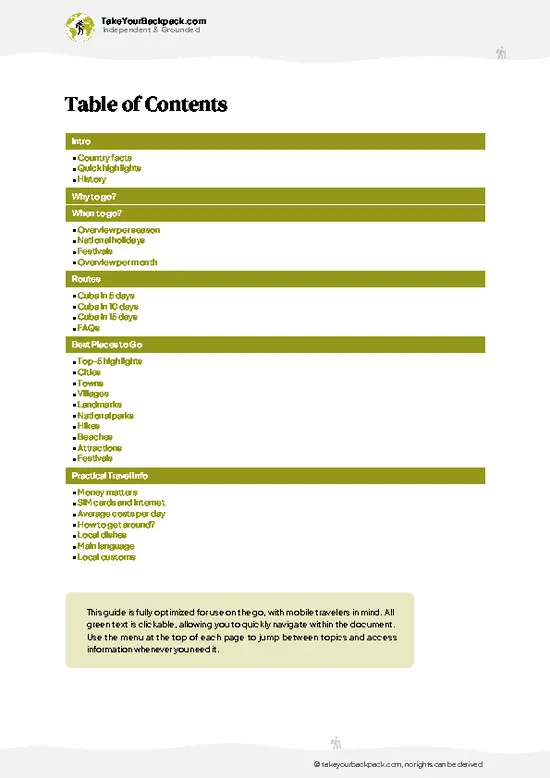
The digital guide (450 pages) contains:
121 highlights, ranked by travel appeal
Optimized 5, 10 & 15-day travel routes
Cities, national parks, landmarks, beaches
How to get around
Offline-friendly for travel without Wi-Fi
👉 Click to see all 30+ guide features

📅 Plan smarter in minutes, not weeks
Month by month travel advice
Festivals & national holidays
Budget expectations

🗺️ Go to the right places, skip the overrated ones
Honest pros & cons of destinations
Top hikes, parks & viewpoints
Lesser-known places most travelers miss
Clear “worth it vs skip it” guidance

🛏️ Travel smoothly without rookie mistakes
Best areas to stay
Transport systems explained simply
Common scams & safety advice
SIM cards, money & practical tips

🌍 Understand the country, not just visit it
Culture & traditions
52 Essential phrases & customs
Festivals worth planning around
Traveler-friendly historical context
Insights that make places more meaningful

📱 Built for real travel conditions
Fully downloadable PDF
Works completely offline
Optimized for phone use
Useful in remote areas & buses
Everything in one place
Save weeks of stressful planning
Get instant access to your full guide. 30‑day money-back guarantee.
+ Add another guide for just US$7.80

By proceeding you agree to our terms.
Sent to your inbox immediately after payment • 100% Secure Checkout
Best Backpacking Travel Advisor 2025 tourism awardBest Backpacking
Travel Advisor
2025
What others say about Take Your Backpack Guides:
⭐⭐⭐⭐⭐
Fantastic, amazing amount of information!
⭐⭐⭐⭐⭐
My goodness this is amazing, it's what I've been looking for hats off too you!
⭐⭐⭐⭐⭐
I think this is absolutely BRILLIANT
⭐⭐⭐⭐
Very complete and informative. It's still missing places, but I gotta to commend you
⭐⭐⭐⭐⭐
This is truly amazing, thank you, can't wait to explore it with my kids!
⭐⭐⭐⭐⭐
Awesome resource, thank you!
⭐⭐⭐⭐⭐
This is amazing! Can't wait to explore the ones I haven't seen
⭐⭐⭐⭐
I love this! Well done, great idea.
⭐⭐⭐⭐⭐
Thanks for taking the time to make this gem!
⭐⭐⭐⭐⭐
This might be the best website I've ever seen.
⭐⭐⭐⭐⭐
Congratulations, and thank you so much for your work; it's incredibly valuable.
⭐⭐⭐⭐
In all seriousness I think you did a great job pointing out the important spots
⭐⭐⭐⭐⭐
10/10 very good
⭐⭐⭐⭐⭐
As someone who's only just starting to visit regularly this is awesome, thank you.
⭐⭐⭐⭐
Thank you very much! I'm going to visit my dad, it's going to be very useful!
⭐⭐⭐⭐⭐
This is really cool! We'll be travelling for the first time and this definitely come in handy.
⭐⭐⭐⭐⭐
You are now our minister of culture, congratulations 👨‍💼
⭐⭐⭐⭐⭐
Just wanted to tell you that this is a pearl! Going to follow your recommendations.
⭐⭐⭐⭐⭐
This is so cool. I'll definitely be using the resource for my travels soon.
⭐⭐⭐⭐⭐
This is very impressive! Good work.
⭐⭐⭐⭐⭐
This is an amazing and informative site. Very well done!

🛏️ Where to stay?Best areas and accommodation options

When you’re gearing up for the Festival Internacional de Coros in Cuba, your choice of where to stay can make or break your experience. Head to the vibrant streets of Havana Vieja. This area buzzes with energy, filled with colorful colonial buildings and lively plazas. You’ll find a mix of budget-friendly casas particulares and hostels where you can swap stories with fellow travelers.

Next, consider Centro Habana. It’s a bit less touristy but offers a genuine slice of Cuban life. The local vibe is palpable, and you’ll find affordable accommodations that are perfect for solo backpackers. Plus, … read more 👉
When you’re gearing up for the Festival Internacional de Coros in Cuba, your choice of where to stay can make or break your experience. Head to the vibrant streets of Havana Vieja. This area buzzes with energy, filled with colorful colonial buildings and lively plazas. You’ll find a mix of budget-friendly casas particulares and hostels where you can swap stories with fellow travelers.

Next, consider Centro Habana. It’s a bit less touristy but offers a genuine slice of Cuban life. The local vibe is palpable, and you’ll find affordable accommodations that are perfect for solo backpackers. Plus, it’s just a short walk to the festival venues, saving you precious time and energy.

Don’t overlook Vedado, either. This neighborhood has a more modern feel, with cafes and bars that cater to a youthful crowd. It’s safe, social, and a great base for exploring.

Avoid the tourist traps that promise luxury but drain your budget. Instead, focus on areas that let you immerse yourself in the culture while keeping your wallet happy. Your adventure starts with smart choices, so pick wisely and dive into the rhythm of Cuba!

👛 Costs (as of 4 September 2026)Travel costs and budget guide for Internacional de Coros

The Festival Internacional de Coros in Cuba is a vibrant celebration of choral music, but navigating the costs can be tricky. Here’s a breakdown to keep your budget in check and your energy focused on the experience.
  • Festival Tickets: Expect to pay around $10 to $30 for a single event ticket. Some performances may be free, but securing a spot for popular shows is wise. Consider a festival pass if you plan to attend multiple events; these can range from $50 to $100.
  • Accommodation: Options vary widely. Budget hostels can be found for $15 to $30 per night, while mid-range hotels typically charge $50 to $100. For a more local experience, look into casa particulares (private homestays) for about $25 to $60 per night.
  • Local Transport: Public transport is affordable. Buses and shared taxis (colectivos)
read more 👉
The Festival Internacional de Coros in Cuba is a vibrant celebration of choral music, but navigating the costs can be tricky. Here’s a breakdown to keep your budget in check and your energy focused on the experience.
  • Festival Tickets: Expect to pay around $10 to $30 for a single event ticket. Some performances may be free, but securing a spot for popular shows is wise. Consider a festival pass if you plan to attend multiple events; these can range from $50 to $100.
  • Accommodation: Options vary widely. Budget hostels can be found for $15 to $30 per night, while mid-range hotels typically charge $50 to $100. For a more local experience, look into casa particulares (private homestays) for about $25 to $60 per night.
  • Local Transport: Public transport is affordable. Buses and shared taxis (colectivos) cost around $1 to $5 for short distances. If you prefer more comfort, private taxis can range from $10 to $30 depending on the distance. Factor in some extra for airport transfers, which can be $25 to $50.
  • Food & Drinks: Street food is a steal, with meals costing between $3 and $10. Sit-down restaurants will set you back $10 to $25 per meal. Don’t forget to budget for drinks; local beers are about $2, while cocktails can range from $5 to $10.
  • Miscellaneous Expenses: Always good to have a buffer. Souvenirs, tips, and unexpected costs can add up. Set aside $50 to $100 for these extras, especially if you plan to indulge in local crafts or experiences.

Keep these figures in mind to avoid surprises. This way, you can dive into the festival with your energy and budget intact, ready to soak up every note and rhythm.


source: cubatravel.cu
⚠️ Prices can change and everyone travels differently, so take this as a rough guide. Hope it helps you plan your adventure!

🍲 FoodLocal Flavors for Backpackers

At the Festival Internacional de Coros in Cuba, food and drinks pulse with local flavor. You’ll find street stalls brimming with tasty treats. Dive into tostones—crispy fried plantains that pack a punch. Pair them with mojo sauce for a zesty kick. Don’t miss out on ropa vieja, a savory shredded beef dish that tells stories of Cuban kitchens.

For drinks, grab a malt beverage or a refreshing coconut water straight from the shell. If you’re feeling adventurous, seek out a Cuban rum cocktail; the mojito is a classic, but try a canchánchara for something uniquely local.

Be ready to share! It’s common to swap bites with fellow festival-goers, creating a communal vibe. Lines can get long, so practice patience and enjoy the atmosphere. Cash is king here; many stalls don’t accept cards, so stock … read more 👉
At the Festival Internacional de Coros in Cuba, food and drinks pulse with local flavor. You’ll find street stalls brimming with tasty treats. Dive into tostones—crispy fried plantains that pack a punch. Pair them with mojo sauce for a zesty kick. Don’t miss out on ropa vieja, a savory shredded beef dish that tells stories of Cuban kitchens.

For drinks, grab a malt beverage or a refreshing coconut water straight from the shell. If you’re feeling adventurous, seek out a Cuban rum cocktail; the mojito is a classic, but try a canchánchara for something uniquely local.

Be ready to share! It’s common to swap bites with fellow festival-goers, creating a communal vibe. Lines can get long, so practice patience and enjoy the atmosphere. Cash is king here; many stalls don’t accept cards, so stock up on pesos. Serving sizes can vary, so don’t hesitate to ask for recommendations. Embrace the flavors, the camaraderie, and the rhythm of this vibrant celebration.

FAQTraveler FAQ

The Festival Internacional de Coros in Cuba typically takes place every two years, usually in November. The event lasts about 7 to 10 days, featuring multiple choral performances across Havana and other cities.
Attendance to the Festival Internacional de Coros is generally free for most public concerts, as it is a cultural event supported by the government. However, some special performances or venues may charge a small fee, usually under 10 USD.
Tickets are not usually required in advance for the majority of the festival's concerts, as many are held in open or public spaces. For special or limited-capacity events, it is advisable to secure tickets early, either through official festival channels or local cultural centers.
⚠️ Things can change over time, so always validate details locally before you go.

Other Cuban festivals near Internacional de Coros

Explore more nearby:


💡 Not sure where to go next?
Create a personalized itinerary for Cuba including Internacional de Coros and the places that fit your trip.

Generate my itinerary

👉 Discover all festivals

Or checkout all Cuba has to offer (think cities, towns, villages, national parks, hikes, beaches, festivals)
Country photo of Cuba

We 💚 feedbackParting advice and final tips

Cuba’s Festival Internacional de Coros is a vibrant celebration of music that pulls you into the heart of local culture. You’ll feel the rhythm in your bones as choirs from around the world harmonize under the Caribbean sun. Just know that accommodations can be pricier during the festival, so budget wisely. Embrace the challenge; it’s all part of the adventure, and those unforgettable moments are worth every penny.

✈️ When did I visit Cuba?
As part of my 1.5 year travel around the world trip, I visited Cuba for 6 weeks in February, March 2016, being extremely lucky that that coincided with the free concert of The Rolling Stones.

✍️ Help improve this page!
The information on this page is based on my own backpacking experience in Cuba, supplemented with up-to-date research and feedback from other travelers. Travel details can change, so if you notice anything outdated or incomplete, feel free to let me know.


🙋‍♂️ Give feedback

👋 Meet the founderWho’s Behind Take Your Backpack?

Johan, backpacker and founder of TakeYourBackpackHi, I’m Johan (Netherlands 🇳🇱), the creator of TakeYourBackpack. Over the past decade, I’ve backpacked through 80+ countries across six continents, gaining extensive experience with independent travel, long-term trips, and overland routes.

This site is built on a combination of firsthand travel experience and carefully curated insights from other backpackers. Many guides are based on places I’ve personally visited, while others bring together tips, observations, and practical advice shared by trusted travelers I’ve met along the way.

The goal is to provide realistic, experience-driven guidance — not generic itineraries — so you can explore destinations with better context, clearer expectations, and more confidence.

Get full Cuba guide •
Instant download • 121 highlights • Full Offline guide