


The Cliffside Setting
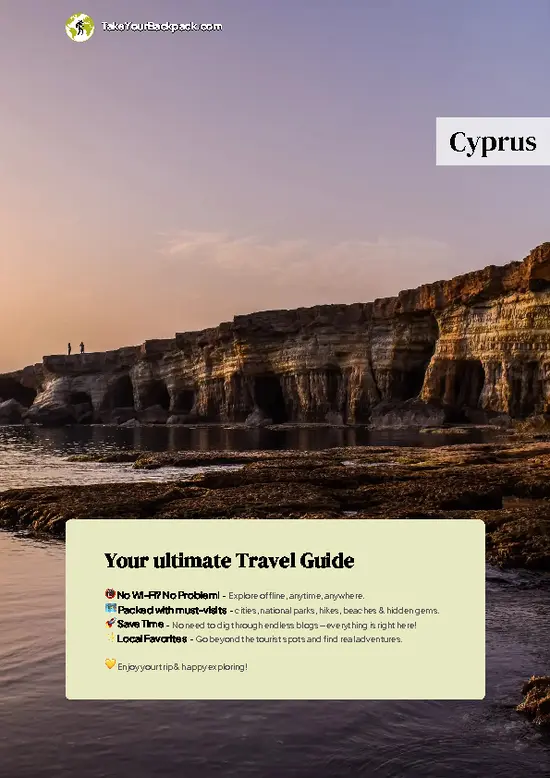
Let’s get the obvious out of the way: Vouni Palace is not the Parthenon, and it’s not pretending to be. What it does have is a location that would make any ancient king smirk with satisfaction. The ruins sprawl across a wind-battered plateau, 250 meters above the Mediterranean, with a view that’s less “Instagram-perfect” and more “I can see why they built a palace here.” You’re not just looking at the sea—you’re looming over it, with the Troodos mountains at your back and the coastline unrolling beneath you. The sense of isolation is real. Even with a handful of other visitors, you’ll feel the raw, strategic power of the site. This is where you come to understand why ancient rulers obsessed over vantage points.
The Maze of Rooms and Courtyards
Forget the glossy reconstructions … read more 👉
The Cliffside Setting
Let’s get the obvious out of the way: Vouni Palace is not the Parthenon, and it’s not pretending to be. What it does have is a location that would make any ancient king smirk with satisfaction. The ruins sprawl across a wind-battered plateau, 250 meters above the Mediterranean, with a view that’s less “Instagram-perfect” and more “I can see why they built a palace here.” You’re not just looking at the sea—you’re looming over it, with the Troodos mountains at your back and the coastline unrolling beneath you. The sense of isolation is real. Even with a handful of other visitors, you’ll feel the raw, strategic power of the site. This is where you come to understand why ancient rulers obsessed over vantage points.
The Maze of Rooms and Courtyards
Forget the glossy reconstructions you see in brochures. Vouni is a jigsaw puzzle of stone foundations, staircases to nowhere, and half-buried columns. But that’s the point. You’re not being spoon-fed a narrative; you’re piecing together the palace’s story yourself. Walk through the remains of over 130 rooms—kitchens, baths, storerooms, and ceremonial halls—laid out in a way that feels both chaotic and deliberate. The palace’s layout is a crash course in ancient Cypriot politics: built by pro-Persian rulers, then torched by their rivals. Every uneven flagstone is a reminder that history isn’t tidy.
The Ancient Bath Complex
If you want a real “how did they pull this off?” moment, head for the bathhouse. The hypocaust system—an underfloor heating network—still makes modern engineers nod in respect. You can trace the channels where hot air once circulated, turning cold stone into a luxury spa. It’s a rare, tactile connection to daily life 2,400 years ago. No velvet ropes, no glass barriers—just you, the stones, and the ghost of ancient steam.
The Unfiltered Silence
Here’s the truth: Vouni Palace doesn’t draw busloads of tourists. There’s no café, no souvenir stand, and no crowd jostling for the perfect selfie. That’s the magic. You’ll hear the wind, the distant clang of goat bells, and your own footsteps echoing off the stones. It’s a rare chance to experience an archaeological site without the circus. The silence is not emptiness—it’s an invitation to imagine, to listen, to actually feel the weight of centuries.
The View of Soli and the Coast
Most guides will tell you to visit the ancient city of Soli down below. What they won’t tell you is that the best view of Soli is from Vouni’s edge. You can see the grid of the ancient city, the sweep of the bay, and—on a clear day—the shimmer of Turkey on the horizon. It’s a reminder that Cyprus has always been a crossroads, and Vouni was built to watch over it all. This isn’t just a photo op; it’s a perspective shift. You see the island as the ancients did: a prize, a fortress, a home.
Spotted a mistake or missing something? Contact us.

Kyrenia Tour

A Day Trip to Medieval FAMAGUSTA (Kyrenia, Nicosia or Famagusta )

From Nicosia and Kyrenia: Famagusta & Kyrenia as Circular Tour

Nicosia and Kyrenia Private Tour From Nicosia & Kyrenia

FAMAGUSTA & NICOSIA Private Tour from Kyrenia

Kyrenia Mountain Villages & Wine Tasting from Nicosia or Kyrenia

Kyrenia and Famagusta Tour (Kyrenia/ Nicosia/ Famagusta Hotels)

Famagusta, Kyrenia and Nicosia As 3 city Tour from North Cyprus

Nicosia and Kyrenia Tour


 Best Backpacking

 Hi, I’m Johan (Netherlands 🇳🇱), the creator of TakeYourBackpack. Over the past 3 decades, I’ve backpacked through 90+ countries across six continents, gaining extensive experience with independent travel, long-term trips, and overland routes.