×

Djibouti🇩🇯 | beachesRas BirLighthouse headland, strait views, empty sand, night skies | things to do and best time to go

Explore Khor AmbadoExplore Ali Sabieh

Backpacking in Ras Bir
👌 Worth visitingbeach ranked #3
By Johan Kruseman 🇳🇱 | Updated October 22, 2026

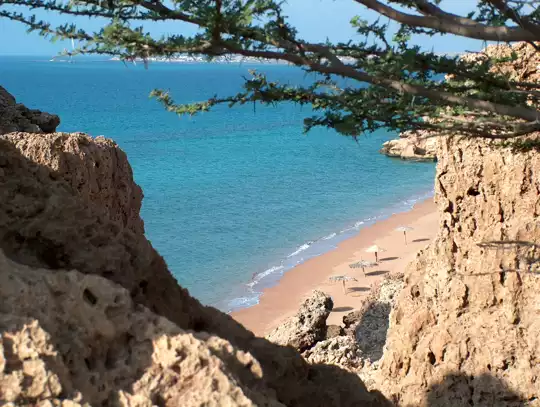
The lighthouse on the headland of Ras Bir stands at the end of the track, and the beach runs out below it in pale sand and dark volcanic rock. The beach is in the north of Djibouti, a short drive from the small port town of Obock, across the Gulf of Tadjoura from the capital. The scenery is the draw: open water at the mouth of the Red Sea, a wide sky and almost no buildings. The sand is clean because few people come to dirty it, and you will often have the shore to yourself. The sea is warm and good for snorkeling over rock and coral edges, though there is no surf worth the name, no rental gear and no shade to speak of. Getting here takes a 4x4 or a hired driver. Food and beds are basic and sit in Obock, not on the beach. Ras Bir beach suits self-sufficient travelers who like silence and empty horizons. It will disappoint anyone who wants cafes, nightlife or easy transport.

Discover everything you want to know in the 📖 Djibouti Travel Guide.


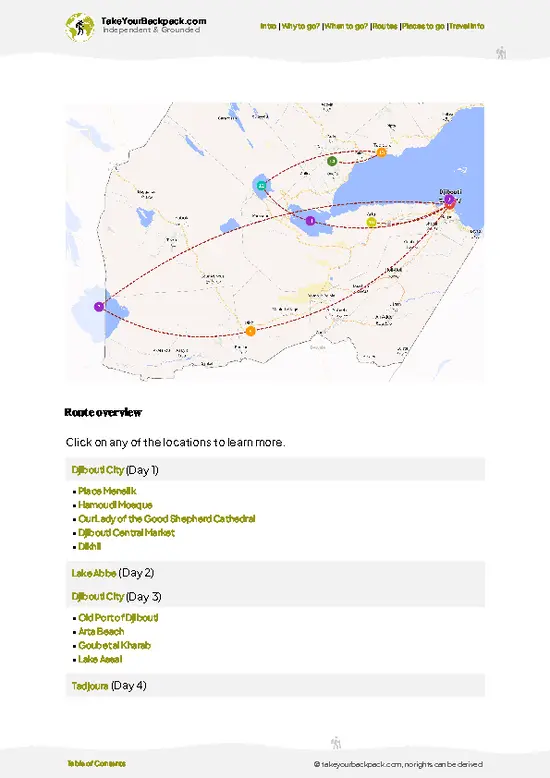
example page 0 from our offline Travel Guide for Djibouti
example page 1 from our offline Travel Guide for Djibouti
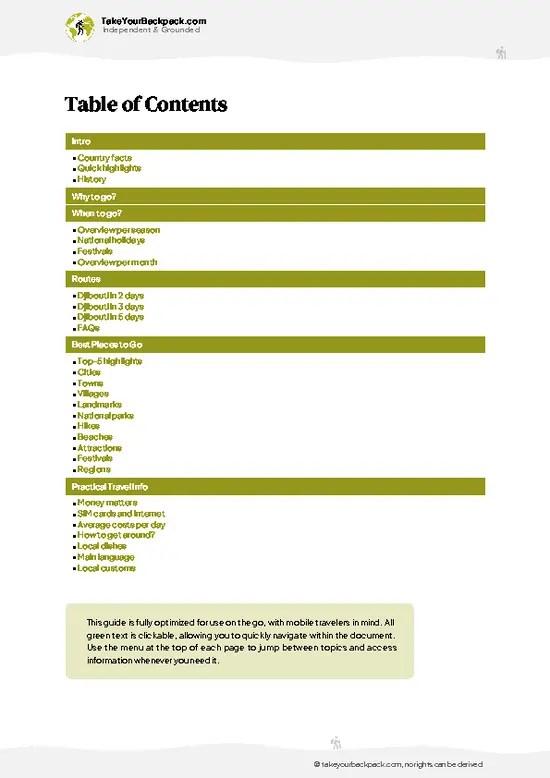
example page 2 from our offline Travel Guide for Djibouti
example page 3 from our offline Travel Guide for Djibouti
example page 4 from our offline Travel Guide for Djibouti
example page 5 from our offline Travel Guide for Djibouti
example page 6 from our offline Travel Guide for Djibouti
example page 7 from our offline Travel Guide for Djibouti
Loading the map 🌍
CLICK TO FILTER
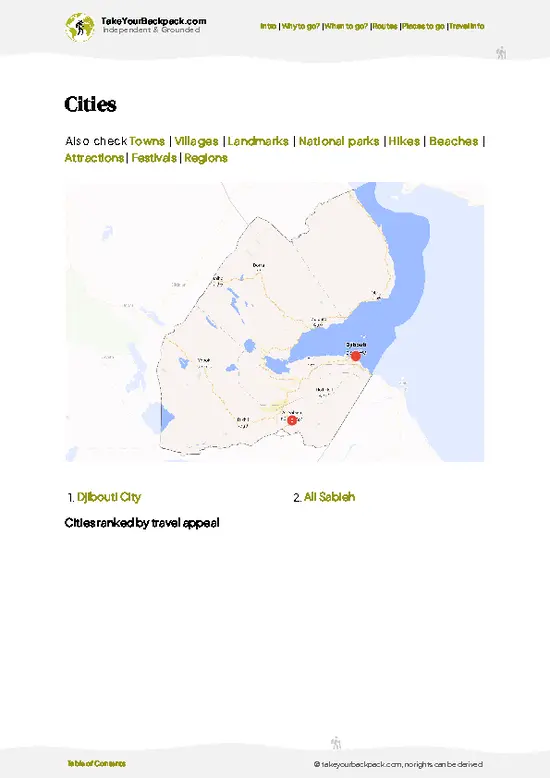
cities
towns
villages
landmarks
national parks
hikes
beaches
attractions
festivals
regions
SHOW COUNTRY’S BESTSHOW ALL

✨ Why go?
Ranked #3 beach in Djibouti
What sets this place apart

Ras Bir beach is where northern Djibouti runs out of road, and that is the main reason to stop. Few places in the country let you stand so close to the Bab-el-Mandeb strait, the narrow gateway between the Red Sea and the Gulf of Aden, and watch freighters slide through on the horizon. On a clear day the Yemeni side of the water is a faint line you can pick out.

The second reason is the lighthouse on the headland. It gives the beach a landmark and gives you a destination for the final stretch of track, which is half the fun after the drive up from Obock. Walking out to it makes a better afternoon than most organized excursions in the country.

The third is what the beach does for a route. Backpackers heading up the coast from the Gulf of Tadjoura ferry crossing use it as a quiet pause, with … read more 👉
Ras Bir beach is where northern Djibouti runs out of road, and that is the main reason to stop. Few places in the country let you stand so close to the Bab-el-Mandeb strait, the narrow gateway between the Red Sea and the Gulf of Aden, and watch freighters slide through on the horizon. On a clear day the Yemeni side of the water is a faint line you can pick out.

The second reason is the lighthouse on the headland. It gives the beach a landmark and gives you a destination for the final stretch of track, which is half the fun after the drive up from Obock. Walking out to it makes a better afternoon than most organized excursions in the country.

The third is what the beach does for a route. Backpackers heading up the coast from the Gulf of Tadjoura ferry crossing use it as a quiet pause, with clear water for snorkeling and a night sky free of city glow. You will not find a social scene here. You will find enough space to sort out your thoughts, camp with a local guide’s blessing and go back to Obock feeling you reached the real edge of the country.

💡 HighlightsEssential experiences to have while visiting Ras Bir

  1. Ras Bir Lighthouse: The lighthouse is the landmark everyone drives out to see. It marks the headland where the Gulf of Tadjoura meets the open strait, and it works as a navigation point for the ships that pass constantly offshore. Walk around the base and look at the coastline from its height; the contrast between black rock and pale sand is clearest here.
  2. The Bab-el-Mandeb viewpoint: From the headland you look across one of the busiest shipping lanes on earth. Container ships and tankers pass in a steady line, and on clear days you can make out the Yemeni side. Bring binoculars, because the traffic is the show.
  3. Snorkeling off the beach: The water is warm and often clear, with rocky patches and small coral formations near the shore. Fish are easy to see in shallow water without a boat. Bring
… read more 👉
  1. Ras Bir Lighthouse: The lighthouse is the landmark everyone drives out to see. It marks the headland where the Gulf of Tadjoura meets the open strait, and it works as a navigation point for the ships that pass constantly offshore. Walk around the base and look at the coastline from its height; the contrast between black rock and pale sand is clearest here.
  2. The Bab-el-Mandeb viewpoint: From the headland you look across one of the busiest shipping lanes on earth. Container ships and tankers pass in a steady line, and on clear days you can make out the Yemeni side. Bring binoculars, because the traffic is the show.
  3. Snorkeling off the beach: The water is warm and often clear, with rocky patches and small coral formations near the shore. Fish are easy to see in shallow water without a boat. Bring your own mask and fins, since nothing is rented here, and take care with currents near the point, which can be strong.
  4. Raptor and seabird watching: The strait is a bottleneck for migrating birds between Africa and Arabia, and the headland gives open sightlines. Birds of prey and seabirds pass in good numbers in the migration seasons, in autumn and spring. A pair of binoculars and some patience on the rocks near the lighthouse is all you need.
  5. Night sky and beach camping: With no town lights nearby, the sky after dark is dense with stars and the Milky Way is clear on moonless nights. This is the one evening activity the beach offers, and it is a good one. Arrange camping with your driver or a local contact in Obock first, and bring everything you need, including water.
Start with the lighthouse and the strait viewpoint together, because the headland is best seen while the light is still clear and before you settle in for snorkeling or the night.
Spotted a mistake or missing something? Contact us.

Things to do near Ras Bir

Ratings based on Tripadvisor reviews. When you book through this link, you support our work at no extra cost to you.

🌤️ When to go?When to go for the best experience

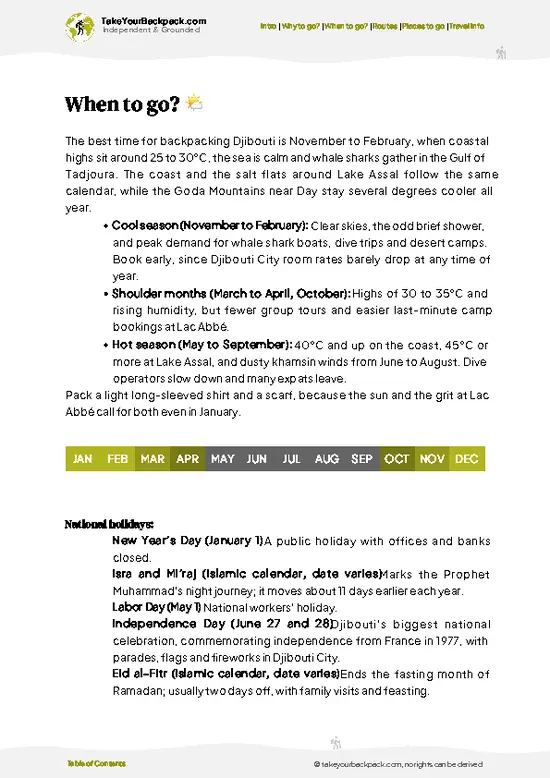
November to March is when Ras Bir beach is comfortable, with daytime highs of 26 to 31°C (79 to 88°F) and sea water around 26 to 28°C (79 to 82°F).
  • Cool Season (November to March): Nights drop to 21 to 24°C (70 to 75°F) and the sea breeze keeps afternoons tolerable. Days run about 11 to 12 hours, so swimming and snorkeling fit in easily. This is the busiest stretch, though that still means a handful of Djibouti-based families and overlanders. Guesthouse and 4x4 rates in Obock run highest now.
  • Shoulder Months (April and October): Highs reach 32 to 36°C (90 to 97°F). The beach is nearly empty and prices soften, but midday shade matters.
  • Hot Season (May to September): Expect 36 to 42°C (97 to 108°F), heavy humidity and hot winds off the Arabian side. Few visitors come, many services slow down, and
… read more 👉
November to March is when Ras Bir beach is comfortable, with daytime highs of 26 to 31°C (79 to 88°F) and sea water around 26 to 28°C (79 to 82°F).
  • Cool Season (November to March): Nights drop to 21 to 24°C (70 to 75°F) and the sea breeze keeps afternoons tolerable. Days run about 11 to 12 hours, so swimming and snorkeling fit in easily. This is the busiest stretch, though that still means a handful of Djibouti-based families and overlanders. Guesthouse and 4x4 rates in Obock run highest now.
  • Shoulder Months (April and October): Highs reach 32 to 36°C (90 to 97°F). The beach is nearly empty and prices soften, but midday shade matters.
  • Hot Season (May to September): Expect 36 to 42°C (97 to 108°F), heavy humidity and hot winds off the Arabian side. Few visitors come, many services slow down, and the water feels like a warm bath. Only experienced desert travelers should consider it.
Book your 4x4 and Obock room a few days ahead in December and January, when rides fill up around Djibouti holidays.


source: climatestotravel.comJANJanuary: excellent for travelingFEBFebruary: excellent for travelingMARMarch: excellent for travelingAPRApril: fair for travelingMAYMay: fair for travelingJUNJune: fair for travelingJULJuly: fair for travelingAUGAugust: fair for travelingSEPSeptember: fair for travelingOCTOctober: fair for travelingNOVNovember: excellent for travelingDECDecember: excellent for traveling
when-to-go

✈️ The backpacker research shortcutDjibouti Travel Guide

An offline-friendly backpacking guide with optimized travel routes, ranked highlights, transport advice, and the best areas to stay.
example page 0 from our offline Travel Guide for Djibouti
example page 1 from our offline Travel Guide for Djibouti
example page 2 from our offline Travel Guide for Djibouti
example page 3 from our offline Travel Guide for Djibouti
example page 4 from our offline Travel Guide for Djibouti
example page 5 from our offline Travel Guide for Djibouti
example page 6 from our offline Travel Guide for Djibouti
example page 7 from our offline Travel Guide for Djibouti
The digital guide (186 pages) contains:
✅ 44 highlights, ranked by travel appeal
✅ Optimized 2, 3 & 5-day travel routes
✅ Cities, national parks, landmarks, beaches
✅ How to get around
✅ Offline-friendly for travel without Wi-Fi
👉 Click to see all 30+ guide features

📅 Plan smarter in minutes, not weeks
✅ Month by month travel advice
✅ Festivals & national holidays
✅ Budget expectations

🗺️ Go to the right places, skip the overrated ones
✅ Honest pros & cons of destinations
✅ Top hikes, parks & viewpoints
✅ Lesser-known places most travelers miss
✅ Clear “worth it vs skip it” guidance

🛏️ Travel smoothly without rookie mistakes
✅ Best areas to stay
✅ Transport systems explained simply
✅ Common scams & safety advice
✅ SIM cards, money & practical tips

🌍 Understand the country, not just visit it
✅ Culture & traditions
✅ 52 Essential phrases & customs
✅ Festivals worth planning around
✅ Traveler-friendly historical context
✅ Insights that make places more meaningful

📱 Built for real travel conditions
✅ Fully downloadable PDF
✅ Works completely offline
✅ Optimized for phone use
✅ Useful in remote areas & buses
✅ Everything in one place
Stop searching, start planning
Get instant access to your full guide. 30‑day money-back guarantee.
+ Add another guide for just

By proceeding you agree to our terms.
Sent to your inbox immediately after payment • 100% Secure Checkout
Best Backpacking Travel Advisor 2025 tourism awardBest Backpacking
Travel Advisor
2025
What others say about Take Your Backpack Guides:
⭐⭐⭐⭐⭐
Fantastic, amazing amount of information!
⭐⭐⭐⭐⭐
My goodness this is amazing, it's what I've been looking for hats off too you!
⭐⭐⭐⭐⭐
I think this is absolutely BRILLIANT
⭐⭐⭐⭐
Very complete and informative. It's still missing places, but I gotta to commend you
⭐⭐⭐⭐⭐
This is truly amazing, thank you, can't wait to explore it with my kids!
⭐⭐⭐⭐⭐
Awesome resource, thank you!
⭐⭐⭐⭐⭐
This is amazing! Can't wait to explore the ones I haven't seen
⭐⭐⭐⭐
I love this! Well done, great idea.
⭐⭐⭐⭐⭐
Thanks for taking the time to make this gem!
⭐⭐⭐⭐⭐
This might be the best website I've ever seen.
⭐⭐⭐⭐⭐
Congratulations, and thank you so much for your work; it's incredibly valuable.
⭐⭐⭐⭐
In all seriousness I think you did a great job pointing out the important spots
⭐⭐⭐⭐⭐
10/10 very good
⭐⭐⭐⭐⭐
As someone who's only just starting to visit regularly this is awesome, thank you.
⭐⭐⭐⭐
Thank you very much! I'm going to visit my dad, it's going to be very useful!
⭐⭐⭐⭐⭐
This is really cool! We'll be travelling for the first time and this definitely come in handy.
⭐⭐⭐⭐⭐
You are now our minister of culture, congratulations 👨‍💼
⭐⭐⭐⭐⭐
Just wanted to tell you that this is a pearl! Going to follow your recommendations.
⭐⭐⭐⭐⭐
This is so cool. I'll definitely be using the resource for my travels soon.
⭐⭐⭐⭐⭐
This is very impressive! Good work.
⭐⭐⭐⭐⭐
This is an amazing and informative site. Very well done!

🛏️ Where to stay?Where staying makes the most sense

Obock town is the practical place to sleep, because Ras Bir beach itself has no accommodation and the town sits roughly 10 to 15 km away along a sandy track. Obock is a small, quiet port with a handful of simple guesthouses, and rooms run about US$20 to 60 a night, with fans or air-conditioning worth paying for in the heat. It is also where you find drivers, fresh fish meals, drinking water and the few shops that stock supplies, so you can sort out a 4x4 for the beach from your doorstep. Social life here is low-key: you will meet other travelers over dinner or while haggling for a ride, not in … read more 👉
Obock town is the practical place to sleep, because Ras Bir beach itself has no accommodation and the town sits roughly 10 to 15 km away along a sandy track. Obock is a small, quiet port with a handful of simple guesthouses, and rooms run about US$20 to 60 a night, with fans or air-conditioning worth paying for in the heat. It is also where you find drivers, fresh fish meals, drinking water and the few shops that stock supplies, so you can sort out a 4x4 for the beach from your doorstep. Social life here is low-key: you will meet other travelers over dinner or while haggling for a ride, not in party hostels. Solo backpackers usually split a vehicle with others staying in town, which cuts the cost per person sharply. If you want sea air and silence, camping near the cape is possible with a local guide who arranges permission, tents and food, though nights are warm and humid. Tadjoura, across the gulf, is the other base, with more places to stay and a livelier waterfront, but it adds a long transfer. Book ahead from Djibouti City if you arrive on a weekend.

🛡️ SafetySafety Tips and Common Scams in Ras Bir

Ras Bir beach is a remote, lightly visited stretch where the main concerns are heat and distance, not crime or rough surf. The water in the Gulf of Tadjoura is warm, often around 28 to 31°C, and generally calm, with no notable rips, though wind can pick up chop in the afternoon. Shallow reef patches and sea urchins sit close to shore in places, so wear water shoes when wading or snorkeling. Sharks exist in the wider gulf but are not a concern for beach swimmers here. Sun exposure is the real issue: shade is scarce, midday temperatures climb well above 35°C (95°F), and a hat, long sleeves and plenty of drinking water matter more than any warning flag. There are no lifeguards or facilities, so swim close to where your driver can see you. Theft is rare because few people come, but leave nothing … read more 👉
Ras Bir beach is a remote, lightly visited stretch where the main concerns are heat and distance, not crime or rough surf. The water in the Gulf of Tadjoura is warm, often around 28 to 31°C, and generally calm, with no notable rips, though wind can pick up chop in the afternoon. Shallow reef patches and sea urchins sit close to shore in places, so wear water shoes when wading or snorkeling. Sharks exist in the wider gulf but are not a concern for beach swimmers here. Sun exposure is the real issue: shade is scarce, midday temperatures climb well above 35°C (95°F), and a hat, long sleeves and plenty of drinking water matter more than any warning flag. There are no lifeguards or facilities, so swim close to where your driver can see you. Theft is rare because few people come, but leave nothing visible in a parked vehicle and keep phone signal and fuel in mind before heading out from Obock.

FAQTraveler FAQ

Reaching Ras Bir beach takes about 4 to 5 hours by road from Djibouti City to Obock (roughly 200 km via Tadjoura), then a further 30 to 45 minutes on sandy tracks. Most travelers hire a 4x4 with a driver, which costs around US$100 to 200 a day and is cheaper split among several people. A ferry from Djibouti City to Tadjoura takes about an hour and saves some driving, but you still need a vehicle for the Obock leg.
Ras Bir beach is best for swimming and snorkeling, thanks to calm, warm water of around 28 to 31°C and shallow reef areas near the shore. Surfing is not an option because the gulf produces almost no swell. Bring your own mask and snorkel, since rental gear is hard to find in Obock, and wear water shoes to avoid urchins on the rocks.
Ras Bir beach has no ticket office and no known entrance fee, so reaching the sand costs nothing beyond transport. Expect to pay for a 4x4 and driver at about US$100 to 200 a day, plus meals and water in Obock. A local guide for a camping trip adds roughly US$30 to 60, depending on what you arrange.
⚠️ Things can change over time, so always validate details locally before you go.

Other Djiboutian beaches near Ras Bir

Explore more nearby:

  • Khor Ambado—Shallow khor, Friday crowds, thatched fish shelters, wading birds| 57 km away
  • Arta Beach—Whale shark boats, shore reef, grilled fish, volcanic coast road| 74 km away

💡 Not sure where to go next?
Create a personalized itinerary for Djibouti including Ras Bir and the places that fit your trip.

Generate my itinerary

👉 Discover all beaches

Or checkout all Djibouti has to offer (think cities, towns, villages, national parks, hikes, beaches, festivals)
Country photo of Djibouti

We 💚 feedbackSumming up the experience

Ras Bir beach works best as the end point of a day out from Obock, paired with that town’s old colonial waterfront and a night there before the long road back toward the Gulf of Tadjoura and the capital. I would hire a driver with a proper 4x4, arrive with all your food and water, and treat the lighthouse as the finish line, not the whole plan.

✍️ Help improve this page!
The information on this page is based on in-depth research, insights shared by experienced travelers, and feedback from the local travel community in Djibouti. While every effort is made to keep the information accurate and current, conditions can change — so if you spot anything incorrect or outdated, please get in touch.


🙋‍♂️ Give feedback

👋 Meet the founderWho’s Behind Take Your Backpack?

Johan, backpacker and founder of TakeYourBackpackHi, I’m Johan (Netherlands 🇳🇱), the creator of TakeYourBackpack. Over the past 3 decades, I’ve backpacked through 90+ countries across six continents, gaining extensive experience with independent travel, long-term trips, and overland routes.

This site is built on a combination of firsthand travel experience and carefully curated insights from other backpackers. Many guides are based on places I’ve personally visited, while others bring together tips, observations, and practical advice shared by trusted travelers I’ve met along the way.

The goal is to provide realistic, experience-driven guidance — not generic itineraries — so you can explore destinations with better context, clearer expectations, and more confidence.