×

Dominica🇩🇲 | attractionsChampagne ReefVolcanic bubble vents, coral slope snorkeling, black-sand rocky entry, Scotts Head views | things to do and best time to go

Explore Grand BayExplore Titou Gorge

Backpacking in Champagne Reef
🏆 Top pickattraction ranked #1
By Johan Kruseman 🇳🇱 | Updated October 22, 2026

Bubbles are the reason you come. Volcanic gas seeps up through the seabed and streams from vents in a warm, fizzing column, so snorkeling here feels like swimming through a glass of sparkling wine. What gets overlooked is the reef itself: a sheltered, shallow drop-off with sea fans, parrotfish and trumpetfish, and a calm that suits nervous swimmers. Champagne Reef sits on the southwest coast of Dominica, just south of Pointe Michel and the capital, Roseau. It lies at the northern end of the Soufrière Scotts Head Marine Reserve, and the sea floor is black sand and boulders, and the water smells faintly of sulfur near the vents. Entry is over rocks and pebbles, which is why locals wear reef shoes rather than bare feet. Bring your own mask, since rentals are limited and sizing is hit or miss. A first day could mean a morning swim at the vents, a lunch of grilled fish from a nearby stall, then a slow drift along the reef edge.

Discover everything you want to know in the 📖 Dominica Travel Guide.


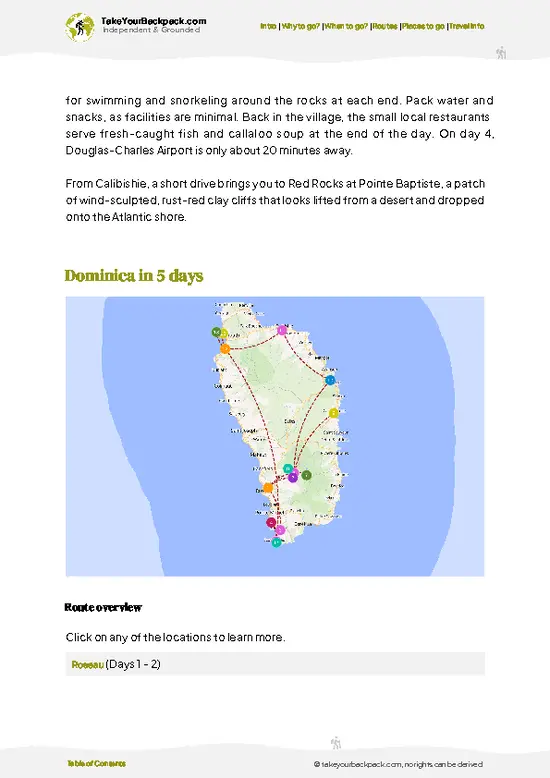
example page 0 from our offline Travel Guide for Dominica
example page 1 from our offline Travel Guide for Dominica
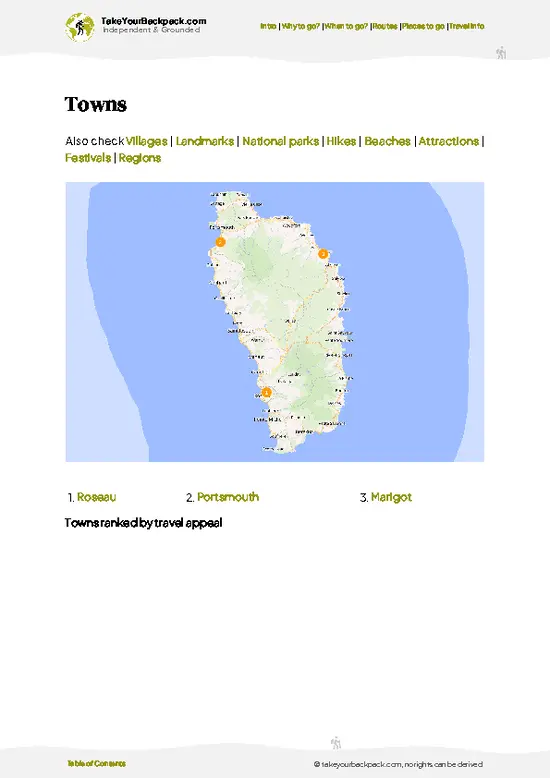
example page 2 from our offline Travel Guide for Dominica
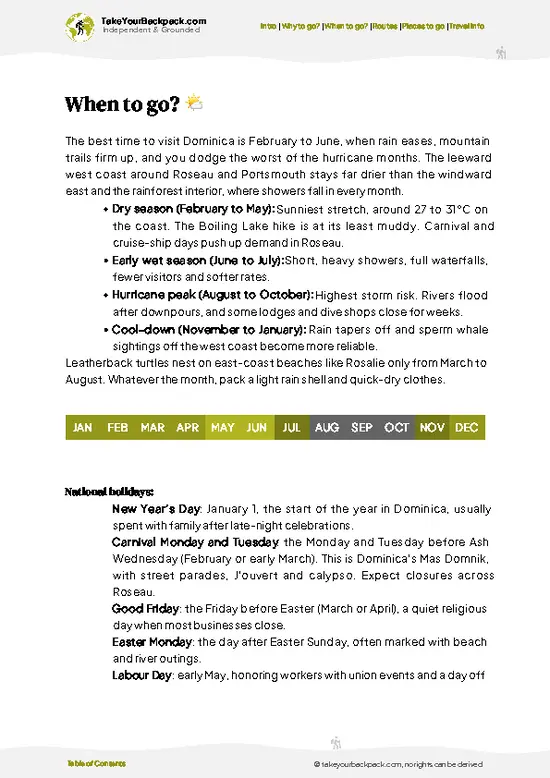
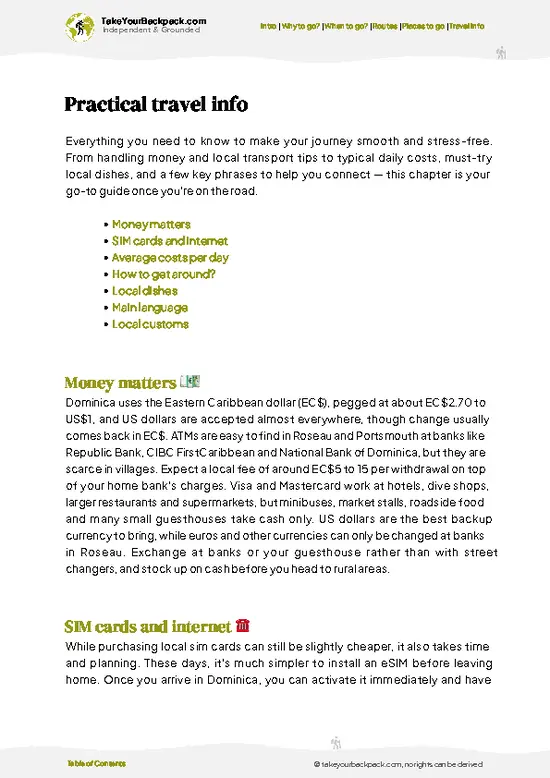
example page 3 from our offline Travel Guide for Dominica
example page 4 from our offline Travel Guide for Dominica
example page 5 from our offline Travel Guide for Dominica
example page 6 from our offline Travel Guide for Dominica
example page 7 from our offline Travel Guide for Dominica
Loading the map 🌍
CLICK TO FILTER
towns
villages
landmarks
national parks
hikes
beaches
attractions
festivals
regions
SHOW COUNTRY’S BESTSHOW ALL

✨ Why go?
Ranked #1 attraction in Dominica
Why Champagne Reef should be on your travel list

Champagne Reef is one of very few places on earth where you can float through volcanic bubbles rising from vents in warm water while fish wander past your mask. The sensation is odd and funny: a tickle against your skin, a faint hiss in your ears, and a column of tiny beads that breaks when you move through it. You will find yourself laughing into your snorkel. That alone sets it apart from the usual reef stop.

It also earns a place on a Dominica route because it shows what the island really is, a young volcanic landmass whose heat still runs under the sea. The site sits at the northern end of the Soufrière Scotts Head Marine Reserve, and the shore drops into deep water quickly, which means divers and snorkelers share one compact site. Entry is easy, the setting is calm, and the effort is … read more 👉
Champagne Reef is one of very few places on earth where you can float through volcanic bubbles rising from vents in warm water while fish wander past your mask. The sensation is odd and funny: a tickle against your skin, a faint hiss in your ears, and a column of tiny beads that breaks when you move through it. You will find yourself laughing into your snorkel. That alone sets it apart from the usual reef stop.

It also earns a place on a Dominica route because it shows what the island really is, a young volcanic landmass whose heat still runs under the sea. The site sits at the northern end of the Soufrière Scotts Head Marine Reserve, and the shore drops into deep water quickly, which means divers and snorkelers share one compact site. Entry is easy, the setting is calm, and the effort is small.

Pair it with the hot springs and the village of Soufriere nearby and you get a day of geology you can feel on your skin. For a first-timer, it is the easiest big moment on the island. For a veteran, the shallow bubble field is a rare novelty worth a few hours.

💡 HighlightsMust-see experiences and standout moments

  1. The geothermal bubble stream. This is what Champagne Reef is named for. Volcanic gas vents from the seabed in the shallows, and streams of fine bubbles rise past your mask and fizz against your skin like soda water. The water is a little warmer right over the vents. Swim slowly and let the bubbles come to you.
  2. Snorkeling the reef wall. Just past the bubbles, the bottom drops into a slope of hard and soft coral. Parrotfish, trumpetfish, sergeant majors and the occasional squid hang in water that is usually clear. Beginners can stay in the calm, shallow section, and confident swimmers can follow the slope along the rocks.
  3. Scuba diving the bubble site. Dive operators in the Soufriere and Scotts Head area run guided dives here, with the bubbles streaming up around you as you descend. It is one of
… read more 👉
  1. The geothermal bubble stream. This is what Champagne Reef is named for. Volcanic gas vents from the seabed in the shallows, and streams of fine bubbles rise past your mask and fizz against your skin like soda water. The water is a little warmer right over the vents. Swim slowly and let the bubbles come to you.
  2. Snorkeling the reef wall. Just past the bubbles, the bottom drops into a slope of hard and soft coral. Parrotfish, trumpetfish, sergeant majors and the occasional squid hang in water that is usually clear. Beginners can stay in the calm, shallow section, and confident swimmers can follow the slope along the rocks.
  3. Scuba diving the bubble site. Dive operators in the Soufriere and Scotts Head area run guided dives here, with the bubbles streaming up around you as you descend. It is one of the most popular dives on the island because the sensation is so odd. Expect shallow, easy conditions suited to newer divers.
  4. The Champagne Reef snorkel shop and entry steps. A small beach shack on the rocky, dark-sand shore rents masks, fins and snorkels, and the entry is down a short set of steps and over rounded stones. Water shoes make the walk in much easier. Wear them and you will not be wincing in the first minute.
  5. The Soufriere Sulphur Springs side trip. The village of Soufriere sits close to the reef, and its churchyard and fishing boats give a feel for daily life in this volcanic corner of the island. Follow the coast road a little and you reach hot springs that explain why the sea here is heated from below.
  6. Scotts Head and Soufriere Bay views. Scotts Head, a narrow, rocky headland at the island’s southern tip, separates the Caribbean from the Atlantic side. A short, steep climb to the top gives a wide view of the bay and the dive sites below. It is a good dry-off after a swim.
  7. Fresh fish and fruit stalls on the shoreline road. Local vendors sell grilled fish, bakes and fruit juice close to the parking area. Eating here after a long snorkel is easy, and you pay in cash with whatever small bills you have. Bring some.
Champagne Reef itself costs the least of these, since the Scotts Head viewpoint and the bubble swim are both free, while the snorkel gear rental and any guided dive are where the money goes.
Spotted a mistake or missing something? Contact us.

Things to do near Champagne Reef

Ratings based on Tripadvisor reviews. When you book through this link, you support our work at no extra cost to you.

🌤️ When to go?When to go for the best experience

  • Dry Season (February to June): Visibility on the reef is at its best, and seas are calm, with air around 24 to 30°C (75 to 86°F) and water near 27°C (81°F). Showers still come, but they are brief. Daylight runs about 11 to 12.5 hours.
  • Peak Winter Months (December to April): Cruise-ship days and cooler, breezier air bring the biggest crowds to the snorkel site and the nearby Soufriere area, and dive operators and guesthouses charge their highest rates.
  • Wet Season (July to November): Expect heavy afternoon downpours, 26 to 32°C (79 to 90°F) with sticky humidity, and occasional murky water after storms. Prices drop and you can often have the reef to yourself.
  • Hurricane Peak (August to October): Storms can cancel boat and snorkel trips for days, so keep your plans flexible.
  • Time of Day: Mornings before
… read more 👉
  • Dry Season (February to June): Visibility on the reef is at its best, and seas are calm, with air around 24 to 30°C (75 to 86°F) and water near 27°C (81°F). Showers still come, but they are brief. Daylight runs about 11 to 12.5 hours.
  • Peak Winter Months (December to April): Cruise-ship days and cooler, breezier air bring the biggest crowds to the snorkel site and the nearby Soufriere area, and dive operators and guesthouses charge their highest rates.
  • Wet Season (July to November): Expect heavy afternoon downpours, 26 to 32°C (79 to 90°F) with sticky humidity, and occasional murky water after storms. Prices drop and you can often have the reef to yourself.
  • Hurricane Peak (August to October): Storms can cancel boat and snorkel trips for days, so keep your plans flexible.
  • Time of Day: Mornings before about 10 am give clearer water and fewer snorkelers than midday.
Book a flexible bed in February or March, then confirm conditions with your dive shop the evening before.


source: climatestotravel.comJANJanuary: excellent for travelingFEBFebruary: excellent for travelingMARMarch: excellent for travelingAPRApril: highly recommended for travelingMAYMay: highly recommended for travelingJUNJune: fair for travelingJULJuly: fair for travelingAUGAugust: fair for travelingSEPSeptember: fair for travelingOCTOctober: fair for travelingNOVNovember: good for travelingDECDecember: excellent for traveling
dominica-attraction-champagne-reef
© Google |

✈️ The backpacker research shortcutDominica Travel Guide

An offline-friendly backpacking guide with optimized travel routes, ranked highlights, transport advice, and the best areas to stay.
example page 0 from our offline Travel Guide for Dominica
example page 1 from our offline Travel Guide for Dominica
example page 2 from our offline Travel Guide for Dominica
example page 3 from our offline Travel Guide for Dominica
example page 4 from our offline Travel Guide for Dominica
example page 5 from our offline Travel Guide for Dominica
example page 6 from our offline Travel Guide for Dominica
example page 7 from our offline Travel Guide for Dominica
The digital guide (132 pages) contains:
✅ 33 highlights, ranked by travel appeal
✅ Optimized 2, 3 & 5-day travel routes
✅ Cities, national parks, landmarks, beaches
✅ How to get around
✅ Offline-friendly for travel without Wi-Fi
👉 Click to see all 30+ guide features

📅 Plan smarter in minutes, not weeks
✅ Month by month travel advice
✅ Festivals & national holidays
✅ Budget expectations

🗺️ Go to the right places, skip the overrated ones
✅ Honest pros & cons of destinations
✅ Top hikes, parks & viewpoints
✅ Lesser-known places most travelers miss
✅ Clear “worth it vs skip it” guidance

🛏️ Travel smoothly without rookie mistakes
✅ Best areas to stay
✅ Transport systems explained simply
✅ Common scams & safety advice
✅ SIM cards, money & practical tips

🌍 Understand the country, not just visit it
✅ Culture & traditions
✅ Local customs
✅ Festivals worth planning around
✅ Traveler-friendly historical context
✅ Insights that make places more meaningful

📱 Built for real travel conditions
✅ Fully downloadable PDF
✅ Works completely offline
✅ Optimized for phone use
✅ Useful in remote areas & buses
✅ Everything in one place
Stop searching, start planning
Get instant access to your full guide. 30‑day money-back guarantee.
+ Add another guide for just

By proceeding you agree to our terms.
Sent to your inbox immediately after payment • 100% Secure Checkout
Best Backpacking Travel Advisor 2025 tourism awardBest Backpacking
Travel Advisor
2025
What others say about Take Your Backpack Guides:
⭐⭐⭐⭐⭐
Fantastic, amazing amount of information!
⭐⭐⭐⭐⭐
My goodness this is amazing, it's what I've been looking for hats off too you!
⭐⭐⭐⭐⭐
I think this is absolutely BRILLIANT
⭐⭐⭐⭐
Very complete and informative. It's still missing places, but I gotta to commend you
⭐⭐⭐⭐⭐
This is truly amazing, thank you, can't wait to explore it with my kids!
⭐⭐⭐⭐⭐
Awesome resource, thank you!
⭐⭐⭐⭐⭐
This is amazing! Can't wait to explore the ones I haven't seen
⭐⭐⭐⭐
I love this! Well done, great idea.
⭐⭐⭐⭐⭐
Thanks for taking the time to make this gem!
⭐⭐⭐⭐⭐
This might be the best website I've ever seen.
⭐⭐⭐⭐⭐
Congratulations, and thank you so much for your work; it's incredibly valuable.
⭐⭐⭐⭐
In all seriousness I think you did a great job pointing out the important spots
⭐⭐⭐⭐⭐
10/10 very good
⭐⭐⭐⭐⭐
As someone who's only just starting to visit regularly this is awesome, thank you.
⭐⭐⭐⭐
Thank you very much! I'm going to visit my dad, it's going to be very useful!
⭐⭐⭐⭐⭐
This is really cool! We'll be travelling for the first time and this definitely come in handy.
⭐⭐⭐⭐⭐
You are now our minister of culture, congratulations 👨‍💼
⭐⭐⭐⭐⭐
Just wanted to tell you that this is a pearl! Going to follow your recommendations.
⭐⭐⭐⭐⭐
This is so cool. I'll definitely be using the resource for my travels soon.
⭐⭐⭐⭐⭐
This is very impressive! Good work.
⭐⭐⭐⭐⭐
This is an amazing and informative site. Very well done!

🛏️ Where to stay?Choosing the right base

Stay in Pointe Michel or Soufriere, the two small villages on the southwest coast within a few minutes of the reef. Pointe Michel is the practical choice, with a handful of guesthouses and dive-linked lodgings along the coastal road, a short walk from the water and from the dive shops that run snorkel and scuba trips. It is quiet in the evening, so you will meet other travelers over shared kitchens and verandas rather than in bars.

Soufriere sits right by the sulfur springs and the reef's bubbling vents, a calmer, more local base with simple rooms and easy access to the bay. It suits those who … read more 👉
Stay in Pointe Michel or Soufriere, the two small villages on the southwest coast within a few minutes of the reef. Pointe Michel is the practical choice, with a handful of guesthouses and dive-linked lodgings along the coastal road, a short walk from the water and from the dive shops that run snorkel and scuba trips. It is quiet in the evening, so you will meet other travelers over shared kitchens and verandas rather than in bars.

Soufriere sits right by the sulfur springs and the reef's bubbling vents, a calmer, more local base with simple rooms and easy access to the bay. It suits those who want sunrise swims and a village feel, though dining options are limited and you will cook or eat at a few small spots.

Scotts Head, a short ride along the road, offers a laid-back fishing-village atmosphere with a good mix of cheap rooms and the peninsula's viewpoints. It is the better pick for a longer stay, with more food choices and a friendlier social scene.

Roseau, the capital, has the widest range of budget beds and the best nightlife, and buses run along the coast to the reef. Choose it if you want city energy and plan a mix of hikes and day trips, accepting a daily commute of roughly 20 to 30 minutes by road.

👛 Costs (as of 22 October 2026)Travel costs and budget guide for Champagne Reef

Champagne Reef costs about US$92 to 210 a day for a backpacker who snorkels independently and sleeps in a guesthouse. The site is a protected area with a small entry fee, and most other spending goes to bed, food and transport.
CategoryBudget RangeLocal Reality
Entrance FeeUS$2 to 5A small site fee is collected at the reef or in the Soufriere area. Combined with other sites, a Dominica site pass is also sold.
Snorkel Gear RentalUS$10 to 15Available from vendors and dive shops on-site. Bringing your own mask and snorkel saves this.
Guided Snorkel or DiveUS$30 to 100Guided snorkels cost less, and a single-tank dive is at the upper end.
Accommodation (High Season)US$35 to 55Private rooms in guesthouses nearby, and cheaper dorm-style options in Roseau. Rates fall in the wet season.
FoodUS$12 to 25Local
… read more 👉
Champagne Reef costs about US$92 to 210 a day for a backpacker who snorkels independently and sleeps in a guesthouse. The site is a protected area with a small entry fee, and most other spending goes to bed, food and transport.
CategoryBudget RangeLocal Reality
Entrance FeeUS$2 to 5A small site fee is collected at the reef or in the Soufriere area. Combined with other sites, a Dominica site pass is also sold.
Snorkel Gear RentalUS$10 to 15Available from vendors and dive shops on-site. Bringing your own mask and snorkel saves this.
Guided Snorkel or DiveUS$30 to 100Guided snorkels cost less, and a single-tank dive is at the upper end.
Accommodation (High Season)US$35 to 55Private rooms in guesthouses nearby, and cheaper dorm-style options in Roseau. Rates fall in the wet season.
FoodUS$12 to 25Local plate lunches with rice, provisions and fish or chicken are the best value. Dinners in restaurants cost more.
Local TransportUS$3 to 10Minibuses from Roseau run along the coast for a few dollars each way. Rides back late afternoon are scarce, so ask the driver about the return.
Total Daily BudgetUS$92 to 210Lower end assumes your own gear, a cheap room and local meals. Prices are quoted in US dollars, and you pay in cash locally.
⚠️ Prices can change and everyone travels differently, so take this as a rough guide. Hope it helps you plan your adventure!

FAQCommon questions from travelers

Half a day is enough for Champagne Reef. Snorkeling takes 1 to 2 hours, and adding a morning dive or a swim at nearby Soufriere and Scotts Head fills a full day. Divers planning two tanks should allow about 4 hours including the boat.
Champagne Reef is worth the small entry fee of roughly US$2 to 5. You swim over warm geothermal bubbles rising from the seabed in water around 27°C (81°F), with reef fish and coral close to shore. Gear rental costs US$10 to 15, so the whole visit stays inexpensive.
Reaching Champagne Reef from Roseau takes about 20 to 30 minutes by road, roughly 10 km (6 miles) south. Minibuses run toward Pointe Michel and Soufriere for a few dollars, then it is a short walk to the site. A taxi costs around US$20 to 30 each way, and drivers often wait for you.
⚠️ Things can change over time, so always validate details locally before you go.

Other Dominican attractions near Champagne Reef

Explore more nearby:


💡 Not sure where to go next?
Create a personalized itinerary for Dominica including Champagne Reef and the places that fit your trip.

Generate my itinerary

👉 Discover all attractions

Or checkout all Dominica has to offer (think cities, towns, villages, national parks, hikes, beaches, festivals)
Country photo of Dominica

We 💚 feedbackKey takeaways before you go

Champagne Reef needs two to three hours of water time, and a half day if you want to snorkel, rinse off and eat nearby without rushing. I would stay the morning, when the water is clearest and cruise groups have not arrived, then move on to the hot springs in the afternoon. Bring reef shoes and your own mask, and skip any plan to stay longer than that.

✍️ Help improve this page!
The information on this page is based on in-depth research, insights shared by experienced travelers, and feedback from the local travel community in Dominica. While every effort is made to keep the information accurate and current, conditions can change — so if you spot anything incorrect or outdated, please get in touch.


🙋‍♂️ Give feedback

👋 Meet the founderWho’s Behind Take Your Backpack?

Johan, backpacker and founder of TakeYourBackpackHi, I’m Johan (Netherlands 🇳🇱), the creator of TakeYourBackpack. Over the past 3 decades, I’ve backpacked through 90+ countries across six continents, gaining extensive experience with independent travel, long-term trips, and overland routes.

This site is built on a combination of firsthand travel experience and carefully curated insights from other backpackers. Many guides are based on places I’ve personally visited, while others bring together tips, observations, and practical advice shared by trusted travelers I’ve met along the way.

The goal is to provide realistic, experience-driven guidance — not generic itineraries — so you can explore destinations with better context, clearer expectations, and more confidence.