×

Dominican Republic🇩🇴 | festivalsMerengue FestivalAccordion típico, Malecón stages, free open-air, late-July run | things to do and best time to go

Explore La Vega CarnivalExplore Puerto Plata Festival

Backpacking in Merengue
🏆 Top pickfestival ranked #3
By Johan Kruseman 🇳🇱 | Updated October 20, 2026

A trombone-sized sax riff cuts through the humid air, a vendor slides you a sweating Presidente, and within four minutes a stranger's grandmother has corrected your footwork. That is the Merengue Festival in Santo Domingo, held along the Malecón, the capital's seafront boulevard, in the Dominican Republic's capital. Expect free open-air stages, tambora and güira percussion, accordion-driven merengue típico, and a crowd of Dominican families, dancers and a modest scatter of foreigners. It runs about ten days, usually late July into August. Entry to the main stages is free, so the money leaks elsewhere: unmetered taxis (agree on the fare before you sit), overpriced beachfront drinks (buy from the colmado instead), and hotels that sell out (book early). Carry small bills and leave your phone zipped away. Unlike Puerto Plata's festival, which leans on beach-town bands, this one is the capital's full-volume main event.

Discover everything you want to know in the 📖 Dominican Republic Travel Guide.


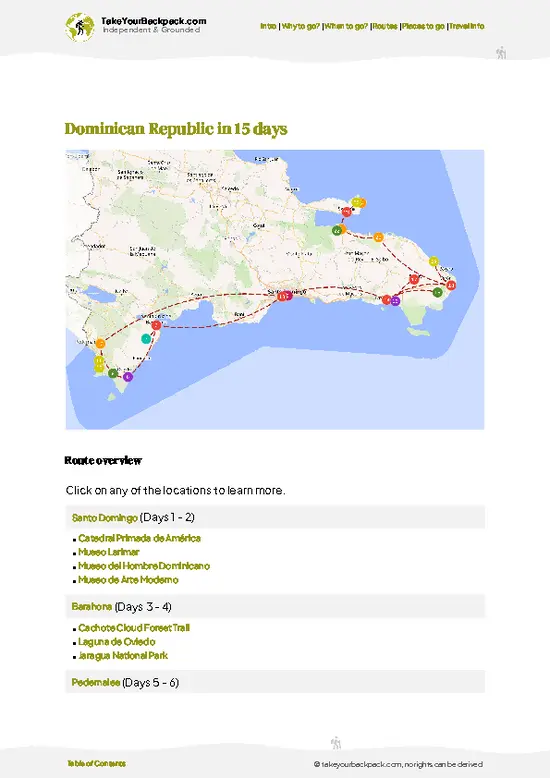
example page 0 from our offline Travel Guide for Dominican Republic
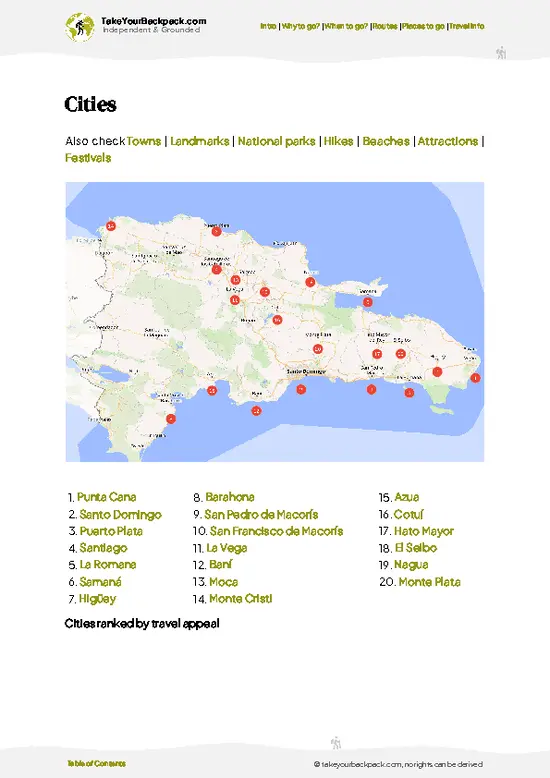
example page 1 from our offline Travel Guide for Dominican Republic
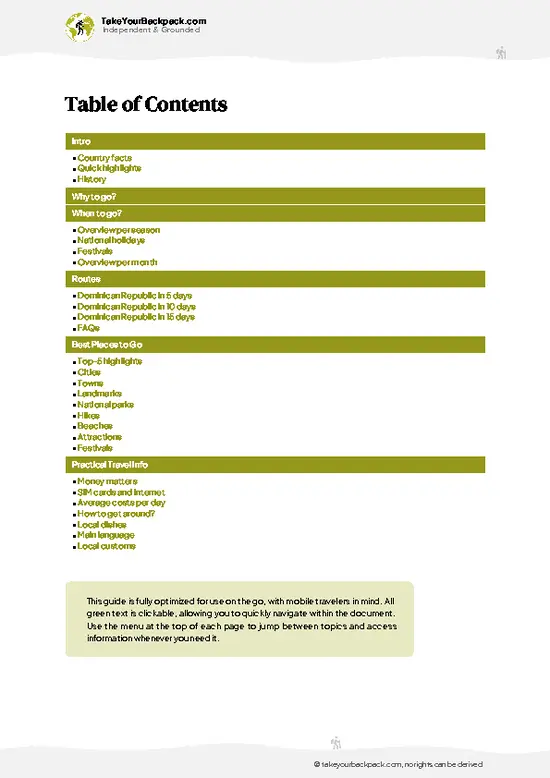
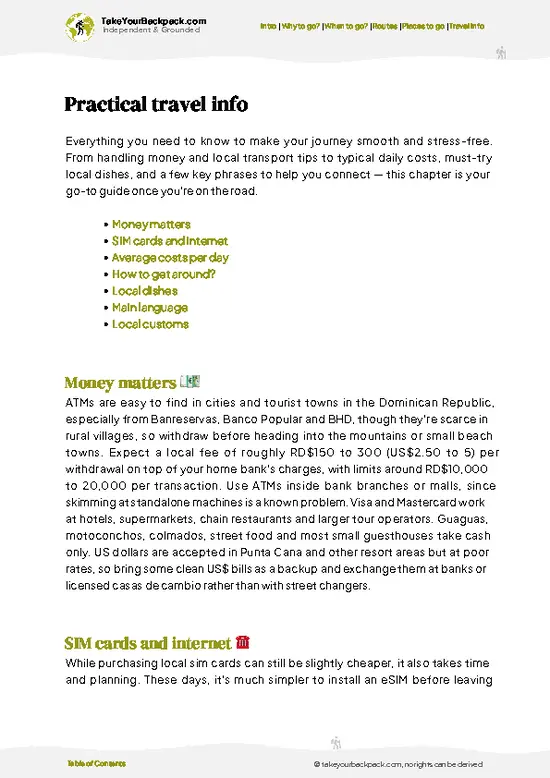
example page 2 from our offline Travel Guide for Dominican Republic
example page 3 from our offline Travel Guide for Dominican Republic
example page 4 from our offline Travel Guide for Dominican Republic
example page 5 from our offline Travel Guide for Dominican Republic
example page 6 from our offline Travel Guide for Dominican Republic
example page 7 from our offline Travel Guide for Dominican Republic
Loading the map 🌍
CLICK TO FILTER
cities
towns
landmarks
national parks
hikes
beaches
attractions
festivals
SHOW COUNTRY’S BESTSHOW ALL

✨ Why go?
Ranked #3 festival in Dominican Republic
What sets this place apart

Merengue Festival gives you a reason to arrive in Santo Domingo when the whole city is outdoors and willing to teach you. The Malecón stages are free, which means you spend your money on food and rum instead of tickets, and the crowd skews local rather than tourist. That matters. You are dancing next to office workers, taxi drivers and abuelas, and nobody treats your two left feet as a performance. Learning the basic step takes about ten minutes and is then the best icebreaker you will carry for the rest of the trip. The second reason is timing. The festival pairs neatly with the Zona Colonial, a short ride from the seafront, so you can spend mornings in the oldest European settlement in the Americas and nights in the street. From the capital, the beaches of the east and the mountains of the … read more 👉
Merengue Festival gives you a reason to arrive in Santo Domingo when the whole city is outdoors and willing to teach you. The Malecón stages are free, which means you spend your money on food and rum instead of tickets, and the crowd skews local rather than tourist. That matters. You are dancing next to office workers, taxi drivers and abuelas, and nobody treats your two left feet as a performance. Learning the basic step takes about ten minutes and is then the best icebreaker you will carry for the rest of the trip. The second reason is timing. The festival pairs neatly with the Zona Colonial, a short ride from the seafront, so you can spend mornings in the oldest European settlement in the Americas and nights in the street. From the capital, the beaches of the east and the mountains of the interior are both easy to reach, which makes the festival a natural opening act for a longer loop around the island.

💡 HighlightsKey sights and experiences for travelers

  1. Malecón main stages: The seafront boulevard is where the biggest crowds gather, with the Caribbean on one side and amplifiers on the other. Established bands play merengue that fills the whole avenue until late.
  2. Merengue típico with accordion: The rural, fast-paced style from the Cibao region is built around the accordion, tambora drum and güira scraper. It is the sound that makes strangers grab your hands.
  3. Street dance lessons: Informal circles form near the stages, and locals will happily correct your hips. The step is a simple two-beat march, forgiving even for beginners.
  4. Food and drink stalls: Fried chicharrón, pica pollo, yaniqueques and cold Presidente beer are sold along the route. Eat where the line is longest and the oil looks fresh.
  5. Zona Colonial after-hours: Calle El Conde and the plazas
… read more 👉
  1. Malecón main stages: The seafront boulevard is where the biggest crowds gather, with the Caribbean on one side and amplifiers on the other. Established bands play merengue that fills the whole avenue until late.
  2. Merengue típico with accordion: The rural, fast-paced style from the Cibao region is built around the accordion, tambora drum and güira scraper. It is the sound that makes strangers grab your hands.
  3. Street dance lessons: Informal circles form near the stages, and locals will happily correct your hips. The step is a simple two-beat march, forgiving even for beginners.
  4. Food and drink stalls: Fried chicharrón, pica pollo, yaniqueques and cold Presidente beer are sold along the route. Eat where the line is longest and the oil looks fresh.
  5. Zona Colonial after-hours: Calle El Conde and the plazas nearby carry the music into smaller bars and courtyards, where live groups play to a more relaxed crowd. It is a good place to recover when the Malecón gets packed.
For Merengue Festival, start with the Malecón main stages on your first evening, because the scale of the crowd sets the tone and helps you find your bearings before you try the quieter spots.
Spotted a mistake or missing something? Contact us.

🌤️ When to go?When is the celebration of Merengue Festival?

The Santo Domingo Merengue Festival runs for about ten days from late July into early August, with dates shifting yearly, and it centers on the Malecón along the Caribbean waterfront in the capital.
  • Best night: Go on the final weekend, when the biggest headliners play and the Malecón fills with dancers until after midnight. Weekday evenings are quieter, with room to move and watch the bands.
  • Weather: Expect 26 to 32°C (79 to 90°F), thick humidity and short afternoon downpours. Bring a light rain shell, a small towel, sunscreen and sandals that can handle wet pavement.
  • Booking: Reserve beds four to six weeks ahead. Rates in the Zona Colonial can climb 20 to 40 percent over the final weekend. Many stages are free, so tickets matter only for select shows.
  • Crowds: Arrive in the city by midday, since
… read more 👉
The Santo Domingo Merengue Festival runs for about ten days from late July into early August, with dates shifting yearly, and it centers on the Malecón along the Caribbean waterfront in the capital.
  • Best night: Go on the final weekend, when the biggest headliners play and the Malecón fills with dancers until after midnight. Weekday evenings are quieter, with room to move and watch the bands.
  • Weather: Expect 26 to 32°C (79 to 90°F), thick humidity and short afternoon downpours. Bring a light rain shell, a small towel, sunscreen and sandals that can handle wet pavement.
  • Booking: Reserve beds four to six weeks ahead. Rates in the Zona Colonial can climb 20 to 40 percent over the final weekend. Many stages are free, so tickets matter only for select shows.
  • Crowds: Arrive in the city by midday, since evening traffic along Avenida George Washington crawls. Leave the next morning, and take a taxi home after the late sets.
Book your bed before you worry about anything else.


source: climatestotravel.comJANJanuary: not recommended for travelingFEBFebruary: not recommended for travelingMARMarch: not recommended for travelingAPRApril: not recommended for travelingMAYMay: not recommended for travelingJUNJune: not recommended for travelingJULJuly: excellent for travelingAUGAugust: not recommended for travelingSEPSeptember: not recommended for travelingOCTOctober: not recommended for travelingNOVNovember: not recommended for travelingDECDecember: not recommended for traveling

✈️ The backpacker research shortcutDominican Republic Travel Guide

An offline-friendly backpacking guide with optimized travel routes, ranked highlights, transport advice, and the best areas to stay.
example page 0 from our offline Travel Guide for Dominican Republic
example page 1 from our offline Travel Guide for Dominican Republic
example page 2 from our offline Travel Guide for Dominican Republic
example page 3 from our offline Travel Guide for Dominican Republic
example page 4 from our offline Travel Guide for Dominican Republic
example page 5 from our offline Travel Guide for Dominican Republic
example page 6 from our offline Travel Guide for Dominican Republic
example page 7 from our offline Travel Guide for Dominican Republic
The digital guide (336 pages) contains:
✅ 112 highlights, ranked by travel appeal
✅ Optimized 5, 10 & 15-day travel routes
✅ Cities, national parks, landmarks, beaches
✅ How to get around
✅ Offline-friendly for travel without Wi-Fi
👉 Click to see all 30+ guide features

📅 Plan smarter in minutes, not weeks
✅ Month by month travel advice
✅ Festivals & national holidays
✅ Budget expectations

🗺️ Go to the right places, skip the overrated ones
✅ Honest pros & cons of destinations
✅ Top hikes, parks & viewpoints
✅ Lesser-known places most travelers miss
✅ Clear “worth it vs skip it” guidance

🛏️ Travel smoothly without rookie mistakes
✅ Best areas to stay
✅ Transport systems explained simply
✅ Common scams & safety advice
✅ SIM cards, money & practical tips

🌍 Understand the country, not just visit it
✅ Culture & traditions
✅ 52 Essential phrases & customs
✅ Festivals worth planning around
✅ Traveler-friendly historical context
✅ Insights that make places more meaningful

📱 Built for real travel conditions
✅ Fully downloadable PDF
✅ Works completely offline
✅ Optimized for phone use
✅ Useful in remote areas & buses
✅ Everything in one place
Stop searching, start planning
Get instant access to your full guide. 30‑day money-back guarantee.
+ Add another guide for just

By proceeding you agree to our terms.
Sent to your inbox immediately after payment • 100% Secure Checkout
Best Backpacking Travel Advisor 2025 tourism awardBest Backpacking
Travel Advisor
2025
What others say about Take Your Backpack Guides:
⭐⭐⭐⭐⭐
Fantastic, amazing amount of information!
⭐⭐⭐⭐⭐
My goodness this is amazing, it's what I've been looking for hats off too you!
⭐⭐⭐⭐⭐
I think this is absolutely BRILLIANT
⭐⭐⭐⭐
Very complete and informative. It's still missing places, but I gotta to commend you
⭐⭐⭐⭐⭐
This is truly amazing, thank you, can't wait to explore it with my kids!
⭐⭐⭐⭐⭐
Awesome resource, thank you!
⭐⭐⭐⭐⭐
This is amazing! Can't wait to explore the ones I haven't seen
⭐⭐⭐⭐
I love this! Well done, great idea.
⭐⭐⭐⭐⭐
Thanks for taking the time to make this gem!
⭐⭐⭐⭐⭐
This might be the best website I've ever seen.
⭐⭐⭐⭐⭐
Congratulations, and thank you so much for your work; it's incredibly valuable.
⭐⭐⭐⭐
In all seriousness I think you did a great job pointing out the important spots
⭐⭐⭐⭐⭐
10/10 very good
⭐⭐⭐⭐⭐
As someone who's only just starting to visit regularly this is awesome, thank you.
⭐⭐⭐⭐
Thank you very much! I'm going to visit my dad, it's going to be very useful!
⭐⭐⭐⭐⭐
This is really cool! We'll be travelling for the first time and this definitely come in handy.
⭐⭐⭐⭐⭐
You are now our minister of culture, congratulations 👨‍💼
⭐⭐⭐⭐⭐
Just wanted to tell you that this is a pearl! Going to follow your recommendations.
⭐⭐⭐⭐⭐
This is so cool. I'll definitely be using the resource for my travels soon.
⭐⭐⭐⭐⭐
This is very impressive! Good work.
⭐⭐⭐⭐⭐
This is an amazing and informative site. Very well done!

🛏️ Where to stay?Where staying makes the most sense

The Zona Colonial is the best base for backpackers, because it puts you a 15 to 25 minute walk from the Malecón stages and keeps you among other travelers. Its cobbled streets around Calle El Conde and Plaza España stay busy and well lit into the night, and the area has the city’s densest cluster of hostels and guesthouses. Solo travelers meet people easily over rooftop drinks and shared breakfasts, and many pair up to walk or share a taxi to the shows.
Gazcue is a calmer option just west of the colonial core. It has tree-lined residential streets, cheaper rooms and family-run guesthouses, and … read more 👉
The Zona Colonial is the best base for backpackers, because it puts you a 15 to 25 minute walk from the Malecón stages and keeps you among other travelers. Its cobbled streets around Calle El Conde and Plaza España stay busy and well lit into the night, and the area has the city’s densest cluster of hostels and guesthouses. Solo travelers meet people easily over rooftop drinks and shared breakfasts, and many pair up to walk or share a taxi to the shows.
Gazcue is a calmer option just west of the colonial core. It has tree-lined residential streets, cheaper rooms and family-run guesthouses, and it sits closer to the festival grounds than most people expect. It is quieter after dark, so you will want to take a taxi back late rather than walk.
The Malecón strip itself has larger hotels with sea views. They cost more and offer little social life, but they put you steps from the music.
Avoid staying far out in Naco or the eastern suburbs unless you have a group to split taxis with. Whatever you pick, choose a place that arranges licensed taxis, and book it early, because festival weekends fill the central neighborhoods quickly.

👛 Costs (as of 20 October 2026)Money, prices, and spending tips

Merengue Festival costs roughly US$42 to 130 per day for a backpacker, with a mid-range figure of US$100 including a dorm bed at high-season prices.
CategoryBudget RangeLocal Reality
Festival ticketsUS$0 to 25Most Malecón stages are free to enter. Tickets are needed only for select headliner nights, and these usually run US$10 to 25.
AccommodationUS$18 to 40Dorm beds in the Zona Colonial cost US$18 to 30 in peak festival days. Private rooms run US$40 to 70.
Local transportUS$4 to 15Metro rides are under US$1. Taxis or app rides between the Zona Colonial and the Malecón cost US$3 to 8, with late-night fares higher.
Food & drinksUS$15 to 35Street snacks cost US$1 to 3, and a full plate of rice, beans and meat costs US$4 to 8. A large Presidente beer is US$2 to 4.
MiscellaneousUS$5 to 15Budget
… read more 👉
Merengue Festival costs roughly US$42 to 130 per day for a backpacker, with a mid-range figure of US$100 including a dorm bed at high-season prices.
CategoryBudget RangeLocal Reality
Festival ticketsUS$0 to 25Most Malecón stages are free to enter. Tickets are needed only for select headliner nights, and these usually run US$10 to 25.
AccommodationUS$18 to 40Dorm beds in the Zona Colonial cost US$18 to 30 in peak festival days. Private rooms run US$40 to 70.
Local transportUS$4 to 15Metro rides are under US$1. Taxis or app rides between the Zona Colonial and the Malecón cost US$3 to 8, with late-night fares higher.
Food & drinksUS$15 to 35Street snacks cost US$1 to 3, and a full plate of rice, beans and meat costs US$4 to 8. A large Presidente beer is US$2 to 4.
MiscellaneousUS$5 to 15Budget for sunscreen, a rain poncho, water and tips for vendors and drivers. Pay in pesos, in small bills.
Total Daily BudgetUS$42 to 130About US$100 per day with a dorm bed at high-season prices and one ticketed night.
⚠️ Prices can change and everyone travels differently, so take this as a rough guide. Hope it helps you plan your adventure!

🍲 FoodLocal Cuisine & Drinks

The Malecón turns into one long open-air kitchen during the festival, and the smell of frying oil and grilled meat follows you from stage to stage. Look for chicharrón and pica pollo (crisp fried chicken with tostones), plus yaniqueques, the fried dough rounds you eat from a paper bag. Carts sell empanadas and pastelitos filled with beef or cheese, usually for US$1 to 3 each.
For a proper plate, head to a stand serving la bandera: rice, beans and stewed meat. Portions are big, and one plate often fills you for the evening. Try a fresh jugo de chinola (passion fruit) or coconut water cracked open at the stall.
Drinks are the heart of the night. Presidente beer comes in large bottles, often passed around the group, and Brugal or Barceló rum is poured into plastic cups with ice and cola. A bottle … read more 👉
The Malecón turns into one long open-air kitchen during the festival, and the smell of frying oil and grilled meat follows you from stage to stage. Look for chicharrón and pica pollo (crisp fried chicken with tostones), plus yaniqueques, the fried dough rounds you eat from a paper bag. Carts sell empanadas and pastelitos filled with beef or cheese, usually for US$1 to 3 each.
For a proper plate, head to a stand serving la bandera: rice, beans and stewed meat. Portions are big, and one plate often fills you for the evening. Try a fresh jugo de chinola (passion fruit) or coconut water cracked open at the stall.
Drinks are the heart of the night. Presidente beer comes in large bottles, often passed around the group, and Brugal or Barceló rum is poured into plastic cups with ice and cola. A bottle shared among friends costs far less than single pours.
Carry cash in small bills, since most vendors do not take cards. Lines move fast but without much order, so step up and say what you want. Ask the price first, and keep your phone zipped away while you eat.

FAQFrequently asked questions about Merengue

Merengue Festival takes place in Santo Domingo over about ten days from late July into early August, with exact dates changing each year. Most events happen along the Malecón waterfront, a short taxi ride from the Zona Colonial. The final weekend draws the largest crowds and the biggest names.
Attending Merengue Festival costs little if you stick to the free stages, and many travelers spend US$0 on entry. Ticketed headliner nights usually run US$10 to 25. Add US$18 to 40 for a dorm bed and US$15 to 35 a day for food and drinks, which puts a typical day at US$75 to 120.
Merengue Festival does not require advance tickets for most of its open-air stages along the Malecón, which are free to enter. Tickets for select headliner concerts are sold ahead and can sell out on the final weekend. Book a bed in the Zona Colonial four to six weeks early, since rooms fill and prices rise 20 to 40 percent.
⚠️ Things can change over time, so always validate details locally before you go.

Other Dominican festivals near Merengue

Explore more nearby:

  • Santo Domingo Jazz Festival—Plaza España sets, jazz over tambora, courtyard clubs, Colonial Zone nights| 3 km away
  • Guloya Festival—Mirrored capes, whip-cracking dancers, tambora and güira, Colonial Zone drums| 65 km away
  • La Vega Carnival—Diablo Cojuelo, vejigazos, Sunday avenue parades, mask workshops| 107 km away

💡 Not sure where to go next?
Create a personalized itinerary for Dominican Republic including Merengue and the places that fit your trip.

Generate my itinerary

👉 Discover all festivals

Or checkout all Dominican Republic has to offer (think cities, towns, villages, national parks, hikes, beaches, festivals)
Country photo of Dominican Republic

We 💚 feedbackWhat to keep in mind

Merengue Festival catches people out when they arrive late, stay on the Malecón all night and then fight for a taxi in the crush. Do it the other way around. Go early, claim a spot near the side of the stage, and leave before the final act ends. I would carry only a little cash, wear shoes you can sweat in, and learn the step on day one.

✍️ Help improve this page!
The information on this page is based on in-depth research, insights shared by experienced travelers, and feedback from the local travel community in Dominican Republic. While every effort is made to keep the information accurate and current, conditions can change — so if you spot anything incorrect or outdated, please get in touch.


🙋‍♂️ Give feedback

👋 Meet the founderWho’s Behind Take Your Backpack?

Johan, backpacker and founder of TakeYourBackpackHi, I’m Johan (Netherlands 🇳🇱), the creator of TakeYourBackpack. Over the past 3 decades, I’ve backpacked through 90+ countries across six continents, gaining extensive experience with independent travel, long-term trips, and overland routes.

This site is built on a combination of firsthand travel experience and carefully curated insights from other backpackers. Many guides are based on places I’ve personally visited, while others bring together tips, observations, and practical advice shared by trusted travelers I’ve met along the way.

The goal is to provide realistic, experience-driven guidance — not generic itineraries — so you can explore destinations with better context, clearer expectations, and more confidence.