×

Dominican Republic🇩🇴 | best festivalsDiscover the 12 Best festivals Across Dominican Republic

Festivals in the Dominican Republic run on two engines: Carnival in February, and a calendar of saints’ days, merengue and bachata nights that never quite stops. The country is small enough that a rattling guagua can move you between very different scenes in an afternoon. Santo Domingo and La Vega offer big, costumed, free street spectacle with easy access and enormous crowds. The north coast and Samaná lean toward music and whale-season events with resort-priced beds nearby. Rural towns run folk traditions with almost no infrastructure and almost no tourists. Independent travelers get the best deal by choosing the mood first and the bus second.

By Johan Kruseman 🇳🇱 | Updated October 20, 2026
Explore the best cities in Dominican Republic

Why go?Key Factors That Shape the Experience

The Dominican Republic suits festivals because celebration is a default setting, not an event. Taíno, Spanish colonial and West African roots merged here over five centuries, and you can still hear all three in the drums, the masks and the call-and-response singing. Add a Catholic calendar packed with patron saints, and nearly every town has a reason to close a street and plug in a speaker by the end of the week. Geography helps. The island is compact, with a decent network of highways and cheap public buses, so reaching a festival rarely takes a heroic effort. Crowds, however, can be heroic, and a town of 80,000 may swell to several times that size on the big days.

Before choosing the country for its festivals, know that most celebrations are made for locals first. Information is often posted … read more 👉
The Dominican Republic suits festivals because celebration is a default setting, not an event. Taíno, Spanish colonial and West African roots merged here over five centuries, and you can still hear all three in the drums, the masks and the call-and-response singing. Add a Catholic calendar packed with patron saints, and nearly every town has a reason to close a street and plug in a speaker by the end of the week. Geography helps. The island is compact, with a decent network of highways and cheap public buses, so reaching a festival rarely takes a heroic effort. Crowds, however, can be heroic, and a town of 80,000 may swell to several times that size on the big days.

Before choosing the country for its festivals, know that most celebrations are made for locals first. Information is often posted late, in Spanish, on social media or by word of mouth, and schedules slide with rain, politics and the mood of the sound system. Accommodation fills fast around Carnival and the main saint’s days, so booking ahead matters. The all-inclusive coast offers polished events but little of the street-level tradition that makes the country distinct. Go in expecting loud, sticky, joyful, and slightly disorganized, and you will be delighted. Expect a printed program and you will be disappointed.
Evaluating the Top Choices
The list of best festivals in Dominican Republic is created based on energy, traditions, crowd experience, activities, and overall excitement. If you feel a festival is missing in this list, please let us know.

When to go?Timing Your Visit for the Best Experience

Best months for festivals: February and March are the best months, because Carnival fills the streets nearly every Sunday in February, and the dry season keeps temperatures around 28 to 31°C with limited rain. Holy Week in March or April is a second peak, and parts of July to August bring a run of music and saints’-day events.
Weather and shoulder seasons: Most of the country is dry from December to April, with humidity manageable and nights around 20 to 22°C. The wet season runs roughly May to November, with afternoon downpours common and the Atlantic hurricane season peaking from August to October. Storms are the main reason an outdoor event gets postponed, and a sudden shower will turn an unpaved procession route into a brown soup. Shoulder months like May, June and November are quieter … read more 👉
Best months for festivals: February and March are the best months, because Carnival fills the streets nearly every Sunday in February, and the dry season keeps temperatures around 28 to 31°C with limited rain. Holy Week in March or April is a second peak, and parts of July to August bring a run of music and saints’-day events.
Weather and shoulder seasons: Most of the country is dry from December to April, with humidity manageable and nights around 20 to 22°C. The wet season runs roughly May to November, with afternoon downpours common and the Atlantic hurricane season peaking from August to October. Storms are the main reason an outdoor event gets postponed, and a sudden shower will turn an unpaved procession route into a brown soup. Shoulder months like May, June and November are quieter and cheaper, with highs of 31 to 33°C and plenty of heat.
Crowds and prices: Around Carnival, Christmas and Holy Week, expect hotel and guesthouse prices to rise by 20 to 50 percent, especially in Santo Domingo, Santiago and the north coast, where beds sell out weeks ahead. Outside those windows, rooms drop to bargain levels. The northeast, including Samaná, has its own season from January to March, and humpback whales push prices up. Southwest areas near Barahona and Pedernales are drier all year, which helps if rain would ruin your plans.

festival hoppingSuggested Travel Strategies

How long you need: A trip combining several festivals in the Dominican Republic needs 10 to 14 days, and 7 is workable if you stay out of the east.
Grouping regions and direction: The country clusters into three practical loops. Santo Domingo and the south coast sit together, the Cibao valley (Santiago, La Vega, Moca) forms the central-north group, and the north coast with Puerto Plata and Samaná forms a third. Start in Santo Domingo, head north through the Cibao, finish on the coast, and fly out of Puerto Plata or Samaná, or loop back to the capital if you have a return flight booked. Budget 2 to 3 days per major stop, enough to arrive, see the event properly and recover. Santo Domingo to Santiago takes 2.5 to 3 hours by express bus (Metro or Caribe Tours), Santiago to Puerto Plata about 1. … read more 👉
How long you need: A trip combining several festivals in the Dominican Republic needs 10 to 14 days, and 7 is workable if you stay out of the east.
Grouping regions and direction: The country clusters into three practical loops. Santo Domingo and the south coast sit together, the Cibao valley (Santiago, La Vega, Moca) forms the central-north group, and the north coast with Puerto Plata and Samaná forms a third. Start in Santo Domingo, head north through the Cibao, finish on the coast, and fly out of Puerto Plata or Samaná, or loop back to the capital if you have a return flight booked. Budget 2 to 3 days per major stop, enough to arrive, see the event properly and recover. Santo Domingo to Santiago takes 2.5 to 3 hours by express bus (Metro or Caribe Tours), Santiago to Puerto Plata about 1.5 hours, and Puerto Plata to Samaná around 3 to 4 hours with a change in Nagua or Sánchez.
Planning mistakes: The classic error is stacking two big celebrations on consecutive days in cities three hours apart, then discovering that buses stop running late and every seat is sold out. Leave a buffer day between big events. A second mistake is arriving the same morning, since street closures can double travel times. Arrive the day before instead. Finally, do not plan around fixed hours, because starts often slip by two or three hours. Keep evenings open and let the schedule breathe.

The ListMust-Visit festivals in Dominican Republic

1 Dominican Carnival

Horned papier-mâché masks, February Sundays, street comparsas, Malecón finale

Follow merengue trucks through February street parades, where handmade devil masks, pig-faced Lechones and bull costumes show how each region plays Carnival differently.

2 La Vega Carnival

Diablo Cojuelo, vejigazos, Sunday avenue parades, mask workshops

Claim a shaded spot along the main avenue for marching comparsas, then buy a handmade papier-mâché mask from local artisans to take home.

3 Merengue Festival

Accordion típico, Malecón stages, free open-air, late-July run

Stand before seafront stages where established bands play accordion-driven merengue, pick up the two-beat step from locals, and finish in Colonial Zone bars.

4 Santo Domingo Jazz Festival

Plaza España sets, jazz over tambora, courtyard clubs, Colonial Zone nights

Settle on a stone plaza for open-air sets that layer trumpet and saxophone over güira rhythms, then move to small courtyard clubs.

5 Dominican Republic Independence Day

February 27, Altar de la Patria, flag-waving crowds, Calle El Conde

Watch wreath-laying and honor guards at Parque Independencia, then join families in the Colonial Zone lanes as carnival groups spill onto the Malecón.

6 Festival del Mar

Sand-level stage, Boca Chica shallows, bachata couples, shoreline DJs

Dance barefoot beside a beachfront stage, wade into calm bay water between acts, and stay for the DJ sessions along the sand.

7 Puerto Plata Festival

Waterfront stages, Fortaleza San Felipe, Victorian square, Isabel de Torres

Stroll the Malecón at dusk for live merengue and bachata, with a cable car ride up Isabel de Torres for morning views.

8 FestiCafé Polo

Barahona coffee, Polo Magnético, Bahoruco highlands, farm visits

Taste Barahona beans poured by the growers, tour drying patios in the cool hills, and test the road where cars appear to roll uphill.

9 Guloya Festival

Mirrored capes, whip-cracking dancers, tambora and güira, Colonial Zone drums

Catch masked troupes cracking whips through cobbled streets, then follow the percussion between Calle El Conde, Plaza de España and the Malecón.

10 Festival de la Restauración

August 16, merengue típico, Capotillo hill, Cordillera ridges

Attend flag-raising ceremonies tied to the 1863 Restoration War, then dance to accordion, güira and tambora in the plaza after dark.

11 Festival de la Virgen de las Mercedes

Santo Cerro pilgrimage, September 24, Columbus cross, Vega Real view

Join pilgrims climbing to the hilltop sanctuary for Mass and procession, then look out over the green valley from the lookout.

12 San Juan Bautista Festival

June 24 saint, palo drums, river bathing, San Juan de la Maguana

Trail the saint’s procession through town, watch palo drum circles with respect, and join locals at the river after dark.

Loading the map 🌍

Expert viewInsights from Locals and Experts

How many to see: Two to four festivals is the right number for a typical trip. One alone can feel like a gamble if rain or a delayed start gets in the way, and more than four turns the trip into a chain of bus stations and hangovers. Each event needs a recovery day, and the heat takes more out of you than you expect.
Which kind to prioritize: First-timers and anyone short on time should prioritize one large Carnival. It offers the most color, the clearest schedule and the easiest access, and it is mostly free to watch. Music lovers should spend their time on a merengue or bachata night in a town or city, where a ticket gets you a proper live band. Culture-minded travelers who want something less polished should choose a rural saints’-day or folk gathering, where you will stand out as a foreigner … read more 👉
How many to see: Two to four festivals is the right number for a typical trip. One alone can feel like a gamble if rain or a delayed start gets in the way, and more than four turns the trip into a chain of bus stations and hangovers. Each event needs a recovery day, and the heat takes more out of you than you expect.
Which kind to prioritize: First-timers and anyone short on time should prioritize one large Carnival. It offers the most color, the clearest schedule and the easiest access, and it is mostly free to watch. Music lovers should spend their time on a merengue or bachata night in a town or city, where a ticket gets you a proper live band. Culture-minded travelers who want something less polished should choose a rural saints’-day or folk gathering, where you will stand out as a foreigner and get invited to join in. I would skip the staged resort shows, because they cost three to five times more and show you a tidy version of something far better done in the street.
What it costs: Budget US$40 to 65 a day on a backpacker setup: a dorm or basic guesthouse for US$15 to 30 (double or triple that during Carnival week), street food and comedores at US$4 to 8 a meal, and local buses at US$2 to 8 a leg. Most street parades are free. Paid concerts and fenced events typically run US$5 to 25, and a local guide for a rural celebration is US$20 to 40 for the day. A good rule is to allow US$60 to 100 per festival visit, including a bed, transport and a few drinks, and to keep a cushion for the expensive peak week.
Safety and etiquette: Crowds attract pickpockets, so carry one phone, a little cash and a photocopy of your passport, and leave the rest at the guesthouse. Use registered taxis or an app after dark rather than walking back alone. Carnival characters such as the diablos cojuelos swing inflated bladders and whips at spectators, so expect a gentle smack, and keep your camera strap tight. Ask before photographing masked performers or religious processions, and dress modestly at church-linked events. Tap water is not safe, so drink bottled water and avoid ice in tourist-heavy stalls. Keep alcohol modest, since the heat and rum combine faster than most visitors expect.

✈️ The backpacker research shortcutDominican Republic Travel Guide

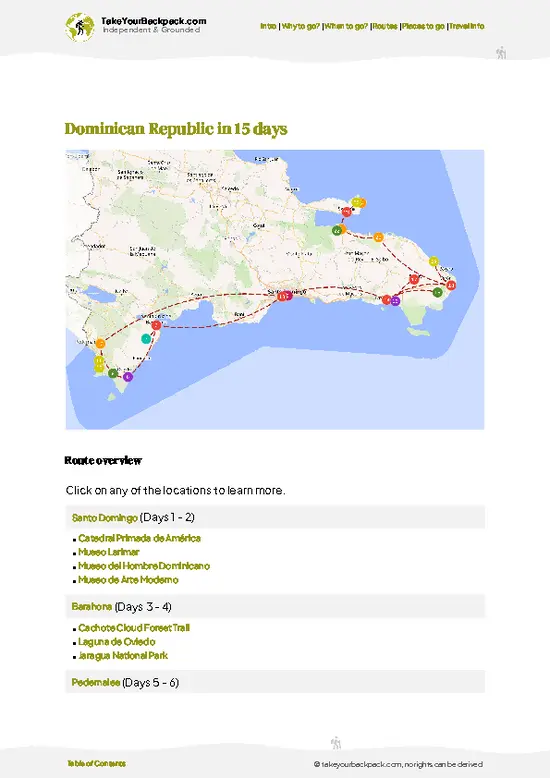
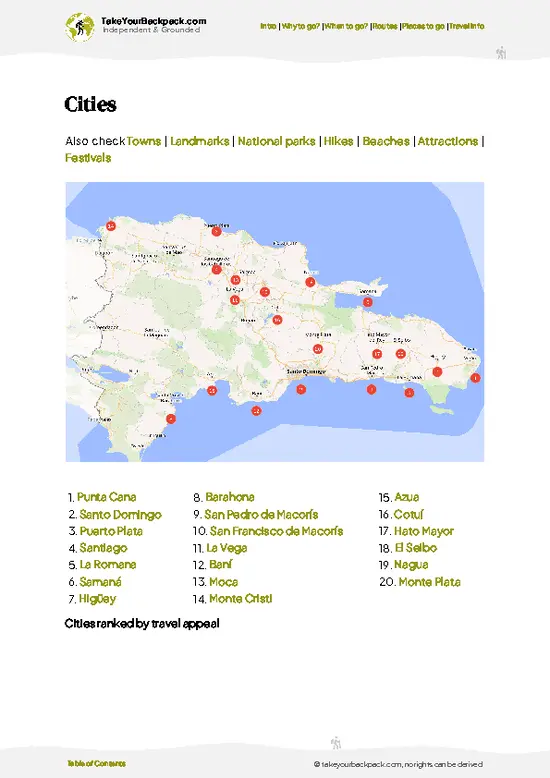
An offline-friendly backpacking guide with optimized travel routes, ranked highlights, transport advice, and the best areas to stay.
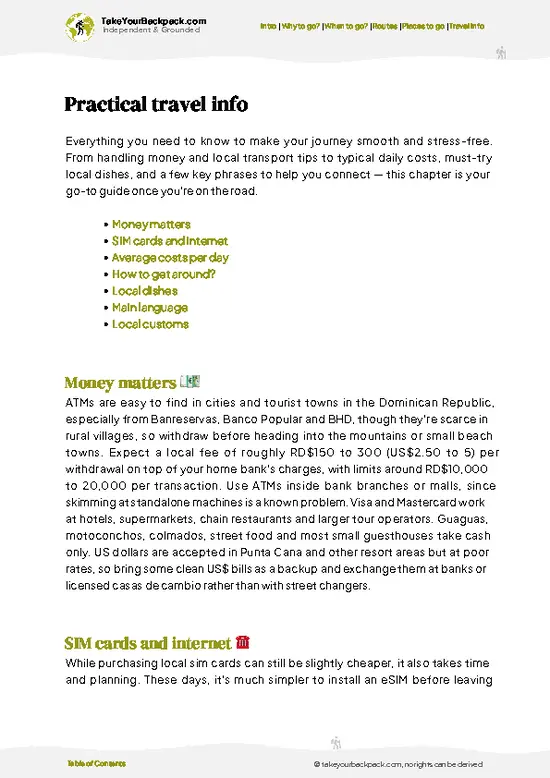
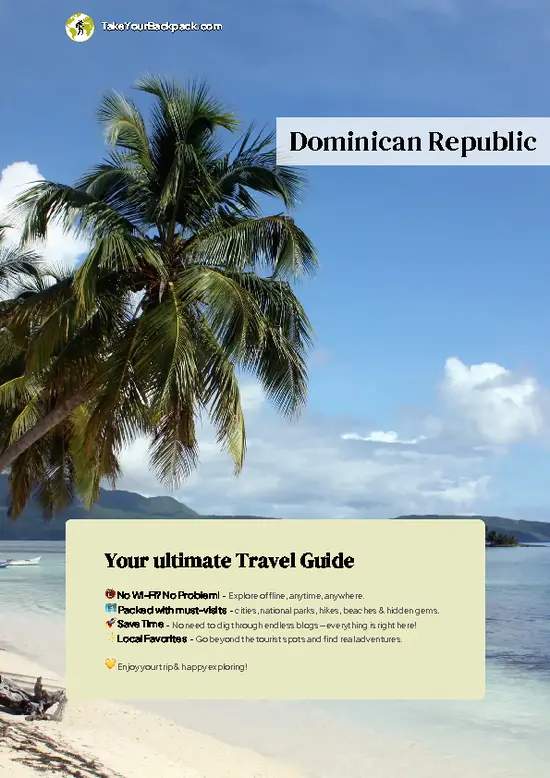
example page 0 from our offline Travel Guide for Dominican Republic
example page 1 from our offline Travel Guide for Dominican Republic
example page 2 from our offline Travel Guide for Dominican Republic
example page 3 from our offline Travel Guide for Dominican Republic
example page 4 from our offline Travel Guide for Dominican Republic
example page 5 from our offline Travel Guide for Dominican Republic
example page 6 from our offline Travel Guide for Dominican Republic
example page 7 from our offline Travel Guide for Dominican Republic
The digital guide (336 pages) contains:
✅ 112 highlights, ranked by travel appeal
✅ Optimized 5, 10 & 15-day travel routes
✅ Cities, national parks, landmarks, beaches
✅ How to get around
✅ Offline-friendly for travel without Wi-Fi
👉 Click to see all 30+ guide features

📅 Plan smarter in minutes, not weeks
✅ Month by month travel advice
✅ Festivals & national holidays
✅ Budget expectations

🗺️ Go to the right places, skip the overrated ones
✅ Honest pros & cons of destinations
✅ Top hikes, parks & viewpoints
✅ Lesser-known places most travelers miss
✅ Clear “worth it vs skip it” guidance

🛏️ Travel smoothly without rookie mistakes
✅ Best areas to stay
✅ Transport systems explained simply
✅ Common scams & safety advice
✅ SIM cards, money & practical tips

🌍 Understand the country, not just visit it
✅ Culture & traditions
✅ 52 Essential phrases & customs
✅ Festivals worth planning around
✅ Traveler-friendly historical context
✅ Insights that make places more meaningful

📱 Built for real travel conditions
✅ Fully downloadable PDF
✅ Works completely offline
✅ Optimized for phone use
✅ Useful in remote areas & buses
✅ Everything in one place
Stop searching, start planning
Get instant access to your full guide. 30‑day money-back guarantee.
+ Add another guide for just

By proceeding you agree to our terms.
Sent to your inbox immediately after payment • 100% Secure Checkout
Best Backpacking Travel Advisor 2025 tourism awardBest Backpacking
Travel Advisor
2025
What others say about Take Your Backpack Guides:
⭐⭐⭐⭐⭐
Fantastic, amazing amount of information!
⭐⭐⭐⭐⭐
My goodness this is amazing, it's what I've been looking for hats off too you!
⭐⭐⭐⭐⭐
I think this is absolutely BRILLIANT
⭐⭐⭐⭐
Very complete and informative. It's still missing places, but I gotta to commend you
⭐⭐⭐⭐⭐
This is truly amazing, thank you, can't wait to explore it with my kids!
⭐⭐⭐⭐⭐
Awesome resource, thank you!
⭐⭐⭐⭐⭐
This is amazing! Can't wait to explore the ones I haven't seen
⭐⭐⭐⭐
I love this! Well done, great idea.
⭐⭐⭐⭐⭐
Thanks for taking the time to make this gem!
⭐⭐⭐⭐⭐
This might be the best website I've ever seen.
⭐⭐⭐⭐⭐
Congratulations, and thank you so much for your work; it's incredibly valuable.
⭐⭐⭐⭐
In all seriousness I think you did a great job pointing out the important spots
⭐⭐⭐⭐⭐
10/10 very good
⭐⭐⭐⭐⭐
As someone who's only just starting to visit regularly this is awesome, thank you.
⭐⭐⭐⭐
Thank you very much! I'm going to visit my dad, it's going to be very useful!
⭐⭐⭐⭐⭐
This is really cool! We'll be travelling for the first time and this definitely come in handy.
⭐⭐⭐⭐⭐
You are now our minister of culture, congratulations 👨‍💼
⭐⭐⭐⭐⭐
Just wanted to tell you that this is a pearl! Going to follow your recommendations.
⭐⭐⭐⭐⭐
This is so cool. I'll definitely be using the resource for my travels soon.
⭐⭐⭐⭐⭐
This is very impressive! Good work.
⭐⭐⭐⭐⭐
This is an amazing and informative site. Very well done!

🛏️ Where to stay?Where to Base Yourself

Hostels and budget guesthouses exist across the Dominican Republic, with dorm beds typically running RD$700 to 1,500 (US$12 to 25) and simple private rooms from about RD$1,800 (US$30). The densest cluster is in Santo Domingo’s Zona Colonial, where you can walk to the main historic sights and weekend bars but should expect street noise and take care on quieter side streets after dark. Elsewhere, Cabarete has surfer and kiter hostels in a lively beach-bar strip, Las Terrenas is calmer with good guesthouse value, Jarabacoa suits quiet mountain stays, and Bávaro’s Los Corales area offers the few budget beds near Punta Cana’s resort beaches.

If you enjoy meeting fellow travelers, consider choosing … read more 👉
Hostels and budget guesthouses exist across the Dominican Republic, with dorm beds typically running RD$700 to 1,500 (US$12 to 25) and simple private rooms from about RD$1,800 (US$30). The densest cluster is in Santo Domingo’s Zona Colonial, where you can walk to the main historic sights and weekend bars but should expect street noise and take care on quieter side streets after dark. Elsewhere, Cabarete has surfer and kiter hostels in a lively beach-bar strip, Las Terrenas is calmer with good guesthouse value, Jarabacoa suits quiet mountain stays, and Bávaro’s Los Corales area offers the few budget beds near Punta Cana’s resort beaches.

If you enjoy meeting fellow travelers, consider choosing hostels with high ratings for atmosphere. On the other hand, if you prefer having your own space, a hotel might be a better option.

Dominican RepublicExpand Your Journey

👋 Meet the founderWho’s Behind Take Your Backpack?

Johan, backpacker and founder of TakeYourBackpackHi, I’m Johan (Netherlands 🇳🇱), the creator of TakeYourBackpack. Over the past 3 decades, I’ve backpacked through 90+ countries across six continents, gaining extensive experience with independent travel, long-term trips, and overland routes.

This site is built on a combination of firsthand travel experience and carefully curated insights from other backpackers. Many guides are based on places I’ve personally visited, while others bring together tips, observations, and practical advice shared by trusted travelers I’ve met along the way.

The goal is to provide realistic, experience-driven guidance — not generic itineraries — so you can explore destinations with better context, clearer expectations, and more confidence.