

×

Ecuador🇪🇨 | regionsAndean Highlandsvolcanic peaks, patchwork valleys, indigenous markets | things to do and best time to go

Explore Pasochoa Wildlife RefugeExplore El Cajas

Backpacking in Andean Highlands
🏆 Top pickregion ranked #1
By Johan Kruseman 🇳🇱 | Updated May 30, 2026

Everyone thinks the Andean Highlands are just cold, gray mountains you rush through on the way to the jungle or the coast; that’s wrong. This is Ecuador’s spine, running roughly north–south through the middle of the country, from around Otavalo and Ibarra down past Quito, Latacunga, Ambato, Riobamba, all the way toward Cuenca. For backpackers, it’s the trade-off capital of Ecuador: cheap buses, dense cluster of towns, and huge payoff in scenery and culture, but you’ll sacrifice a bit of warmth and oxygen. You get volcano alley, Quilotoa’s crater lake, Cotopaxi and Chimborazo, indigenous markets, and small towns where you still feel like a guest, not a walking ATM. Compared to the coast, it’s less party, more trekking boots and wool hats; compared to the Amazon, it’s easier logistics but less wild. Some hubs (Quito, Baños) are tourist-heavy, but hop one bus further and it gets real, fast.

Discover everything you want to know in the 📖 Ecuador Travel Guide.


Get your Ecuador guide
94 ranked highlights, routes & tips, works offline (362 pages)
Loading the map 🌍
CLICK TO FILTER
cities
towns
landmarks
national parks
hikes
beaches
attractions
festivals
regions
SHOW COUNTRY’S BESTSHOW ALL

✨ Why go?
Ranked #1 region in Ecuador
What sets this place apart

In the Andean Highlands of Ecuador, backpackers find a playground that balances time, money, and comfort like no other. You can dive into a variety of landscapes without the hassle of constant relocation. One day, you’re trekking through lush valleys; the next, you’re gazing at snow-capped peaks. This region is a nature lover’s dream and a cultural feast rolled into one.

Transport is surprisingly flexible. Buses are frequent and affordable, making it easy to hop between towns like Baños and Otavalo. You can spend a few days in one spot, soaking in the local vibe, then move on when you’re ready. This slow travel approach lets you connect more deeply with the people and places you encounter.

Mixing nature and culture is the real magic here. Explore indigenous markets, sample local cuisine, … read more 👉
In the Andean Highlands of Ecuador, backpackers find a playground that balances time, money, and comfort like no other. You can dive into a variety of landscapes without the hassle of constant relocation. One day, you’re trekking through lush valleys; the next, you’re gazing at snow-capped peaks. This region is a nature lover’s dream and a cultural feast rolled into one.

Transport is surprisingly flexible. Buses are frequent and affordable, making it easy to hop between towns like Baños and Otavalo. You can spend a few days in one spot, soaking in the local vibe, then move on when you’re ready. This slow travel approach lets you connect more deeply with the people and places you encounter.

Mixing nature and culture is the real magic here. Explore indigenous markets, sample local cuisine, and hike to breathtaking viewpoints, all while keeping your budget in check. The high-value experiences you’ll collect in the Andean Highlands will have you feeling like a savvy local, not just another tourist passing through.
Want to include Andean Highlands in your Ecuador route?
Create a personalized Ecuador itinerary that includes Andean Highlands and the places that fit your trip — based on your travel style, budget, and available time. Get your route in seconds.

Generate my trip

💡 HighlightsDon't-miss highlights and experiences

  1. Quilotoa Crater Lake — A bright turquoise crater lake you can walk the rim of, descend to by foot or mule, and camp nearby in tiny community-run hostels. The scenery and the low-key Quilotoa Loop villages make this a highland landscape you won’t forget — volcanic, walkable, and deeply local.
  2. Cotopaxi National Park (Laguna Limpiopungo & the refuge) — Classic Andean volcano country: hike across páramo, watch wild horses, and stand under the perfect cone of Cotopaxi. The short trek to Laguna Limpiopungo gives staggeringly clear volcano reflections, and local guides/ranch stays add authentic highland flavor.
  3. Chimborazo Faunal Reserve (Refugio José Rivas viewpoint) — Chimborazo’s snout is the geodetic high point of the Earth (farthest point from Earth’s center), and the reserve is where you’ll
read more 👉
  1. Quilotoa Crater Lake — A bright turquoise crater lake you can walk the rim of, descend to by foot or mule, and camp nearby in tiny community-run hostels. The scenery and the low-key Quilotoa Loop villages make this a highland landscape you won’t forget — volcanic, walkable, and deeply local.
  2. Cotopaxi National Park (Laguna Limpiopungo & the refuge) — Classic Andean volcano country: hike across páramo, watch wild horses, and stand under the perfect cone of Cotopaxi. The short trek to Laguna Limpiopungo gives staggeringly clear volcano reflections, and local guides/ranch stays add authentic highland flavor.
  3. Chimborazo Faunal Reserve (Refugio José Rivas viewpoint) — Chimborazo’s snout is the geodetic high point of the Earth (farthest point from Earth’s center), and the reserve is where you’ll see vicuñas and the harsh, stunning puna. It’s big, quiet, and raw — great for acclimatizing treks or simply watching highland wildlife and light. (Personal favorite — love the solitude and the view of those curved glaciers.)
  4. Otavalo Market & Peguche weaving community — One of the most authentic textile markets in South America: handwoven ponchos, natural dyes, and a real local pulse, not just souvenirs. Walk beyond the main plaza to Peguche for the waterfall and artisan workshops where traditional techniques are still taught.
  5. Cuicocha Crater Lake & Cotacachi — A deep caldera lake with two islands you can boat around; the walk on the rim is quiet and dramatic. Pair the lake with a stop in Cotacachi for respected leather craftsmen — two very different local experiences in one outing.
  6. Alausí — Devil’s Nose Train (Nariz del Diablo) — One of the most dramatic mountain train rides you can still take: engineering switchbacks clinging to steep slopes, spectacular canyon views, and a genuine working railway experience. It’s not a theme-park ride — it’s old-school Andes adrenaline and landscape in one.
  7. El Cajas National Park — High Andean tundra with hundreds of glacial lakes, hiking circuits, and excellent trout streams near Cuenca. The landscape is otherworldly at morning light and ideal for multi-hour hikes without crowds — a proper alpine experience in Ecuador’s south-central highlands.
  8. Saquisilí Market (hidden gem) — A less-touristed indigenous market near Latacunga where locals buy livestock, tools, and produce; far more “real life” than the better-known tourist markets. If you want to see how Highland markets run without the tourist gloss, this is the place.
  9. El Ángel Ecological Reserve (hidden gem) — A northern páramo of frailejones, peat bogs, and strange highland plants that don’t look like they belong anywhere else. It’s quiet, often empty of tourists, and perfect for anyone who loves weird high-altitude ecosystems and photography.
  10. Tigua Painting Village (hidden gem) — A small craft village famous for colorful folk paintings that depict Andean life and volcanoes in a style you won’t find elsewhere. Workshops let you watch artists paint and try a piece yourself — an intimate, creative cultural stop that’s easy to miss if you stick to big towns.
Spotted a mistake or missing something? Contact us.

Things to do near Andean Highlands

Ratings based on Tripadvisor reviews. When you book through this link, you support our work at no extra cost to you.

⌛️ 5 days5-day itinerary for Andean Highlands

Day 1: Quito
Your journey kicks off in Quito, the gateway to the Andean Highlands. Spend the day acclimatizing to the altitude while exploring the historic center, a UNESCO World Heritage site. The cobblestone streets and vibrant plazas are a feast for the senses. Use this day to get your bearings; the city’s transport system is efficient, with buses and taxis ready to whisk you around. Grab a local meal at a market—this is where you’ll find the real flavors of Ecuador.

Day 2: Otavalo
Head to Otavalo early in the morning. The bus ride is about two hours, and it’s a chance to soak in the stunning landscapes. Otavalo is famous for its indigenous market, where you can haggle for textiles and handicrafts. This is a great spot to pick up unique souvenirs. The bus system here is reliable, … read more 👉
Day 1: Quito
Your journey kicks off in Quito, the gateway to the Andean Highlands. Spend the day acclimatizing to the altitude while exploring the historic center, a UNESCO World Heritage site. The cobblestone streets and vibrant plazas are a feast for the senses. Use this day to get your bearings; the city’s transport system is efficient, with buses and taxis ready to whisk you around. Grab a local meal at a market—this is where you’ll find the real flavors of Ecuador.

Day 2: Otavalo
Head to Otavalo early in the morning. The bus ride is about two hours, and it’s a chance to soak in the stunning landscapes. Otavalo is famous for its indigenous market, where you can haggle for textiles and handicrafts. This is a great spot to pick up unique souvenirs. The bus system here is reliable, but don’t rush; the market is best enjoyed at a leisurely pace.

Day 3: Cotacachi
Just a short bus ride from Otavalo, Cotacachi is known for its leather goods. Spend the day wandering the charming streets and visiting artisan shops. The transport between these towns is seamless, allowing you to maximize your time exploring. Don’t miss the chance to try some local cheese; it’s a treat that pairs perfectly with the laid-back vibe of the town.

Day 4: Cuenca
Travel to Cuenca, a longer journey of about six hours. This is where the Andean culture truly shines. The bus ride is scenic, so grab a window seat. Once in Cuenca, explore the historic architecture and vibrant art scene. This city has a slower pace, perfect for unwinding.

Day 5: Cajas National Park
Take a day trip to Cajas National Park from Cuenca. The park is a short bus ride away and offers breathtaking hikes. This is your Off-Path Reward; the stunning lakes and unique flora make it worth the trek.

The must-do day? Day 4 in Cuenca. The blend of culture, history, and the surrounding nature makes it the heart of your Andean adventure. You’ll leave feeling like you’ve truly connected with the soul of Ecuador.
Turn your Andean Highlands visit into an Ecuador adventure
Build a complete Ecuador route with Andean Highlands, hidden gems, must-see destinations, and realistic travel times included.

Generate my trip

🌤️ When to go?Seasonal considerations and timing


  • Weather: The dry season from June to September is your golden window. Expect crisp, clear skies perfect for hiking and photography. The wet season (October to May) brings heavy afternoon rains that can turn trails into mudslides—great for solitude, but not for comfort.

  • Temperature: Days hover around 15-20°C (59-68°F), but nights can dip below freezing, especially in June and July. Pack layers; the sun feels warm but the air bites once it sets.

  • Daylight Hours: Roughly 11 to 12 hours of daylight year-round, but the dry season offers more consistent, bright mornings. Early starts pay off—trails are quieter and the light is unbeatable.

  • Crowds: Peak months (July and August) draw international trekkers and local festivals, so expect busier trails and higher prices. Shoulder months like
read more 👉

  • Weather: The dry season from June to September is your golden window. Expect crisp, clear skies perfect for hiking and photography. The wet season (October to May) brings heavy afternoon rains that can turn trails into mudslides—great for solitude, but not for comfort.

  • Temperature: Days hover around 15-20°C (59-68°F), but nights can dip below freezing, especially in June and July. Pack layers; the sun feels warm but the air bites once it sets.

  • Daylight Hours: Roughly 11 to 12 hours of daylight year-round, but the dry season offers more consistent, bright mornings. Early starts pay off—trails are quieter and the light is unbeatable.

  • Crowds: Peak months (July and August) draw international trekkers and local festivals, so expect busier trails and higher prices. Shoulder months like May and September offer a sweet spot with fewer people and decent weather.

  • Seasonal Activities: June to August hosts vibrant indigenous festivals—think traditional music, dance, and markets. These cultural bursts add depth but plan ahead; accommodations fill fast.

  • Price Fluctuations: Dry season means higher prices for lodging and tours. Booking early or aiming for shoulder months can save you a solid chunk of cash without sacrificing much on experience.


Pro-tip: Arrive late May or early September—weather’s still solid, crowds thin, and prices dip. You’ll feel like you cracked the code.


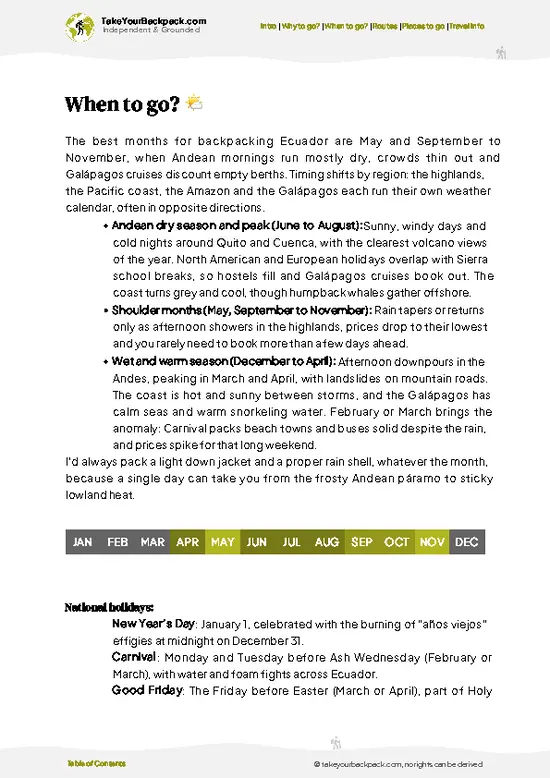
source: climatestotravel.comJANJanuary: fair for travelingFEBFebruary: fair for travelingMARMarch: fair for travelingAPRApril: fair for travelingMAYMay: highly recommended for travelingJUNJune: excellent for travelingJULJuly: excellent for travelingAUGAugust: excellent for travelingSEPSeptember: highly recommended for travelingOCTOctober: fair for travelingNOVNovember: fair for travelingDECDecember: fair for traveling
ecuador-region-andean-highlands
© Google |

✈️ The backpacker research shortcutEcuador Travel Guide

An offline-friendly backpacking guide with optimized travel routes, ranked highlights, transport advice, and the best areas to stay.
example page 0 from our offline Travel Guide for Ecuador
example page 1 from our offline Travel Guide for Ecuador
example page 2 from our offline Travel Guide for Ecuador
example page 3 from our offline Travel Guide for Ecuador
example page 4 from our offline Travel Guide for Ecuador
example page 5 from our offline Travel Guide for Ecuador
example page 6 from our offline Travel Guide for Ecuador
example page 7 from our offline Travel Guide for Ecuador
The digital guide (362 pages) contains:
94 highlights, ranked by travel appeal
Optimized 5, 10 & 15-day travel routes
Cities, national parks, landmarks, beaches
How to get around
Offline-friendly for travel without Wi-Fi
👉 Click to see all 30+ guide features

📅 Plan smarter in minutes, not weeks
Month by month travel advice
Festivals & national holidays
Budget expectations

🗺️ Go to the right places, skip the overrated ones
Honest pros & cons of destinations
Top hikes, parks & viewpoints
Lesser-known places most travelers miss
Clear “worth it vs skip it” guidance

🛏️ Travel smoothly without rookie mistakes
Best areas to stay
Transport systems explained simply
Common scams & safety advice
SIM cards, money & practical tips

🌍 Understand the country, not just visit it
Culture & traditions
52 Essential phrases & customs
Festivals worth planning around
Traveler-friendly historical context
Insights that make places more meaningful

📱 Built for real travel conditions
Fully downloadable PDF
Works completely offline
Optimized for phone use
Useful in remote areas & buses
Everything in one place
Save weeks of stressful planning
Get instant access to your full guide. 30‑day money-back guarantee.


By proceeding you agree to our terms.
Sent to your inbox immediately after payment • 100% Secure Checkout
Best Backpacking Travel Advisor 2025 tourism awardBest Backpacking
Travel Advisor
2025
What others say about Take Your Backpack Guides:
⭐⭐⭐⭐⭐
Fantastic, amazing amount of information!
⭐⭐⭐⭐⭐
My goodness this is amazing, it's what I've been looking for hats off too you!
⭐⭐⭐⭐⭐
I think this is absolutely BRILLIANT
⭐⭐⭐⭐
Very complete and informative. It's still missing places, but I gotta to commend you
⭐⭐⭐⭐⭐
This is truly amazing, thank you, can't wait to explore it with my kids!
⭐⭐⭐⭐⭐
Awesome resource, thank you!
⭐⭐⭐⭐⭐
This is amazing! Can't wait to explore the ones I haven't seen
⭐⭐⭐⭐
I love this! Well done, great idea.
⭐⭐⭐⭐⭐
Thanks for taking the time to make this gem!
⭐⭐⭐⭐⭐
This might be the best website I've ever seen.
⭐⭐⭐⭐⭐
Congratulations, and thank you so much for your work; it's incredibly valuable.
⭐⭐⭐⭐
In all seriousness I think you did a great job pointing out the important spots
⭐⭐⭐⭐⭐
10/10 very good
⭐⭐⭐⭐⭐
As someone who's only just starting to visit regularly this is awesome, thank you.
⭐⭐⭐⭐
Thank you very much! I'm going to visit my dad, it's going to be very useful!
⭐⭐⭐⭐⭐
This is really cool! We'll be travelling for the first time and this definitely come in handy.
⭐⭐⭐⭐⭐
You are now our minister of culture, congratulations 👨‍💼
⭐⭐⭐⭐⭐
Just wanted to tell you that this is a pearl! Going to follow your recommendations.
⭐⭐⭐⭐⭐
This is so cool. I'll definitely be using the resource for my travels soon.
⭐⭐⭐⭐⭐
This is very impressive! Good work.
⭐⭐⭐⭐⭐
This is an amazing and informative site. Very well done!

🛏️ Where to stay?Best areas and accommodation options

In the Andean Highlands of Ecuador, you’ve got some stellar options for backpacker-friendly spots that balance safety, social vibes, and budget-friendliness.

Start with Cuenca. This city is a cultural hub with a laid-back atmosphere. The historic center is a UNESCO World Heritage site, perfect for wandering. You’ll find plenty of cafes and bars where you can chat with fellow travelers. Plus, the local markets are a feast for the senses—grab some fresh fruit and mingle with the locals.

Next up is Baños. If you’re into adventure, this is your playground. Think hot springs, waterfalls, and outdoor … read more 👉
In the Andean Highlands of Ecuador, you’ve got some stellar options for backpacker-friendly spots that balance safety, social vibes, and budget-friendliness.

Start with Cuenca. This city is a cultural hub with a laid-back atmosphere. The historic center is a UNESCO World Heritage site, perfect for wandering. You’ll find plenty of cafes and bars where you can chat with fellow travelers. Plus, the local markets are a feast for the senses—grab some fresh fruit and mingle with the locals.

Next up is Baños. If you’re into adventure, this is your playground. Think hot springs, waterfalls, and outdoor activities galore. The town is compact, making it easy to meet other backpackers. The nightlife is lively, with plenty of spots to unwind after a day of hiking or biking.

Don’t overlook Otavalo, especially if you’re there for the famous market. It’s a great base for exploring the surrounding countryside. The community is welcoming, and you’ll find a mix of locals and travelers. The vibrant market scene is a perfect backdrop for connecting with others.

Each of these spots offers a unique flavor of the Andes, ensuring you’re not just passing through but truly experiencing the heart of Ecuador.

🚌 Getting aroundHow to get from A to B

The Andean Highlands pulse with a rhythm that’s both chaotic and liberating. Picture this: you’re standing in a bustling market, the air thick with the scent of roasted corn and fresh herbs, while vendors shout prices and locals barter with a smile. Here, schedules are more like suggestions. You’ll find that transport options ebb and flow, often dictated by the whims of the weather or the number of passengers. It’s a place where you can embrace spontaneity, but knowing your options can save you time and hassle. Let’s break down the essential transport choices that will keep you moving through this stunning landscape without breaking the bank.


  • Local Buses: These are your lifeline. They run frequently, usually from dawn until around 8 PM, and cost between $1 to $3 depending on the distance.
read more 👉
The Andean Highlands pulse with a rhythm that’s both chaotic and liberating. Picture this: you’re standing in a bustling market, the air thick with the scent of roasted corn and fresh herbs, while vendors shout prices and locals barter with a smile. Here, schedules are more like suggestions. You’ll find that transport options ebb and flow, often dictated by the whims of the weather or the number of passengers. It’s a place where you can embrace spontaneity, but knowing your options can save you time and hassle. Let’s break down the essential transport choices that will keep you moving through this stunning landscape without breaking the bank.


  • Local Buses: These are your lifeline. They run frequently, usually from dawn until around 8 PM, and cost between $1 to $3 depending on the distance. Expect a bumpy ride, but you’ll soak in the scenery and local life. Just be ready for a bit of a squeeze during peak hours.


  • Shared Taxis (Colectivos): A great middle ground between comfort and cost. They typically operate from early morning until late afternoon, charging around $2 to $5 per trip. You’ll share the ride with a few others, but they’re faster than buses and drop you closer to your destination. Just hop in and wait for the car to fill up.


  • Private Taxis: If you’re feeling a bit flush, this is the way to go. Prices vary widely, but expect to pay around $10 to $30 for longer distances. They’re available anytime, and you can negotiate the fare upfront. Comfort is a given, and you’ll have the freedom to stop for photos or snacks along the way.


  • Trains: The scenic train rides, like the one from Quito to Nariz del Diablo, are a must-do. Tickets range from $25 to $50, depending on the class. The trains usually run on a set schedule, so check ahead. The views are breathtaking, making it worth the splurge.


  • Motorbike Taxis: For the adventurous spirit, these are a quick way to navigate through tight spots. Prices start around $1 for short distances. They’re available throughout the day, but always negotiate the fare before hopping on. Just hold on tight!


Here’s your tactical tip: download a local transport app or keep a map handy. Knowing the routes and schedules can save you from waiting around and help you catch those fleeting moments that make travel special. Embrace the flow, but stay savvy!

🍲 FoodLocal Cuisine & Drinks

In the Andean Highlands, food is a celebration of culture and community. Start with locro de papa, a creamy potato soup that warms you from the inside out, often topped with avocado and cheese. Then there’s cuy, or guinea pig, a traditional dish that’s crispy on the outside and tender within. Don’t shy away; it’s a rite of passage here. Pair it with choclo, giant kernels of corn that burst with flavor.

For drinks, seek out chicha, a fermented corn beverage that locals sip with pride. You’ll find it at bustling markets, where the air is thick with the scent of grilled meats and spices. Street vendors serve up empanadas stuffed with cheese or meat, perfect for a quick bite as you wander.

Dining here is communal. Expect to share tables and stories, especially in casual restaurants where the … read more 👉
In the Andean Highlands, food is a celebration of culture and community. Start with locro de papa, a creamy potato soup that warms you from the inside out, often topped with avocado and cheese. Then there’s cuy, or guinea pig, a traditional dish that’s crispy on the outside and tender within. Don’t shy away; it’s a rite of passage here. Pair it with choclo, giant kernels of corn that burst with flavor.

For drinks, seek out chicha, a fermented corn beverage that locals sip with pride. You’ll find it at bustling markets, where the air is thick with the scent of grilled meats and spices. Street vendors serve up empanadas stuffed with cheese or meat, perfect for a quick bite as you wander.

Dining here is communal. Expect to share tables and stories, especially in casual restaurants where the vibe is relaxed. When you’re invited to join a meal, it’s customary to accept; it’s a sign of friendship.

Remember, meals can stretch into hours, so embrace the slow pace. This isn’t just about eating; it’s about connecting with the heart of the Andes.

Other destinations worth considering

Andean Highlands isn’t the only highlight in Ecuador. Explore all what Ecuador has to offer.
Country photo of Ecuador

We 💚 feedbackIs it worth it?

The Andean Highlands are a treasure trove of culture and breathtaking landscapes. You’ll find vibrant markets and friendly locals who genuinely want to share their world with you. But here’s the kicker: altitude sickness can hit hard. Take it slow, hydrate, and give yourself time to acclimate. The payoff? Unmatched views and experiences that feel like they’re straight out of a dream. Just remember, it’s a journey, not a race.

✈️ When did I visit Ecuador?
Ecuador I visited during my half year trip through South and Central America back in 2003

✍️ Help improve this page!
The information on this page is based on my own backpacking experience in Ecuador, supplemented with up-to-date research and feedback from other travelers. Travel details can change, so if you notice anything outdated or incomplete, feel free to let me know.


🙋‍♂️ Give feedback

👋 Meet the founderWho’s Behind Take Your Backpack?

Johan, backpacker and founder of TakeYourBackpackHi, I’m Johan (Netherlands 🇳🇱), the creator of TakeYourBackpack. Over the past decade, I’ve backpacked through 80+ countries across six continents, gaining extensive experience with independent travel, long-term trips, and overland routes.

This site is built on a combination of firsthand travel experience and carefully curated insights from other backpackers. Many guides are based on places I’ve personally visited, while others bring together tips, observations, and practical advice shared by trusted travelers I’ve met along the way.

The goal is to provide realistic, experience-driven guidance — not generic itineraries — so you can explore destinations with better context, clearer expectations, and more confidence.

Get full Ecuador guide •
Instant download • 94 highlights • Full Offline guide