×

Equatorial Guinea🇬🇶 | festivalsBantu Cultural Festivalancestral rituals, Bantu heritage, ceremonial attire | things to do and best time to go

Explore Annobón Cultural FestivalExplore Bioko Island Moka Festival

Backpacking in Bantu Cultural
By Johan Kruseman 🇳🇱 | Updated October 15, 2026

Your shirt sticks to your back as the drumline cracks through the humid dusk, sweat and woodsmoke tangling in the air. Bare feet stamp the red earth. You’re shoulder-to-shoulder with locals and travelers, all pulsing to the same ancient rhythms—no one’s checking their phone. The Bantu Cultural Festival erupts every July in Bata, Equatorial Guinea’s coastal heart, where the Gulf of Guinea breeze barely cools the crowd. This isn’t a tourist sideshow; it’s a living, breathing celebration of Bantu heritage, with pounding balafons, call-and-response chants, and dancers who move like they’re channeling the ancestors. The crowd is a mix: families, elders, young musicians, and a handful of wide-eyed backpackers. The vibe is raw, communal, and fiercely proud. It’s a week-long immersion—intense, sometimes overwhelming, but if you want to feel Equatorial Guinea’s soul, this is where you start.

Discover everything you want to know in the 📖 Equatorial Guinea Travel Guide.


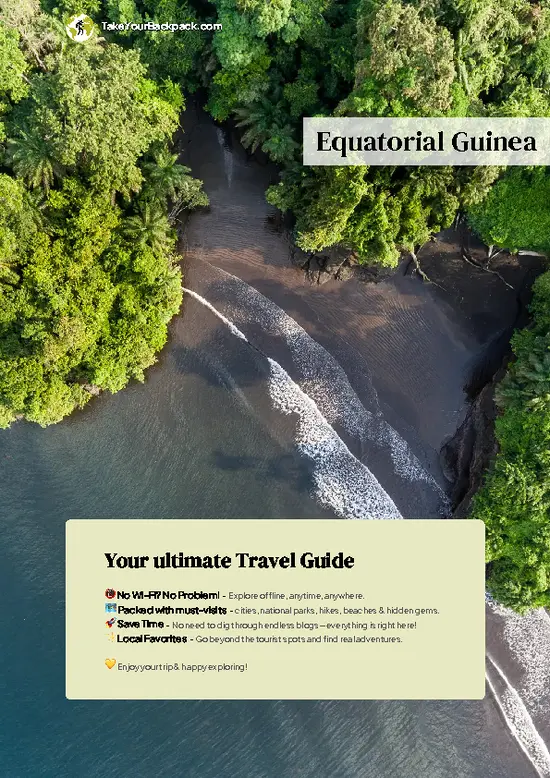
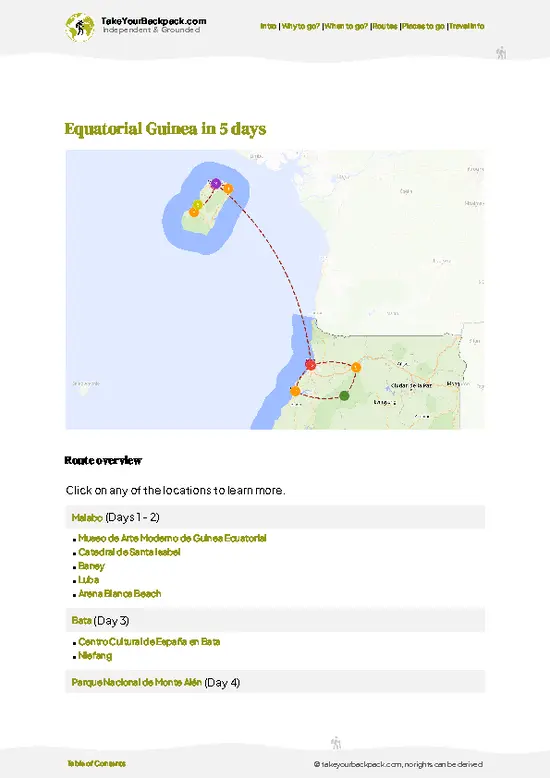
example page 0 from our offline Travel Guide for Equatorial Guinea
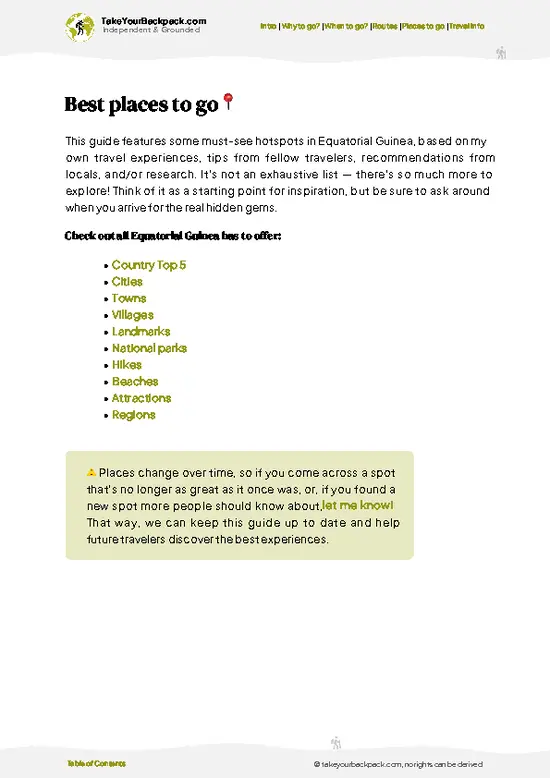
example page 1 from our offline Travel Guide for Equatorial Guinea
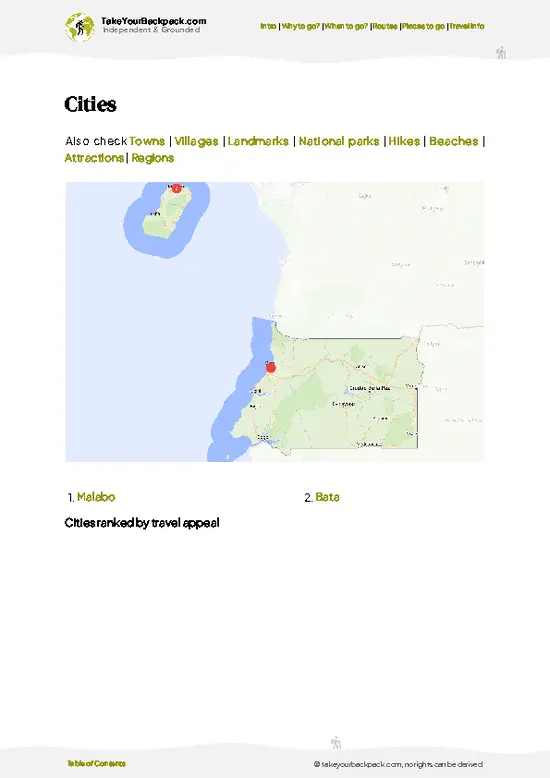
example page 2 from our offline Travel Guide for Equatorial Guinea
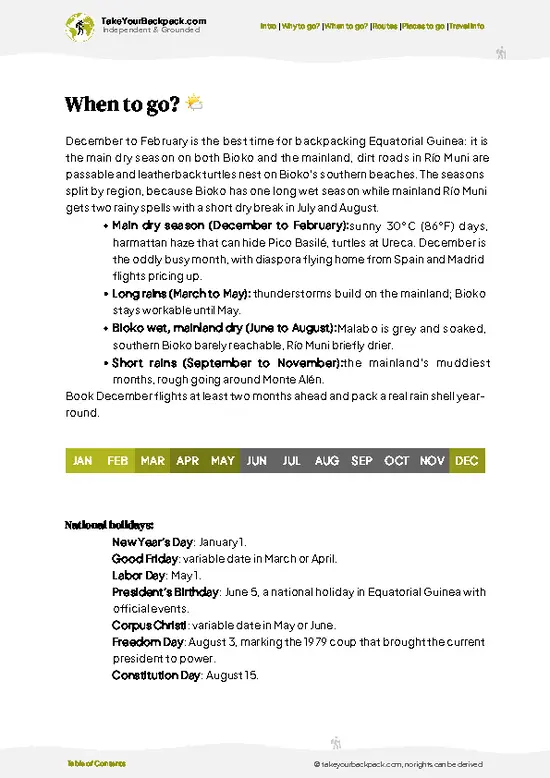
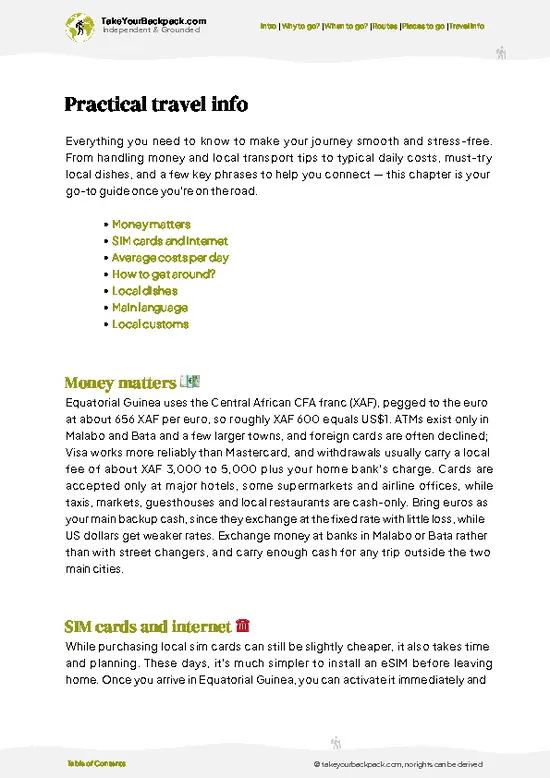
example page 3 from our offline Travel Guide for Equatorial Guinea
example page 4 from our offline Travel Guide for Equatorial Guinea
example page 5 from our offline Travel Guide for Equatorial Guinea
example page 6 from our offline Travel Guide for Equatorial Guinea
example page 7 from our offline Travel Guide for Equatorial Guinea
Loading the map 🌍
CLICK TO FILTER
cities
towns
villages
landmarks
national parks
hikes
beaches
attractions
festivals
regions
SHOW COUNTRY’S BESTSHOW ALL

✨ Why go?
Ranked #99 festival in Equatorial Guinea
What makes this festival worth celebrating

Backpackers flock to the Bantu Cultural Festival in Equatorial Guinea for a reason: it’s a social energy powerhouse. Picture this: vibrant drumming, colorful costumes, and a community that feels like family, even if you just met. This festival isn’t just an event; it’s a temporary community where you can dive deep into the rich traditions of the Bantu people.

Planning your route around this festival means you’re not just a spectator; you’re a participant in a cultural immersion that’s hard to replicate elsewhere. The affordability of the festival compared to similar events in Africa makes it a no-brainer. You get to experience authentic culture without breaking the bank, leaving you more funds for other adventures.

Integrating the festival into your longer travel plans is a savvy move. … read more 👉
Backpackers flock to the Bantu Cultural Festival in Equatorial Guinea for a reason: it’s a social energy powerhouse. Picture this: vibrant drumming, colorful costumes, and a community that feels like family, even if you just met. This festival isn’t just an event; it’s a temporary community where you can dive deep into the rich traditions of the Bantu people.

Planning your route around this festival means you’re not just a spectator; you’re a participant in a cultural immersion that’s hard to replicate elsewhere. The affordability of the festival compared to similar events in Africa makes it a no-brainer. You get to experience authentic culture without breaking the bank, leaving you more funds for other adventures.

Integrating the festival into your longer travel plans is a savvy move. It serves as a catalyst for exploring the surrounding areas, from lush jungles to stunning coastlines. By aligning your journey with the festival, you’re not just ticking boxes; you’re weaving a narrative that enriches your entire trip. Embrace the rhythm, and let the festival guide your path.

💡 HighlightsWhat this place is best known for

  • Polyrhythmic Drumming & Dance Ensembles: Tight, repetitive drum patterns underpin energetic dances that pull everyone into the pulse — expect call-and-response singing, complex footwork, and moments where the whole crowd claps in time. It’s the festival’s heartbeat: visceral, infectious, and a perfect place to learn a few steps (or at least try not to trip while joining in).
  • Masked Masquerades and Ceremonial Theatre: Elaborate masks and costumed performers enact myths, moral tales, and ancestral greetings; the masks are often hand-carved and carry deep symbolic meaning. These performances aren’t just pretty to watch — they connect present-day communities to long-standing spiritual and social traditions.
  • Oral Storytelling and Elders’ Circles: Elders and griot-like storytellers share origin
… read more 👉
  • Polyrhythmic Drumming & Dance Ensembles: Tight, repetitive drum patterns underpin energetic dances that pull everyone into the pulse — expect call-and-response singing, complex footwork, and moments where the whole crowd claps in time. It’s the festival’s heartbeat: visceral, infectious, and a perfect place to learn a few steps (or at least try not to trip while joining in).
  • Masked Masquerades and Ceremonial Theatre: Elaborate masks and costumed performers enact myths, moral tales, and ancestral greetings; the masks are often hand-carved and carry deep symbolic meaning. These performances aren’t just pretty to watch — they connect present-day communities to long-standing spiritual and social traditions.
  • Oral Storytelling and Elders’ Circles: Elders and griot-like storytellers share origin myths, clan histories, and fables in relaxed circles where you can ask questions and learn context the guidebooks don’t cover. It’s intimate, often humorous, and a great way to hear local perspectives on identity and history straight from the source.
  • Local Food Stalls and Communal Feasts: Expect coastal and forest flavors — fresh seafood, smoked fish, cassava dishes, spicy stews, and palm-wine tastings — served at family-run stalls or larger communal meals. Eating here is social: food is how people bond, celebrate, and introduce guests to home cooking traditions.
  • Craft Markets and Hands-On Workshops: Markets brim with woodcarvings, woven baskets, beadwork, and textiles; many stalls are run by the artisans themselves. Look for short workshops where you can try carving, weaving, or drum-making — small, meaningful souvenirs you actually made and a direct way to support local craftsmen.
Spotted a mistake or missing something? Contact us.

🌤️ When to go?When is the celebration of Bantu Cultural Festival?

  • Topic: Weather - Aim for July to September when the dry season kicks in. Expect less rain, which means trails stay firm and your gear stays dry. Avoid the heavy rains of April to June that can turn paths into mud traps and dampen the vibe.
  • Topic: Temperature - Daytime temps hover around 25-30°C (77-86°F), perfect for trekking without overheating. Nights cool down to 18-22°C (64-72°F), so pack a light layer. Avoid the hotter months of February and March when humidity spikes.
  • Topic: Daylight Hours - Equatorial Guinea offers roughly 12 hours of daylight year-round, but the dry season’s clearer skies mean more reliable light for exploring and festival events.
  • Topic: Crowds - The festival draws locals and regional visitors mostly during the dry season. Arriving early in the dry season means
… read more 👉
  • Topic: Weather - Aim for July to September when the dry season kicks in. Expect less rain, which means trails stay firm and your gear stays dry. Avoid the heavy rains of April to June that can turn paths into mud traps and dampen the vibe.
  • Topic: Temperature - Daytime temps hover around 25-30°C (77-86°F), perfect for trekking without overheating. Nights cool down to 18-22°C (64-72°F), so pack a light layer. Avoid the hotter months of February and March when humidity spikes.
  • Topic: Daylight Hours - Equatorial Guinea offers roughly 12 hours of daylight year-round, but the dry season’s clearer skies mean more reliable light for exploring and festival events.
  • Topic: Crowds - The festival draws locals and regional visitors mostly during the dry season. Arriving early in the dry season means fewer tourists, giving you space to absorb the culture without elbowing through crowds.
  • Topic: Seasonal Activities - Dry months open up outdoor cultural performances, traditional dances, and market stalls. Wet season often cancels or limits these, so timing your visit right maximizes your experience.
  • Topic: Price Fluctuations - Expect accommodation and transport costs to rise during peak festival months (July-September). Booking early locks in better rates and avoids last-minute price hikes.
Pro-tip: Lock in your trip for the early dry season to dodge rain, crowds, and inflated prices—keeping your energy and wallet ready for the festival’s full impact.


source: climatestotravel.comJANJanuary: not recommended for travelingFEBFebruary: not recommended for travelingMARMarch: not recommended for travelingAPRApril: not recommended for travelingMAYMay: not recommended for travelingJUNJune: not recommended for travelingJULJuly: excellent for travelingAUGAugust: not recommended for travelingSEPSeptember: not recommended for travelingOCTOctober: not recommended for travelingNOVNovember: not recommended for travelingDECDecember: not recommended for traveling

✈️ The backpacker research shortcutEquatorial Guinea Travel Guide

An offline-friendly backpacking guide with optimized travel routes, ranked highlights, transport advice, and the best areas to stay.
example page 0 from our offline Travel Guide for Equatorial Guinea
example page 1 from our offline Travel Guide for Equatorial Guinea
example page 2 from our offline Travel Guide for Equatorial Guinea
example page 3 from our offline Travel Guide for Equatorial Guinea
example page 4 from our offline Travel Guide for Equatorial Guinea
example page 5 from our offline Travel Guide for Equatorial Guinea
example page 6 from our offline Travel Guide for Equatorial Guinea
example page 7 from our offline Travel Guide for Equatorial Guinea
The digital guide (174 pages) contains:
✅ 36 highlights, ranked by travel appeal
✅ Optimized 2, 3 & 5-day travel routes
✅ Cities, national parks, landmarks, beaches
✅ How to get around
✅ Offline-friendly for travel without Wi-Fi
👉 Click to see all 30+ guide features

📅 Plan smarter in minutes, not weeks
✅ Month by month travel advice
✅ Festivals & national holidays
✅ Budget expectations

🗺️ Go to the right places, skip the overrated ones
✅ Honest pros & cons of destinations
✅ Top hikes, parks & viewpoints
✅ Lesser-known places most travelers miss
✅ Clear “worth it vs skip it” guidance

🛏️ Travel smoothly without rookie mistakes
✅ Best areas to stay
✅ Transport systems explained simply
✅ Common scams & safety advice
✅ SIM cards, money & practical tips

🌍 Understand the country, not just visit it
✅ Culture & traditions
✅ 52 Essential phrases & customs
✅ Festivals worth planning around
✅ Traveler-friendly historical context
✅ Insights that make places more meaningful

📱 Built for real travel conditions
✅ Fully downloadable PDF
✅ Works completely offline
✅ Optimized for phone use
✅ Useful in remote areas & buses
✅ Everything in one place
Stop searching, start planning
Get instant access to your full guide. 30‑day money-back guarantee.
+ Add another guide for just

By proceeding you agree to our terms.
Sent to your inbox immediately after payment • 100% Secure Checkout
Best Backpacking Travel Advisor 2025 tourism awardBest Backpacking
Travel Advisor
2025
What others say about Take Your Backpack Guides:
⭐⭐⭐⭐⭐
Fantastic, amazing amount of information!
⭐⭐⭐⭐⭐
My goodness this is amazing, it's what I've been looking for hats off too you!
⭐⭐⭐⭐⭐
I think this is absolutely BRILLIANT
⭐⭐⭐⭐
Very complete and informative. It's still missing places, but I gotta to commend you
⭐⭐⭐⭐⭐
This is truly amazing, thank you, can't wait to explore it with my kids!
⭐⭐⭐⭐⭐
Awesome resource, thank you!
⭐⭐⭐⭐⭐
This is amazing! Can't wait to explore the ones I haven't seen
⭐⭐⭐⭐
I love this! Well done, great idea.
⭐⭐⭐⭐⭐
Thanks for taking the time to make this gem!
⭐⭐⭐⭐⭐
This might be the best website I've ever seen.
⭐⭐⭐⭐⭐
Congratulations, and thank you so much for your work; it's incredibly valuable.
⭐⭐⭐⭐
In all seriousness I think you did a great job pointing out the important spots
⭐⭐⭐⭐⭐
10/10 very good
⭐⭐⭐⭐⭐
As someone who's only just starting to visit regularly this is awesome, thank you.
⭐⭐⭐⭐
Thank you very much! I'm going to visit my dad, it's going to be very useful!
⭐⭐⭐⭐⭐
This is really cool! We'll be travelling for the first time and this definitely come in handy.
⭐⭐⭐⭐⭐
You are now our minister of culture, congratulations 👨‍💼
⭐⭐⭐⭐⭐
Just wanted to tell you that this is a pearl! Going to follow your recommendations.
⭐⭐⭐⭐⭐
This is so cool. I'll definitely be using the resource for my travels soon.
⭐⭐⭐⭐⭐
This is very impressive! Good work.
⭐⭐⭐⭐⭐
This is an amazing and informative site. Very well done!

🛏️ Where to stay?Best areas and accommodation options

When you’re gearing up for the Bantu Cultural Festival in Equatorial Guinea, your choice of where to stay can make or break your experience. Head to Malabo, the capital, where the energy is palpable. This city buzzes with life, and you’ll find a mix of budget-friendly accommodations that cater to backpackers. The social scene here is vibrant, making it easy to connect with fellow travelers.

Look for spots near the waterfront. The views are stunning, and the proximity to local eateries means you can fuel up on delicious street food without breaking the bank. Plus, being close to the festival … read more 👉
When you’re gearing up for the Bantu Cultural Festival in Equatorial Guinea, your choice of where to stay can make or break your experience. Head to Malabo, the capital, where the energy is palpable. This city buzzes with life, and you’ll find a mix of budget-friendly accommodations that cater to backpackers. The social scene here is vibrant, making it easy to connect with fellow travelers.

Look for spots near the waterfront. The views are stunning, and the proximity to local eateries means you can fuel up on delicious street food without breaking the bank. Plus, being close to the festival grounds means you can dive into the action without wasting time on transport.

Another option is to explore the neighborhoods around the central market. This area is a hive of activity, filled with locals and travelers alike. You’ll find affordable lodging and a chance to immerse yourself in the local culture. Just keep your wits about you; while the vibe is generally safe, it’s always smart to stay aware.

Stay in these areas, and you’ll preserve your energy and budget for the festival’s unforgettable moments. Embrace the rhythm of the city, and let the adventure unfold!

👛 Costs (as of 15 October 2026)How expensive it really is

The Bantu Cultural Festival in Equatorial Guinea is a vibrant celebration, but navigating costs can be tricky. Here’s what you need to know to keep your budget intact while fully enjoying the experience.
  • Festival Tickets: Expect to pay around €10 to €30 for entry. Prices can vary based on the day and specific events within the festival. Buying tickets in advance can save you some hassle on the ground.
  • Accommodation: Options range from budget hostels at about €15 per night to mid-range hotels costing €50 to €100. Booking early is key, especially during the festival when demand spikes. Consider staying a bit outside the main festival area for better rates.
  • Local Transport: Public transport is limited, so budget around €5 to €15 per day for taxis or shared rides. If you’re feeling adventurous, walking
… read more 👉
The Bantu Cultural Festival in Equatorial Guinea is a vibrant celebration, but navigating costs can be tricky. Here’s what you need to know to keep your budget intact while fully enjoying the experience.
  • Festival Tickets: Expect to pay around €10 to €30 for entry. Prices can vary based on the day and specific events within the festival. Buying tickets in advance can save you some hassle on the ground.
  • Accommodation: Options range from budget hostels at about €15 per night to mid-range hotels costing €50 to €100. Booking early is key, especially during the festival when demand spikes. Consider staying a bit outside the main festival area for better rates.
  • Local Transport: Public transport is limited, so budget around €5 to €15 per day for taxis or shared rides. If you’re feeling adventurous, walking is a great way to soak in the local atmosphere, but be mindful of distances.
  • Food & Drinks: Street food is your friend here. You can grab a meal for as little as €3 to €7. Dining in local restaurants will set you back about €10 to €20 per meal. Hydration is crucial, so factor in another €2 to €5 for drinks daily.
  • Miscellaneous Expenses: Set aside €20 to €50 for souvenirs, tips, or unexpected costs. This cushion will help you enjoy spontaneous experiences without stress.

Planning ahead and being aware of these costs will help you focus on the festival’s energy rather than financial surprises. Keep your eyes on the prize: authentic experiences and cultural immersion.


source: guineaecuatorialpress.com
⚠️ Prices can change and everyone travels differently, so take this as a rough guide. Hope it helps you plan your adventure!

🍲 FoodLocal Cuisine & Drinks

At the Bantu Cultural Festival in Equatorial Guinea, food and drink are not just sustenance; they’re a vibrant celebration of culture. You’ll find stalls brimming with local specialties like fufu, a starchy staple made from cassava or plantains, often served with rich, spicy sauces. Don’t miss out on pepper soup, a fiery broth that warms you from the inside out, or grilled fish, fresh from the coast, seasoned to perfection.

For a true taste of the festival, dive into palm wine. This traditional drink is sweet and slightly fermented, served in calabashes. It’s a communal experience; locals often share a sip, so don’t hesitate to join in. Just remember, it’s customary to greet the vendor and express gratitude when you receive your drink.

Lines can get long, especially for the most popular … read more 👉
At the Bantu Cultural Festival in Equatorial Guinea, food and drink are not just sustenance; they’re a vibrant celebration of culture. You’ll find stalls brimming with local specialties like fufu, a starchy staple made from cassava or plantains, often served with rich, spicy sauces. Don’t miss out on pepper soup, a fiery broth that warms you from the inside out, or grilled fish, fresh from the coast, seasoned to perfection.

For a true taste of the festival, dive into palm wine. This traditional drink is sweet and slightly fermented, served in calabashes. It’s a communal experience; locals often share a sip, so don’t hesitate to join in. Just remember, it’s customary to greet the vendor and express gratitude when you receive your drink.

Lines can get long, especially for the most popular dishes, so be patient and enjoy the buzz around you. Bring cash; many stalls may not accept cards, and having small bills will help you navigate the bustling atmosphere. Serving sizes can vary, so don’t be shy about asking for recommendations. Embrace the quirks of sharing and savor the moment—this festival is all about connection, both with the food and the people around you.

FAQFrequently asked questions about Bantu Cultural

The Bantu Cultural Festival takes place annually in July, typically lasting for about 3 days. It is timed to celebrate the cultural heritage of the Bantu people in Equatorial Guinea. The exact dates may vary slightly each year based on local scheduling.
Attendance to the Bantu Cultural Festival is generally free, as it is a cultural celebration aimed at community participation. However, some special events or performances within the festival may have a small entrance fee, usually around 5 to 10 USD. Budgeting a small amount for these optional activities is advisable.
Tickets are not usually required in advance for the general festival activities, as it is an open public event. For special performances or workshops, it is recommended to check locally and book tickets ahead if possible, especially during peak festival days. This helps avoid disappointment due to limited seating or capacity.
⚠️ Things can change over time, so always validate details locally before you go.

Other Equatoguinean festivals near Bantu Cultural

Explore more nearby:


💡 Not sure where to go next?
Create a personalized itinerary for Equatorial Guinea including Bantu Cultural and the places that fit your trip.

Generate my itinerary

👉 Discover all festivals

Or checkout all Equatorial Guinea has to offer (think cities, towns, villages, national parks, hikes, beaches, festivals)
Country photo of Equatorial Guinea

We 💚 feedbackSumming up the experience

The Bantu Cultural Festival is a whirlwind of energy and authenticity. You’ll feel the pulse of tradition in every drumbeat and dance. The best surprise? The warmth of the locals; they’ll pull you into their celebrations like you belong. But here’s the kicker: don’t underestimate the heat. Hydrate like it’s your job. Embrace the chaos, savor the flavors, and let the vibrant spirit of Equatorial Guinea ignite your journey. This isn’t just a festival; it’s a living tapestry of culture that you’ll carry with you.

✍️ Help improve this page!
The information on this page is based on in-depth research, insights shared by experienced travelers, and feedback from the local travel community in Equatorial Guinea. While every effort is made to keep the information accurate and current, conditions can change — so if you spot anything incorrect or outdated, please get in touch.


🙋‍♂️ Give feedback

👋 Meet the founderWho’s Behind Take Your Backpack?

Johan, backpacker and founder of TakeYourBackpackHi, I’m Johan (Netherlands 🇳🇱), the creator of TakeYourBackpack. Over the past 3 decades, I’ve backpacked through 90+ countries across six continents, gaining extensive experience with independent travel, long-term trips, and overland routes.

This site is built on a combination of firsthand travel experience and carefully curated insights from other backpackers. Many guides are based on places I’ve personally visited, while others bring together tips, observations, and practical advice shared by trusted travelers I’ve met along the way.

The goal is to provide realistic, experience-driven guidance — not generic itineraries — so you can explore destinations with better context, clearer expectations, and more confidence.