×

Equatorial Guinea🇬🇶 | festivalsMalabo International Music Festivallive concerts, African pop, international guest artists | things to do and best time to go

Explore Ebebiyín Cultural FestivalExplore Bata Cultural Festival

Backpacking in Malabo International Music
🏆 Top pickfestival ranked #1
By Johan Kruseman 🇳🇱 | Updated July 30, 2026

A decade ago, the Malabo International Music Festival felt like a fever dream—raw, unpredictable, and pulsing with the kind of energy that made you forget you were sweating through your shirt in the equatorial heat. Back then, you’d stumble into a crowd of locals and expats, all moving as one to the crash of Afrobeat, Congolese rumba, and the occasional Spanish guitar riff. Fast-forward to today: the festival still thumps with life, but it’s slicker, more organized, and—let’s be honest—a bit pricier, with security fences and official merch stands where there used to be makeshift beer stalls.

Held right in Malabo, the capital perched on Bioko Island’s volcanic rim, this festival draws a mix of young Equatoguineans, regional music fans, and a handful of adventurous backpackers. The lineup leans into pan-African rhythms with a dash of international pop, stretching over three relentless days and nights. If you crave a festival where the music is loud, the crowd is real, and the sweat is earned, Malabo delivers—just don’t expect the wild west of years past.

Discover everything you want to know in the 📖 Equatorial Guinea Travel Guide.
Loading the map 🌍
CLICK TO FILTER
cities
towns
villages
landmarks
national parks
hikes
beaches
attractions
festivals
regions
SHOW COUNTRY’S BESTSHOW ALL

✨ Why go?
Ranked #1 festival in Equatorial Guinea
Why visitors keep coming back

Backpackers flock to the Malabo International Music Festival for a reason: it’s a cultural explosion that transforms the city into a vibrant hub of social energy. This isn’t just a series of concerts; it’s a temporary community where you can connect with locals and fellow travelers alike, sharing stories and experiences that linger long after the last note fades.

Planning your route around this festival isn’t just smart; it’s essential for immersive experiences. You’ll dive headfirst into the rhythms of Equatorial Guinea, tasting local cuisine and feeling the pulse of the streets. Plus, compared to similar events worldwide, this festival is a budget-friendly option that doesn’t skimp on quality.

Incorporating the festival into your travel plans means you’re not just passing through; you’re … read more 👉
Backpackers flock to the Malabo International Music Festival for a reason: it’s a cultural explosion that transforms the city into a vibrant hub of social energy. This isn’t just a series of concerts; it’s a temporary community where you can connect with locals and fellow travelers alike, sharing stories and experiences that linger long after the last note fades.

Planning your route around this festival isn’t just smart; it’s essential for immersive experiences. You’ll dive headfirst into the rhythms of Equatorial Guinea, tasting local cuisine and feeling the pulse of the streets. Plus, compared to similar events worldwide, this festival is a budget-friendly option that doesn’t skimp on quality.

Incorporating the festival into your travel plans means you’re not just passing through; you’re engaging with the heart of the culture. It’s a perfect pit stop on a longer journey, allowing you to recharge your spirit and fill your backpack with memories rather than just souvenirs. Don’t miss this chance to dance, laugh, and connect in a way that only a festival can offer.
Want to include Malabo International Music Festival in your Equatorial Guinea route?
Create a personalized Equatorial Guinea itinerary that includes Malabo International Music Festival and the places that fit your trip — based on your travel style, budget, and available time. Get your route in seconds.

Generate my trip

💡 HighlightsEssential experiences to have while celebrating the Malabo International Music

  1. Cross-cultural line-up and genre mashups — International acts sharing bills with local bands create unpredictable sets where Afro rhythms, Latin flair, jazz and contemporary world music collide. It’s less about polished arenas and more about musical conversations across styles, so you’ll hear familiar sounds reworked in fresh ways.
  2. Traditional rhythms, dance and living heritage — The festival makes space for Bubi, Fang and other local traditions alongside modern acts, so you’ll catch powerful drumming, call-and-response vocals and energetic dances that connect the party to centuries of island culture. It’s a genuine peek at local identity — loud, rhythmic and physical.
  3. Seafront and open-air stages with sunset sets — Several performances happen right by the water or under the sky, so a
read more 👉
  1. Cross-cultural line-up and genre mashups — International acts sharing bills with local bands create unpredictable sets where Afro rhythms, Latin flair, jazz and contemporary world music collide. It’s less about polished arenas and more about musical conversations across styles, so you’ll hear familiar sounds reworked in fresh ways.
  2. Traditional rhythms, dance and living heritage — The festival makes space for Bubi, Fang and other local traditions alongside modern acts, so you’ll catch powerful drumming, call-and-response vocals and energetic dances that connect the party to centuries of island culture. It’s a genuine peek at local identity — loud, rhythmic and physical.
  3. Seafront and open-air stages with sunset sets — Several performances happen right by the water or under the sky, so a sunset soundtrack and warm evening breeze are basically part of the program. Those outdoor gigs have a relaxed, cinematic feel you won’t get in a stadium.
  4. Workshops, masterclasses and spontaneous jam sessions — Musicians often run clinics and pop-up sessions where locals and visitors can join in. It’s an easy way to learn a few rhythms, swap ideas, or end up in an impromptu night jam — more interaction than just watching from the crowd.
  5. Community village: food stalls, crafts and local hangouts — Beyond stages there’s a lively festival village with seafood and street food, handicrafts and informal performance corners. It’s the place to meet people, try local bites, buy a handmade keep-sake and soak up the friendly, communal atmosphere that keeps the festival feeling warm and approachable.
Spotted a mistake or missing something? Contact us.

🌤️ When to go?When is the celebration of Malabo International Music Festival?


  • Topic: Weather – The festival runs during the dry season, roughly June to September. Expect less rain, which means fewer soggy shoes and more reliable outdoor stages. The wet season (October to May) brings heavy downpours that can stall performances and dampen your vibe.

  • Topic: Temperature – Daytime highs hover around 28-32°C (82-90°F), with nights cooling to 22-24°C (72-75°F). The dry season feels more comfortable, less sticky, letting you enjoy the music without sweating through your shirt.

  • Topic: Daylight Hours – Equatorial Guinea sits near the equator, so daylight stays steady at about 12 hours year-round. This means no surprise early sunsets cutting your festival time short—plan your days knowing the sun won’t quit on you.

  • Topic: Crowds – The festival draws a mix of locals and
read more 👉

  • Topic: Weather – The festival runs during the dry season, roughly June to September. Expect less rain, which means fewer soggy shoes and more reliable outdoor stages. The wet season (October to May) brings heavy downpours that can stall performances and dampen your vibe.

  • Topic: Temperature – Daytime highs hover around 28-32°C (82-90°F), with nights cooling to 22-24°C (72-75°F). The dry season feels more comfortable, less sticky, letting you enjoy the music without sweating through your shirt.

  • Topic: Daylight Hours – Equatorial Guinea sits near the equator, so daylight stays steady at about 12 hours year-round. This means no surprise early sunsets cutting your festival time short—plan your days knowing the sun won’t quit on you.

  • Topic: Crowds – The festival draws a mix of locals and international visitors, but the dry season sees the biggest influx. Arrive early to lock in affordable accommodation and snag prime spots before the crowd swells.

  • Topic: Seasonal Activities – The dry season also opens up other outdoor adventures like island hikes and beach days. Timing your visit here lets you stack the festival with nature without battling mud or closed trails.

  • Topic: Price Fluctuations – Expect prices for lodging and flights to spike during the festival’s peak dry months. Booking months ahead or targeting early festival days can save you serious cash, leaving more for local eats and souvenirs.


Pro-tip: Lock in your trip for the early dry season—June or July—when the weather is solid, crowds are manageable, and prices haven’t hit their peak. This strategy keeps your energy high and your wallet happy.


source: climatestotravel.comJANJanuary: not recommended for travelingFEBFebruary: not recommended for travelingMARMarch: not recommended for travelingAPRApril: not recommended for travelingMAYMay: not recommended for travelingJUNJune: excellent for travelingJULJuly: not recommended for travelingAUGAugust: not recommended for travelingSEPSeptember: not recommended for travelingOCTOctober: not recommended for travelingNOVNovember: not recommended for travelingDECDecember: not recommended for traveling

✈️ The backpacker research shortcutEquatorial Guinea Travel Guide

An offline-friendly backpacking guide with optimized travel routes, ranked highlights, transport advice, and the best areas to stay.
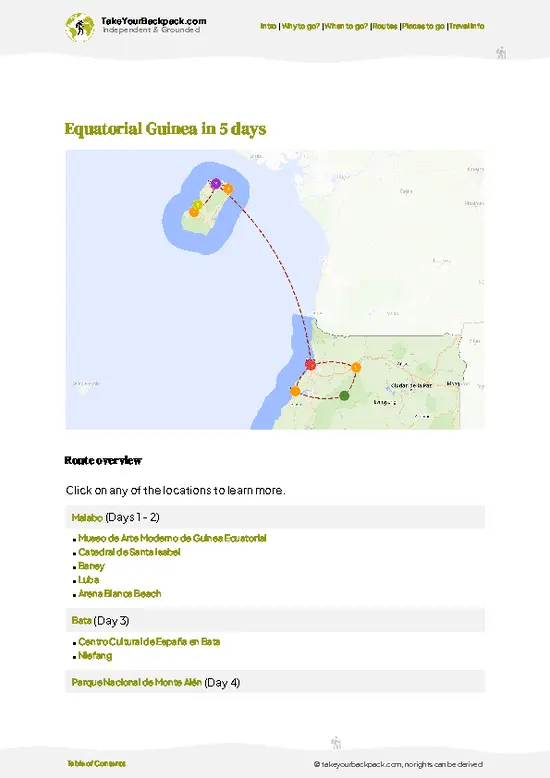
example page 0 from our offline Travel Guide for Equatorial Guinea
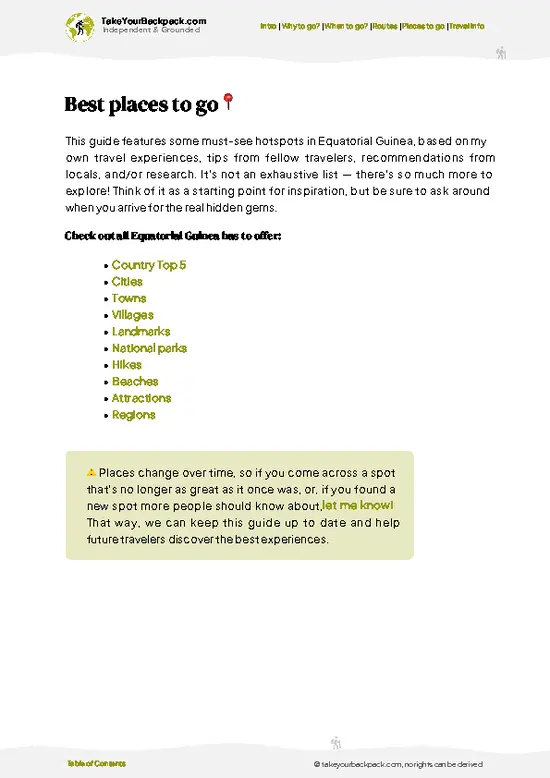
example page 1 from our offline Travel Guide for Equatorial Guinea
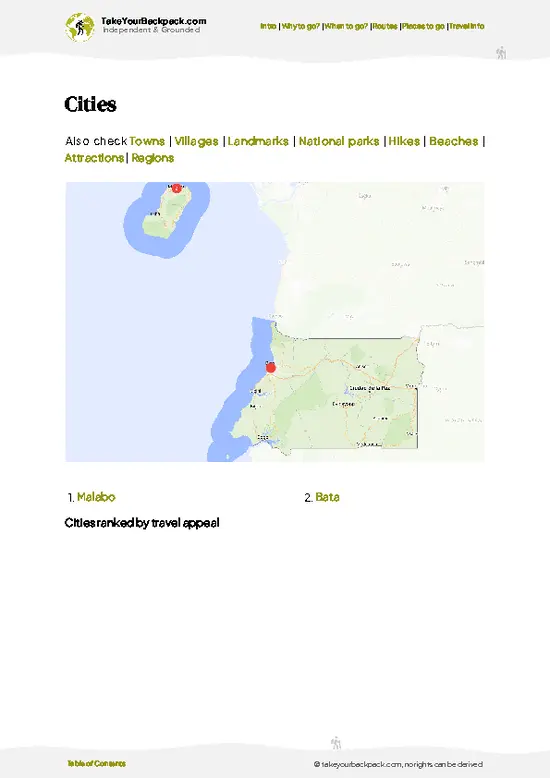
example page 2 from our offline Travel Guide for Equatorial Guinea
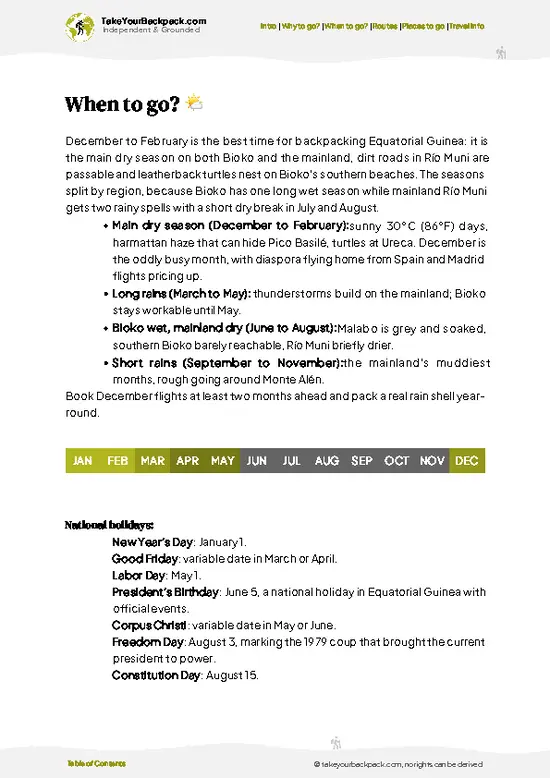
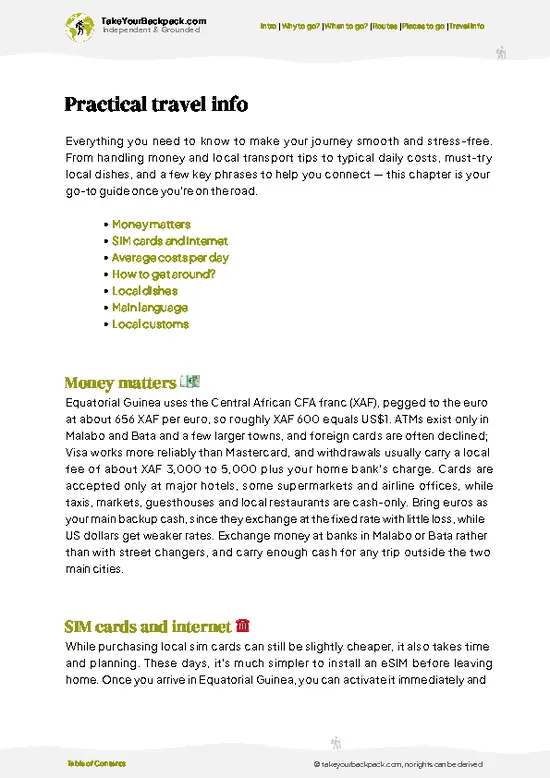
example page 3 from our offline Travel Guide for Equatorial Guinea
example page 4 from our offline Travel Guide for Equatorial Guinea
example page 5 from our offline Travel Guide for Equatorial Guinea
example page 6 from our offline Travel Guide for Equatorial Guinea
example page 7 from our offline Travel Guide for Equatorial Guinea
The digital guide (202 pages) contains:
48 highlights, ranked by travel appeal
Optimized 2, 3 & 5-day travel routes
Cities, national parks, landmarks, beaches
How to get around
Offline-friendly for travel without Wi-Fi
👉 Click to see all 30+ guide features

📅 Plan smarter in minutes, not weeks
Month by month travel advice
Festivals & national holidays
Budget expectations

🗺️ Go to the right places, skip the overrated ones
Honest pros & cons of destinations
Top hikes, parks & viewpoints
Lesser-known places most travelers miss
Clear “worth it vs skip it” guidance

🛏️ Travel smoothly without rookie mistakes
Best areas to stay
Transport systems explained simply
Common scams & safety advice
SIM cards, money & practical tips

🌍 Understand the country, not just visit it
Culture & traditions
52 Essential phrases & customs
Festivals worth planning around
Traveler-friendly historical context
Insights that make places more meaningful

📱 Built for real travel conditions
Fully downloadable PDF
Works completely offline
Optimized for phone use
Useful in remote areas & buses
Everything in one place
Save weeks of stressful planning
Get instant access to your full guide. 30‑day money-back guarantee.


By proceeding you agree to our terms.
Sent to your inbox immediately after payment • 100% Secure Checkout
Best Backpacking Travel Advisor 2025 tourism awardBest Backpacking
Travel Advisor
2025
What others say about Take Your Backpack Guides:
⭐⭐⭐⭐⭐
Fantastic, amazing amount of information!
⭐⭐⭐⭐⭐
My goodness this is amazing, it's what I've been looking for hats off too you!
⭐⭐⭐⭐⭐
I think this is absolutely BRILLIANT
⭐⭐⭐⭐
Very complete and informative. It's still missing places, but I gotta to commend you
⭐⭐⭐⭐⭐
This is truly amazing, thank you, can't wait to explore it with my kids!
⭐⭐⭐⭐⭐
Awesome resource, thank you!
⭐⭐⭐⭐⭐
This is amazing! Can't wait to explore the ones I haven't seen
⭐⭐⭐⭐
I love this! Well done, great idea.
⭐⭐⭐⭐⭐
Thanks for taking the time to make this gem!
⭐⭐⭐⭐⭐
This might be the best website I've ever seen.
⭐⭐⭐⭐⭐
Congratulations, and thank you so much for your work; it's incredibly valuable.
⭐⭐⭐⭐
In all seriousness I think you did a great job pointing out the important spots
⭐⭐⭐⭐⭐
10/10 very good
⭐⭐⭐⭐⭐
As someone who's only just starting to visit regularly this is awesome, thank you.
⭐⭐⭐⭐
Thank you very much! I'm going to visit my dad, it's going to be very useful!
⭐⭐⭐⭐⭐
This is really cool! We'll be travelling for the first time and this definitely come in handy.
⭐⭐⭐⭐⭐
You are now our minister of culture, congratulations 👨‍💼
⭐⭐⭐⭐⭐
Just wanted to tell you that this is a pearl! Going to follow your recommendations.
⭐⭐⭐⭐⭐
This is so cool. I'll definitely be using the resource for my travels soon.
⭐⭐⭐⭐⭐
This is very impressive! Good work.
⭐⭐⭐⭐⭐
This is an amazing and informative site. Very well done!

🛏️ Where to stay?Best areas and accommodation options

When you’re gearing up for the Malabo International Music Festival, your choice of where to stay can amplify the experience. Look no further than the vibrant neighborhoods around the festival grounds.

First up, the area near the city center is buzzing with energy. You’ll find a mix of local eateries and lively bars, perfect for mingling with fellow festival-goers. The streets are alive with music and laughter, making it easy to connect with others. Safety is a priority here, so you can roam freely, soaking in the atmosphere.

Then there’s the coastal stretch. Staying close to the beach not only … read more 👉
When you’re gearing up for the Malabo International Music Festival, your choice of where to stay can amplify the experience. Look no further than the vibrant neighborhoods around the festival grounds.

First up, the area near the city center is buzzing with energy. You’ll find a mix of local eateries and lively bars, perfect for mingling with fellow festival-goers. The streets are alive with music and laughter, making it easy to connect with others. Safety is a priority here, so you can roam freely, soaking in the atmosphere.

Then there’s the coastal stretch. Staying close to the beach not only offers stunning views but also a laid-back vibe. You can unwind after a day of music, maybe even catch a sunset while chatting with fellow travelers. The proximity to the festival means you won’t waste time commuting; you’ll be right in the thick of it.

Lastly, consider the outskirts of Malabo. While a bit quieter, this area offers a unique glimpse into local life. You’ll find budget-friendly options and a chance to escape the festival frenzy when you need a breather. Just be sure to check transport options to ensure easy access back to the action.

Choose wisely, and let the rhythm of the festival guide your adventure!

👛 Costs (as of 30 July 2026)Travel costs and budget guide for Malabo International Music

The Malabo International Music Festival is a vibrant celebration, but navigating the costs can be tricky. Here’s how to budget effectively so you can focus on the music and the experience.
  • Festival Tickets: Expect to pay between €20 to €50 for a general admission ticket. VIP options can soar to €100 or more, depending on the lineup and perks. Buy early to snag the best prices.
  • Accommodation: Hotels range from €30 for budget options to €150 for mid-range stays. If you’re looking for something unique, consider local guesthouses, which can be around €25 to €60. Book ahead, especially during the festival.
  • Local Transport: Public transport is limited, so budget around €5 to €15 per day for taxis or ride-sharing. If you’re feeling adventurous, renting a bike can be a fun way to explore, costing about
read more 👉
The Malabo International Music Festival is a vibrant celebration, but navigating the costs can be tricky. Here’s how to budget effectively so you can focus on the music and the experience.
  • Festival Tickets: Expect to pay between €20 to €50 for a general admission ticket. VIP options can soar to €100 or more, depending on the lineup and perks. Buy early to snag the best prices.
  • Accommodation: Hotels range from €30 for budget options to €150 for mid-range stays. If you’re looking for something unique, consider local guesthouses, which can be around €25 to €60. Book ahead, especially during the festival.
  • Local Transport: Public transport is limited, so budget around €5 to €15 per day for taxis or ride-sharing. If you’re feeling adventurous, renting a bike can be a fun way to explore, costing about €10 per day.
  • Food & Drinks: Street food is your friend here. You can grab a meal for €3 to €7. Dining at a mid-range restaurant will set you back about €10 to €25. Don’t forget to factor in drinks; local beers are around €2, while cocktails can hit €5 to €10.
  • Miscellaneous Expenses: Always have a buffer for souvenirs, tips, or unexpected costs. Budget around €20 to €50 for extras. This ensures you can enjoy spontaneous moments without stress.

Keep these figures in mind as you plan. They’ll help you avoid surprises and keep your energy focused on the festival fun.
⚠️ Prices can change and everyone travels differently, so take this as a rough guide. Hope it helps you plan your adventure!

🍲 FoodEating & Drinking in Malabo International Music

At the Malabo International Music Festival, food and drinks are as vibrant as the music. Dive into local specialties like pepper soup and fufu, a starchy delight that pairs perfectly with rich sauces. Street stalls buzz with energy, serving up grilled fish seasoned with zesty spices. Don’t miss out on plantains, fried to golden perfection; they’re a staple that captures the essence of Equatorial Guinea.

For drinks, malamba—a local palm wine—offers a sweet, slightly tangy kick that’s a must-try. If you’re feeling adventurous, grab a coconut cocktail served fresh from the shell. It’s refreshing and a great way to cool off while soaking in the festival atmosphere.

Be prepared for some quirks. Lines can get long, especially for the most popular stalls, so patience is key. Sharing is common here; … read more 👉
At the Malabo International Music Festival, food and drinks are as vibrant as the music. Dive into local specialties like pepper soup and fufu, a starchy delight that pairs perfectly with rich sauces. Street stalls buzz with energy, serving up grilled fish seasoned with zesty spices. Don’t miss out on plantains, fried to golden perfection; they’re a staple that captures the essence of Equatorial Guinea.

For drinks, malamba—a local palm wine—offers a sweet, slightly tangy kick that’s a must-try. If you’re feeling adventurous, grab a coconut cocktail served fresh from the shell. It’s refreshing and a great way to cool off while soaking in the festival atmosphere.

Be prepared for some quirks. Lines can get long, especially for the most popular stalls, so patience is key. Sharing is common here; locals often invite you to taste their dishes, so don’t hesitate to reciprocate. Cash is king, so stash some local currency for those spontaneous food moments. Serving sizes can vary, so if you’re unsure, ask for a “small” first to gauge your appetite.

Embrace the flavors and the camaraderie; it’s all part of the festival’s heartbeat.

Other Equatoguinean festivals near Malabo International Music

Explore more nearby:


💡 Not sure where to go next?
Create a personalized itinerary for Equatorial Guinea including Malabo International Music and the places that fit your trip.

Generate my itinerary

👉 Discover all festivals

Or checkout all Equatorial Guinea has to offer (think cities, towns, villages, national parks, hikes, beaches, festivals)
Country photo of Equatorial Guinea

We 💚 feedbackFinal thoughts on celebrating the Malabo International Music

The Malabo International Music Festival pulses with energy, a vibrant celebration of rhythm and culture. Expect to be swept up in the infectious joy of local artists and international acts alike. The best surprise? The food stalls—don’t skip the grilled fish and spicy plantains; they’re a feast for the senses. Just a heads-up: accommodations can fill up fast, so book early to avoid scrambling last minute. Embrace the chaos; it’s part of the adventure, and it’ll keep your spirit soaring.

✍️ Help improve this page!
The information on this page is based on in-depth research, insights shared by experienced travelers, and feedback from the local travel community in Equatorial Guinea. While every effort is made to keep the information accurate and current, conditions can change — so if you spot anything incorrect or outdated, please get in touch.


🙋‍♂️ Give feedback

👋 Meet the founderWho’s Behind Take Your Backpack?

Johan, backpacker and founder of TakeYourBackpackHi, I’m Johan (Netherlands 🇳🇱), the creator of TakeYourBackpack. Over the past decade, I’ve backpacked through 80+ countries across six continents, gaining extensive experience with independent travel, long-term trips, and overland routes.

This site is built on a combination of firsthand travel experience and carefully curated insights from other backpackers. Many guides are based on places I’ve personally visited, while others bring together tips, observations, and practical advice shared by trusted travelers I’ve met along the way.

The goal is to provide realistic, experience-driven guidance — not generic itineraries — so you can explore destinations with better context, clearer expectations, and more confidence.

Get full country guide •
Instant download • 48 highlights • Full Offline guide