
×

Fiji🇫🇯 | festivalsHibiscus Festivalbeauty pageant, amusement rides, craft markets, live entertainment | things to do and best time to go

Explore Fiji DayExplore Sugar Festival

Backpacking in Hibiscus
🏆 Top pickfestival ranked #1
By Johan Kruseman 🇳🇱 | Updated May 23, 2026

Most travelers only realize on day three that Hibiscus Festival is basically Fiji’s one-stop crash course in local culture, so you can skip a dozen separate tours and still walk away feeling like you’ve “done” Suva. The festival runs in and around Suva, on the southeast coast of Viti Levu, Fiji’s main island. It’s a city fair turned national event: beauty pageant at its core, but wrapped in food stalls, carnival rides, church groups fundraising, school kids performing, and live bands hammering out island pop, reggae, gospel, and old-school rock covers. You’ll mostly see local families, teens roaming in packs, and a sprinkling of backpackers who wandered over from their Suva guesthouse. The vibe is chaotic, loud, and very human, more county fair than polished cultural show. It usually stretches over about a week, and it’s worth visiting if you want real-life Fiji, not brochure Fiji.

Discover everything you want to know in the 📖 Fiji Travel Guide.


Get your Fiji guide
54 ranked highlights, routes & tips, works offline (225 pages)
Loading the map 🌍
CLICK TO FILTER
towns
villages
landmarks
national parks
hikes
beaches
attractions
festivals
regions
SHOW COUNTRY’S BESTSHOW ALL

✨ Why go?
Ranked #1 festival in Fiji
Why Hibiscus should be on your travel list

Backpackers flock to the Hibiscus Festival in Fiji for a burst of social energy that transforms the landscape into a vibrant playground. This isn’t just a festival; it’s a temporary community where you’ll find locals and travelers mingling over music, dance, and food. The festival offers a unique chance for cultural immersion—think traditional performances and local crafts that you won’t find in guidebooks.

Planning your route around this event isn’t just smart; it’s a savvy way to stretch your budget. Compared to similar festivals worldwide, the affordability of the Hibiscus Festival is a steal. You’ll enjoy a week of festivities without breaking the bank, leaving you more cash for those epic adventures that lie ahead.

Incorporating the festival into your travel plans adds a layer of excitement. … read more 👉
Backpackers flock to the Hibiscus Festival in Fiji for a burst of social energy that transforms the landscape into a vibrant playground. This isn’t just a festival; it’s a temporary community where you’ll find locals and travelers mingling over music, dance, and food. The festival offers a unique chance for cultural immersion—think traditional performances and local crafts that you won’t find in guidebooks.

Planning your route around this event isn’t just smart; it’s a savvy way to stretch your budget. Compared to similar festivals worldwide, the affordability of the Hibiscus Festival is a steal. You’ll enjoy a week of festivities without breaking the bank, leaving you more cash for those epic adventures that lie ahead.

Incorporating the festival into your travel plans adds a layer of excitement. It’s a perfect pit stop between island-hopping or diving into the crystal-clear waters. So, gear up for an experience that fuels your spirit and enriches your journey. The Hibiscus Festival isn’t just an event; it’s a catalyst for unforgettable memories and connections.
Get the complete Travel Guide for Fiji
Everything organized for offline planning — routes, highlights, costs & tips

See what’s inside 👉

Get the Travel Guide -

💡 HighlightsDon't-miss highlights and experiences

  1. Parade of Floats and Street Carnival — Colourful, loud and impossible to ignore: community groups and businesses build hibiscus-themed floats and march through the streets with costume crews, drummers and brass. It’s a proper street party where people join in, dance on the sidelines and the whole city feels like one long, sweaty celebration.
  2. Miss Hibiscus Pageant and Cultural Performances — More than a beauty show, the pageant mixes modern stagecraft with traditional Fijian elements: choreographed numbers, cultural presentations and dramatic costumes. The cultural segments—meke (traditional dances), story pieces and costume work—showcase island identity in a way that’s both theatrical and heartfelt.
  3. Kava Ceremonies and Cultural Village — The festival often brings traditional yaqona (kava)
read more 👉
  1. Parade of Floats and Street Carnival — Colourful, loud and impossible to ignore: community groups and businesses build hibiscus-themed floats and march through the streets with costume crews, drummers and brass. It’s a proper street party where people join in, dance on the sidelines and the whole city feels like one long, sweaty celebration.
  2. Miss Hibiscus Pageant and Cultural Performances — More than a beauty show, the pageant mixes modern stagecraft with traditional Fijian elements: choreographed numbers, cultural presentations and dramatic costumes. The cultural segments—meke (traditional dances), story pieces and costume work—showcase island identity in a way that’s both theatrical and heartfelt.
  3. Kava Ceremonies and Cultural Village — The festival often brings traditional yaqona (kava) rituals and cultural demonstrations front and centre, letting visitors see—and sometimes respectfully join—village customs, weaving, carving and storytelling. It’s a rare chance to experience Fijian ceremony in an open, festival setting rather than only in formal tourist shows.
  4. Food Stalls, Lovo and Street Eats — Expect a feast of cheap, intensely local flavours: lovo (food cooked in an earth oven), freshly grilled seafood, curries, roti and tropical fruit. The food scene is where you actually taste the culture—affordable, communal and often cooked by neighbourhood crews who’ve been doing this for years.
  5. Live Music Nights and Band Competitions — From acoustic island bands to reggae and contemporary pop, evening stages draw crowds who sing along and dance in the open air. The mix of traditional songs and modern sets creates a late-night vibe that’s energetic, communal and uniquely Fijian—expect to end up clapping with strangers.
Spotted a mistake or missing something? Contact us.
Things to do around Hibiscus Festival

Ratings based on Tripadvisor reviews. When you book through this link, you support our work at no extra cost to you.

🌤️ When to go?When is the celebration of Hibiscus Festival?


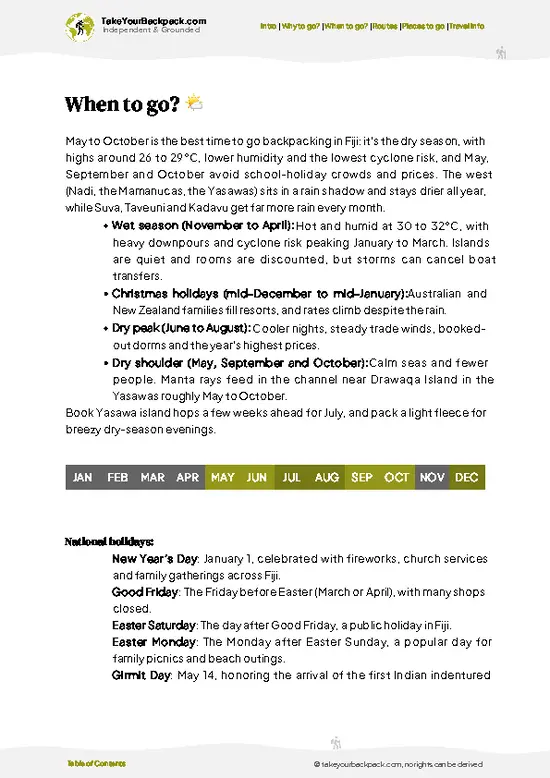
  • Topic: Weather – The Hibiscus Festival hits its stride in late July and early August, right in Fiji’s dry season. Expect warm, sunny days around 26-29°C (79-84°F) with minimal rain. This means less mud on your boots and more time soaking in the festival vibes without weather interruptions.

  • Topic: Temperature – Nights dip comfortably to about 18-20°C (64-68°F), perfect for camping or late-night street food runs without sweating through your gear. The steady warmth keeps energy high for all-day exploring.

  • Topic: Daylight Hours – With roughly 11 to 12 hours of daylight, you get ample time to dive into daytime events and still catch evening performances. The sun sets around 6 PM, giving you a natural rhythm to pace your festival days.

  • Topic: Crowds – This is peak festival season, so expect
read more 👉

  • Topic: Weather – The Hibiscus Festival hits its stride in late July and early August, right in Fiji’s dry season. Expect warm, sunny days around 26-29°C (79-84°F) with minimal rain. This means less mud on your boots and more time soaking in the festival vibes without weather interruptions.

  • Topic: Temperature – Nights dip comfortably to about 18-20°C (64-68°F), perfect for camping or late-night street food runs without sweating through your gear. The steady warmth keeps energy high for all-day exploring.

  • Topic: Daylight Hours – With roughly 11 to 12 hours of daylight, you get ample time to dive into daytime events and still catch evening performances. The sun sets around 6 PM, giving you a natural rhythm to pace your festival days.

  • Topic: Crowds – This is peak festival season, so expect a lively crowd. It’s a trade-off: more people means more energy and events but also higher accommodation prices and busier venues. Book early to lock in your spot and avoid last-minute stress.

  • Topic: Seasonal Activities – Beyond the festival, this period aligns with prime surfing and diving conditions. If you’re packing a wetsuit, plan extra days to ride waves or explore coral reefs when the festival wraps up.

  • Topic: Price Fluctuations – Prices spike during the festival, especially for lodging and flights. Lock in deals months ahead or consider staying in nearby towns with shuttle access to save cash without missing the action.


Pro-tip: Arrive a day early to acclimate and snag the best local spots before the festival frenzy kicks in—your energy and budget will thank you.


source: climatestotravel.comJANJanuary: not recommended for travelingFEBFebruary: not recommended for travelingMARMarch: not recommended for travelingAPRApril: not recommended for travelingMAYMay: not recommended for travelingJUNJune: not recommended for travelingJULJuly: excellent for travelingAUGAugust: not recommended for travelingSEPSeptember: not recommended for travelingOCTOctober: not recommended for travelingNOVNovember: not recommended for travelingDECDecember: not recommended for traveling

✈️ The backpacker research shortcutFiji Travel Guide

An offline-friendly backpacking guide with optimized travel routes, ranked highlights, transport advice, and the best areas to stay.
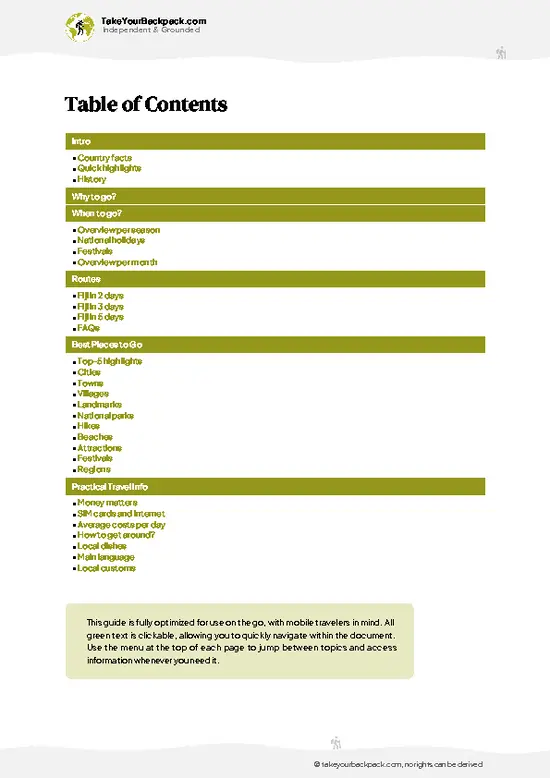
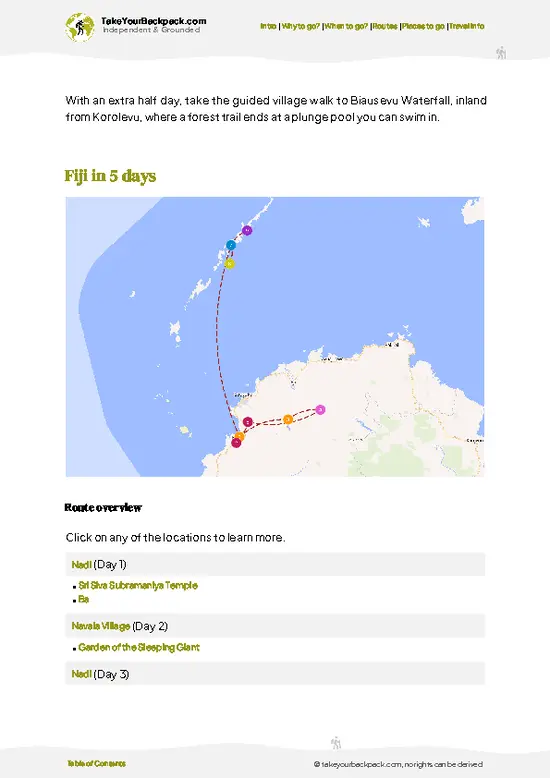
example page 0 from our offline Travel Guide for Fijiexample page 1 from our offline Travel Guide for Fijiexample page 2 from our offline Travel Guide for Fijiexample page 3 from our offline Travel Guide for Fijiexample page 4 from our offline Travel Guide for Fijiexample page 5 from our offline Travel Guide for Fijiexample page 6 from our offline Travel Guide for Fijiexample page 7 from our offline Travel Guide for Fiji
The digital guide (225 pages) contains:
54 highlights, ranked by travel appeal
Optimized 2, 3 & 5-day travel routes
Cities, national parks, beaches, historical sites, ...
How to get around
Offline-friendly for travel without Wi-Fi
👉 Click to see all 30+ guide features

📅 Plan smarter in minutes, not weeks
Month by month travel advice
Festivals & national holidays
Budget expectations

🗺️ Go to the right places, skip the overrated ones
Honest pros & cons of destinations
Top hikes, parks & viewpoints
Lesser-known places most travelers miss
Clear “worth it vs skip it” guidance

🛏️ Travel smoothly without rookie mistakes
Best areas to stay
Transport systems explained simply
Common scams & safety advice
SIM cards, money & practical tips

🌍 Understand the country, not just visit it
Culture & traditions
52 Essential phrases & customs
Festivals worth planning around
Traveler-friendly historical context
Insights that make places more meaningful

📱 Built for real travel conditions
Fully downloadable PDF
Works completely offline
Optimized for phone use
Useful in remote areas & buses
Everything in one place
Save weeks of stressful planning
Get instant access to the full guide directly. 30-day money-back guarantee.


Sent to your inbox immediately after payment • 100% Secure Checkout
Best Backpacking Travel Advisor 2025 tourism awardBest Backpacking
Travel Advisor
2025
What others say about Take Your Backpack Guides:
⭐⭐⭐⭐⭐
Fantastic, amazing amount of information!
⭐⭐⭐⭐⭐
My goodness this is amazing, it's what I've been looking for hats off too you!
⭐⭐⭐⭐⭐
I think this is absolutely BRILLIANT
⭐⭐⭐⭐
Very complete and informative. It's still missing places, but I gotta to commend you
⭐⭐⭐⭐⭐
This is truly amazing, thank you, can't wait to explore it with my kids!
⭐⭐⭐⭐⭐
Awesome resource, thank you!
⭐⭐⭐⭐⭐
This is amazing! Can't wait to explore the ones I haven't seen
⭐⭐⭐⭐
I love this! Well done, great idea.
⭐⭐⭐⭐⭐
Thanks for taking the time to make this gem!
⭐⭐⭐⭐⭐
This might be the best website I've ever seen.
⭐⭐⭐⭐⭐
Congratulations, and thank you so much for your work; it's incredibly valuable.
⭐⭐⭐⭐
In all seriousness I think you did a great job pointing out the important spots
⭐⭐⭐⭐⭐
10/10 very good
⭐⭐⭐⭐⭐
As someone who's only just starting to visit regularly this is awesome, thank you.
⭐⭐⭐⭐
Thank you very much! I'm going to visit my dad, it's going to be very useful!
⭐⭐⭐⭐⭐
This is really cool! We'll be travelling for the first time and this definitely come in handy.
⭐⭐⭐⭐⭐
You are now our minister of culture, congratulations 👨‍💼
⭐⭐⭐⭐⭐
Just wanted to tell you that this is a pearl! Going to follow your recommendations.
⭐⭐⭐⭐⭐
This is so cool. I'll definitely be using the resource for my travels soon.
⭐⭐⭐⭐⭐
This is very impressive! Good work.
⭐⭐⭐⭐⭐
This is an amazing and informative site. Very well done!

🛏️ Where to stay?Best areas to stay in Fiji

The Hibiscus Festival in Fiji is a vibrant celebration, and where you stay can amplify the experience. Head to Suva, the capital, where the festival unfolds. This bustling city is a hub for backpackers, offering a mix of affordable guesthouses and lively hostels. You’ll find a community of travelers eager to share stories and tips, making it easy to connect.

Stay near the waterfront for a dose of local life. The markets buzz with energy, and you can grab fresh fruit or a quick bite before diving into festival activities. The proximity to the festival means you won’t waste time commuting; you’ll … read more 👉
The Hibiscus Festival in Fiji is a vibrant celebration, and where you stay can amplify the experience. Head to Suva, the capital, where the festival unfolds. This bustling city is a hub for backpackers, offering a mix of affordable guesthouses and lively hostels. You’ll find a community of travelers eager to share stories and tips, making it easy to connect.

Stay near the waterfront for a dose of local life. The markets buzz with energy, and you can grab fresh fruit or a quick bite before diving into festival activities. The proximity to the festival means you won’t waste time commuting; you’ll be in the thick of it, soaking up the atmosphere.

Consider areas like Lami, just a short ride from Suva. It’s quieter but still social, with a laid-back vibe that invites relaxation after a day of festivities. Plus, the coastal views are a bonus.

Safety is key. Stick to well-lit areas and travel in groups when possible. This way, you preserve your energy for the festival’s highlights, not the hassles. Embrace the challenge of navigating a new place, and let the spirit of Fiji fuel your adventure.

👛 Costs (as of 3 May 2026)Travel costs and budget guide for Hibiscus

The Hibiscus Festival in Fiji is a vibrant celebration, but navigating costs can be tricky. Here’s a breakdown to keep your budget in check and your energy focused on the fun.
  • Festival Tickets: Expect to pay around $10 to $30 USD for entry. Some events may have additional fees, especially for special performances or activities. Grab your tickets early to avoid any last-minute price hikes.
  • Accommodation: Prices vary widely. Budget options start at about $30 USD per night for hostels or shared accommodations. Mid-range hotels can range from $80 to $150 USD. If you’re feeling fancy, upscale resorts can soar above $200 USD. Book ahead to secure the best deals.
  • Local Transport: Public transport is your friend. Buses cost around $1 to $5 USD for short trips. Taxis can be pricier, with fares starting
read more 👉
The Hibiscus Festival in Fiji is a vibrant celebration, but navigating costs can be tricky. Here’s a breakdown to keep your budget in check and your energy focused on the fun.
  • Festival Tickets: Expect to pay around $10 to $30 USD for entry. Some events may have additional fees, especially for special performances or activities. Grab your tickets early to avoid any last-minute price hikes.
  • Accommodation: Prices vary widely. Budget options start at about $30 USD per night for hostels or shared accommodations. Mid-range hotels can range from $80 to $150 USD. If you’re feeling fancy, upscale resorts can soar above $200 USD. Book ahead to secure the best deals.
  • Local Transport: Public transport is your friend. Buses cost around $1 to $5 USD for short trips. Taxis can be pricier, with fares starting at $10 USD for short distances. Consider renting a bike for a more adventurous and budget-friendly option.
  • Food & Drinks: Street food is a steal, with meals costing between $5 to $15 USD. Restaurants vary; expect to pay $15 to $30 USD for a decent meal. Don’t forget to budget for drinks—local beers are around $5 USD, while cocktails can hit $10 USD or more.
  • Miscellaneous Expenses: Set aside $20 to $50 USD for souvenirs, festival merchandise, or unexpected costs. Activities like workshops or guided tours can add up, so check prices in advance to avoid surprises.

Stay sharp, plan ahead, and you’ll have the energy and budget to dive into the festival’s vibrant atmosphere without a hitch.


source: fiji.travel
⚠️ Prices can change and everyone travels differently, so take this as a rough guide. Hope it helps you plan your adventure!

🍲 FoodWhat to Eat & Drink

At the Hibiscus Festival in Fiji, food and drinks are a vibrant celebration of local culture. You’ll find stalls bursting with fresh seafood, like grilled fish marinated in coconut milk, and lovo, a traditional feast cooked in an underground oven. Don’t miss the palusami, a creamy dish made from taro leaves and coconut cream. Each bite is a taste of Fijian hospitality.

For drinks, the festival offers kava, a ceremonial beverage that’s both calming and social. Sip it slowly and enjoy the communal vibe. If you’re feeling adventurous, try a Fijian cocktail made with local fruits like passionfruit or guava. They’re refreshing and perfect for the tropical heat.

When diving into the food scene, embrace the sharing culture. Portions are often generous, so it’s common to swap bites with friends … read more 👉
At the Hibiscus Festival in Fiji, food and drinks are a vibrant celebration of local culture. You’ll find stalls bursting with fresh seafood, like grilled fish marinated in coconut milk, and lovo, a traditional feast cooked in an underground oven. Don’t miss the palusami, a creamy dish made from taro leaves and coconut cream. Each bite is a taste of Fijian hospitality.

For drinks, the festival offers kava, a ceremonial beverage that’s both calming and social. Sip it slowly and enjoy the communal vibe. If you’re feeling adventurous, try a Fijian cocktail made with local fruits like passionfruit or guava. They’re refreshing and perfect for the tropical heat.

When diving into the food scene, embrace the sharing culture. Portions are often generous, so it’s common to swap bites with friends or fellow festival-goers. Lines can get long, especially for popular dishes, so be patient; the wait is part of the experience. Bring cash, as many stalls might not accept cards, and keep an eye out for smaller serving sizes if you want to sample a bit of everything.

This festival isn’t just about eating; it’s about connecting with the spirit of Fiji. Enjoy every moment!

Other Fijian festivals near Hibiscus

Explore more nearby:

  • Bula Festival—community parades, local music, food stalls, charity events| 1 km away
  • Sugar Festival—cane industry focus, rural parades, fundraising, local pageants| 62 km away
  • Fiji Day—flag-raising, military marches, cultural performances, national pride

👉 Discover all festivals

Or checkout all Fiji has to offer (think cities, towns, villages, national parks, hikes, beaches, festivals)
Country photo of Fiji

We 💚 feedbackIs it worth it?

The Hibiscus Festival in Fiji is pure energy. Picture vibrant parades, local crafts, and the intoxicating scent of tropical blooms. The best surprise? The spontaneous dance-offs that break out—everyone joins in, and you’ll feel like a local. But here’s the catch: accommodations can spike during the festival. Book early to avoid the budget squeeze. Embrace the chaos, savor the laughter, and let the island spirit sweep you up. It’s not just a festival; it’s a celebration of life.

✍️ Help improve this page!
The information on this page is based on in-depth research, insights shared by experienced travelers, and feedback from the local travel community in Fiji. While every effort is made to keep the information accurate and current, conditions can change — so if you spot anything incorrect or outdated, please get in touch.


🙋‍♂️ Give feedback

👋 Meet the founderWho’s Behind Take Your Backpack?

Johan, backpacker and founder of TakeYourBackpackHi, I’m Johan (Netherlands 🇳🇱), the creator of TakeYourBackpack. Over the past decade, I’ve backpacked through 80+ countries across six continents, gaining extensive experience with independent travel, long-term trips, and overland routes.

This site is built on a combination of firsthand travel experience and carefully curated insights from other backpackers. Many guides are based on places I’ve personally visited, while others bring together tips, observations, and practical advice shared by trusted travelers I’ve met along the way.

The goal is to provide realistic, experience-driven guidance — not generic itineraries — so you can explore destinations with better context, clearer expectations, and more confidence.

Get full Fiji guide •
Instant download • 54 highlights • Full Offline guide