×

Fiji🇫🇯 | beachesYasawa Islands BeachesYasawa Flyer hops, Blue Lagoon bay, Sawa-i-Lau cave, manta channel | things to do and best time to go

Explore Vuda PointExplore Taveuni Island Beaches

Backpacking in Yasawa Islands Beaches
By Johan Kruseman 🇳🇱 | Updated October 15, 2026

Hop on the Yasawa Flyer and one boat ticket gets you a whole chain of beach stops, so you can island-hop without a single flight. The Yasawa Islands sit in the north-west of Fiji, strung out beyond the Mamanuca group, and the boat is the only way in. Sand is soft and pale, water runs clear turquoise, and lagoons are calm enough for easy swimming and snorkeling off many beaches. Dorm beds and fan-cooled bures are common, and most resorts serve set meals, so you eat well without hunting for a restaurant. Electricity can be limited and phone signal patchy, which suits most people after day two. Boat times are fixed, so book beds ahead in busy months and keep a loose plan for weather. Compared with the nearby Mamanucas, the Yasawas feel less polished, more village-based and far quieter after sunset.

Discover everything you want to know in the 📖 Fiji Travel Guide.


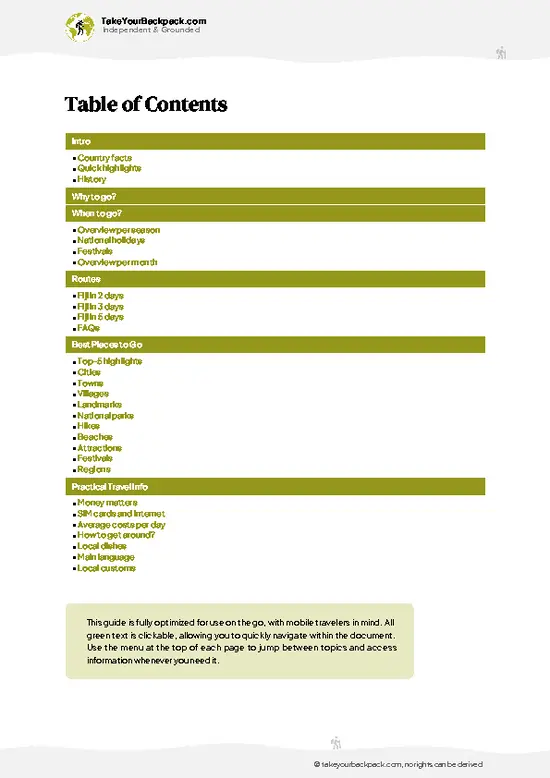
example page 0 from our offline Travel Guide for Fiji
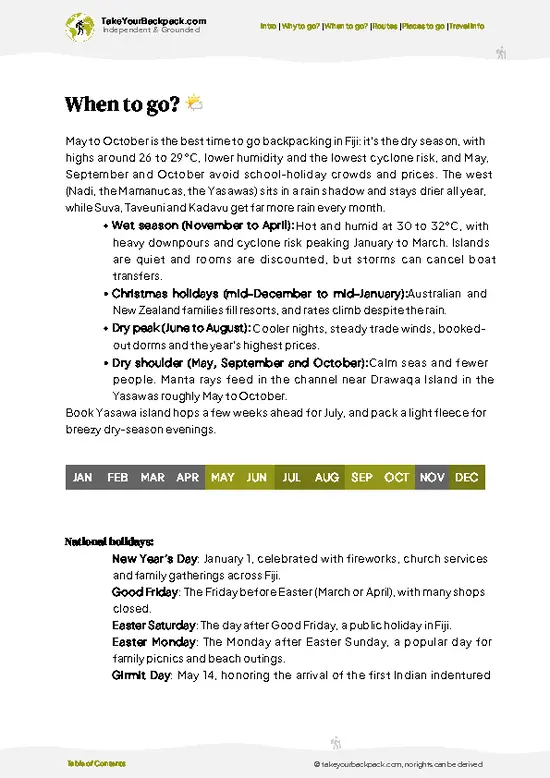
example page 1 from our offline Travel Guide for Fiji
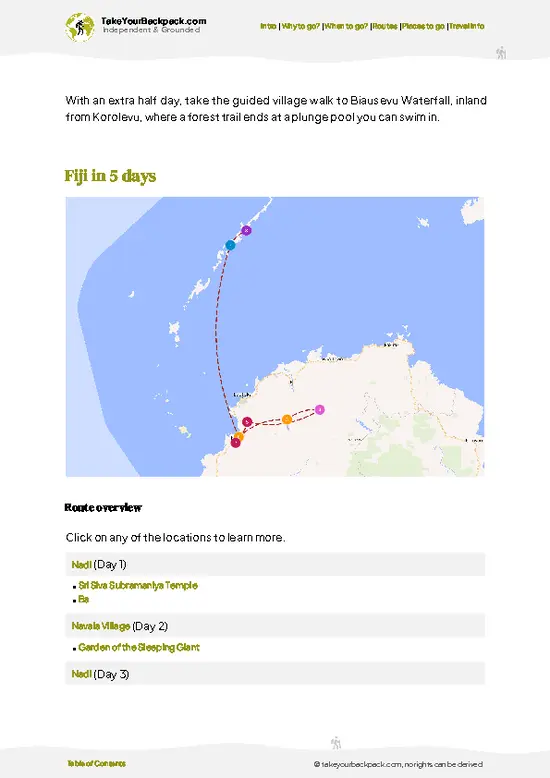
example page 2 from our offline Travel Guide for Fiji
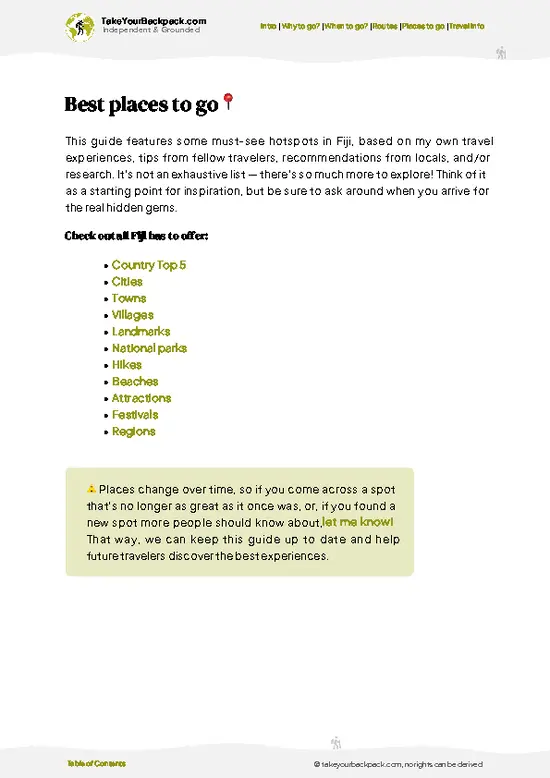
example page 3 from our offline Travel Guide for Fiji
example page 4 from our offline Travel Guide for Fiji
example page 5 from our offline Travel Guide for Fiji
example page 6 from our offline Travel Guide for Fiji
example page 7 from our offline Travel Guide for Fiji
Loading the map 🌍
CLICK TO FILTER
cities
towns
villages
landmarks
national parks
hikes
beaches
attractions
festivals
regions
SHOW COUNTRY’S BESTSHOW ALL

✨ Why go?
Ranked #99 beach in Fiji
What makes it a must-see beach

Backpackers stop here because the Yasawa Flyer catamaran turns the chain into a hop-on, hop-off route. You can sleep on one beach, wave goodbye after breakfast and be on another by lunch, with no tour desk involved. Stays run on a simple formula: bed, three meals, and a kava circle or guitar night, so strangers become travel partners within an evening. That is the real draw for solo travelers.

The second reason is the water. Reefs sit close to shore at many beaches, and Blue Lagoon on Nacula, with its sheltered bay, gives swimmers and snorkelers easy entry without a boat trip. Further north, Sawa-i-Lau cave adds a swim into a limestone chamber lit from above, reached by a short boat ride from nearby resorts.

And there is the village side. Many stays sit beside Fijian communities, so a Sunday … read more 👉
Backpackers stop here because the Yasawa Flyer catamaran turns the chain into a hop-on, hop-off route. You can sleep on one beach, wave goodbye after breakfast and be on another by lunch, with no tour desk involved. Stays run on a simple formula: bed, three meals, and a kava circle or guitar night, so strangers become travel partners within an evening. That is the real draw for solo travelers.

The second reason is the water. Reefs sit close to shore at many beaches, and Blue Lagoon on Nacula, with its sheltered bay, gives swimmers and snorkelers easy entry without a boat trip. Further north, Sawa-i-Lau cave adds a swim into a limestone chamber lit from above, reached by a short boat ride from nearby resorts.

And there is the village side. Many stays sit beside Fijian communities, so a Sunday church service or school visit is part of the deal. You pay for a bed and leave knowing someone’s name.

💡 HighlightsMust-see experiences and standout moments

  1. Blue Lagoon beach, Nacula Island: The bay most travelers picture when they hear Yasawa, with shallow, sheltered water over white sand and a few resorts spaced along the curve. Swimming is easy and the snorkeling is good at the reef edges.
  2. Sawa-i-Lau Caves: A limestone island with a cave you enter by swimming through a gap in the rock. Inside, daylight falls through an opening onto a pool of deep blue water. Resorts in the area run boat trips, and a village fee is usually collected.
  3. Naviti Island manta ray snorkeling: Between roughly May and October, mantas gather in the channel between Naviti and Drawaqa to feed. Guides take small boats out, and you slip in to see wingspans of several meters glide beneath you.
  4. Kava ceremony and village visit: Most resorts arrange an evening kava session or a
… read more 👉
  1. Blue Lagoon beach, Nacula Island: The bay most travelers picture when they hear Yasawa, with shallow, sheltered water over white sand and a few resorts spaced along the curve. Swimming is easy and the snorkeling is good at the reef edges.
  2. Sawa-i-Lau Caves: A limestone island with a cave you enter by swimming through a gap in the rock. Inside, daylight falls through an opening onto a pool of deep blue water. Resorts in the area run boat trips, and a village fee is usually collected.
  3. Naviti Island manta ray snorkeling: Between roughly May and October, mantas gather in the channel between Naviti and Drawaqa to feed. Guides take small boats out, and you slip in to see wingspans of several meters glide beneath you.
  4. Kava ceremony and village visit: Most resorts arrange an evening kava session or a visit to the neighboring village. You clap once before drinking, once after, and sit cross-legged on a woven mat. It is a plain way to meet locals and the closest thing to nightlife here.
  5. Summit hikes and viewpoints on Nacula and Waya: Short, steep tracks climb grassy ridges above the lagoons. At the top you look down on layered reefs in shades of green and blue. Go early or late to avoid heat, and wear shoes with grip because the dirt turns slick after rain.
For a first visit, start with Blue Lagoon beach, because it gives you swimming, snorkeling and a sociable resort night in one place.
Spotted a mistake or missing something? Contact us.

Things to do near Yasawa Islands Beaches

Ratings based on Tripadvisor reviews. When you book through this link, you support our work at no extra cost to you.

🌤️ When to go?When to go for the best experience

May to October is the window for the Yasawas, with dry, sunny days and the clearest water for snorkeling and diving.
  • Dry Season (May to October): Days run 26 to 29°C (79 to 84°F) and nights drop to around 18 to 21°C (64 to 70°F). Rain is light, the breeze is steady, and sunrise is around 6:30 am with dusk near 6 pm. Resorts and the Yasawa Flyer fill up, and July to August is the busiest stretch.
  • Wet Season (November to April): Expect 28 to 32°C (82 to 90°F), heavy humidity, and sudden downpours. Daylight stretches to around 7 pm. Cyclones are most likely from January to March, and boat services can be canceled. Beds are cheaper and the islands are quiet, but visibility drops after heavy rain.
  • Shoulder Months (April and November): Fewer people, mostly manageable weather, and occasional discounts
… read more 👉
May to October is the window for the Yasawas, with dry, sunny days and the clearest water for snorkeling and diving.
  • Dry Season (May to October): Days run 26 to 29°C (79 to 84°F) and nights drop to around 18 to 21°C (64 to 70°F). Rain is light, the breeze is steady, and sunrise is around 6:30 am with dusk near 6 pm. Resorts and the Yasawa Flyer fill up, and July to August is the busiest stretch.
  • Wet Season (November to April): Expect 28 to 32°C (82 to 90°F), heavy humidity, and sudden downpours. Daylight stretches to around 7 pm. Cyclones are most likely from January to March, and boat services can be canceled. Beds are cheaper and the islands are quiet, but visibility drops after heavy rain.
  • Shoulder Months (April and November): Fewer people, mostly manageable weather, and occasional discounts on dorm beds and packages.
  • Manta Season (roughly May to October): Manta rays gather near Drawaqa and Naviti, so dry-season visits catch them.
Book the Flyer ferry ahead for July and August, since seats sell out.


source: climatestotravel.comJANJanuary: fair for travelingFEBFebruary: fair for travelingMARMarch: fair for travelingAPRApril: fair for travelingMAYMay: highly recommended for travelingJUNJune: excellent for travelingJULJuly: highly recommended for travelingAUGAugust: highly recommended for travelingSEPSeptember: highly recommended for travelingOCTOctober: excellent for travelingNOVNovember: fair for travelingDECDecember: fair for traveling
when-to-go

✈️ The backpacker research shortcutFiji Travel Guide

An offline-friendly backpacking guide with optimized travel routes, ranked highlights, transport advice, and the best areas to stay.
example page 0 from our offline Travel Guide for Fiji
example page 1 from our offline Travel Guide for Fiji
example page 2 from our offline Travel Guide for Fiji
example page 3 from our offline Travel Guide for Fiji
example page 4 from our offline Travel Guide for Fiji
example page 5 from our offline Travel Guide for Fiji
example page 6 from our offline Travel Guide for Fiji
example page 7 from our offline Travel Guide for Fiji
The digital guide (159 pages) contains:
✅ 41 highlights, ranked by travel appeal
✅ Optimized 2, 3 & 5-day travel routes
✅ Cities, national parks, landmarks, beaches
✅ How to get around
✅ Offline-friendly for travel without Wi-Fi
👉 Click to see all 30+ guide features

📅 Plan smarter in minutes, not weeks
✅ Month by month travel advice
✅ Festivals & national holidays
✅ Budget expectations

🗺️ Go to the right places, skip the overrated ones
✅ Honest pros & cons of destinations
✅ Top hikes, parks & viewpoints
✅ Lesser-known places most travelers miss
✅ Clear “worth it vs skip it” guidance

🛏️ Travel smoothly without rookie mistakes
✅ Best areas to stay
✅ Transport systems explained simply
✅ Common scams & safety advice
✅ SIM cards, money & practical tips

🌍 Understand the country, not just visit it
✅ Culture & traditions
✅ 52 Essential phrases & customs
✅ Festivals worth planning around
✅ Traveler-friendly historical context
✅ Insights that make places more meaningful

📱 Built for real travel conditions
✅ Fully downloadable PDF
✅ Works completely offline
✅ Optimized for phone use
✅ Useful in remote areas & buses
✅ Everything in one place
Stop searching, start planning
Get instant access to your full guide. 30‑day money-back guarantee.
+ Add another guide for just

By proceeding you agree to our terms.
Sent to your inbox immediately after payment • 100% Secure Checkout
Best Backpacking Travel Advisor 2025 tourism awardBest Backpacking
Travel Advisor
2025
What others say about Take Your Backpack Guides:
⭐⭐⭐⭐⭐
Fantastic, amazing amount of information!
⭐⭐⭐⭐⭐
My goodness this is amazing, it's what I've been looking for hats off too you!
⭐⭐⭐⭐⭐
I think this is absolutely BRILLIANT
⭐⭐⭐⭐
Very complete and informative. It's still missing places, but I gotta to commend you
⭐⭐⭐⭐⭐
This is truly amazing, thank you, can't wait to explore it with my kids!
⭐⭐⭐⭐⭐
Awesome resource, thank you!
⭐⭐⭐⭐⭐
This is amazing! Can't wait to explore the ones I haven't seen
⭐⭐⭐⭐
I love this! Well done, great idea.
⭐⭐⭐⭐⭐
Thanks for taking the time to make this gem!
⭐⭐⭐⭐⭐
This might be the best website I've ever seen.
⭐⭐⭐⭐⭐
Congratulations, and thank you so much for your work; it's incredibly valuable.
⭐⭐⭐⭐
In all seriousness I think you did a great job pointing out the important spots
⭐⭐⭐⭐⭐
10/10 very good
⭐⭐⭐⭐⭐
As someone who's only just starting to visit regularly this is awesome, thank you.
⭐⭐⭐⭐
Thank you very much! I'm going to visit my dad, it's going to be very useful!
⭐⭐⭐⭐⭐
This is really cool! We'll be travelling for the first time and this definitely come in handy.
⭐⭐⭐⭐⭐
You are now our minister of culture, congratulations 👨‍💼
⭐⭐⭐⭐⭐
Just wanted to tell you that this is a pearl! Going to follow your recommendations.
⭐⭐⭐⭐⭐
This is so cool. I'll definitely be using the resource for my travels soon.
⭐⭐⭐⭐⭐
This is very impressive! Good work.
⭐⭐⭐⭐⭐
This is an amazing and informative site. Very well done!

🛏️ Where to stay?How to pick the right area

Stay on the southern and central islands, where the Yasawa Flyer stops daily and budget dorms cluster along the same few beaches.
Waya and Wayasewa, closest to Denarau, suit a first trip. Transfers are short, and village-run beachfront stays offer dorms from about FJ$60 to 110 (US$27 to 50) a night, usually with meals included. Rain days feel easier here because boats keep running.
Naviti is the social hub for solo travelers. Several backpacker resorts sit along its long white beaches, and shared dinners, kava nights, and group snorkel trips make it easy to meet people within an hour of arriving. … read more 👉
Stay on the southern and central islands, where the Yasawa Flyer stops daily and budget dorms cluster along the same few beaches.
Waya and Wayasewa, closest to Denarau, suit a first trip. Transfers are short, and village-run beachfront stays offer dorms from about FJ$60 to 110 (US$27 to 50) a night, usually with meals included. Rain days feel easier here because boats keep running.
Naviti is the social hub for solo travelers. Several backpacker resorts sit along its long white beaches, and shared dinners, kava nights, and group snorkel trips make it easy to meet people within an hour of arriving. Manta ray swims leave from this area in season.
Tavewa and Nacula, further north, are quieter and a bit pricier, but they have the sandy bays, hammocks, and snorkeling straight off the shore that many travelers come for. Nacula also has the Blue Lagoon area nearby, with calm water and village visits.
Dorm beds are usually bundled with three meals, because there are no shops or restaurants on most islands. Bring cash, since card machines and ATMs are rare. Resort hopping works well with a Bula Pass from the Flyer, letting you spend a few nights on two or three islands.

🛡️ SafetyScams, Hazards, and Annoyances

The Yasawa beaches are generally calm and safe, with most swimming happening in sheltered bays inside fringing reefs. Waves are small, rips are uncommon, and tides matter mostly because low tide can leave the shallows too thin for swimming and expose sharp coral. Wear reef shoes for walking in and out, and swim at mid to high tide when the water is deepest and clearest.
Sea life is mostly a bonus. Reef sharks are seen on dives and are not a threat. Sea urchins and stonefish sit on the reef flat, so don’t step blindly. Jellyfish are occasional.
The sun is the more realistic problem. Even on cloudy days you burn fast, so use reef-safe sunscreen, a rash vest, and a hat between 10 am and 3 pm. Drink plenty of water, since island supplies can be limited.
Petty theft is rare, but keep valuables in … read more 👉
The Yasawa beaches are generally calm and safe, with most swimming happening in sheltered bays inside fringing reefs. Waves are small, rips are uncommon, and tides matter mostly because low tide can leave the shallows too thin for swimming and expose sharp coral. Wear reef shoes for walking in and out, and swim at mid to high tide when the water is deepest and clearest.
Sea life is mostly a bonus. Reef sharks are seen on dives and are not a threat. Sea urchins and stonefish sit on the reef flat, so don’t step blindly. Jellyfish are occasional.
The sun is the more realistic problem. Even on cloudy days you burn fast, so use reef-safe sunscreen, a rash vest, and a hat between 10 am and 3 pm. Drink plenty of water, since island supplies can be limited.
Petty theft is rare, but keep valuables in your room and carry cash in a dry bag. Ask the village or resort before swimming away from the beach, because currents can pick up in channels between islands. Boat rides can be wet and rough.

FAQCommon questions from travelers

Take the Yasawa Flyer catamaran from Denarau Marina near Nadi, which serves the islands daily and takes about 1 to 5 hours depending on the stop. Waya is the closest, and Nacula and Tavewa are at the far end of the route. Adult passes run roughly FJ$100 to 300 (US$45 to 135) each way, with the Bula Pass offering multi-stop options. Nadi airport is about 20 to 30 minutes by road from Denarau.
Swimming and snorkeling are the highlights. Most beaches have warm, clear water of 24 to 29°C (75 to 84°F) and easy reef snorkeling straight from the shore, especially around Naviti, Nacula, and Tavewa. Surfing is not a draw here because the islands are largely sheltered. Diving trips and manta ray swims run May to October from resorts, costing roughly FJ$150 to 250 (US$70 to 115).
Most beaches themselves have no entrance charge, but land and foreshore belong to villages, so you usually access them as a guest of a resort or village. A village visit often includes a small sevusevu gift of kava root, around FJ$20 to 40 (US$9 to 18). Day visits, snorkel trips, or Blue Lagoon visits may carry a modest fee of FJ$10 to 30 (US$5 to 14). Staying overnight gives easiest access, with beds typically costing FJ$60 to 110 (US$27 to 50) with meals included.
⚠️ Things can change over time, so always validate details locally before you go.

Other Fijian beaches near Yasawa Islands Beaches

Explore more nearby:

  • Waya Island Beaches—Soft-sand shallows, Waya Lailai reef, Yalobi village, ridge trails| 43 km away
  • Vuda Point—marina access, sunset views, sheltered waters, historical landing site| 76 km away
  • Natadola Beach—Wide curved bay, beach horse rides, west-facing sunsets, local bus access| 123 km away

💡 Not sure where to go next?
Create a personalized itinerary for Fiji including Yasawa Islands Beaches and the places that fit your trip.

Generate my itinerary

👉 Discover all beaches

Or checkout all Fiji has to offer (think cities, towns, villages, national parks, hikes, beaches, festivals)
Country photo of Fiji

We 💚 feedbackIs it worth it?

Most first-timers rush for the far-north beaches and skip the short boat transfers from the Flyer drop-off, but that small-boat ride into the bay is half the fun, with reef flashing beneath you. Pack a dry bag, cash for village fees and boat extras, and book the stay with the best reef at your doorstep over the one with the fanciest room.

✍️ Help improve this page!
The information on this page is based on in-depth research, insights shared by experienced travelers, and feedback from the local travel community in Fiji. While every effort is made to keep the information accurate and current, conditions can change — so if you spot anything incorrect or outdated, please get in touch.


🙋‍♂️ Give feedback

👋 Meet the founderWho’s Behind Take Your Backpack?

Johan, backpacker and founder of TakeYourBackpackHi, I’m Johan (Netherlands 🇳🇱), the creator of TakeYourBackpack. Over the past 3 decades, I’ve backpacked through 90+ countries across six continents, gaining extensive experience with independent travel, long-term trips, and overland routes.

This site is built on a combination of firsthand travel experience and carefully curated insights from other backpackers. Many guides are based on places I’ve personally visited, while others bring together tips, observations, and practical advice shared by trusted travelers I’ve met along the way.

The goal is to provide realistic, experience-driven guidance — not generic itineraries — so you can explore destinations with better context, clearer expectations, and more confidence.