×

French Polynesia🇵🇫 | attractionsMuseum of Tahiti and the IslandsVoyaging canoe models, carved to’o figures, tatau origins, Moorea-facing lawn | things to do and best time to go

Explore Te Fare Tauhiti Nui – Maison de la CultureExplore Anse Bougainville

Backpacking in Museum of Tahiti and the Islands
🏆 Top pickattraction ranked #1
By Johan Kruseman 🇳🇱 | Updated October 15, 2026

The first thing that hits you is the cool of the entrance hall after the coastal heat, then the low creak of the floor beside a case of fishhooks carved from pearl shell. The Museum of Tahiti and the Islands sits on the lagoon side of Puna’auia, in the west of Tahiti, French Polynesia’s main island, a short drive southwest of Papeete. It is the best single stop for understanding what you see on the beaches and in the markets: the tattoos, the canoes, the stone platforms in the forest. The entry fee is modest, and the galleries stay quiet except when a cruise group or school class rolls through. The displays are dense and some labels run long, so skim the ones that bore you. The lawn facing Moorea is the bonus. Go in the morning, before the heat builds and the light on the reef flattens. A good first day: two hours inside, a sit on the grass, then lunch from a roulotte (food truck) nearby.

Discover everything you want to know in the 📖 French Polynesia Travel Guide.


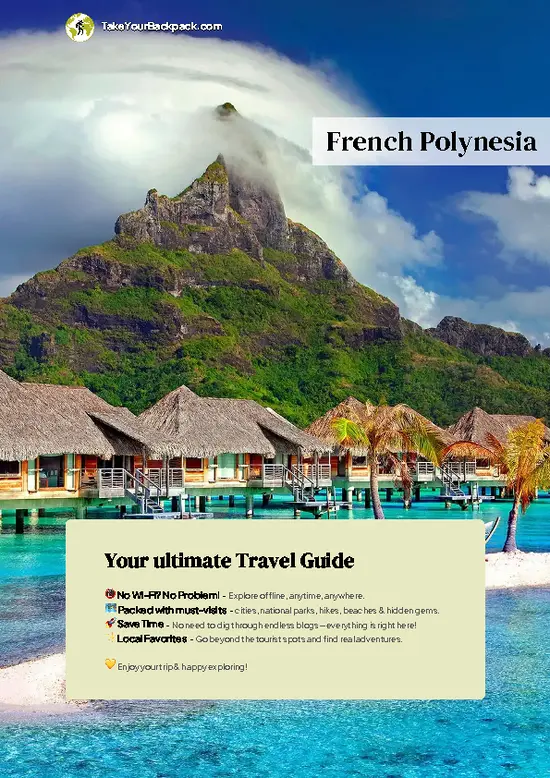
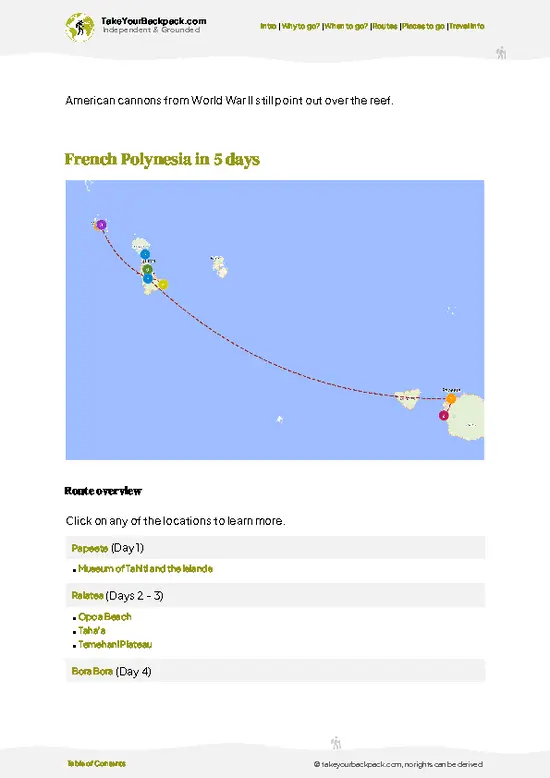
example page 0 from our offline Travel Guide for French Polynesia
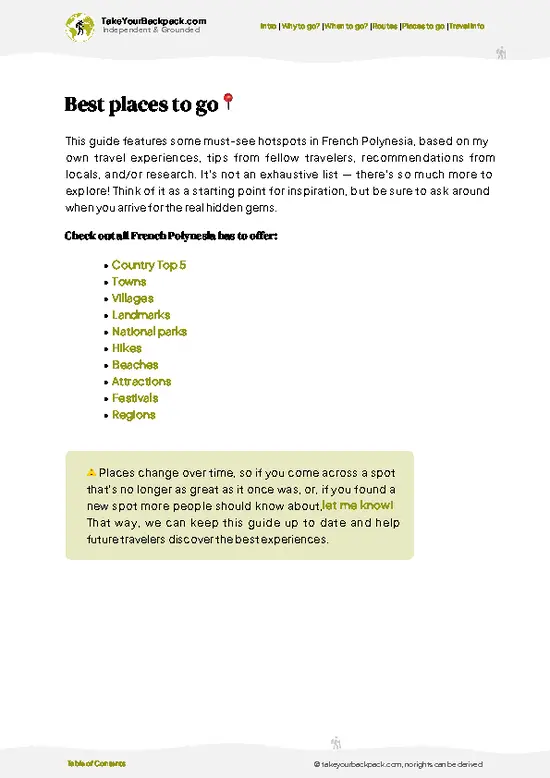
example page 1 from our offline Travel Guide for French Polynesia
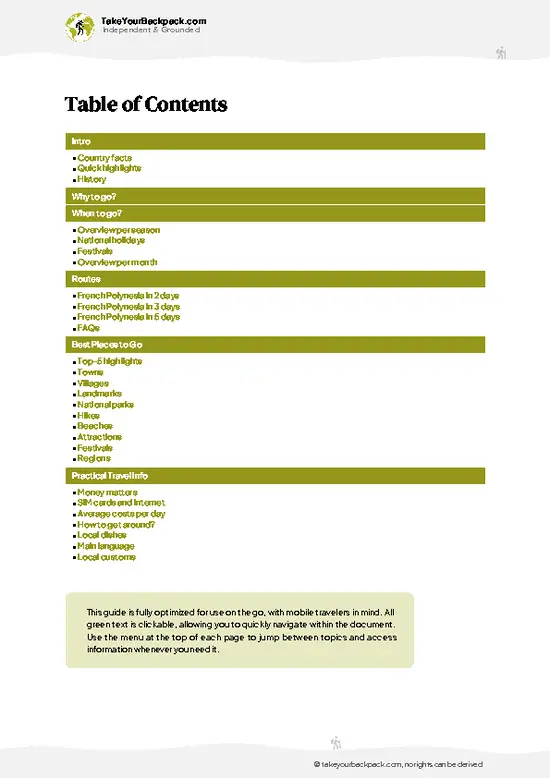
example page 2 from our offline Travel Guide for French Polynesia
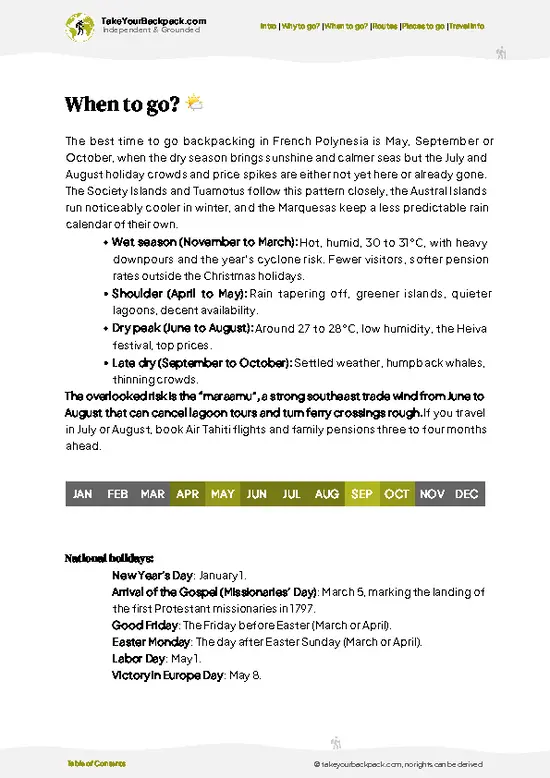
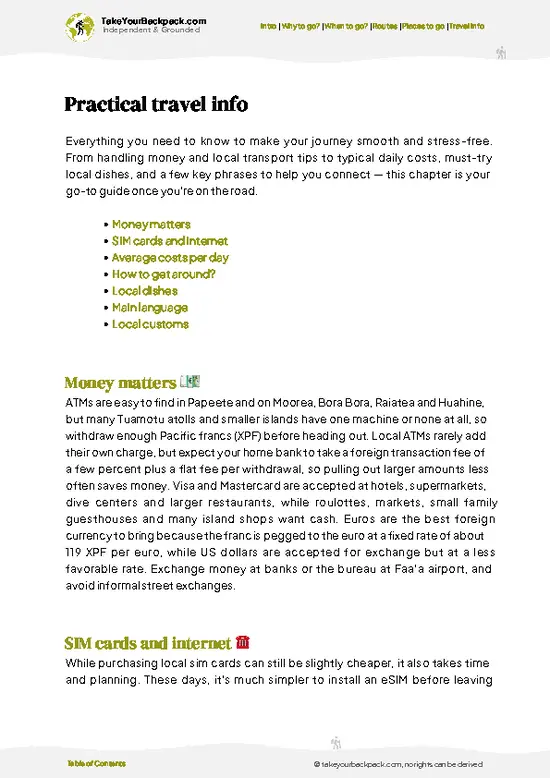
example page 3 from our offline Travel Guide for French Polynesia
example page 4 from our offline Travel Guide for French Polynesia
example page 5 from our offline Travel Guide for French Polynesia
example page 6 from our offline Travel Guide for French Polynesia
example page 7 from our offline Travel Guide for French Polynesia
Loading the map 🌍
CLICK TO FILTER
towns
villages
landmarks
national parks
hikes
beaches
attractions
festivals
regions
SHOW COUNTRY’S BESTSHOW ALL

✨ Why go?
Ranked #1 attraction in French Polynesia
What makes it a must-see attraction

Tahiti’s postcard version is lagoons and black-sand surf. This museum explains the people who crossed the Pacific to settle it. If you are going to island-hop through the Society Islands, the Pacific navigation and migration galleries give you the context for every outrigger you will see later, and for why the same few words and designs turn up from Tahiti to the Marquesas. Few places in the region lay out the sequence so clearly in one building.
The second reason is the colonial-era story, told from a Polynesian angle. The Pomare dynasty and the arrival of Cook, the missionaries and the French protectorate are all covered, and you leave understanding why Papeete looks and sounds the way it does.
Then there is the setting. Few museums come with a lawn running to the lagoon edge with Moorea on … read more 👉
Tahiti’s postcard version is lagoons and black-sand surf. This museum explains the people who crossed the Pacific to settle it. If you are going to island-hop through the Society Islands, the Pacific navigation and migration galleries give you the context for every outrigger you will see later, and for why the same few words and designs turn up from Tahiti to the Marquesas. Few places in the region lay out the sequence so clearly in one building.
The second reason is the colonial-era story, told from a Polynesian angle. The Pomare dynasty and the arrival of Cook, the missionaries and the French protectorate are all covered, and you leave understanding why Papeete looks and sounds the way it does.
Then there is the setting. Few museums come with a lawn running to the lagoon edge with Moorea on the horizon. After an hour among carved gods and tapa cloth, you can sit there with your shoes off and watch the sunlight shift on the reef. It makes a cheap, easy half day on an island where most experiences cost far more.

💡 HighlightsKey sights and experiences for travelers

  1. Polynesian Navigation and Settlement Gallery: Models of double-hulled voyaging canoes and star-path explanations show how Polynesians reached the islands without instruments. It is the best-known part of the museum and the logical place to start.
  2. Carved Gods and Ritual Objects: Wooden to’o figures, ornamented staffs and sacred pieces from the pre-Christian religion sit in low light. The wrapped and bound forms look different from the polished tiki sold at souvenir stalls.
  3. Tahitian Society and Daily Life: Tapa bark cloth, pounders, fishing gear, shell ornaments and tools show how people lived. The pearl-shell fishhooks are tiny and finely made.
  4. Tattoo and Body Art Displays: Tools and patterns explain tatau, the Tahitian word that gave English the term tattoo. Look at the designs here before you
… read more 👉
  1. Polynesian Navigation and Settlement Gallery: Models of double-hulled voyaging canoes and star-path explanations show how Polynesians reached the islands without instruments. It is the best-known part of the museum and the logical place to start.
  2. Carved Gods and Ritual Objects: Wooden to’o figures, ornamented staffs and sacred pieces from the pre-Christian religion sit in low light. The wrapped and bound forms look different from the polished tiki sold at souvenir stalls.
  3. Tahitian Society and Daily Life: Tapa bark cloth, pounders, fishing gear, shell ornaments and tools show how people lived. The pearl-shell fishhooks are tiny and finely made.
  4. Tattoo and Body Art Displays: Tools and patterns explain tatau, the Tahitian word that gave English the term tattoo. Look at the designs here before you see them on locals and decide what means what.
  5. Pomare Dynasty and the Colonial Era: Portraits, documents and objects trace the royal family, European contact and the shift to the French protectorate. This gallery gives the political backstory of Papeete.
  6. Natural History Section: Reef life, volcanic geology and island ecology are explained, which helps if you plan to snorkel or hike inland. It is quieter than the galleries on culture.
  7. Lagoon-side Gardens: The grounds hold stone carvings and plants, and look straight across the channel to Moorea. Entry to the museum is 1,000 XPF (about US$9), and two hours inside plus time in the garden fills a morning comfortably.
The navigation gallery and the gardens pair well in one morning: take in the history indoors, then let it settle on the lawn looking at the same ocean those canoes crossed.
Spotted a mistake or missing something? Contact us.

Things to do near Museum of Tahiti and the Islands

Ratings based on Tripadvisor reviews. When you book through this link, you support our work at no extra cost to you.

🌤️ When to go?Weather, crowds, and seasonal trade-offs

The museum is easiest to enjoy from May to October, when Tahiti’s dry, cooler months make the walk between the exhibits and the lagoon-side gardens at Puna’auia pleasant.
  • Dry Season (May to October): Days run about 27 to 30°C (81 to 86°F), nights drop to 20 to 22°C (68 to 72°F), and humidity eases. Daylight lasts roughly 11 hours, with sunset near 5:30 pm in July. Flights and rooms cost the most in July and August.
  • Wet Season (November to April): Expect 29 to 32°C (84 to 90°F), heavy afternoon downpours and sticky air. Rain is a good reason to be inside the galleries. Sunset comes after 6:30 pm, and prices soften outside the Christmas weeks.
  • Heiva (late June to July): Dance and canoe competitions fill Papeete, and the museum’s Polynesian dance, tattoo and navigation displays make good context.
… read more 👉
The museum is easiest to enjoy from May to October, when Tahiti’s dry, cooler months make the walk between the exhibits and the lagoon-side gardens at Puna’auia pleasant.
  • Dry Season (May to October): Days run about 27 to 30°C (81 to 86°F), nights drop to 20 to 22°C (68 to 72°F), and humidity eases. Daylight lasts roughly 11 hours, with sunset near 5:30 pm in July. Flights and rooms cost the most in July and August.
  • Wet Season (November to April): Expect 29 to 32°C (84 to 90°F), heavy afternoon downpours and sticky air. Rain is a good reason to be inside the galleries. Sunset comes after 6:30 pm, and prices soften outside the Christmas weeks.
  • Heiva (late June to July): Dance and canoe competitions fill Papeete, and the museum’s Polynesian dance, tattoo and navigation displays make good context. Book beds early.
  • Weekday Mornings: Tour buses and cruise groups are rare, so you often have the Marae and Pacific navigation halls nearly to yourself.
Arrive at opening time on a weekday to beat both the midday heat and any school groups.


source: climatestotravel.comJANJanuary: fair for travelingFEBFebruary: fair for travelingMARMarch: fair for travelingAPRApril: fair for travelingMAYMay: excellent for travelingJUNJune: highly recommended for travelingJULJuly: highly recommended for travelingAUGAugust: highly recommended for travelingSEPSeptember: excellent for travelingOCTOctober: highly recommended for travelingNOVNovember: fair for travelingDECDecember: fair for traveling
french-polynesia-attraction-museum-of-tahiti-and-the-islands v1
© Google |

✈️ The backpacker research shortcutFrench Polynesia Travel Guide

An offline-friendly backpacking guide with optimized travel routes, ranked highlights, transport advice, and the best areas to stay.
example page 0 from our offline Travel Guide for French Polynesia
example page 1 from our offline Travel Guide for French Polynesia
example page 2 from our offline Travel Guide for French Polynesia
example page 3 from our offline Travel Guide for French Polynesia
example page 4 from our offline Travel Guide for French Polynesia
example page 5 from our offline Travel Guide for French Polynesia
example page 6 from our offline Travel Guide for French Polynesia
example page 7 from our offline Travel Guide for French Polynesia
The digital guide (149 pages) contains:
✅ 41 highlights, ranked by travel appeal
✅ Optimized 2, 3 & 5-day travel routes
✅ Cities, national parks, landmarks, beaches
✅ How to get around
✅ Offline-friendly for travel without Wi-Fi
👉 Click to see all 30+ guide features

📅 Plan smarter in minutes, not weeks
✅ Month by month travel advice
✅ Festivals & national holidays
✅ Budget expectations

🗺️ Go to the right places, skip the overrated ones
✅ Honest pros & cons of destinations
✅ Top hikes, parks & viewpoints
✅ Lesser-known places most travelers miss
✅ Clear “worth it vs skip it” guidance

🛏️ Travel smoothly without rookie mistakes
✅ Best areas to stay
✅ Transport systems explained simply
✅ Common scams & safety advice
✅ SIM cards, money & practical tips

🌍 Understand the country, not just visit it
✅ Culture & traditions
✅ 52 Essential phrases & customs
✅ Festivals worth planning around
✅ Traveler-friendly historical context
✅ Insights that make places more meaningful

📱 Built for real travel conditions
✅ Fully downloadable PDF
✅ Works completely offline
✅ Optimized for phone use
✅ Useful in remote areas & buses
✅ Everything in one place
Stop searching, start planning
Get instant access to your full guide. 30‑day money-back guarantee.
+ Add another guide for just

By proceeding you agree to our terms.
Sent to your inbox immediately after payment • 100% Secure Checkout
Best Backpacking Travel Advisor 2025 tourism awardBest Backpacking
Travel Advisor
2025
What others say about Take Your Backpack Guides:
⭐⭐⭐⭐⭐
Fantastic, amazing amount of information!
⭐⭐⭐⭐⭐
My goodness this is amazing, it's what I've been looking for hats off too you!
⭐⭐⭐⭐⭐
I think this is absolutely BRILLIANT
⭐⭐⭐⭐
Very complete and informative. It's still missing places, but I gotta to commend you
⭐⭐⭐⭐⭐
This is truly amazing, thank you, can't wait to explore it with my kids!
⭐⭐⭐⭐⭐
Awesome resource, thank you!
⭐⭐⭐⭐⭐
This is amazing! Can't wait to explore the ones I haven't seen
⭐⭐⭐⭐
I love this! Well done, great idea.
⭐⭐⭐⭐⭐
Thanks for taking the time to make this gem!
⭐⭐⭐⭐⭐
This might be the best website I've ever seen.
⭐⭐⭐⭐⭐
Congratulations, and thank you so much for your work; it's incredibly valuable.
⭐⭐⭐⭐
In all seriousness I think you did a great job pointing out the important spots
⭐⭐⭐⭐⭐
10/10 very good
⭐⭐⭐⭐⭐
As someone who's only just starting to visit regularly this is awesome, thank you.
⭐⭐⭐⭐
Thank you very much! I'm going to visit my dad, it's going to be very useful!
⭐⭐⭐⭐⭐
This is really cool! We'll be travelling for the first time and this definitely come in handy.
⭐⭐⭐⭐⭐
You are now our minister of culture, congratulations 👨‍💼
⭐⭐⭐⭐⭐
Just wanted to tell you that this is a pearl! Going to follow your recommendations.
⭐⭐⭐⭐⭐
This is so cool. I'll definitely be using the resource for my travels soon.
⭐⭐⭐⭐⭐
This is very impressive! Good work.
⭐⭐⭐⭐⭐
This is an amazing and informative site. Very well done!

🛏️ Where to stay?Choosing the right base

Base yourself in Papeete or along the west coast near Puna’auia, since the museum sits at Pointe des Pêcheurs in Puna’auia, about 15 minutes by car from downtown Papeete.
Papeete is the practical choice for most backpackers. It has the ferry terminal for Moorea, the Le Truck bus hub, markets, and the widest range of cheap eats. The waterfront and the streets around the cathedral are fine by day, but the area behind the harbor gets rowdy late at night, so choose a bed within walking distance of the main drag and taxi home after dark. Solo travelers meet others easily here, and it is the best base … read more 👉
Base yourself in Papeete or along the west coast near Puna’auia, since the museum sits at Pointe des Pêcheurs in Puna’auia, about 15 minutes by car from downtown Papeete.
Papeete is the practical choice for most backpackers. It has the ferry terminal for Moorea, the Le Truck bus hub, markets, and the widest range of cheap eats. The waterfront and the streets around the cathedral are fine by day, but the area behind the harbor gets rowdy late at night, so choose a bed within walking distance of the main drag and taxi home after dark. Solo travelers meet others easily here, and it is the best base for onward island hopping.
Puna’auia and the coastal strip toward Paea is calmer and greener. You get guesthouses with kitchens, lagoon access and easy trips to the museum, the Maraa grotto, and surf spots, plus supermarkets for self-catering. It feels safe and residential, though evenings are quiet and you will want a bus pass or rental scooter.
Pirae, just east of Papeete, is a middle option with local restaurants and slightly lower rates, though fewer social spaces. Whichever you pick, stay near the coastal road, where buses run frequently until the early evening.

👛 Costs (as of 15 October 2026)Money, prices, and spending tips

A day built around the Museum of Tahiti and the Islands runs about €60 for a budget traveler, with the entry ticket making up only a small part of it. The museum sits on the coast at Punaauia, roughly 10 km (6 miles) southwest of Papeete, on Pointe Outuaiai, and its gardens face the lagoon.
CategoryBudget RangeLocal Reality
Museum entry€6 to 8Adult ticket covers the permanent halls on Polynesian history, navigation, and tattoo traditions plus the lawns; children and residents pay less. Check the current rate at the desk, as it is adjusted from time to time.
Transport€3 to 8Le Truck (local bus) along the west coast road costs about €2 each way. A taxi from Papeete runs roughly €20 to 30 one way, so most backpackers take the bus.
Food€10 to 18Roulottes (food trucks) in Punaauia and Papeete serve
… read more 👉
A day built around the Museum of Tahiti and the Islands runs about €60 for a budget traveler, with the entry ticket making up only a small part of it. The museum sits on the coast at Punaauia, roughly 10 km (6 miles) southwest of Papeete, on Pointe Outuaiai, and its gardens face the lagoon.
CategoryBudget RangeLocal Reality
Museum entry€6 to 8Adult ticket covers the permanent halls on Polynesian history, navigation, and tattoo traditions plus the lawns; children and residents pay less. Check the current rate at the desk, as it is adjusted from time to time.
Transport€3 to 8Le Truck (local bus) along the west coast road costs about €2 each way. A taxi from Papeete runs roughly €20 to 30 one way, so most backpackers take the bus.
Food€10 to 18Roulottes (food trucks) in Punaauia and Papeete serve plate meals for around €10 to 14. A supermarket baguette lunch is cheaper. Everything is paid in the local currency, and card use is common in shops but not at trucks.
Extras€0 to 6Temporary exhibitions are sometimes included in the ticket. The gift shop sells books and pareu cloth, and coffee on site is about €3 to 4.
Accommodation (high season, May to October)€28 to 45A dorm bed or basic guesthouse room in the Papeete or Punaauia area. In the low season, from November to April, expect roughly €22 to 38.
Total Daily Budget€60Per person, per day, in high season.
The museum is closed on Mondays, so plan your costs around a Tuesday to Sunday visit. Prices in French Polynesia run higher than in mainland Europe, and the island’s imported goods are the main reason.
⚠️ Prices can change and everyone travels differently, so take this as a rough guide. Hope it helps you plan your adventure!

FAQTraveler FAQ

Plan on 2 to 3 hours for the main exhibitions, which cover Polynesian navigation, religion, tattoo and island history. Add another hour if you want to walk the grounds and the lagoon-side gardens at Pointe des Pêcheurs. Combine it with the nearby Maraa grotto or a lunch stop in Puna’auia for a half-day outing from Papeete.
Yes for most travelers, since the cost is low relative to everything else on Tahiti and the collection is the clearest introduction to Polynesian culture on the island. Expect carved tiki figures, canoe models, tapa cloth and maps of ancient voyaging routes, with English labelling in many galleries. Budget about USD 0 to 10 for entry, so the value is hard to beat on a rainy day.
From Papeete, the museum is about 10 km southwest along the coastal road in Puna’auia, a 15 to 25 minute drive depending on traffic. Le Truck buses heading to Puna’auia cost roughly USD 2 to 3 and run frequently on weekdays, so ask the driver to stop near Pointe des Pêcheurs. A taxi costs about USD 20 to 30 each way, and a rental scooter or car gives the most flexibility.
⚠️ Things can change over time, so always validate details locally before you go.

Other French Polynesian attractions near Museum of Tahiti and the Islands

Explore more nearby:


💡 Not sure where to go next?
Create a personalized itinerary for French Polynesia including Museum of Tahiti and the Islands and the places that fit your trip.

Generate my itinerary

👉 Discover all attractions

Or checkout all French Polynesia has to offer (think cities, towns, villages, national parks, hikes, beaches, festivals)
Country photo of French Polynesia

We 💚 feedbackWhat to keep in mind

Go on a weekday morning in the cooler months, when the galleries are nearly empty and the lawn is still shaded, then stay until the heat starts to rise. I would skip the afternoon, when tour groups arrive and the glare off the lagoon makes the garden hard to enjoy. Bring a light layer, since the air conditioning is strong.

✍️ Help improve this page!
The information on this page is based on in-depth research, insights shared by experienced travelers, and feedback from the local travel community in French Polynesia. While every effort is made to keep the information accurate and current, conditions can change — so if you spot anything incorrect or outdated, please get in touch.


🙋‍♂️ Give feedback

👋 Meet the founderWho’s Behind Take Your Backpack?

Johan, backpacker and founder of TakeYourBackpackHi, I’m Johan (Netherlands 🇳🇱), the creator of TakeYourBackpack. Over the past 3 decades, I’ve backpacked through 90+ countries across six continents, gaining extensive experience with independent travel, long-term trips, and overland routes.

This site is built on a combination of firsthand travel experience and carefully curated insights from other backpackers. Many guides are based on places I’ve personally visited, while others bring together tips, observations, and practical advice shared by trusted travelers I’ve met along the way.

The goal is to provide realistic, experience-driven guidance — not generic itineraries — so you can explore destinations with better context, clearer expectations, and more confidence.