×

French Polynesia🇵🇫 | beachesOpoa BeachTaputapuatea Marae, sacred reef pass, dark sand, Faaroa Bay | things to do and best time to go

Explore Motu TiahuraExplore Opunohu Bay

Backpacking in Opoa Beach
👀 For curious travelersbeach ranked #7
By Johan Kruseman 🇳🇱 | Updated October 15, 2026

Opoa Beach is a narrow strip of dark sand and coral rubble beside a village, and the postcard white-sand stretch you may be picturing is not what you get. It sits on the southeast coast of Raiatea in French Polynesia, about 45 minutes by road from Uturoa, the island’s main town. Swimming is fine in calm, shallow lagoon water, though it is more of a quick dip than a beach day, and the snorkeling is average. What you gain is quiet. Few people, clean shoreline, and nothing but pensions and roadside snack trucks for food. I’d spend your time on the sacred sites and the lagoon, and skip any plan built around sunbathing. Go early, before the day’s heat, when the light is soft on the water and roosters outnumber visitors. Fishing pirogues rest on the grass nearby.

Discover everything you want to know in the 📖 French Polynesia Travel Guide.


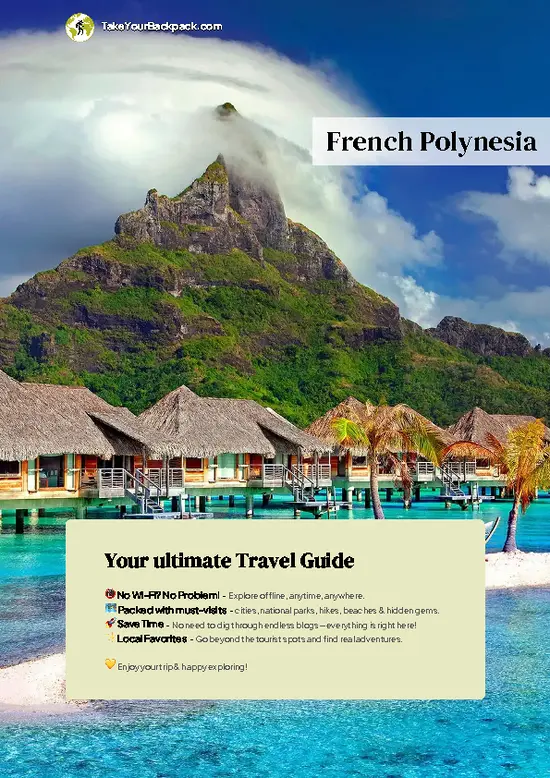
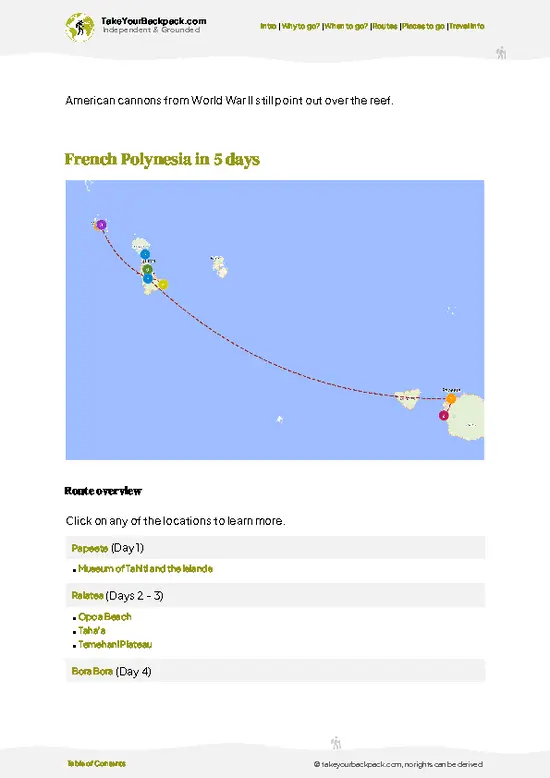
example page 0 from our offline Travel Guide for French Polynesia
example page 1 from our offline Travel Guide for French Polynesia
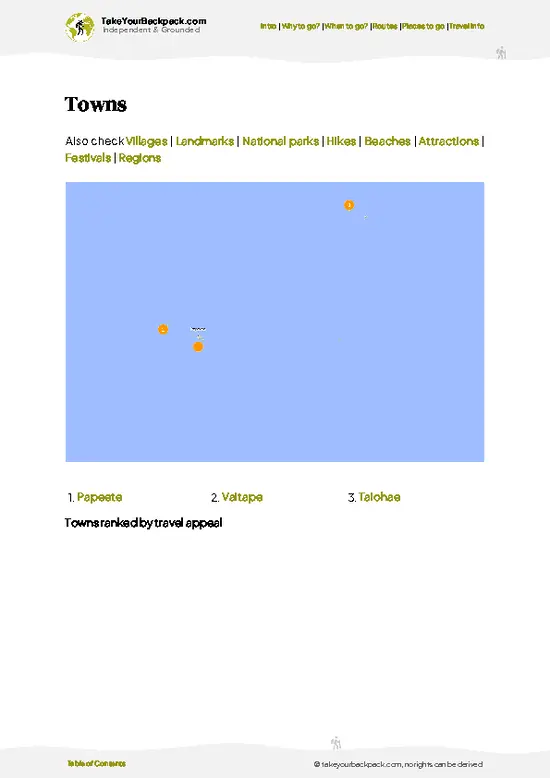
example page 2 from our offline Travel Guide for French Polynesia
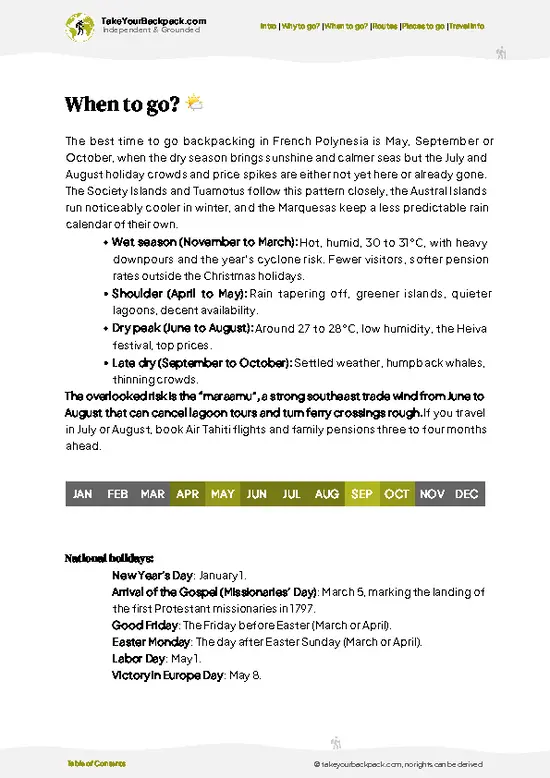
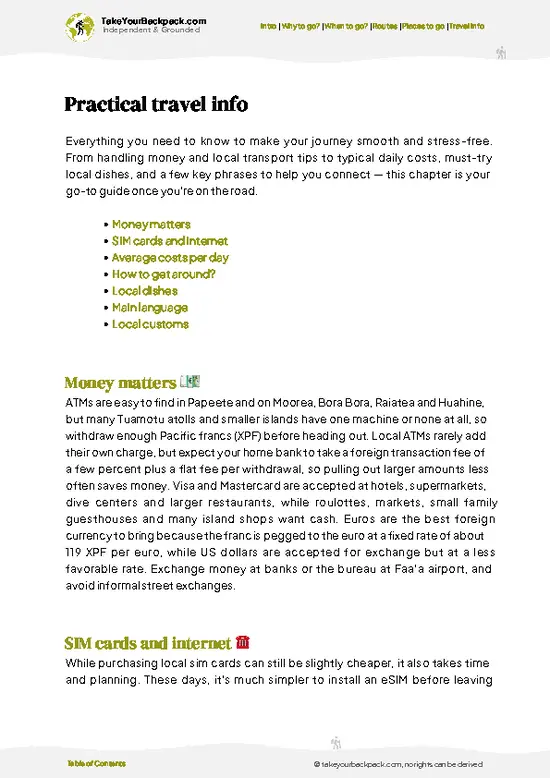
example page 3 from our offline Travel Guide for French Polynesia
example page 4 from our offline Travel Guide for French Polynesia
example page 5 from our offline Travel Guide for French Polynesia
example page 6 from our offline Travel Guide for French Polynesia
example page 7 from our offline Travel Guide for French Polynesia
Loading the map 🌍
CLICK TO FILTER
towns
villages
landmarks
national parks
hikes
beaches
attractions
festivals
regions
SHOW COUNTRY’S BESTSHOW ALL

✨ Why go?
Ranked #7 beach in French Polynesia
Why visitors keep coming back

Backpackers stop here for the history, not the sand. The Taputapuatea marae is a few minutes’ walk along the shore, and it was the religious and political center of Eastern Polynesia. Voyaging canoes set out from this coast toward Hawaii, Aotearoa and Rapa Nui. UNESCO listed the site in 2017, and standing on the stone platform with the lagoon in front of you makes the scale of those journeys feel real in a way no museum does.

The second reason is the lack of crowds. Opoa is a working village on the quiet side of Raiatea, so you share the road with locals, not tour buses. The Teavamoa pass just offshore gives the coast a wild edge, with waves breaking on the reef while the lagoon stays glassy. Nearby Faaroa Bay adds river paddling to the mix. It suits travelers who like to linger and talk … read more 👉
Backpackers stop here for the history, not the sand. The Taputapuatea marae is a few minutes’ walk along the shore, and it was the religious and political center of Eastern Polynesia. Voyaging canoes set out from this coast toward Hawaii, Aotearoa and Rapa Nui. UNESCO listed the site in 2017, and standing on the stone platform with the lagoon in front of you makes the scale of those journeys feel real in a way no museum does.

The second reason is the lack of crowds. Opoa is a working village on the quiet side of Raiatea, so you share the road with locals, not tour buses. The Teavamoa pass just offshore gives the coast a wild edge, with waves breaking on the reef while the lagoon stays glassy. Nearby Faaroa Bay adds river paddling to the mix. It suits travelers who like to linger and talk with the family running the pension, and it is a calm break between busier islands.

💡 HighlightsEssential experiences to have while visiting Opoa Beach

  1. Taputapuatea Marae: The reason to come. This vast complex of stone platforms and courtyards on the point is the great ceremonial center of ancient Polynesia, tied to the departures of ocean-voyaging canoes. Entry is free. Allow an hour, and read the signboards before you walk the grounds.
  2. Te Ava Mo’a, the sacred pass: Look out from the marae to the narrow gap in the reef through which the canoes once left. Even from shore you can see the line of surf on either side, and the contrast with the calm lagoon explains why the spot was chosen.
  3. Lagoon swim at the beach: The water is shallow and gentle, and the dark sand shoreline is quiet most of the day. It is best in the morning. Bring reef shoes, since the bottom has coral rubble.
  4. Paddling Faaroa Bay: A short way from Opoa, this deep, sheltered bay
… read more 👉
  1. Taputapuatea Marae: The reason to come. This vast complex of stone platforms and courtyards on the point is the great ceremonial center of ancient Polynesia, tied to the departures of ocean-voyaging canoes. Entry is free. Allow an hour, and read the signboards before you walk the grounds.
  2. Te Ava Mo’a, the sacred pass: Look out from the marae to the narrow gap in the reef through which the canoes once left. Even from shore you can see the line of surf on either side, and the contrast with the calm lagoon explains why the spot was chosen.
  3. Lagoon swim at the beach: The water is shallow and gentle, and the dark sand shoreline is quiet most of the day. It is best in the morning. Bring reef shoes, since the bottom has coral rubble.
  4. Paddling Faaroa Bay: A short way from Opoa, this deep, sheltered bay is the only one in the islands with a navigable river. Rent a kayak or join a local guide, and drift up the Faaroa River between steep green banks with breadfruit and hibiscus on the shore.
  5. Mount Temehani plateau: A guided hike to this high plateau is the only way to see the tiare apetahi, a rare flower found nowhere else on earth. It opens at dawn, so expect an early start and a muddy trail. Hire a guide locally.
If time is short, skip the hike and keep the marae and the pass, which sit side by side.
Spotted a mistake or missing something? Contact us.

Things to do near Opoa Beach

Ratings based on Tripadvisor reviews. When you book through this link, you support our work at no extra cost to you.

🌤️ When to go?Choosing the right time of year

  • Dry Season (May to October): Opoa on Raiatea’s southeast coast gets its steadiest weather now, with highs near 27 to 29°C (81 to 84°F), nights around 21 to 23°C (70 to 73°F), and sunshine most days. Daylight runs about 11 hours in June and July.
  • Wet Season (November to April): Expect 28 to 31°C (82 to 88°F), thick humidity, and heavy afternoon downpours. February and March bring the highest cyclone risk, though direct hits are rare.
  • Crowds and Prices: Visitors are few at Opoa year-round, since the area has no resorts. Flights into Raiatea and boat charters cost more from July to August.
  • Events: Heiva festivities in July bring dance and canoe contests to the Leeward Islands, with some Raiatea events reachable by road.
I would go in June or September, when skies are clear and rooms are easier to find.

source: climatestotravel.comJANJanuary: fair for travelingFEBFebruary: fair for travelingMARMarch: fair for travelingAPRApril: fair for travelingMAYMay: excellent for travelingJUNJune: highly recommended for travelingJULJuly: highly recommended for travelingAUGAugust: highly recommended for travelingSEPSeptember: excellent for travelingOCTOctober: highly recommended for travelingNOVNovember: good for travelingDECDecember: fair for traveling
when-to-go

✈️ The backpacker research shortcutFrench Polynesia Travel Guide

An offline-friendly backpacking guide with optimized travel routes, ranked highlights, transport advice, and the best areas to stay.
example page 0 from our offline Travel Guide for French Polynesia
example page 1 from our offline Travel Guide for French Polynesia
example page 2 from our offline Travel Guide for French Polynesia
example page 3 from our offline Travel Guide for French Polynesia
example page 4 from our offline Travel Guide for French Polynesia
example page 5 from our offline Travel Guide for French Polynesia
example page 6 from our offline Travel Guide for French Polynesia
example page 7 from our offline Travel Guide for French Polynesia
The digital guide (149 pages) contains:
✅ 41 highlights, ranked by travel appeal
✅ Optimized 2, 3 & 5-day travel routes
✅ Cities, national parks, landmarks, beaches
✅ How to get around
✅ Offline-friendly for travel without Wi-Fi
👉 Click to see all 30+ guide features

📅 Plan smarter in minutes, not weeks
✅ Month by month travel advice
✅ Festivals & national holidays
✅ Budget expectations

🗺️ Go to the right places, skip the overrated ones
✅ Honest pros & cons of destinations
✅ Top hikes, parks & viewpoints
✅ Lesser-known places most travelers miss
✅ Clear “worth it vs skip it” guidance

🛏️ Travel smoothly without rookie mistakes
✅ Best areas to stay
✅ Transport systems explained simply
✅ Common scams & safety advice
✅ SIM cards, money & practical tips

🌍 Understand the country, not just visit it
✅ Culture & traditions
✅ 52 Essential phrases & customs
✅ Festivals worth planning around
✅ Traveler-friendly historical context
✅ Insights that make places more meaningful

📱 Built for real travel conditions
✅ Fully downloadable PDF
✅ Works completely offline
✅ Optimized for phone use
✅ Useful in remote areas & buses
✅ Everything in one place
Stop searching, start planning
Get instant access to your full guide. 30‑day money-back guarantee.
+ Add another guide for just

By proceeding you agree to our terms.
Sent to your inbox immediately after payment • 100% Secure Checkout
Best Backpacking Travel Advisor 2025 tourism awardBest Backpacking
Travel Advisor
2025
What others say about Take Your Backpack Guides:
⭐⭐⭐⭐⭐
Fantastic, amazing amount of information!
⭐⭐⭐⭐⭐
My goodness this is amazing, it's what I've been looking for hats off too you!
⭐⭐⭐⭐⭐
I think this is absolutely BRILLIANT
⭐⭐⭐⭐
Very complete and informative. It's still missing places, but I gotta to commend you
⭐⭐⭐⭐⭐
This is truly amazing, thank you, can't wait to explore it with my kids!
⭐⭐⭐⭐⭐
Awesome resource, thank you!
⭐⭐⭐⭐⭐
This is amazing! Can't wait to explore the ones I haven't seen
⭐⭐⭐⭐
I love this! Well done, great idea.
⭐⭐⭐⭐⭐
Thanks for taking the time to make this gem!
⭐⭐⭐⭐⭐
This might be the best website I've ever seen.
⭐⭐⭐⭐⭐
Congratulations, and thank you so much for your work; it's incredibly valuable.
⭐⭐⭐⭐
In all seriousness I think you did a great job pointing out the important spots
⭐⭐⭐⭐⭐
10/10 very good
⭐⭐⭐⭐⭐
As someone who's only just starting to visit regularly this is awesome, thank you.
⭐⭐⭐⭐
Thank you very much! I'm going to visit my dad, it's going to be very useful!
⭐⭐⭐⭐⭐
This is really cool! We'll be travelling for the first time and this definitely come in handy.
⭐⭐⭐⭐⭐
You are now our minister of culture, congratulations 👨‍💼
⭐⭐⭐⭐⭐
Just wanted to tell you that this is a pearl! Going to follow your recommendations.
⭐⭐⭐⭐⭐
This is so cool. I'll definitely be using the resource for my travels soon.
⭐⭐⭐⭐⭐
This is very impressive! Good work.
⭐⭐⭐⭐⭐
This is an amazing and informative site. Very well done!

🛏️ Where to stay?How to pick the right area

Opoa has almost no tourist infrastructure, so the best base for most backpackers is Uturoa, Raiatea’s main town, about 35 to 40 kilometers (22 to 25 miles) north by the coastal road, roughly 45 minutes by car. Uturoa has the supermarkets, ATMs, ferry quay, and a handful of budget guesthouses and pensions, plus the best chance of meeting other travelers, especially sailors and divers. Rooms there run about 7,000 to 12,000 XPF (US$65 to 110) for a double. A rental car or scooter is nearly essential to reach Opoa from there. If you want quiet, family-run pensions are scattered along the southeast … read more 👉
Opoa has almost no tourist infrastructure, so the best base for most backpackers is Uturoa, Raiatea’s main town, about 35 to 40 kilometers (22 to 25 miles) north by the coastal road, roughly 45 minutes by car. Uturoa has the supermarkets, ATMs, ferry quay, and a handful of budget guesthouses and pensions, plus the best chance of meeting other travelers, especially sailors and divers. Rooms there run about 7,000 to 12,000 XPF (US$65 to 110) for a double. A rental car or scooter is nearly essential to reach Opoa from there. If you want quiet, family-run pensions are scattered along the southeast and east coast near Opoa and Faaroa Bay, often with kitchen access, but they are not social places and meals can be limited, so stock up in Uturoa first. Some guesthouses near Faaroa Bay offer kayaks and river trips. Book ahead from July to August, since the options are few.

🛡️ SafetyScams, Hazards, and Annoyances

Opoa is a quiet, low-risk spot, but it is not a managed swimming beach. There are no lifeguards or flags, and the shoreline is mostly rocky or coral-edged rather than soft sand, so wear reef shoes for wading. Water inside the lagoon is calm, though currents can run strongly through the reef passes, so stay away from channel openings. Rays and small blacktip reef sharks are common in Polynesian lagoons and rarely bother anyone who keeps calm. Sun is intense from mid-morning, so bring reef-safe sunscreen and a hat. Afternoon squalls roll in during the wet season. Theft is uncommon here, but lock a rental car and keep valuables out of sight when visiting nearby Taputapuatea marae. Few services exist, so carry water and snacks.

FAQCommon questions from travelers

Opoa lies on Raiatea’s southeast coast, reached by road from Uturoa, about 35 to 40 kilometers (22 to 25 miles) and roughly 45 minutes by car. Fly into Raiatea from Tahiti (about 45 minutes) or take the Apetahi Express ferry from Papeete, around 4.5 to 5 hours. Rental cars run about 8,000 to 12,000 XPF (US$75 to 110) a day in Uturoa. Public buses are very limited, so a rental is the practical option.
Opoa suits calm lagoon swimming and paddling better than surfing or serious snorkeling. Visibility and coral are better in other parts of Raiatea and on nearby Taha’a, though shallow lagoon swims are pleasant. Some surf breaks exist at the reef passes, but they need a boat and local guidance. Bring your own mask and reef shoes, as rental gear is not available at Opoa.
Yes, there is no entry fee for Opoa’s shoreline, and the nearby Taputapuatea marae, a UNESCO World Heritage site, is also open to walk around freely. Your main costs are transport and food. A rental car runs about 8,000 to 12,000 XPF (US$75 to 110) a day, and shops near Opoa are minimal, so buy supplies in Uturoa. Guided marae tours cost extra, usually around 4,000 to 8,000 XPF (US$35 to 75).
⚠️ Things can change over time, so always validate details locally before you go.

Other French Polynesian beaches near Opoa Beach

Explore more nearby:

  • Matira Beach—Public sand, 2 km strand, knee-deep lagoon, Otemanu sunsets| 54 km away
  • Paeahi—surf break, black sand, local surf culture| 63 km away
  • Motu Tiahura—Ray shallows, blacktip sharks, coral gardens, paddle-ready lagoon| 168 km away

💡 Not sure where to go next?
Create a personalized itinerary for French Polynesia including Opoa Beach and the places that fit your trip.

Generate my itinerary

👉 Discover all beaches

Or checkout all French Polynesia has to offer (think cities, towns, villages, national parks, hikes, beaches, festivals)
Country photo of French Polynesia

We 💚 feedbackParting advice and final tips

The classic mistake is treating Opoa as a drive-by photo stop, snapping the marae from the road and leaving. Give it a slow morning instead. Walk the platforms before the heat and the day visitors arrive, then swim afterward, and bring water and snacks since options on this coast are few.

✍️ Help improve this page!
The information on this page is based on in-depth research, insights shared by experienced travelers, and feedback from the local travel community in French Polynesia. While every effort is made to keep the information accurate and current, conditions can change — so if you spot anything incorrect or outdated, please get in touch.


🙋‍♂️ Give feedback

👋 Meet the founderWho’s Behind Take Your Backpack?

Johan, backpacker and founder of TakeYourBackpackHi, I’m Johan (Netherlands 🇳🇱), the creator of TakeYourBackpack. Over the past 3 decades, I’ve backpacked through 90+ countries across six continents, gaining extensive experience with independent travel, long-term trips, and overland routes.

This site is built on a combination of firsthand travel experience and carefully curated insights from other backpackers. Many guides are based on places I’ve personally visited, while others bring together tips, observations, and practical advice shared by trusted travelers I’ve met along the way.

The goal is to provide realistic, experience-driven guidance — not generic itineraries — so you can explore destinations with better context, clearer expectations, and more confidence.