×

French Polynesia🇵🇫 | beachesTiahura BeachReef-edge wade, coral patches, west-facing dusk, snack caravans | things to do and best time to go

Explore Temae BeachExplore Festival of the Arts

Backpacking in Tiahura Beach
🌟 Highlightbeach ranked #3
By Johan Kruseman 🇳🇱 | Updated October 15, 2026

Tiahura Beach is best known for the shallow lagoon off its western shore, where the water stays knee to waist deep for a long walk toward the reef and you can wade out to see rays and blacktip reef sharks. The beach sits on the northwest coast of Moorea, an island in French Polynesia, a short ferry hop west of Tahiti’s capital, Papeete. The sand is pale and fairly clean, with a few coconut palms for shade, and the water is calm and clear, great for snorkeling and paddling. Don’t expect surf here, since the reef breaks the swell far offshore. Crowds stay thin, mostly guests from nearby pensions, and you can reach the sand from the road on foot. A snack caravan or two and a small grocery are close for cheap lunches. Go in the morning, when the lagoon is glassy and the light is soft, and bring reef-safe sunscreen and water shoes for the coral rubble.

Discover everything you want to know in the 📖 French Polynesia Travel Guide.


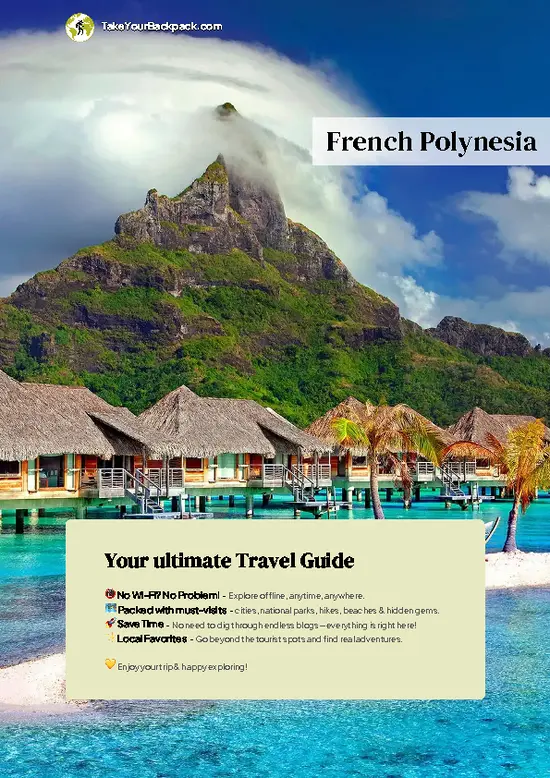
example page 0 from our offline Travel Guide for French Polynesia
example page 1 from our offline Travel Guide for French Polynesia
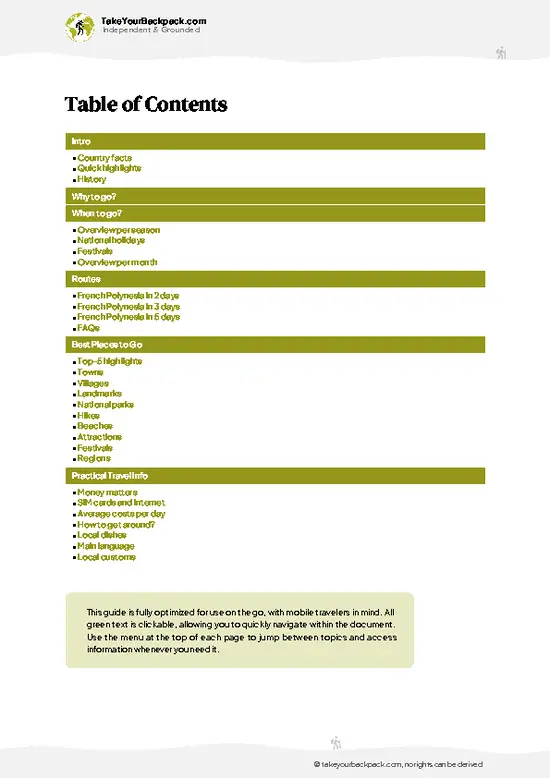
example page 2 from our offline Travel Guide for French Polynesia
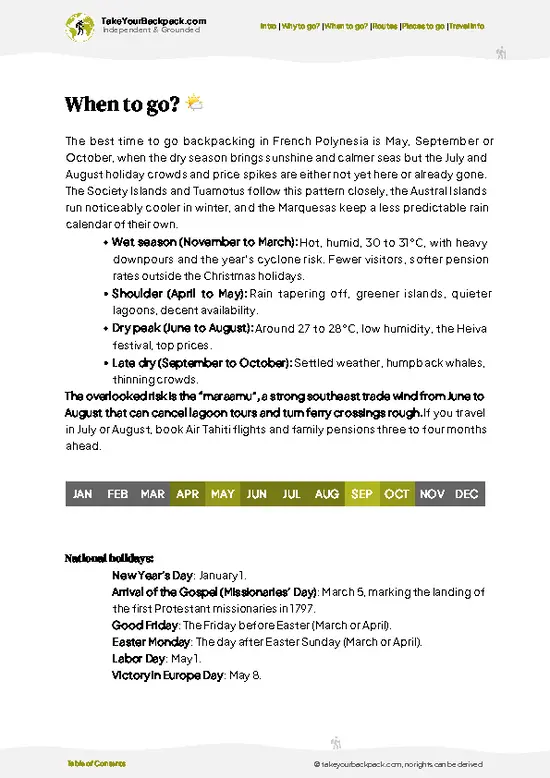
example page 3 from our offline Travel Guide for French Polynesia
example page 4 from our offline Travel Guide for French Polynesia
example page 5 from our offline Travel Guide for French Polynesia
example page 6 from our offline Travel Guide for French Polynesia
example page 7 from our offline Travel Guide for French Polynesia
Loading the map 🌍
CLICK TO FILTER
towns
villages
landmarks
national parks
hikes
beaches
attractions
festivals
regions
SHOW COUNTRY’S BESTSHOW ALL

✨ Why go?
Ranked #3 beach in French Polynesia
What makes this beach worth visiting

Backpackers stop at Tiahura because it gives you a lagoon you can walk across without paying for a boat. In the shallows you can drift over coral heads and sandy patches full of parrotfish, butterflyfish and the occasional ray, with a snorkel mask as your only real expense. That matters in a country where most lagoon time is sold in tour packages.

The second reason is the setting. Tiahura sits on the sunset side of Moorea, so evenings bring a clear view of the sun dropping into the open ocean while the island’s jagged peaks turn dark behind you. You can eat from a roadside snack stand, sit on the sand with a drink and watch the sky change without booking anything.

It also works as a pause between more demanding stops. Hikes in the interior, pineapple fields and bays on the north coast are … read more 👉
Backpackers stop at Tiahura because it gives you a lagoon you can walk across without paying for a boat. In the shallows you can drift over coral heads and sandy patches full of parrotfish, butterflyfish and the occasional ray, with a snorkel mask as your only real expense. That matters in a country where most lagoon time is sold in tour packages.

The second reason is the setting. Tiahura sits on the sunset side of Moorea, so evenings bring a clear view of the sun dropping into the open ocean while the island’s jagged peaks turn dark behind you. You can eat from a roadside snack stand, sit on the sand with a drink and watch the sky change without booking anything.

It also works as a pause between more demanding stops. Hikes in the interior, pineapple fields and bays on the north coast are all within reach, so Tiahura becomes the place where you swim, wash the salt off and reset. Pensions nearby keep it a social base, and conversations start easily over breakfast.

💡 HighlightsEssential experiences to have while visiting Tiahura Beach

  1. Walking the Tiahura lagoon to the reef edge: The signature experience. The water stays shallow for a long stretch, and you can wade or snorkel out to see coral gardens, reef fish and sometimes small sharks and rays. Go early, when the water is still and visibility is best.
  2. Snorkeling the coral gardens: Just offshore the lagoon floor is a patchwork of coral heads, sand and sea grass. Giant clams, trumpetfish and schools of sergeant majors turn up close to the beach, so a mask and fins from your pension are enough.
  3. Kayaking or paddleboarding across the lagoon: The calm surface makes this easy even for first-timers. Paddle along the reef line and look down through the clear water, then land on one of the sandbars for a break.
  4. Sunset over the ocean: Because the beach looks west, the sun drops into
… read more 👉
  1. Walking the Tiahura lagoon to the reef edge: The signature experience. The water stays shallow for a long stretch, and you can wade or snorkel out to see coral gardens, reef fish and sometimes small sharks and rays. Go early, when the water is still and visibility is best.
  2. Snorkeling the coral gardens: Just offshore the lagoon floor is a patchwork of coral heads, sand and sea grass. Giant clams, trumpetfish and schools of sergeant majors turn up close to the beach, so a mask and fins from your pension are enough.
  3. Kayaking or paddleboarding across the lagoon: The calm surface makes this easy even for first-timers. Paddle along the reef line and look down through the clear water, then land on one of the sandbars for a break.
  4. Sunset over the ocean: Because the beach looks west, the sun drops into the open ocean and the sky goes orange and violet over the water. Bring something to drink, sit on the sand and stay until the first stars show.
  5. Lunch from a roadside snack stand: Small snack caravans near the beach serve poisson cru (raw tuna marinated in coconut milk and lime), grilled fish and fries. It is the cheapest way to eat well here, and you can carry it back to the sand.
The lagoon walk and the snorkeling combine naturally in one morning, since you are already in the water, and the sunset can close the day.
Spotted a mistake or missing something? Contact us.

Things to do around Tiahura Beach

Ratings based on Tripadvisor reviews. When you book through this link, you support our work at no extra cost to you.

🌤️ When to go?Choosing the right time of year

  • Dry Season (May to October): The best window for Tiahura, with days of 27 to 29°C (81 to 84°F), cooler nights near 21 to 23°C (70 to 73°F), low rain and steady trade-wind breezes. Sunrise to sunset is roughly 6am to 5:45pm, so plan around an early dark.
  • Wet Season (November to April): Expect 29 to 32°C (84 to 90°F), heavy humidity and short, loud downpours, with the odd multi-day cyclone-fringe system. Water is bath-warm and the lagoon is often clearer on calm mornings.
  • July and August: Peak crowds from Europe and North America, so beds and ferries fill and prices run highest. Humpback whales pass offshore from roughly July to October, and tour boats leave from the Moorea coast.
  • Shoulder Months (May, June, September, October): Dry weather, thinner crowds and noticeably lower lodging rates.
Book … read more 👉
  • Dry Season (May to October): The best window for Tiahura, with days of 27 to 29°C (81 to 84°F), cooler nights near 21 to 23°C (70 to 73°F), low rain and steady trade-wind breezes. Sunrise to sunset is roughly 6am to 5:45pm, so plan around an early dark.
  • Wet Season (November to April): Expect 29 to 32°C (84 to 90°F), heavy humidity and short, loud downpours, with the odd multi-day cyclone-fringe system. Water is bath-warm and the lagoon is often clearer on calm mornings.
  • July and August: Peak crowds from Europe and North America, so beds and ferries fill and prices run highest. Humpback whales pass offshore from roughly July to October, and tour boats leave from the Moorea coast.
  • Shoulder Months (May, June, September, October): Dry weather, thinner crowds and noticeably lower lodging rates.
Book a bed in the Moorea west-coast area at least a month ahead for July or August, and expect better rates in May or late September.


source: climatestotravel.comJANJanuary: fair for travelingFEBFebruary: fair for travelingMARMarch: fair for travelingAPRApril: fair for travelingMAYMay: highly recommended for travelingJUNJune: excellent for travelingJULJuly: excellent for travelingAUGAugust: excellent for travelingSEPSeptember: highly recommended for travelingOCTOctober: highly recommended for travelingNOVNovember: fair for travelingDECDecember: fair for traveling
french-polynesia-beach-tiahura-beach
© Google | Sylvie Dutot

✈️ The backpacker research shortcutFrench Polynesia Travel Guide

An offline-friendly backpacking guide with optimized travel routes, ranked highlights, transport advice, and the best areas to stay.
example page 0 from our offline Travel Guide for French Polynesia
example page 1 from our offline Travel Guide for French Polynesia
example page 2 from our offline Travel Guide for French Polynesia
example page 3 from our offline Travel Guide for French Polynesia
example page 4 from our offline Travel Guide for French Polynesia
example page 5 from our offline Travel Guide for French Polynesia
example page 6 from our offline Travel Guide for French Polynesia
example page 7 from our offline Travel Guide for French Polynesia
The digital guide (149 pages) contains:
✅ 41 highlights, ranked by travel appeal
✅ Optimized 2, 3 & 5-day travel routes
✅ Cities, national parks, landmarks, beaches
✅ How to get around
✅ Offline-friendly for travel without Wi-Fi
👉 Click to see all 30+ guide features

📅 Plan smarter in minutes, not weeks
✅ Month by month travel advice
✅ Festivals & national holidays
✅ Budget expectations

🗺️ Go to the right places, skip the overrated ones
✅ Honest pros & cons of destinations
✅ Top hikes, parks & viewpoints
✅ Lesser-known places most travelers miss
✅ Clear “worth it vs skip it” guidance

🛏️ Travel smoothly without rookie mistakes
✅ Best areas to stay
✅ Transport systems explained simply
✅ Common scams & safety advice
✅ SIM cards, money & practical tips

🌍 Understand the country, not just visit it
✅ Culture & traditions
✅ 52 Essential phrases & customs
✅ Festivals worth planning around
✅ Traveler-friendly historical context
✅ Insights that make places more meaningful

📱 Built for real travel conditions
✅ Fully downloadable PDF
✅ Works completely offline
✅ Optimized for phone use
✅ Useful in remote areas & buses
✅ Everything in one place
Stop searching, start planning
Get instant access to your full guide. 30‑day money-back guarantee.
+ Add another guide for just

By proceeding you agree to our terms.
Sent to your inbox immediately after payment • 100% Secure Checkout
Best Backpacking Travel Advisor 2025 tourism awardBest Backpacking
Travel Advisor
2025
What others say about Take Your Backpack Guides:
⭐⭐⭐⭐⭐
Fantastic, amazing amount of information!
⭐⭐⭐⭐⭐
My goodness this is amazing, it's what I've been looking for hats off too you!
⭐⭐⭐⭐⭐
I think this is absolutely BRILLIANT
⭐⭐⭐⭐
Very complete and informative. It's still missing places, but I gotta to commend you
⭐⭐⭐⭐⭐
This is truly amazing, thank you, can't wait to explore it with my kids!
⭐⭐⭐⭐⭐
Awesome resource, thank you!
⭐⭐⭐⭐⭐
This is amazing! Can't wait to explore the ones I haven't seen
⭐⭐⭐⭐
I love this! Well done, great idea.
⭐⭐⭐⭐⭐
Thanks for taking the time to make this gem!
⭐⭐⭐⭐⭐
This might be the best website I've ever seen.
⭐⭐⭐⭐⭐
Congratulations, and thank you so much for your work; it's incredibly valuable.
⭐⭐⭐⭐
In all seriousness I think you did a great job pointing out the important spots
⭐⭐⭐⭐⭐
10/10 very good
⭐⭐⭐⭐⭐
As someone who's only just starting to visit regularly this is awesome, thank you.
⭐⭐⭐⭐
Thank you very much! I'm going to visit my dad, it's going to be very useful!
⭐⭐⭐⭐⭐
This is really cool! We'll be travelling for the first time and this definitely come in handy.
⭐⭐⭐⭐⭐
You are now our minister of culture, congratulations 👨‍💼
⭐⭐⭐⭐⭐
Just wanted to tell you that this is a pearl! Going to follow your recommendations.
⭐⭐⭐⭐⭐
This is so cool. I'll definitely be using the resource for my travels soon.
⭐⭐⭐⭐⭐
This is very impressive! Good work.
⭐⭐⭐⭐⭐
This is an amazing and informative site. Very well done!

🛏️ Where to stay?How to pick the right area

The best base for backpackers is the Haapiti and Papetoai stretch of Moorea’s northwest coast, where Tiahura Beach sits. It is the quieter side of the island, with white-sand lagoon access, a calm reef pass and easy snorkeling right off the shore.
Hostel-style beds and simple guesthouses cluster along the coastal road here, usually US$30 to 60 (roughly 3,000 to 6,000 XPF) a night for a dorm bed or a basic room. Many offer kitchens, which matters because restaurants are pricey and a supermarket run saves a lot.
Papetoai has a small village feel, a few snack trucks (roulottes) and a market for fruit … read more 👉
The best base for backpackers is the Haapiti and Papetoai stretch of Moorea’s northwest coast, where Tiahura Beach sits. It is the quieter side of the island, with white-sand lagoon access, a calm reef pass and easy snorkeling right off the shore.
Hostel-style beds and simple guesthouses cluster along the coastal road here, usually US$30 to 60 (roughly 3,000 to 6,000 XPF) a night for a dorm bed or a basic room. Many offer kitchens, which matters because restaurants are pricey and a supermarket run saves a lot.
Papetoai has a small village feel, a few snack trucks (roulottes) and a market for fruit and bread. It is good for meeting other travelers, though evenings are low-key rather than lively.
Cook Bay and Maharepa on the north side offer more shops, ATMs, bike rentals and restaurants, plus easier ferry access, and make a sensible second option if you want more choice. They are about 15 to 25 minutes from Tiahura by bike or car.
A rental bike or scooter makes the coastal road easy. Without one, the island bus is sparse and tied to ferry times, so staying within walking distance of the beach is wise.

🛡️ SafetyTraveler Safety Guide

Tiahura is a calm, well-behaved lagoon beach, and most travelers swim here without any trouble. The reef shelters the shore, so waves are small and there are no real rips inside the lagoon. Currents do pick up near the reef passes (the gaps in the outer reef), so avoid drifting toward them, especially on an outgoing tide.
The water is shallow in spots, with sharp coral and sea urchins on the bottom. Reef shoes help and you should not stand on live coral. Blacktip reef sharks and stingrays are common in the lagoon and used to people. They are harmless if you give them space and don’t chase or feed them.
The sun is the real hazard. UV is strong year-round, so wear reef-safe sunscreen and a rash guard, and seek shade between 11am and 2pm. Afternoon showers can roll in during the wet season.
Petty … read more 👉
Tiahura is a calm, well-behaved lagoon beach, and most travelers swim here without any trouble. The reef shelters the shore, so waves are small and there are no real rips inside the lagoon. Currents do pick up near the reef passes (the gaps in the outer reef), so avoid drifting toward them, especially on an outgoing tide.
The water is shallow in spots, with sharp coral and sea urchins on the bottom. Reef shoes help and you should not stand on live coral. Blacktip reef sharks and stingrays are common in the lagoon and used to people. They are harmless if you give them space and don’t chase or feed them.
The sun is the real hazard. UV is strong year-round, so wear reef-safe sunscreen and a rash guard, and seek shade between 11am and 2pm. Afternoon showers can roll in during the wet season.
Petty theft from parked cars and unattended bags does occur, so keep valuables out of sight or leave them locked at your lodging.

FAQCommon questions from travelers

Moorea is reached from Papeete on Tahiti by ferry in about 30 to 60 minutes, or a 10-minute flight from Faa’a airport. Ferries (Aremiti or Terevau) cost roughly 1,300 to 1,500 XPF (US$12 to 14) one way and arrive at Vaiare, on the east side. From there Tiahura Beach is a 25 to 35 minute drive on the island ring road, or a taxi or rental bike for the trip.
It is excellent for swimming and snorkeling but not for surfing. The lagoon is shallow, warm at 26 to 29°C and sheltered by the reef, with coral heads, reef fish, blacktip sharks and rays within a short swim of the shore. Surfers head to the reef pass breaks outside the lagoon, reached by boat or outrigger, which is for experienced riders only.
Yes, the beach itself costs nothing to enter, and there is no charge for swimming or snorkeling from the sand. Access is often through public paths between properties along the coastal road. Budget extra for snorkel gear rental (about 1,000 to 2,000 XPF, or US$9 to 18 per day) and boat trips to the lagoon, which typically start around 5,000 XPF (US$45).
⚠️ Things can change over time, so always validate details locally before you go.

Other French Polynesian beaches near Tiahura Beach

Explore more nearby:

  • Motu Tiahura—Ray shallows, blacktip sharks, coral gardens, paddle-ready lagoon| 2 km away
  • Opunohu Bay—deep bay, mountain backdrop, moored sailboats| 4 km away
  • Temae Beach—Waist-deep lagoon, palm shade, Tahiti horizon, Sunday gatherings| 14 km away

💡 Not sure where to go next?
Create a personalized itinerary for French Polynesia including Tiahura Beach and the places that fit your trip.

Generate my itinerary

👉 Discover all beaches

Or checkout all French Polynesia has to offer (think cities, towns, villages, national parks, hikes, beaches, festivals)
Country photo of French Polynesia

We 💚 feedbackSumming up the experience

Two nights is the right stay for Tiahura. That gives you one morning for the lagoon and a second to paddle or snorkel again once you know where the coral heads are. Stay longer only if you plan to hike the island’s interior from here. I would bring my own mask and water shoes, and skip the afternoon when the wind ruffles the lagoon.

✍️ Help improve this page!
The information on this page is based on in-depth research, insights shared by experienced travelers, and feedback from the local travel community in French Polynesia. While every effort is made to keep the information accurate and current, conditions can change — so if you spot anything incorrect or outdated, please get in touch.


🙋‍♂️ Give feedback

👋 Meet the founderWho’s Behind Take Your Backpack?

Johan, backpacker and founder of TakeYourBackpackHi, I’m Johan (Netherlands 🇳🇱), the creator of TakeYourBackpack. Over the past 3 decades, I’ve backpacked through 90+ countries across six continents, gaining extensive experience with independent travel, long-term trips, and overland routes.

This site is built on a combination of firsthand travel experience and carefully curated insights from other backpackers. Many guides are based on places I’ve personally visited, while others bring together tips, observations, and practical advice shared by trusted travelers I’ve met along the way.

The goal is to provide realistic, experience-driven guidance — not generic itineraries — so you can explore destinations with better context, clearer expectations, and more confidence.