×

Gabon🇬🇦 | landmarksMarché du Mont-BouëtWax-print fabric rows, cassava lanes, smoked fish racks, herbal medicine stalls | things to do and best time to go

Explore NdjoléExplore Sette Cama

Backpacking in Marché du Mont-Bouët
🏆 Top pickunique site ranked #1
By Johan Kruseman 🇳🇱 | Updated October 22, 2026

Entry is free, and a morning here costs only what you choose to buy. Marché du Mont-Bouët sits in the Mont-Bouët district of Libreville, Gabon’s capital, and it is the biggest and loudest market in the country. Expect tin roofs ticking in the heat, red palm oil on your fingers, smoke from fish racks, and aisles so narrow that you turn sideways for porters pushing loaded carts. The fabric rows, the produce lanes and the herbal medicine stalls deserve your time. The electronics and plastic-goods sections are the same as any market in West and Central Africa, so skim them. It is crowded, pickpockets work the tight passages, and some vendors object to cameras, so ask first. Visit if you like sensory overload, haggling and eating where locals eat. Skip it if you need space, quiet or fixed prices.

Discover everything you want to know in the 📖 Gabon Travel Guide.


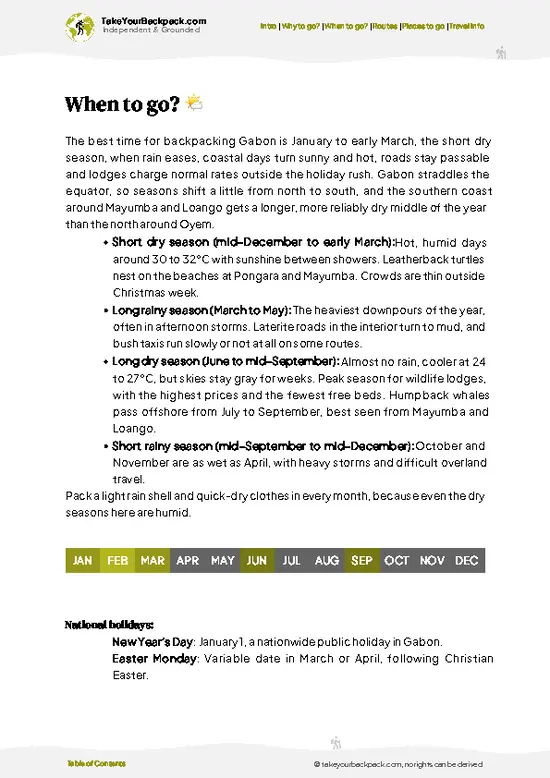
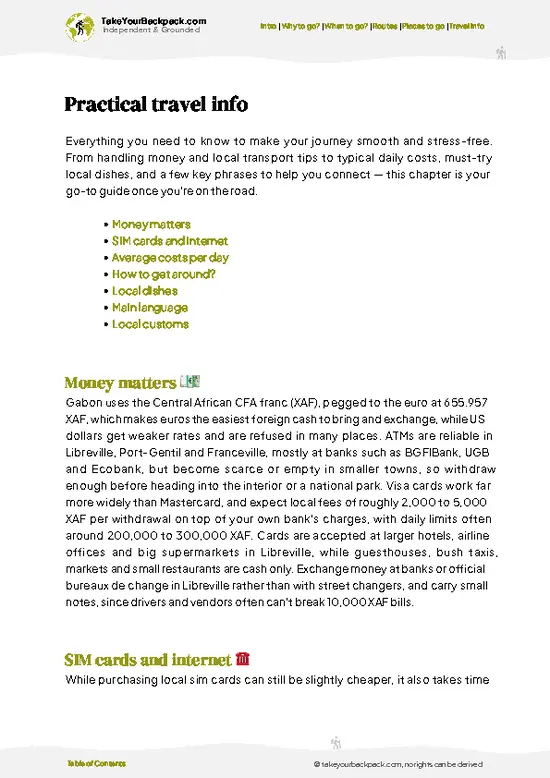
example page 0 from our offline Travel Guide for Gabon
example page 1 from our offline Travel Guide for Gabon
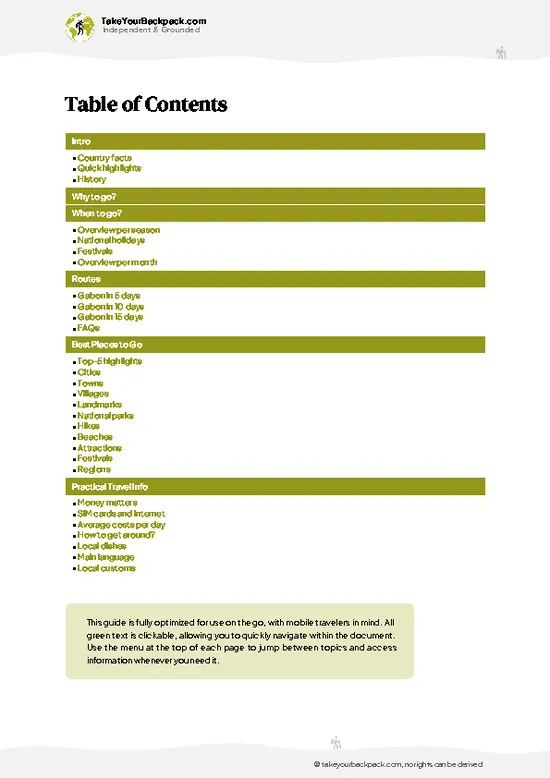
example page 2 from our offline Travel Guide for Gabon
example page 3 from our offline Travel Guide for Gabon
example page 4 from our offline Travel Guide for Gabon
example page 5 from our offline Travel Guide for Gabon
example page 6 from our offline Travel Guide for Gabon
example page 7 from our offline Travel Guide for Gabon
Loading the map 🌍
CLICK TO FILTER
cities
towns
villages
landmarks
national parks
hikes
beaches
attractions
festivals
regions
SHOW COUNTRY’S BESTSHOW ALL

✨ Why go?
Ranked #1 unique site in Gabon
Why Marché du Mont-Bouët should be on your travel list

Marché du Mont-Bouët is where Libreville actually shops, so you see the real economy of Gabon instead of a staged version of it. Traders from Senegal, Mali, Nigeria, Cameroon and Benin run many of the stalls, which makes the market a quick lesson in how Central and West Africa trade with each other. You hear French, Fang, Punu and several other languages within a few steps.

The second reason is the goods. Hundreds of bolts of wax-print pagnes hang in the cloth rows, and tailors nearby will turn them into a shirt or dress for you. The traditional medicine stalls, stacked with barks, roots, dried animal parts and bottled tinctures, are unlike anything in a European or Asian market.

It also fits easily into a Libreville stay. The market is a free, self-guided stop in the middle of the city, … read more 👉
Marché du Mont-Bouët is where Libreville actually shops, so you see the real economy of Gabon instead of a staged version of it. Traders from Senegal, Mali, Nigeria, Cameroon and Benin run many of the stalls, which makes the market a quick lesson in how Central and West Africa trade with each other. You hear French, Fang, Punu and several other languages within a few steps.

The second reason is the goods. Hundreds of bolts of wax-print pagnes hang in the cloth rows, and tailors nearby will turn them into a shirt or dress for you. The traditional medicine stalls, stacked with barks, roots, dried animal parts and bottled tinctures, are unlike anything in a European or Asian market.

It also fits easily into a Libreville stay. The market is a free, self-guided stop in the middle of the city, so you can pair it with the seafront, the National Museum of Arts and Traditions or the beaches without planning around an entry ticket or a tour. Go early, bring small bills and keep your bag in front of you.

💡 HighlightsMust-see experiences and standout moments

  1. The wax-print fabric rows: This is the market’s signature. Stalls stack bold, patterned cotton in every color, sold by the pagne length (usually six yards). Prices are negotiable, and seamstresses on the spot can sew what you buy.
  2. Fresh produce and manioc lanes: Pyramids of plantains, tomatoes, peppers and yams fill the central aisles, alongside cassava leaves and the long cassava sticks (bâton de manioc) wrapped in leaves. It is the best place to see what Gabonese kitchens run on.
  3. The fish section: Fresh, salted and smoked fish arrive from the coast and the Estuaire. The smoke is thick, the floors are wet and the pace is fast, so wear closed shoes.
  4. Traditional medicine stalls: Healers and herb sellers display bark, roots, seeds, powders and dried animal remains, and will explain what each is
… read more 👉
  1. The wax-print fabric rows: This is the market’s signature. Stalls stack bold, patterned cotton in every color, sold by the pagne length (usually six yards). Prices are negotiable, and seamstresses on the spot can sew what you buy.
  2. Fresh produce and manioc lanes: Pyramids of plantains, tomatoes, peppers and yams fill the central aisles, alongside cassava leaves and the long cassava sticks (bâton de manioc) wrapped in leaves. It is the best place to see what Gabonese kitchens run on.
  3. The fish section: Fresh, salted and smoked fish arrive from the coast and the Estuaire. The smoke is thick, the floors are wet and the pace is fast, so wear closed shoes.
  4. Traditional medicine stalls: Healers and herb sellers display bark, roots, seeds, powders and dried animal remains, and will explain what each is meant to treat. Look and ask. Photography here needs explicit permission.
  5. Tailor and seamstress corners: Rows of sewing machines are tucked between the fabric stalls. You can watch garments being cut and stitched within a day or two, and the work is cheap by European standards.
  6. Spice, dried goods and palm oil sellers: Bags of dried shrimp, ground peppers, groundnuts, salt and bottled red palm oil sit in tight rows. The smell alone orients you, and small purchases make good, packable souvenirs.
  7. Secondhand clothing and household goods: The friperie piles and kitchenware stalls on the outer streets are where residents hunt for bargains. It is lively to walk through even if you buy nothing.
  8. Street food at the market edges: Women grill fish and plantains, and sell beignets and skewers from small stands. It is cheap and quick, and the best way to refuel without leaving the market.
At Marché du Mont-Bouët, start in the produce and fish lanes at first light, because the aisles are cooler and quieter then and the stock is at its freshest, leaving the fabric rows and tailors for mid-morning once you have your bearings.
Spotted a mistake or missing something? Contact us.

Things to do around Marché du Mont-Bouët

Ratings based on Tripadvisor reviews. When you book through this link, you support our work at no extra cost to you.

🌤️ When to go?Weather, crowds, and seasonal trade-offs

  • Long Dry Season (June to September): Mont-Bouët is easiest to work in these months. Days run 22 to 28°C (72 to 82°F), skies stay gray and overcast, and rain is rare, so the covered alleys stay dry underfoot. Daylight is about 12 hours all year, so plan to finish by late afternoon.
  • Short Dry Season (mid-December to February): Expect 25 to 31°C (77 to 88°F) with patchy sun and humid heat. Stalls overflow with holiday goods and the aisles are at their most packed, so bring patience and keep your bag in front.
  • Big Rains (October to mid-December, March to May): Temperatures sit at 24 to 31°C (75 to 88°F) with heavy afternoon downpours. Lanes turn muddy, drains overflow, and taxis are harder to flag. Mornings are usually drier.
  • Crowds and Prices: The market is busy every day, with Saturday the heaviest.
… read more 👉
  • Long Dry Season (June to September): Mont-Bouët is easiest to work in these months. Days run 22 to 28°C (72 to 82°F), skies stay gray and overcast, and rain is rare, so the covered alleys stay dry underfoot. Daylight is about 12 hours all year, so plan to finish by late afternoon.
  • Short Dry Season (mid-December to February): Expect 25 to 31°C (77 to 88°F) with patchy sun and humid heat. Stalls overflow with holiday goods and the aisles are at their most packed, so bring patience and keep your bag in front.
  • Big Rains (October to mid-December, March to May): Temperatures sit at 24 to 31°C (75 to 88°F) with heavy afternoon downpours. Lanes turn muddy, drains overflow, and taxis are harder to flag. Mornings are usually drier.
  • Crowds and Prices: The market is busy every day, with Saturday the heaviest. Prices are negotiable and shift with supply and holidays, not tourist season, since few visitors come.
Go between 8 and 11 a.m. on a weekday, when it is cooler, less crowded, and stalls are fully stocked.


source: climatestotravel.comJANJanuary: fair for travelingFEBFebruary: fair for travelingMARMarch: fair for travelingAPRApril: fair for travelingMAYMay: fair for travelingJUNJune: highly recommended for travelingJULJuly: highly recommended for travelingAUGAugust: highly recommended for travelingSEPSeptember: highly recommended for travelingOCTOctober: fair for travelingNOVNovember: fair for travelingDECDecember: fair for traveling
when-to-go

✈️ The backpacker research shortcutGabon Travel Guide

An offline-friendly backpacking guide with optimized travel routes, ranked highlights, transport advice, and the best areas to stay.
example page 0 from our offline Travel Guide for Gabon
example page 1 from our offline Travel Guide for Gabon
example page 2 from our offline Travel Guide for Gabon
example page 3 from our offline Travel Guide for Gabon
example page 4 from our offline Travel Guide for Gabon
example page 5 from our offline Travel Guide for Gabon
example page 6 from our offline Travel Guide for Gabon
example page 7 from our offline Travel Guide for Gabon
The digital guide (209 pages) contains:
✅ 47 highlights, ranked by travel appeal
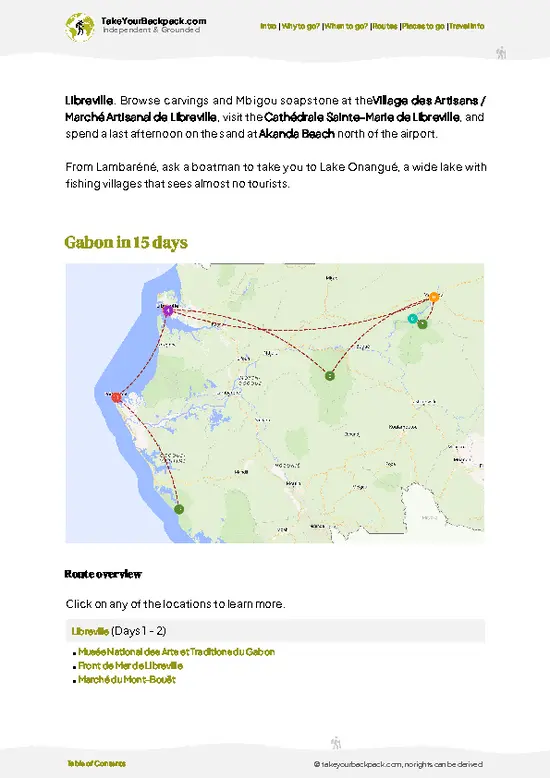
✅ Optimized 5, 10 & 15-day travel routes
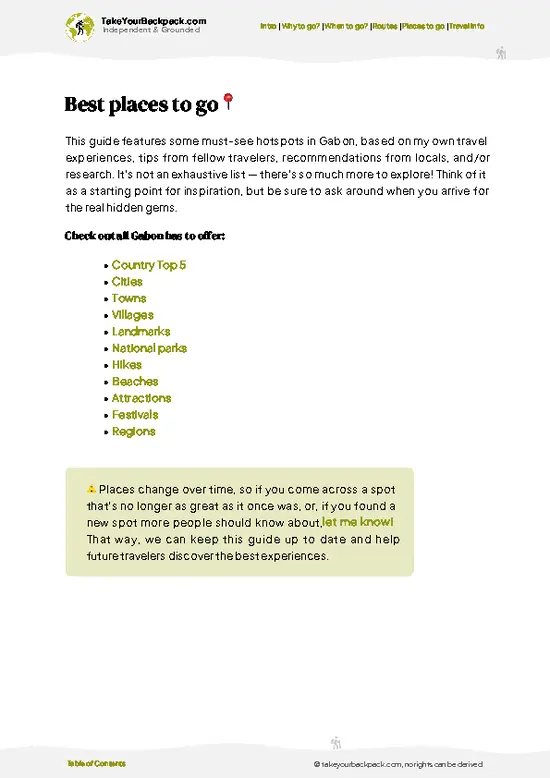
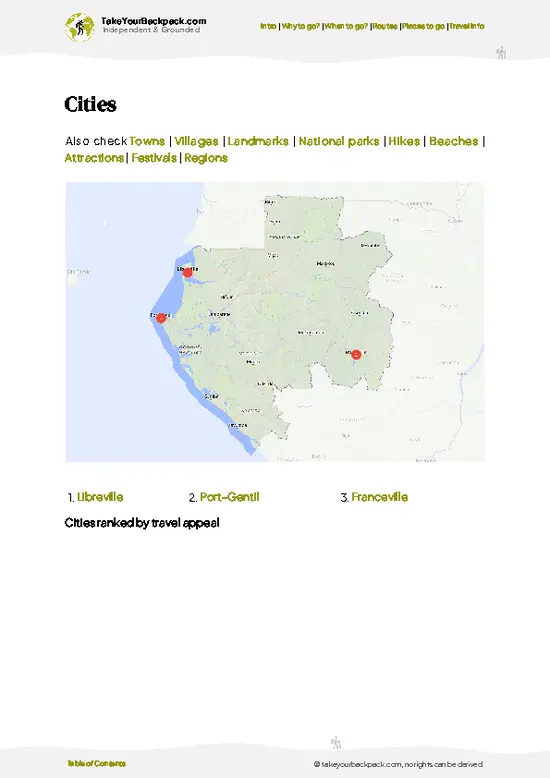
✅ Cities, national parks, landmarks, beaches
✅ How to get around
✅ Offline-friendly for travel without Wi-Fi
👉 Click to see all 30+ guide features

📅 Plan smarter in minutes, not weeks
✅ Month by month travel advice
✅ Festivals & national holidays
✅ Budget expectations

🗺️ Go to the right places, skip the overrated ones
✅ Honest pros & cons of destinations
✅ Top hikes, parks & viewpoints
✅ Lesser-known places most travelers miss
✅ Clear “worth it vs skip it” guidance

🛏️ Travel smoothly without rookie mistakes
✅ Best areas to stay
✅ Transport systems explained simply
✅ Common scams & safety advice
✅ SIM cards, money & practical tips

🌍 Understand the country, not just visit it
✅ Culture & traditions
✅ 52 Essential phrases & customs
✅ Festivals worth planning around
✅ Traveler-friendly historical context
✅ Insights that make places more meaningful

📱 Built for real travel conditions
✅ Fully downloadable PDF
✅ Works completely offline
✅ Optimized for phone use
✅ Useful in remote areas & buses
✅ Everything in one place
Stop searching, start planning
Get instant access to your full guide. 30‑day money-back guarantee.
+ Add another guide for just

By proceeding you agree to our terms.
Sent to your inbox immediately after payment • 100% Secure Checkout
Best Backpacking Travel Advisor 2025 tourism awardBest Backpacking
Travel Advisor
2025
What others say about Take Your Backpack Guides:
⭐⭐⭐⭐⭐
Fantastic, amazing amount of information!
⭐⭐⭐⭐⭐
My goodness this is amazing, it's what I've been looking for hats off too you!
⭐⭐⭐⭐⭐
I think this is absolutely BRILLIANT
⭐⭐⭐⭐
Very complete and informative. It's still missing places, but I gotta to commend you
⭐⭐⭐⭐⭐
This is truly amazing, thank you, can't wait to explore it with my kids!
⭐⭐⭐⭐⭐
Awesome resource, thank you!
⭐⭐⭐⭐⭐
This is amazing! Can't wait to explore the ones I haven't seen
⭐⭐⭐⭐
I love this! Well done, great idea.
⭐⭐⭐⭐⭐
Thanks for taking the time to make this gem!
⭐⭐⭐⭐⭐
This might be the best website I've ever seen.
⭐⭐⭐⭐⭐
Congratulations, and thank you so much for your work; it's incredibly valuable.
⭐⭐⭐⭐
In all seriousness I think you did a great job pointing out the important spots
⭐⭐⭐⭐⭐
10/10 very good
⭐⭐⭐⭐⭐
As someone who's only just starting to visit regularly this is awesome, thank you.
⭐⭐⭐⭐
Thank you very much! I'm going to visit my dad, it's going to be very useful!
⭐⭐⭐⭐⭐
This is really cool! We'll be travelling for the first time and this definitely come in handy.
⭐⭐⭐⭐⭐
You are now our minister of culture, congratulations 👨‍💼
⭐⭐⭐⭐⭐
Just wanted to tell you that this is a pearl! Going to follow your recommendations.
⭐⭐⭐⭐⭐
This is so cool. I'll definitely be using the resource for my travels soon.
⭐⭐⭐⭐⭐
This is very impressive! Good work.
⭐⭐⭐⭐⭐
This is an amazing and informative site. Very well done!

🛏️ Where to stay?How to pick the right area

Stay in Libreville’s central districts, because Mont-Bouët is a working market and has no backpacker accommodation of its own. A taxi from most of these areas takes 5 to 15 minutes, depending on traffic.

The Louis and Glass area along the seafront boulevard is the most practical base. It has the widest range of budget guesthouses, plus restaurants, ATMs and pharmacies within walking distance. Evenings feel comfortable here, and you can meet other travelers at cafés and grill spots. It is also where most shared taxis and ride-hailing cars are easy to catch.

Nomba and the streets around the Haut-de-Gué-Gué … read more 👉
Stay in Libreville’s central districts, because Mont-Bouët is a working market and has no backpacker accommodation of its own. A taxi from most of these areas takes 5 to 15 minutes, depending on traffic.

The Louis and Glass area along the seafront boulevard is the most practical base. It has the widest range of budget guesthouses, plus restaurants, ATMs and pharmacies within walking distance. Evenings feel comfortable here, and you can meet other travelers at cafés and grill spots. It is also where most shared taxis and ride-hailing cars are easy to catch.

Nomba and the streets around the Haut-de-Gué-Gué area suit travelers who want quieter, more residential surroundings. Rooms are often cheaper than on the seafront, and local eateries serve cheap grilled fish and brochettes. Fewer foreigners stay here, so the social side is thinner, but you get everyday Libreville life.

The Akanda and Batterie IV areas offer a calmer, upscale feel with safer night walks, though prices run higher and you will need taxis for everything.

Avoid sleeping right beside Mont-Bouët itself. The surrounding streets are loud, crowded, and not recommended after dark. Visit during the day, then retreat to a central neighborhood. Always agree on a taxi fare before getting in, and take a taxi back rather than walking at night.

👛 Costs (as of 22 October 2026)How expensive it really is

A day at Marché du Mont-Bouët costs roughly €38 to 75 per person, including a bed, meals and transport in Libreville. Entry to the market is free, and you pay in Central African francs. Bargaining is expected at every stall.
CategoryBudget RangeLocal Reality
Entry€0No ticket. Anyone can walk in, though some stallholders ask a small fee to take photos of their goods.
Accommodation (high season)€20 to 40Basic guesthouse or simple hotel room in central Libreville. Prices stay fairly flat across the year. Dorms are rare.
Local transport€2 to 6Shared taxis cost about €0.50 to 1 per hop. A private taxi to or from the market costs roughly €3 to 6, and the price should be agreed before you set off.
Food and drink€6 to 15Grilled fish, plantain, cassava and brochettes from market stalls and stands cost around
… read more 👉
A day at Marché du Mont-Bouët costs roughly €38 to 75 per person, including a bed, meals and transport in Libreville. Entry to the market is free, and you pay in Central African francs. Bargaining is expected at every stall.
CategoryBudget RangeLocal Reality
Entry€0No ticket. Anyone can walk in, though some stallholders ask a small fee to take photos of their goods.
Accommodation (high season)€20 to 40Basic guesthouse or simple hotel room in central Libreville. Prices stay fairly flat across the year. Dorms are rare.
Local transport€2 to 6Shared taxis cost about €0.50 to 1 per hop. A private taxi to or from the market costs roughly €3 to 6, and the price should be agreed before you set off.
Food and drink€6 to 15Grilled fish, plantain, cassava and brochettes from market stalls and stands cost around €2 to 5 a plate. Sit-down restaurants cost more.
Shopping€5 to 25Fabrics, spices, dried fish, souvenirs and handmade items. Opening quotes are often well above the final price.
Extras€2 to 5Water, SIM data, small tips to guides or helpers who carry bags.
Total Daily Budget€38 to 75Carry small notes, since stallholders often lack change for large bills.
⚠️ Prices can change and everyone travels differently, so take this as a rough guide. Hope it helps you plan your adventure!

FAQTraveler FAQ

Marché du Mont-Bouët is the largest market in Libreville, Gabon’s capital, and the busiest commercial hub in the country. Hundreds of stalls sell fabrics, spices, smoked and dried fish, produce, cosmetics, electronics and traditional medicine. Entry is free, and most traders open from about 7 a.m. until late afternoon.
Allow 2 to 3 hours for Marché du Mont-Bouët if you want to walk the main alleys and bargain for a few items. A morning visit between 8 and 11 a.m. is the most comfortable, before the heat and the crowds peak. Adding food stops or a guide can stretch it to half a day.
Marché du Mont-Bouët sits in the north of central Libreville, about 5 to 10 km from Léon-Mba International Airport depending on traffic. A taxi from the airport takes 20 to 40 minutes and costs about €10 to 15, or less if you share. From the seafront area, a shared taxi or short private ride takes 10 to 15 minutes, and you should agree on the fare first.
⚠️ Things can change over time, so always validate details locally before you go.

Other destinations worth considering

Marché du Mont-Bouët isn’t the only highlight in Gabon. Explore all what Gabon has to offer.
Country photo of Gabon

We 💚 feedbackKey takeaways before you go

Marché du Mont-Bouët is best in one focused morning of about three hours. That is enough to loop the produce, fish and fabric rows, grab grilled fish at the edge and still have energy left. A second visit only pays off if you are commissioning clothes from a tailor. I would bring small bills, leave valuables at the hotel and wear closed shoes.

✍️ Help improve this page!
The information on this page is based on in-depth research, insights shared by experienced travelers, and feedback from the local travel community in Gabon. While every effort is made to keep the information accurate and current, conditions can change — so if you spot anything incorrect or outdated, please get in touch.


🙋‍♂️ Give feedback

👋 Meet the founderWho’s Behind Take Your Backpack?

Johan, backpacker and founder of TakeYourBackpackHi, I’m Johan (Netherlands 🇳🇱), the creator of TakeYourBackpack. Over the past 3 decades, I’ve backpacked through 90+ countries across six continents, gaining extensive experience with independent travel, long-term trips, and overland routes.

This site is built on a combination of firsthand travel experience and carefully curated insights from other backpackers. Many guides are based on places I’ve personally visited, while others bring together tips, observations, and practical advice shared by trusted travelers I’ve met along the way.

The goal is to provide realistic, experience-driven guidance — not generic itineraries — so you can explore destinations with better context, clearer expectations, and more confidence.