v2.webp)
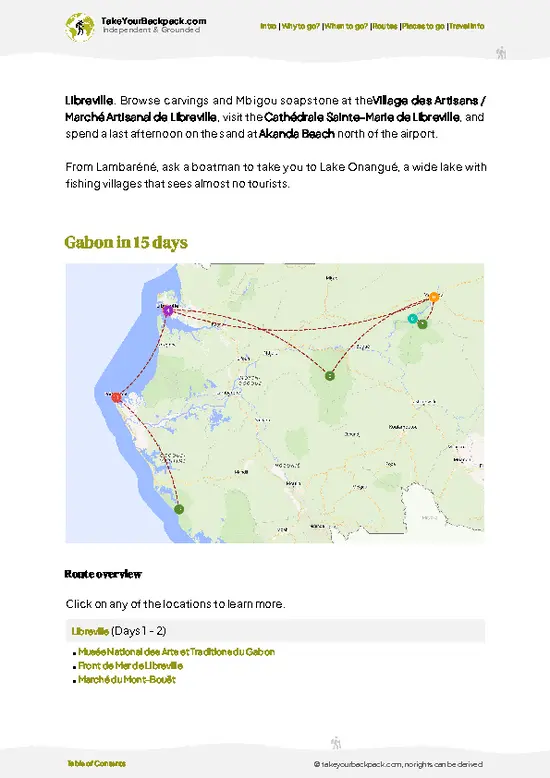
- Ogooué River waterfront and port — The spine of Ndjolé: busy quays where pirogues, cargo skiffs and occasional passenger boats load and unload. Great for people-watching, catching river traffic rhythms, and sunrise/sunset light over the water.
- Ndjolé central market (Marché) — A compact, colorful jumble of fresh fish, yams, tropical fruit and household goods. Visiting in the morning gives a real feel for daily life and is the best place to sample local snacks and buy small crafts.
- Trans-Gabon railway station — The small station on the national rail line is a practical transport hub and a living slice of Gabon’s infrastructure history; watching freight and occasional passenger movements tells you why Ndjolé matters on the map.
- River rapids and historical portage zone — The stretch of river
- Ogooué River waterfront and port — The spine of Ndjolé: busy quays where pirogues, cargo skiffs and occasional passenger boats load and unload. Great for people-watching, catching river traffic rhythms, and sunrise/sunset light over the water.
- Ndjolé central market (Marché) — A compact, colorful jumble of fresh fish, yams, tropical fruit and household goods. Visiting in the morning gives a real feel for daily life and is the best place to sample local snacks and buy small crafts.
- Trans-Gabon railway station — The small station on the national rail line is a practical transport hub and a living slice of Gabon’s infrastructure history; watching freight and occasional passenger movements tells you why Ndjolé matters on the map.
- River rapids and historical portage zone — The stretch of river near town where navigation becomes tricky is historically why Ndjolé developed. You can walk the riverbanks, see how boats are handled here, and spot birds and punted canoes negotiating the current.
- Boatbuilding and carpentry yards — Simple workshops along the river where local craftsmen carve and assemble wooden pirogues and small boats. It’s hands-on craft watching—ask politely and you’ll often see techniques passed down generations.
- Riverside fish smokehouses — Clusters of smokehouses that turn fresh catch into staple smoked fish. They’re aromatic, photogenic, and a practical way to learn about local food preservation and taste something traditional.
- Catholic mission / parish complex — The mission compound anchors much social life: church services, community events and sometimes small clinics or schools. The mix of local and missionary history is visible in the buildings and the people you meet.
- Municipal quarter and colonial-era administrative buildings — A short walk through town reveals older administrative structures and the layout left by colonial-era planning; useful for anyone curious about the town’s growth and architecture.
- Local crafts stalls and wood-carvers’ alley — Scattered stalls and a few dedicated carvers make masks, utensils and small sculptures from local wood. Prices are modest and buying directly supports artisans—perfect for authentic souvenirs.
- Community football pitch and markets at dusk — Not a monument, but where Ndjolé’s social life happens: evening matches, street food, music and bustle. Spend an hour here and you’ll meet locals and see the town unwind.
Spotted a mistake or missing something? Contact us.

 Best Backpacking
.jpg) Hi, I’m Johan (Netherlands 🇳🇱), the creator of TakeYourBackpack. Over the past 3 decades, I’ve backpacked through 90+ countries across six continents, gaining extensive experience with independent travel, long-term trips, and overland routes.
Hi, I’m Johan (Netherlands 🇳🇱), the creator of TakeYourBackpack. Over the past 3 decades, I’ve backpacked through 90+ countries across six continents, gaining extensive experience with independent travel, long-term trips, and overland routes.