


×
Acropolis Museum

Greece🇬🇷 | attractionsAcropolis MuseumParthenon sculptures, glass floors, rooftop views | things to do and best time to go

Explore MethoniExplore Ancient Agora of Athens

Backpacking in Acropolis Museum
🏆 Top pickattraction ranked #1
By Johan Kruseman 🇳🇱 | Updated September 23, 2026

Let’s kill the myth right away: the Acropolis Museum is not just a glass box for old rocks, and it’s definitely not a quiet, secret spot for meditative reflection—unless your idea of zen includes selfie sticks and school groups. Smack in the heart of Athens, just a stone’s throw from the Acropolis itself, this place is the beating intellectual heart of Greece’s ancient legacy. For backpackers, it’s a double-edged sword. The wow-factor is real: floor-to-ceiling windows frame the Parthenon like a living postcard, and the galleries are packed with artifacts that actually make history feel tactile, not textbook. But you’ll pay for it—entry isn’t cheap by Greek standards, and the crowds can be relentless, especially in summer. Still, the museum’s layout is sleek, the air conditioning is a godsend, and the sheer density of jaw-dropping sculpture outclasses most European museums. Compared to the chaos of the Acropolis hill, this is where the story actually clicks. I’d skip a dozen “must-see” ruins for one slow lap here.

Discover everything you want to know in the 📖 Greece Travel Guide.


example page 0 from our offline Travel Guide for Greece
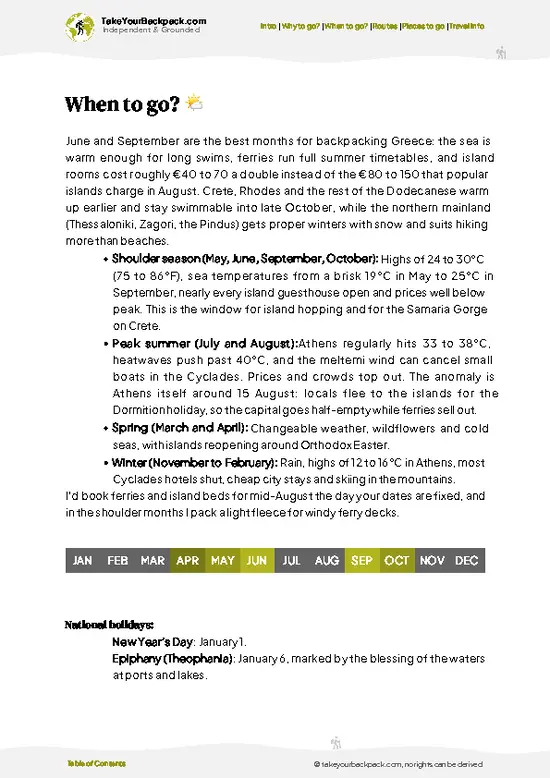
example page 1 from our offline Travel Guide for Greece
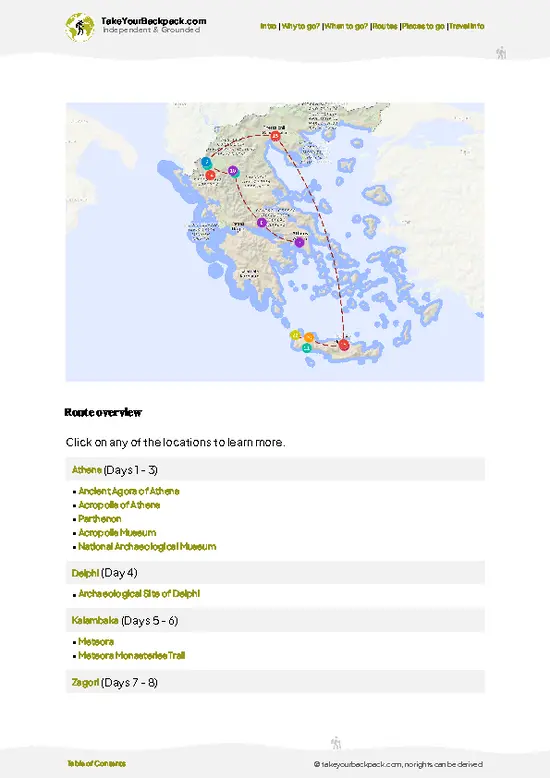
example page 2 from our offline Travel Guide for Greece
example page 3 from our offline Travel Guide for Greece
example page 4 from our offline Travel Guide for Greece
example page 5 from our offline Travel Guide for Greece
example page 6 from our offline Travel Guide for Greece
example page 7 from our offline Travel Guide for Greece
Loading the map 🌍
CLICK TO FILTER
cities
towns
villages
landmarks
national parks
hikes
beaches
attractions
festivals
regions
SHOW COUNTRY’S BESTSHOW ALL

✨ Why go?
Ranked #1 attraction in Greece
What makes it a must-see attraction

The Acropolis Museum is not just another stop on the Athens itinerary—it’s a checkpoint for anyone serious about understanding Greece beyond the postcard. Yes, it’s crowded. Yes, it’s not cheap by local standards. But here’s the deal: this museum is the frontline where ancient history meets modern storytelling. You’re not just looking at dusty relics behind glass; you’re standing face-to-face with artifacts that shaped Western civilization. The sheer scale of the collection, from the intricate friezes to the statues that once adorned the Parthenon, delivers a punch of cultural gravity that no Instagram snap can capture.

Backpackers who carve out time here aren’t just ticking a box—they’re investing in context. The museum’s design itself is a masterstroke, with glass floors revealing ongoing … read more 👉
The Acropolis Museum is not just another stop on the Athens itinerary—it’s a checkpoint for anyone serious about understanding Greece beyond the postcard. Yes, it’s crowded. Yes, it’s not cheap by local standards. But here’s the deal: this museum is the frontline where ancient history meets modern storytelling. You’re not just looking at dusty relics behind glass; you’re standing face-to-face with artifacts that shaped Western civilization. The sheer scale of the collection, from the intricate friezes to the statues that once adorned the Parthenon, delivers a punch of cultural gravity that no Instagram snap can capture.

Backpackers who carve out time here aren’t just ticking a box—they’re investing in context. The museum’s design itself is a masterstroke, with glass floors revealing ongoing excavations beneath, reminding you that history is alive and still being uncovered. It’s a mental workout, too: the effort to absorb the layers of mythology, politics, and artistry pays off with a richer, more grounded appreciation of Greece. If you’re trekking the country route from Athens to the islands, this museum is a milestone that anchors your journey in something real and irreplaceable. Skip it, and you miss the backbone of the story Greece is trying to tell.

💡 HighlightsDon't-miss highlights and experiences

The Parthenon Marbles Gallery
Let’s get real: this is the main event. The top floor is a glass-walled runway for the Parthenon’s original sculptures, displayed in the exact layout they once had on the temple. You’re eye-level with the Acropolis itself, sunlight bouncing off marble, and you can trace the story of gods and mortals in the frieze. Yes, some panels are plaster casts (the British Museum still has the rest), but the effect is electric. You’re not just looking at art; you’re standing in the crossfire of history, politics, and beauty. This is the Acropolis Museum’s knockout punch.


The Glass Floor Over Ancient Athens
Skip the Instagram pose and actually look down. The museum is built over an active archaeological dig, and the glass floors let you peer straight into the bones of ancient … read more 👉
The Parthenon Marbles Gallery
Let’s get real: this is the main event. The top floor is a glass-walled runway for the Parthenon’s original sculptures, displayed in the exact layout they once had on the temple. You’re eye-level with the Acropolis itself, sunlight bouncing off marble, and you can trace the story of gods and mortals in the frieze. Yes, some panels are plaster casts (the British Museum still has the rest), but the effect is electric. You’re not just looking at art; you’re standing in the crossfire of history, politics, and beauty. This is the Acropolis Museum’s knockout punch.


The Glass Floor Over Ancient Athens
Skip the Instagram pose and actually look down. The museum is built over an active archaeological dig, and the glass floors let you peer straight into the bones of ancient neighborhoods—homes, workshops, even a bathhouse. It’s not a gimmick. It’s a jolt of context: Athens isn’t just ruins on a hill, it’s layers of real lives stacked beneath your feet. Kids love it, but so do adults who want to feel the city’s pulse.


The Archaic Gallery
This is where the Acropolis Museum flexes its muscle. The gallery is flooded with natural light, and the statues—kouroi and korai—are displayed without glass, so you can walk around them. These aren’t the stiff, dead-eyed relics you expect. They’re full of personality: sly smiles, intricate braids, traces of ancient paint. You get face-to-face with the people who built Athens, not just their gods. It’s intimate, almost eerie, and a total antidote to the usual museum fatigue.


The Caryatids
The real ones. Not the copies holding up the Erechtheion outside, but the actual marble women, rescued from centuries of pollution and acid rain. Up close, you see the chisel marks, the weathering, the individuality in their faces. They’re survivors, and the museum’s lighting gives them a quiet dignity. This is a rare chance to see icons stripped of their postcard gloss.


The Short Films and Interactive Displays
Most museums treat multimedia like an afterthought. Not here. The Acropolis Museum uses short, sharp films and digital reconstructions to show how the Parthenon and its sculptures looked in their prime—painted, alive, and anything but white. It’s not just for kids. If you’ve ever rolled your eyes at a dusty diorama, these displays will win you over. They make the ancient world feel urgent and relevant.


Personal Favorite: The Parthenon Marbles Gallery
Nothing else in Athens—maybe nothing else in Europe—delivers the same gut-punch of history, controversy, and sheer artistic bravado. Stand here at sunset and you’ll understand why people have been fighting over these stones for centuries.
Spotted a mistake or missing something? Contact us.

Things to do around Acropolis Museum

Ratings based on Tripadvisor reviews. When you book through this link, you support our work at no extra cost to you.

🌤️ When to go?Seasonal considerations and timing

  • Topic: Weather and Temperature - The Acropolis Museum bakes under the Greek sun from June to August, with highs often hitting 33-35°C (91-95°F). If you’re not a fan of sweating through your shirt, aim for April, May, or September when temps hover around a comfortable 18-25°C (64-77°F).
  • Topic: Daylight Hours - Long summer days mean more time to explore, with daylight stretching to about 14-15 hours in June. Winter months like December and January shrink that to around 9-10 hours, cutting your sightseeing window drastically.
  • Topic: Crowds - Expect shoulder-to-shoulder tourists in July and August. The museum’s popularity peaks then, turning your visit into a slow shuffle. Late spring (April-May) and early fall (September-October) offer a quieter, more intimate experience.
  • Topic: Seasonal
… read more 👉
  • Topic: Weather and Temperature - The Acropolis Museum bakes under the Greek sun from June to August, with highs often hitting 33-35°C (91-95°F). If you’re not a fan of sweating through your shirt, aim for April, May, or September when temps hover around a comfortable 18-25°C (64-77°F).
  • Topic: Daylight Hours - Long summer days mean more time to explore, with daylight stretching to about 14-15 hours in June. Winter months like December and January shrink that to around 9-10 hours, cutting your sightseeing window drastically.
  • Topic: Crowds - Expect shoulder-to-shoulder tourists in July and August. The museum’s popularity peaks then, turning your visit into a slow shuffle. Late spring (April-May) and early fall (September-October) offer a quieter, more intimate experience.
  • Topic: Seasonal Activities - The museum hosts special exhibitions and events mostly in spring and fall, adding layers to your visit beyond the usual artifacts. Summer’s heat can make these less enjoyable, so timing matters.
  • Topic: Price Fluctuations - Entrance fees stay fairly stable year-round, but flights and accommodation spike in summer. Visiting off-peak months can save you a bundle, freeing up cash for a killer gyro afterward.
Pro-tip: Hit the Acropolis Museum in late April or early October—cooler temps, manageable crowds, and a richer vibe that Instagram won’t show you.


source: climatestotravel.comJANJanuary: fair for travelingFEBFebruary: fair for travelingMARMarch: good for travelingAPRApril: excellent for travelingMAYMay: excellent for travelingJUNJune: good for travelingJULJuly: below average for travelingAUGAugust: below average for travelingSEPSeptember: excellent for travelingOCTOctober: highly recommended for travelingNOVNovember: good for travelingDECDecember: fair for traveling
Greece - Acropolis Museum

✈️ The backpacker research shortcutGreece Travel Guide

An offline-friendly backpacking guide with optimized travel routes, ranked highlights, transport advice, and the best areas to stay.
example page 0 from our offline Travel Guide for Greece
example page 1 from our offline Travel Guide for Greece
example page 2 from our offline Travel Guide for Greece
example page 3 from our offline Travel Guide for Greece
example page 4 from our offline Travel Guide for Greece
example page 5 from our offline Travel Guide for Greece
example page 6 from our offline Travel Guide for Greece
example page 7 from our offline Travel Guide for Greece
The digital guide (417 pages) contains:
✅ 114 highlights, ranked by travel appeal
✅ Optimized 5, 10 & 15-day travel routes
✅ Cities, national parks, landmarks, beaches
✅ How to get around
✅ Offline-friendly for travel without Wi-Fi
👉 Click to see all 30+ guide features

📅 Plan smarter in minutes, not weeks
✅ Month by month travel advice
✅ Festivals & national holidays
✅ Budget expectations

🗺️ Go to the right places, skip the overrated ones
✅ Honest pros & cons of destinations
✅ Top hikes, parks & viewpoints
✅ Lesser-known places most travelers miss
✅ Clear “worth it vs skip it” guidance

🛏️ Travel smoothly without rookie mistakes
✅ Best areas to stay
✅ Transport systems explained simply
✅ Common scams & safety advice
✅ SIM cards, money & practical tips

🌍 Understand the country, not just visit it
✅ Culture & traditions
✅ 52 Essential phrases & customs
✅ Festivals worth planning around
✅ Traveler-friendly historical context
✅ Insights that make places more meaningful

📱 Built for real travel conditions
✅ Fully downloadable PDF
✅ Works completely offline
✅ Optimized for phone use
✅ Useful in remote areas & buses
✅ Everything in one place
Stop searching, start planning
Get instant access to your full guide. 30‑day money-back guarantee.
+ Add another guide for just

By proceeding you agree to our terms.
Sent to your inbox immediately after payment • 100% Secure Checkout
Best Backpacking Travel Advisor 2025 tourism awardBest Backpacking
Travel Advisor
2025
What others say about Take Your Backpack Guides:
⭐⭐⭐⭐⭐
Fantastic, amazing amount of information!
⭐⭐⭐⭐⭐
My goodness this is amazing, it's what I've been looking for hats off too you!
⭐⭐⭐⭐⭐
I think this is absolutely BRILLIANT
⭐⭐⭐⭐
Very complete and informative. It's still missing places, but I gotta to commend you
⭐⭐⭐⭐⭐
This is truly amazing, thank you, can't wait to explore it with my kids!
⭐⭐⭐⭐⭐
Awesome resource, thank you!
⭐⭐⭐⭐⭐
This is amazing! Can't wait to explore the ones I haven't seen
⭐⭐⭐⭐
I love this! Well done, great idea.
⭐⭐⭐⭐⭐
Thanks for taking the time to make this gem!
⭐⭐⭐⭐⭐
This might be the best website I've ever seen.
⭐⭐⭐⭐⭐
Congratulations, and thank you so much for your work; it's incredibly valuable.
⭐⭐⭐⭐
In all seriousness I think you did a great job pointing out the important spots
⭐⭐⭐⭐⭐
10/10 very good
⭐⭐⭐⭐⭐
As someone who's only just starting to visit regularly this is awesome, thank you.
⭐⭐⭐⭐
Thank you very much! I'm going to visit my dad, it's going to be very useful!
⭐⭐⭐⭐⭐
This is really cool! We'll be travelling for the first time and this definitely come in handy.
⭐⭐⭐⭐⭐
You are now our minister of culture, congratulations 👨‍💼
⭐⭐⭐⭐⭐
Just wanted to tell you that this is a pearl! Going to follow your recommendations.
⭐⭐⭐⭐⭐
This is so cool. I'll definitely be using the resource for my travels soon.
⭐⭐⭐⭐⭐
This is very impressive! Good work.
⭐⭐⭐⭐⭐
This is an amazing and informative site. Very well done!

🛏️ Where to stay?Best areas and accommodation options

If you’re aiming to crash near the Acropolis Museum without selling a kidney, forget the glossy tourist traps that charge you for a view of a brick wall. The real action happens in neighborhoods where locals live, laugh, and pour their morning coffee with zero pretense.

First up, Plaka. It’s touristy, sure, but it’s also the beating heart of old Athens. Narrow streets, street musicians, and tavernas where you can snag a gyro for next to nothing. It’s safe, walkable, and packed with fellow backpackers who want to swap stories over a cheap beer. The vibe is social without the forced friendliness … read more 👉
If you’re aiming to crash near the Acropolis Museum without selling a kidney, forget the glossy tourist traps that charge you for a view of a brick wall. The real action happens in neighborhoods where locals live, laugh, and pour their morning coffee with zero pretense.

First up, Plaka. It’s touristy, sure, but it’s also the beating heart of old Athens. Narrow streets, street musicians, and tavernas where you can snag a gyro for next to nothing. It’s safe, walkable, and packed with fellow backpackers who want to swap stories over a cheap beer. The vibe is social without the forced friendliness of tourist zones. You’ll be steps from the museum and the Acropolis itself, but also close enough to dive into authentic Athenian life.

Then there’s Koukaki, just south of the museum. This area flies under the radar for many travelers, which means fewer crowds and better prices. It’s a working-class neighborhood with a cool, laid-back energy. Cafes spill onto sidewalks, and you’ll find plenty of budget spots where solo travelers gather. It’s safe, chill, and a solid base if you want to explore Athens without the tourist circus.

Both areas put you close to the Acropolis Museum but offer a real slice of Athens—no Instagram filters needed.

👛 Costs (as of 23 September 2026)How expensive it really is

The standard ticket price for the Acropolis Museum is around €10. Reduced tickets for EU citizens aged 18-25 cost about €5. Admission is free for EU citizens under 18 and for all visitors on certain days of the year. Additional costs may include audio guides or special exhibitions, which can add approximately €5 to €10.

source: theacropolismuseum.gr
⚠️ Prices can change and everyone travels differently, so take this as a rough guide. Hope it helps you plan your adventure!

FAQCommon questions from travelers

2 to 3 hours is sufficient to visit the Acropolis Museum. This allows time to see the main exhibits and the Parthenon Gallery. Plan for extra time if you want to explore in detail or use the audio guide.
Yes, the Acropolis Museum is worth the entrance fee of around 10 euros. It offers a comprehensive view of artifacts from the Acropolis site with modern displays and excellent preservation. The museum's location near the Acropolis adds to the experience.
The Acropolis Museum is accessible by metro; take Line 2 to the Acropoli station, which is a short walk from the museum. Several buses also stop nearby, including routes 230 and 040. Walking from the Acropolis site takes about 10 minutes downhill.
⚠️ Things can change over time, so always validate details locally before you go.

Other Greek attractions near Acropolis Museum

Explore more nearby:


💡 Not sure where to go next?
Create a personalized itinerary for Greece including Acropolis Museum and the places that fit your trip.

Generate my itinerary

👉 Discover all attractions

Or checkout all Greece has to offer (think cities, towns, villages, national parks, hikes, beaches, festivals)
Country photo of Greece

We 💚 feedbackIs it worth it?

The Acropolis Museum isn’t just another glass box with dusty relics—it’s where ancient Athens comes alive through smart displays and killer views of the Parthenon. But brace yourself: it gets packed, especially midday, and the entry fee isn’t pocket change. Still, if you want to feel the pulse of Greek history without the chaos of the Acropolis itself, this museum delivers a rare, focused hit of authenticity that’s worth carving out time for.

✈️ When did I visit Greece?
Europe has so many beautiful countries in a relative close distance. This allowed me to squeeze in Greece in October 2020.

✍️ Help improve this page!
The information on this page is based on my own backpacking experience in Greece, supplemented with up-to-date research and feedback from other travelers. Travel details can change, so if you notice anything outdated or incomplete, feel free to let me know.


🙋‍♂️ Give feedback

👋 Meet the founderWho’s Behind Take Your Backpack?

Johan, backpacker and founder of TakeYourBackpackHi, I’m Johan (Netherlands 🇳🇱), the creator of TakeYourBackpack. Over the past 3 decades, I’ve backpacked through 90+ countries across six continents, gaining extensive experience with independent travel, long-term trips, and overland routes.

This site is built on a combination of firsthand travel experience and carefully curated insights from other backpackers. Many guides are based on places I’ve personally visited, while others bring together tips, observations, and practical advice shared by trusted travelers I’ve met along the way.

The goal is to provide realistic, experience-driven guidance — not generic itineraries — so you can explore destinations with better context, clearer expectations, and more confidence.