


×

Greenland🇬🇱 | townsUpernavikUpernavik archipelago, drying racks, old museum, far northwest | things to do and best time to go

Explore UpernavikExplore Greenland National Museum

Backpacking in Upernavik
👍 Recommendedtown ranked #6
By Johan Kruseman 🇳🇱 | Updated October 23, 2026

Drying racks of halibut and Greenland shark meat line the shore on the edge of Upernavik, and the smell of it carries across the colorful wooden houses on a warm day. The town sits on a small island in the Upernavik archipelago, in the northwest of Greenland, far above the Arctic Circle. Everything here runs on boats and helicopters, so there is no point rushing: ferry and flight schedules shift with ice and fog, and an experienced traveler builds spare days in and books the return leg first. Evenings are quiet, with dogs howling and the harbor clinking, and meeting other travelers is easy because there are so few of you. Plan a first day around a slow walk to the harbor, the old church, and a hillside view over the icebergs.

Discover everything you want to know in the 📖 Greenland Travel Guide.


example page 0 from our offline Travel Guide for Greenland
example page 1 from our offline Travel Guide for Greenland
example page 2 from our offline Travel Guide for Greenland
example page 3 from our offline Travel Guide for Greenland
example page 4 from our offline Travel Guide for Greenland
example page 5 from our offline Travel Guide for Greenland
example page 6 from our offline Travel Guide for Greenland
example page 7 from our offline Travel Guide for Greenland
Loading the map 🌍
CLICK TO FILTER
towns
villages
landmarks
national parks
hikes
attractions
festivals
regions
SHOW COUNTRY’S BESTSHOW ALL

✨ Why go?
Ranked #6 town in Greenland
What sets this place apart

Upernavik earns a stop for one reason: it is among the most northerly towns in Greenland that a backpacker can reach on public transport, and it feels like a working hunting community rather than a tour stop. Hunters haul in seal and narwhal, sled dogs lie chained along the paths, and the surrounding fjords fill with icebergs calved from the Upernavik glaciers. You can walk out of the last house and be on open tundra within ten minutes, which suits hikers and photographers. Most people stay two or three nights, though slow travelers who like silence will happily linger longer. It is not a party place. Social life is a conversation at the grocery store or a guesthouse kitchen. Solo travelers seeking calm and a chance to watch daily Arctic life will enjoy it. If you need nightlife or fast logistics, … read more 👉
Upernavik earns a stop for one reason: it is among the most northerly towns in Greenland that a backpacker can reach on public transport, and it feels like a working hunting community rather than a tour stop. Hunters haul in seal and narwhal, sled dogs lie chained along the paths, and the surrounding fjords fill with icebergs calved from the Upernavik glaciers. You can walk out of the last house and be on open tundra within ten minutes, which suits hikers and photographers. Most people stay two or three nights, though slow travelers who like silence will happily linger longer. It is not a party place. Social life is a conversation at the grocery store or a guesthouse kitchen. Solo travelers seeking calm and a chance to watch daily Arctic life will enjoy it. If you need nightlife or fast logistics, make it a short stop, since weather can hold you here regardless of your plans.

💡 HighlightsPlaces and moments you shouldn't skip

  1. Upernavik Museum: The northernmost museum in the region occupies some of the oldest buildings in town, including a former colonial-era house. Displays cover hunting, kayaks, clothing and the town’s Danish trading history. Open weekdays most of the year, with small entry fees around US$5 to 8. Allow about 1 hour, and go on a gray or windy afternoon.
  2. Upernavik Church: The small wooden church stands above the harbor and anchors the old part of town. It is simple and bright inside, and the setting among colored houses makes it a favorite photo stop. Entry is usually free when open, but hours vary, so ask locally. Come in the evening for soft light. About 30 minutes.
  3. Harbor and drying racks: The waterfront is where you see hunters unload catch, fish dry on frames, and boats thread between drifting
… read more 👉
  1. Upernavik Museum: The northernmost museum in the region occupies some of the oldest buildings in town, including a former colonial-era house. Displays cover hunting, kayaks, clothing and the town’s Danish trading history. Open weekdays most of the year, with small entry fees around US$5 to 8. Allow about 1 hour, and go on a gray or windy afternoon.
  2. Upernavik Church: The small wooden church stands above the harbor and anchors the old part of town. It is simple and bright inside, and the setting among colored houses makes it a favorite photo stop. Entry is usually free when open, but hours vary, so ask locally. Come in the evening for soft light. About 30 minutes.
  3. Harbor and drying racks: The waterfront is where you see hunters unload catch, fish dry on frames, and boats thread between drifting ice. It costs nothing and is best in the morning or late evening when boats come and go. Spend 1 to 2 hours, and ask before photographing people or their catch.
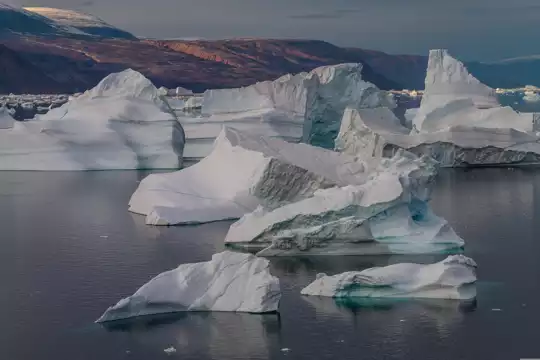
For day trips, local boat operators can take you toward the Upernavik Icefjord, nearby abandoned settlements, and the bird cliffs and glacier fronts in the archipelago. All three sights fit comfortably into one long afternoon, though a full day with a hill walk is better.
Spotted a mistake or missing something? Contact us.

🏘️ NeighborhoodsHow different areas shape the experience

Upernavik sits on a small island, so every area is a few minutes on foot, and the ground is bare rock, which is why the paths wind and climb instead of running in grids. Wear boots with grip, not sneakers.
  • Harbor and the town center: The working heart. Fishing boats knock against the quay, gulls scream, and the smell of diesel and drying halibut hangs around the fish hall. The supermarket and the post office are here, so stock up before the shops close early and on Sundays. Most things happen within a ten-minute walk.
  • Old town and the museum area: Upernavik Museum occupies some of the oldest buildings, dating to the town’s founding in 1772. Small timber houses sit on exposed rock, and boardwalks cross the wet patches because permafrost makes roads impractical. Come in the evening when the low
… read more 👉
Upernavik sits on a small island, so every area is a few minutes on foot, and the ground is bare rock, which is why the paths wind and climb instead of running in grids. Wear boots with grip, not sneakers.
  • Harbor and the town center: The working heart. Fishing boats knock against the quay, gulls scream, and the smell of diesel and drying halibut hangs around the fish hall. The supermarket and the post office are here, so stock up before the shops close early and on Sundays. Most things happen within a ten-minute walk.
  • Old town and the museum area: Upernavik Museum occupies some of the oldest buildings, dating to the town’s founding in 1772. Small timber houses sit on exposed rock, and boardwalks cross the wet patches because permafrost makes roads impractical. Come in the evening when the low light turns the walls warm.
  • Residential slopes and the heliport side: Painted houses climb the hill, and sled dogs howl from tethered spots at the edges. Keep your distance from the dogs, since they are working animals and not pets. Views over the icebergs of the fjord reward the short climb.
  • Shoreline trails: Walk out past the last houses and the sound drops to wind, meltwater and cracking ice. Mosquitoes can be thick in July, so carry repellent. Nightlife is a pub or a quiet kitchen table, and that suits most visitors.

⌛️ 1 daySeeing the highlights in 24 hours

8:00 AM: Upernavik Museum
Start in the old colonial buildings, the oldest of which date to the town’s founding in 1772. The small collection covers hunting gear, kayaks and the Danish trading era, and it takes about an hour. Entry is cheap, around US$5 to 7. Walk down toward the harbor afterward.

9:30 AM: Harbor and fish hall
Hunters land seal, halibut and sometimes narwhal here, and the smell and noise tell you what the week has brought. Watch quietly and ask before photographing anyone. Then climb the rocky path behind the harbor to the town’s older streets.

11:00 AM: Upernavik Church
The small wooden church sits among brightly painted houses, and the walk between them shows how the town clings to a bare island of bedrock. Houses stand on stilts because digging into stone is hard. Pass the … read more 👉
8:00 AM: Upernavik Museum
Start in the old colonial buildings, the oldest of which date to the town’s founding in 1772. The small collection covers hunting gear, kayaks and the Danish trading era, and it takes about an hour. Entry is cheap, around US$5 to 7. Walk down toward the harbor afterward.

9:30 AM: Harbor and fish hall
Hunters land seal, halibut and sometimes narwhal here, and the smell and noise tell you what the week has brought. Watch quietly and ask before photographing anyone. Then climb the rocky path behind the harbor to the town’s older streets.

11:00 AM: Upernavik Church
The small wooden church sits among brightly painted houses, and the walk between them shows how the town clings to a bare island of bedrock. Houses stand on stilts because digging into stone is hard. Pass the sled dog teams staked on the hillside, and keep a respectful distance from them.

12:30 PM: Lunch at the supermarket and cafe
Buy bread, cheese and smoked fish at the Pilersuisoq store, a supply point for the whole district, and picnic on the rocks facing the water. The icebergs drifting past are the entertainment.

2:00 PM: Southern rocks and the old settlement trails
This is the stop few visitors bother with. Follow the path past the last houses toward the island’s quiet edges, where ruined turf-house foundations and moss-covered stone sit above the shore. Fog can roll in, so stay on the marked ground and keep the town in sight. Allow two hours.

4:30 PM: Viewpoint above town
Climb the hill behind the houses for a wide look across the archipelago, with the ice-choked channels spread out below. Spend time here with a thermos.

7:00 PM: Dinner in town
Finish with a hot meal at a local eatery or your guesthouse, then step out again, since summer light stays on long after dinner.

🌤️ When to go?Choosing the right time of year

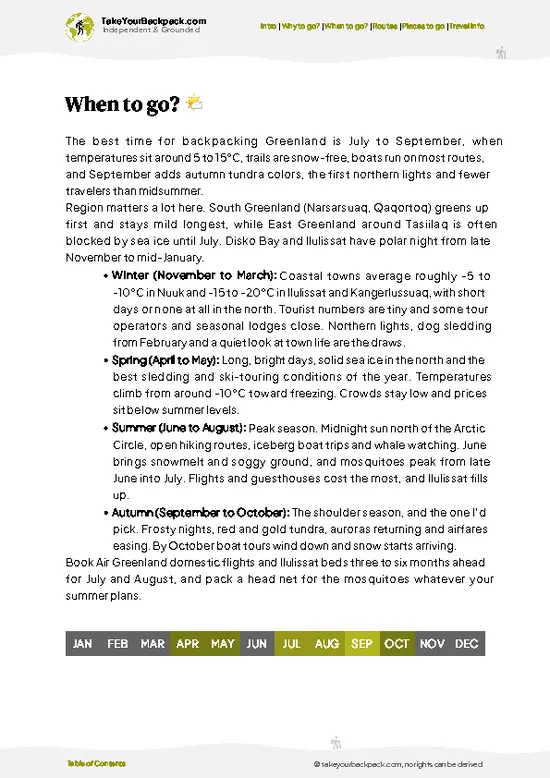
  • Midnight Sun (late May to late July): The sun stays above the horizon for roughly two and a half months, so you can hike or kayak at any hour. Highs run 2 to 8°C (36 to 46°F), and the fjord ice breaks up in June.
  • Late Summer (August to September): Dark nights return, and with them mosquito-free evenings and the best chance of seeing aurora by September. Temperatures sit around 3 to 7°C (37 to 45°F), and icebergs are at their most numerous.
  • Polar Night (mid-November to late January): The sun does not rise for weeks, and daytime highs fall to about -15 to -8°C (5 to 18°F). Boats mostly stop and the town is very quiet.
  • Spring (March to May): Sea ice holds, dog sledding and snowmobile trips run, and days lengthen fast. Expect -20 to -5°C (-4 to 23°F).
Book flights and guesthouses early for July, when the few beds fill first.

source: climatestotravel.comJANJanuary: below average for travelingFEBFebruary: below average for travelingMARMarch: below average for travelingAPRApril: fair for travelingMAYMay: fair for travelingJUNJune: highly recommended for travelingJULJuly: excellent for travelingAUGAugust: excellent for travelingSEPSeptember: good for travelingOCTOctober: fair for travelingNOVNovember: below average for travelingDECDecember: below average for traveling
greenland-city-upernavik
© Google | Karl Zinglersen

✈️ The backpacker research shortcutGreenland Travel Guide

An offline-friendly backpacking guide with optimized travel routes, ranked highlights, transport advice, and the best areas to stay.
example page 0 from our offline Travel Guide for Greenland
example page 1 from our offline Travel Guide for Greenland
example page 2 from our offline Travel Guide for Greenland
example page 3 from our offline Travel Guide for Greenland
example page 4 from our offline Travel Guide for Greenland
example page 5 from our offline Travel Guide for Greenland
example page 6 from our offline Travel Guide for Greenland
example page 7 from our offline Travel Guide for Greenland
The digital guide (154 pages) contains:
✅ 33 highlights, ranked by travel appeal
✅ Optimized 7, 14 & 21-day travel routes
✅ Cities, national parks, landmarks, beaches
✅ How to get around
✅ Offline-friendly for travel without Wi-Fi
👉 Click to see all 30+ guide features

📅 Plan smarter in minutes, not weeks
✅ Month by month travel advice
✅ Festivals & national holidays
✅ Budget expectations

🗺️ Go to the right places, skip the overrated ones
✅ Honest pros & cons of destinations
✅ Top hikes, parks & viewpoints
✅ Lesser-known places most travelers miss
✅ Clear “worth it vs skip it” guidance

🛏️ Travel smoothly without rookie mistakes
✅ Best areas to stay
✅ Transport systems explained simply
✅ Common scams & safety advice
✅ SIM cards, money & practical tips

🌍 Understand the country, not just visit it
✅ Culture & traditions
✅ 52 Essential phrases & customs
✅ Festivals worth planning around
✅ Traveler-friendly historical context
✅ Insights that make places more meaningful

📱 Built for real travel conditions
✅ Fully downloadable PDF
✅ Works completely offline
✅ Optimized for phone use
✅ Useful in remote areas & buses
✅ Everything in one place
Stop searching, start planning
Get instant access to your full guide. 30‑day money-back guarantee.
+ Add another guide for just

By proceeding you agree to our terms.
Sent to your inbox immediately after payment • 100% Secure Checkout
Best Backpacking Travel Advisor 2025 tourism awardBest Backpacking
Travel Advisor
2025
What others say about Take Your Backpack Guides:
⭐⭐⭐⭐⭐
Fantastic, amazing amount of information!
⭐⭐⭐⭐⭐
My goodness this is amazing, it's what I've been looking for hats off too you!
⭐⭐⭐⭐⭐
I think this is absolutely BRILLIANT
⭐⭐⭐⭐
Very complete and informative. It's still missing places, but I gotta to commend you
⭐⭐⭐⭐⭐
This is truly amazing, thank you, can't wait to explore it with my kids!
⭐⭐⭐⭐⭐
Awesome resource, thank you!
⭐⭐⭐⭐⭐
This is amazing! Can't wait to explore the ones I haven't seen
⭐⭐⭐⭐
I love this! Well done, great idea.
⭐⭐⭐⭐⭐
Thanks for taking the time to make this gem!
⭐⭐⭐⭐⭐
This might be the best website I've ever seen.
⭐⭐⭐⭐⭐
Congratulations, and thank you so much for your work; it's incredibly valuable.
⭐⭐⭐⭐
In all seriousness I think you did a great job pointing out the important spots
⭐⭐⭐⭐⭐
10/10 very good
⭐⭐⭐⭐⭐
As someone who's only just starting to visit regularly this is awesome, thank you.
⭐⭐⭐⭐
Thank you very much! I'm going to visit my dad, it's going to be very useful!
⭐⭐⭐⭐⭐
This is really cool! We'll be travelling for the first time and this definitely come in handy.
⭐⭐⭐⭐⭐
You are now our minister of culture, congratulations 👨‍💼
⭐⭐⭐⭐⭐
Just wanted to tell you that this is a pearl! Going to follow your recommendations.
⭐⭐⭐⭐⭐
This is so cool. I'll definitely be using the resource for my travels soon.
⭐⭐⭐⭐⭐
This is very impressive! Good work.
⭐⭐⭐⭐⭐
This is an amazing and informative site. Very well done!

🛏️ Where to stay?Best areas to stay in Greenland

Upernavik has a handful of beds, so book ahead for summer, when they fill with visitors and contractors. Hotel Upernavik is the main option, with private rooms and an on-site restaurant, and prices usually run US$150 to 230 a night. Cheaper rooms exist in the Seamen’s Home style hostel accommodation near the harbor, with beds or simple rooms in the US$60 to 110 range. These are plain, practical places with shared kitchens or bathrooms in some cases, and they suit people who plan to cook for themselves. Check availability by email or phone rather than counting on a walk-in.
Camping is possible on … read more 👉
Upernavik has a handful of beds, so book ahead for summer, when they fill with visitors and contractors. Hotel Upernavik is the main option, with private rooms and an on-site restaurant, and prices usually run US$150 to 230 a night. Cheaper rooms exist in the Seamen’s Home style hostel accommodation near the harbor, with beds or simple rooms in the US$60 to 110 range. These are plain, practical places with shared kitchens or bathrooms in some cases, and they suit people who plan to cook for themselves. Check availability by email or phone rather than counting on a walk-in.
Camping is possible on the rocky ground outside the settlement, and it is the budget route in July and August. Pitch away from the dog yards, where howling carries all night, and use heavy pegs because wind is constant. Water is available in town, and the supermarket near the harbor handles resupply. Winter camping is a poor idea. If you arrive on a late flight, confirm your pick-up with your host before leaving Aasiaat or Ilulissat, since there is no taxi culture to fall back on.

🚌 Getting aroundGetting around like a local

A local ride in Upernavik costs next to nothing because there is almost nothing to ride: the town has a few taxis, and you pay the driver in cash or by card, roughly US$4 to 7 for any trip on the island. Most backpackers simply walk, since the whole settlement is smaller than a long city block grid. Roads are short, gravel and rock, and traffic is a handful of pickups and quad bikes. The real transport story is the water and the sky.
  • Walking: Free and fast. Plan for wet rock, loose gravel and slippery boardwalks, which is why grippy boots matter more than a map. In winter, crampons or ice cleats help on the glazed slopes.
  • Taxi: A tiny fleet. Calling the driver or asking at your lodging is usual, and a ride across the island runs about US$4 to 7. Do not expect one at midnight.
  • Passenger boats
… read more 👉
A local ride in Upernavik costs next to nothing because there is almost nothing to ride: the town has a few taxis, and you pay the driver in cash or by card, roughly US$4 to 7 for any trip on the island. Most backpackers simply walk, since the whole settlement is smaller than a long city block grid. Roads are short, gravel and rock, and traffic is a handful of pickups and quad bikes. The real transport story is the water and the sky.
  • Walking: Free and fast. Plan for wet rock, loose gravel and slippery boardwalks, which is why grippy boots matter more than a map. In winter, crampons or ice cleats help on the glazed slopes.
  • Taxi: A tiny fleet. Calling the driver or asking at your lodging is usual, and a ride across the island runs about US$4 to 7. Do not expect one at midnight.
  • Passenger boats and the Disko Line network: Settlement boats connect Upernavik to nearby villages such as Kullorsuaq, Tasiusaq and Naajaat, usually once or twice a week in the ice-free months. Fares are roughly US$30 to 120 depending on distance, and the engine drone and spray are part of the ride. Schedules shift with weather and ice, so confirm at the harbor or tourist office. No ferry runs south to Ilulissat, so reaching town from elsewhere means flying.
  • Helicopter: Air Greenland helicopters link Upernavik with the surrounding settlements and the airstrip at Aappilattoq and others. Seats are limited, fares are about US$60 to 250, and low cloud or fog can ground flights for a day or more, so keep your schedule loose.
  • Chartered boat: A local fisherman can take you among icebergs for around US$80 to 200 per person on a shared trip. Agree the price and duration first, and dress for cold spray even in July.
The airport lies on a separate island, Upernavik Airport, and arrivals continue by a short boat or helicopter hop, so allow time for the connection and for delays.

👛 Costs (as of 23 October 2026)Typical daily expenses

Upernavik costs about US$215 a day for a backpacker, because almost everything arrives by ship or plane and prices run high.
CategoryBudget RangeLocal Reality
Dorm accommodationUS$70 to 110Beds are few and basic. Guesthouse rooms or a shared room are the usual choice, and high season fills fast.
MealsUS$40 to 60Self-catering from the supermarket is the norm. A café or restaurant meal costs US$20 to 35.
Local transportUS$5 to 15Walking is free and taxis are US$4 to 7 a ride. Settlement boats and helicopters are extra.
Basic activities/entry feesUS$10 to 90The museum costs a few dollars. Iceberg boat trips run US$80 to 200.
Miscellaneous expensesUS$10 to 20Snacks, repellent, a few postcards and cash for small shops.
Total Daily BudgetUS$215Based on high-season prices.
Buy food in the supermarket and … read more 👉
Upernavik costs about US$215 a day for a backpacker, because almost everything arrives by ship or plane and prices run high.
CategoryBudget RangeLocal Reality
Dorm accommodationUS$70 to 110Beds are few and basic. Guesthouse rooms or a shared room are the usual choice, and high season fills fast.
MealsUS$40 to 60Self-catering from the supermarket is the norm. A café or restaurant meal costs US$20 to 35.
Local transportUS$5 to 15Walking is free and taxis are US$4 to 7 a ride. Settlement boats and helicopters are extra.
Basic activities/entry feesUS$10 to 90The museum costs a few dollars. Iceberg boat trips run US$80 to 200.
Miscellaneous expensesUS$10 to 20Snacks, repellent, a few postcards and cash for small shops.
Total Daily BudgetUS$215Based on high-season prices.
Buy food in the supermarket and cook at your lodging, and pick up fresh halibut or Greenlandic shrimp at the fish hall for a cheaper dinner. Prices are in Danish kroner, and cards are widely accepted.


source: visitgreenland.com
⚠️ Prices can change and everyone travels differently, so take this as a rough guide. Hope it helps you plan your adventure!

🚌 Day tripsExploring the surroundings

Upernavik works as a base for boat-dependent day trips, and most are arranged with local fishermen the day before rather than through any large operator.
Iceberg Cruise in the Fjords:
A small boat charter out among the grounded icebergs is the standout, since the archipelago produces towering blocks from nearby glaciers. Expect two to four hours on the water and US$60 to 120 per person in a shared group, more if you charter alone. Go in July to September, when the ice is open enough to move through. First-timers often skip warm layers, yet the wind off the ice is cold even on sunny days.

Upernavik Kujalleq:
Upernavik Kujalleq, a small settlement to the south, can be reached by the local boat in about one to two hours each way, with a return fare in the region of US$40 to 90. The village sits … read more 👉
Upernavik works as a base for boat-dependent day trips, and most are arranged with local fishermen the day before rather than through any large operator.
Iceberg Cruise in the Fjords:
A small boat charter out among the grounded icebergs is the standout, since the archipelago produces towering blocks from nearby glaciers. Expect two to four hours on the water and US$60 to 120 per person in a shared group, more if you charter alone. Go in July to September, when the ice is open enough to move through. First-timers often skip warm layers, yet the wind off the ice is cold even on sunny days.

Upernavik Kujalleq:
Upernavik Kujalleq, a small settlement to the south, can be reached by the local boat in about one to two hours each way, with a return fare in the region of US$40 to 90. The village sits among rocks with drying racks and sled dogs, and it is a calm look at daily life. Schedules vary, so confirm the return sailing before you step off.

Giesecke Glacier Edge Viewpoint:
An organized boat to the calving front of a nearby glacier takes a half day and typically costs US$100 to 180. Stay well back from the face, as waves from calving can swamp small boats, and let your skipper set the distance. August is best, when ice is thinner.

Hike to the Hill Above Town:
The rocky ridge behind the settlement takes one to two hours round trip and costs nothing. It gives a wide view over islands and ice, and it is best on a clear June or July evening.

🛡️ SafetyTraveler Safety Guide

Upernavik is very safe in terms of crime, and theft or harassment is rare. What catches travelers out is the environment. Sea ice, sudden fog and fast weather changes make unguided hikes risky, so tell your host where you are going and carry a charged phone and extra layers. Never walk on fjord ice without local advice. Sled dogs are chained at the edges of town and can bite, so keep your distance and do not pet them. Polar bears are rare here, but hunters and locals know the current situation, so ask before camping outside the settlement. Alcohol is expensive and a social issue, so late evenings can be loud near the pub. Solo travelers, including women, find the town calm at night, though the midsummer sun makes it easy to forget the hour. Mosquitoes in July are the most common annoyance.

FAQCommon questions from travelers

Upernavik is reached by Air Greenland, with flights from Ilulissat, sometimes via Qaarsut, taking roughly two to four hours in total. A one-way ticket generally costs US$300 to 600 depending on the season and how early you book. No passenger ferry runs north of Ilulissat, so everyone flies.
Upernavik is worth the trip if you want iceberg-filled fjords, traditional hunting life and almost no tourists. Plan three to five days to allow for weather delays and to fit in a boat trip, which costs roughly US$60 to 180. It is expensive and basic compared with Ilulissat, so it suits travelers who value quiet over sights.
Upernavik is not practical as a same-day visit from elsewhere, because flights are limited and weather often changes schedules. Staying at least two nights is the sensible minimum, and three to five is better. Once you are there, day trips by boat to nearby settlements and glacier fronts cost around US$40 to 180 and return the same evening.
⚠️ Things can change over time, so always validate details locally before you go.

Other Greenlandic towns near Upernavik

Explore more nearby:

  • Ilulissat—UNESCO icefjord, boardwalk trails, sled dog yards, Rasmussen museum| 436 km away
  • Aasiaat—Island harbor, granite rock walks, colonial wooden quarter, small museum| 469 km away
  • Sisimiut—Arctic Circle Trail finish, Blue House quarter, ridge climbs, fishing harbor| 657 km away

💡 Not sure where to go next?
Create a personalized itinerary for Greenland including Upernavik and the places that fit your trip.

Generate my itinerary

👉 Discover all towns

Or checkout all Greenland has to offer (think cities, towns, villages, national parks, hikes, beaches, festivals)
Country photo of Greenland

We 💚 feedbackIs it worth it?

Upernavik rewards two to three nights: one to settle in, one for a boat trip among the icebergs, and a spare for weather. Skip trying to squeeze it into a single day. I would bring a good windproof layer, mosquito netting in summer and plenty of patience.

✍️ Help improve this page!
The information on this page is based on in-depth research, insights shared by experienced travelers, and feedback from the local travel community in Greenland. While every effort is made to keep the information accurate and current, conditions can change — so if you spot anything incorrect or outdated, please get in touch.


🙋‍♂️ Give feedback

👋 Meet the founderWho’s Behind Take Your Backpack?

Johan, backpacker and founder of TakeYourBackpackHi, I’m Johan (Netherlands 🇳🇱), the creator of TakeYourBackpack. Over the past 3 decades, I’ve backpacked through 90+ countries across six continents, gaining extensive experience with independent travel, long-term trips, and overland routes.

This site is built on a combination of firsthand travel experience and carefully curated insights from other backpackers. Many guides are based on places I’ve personally visited, while others bring together tips, observations, and practical advice shared by trusted travelers I’ve met along the way.

The goal is to provide realistic, experience-driven guidance — not generic itineraries — so you can explore destinations with better context, clearer expectations, and more confidence.