×

Guatemala🇬🇹 | national parksSierra de las Minas Biosphere Reservecloud forest, rare orchids, mountain ridges | things to do and best time to go

Explore Semuc Champey National ParkExplore Volcán Pacaya National Park

Backpacking in Sierra de las Minas Biosphere Reserve
👍 Recommendednational park ranked #6
By Johan Kruseman 🇳🇱 | Updated May 9, 2026

You have to decide early whether Sierra de las Minas is worth the effort of logistics, or if you’d rather stick to easier wins like Semuc Champey or Biotopo del Quetzal. That choice matters, because this reserve sits along the eastern highlands between Baja Verapaz, Alta Verapaz, and Zacapa, and getting into the core cloud forest can eat a full day of buses, pickups, and hiking before you even start “the real” trek. For backpackers, it’s serious mountain country: long, steep trails, big views over layered ridges, real chances of seeing quetzals and tapir tracks, and almost no crowds. Access is patchy, trailheads are confusing, and you’ll likely deal with community-run checkpoints and modest but inconsistent entrance fees. Camping and basic hospedajes exist but are rustic. Compared with more polished parks, Sierra de las Minas feels wilder, cheaper, and less forgiving.

Discover everything you want to know in the 📖 Guatemala Travel Guide.
Loading the map 🌍
CLICK TO FILTER
cities
towns
villages
landmarks
national parks
hikes
beaches
attractions
festivals
regions
SHOW COUNTRY’S BESTSHOW ALL

✨ Why go?
Ranked #6 national park in Guatemala
The unique appeal for travelers

Backpackers flock to Sierra de las Minas Biosphere Reserve for its blend of independent exploration and affordable accommodations. The park offers a range of budget camping options and nearby hostels, making it easy to stretch your funds while soaking in the natural beauty.

Trails here are diverse, catering to both casual hikers and seasoned trekkers. You can wander through lush forests, tackle steep ascents, or simply enjoy the tranquility of the surroundings. This variety means you can tailor your experience to your energy levels and interests.

What sets Sierra de las Minas apart is its suitability for self-guided travelers. While guided tours are available, many find that navigating the trails independently enhances the experience. You can set your own pace, linger at scenic spots, and … read more 👉
Backpackers flock to Sierra de las Minas Biosphere Reserve for its blend of independent exploration and affordable accommodations. The park offers a range of budget camping options and nearby hostels, making it easy to stretch your funds while soaking in the natural beauty.

Trails here are diverse, catering to both casual hikers and seasoned trekkers. You can wander through lush forests, tackle steep ascents, or simply enjoy the tranquility of the surroundings. This variety means you can tailor your experience to your energy levels and interests.

What sets Sierra de las Minas apart is its suitability for self-guided travelers. While guided tours are available, many find that navigating the trails independently enhances the experience. You can set your own pace, linger at scenic spots, and truly connect with the environment. Just be mindful of trail markers and carry a reliable map; getting lost can happen, but it’s part of the adventure.
Want to include Sierra de las Minas Biosphere Reserve in your Guatemala route?
Create a personalized Guatemala itinerary that includes Sierra de las Minas Biosphere Reserve and the places that fit your trip — based on your travel style, budget, and available time. Get your route in seconds.

Generate my trip

💡 HighlightsThe experiences that define the visit

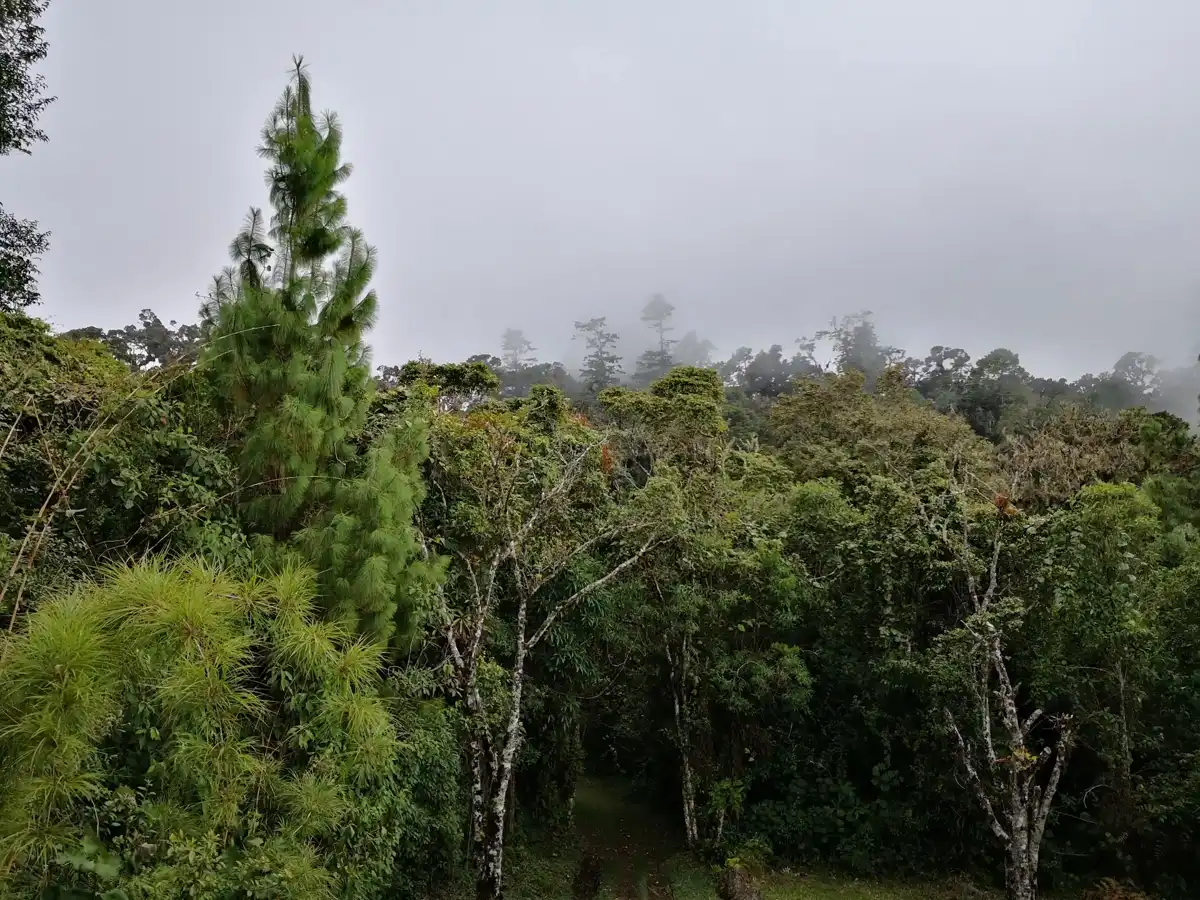
  • Cloud forests — Thick, mossy cloud forest is the reserve’s calling card: trees smothered in epiphytes, hanging moss, and orchids that make the slopes feel like a living cathedral. Walk the trails at dawn and you’ll get low clouds drifting through the canopy and a sense of being inside a green fog — magical and chilly, so pack a warm layer.
  • Resplendent quetzal habitat — This is one of the better places in Guatemala to see the famous quetzal. Male quetzals with their long tail streamers hop around mossy trunks looking for fruit and nesting holes; early morning birding with a local guide greatly increases your chances (personal favorite).
  • Orchids, bromeliads and epiphytes — The biodiversity on tree branches is ridiculous in a good way: dozens of orchid and bromeliad species cling to trunks
read more 👉
  • Cloud forests — Thick, mossy cloud forest is the reserve’s calling card: trees smothered in epiphytes, hanging moss, and orchids that make the slopes feel like a living cathedral. Walk the trails at dawn and you’ll get low clouds drifting through the canopy and a sense of being inside a green fog — magical and chilly, so pack a warm layer.
  • Resplendent quetzal habitat — This is one of the better places in Guatemala to see the famous quetzal. Male quetzals with their long tail streamers hop around mossy trunks looking for fruit and nesting holes; early morning birding with a local guide greatly increases your chances (personal favorite).
  • Orchids, bromeliads and epiphytes — The biodiversity on tree branches is ridiculous in a good way: dozens of orchid and bromeliad species cling to trunks and branches. If you like plants, you can spend hours spotting tiny, brilliantly colored species that are nowhere near the roads.
  • High-altitude pine-oak and páramo zones — The reserve rises into cooler, drier pine-oak forests and even páramo-like open scrub on the highest ridges. These zones host different birdlife and plants than the cloud forest, so a few hundred meters of elevation change feels like entering another world.
  • Scenic ridgelines and viewpoints — There are multiple lookouts where you can see a sweep of forested mountains falling away to lowland valleys and distant volcanoes on clear days. Sunrise from a ridge is worth the early start; the light and cloud layers are excellent for photos.
  • Rivers, springs and waterfalls — Cold, clear headwater streams cut through the reserve; some form small waterfalls and pools tucked into the forest. They’re lovely for a picnic stop and a quick (brisk) dip if you’re properly dressed — be mindful of fragile riparian areas.
  • Backcountry trails and remote camping/refuges — Trails range from short nature walks to multi-day routes that thread remote valleys and ridges. Hiring a local guide is wise: they know the best wildlife spots, have contacts for refuges, and help with route and weather sense in this rugged terrain.
Spotted a mistake or missing something? Contact us.

Things to do near Sierra de las Minas Biosphere Reserve

Ratings based on Tripadvisor reviews. When you book through this link, you support our work at no extra cost to you.

🌤️ When to go?Choosing the right time of year


  • Topic: Weather – The dry season, from November to April, is your best bet. Expect mostly clear skies and minimal rain, which means trails won’t turn into mud traps. The wet season (May to October) brings heavy afternoon showers that can wash out paths and make camping tricky.

  • Topic: Temperature – Daytime temps hover around 18-24°C (65-75°F), perfect for hiking without overheating. Nights can dip to 10°C (50°F), so pack a warm layer. Avoid the hottest months of March and April when it can climb above 27°C (80°F), making long treks less comfortable.

  • Topic: Daylight Hours – Roughly 11 to 12 hours of daylight year-round, giving you plenty of time to explore without rushing. Sunrise is around 6 AM, sunset near 6 PM, so plan your hikes accordingly to avoid being caught out after dark.

  • Topic:
read more 👉

  • Topic: Weather – The dry season, from November to April, is your best bet. Expect mostly clear skies and minimal rain, which means trails won’t turn into mud traps. The wet season (May to October) brings heavy afternoon showers that can wash out paths and make camping tricky.

  • Topic: Temperature – Daytime temps hover around 18-24°C (65-75°F), perfect for hiking without overheating. Nights can dip to 10°C (50°F), so pack a warm layer. Avoid the hottest months of March and April when it can climb above 27°C (80°F), making long treks less comfortable.

  • Topic: Daylight Hours – Roughly 11 to 12 hours of daylight year-round, giving you plenty of time to explore without rushing. Sunrise is around 6 AM, sunset near 6 PM, so plan your hikes accordingly to avoid being caught out after dark.

  • Topic: Crowds – This reserve isn’t a tourist magnet, but weekends and Guatemalan holidays see a spike in local visitors. Weekdays during the dry season offer a quieter experience, letting you soak in the reserve’s natural rhythms without interruptions.

  • Topic: Seasonal Activities – Birdwatching peaks in the dry months when migratory species arrive. The wet season brings lush greenery and blooming orchids but at the cost of slippery trails and more bugs.

  • Topic: Price Fluctuations – Accommodation and guide fees tend to rise slightly during the dry season’s peak months (December to February). Booking ahead can lock in better rates and avoid last-minute premium charges.


Pro-tip: Aim for late November or early December—dry trails, fewer crowds, and prices that haven’t yet hit their peak. It’s the sweet spot for stamina and budget alike.


source: climatestotravel.comJANJanuary: excellent for travelingFEBFebruary: excellent for travelingMARMarch: good for travelingAPRApril: good for travelingMAYMay: fair for travelingJUNJune: fair for travelingJULJuly: fair for travelingAUGAugust: fair for travelingSEPSeptember: fair for travelingOCTOctober: fair for travelingNOVNovember: highly recommended for travelingDECDecember: highly recommended for traveling

✈️ The backpacker research shortcutGuatemala Travel Guide

An offline-friendly backpacking guide with optimized travel routes, ranked highlights, transport advice, and the best areas to stay.
example page 0 from our offline Travel Guide for Guatemala
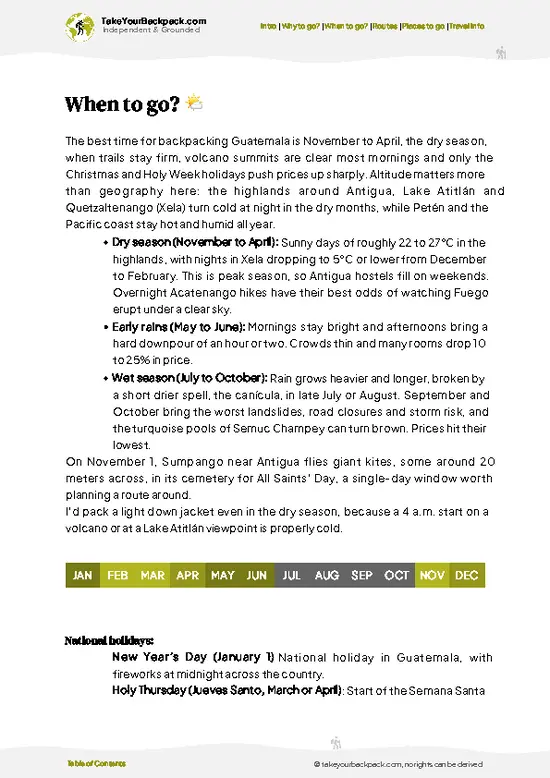
example page 1 from our offline Travel Guide for Guatemala
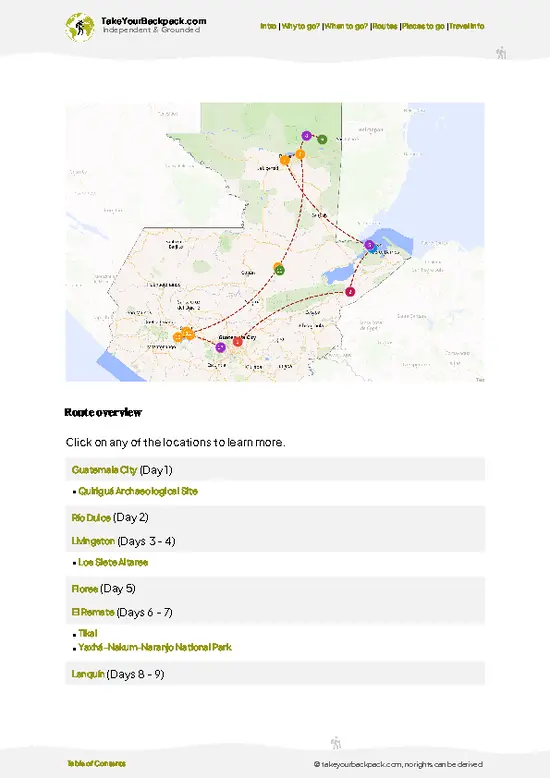
example page 2 from our offline Travel Guide for Guatemala
example page 3 from our offline Travel Guide for Guatemala
example page 4 from our offline Travel Guide for Guatemala
example page 5 from our offline Travel Guide for Guatemala
example page 6 from our offline Travel Guide for Guatemala
example page 7 from our offline Travel Guide for Guatemala
The digital guide (396 pages) contains:
100 highlights, ranked by travel appeal
Optimized 5, 10 & 15-day travel routes
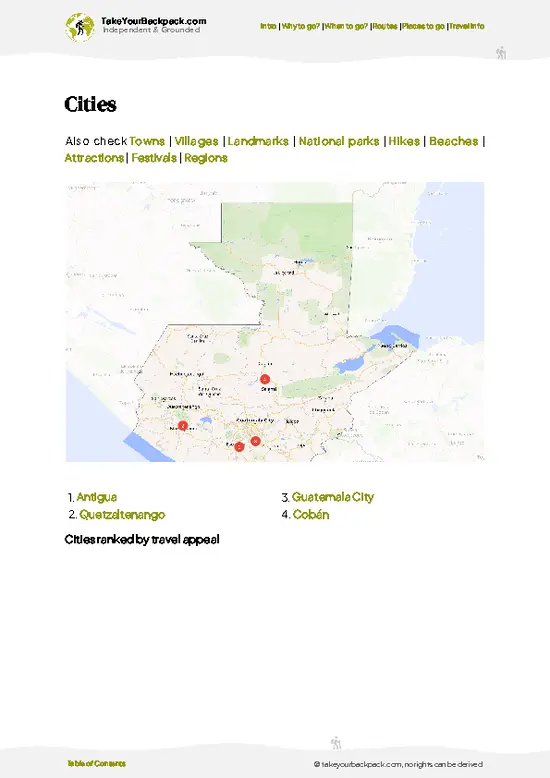
Cities, national parks, landmarks, beaches
How to get around
Offline-friendly for travel without Wi-Fi
👉 Click to see all 30+ guide features

📅 Plan smarter in minutes, not weeks
Month by month travel advice
Festivals & national holidays
Budget expectations

🗺️ Go to the right places, skip the overrated ones
Honest pros & cons of destinations
Top hikes, parks & viewpoints
Lesser-known places most travelers miss
Clear “worth it vs skip it” guidance

🛏️ Travel smoothly without rookie mistakes
Best areas to stay
Transport systems explained simply
Common scams & safety advice
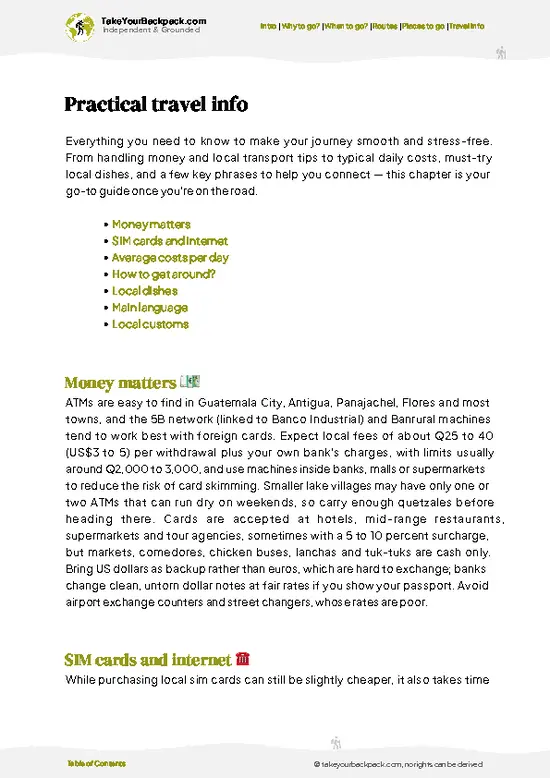
SIM cards, money & practical tips

🌍 Understand the country, not just visit it
Culture & traditions
52 Essential phrases & customs
Festivals worth planning around
Traveler-friendly historical context
Insights that make places more meaningful

📱 Built for real travel conditions
Fully downloadable PDF
Works completely offline
Optimized for phone use
Useful in remote areas & buses
Everything in one place
Save weeks of stressful planning
Get instant access to your full guide. 30‑day money-back guarantee.


By proceeding you agree to our terms.
Sent to your inbox immediately after payment • 100% Secure Checkout
Best Backpacking Travel Advisor 2025 tourism awardBest Backpacking
Travel Advisor
2025
What others say about Take Your Backpack Guides:
⭐⭐⭐⭐⭐
Fantastic, amazing amount of information!
⭐⭐⭐⭐⭐
My goodness this is amazing, it's what I've been looking for hats off too you!
⭐⭐⭐⭐⭐
I think this is absolutely BRILLIANT
⭐⭐⭐⭐
Very complete and informative. It's still missing places, but I gotta to commend you
⭐⭐⭐⭐⭐
This is truly amazing, thank you, can't wait to explore it with my kids!
⭐⭐⭐⭐⭐
Awesome resource, thank you!
⭐⭐⭐⭐⭐
This is amazing! Can't wait to explore the ones I haven't seen
⭐⭐⭐⭐
I love this! Well done, great idea.
⭐⭐⭐⭐⭐
Thanks for taking the time to make this gem!
⭐⭐⭐⭐⭐
This might be the best website I've ever seen.
⭐⭐⭐⭐⭐
Congratulations, and thank you so much for your work; it's incredibly valuable.
⭐⭐⭐⭐
In all seriousness I think you did a great job pointing out the important spots
⭐⭐⭐⭐⭐
10/10 very good
⭐⭐⭐⭐⭐
As someone who's only just starting to visit regularly this is awesome, thank you.
⭐⭐⭐⭐
Thank you very much! I'm going to visit my dad, it's going to be very useful!
⭐⭐⭐⭐⭐
This is really cool! We'll be travelling for the first time and this definitely come in handy.
⭐⭐⭐⭐⭐
You are now our minister of culture, congratulations 👨‍💼
⭐⭐⭐⭐⭐
Just wanted to tell you that this is a pearl! Going to follow your recommendations.
⭐⭐⭐⭐⭐
This is so cool. I'll definitely be using the resource for my travels soon.
⭐⭐⭐⭐⭐
This is very impressive! Good work.
⭐⭐⭐⭐⭐
This is an amazing and informative site. Very well done!

🛏️ Where to stay?Where staying makes the most sense

For backpackers heading to the Sierra de las Minas Biosphere Reserve, options are limited but solid. Inside the park, accommodations are sparse. The best bet is to camp if you’re equipped for it. There are designated camping areas, but be prepared for basic facilities. Bring your own gear and food; it’s a chance to immerse yourself in nature without distractions.

If you prefer a bit more comfort, head to nearby towns like *Santa María de Jesús* or *Purulhá*. These towns offer a few budget-friendly hostels and guesthouses. In *Santa María de Jesús*, you might find *Hostal Casa de la Abuela*, which … read more 👉
For backpackers heading to the Sierra de las Minas Biosphere Reserve, options are limited but solid. Inside the park, accommodations are sparse. The best bet is to camp if you’re equipped for it. There are designated camping areas, but be prepared for basic facilities. Bring your own gear and food; it’s a chance to immerse yourself in nature without distractions.

If you prefer a bit more comfort, head to nearby towns like *Santa María de Jesús* or *Purulhá*. These towns offer a few budget-friendly hostels and guesthouses. In *Santa María de Jesús*, you might find *Hostal Casa de la Abuela*, which has a cozy vibe and local charm.

*Purulhá* is another option, with places like *Hotel El Mirador*, where you can recharge after a day of hiking. Both towns provide access to local markets for supplies, which is a bonus for your budget.

Keep in mind that transportation can be tricky. Public buses are available, but schedules can be erratic. Plan ahead to avoid wasting time. Prioritize your energy for the trails, not the logistics.

👛 Costs (as of 13 June 2025)How expensive it really is

Visiting the Sierra de las Minas Biosphere Reserve in Guatemala can be a rewarding experience, but it’s essential to be aware of the costs involved to avoid surprises.

Entrance fees typically range from $5 to $10 USD per person. This fee grants you access to the park’s trails and natural beauty. If you plan to camp, expect to pay an additional $10 to $15 USD per night for a campsite.

Guided tours are highly recommended for a deeper understanding of the area. Prices for these tours can vary significantly, usually falling between $30 and $100 USD, depending on the length and inclusivity of the package. Some tours may include meals or transportation, so clarify what’s covered before booking.

Transportation to the reserve can also add up. If you’re coming from nearby towns like Cobán, expect … read more 👉
Visiting the Sierra de las Minas Biosphere Reserve in Guatemala can be a rewarding experience, but it’s essential to be aware of the costs involved to avoid surprises.

Entrance fees typically range from $5 to $10 USD per person. This fee grants you access to the park’s trails and natural beauty. If you plan to camp, expect to pay an additional $10 to $15 USD per night for a campsite.

Guided tours are highly recommended for a deeper understanding of the area. Prices for these tours can vary significantly, usually falling between $30 and $100 USD, depending on the length and inclusivity of the package. Some tours may include meals or transportation, so clarify what’s covered before booking.

Transportation to the reserve can also add up. If you’re coming from nearby towns like Cobán, expect to pay around $10 to $20 USD for a shuttle or bus. Private transport will cost more, generally starting at $50 USD.

Food options within the reserve are limited. Budget around $5 to $15 USD per meal if you plan to eat at local eateries or bring your own supplies for a more economical choice.

Lastly, consider the costs of any additional activities, such as birdwatching or visiting nearby waterfalls, which may have their own fees.

By planning for these expenses, you can focus your energy and budget on enjoying the stunning landscapes and rich biodiversity of the Sierra de las Minas.


source: roughguides.com
⚠️ Prices can change and everyone travels differently, so take this as a rough guide. Hope it helps you plan your adventure!

🥾 TrailsExploring Sierra de las Minas Biosphere Reserve: trails, terrain, and views

The Sierra de las Minas Biosphere Reserve is a hidden gem for hikers in Guatemala, offering a mix of stunning landscapes and diverse wildlife. You’ll find lush cloud forests, cascading waterfalls, and breathtaking views that make every step worthwhile. The terrain varies from gentle slopes to steep inclines, so be prepared for a workout, especially if you venture into the more rugged areas. Wildlife is abundant here; keep your eyes peeled for unique bird species, monkeys, and maybe even a jaguar if you’re lucky.

One of the popular trails is Los Cuchumatanes Trail, which is a fantastic choice … read more 👉
The Sierra de las Minas Biosphere Reserve is a hidden gem for hikers in Guatemala, offering a mix of stunning landscapes and diverse wildlife. You’ll find lush cloud forests, cascading waterfalls, and breathtaking views that make every step worthwhile. The terrain varies from gentle slopes to steep inclines, so be prepared for a workout, especially if you venture into the more rugged areas. Wildlife is abundant here; keep your eyes peeled for unique bird species, monkeys, and maybe even a jaguar if you’re lucky.

One of the popular trails is Los Cuchumatanes Trail, which is a fantastic choice for both novice and experienced hikers. Here’s the scoop:
  • Length: 10 km
  • Estimated Duration: 4-5 hours
  • Difficulty Level: Moderate
  • Key Features: Stunning vistas, diverse flora and fauna, and a chance to see traditional Mayan villages
  • Terrain: Varied, with some steep sections and well-maintained paths

Getting to the park is pretty straightforward; you can catch a bus from Guatemala City to the nearby town of Cobán, and from there, local transport will take you closer to the reserve. It’s not overly crowded, especially if you go during the week, so you can enjoy the tranquility of nature without too many interruptions. Just keep in mind there’s an entrance fee, usually around 50 quetzales, which helps maintain the park’s beauty. Pack some snacks, fill up your water bottle, and enjoy the adventure!
⚠️ Hiking info can sometimes be outdated or inaccurate. Before you hit the trail, check the latest conditions with locals. If you do spot anything that's off, I'd love to hear from you, so I can update it for fellow travelers.

🛡️ SafetyScams, Hazards, and Annoyances

The Sierra de las Minas Biosphere Reserve is generally welcoming for backpackers, but a few practical insights can make your experience smoother. Weather can shift quickly; pack layers to adapt to temperature changes, especially at higher altitudes. The trails vary in steepness, so good footwear is essential for grip and comfort. Navigation can be tricky in dense areas, so a reliable map or GPS device is a must.

Wildlife encounters are rare but possible. If you spot a snake or other critters, give them space and keep moving. Respect the environment by sticking to marked trails to minimize your impact.

Timing is key; early mornings are cooler and less crowded. Stay hydrated and pace yourself, especially on longer hikes. These simple strategies will help you focus on the beauty around you rather than potential pitfalls.

Other Guatemalan national parks near Sierra de las Minas Biosphere Reserve

Explore more nearby:


💡 Not sure where to go next?
Create a personalized itinerary for Guatemala including Sierra de las Minas Biosphere Reserve and the places that fit your trip.

Generate my itinerary

👉 Discover all national parks

Or checkout all Guatemala has to offer (think cities, towns, villages, national parks, hikes, beaches, festivals)
Country photo of Guatemala

We 💚 feedbackSumming up the experience

Sierra de las Minas is a treasure for those who crave biodiversity. You’ll find unique flora and fauna that you won’t see anywhere else. But be prepared: the trails can be challenging, and the weather is unpredictable. Bring sturdy gear and a flexible mindset. This place rewards the prepared traveler, but don’t underestimate the effort it takes to truly experience its beauty. It’s worth it, but only if you’re ready for the adventure.

✈️ When did I visit Guatemala?
Guatemala I visited during my half year trip through South and Central America back in 2003

✍️ Help improve this page!
The information on this page is based on my own backpacking experience in Guatemala, supplemented with up-to-date research and feedback from other travelers. Travel details can change, so if you notice anything outdated or incomplete, feel free to let me know.


🙋‍♂️ Give feedback

👋 Meet the founderWho’s Behind Take Your Backpack?

Johan, backpacker and founder of TakeYourBackpackHi, I’m Johan (Netherlands 🇳🇱), the creator of TakeYourBackpack. Over the past decade, I’ve backpacked through 80+ countries across six continents, gaining extensive experience with independent travel, long-term trips, and overland routes.

This site is built on a combination of firsthand travel experience and carefully curated insights from other backpackers. Many guides are based on places I’ve personally visited, while others bring together tips, observations, and practical advice shared by trusted travelers I’ve met along the way.

The goal is to provide realistic, experience-driven guidance — not generic itineraries — so you can explore destinations with better context, clearer expectations, and more confidence.

Get full Guatemala guide •
Instant download • 100 highlights • Full Offline guide