×

Hong Kong🇭🇰 | attractionsPMQcreative studios, design shops, historic compound | things to do and best time to go

Explore Hong Kong Heritage MuseumExplore Tai Kwun Centre for Heritage and Arts

Backpacking in PMQ
👌 Worth visitingattraction ranked #14
By Johan Kruseman 🇳🇱 | Updated September 4, 2026

Forget the Instagram myth: PMQ isn’t some secret, bohemian wonderland where artists hand you masterpieces over matcha lattes. It’s right in the heart of Central, Hong Kong, wedged between glass towers and old stone steps. PMQ is the city’s former police married quarters, now a creative hub that’s more polished than gritty. Yes, you’ll find indie designers, quirky pop-ups, and the occasional art show that actually surprises you. But expect crowds—especially on weekends—and prices that remind you this is Central, not a backpacker’s bargain bin. Still, there’s real magic in the building’s bones: colonial corridors, hidden stairwells, and a sense of Hong Kong’s restless reinvention. Compared to the city’s headline acts, PMQ is less spectacle, more slow-burn—worth it if you crave creative energy over postcard perfection.

Discover everything you want to know in the 📖 Hong Kong Travel Guide.
Loading the map 🌍
CLICK TO FILTER
towns
landmarks
national parks
hikes
beaches
attractions
festivals
regions
SHOW COUNTRY’S BESTSHOW ALL

✨ Why go?
Ranked #14 attraction in Hong Kong
What makes this attraction worth visiting

PMQ in Hong Kong isn’t your typical tourist stop plastered all over Instagram with perfect angles and zero context. Yes, it’s crowded—especially on weekends—and the prices at some boutiques can make you blink twice. But here’s the real deal: PMQ is a living piece of Hong Kong’s soul. Once the Police Married Quarters, this building carries layers of history that few spots in the city can claim. It’s a rare mash-up of old-school colonial architecture and cutting-edge local design, where emerging artists and designers push boundaries right alongside heritage walls. Backpackers who make time for PMQ aren’t just ticking off a checklist; they’re witnessing Hong Kong’s creative heartbeat in real time. It’s a cultural milestone on any route through the city, offering a raw, unfiltered glimpse into … read more 👉
PMQ in Hong Kong isn’t your typical tourist stop plastered all over Instagram with perfect angles and zero context. Yes, it’s crowded—especially on weekends—and the prices at some boutiques can make you blink twice. But here’s the real deal: PMQ is a living piece of Hong Kong’s soul. Once the Police Married Quarters, this building carries layers of history that few spots in the city can claim. It’s a rare mash-up of old-school colonial architecture and cutting-edge local design, where emerging artists and designers push boundaries right alongside heritage walls. Backpackers who make time for PMQ aren’t just ticking off a checklist; they’re witnessing Hong Kong’s creative heartbeat in real time. It’s a cultural milestone on any route through the city, offering a raw, unfiltered glimpse into how tradition and innovation collide here. The effort to navigate the crowds and the slightly steep prices pays off with a dose of authenticity that no postcard can capture.
Want to include PMQ in your Hong Kong route?
Create a personalized Hong Kong itinerary that includes PMQ and the places that fit your trip — based on your travel style, budget, and available time. Get your route in seconds.

Generate my trip

💡 HighlightsEssential experiences to have while visiting PMQ

1. The PMQ Design Studios
Skip the Instagram façade of “cute shops” and get into the guts of PMQ: the working studios. These aren’t just retail fronts—they’re the nerve center of Hong Kong’s indie design scene. You’ll see designers sketching, prototyping, and sometimes arguing over color swatches. It’s raw, unpredictable, and a million miles from the sanitized mall experience. If you want to meet the minds behind the merchandise, this is where you do it. Don’t be shy—most are happy to talk shop if you show genuine curiosity.


2. Night Markets and Pop-Up Events
The real PMQ magic happens after hours. Forget the tourist brochures—come for the night markets, indie film screenings, or one-off art installations. These events are where Hong Kong’s creative misfits and up-and-comers test their wildest … read more 👉
1. The PMQ Design Studios
Skip the Instagram façade of “cute shops” and get into the guts of PMQ: the working studios. These aren’t just retail fronts—they’re the nerve center of Hong Kong’s indie design scene. You’ll see designers sketching, prototyping, and sometimes arguing over color swatches. It’s raw, unpredictable, and a million miles from the sanitized mall experience. If you want to meet the minds behind the merchandise, this is where you do it. Don’t be shy—most are happy to talk shop if you show genuine curiosity.


2. Night Markets and Pop-Up Events
The real PMQ magic happens after hours. Forget the tourist brochures—come for the night markets, indie film screenings, or one-off art installations. These events are where Hong Kong’s creative misfits and up-and-comers test their wildest ideas. You might stumble into a streetwear launch, a sake tasting, or a DJ set in a stairwell. It’s unpredictable, occasionally chaotic, and always more interesting than anything you’ll find in a guidebook.


3. The Original Central School Architecture
Here’s the plot twist: PMQ isn’t just a design hub. It’s built inside the bones of Hong Kong’s first government school, and the original staircases and corridors are still intact. Walk the echoing halls and you’ll feel the collision of colonial history and modern reinvention. The contrast is sharp—gleaming glass next to battered brick, old school plaques next to neon art. It’s a rare place where you can literally touch the city’s past while standing in its creative future.


4. Taste Kitchen
This isn’t your average food court. Taste Kitchen is a culinary incubator—think of it as a pop-up restaurant with a revolving door of ambitious chefs. Menus change constantly, and you’re just as likely to get a mind-bending fusion experiment as a classic Cantonese comfort dish. It’s not always perfect, but it’s never boring. If you want to eat like a local creative, this is the table you want.


5. The Courtyard and Rooftop Spaces
Most people snap a photo and move on, but the real value is in lingering. The courtyards and rooftop garden are where you catch your breath, watch the city swirl, and maybe catch a surprise performance or open-air workshop. It’s a rare slice of calm in Central, and the people-watching is top-tier—designers, students, and the occasional eccentric artist all in one frame.
Spotted a mistake or missing something? Contact us.

Things to do around PMQ

Ratings based on Tripadvisor reviews. When you book through this link, you support our work at no extra cost to you.

🌤️ When to go?Seasonal considerations and timing


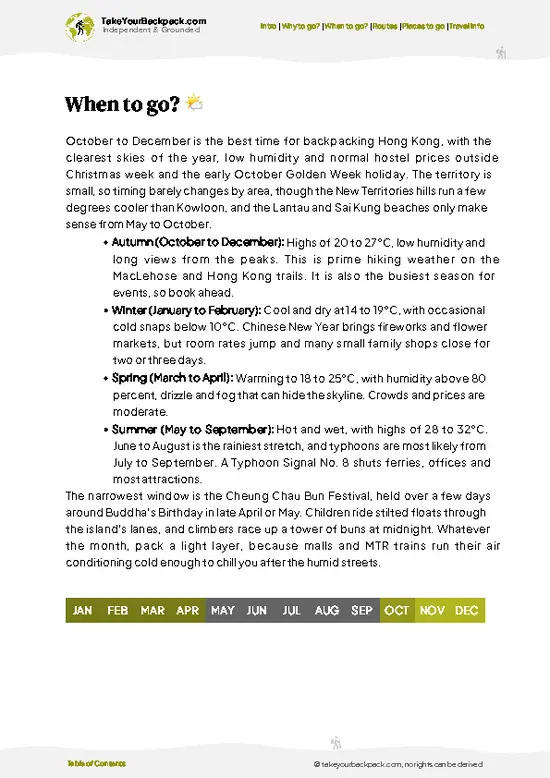
  • Weather: Hong Kong’s subtropical climate means summers (June to August) are hot and humid, often hitting 28-33°C (82-91°F) with frequent rain and typhoons. Winters (December to February) are mild and dry, around 14-20°C (57-68°F), making it far more comfortable for wandering PMQ’s open-air spaces.

  • Daylight Hours: Longer days from April to September offer up to 13-14 hours of light, perfect for exploring every nook of PMQ without rushing. Shorter winter days mean less time for outdoor browsing but fewer crowds.

  • Crowds: Weekends and public holidays are packed year-round, but especially during the Christmas season and Chinese New Year (January/February). Visiting on weekday mornings or off-peak months like March or October gives you breathing room.

  • Seasonal Activities: PMQ hosts design
read more 👉

  • Weather: Hong Kong’s subtropical climate means summers (June to August) are hot and humid, often hitting 28-33°C (82-91°F) with frequent rain and typhoons. Winters (December to February) are mild and dry, around 14-20°C (57-68°F), making it far more comfortable for wandering PMQ’s open-air spaces.

  • Daylight Hours: Longer days from April to September offer up to 13-14 hours of light, perfect for exploring every nook of PMQ without rushing. Shorter winter days mean less time for outdoor browsing but fewer crowds.

  • Crowds: Weekends and public holidays are packed year-round, but especially during the Christmas season and Chinese New Year (January/February). Visiting on weekday mornings or off-peak months like March or October gives you breathing room.

  • Seasonal Activities: PMQ hosts design markets and art fairs mostly in spring and autumn, adding layers to your visit beyond just shops. Summer events can be swamped and sweaty, so plan accordingly.

  • Price Fluctuations: While PMQ itself doesn’t charge entry, nearby accommodation and flights spike during major festivals and summer holidays. Booking in shoulder seasons like April or November can save you serious cash.


Pro-tip: Aim for late autumn (October-November) when the weather is crisp, crowds thin, and the creative pulse of PMQ is at its liveliest without the tourist chaos.


source: climatestotravel.comJANJanuary: good for travelingFEBFebruary: good for travelingMARMarch: highly recommended for travelingAPRApril: excellent for travelingMAYMay: highly recommended for travelingJUNJune: fair for travelingJULJuly: fair for travelingAUGAugust: fair for travelingSEPSeptember: highly recommended for travelingOCTOctober: excellent for travelingNOVNovember: excellent for travelingDECDecember: good for traveling
when-to-go

✈️ The backpacker research shortcutHong Kong Travel Guide

An offline-friendly backpacking guide with optimized travel routes, ranked highlights, transport advice, and the best areas to stay.
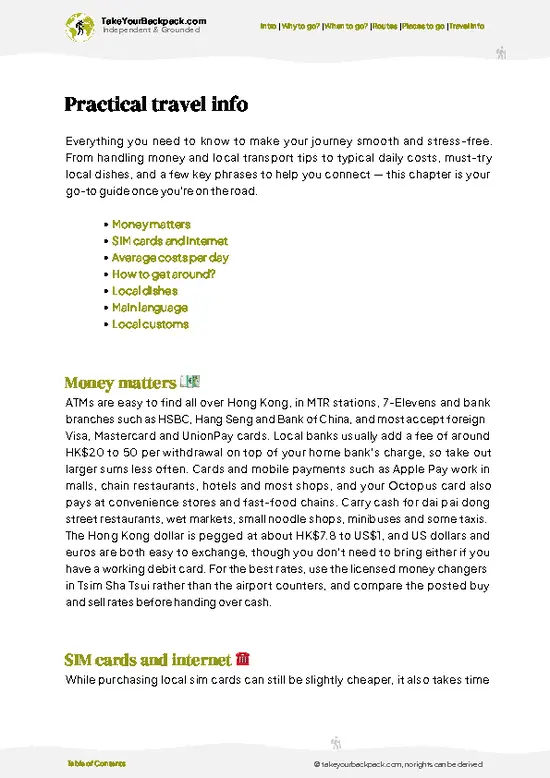
example page 0 from our offline Travel Guide for Hong Kong
example page 1 from our offline Travel Guide for Hong Kong
example page 2 from our offline Travel Guide for Hong Kong
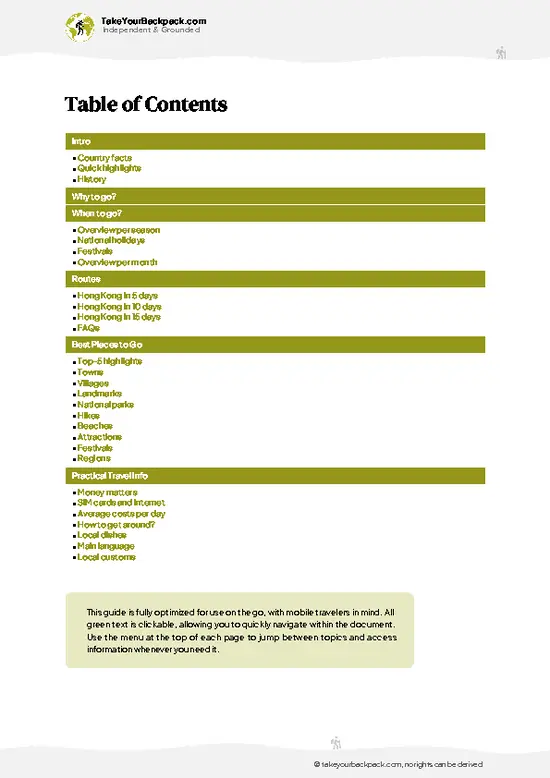
example page 3 from our offline Travel Guide for Hong Kong
example page 4 from our offline Travel Guide for Hong Kong
example page 5 from our offline Travel Guide for Hong Kong
example page 6 from our offline Travel Guide for Hong Kong
example page 7 from our offline Travel Guide for Hong Kong
The digital guide (357 pages) contains:
98 highlights, ranked by travel appeal
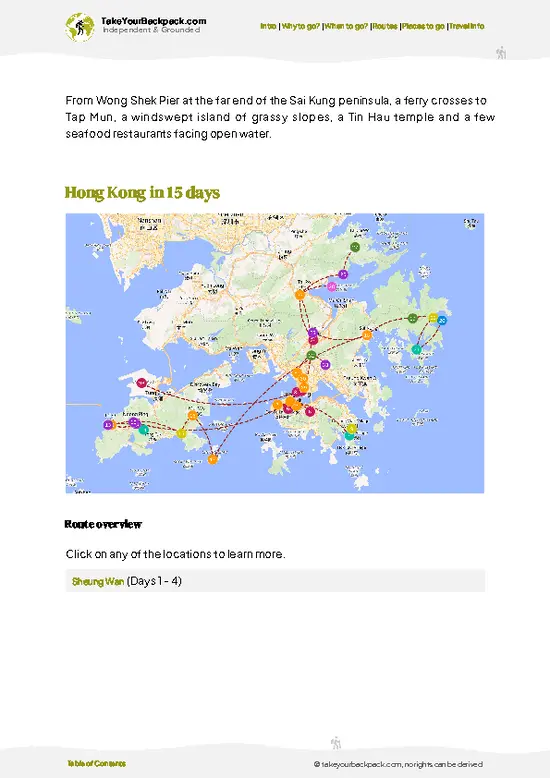
Optimized 5, 10 & 15-day travel routes
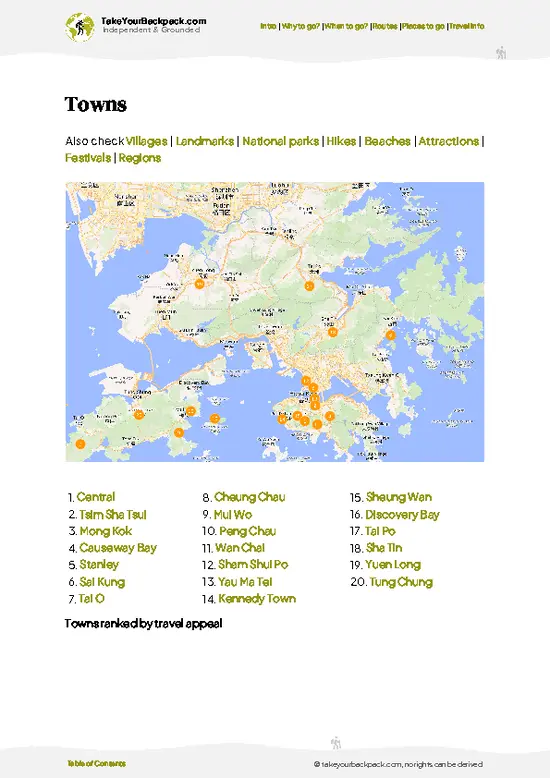
Cities, national parks, landmarks, beaches
How to get around
Offline-friendly for travel without Wi-Fi
👉 Click to see all 30+ guide features

📅 Plan smarter in minutes, not weeks
Month by month travel advice
Festivals & national holidays
Budget expectations

🗺️ Go to the right places, skip the overrated ones
Honest pros & cons of destinations
Top hikes, parks & viewpoints
Lesser-known places most travelers miss
Clear “worth it vs skip it” guidance

🛏️ Travel smoothly without rookie mistakes
Best areas to stay
Transport systems explained simply
Common scams & safety advice
SIM cards, money & practical tips

🌍 Understand the country, not just visit it
Culture & traditions
52 Essential phrases & customs
Festivals worth planning around
Traveler-friendly historical context
Insights that make places more meaningful

📱 Built for real travel conditions
Fully downloadable PDF
Works completely offline
Optimized for phone use
Useful in remote areas & buses
Everything in one place
Save weeks of stressful planning
Get instant access to your full guide. 30‑day money-back guarantee.
+ Add another guide for just US$7.80

By proceeding you agree to our terms.
Sent to your inbox immediately after payment • 100% Secure Checkout
Best Backpacking Travel Advisor 2025 tourism awardBest Backpacking
Travel Advisor
2025
What others say about Take Your Backpack Guides:
⭐⭐⭐⭐⭐
Fantastic, amazing amount of information!
⭐⭐⭐⭐⭐
My goodness this is amazing, it's what I've been looking for hats off too you!
⭐⭐⭐⭐⭐
I think this is absolutely BRILLIANT
⭐⭐⭐⭐
Very complete and informative. It's still missing places, but I gotta to commend you
⭐⭐⭐⭐⭐
This is truly amazing, thank you, can't wait to explore it with my kids!
⭐⭐⭐⭐⭐
Awesome resource, thank you!
⭐⭐⭐⭐⭐
This is amazing! Can't wait to explore the ones I haven't seen
⭐⭐⭐⭐
I love this! Well done, great idea.
⭐⭐⭐⭐⭐
Thanks for taking the time to make this gem!
⭐⭐⭐⭐⭐
This might be the best website I've ever seen.
⭐⭐⭐⭐⭐
Congratulations, and thank you so much for your work; it's incredibly valuable.
⭐⭐⭐⭐
In all seriousness I think you did a great job pointing out the important spots
⭐⭐⭐⭐⭐
10/10 very good
⭐⭐⭐⭐⭐
As someone who's only just starting to visit regularly this is awesome, thank you.
⭐⭐⭐⭐
Thank you very much! I'm going to visit my dad, it's going to be very useful!
⭐⭐⭐⭐⭐
This is really cool! We'll be travelling for the first time and this definitely come in handy.
⭐⭐⭐⭐⭐
You are now our minister of culture, congratulations 👨‍💼
⭐⭐⭐⭐⭐
Just wanted to tell you that this is a pearl! Going to follow your recommendations.
⭐⭐⭐⭐⭐
This is so cool. I'll definitely be using the resource for my travels soon.
⭐⭐⭐⭐⭐
This is very impressive! Good work.
⭐⭐⭐⭐⭐
This is an amazing and informative site. Very well done!

🛏️ Where to stay?How to pick the right area

PMQ sits smack in the middle of Hong Kong’s Central district, a place that’s anything but quiet or cheap. If you’re chasing the Instagram-perfect vibe of PMQ’s creative buzz, expect crowds and prices that reflect its prime location. But here’s the real deal: staying right next to PMQ means you’re in the heart of the city’s pulse, with endless street food stalls, quirky shops, and a nightlife that doesn’t quit.

For backpackers, the best spots aren’t inside the tourist bubble but just a few blocks away in Sheung Wan or the edge of Central. Sheung Wan offers a gritty, lived-in feel with narrow … read more 👉
PMQ sits smack in the middle of Hong Kong’s Central district, a place that’s anything but quiet or cheap. If you’re chasing the Instagram-perfect vibe of PMQ’s creative buzz, expect crowds and prices that reflect its prime location. But here’s the real deal: staying right next to PMQ means you’re in the heart of the city’s pulse, with endless street food stalls, quirky shops, and a nightlife that doesn’t quit.

For backpackers, the best spots aren’t inside the tourist bubble but just a few blocks away in Sheung Wan or the edge of Central. Sheung Wan offers a gritty, lived-in feel with narrow alleys, local markets, and a strong community vibe that’s safer and more social than the flashy skyscraper zone. It’s where solo travelers can easily strike up conversations over cheap eats or craft coffee. Central’s backstreets, meanwhile, have a mix of budget guesthouses and hostels that balance convenience with a chance to meet other adventurers without the tourist trap prices. Both areas keep you close enough to PMQ’s creative energy but far enough to avoid the tourist crush and inflated costs.

👛 Costs (as of 4 September 2026)What things cost and how to budget

General admission to PMQ is free. Workshops and guided tours typically range from HK$150 to HK$600 (approximately €20 to €80). Food and retail prices vary by vendor. ([pmq.org.hk](https://www.pmq.org.hk/heritage/guided-tour/?utm_source=openai))

source: pmq.org.hk
⚠️ Prices can change and everyone travels differently, so take this as a rough guide. Hope it helps you plan your adventure!

FAQFrequently asked questions about PMQ

1 to 2 hours is sufficient to explore PMQ. This allows time to browse the design shops, galleries, and occasional exhibitions without rushing. Weekends may require more time due to higher visitor numbers.
Yes, PMQ is worth the entrance fee as it offers a unique insight into Hong Kong's creative and design culture. The entrance is generally free, with some special exhibitions or workshops possibly charging a small fee. It provides value through its blend of history, art, and local craftsmanship.
Take the MTR to Central Station and use Exit D2; PMQ is a 5-minute walk from there. Alternatively, several bus routes stop nearby on Hollywood Road. The location is central and well-signposted.
⚠️ Things can change over time, so always validate details locally before you go.

Other Hong Kongese attractions near PMQ

Explore more nearby:


💡 Not sure where to go next?
Create a personalized itinerary for Hong Kong including PMQ and the places that fit your trip.

Generate my itinerary

👉 Discover all attractions

Or checkout all Hong Kong has to offer (think cities, towns, villages, national parks, hikes, beaches, festivals)
Country photo of Hong Kong

We 💚 feedbackSumming up the experience

PMQ isn’t your typical polished mall pretending to be artsy—it’s a gritty, creative hub squeezed into a historic police quarters shell. Expect a mix of tourists and locals, but the real magic is in the tiny studios where you can watch artists at work or snag one-of-a-kind crafts. It’s not cheap, but the authenticity and energy here beat any soulless shopping spree. Just don’t come expecting a quiet stroll—this place hums with life.

✍️ Help improve this page!
The information on this page is based on in-depth research, insights shared by experienced travelers, and feedback from the local travel community in Hong Kong. While every effort is made to keep the information accurate and current, conditions can change — so if you spot anything incorrect or outdated, please get in touch.


🙋‍♂️ Give feedback

👋 Meet the founderWho’s Behind Take Your Backpack?

Johan, backpacker and founder of TakeYourBackpackHi, I’m Johan (Netherlands 🇳🇱), the creator of TakeYourBackpack. Over the past decade, I’ve backpacked through 80+ countries across six continents, gaining extensive experience with independent travel, long-term trips, and overland routes.

This site is built on a combination of firsthand travel experience and carefully curated insights from other backpackers. Many guides are based on places I’ve personally visited, while others bring together tips, observations, and practical advice shared by trusted travelers I’ve met along the way.

The goal is to provide realistic, experience-driven guidance — not generic itineraries — so you can explore destinations with better context, clearer expectations, and more confidence.

Get full Hong Kong guide •
Instant download • 98 highlights • Full Offline guide