×

Iran🇮🇷 | hikesMount Damavandvolcanic cone, sulfur vents, high-altitude ascent | things to do and best time to go

Explore DarbandExplore Dena Mountain Range

Backpacking in Mount Damavand
🏆 Top pickhike ranked #1
By Johan Kruseman 🇳🇱 | Updated June 8, 2026

Most people hear “Damavand” and picture a remote, technical Himalayan-style epic. It isn’t. Mount Damavand is Iran’s highest peak, but it rises just northeast of Tehran in the Alborz range, close enough that you can leave the city in the morning and be on the mountain by afternoon. The hike itself is a long, lung-punching slog rather than a delicate climb: loose volcanic grit underfoot, sulfur vents stinging your nose near the top, and a relentless final push that feels steeper with every step. In return, you get huge views over the Alborz, cloud seas, and—on clear days—the sense that half of Iran is spread below you. Public transport gets you reasonably close via Tehran–Polur–Rineh, then it’s shared taxis and 4x4s. Compared with nearby Alamut or Tochal, Damavand is less green, more barren, more brutal—and far more of a summit trophy.

Discover everything you want to know in the 📖 Iran Travel Guide.
Best time to go: May - September
Duration: 2 to 3 days
Distance: 18 kilometers
Total ascent: 3,000 meters
Safety warning

The current risk level for Iran is high. Check the advice before going.


Get your Iran guide
121 ranked highlights, routes & tips, works offline (419 pages)
Loading the map 🌍
CLICK TO FILTER
cities
towns
villages
landmarks
national parks
hikes
beaches
attractions
festivals
regions
SHOW COUNTRY’S BESTSHOW ALL

✨ Why go?
Ranked #1 hike in Iran
The unique appeal for travelers

Mount Damavand is a siren call for backpackers craving a blend of challenge and reward. Standing at 5,610 meters, it’s the highest peak in the Middle East, but don’t let the altitude scare you off. The scenery-to-effort ratio is off the charts. Picture this: a snow-capped volcano looming over lush valleys, with wildflowers bursting through rocky terrain. Each step brings you closer to a view that makes the grind worthwhile.

Getting there? Easy. Public transport whisks you from Tehran to the trailhead, making it accessible for those on a budget. The low cost of the hike means you can splurge on a hearty meal afterward without guilt.

What’s more, the hike offers flexible distances. You can opt for a leisurely ascent or push yourself on a more demanding route. Either way, the camaraderie among … read more 👉
Mount Damavand is a siren call for backpackers craving a blend of challenge and reward. Standing at 5,610 meters, it’s the highest peak in the Middle East, but don’t let the altitude scare you off. The scenery-to-effort ratio is off the charts. Picture this: a snow-capped volcano looming over lush valleys, with wildflowers bursting through rocky terrain. Each step brings you closer to a view that makes the grind worthwhile.

Getting there? Easy. Public transport whisks you from Tehran to the trailhead, making it accessible for those on a budget. The low cost of the hike means you can splurge on a hearty meal afterward without guilt.

What’s more, the hike offers flexible distances. You can opt for a leisurely ascent or push yourself on a more demanding route. Either way, the camaraderie among fellow hikers adds a layer of joy to the experience.

As you reach the summit, the burn in your legs fades away, replaced by the exhilaration of standing atop a giant. That first cold beer at the base camp? It tastes like victory.
Want to include Mount Damavand in your Iran route?
Create a personalized Iran itinerary that includes Mount Damavand and the places that fit your trip — based on your travel style, budget, and available time. Get your route in seconds.

Generate my trip

💡 HighlightsWhat this place is best known for

  1. Summit crater & fumaroles — The top of Damavand is an actual volcanic crater with steaming sulphur vents and yellow mineral stains; standing at the rim of an active volcano (5,610 m) feels different from any granite peak — raw, otherworldly and a little smoky.
  2. Panoramic summit views — On a clear morning you can see the jagged Alborz ridges, Tehran far below and even the Caspian Sea on the horizon; sunrise above a sea of clouds from this height is the kind of view that makes the altitude ache worth it.
  3. Pumice slopes and loose scree — Much of the ascent crosses light, volcanic pumice and black scree, so you get long, runnable sections and surreal “lunar” terrain — different from the packed-out dirt or granite faces common on many other trails.
  4. Alpine flora and possible wildlife encounters
read more 👉
  1. Summit crater & fumaroles — The top of Damavand is an actual volcanic crater with steaming sulphur vents and yellow mineral stains; standing at the rim of an active volcano (5,610 m) feels different from any granite peak — raw, otherworldly and a little smoky.
  2. Panoramic summit views — On a clear morning you can see the jagged Alborz ridges, Tehran far below and even the Caspian Sea on the horizon; sunrise above a sea of clouds from this height is the kind of view that makes the altitude ache worth it.
  3. Pumice slopes and loose scree — Much of the ascent crosses light, volcanic pumice and black scree, so you get long, runnable sections and surreal “lunar” terrain — different from the packed-out dirt or granite faces common on many other trails.
  4. Alpine flora and possible wildlife encounters — Late spring/summer brings carpets of hardy alpine wildflowers in the lower meadows and you might spot mountain foxes or ibex higher up; the flora and fauna feel steppe-to-alpine in a way unique to the Iranian highlands.
  5. Mountain huts, local route culture & hot springs — The classic southern route has lived-in huts (Bargah-e Sevom and shepherd shelters), friendly local guides and nearby thermal springs at the mountain’s base — so the hike mixes serious high-altitude climbing with a real local, base-camp culture you don’t always get on more commercial peaks.
Spotted a mistake or missing something? Contact us.

🌤️ When to go?When to go for the best experience


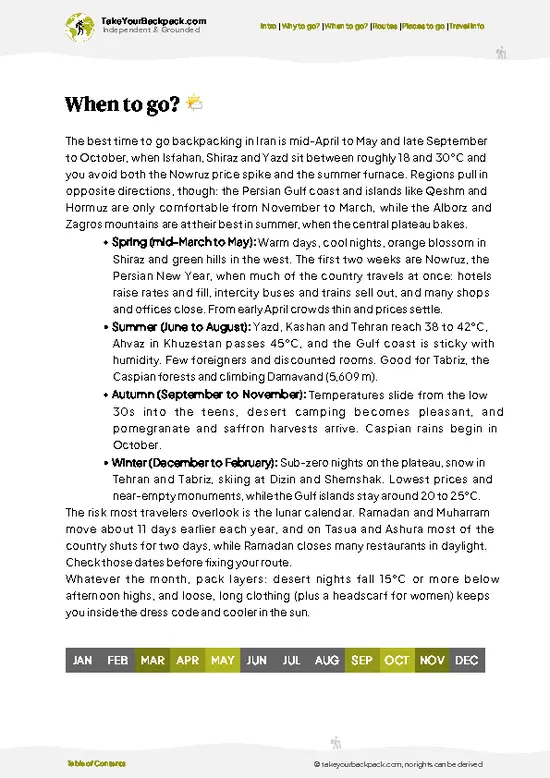
  • Topic: Weather — The prime hiking window is late June through early September. This is when Damavand sheds its winter coat, revealing mostly dry trails and manageable snow patches. Outside this, expect biting cold, unpredictable storms, and deep snow that can stall even the most seasoned climbers.

  • Topic: Temperature — Daytime highs hover around 10-15°C (50-59°F) at the summit during summer, but nights plunge below freezing, often hitting -10°C (14°F) or colder. Prepare for sharp swings; the mountain doesn’t forgive complacency.

  • Topic: Daylight Hours — Summer grants you 14 to 15 hours of daylight, crucial for pacing your ascent and descent safely. Early starts are still mandatory, but the extended light stretches your window for exploration and recovery.

  • Topic: Crowds — Peak season
read more 👉

  • Topic: Weather — The prime hiking window is late June through early September. This is when Damavand sheds its winter coat, revealing mostly dry trails and manageable snow patches. Outside this, expect biting cold, unpredictable storms, and deep snow that can stall even the most seasoned climbers.

  • Topic: Temperature — Daytime highs hover around 10-15°C (50-59°F) at the summit during summer, but nights plunge below freezing, often hitting -10°C (14°F) or colder. Prepare for sharp swings; the mountain doesn’t forgive complacency.

  • Topic: Daylight Hours — Summer grants you 14 to 15 hours of daylight, crucial for pacing your ascent and descent safely. Early starts are still mandatory, but the extended light stretches your window for exploration and recovery.

  • Topic: Crowds — Peak season draws a steady stream of Iranian and international climbers, especially weekends. Weekdays offer a quieter trail, letting you savor the raw mountain vibe without the chatter and congestion.

  • Topic: Seasonal Activities — Summer opens the door for alpine camping and summit pushes. Outside this, the mountain shifts to a winter playground for hardcore mountaineers equipped with crampons and ice axes.

  • Topic: Price Fluctuations — Expect higher costs for guides, gear rentals, and accommodations during the summer rush. Off-season rates drop but come with the trade-off of harsher conditions and limited services.


Pro-tip: Aim for early July weekdays to catch the sweet spot—stable weather, long days, and thinner crowds—maximizing your chances for a clean, exhilarating summit push.


source: climatestotravel.comJANJanuary: below average for travelingFEBFebruary: below average for travelingMARMarch: fair for travelingAPRApril: fair for travelingMAYMay: good for travelingJUNJune: highly recommended for travelingJULJuly: excellent for travelingAUGAugust: excellent for travelingSEPSeptember: highly recommended for travelingOCTOctober: fair for travelingNOVNovember: below average for travelingDECDecember: below average for traveling
when-to-go

✈️ The backpacker research shortcutIran Travel Guide

An offline-friendly backpacking guide with optimized travel routes, ranked highlights, transport advice, and the best areas to stay.
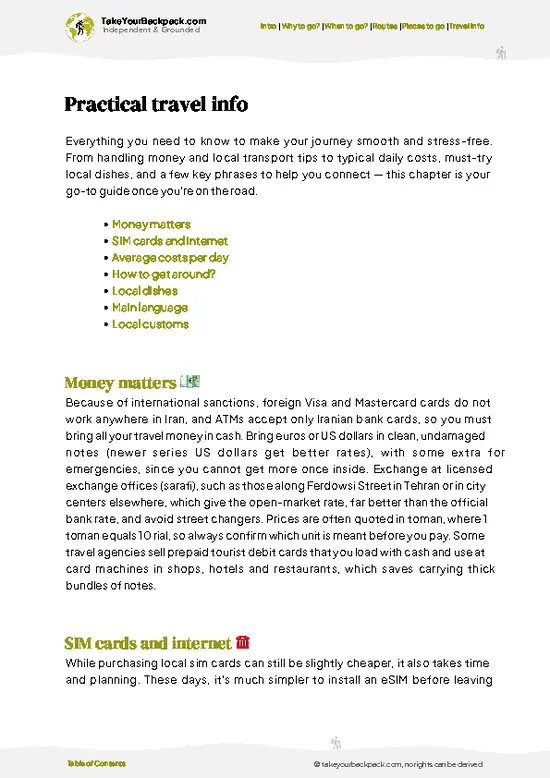
example page 0 from our offline Travel Guide for Iran
example page 1 from our offline Travel Guide for Iran
example page 2 from our offline Travel Guide for Iran
example page 3 from our offline Travel Guide for Iran
example page 4 from our offline Travel Guide for Iran
example page 5 from our offline Travel Guide for Iran
example page 6 from our offline Travel Guide for Iran
example page 7 from our offline Travel Guide for Iran
The digital guide (419 pages) contains:
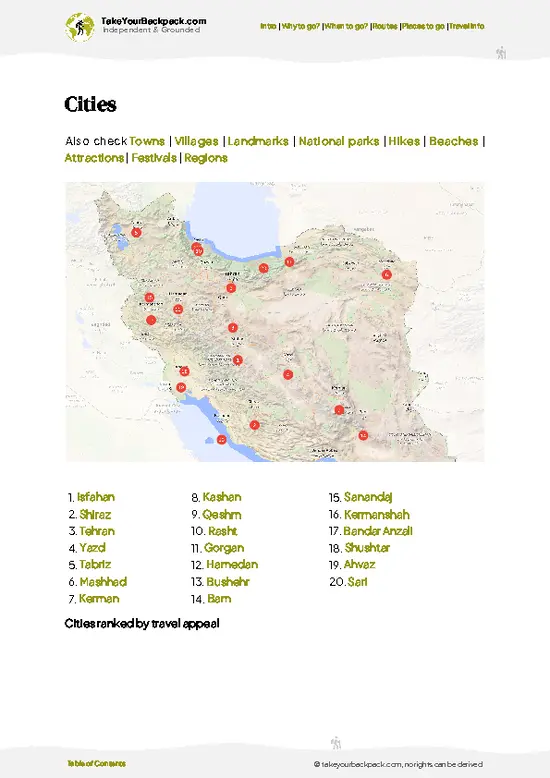
121 highlights, ranked by travel appeal
Optimized 7, 14 & 21-day travel routes
Cities, national parks, landmarks, beaches
How to get around
Offline-friendly for travel without Wi-Fi
👉 Click to see all 30+ guide features

📅 Plan smarter in minutes, not weeks
Month by month travel advice
Festivals & national holidays
Budget expectations

🗺️ Go to the right places, skip the overrated ones
Honest pros & cons of destinations
Top hikes, parks & viewpoints
Lesser-known places most travelers miss
Clear “worth it vs skip it” guidance

🛏️ Travel smoothly without rookie mistakes
Best areas to stay
Transport systems explained simply
Common scams & safety advice
SIM cards, money & practical tips

🌍 Understand the country, not just visit it
Culture & traditions
52 Essential phrases & customs
Festivals worth planning around
Traveler-friendly historical context
Insights that make places more meaningful

📱 Built for real travel conditions
Fully downloadable PDF
Works completely offline
Optimized for phone use
Useful in remote areas & buses
Everything in one place
Save weeks of stressful planning
Get instant access to your full guide. 30‑day money-back guarantee.


By proceeding you agree to our terms.
Sent to your inbox immediately after payment • 100% Secure Checkout
Best Backpacking Travel Advisor 2025 tourism awardBest Backpacking
Travel Advisor
2025
What others say about Take Your Backpack Guides:
⭐⭐⭐⭐⭐
Fantastic, amazing amount of information!
⭐⭐⭐⭐⭐
My goodness this is amazing, it's what I've been looking for hats off too you!
⭐⭐⭐⭐⭐
I think this is absolutely BRILLIANT
⭐⭐⭐⭐
Very complete and informative. It's still missing places, but I gotta to commend you
⭐⭐⭐⭐⭐
This is truly amazing, thank you, can't wait to explore it with my kids!
⭐⭐⭐⭐⭐
Awesome resource, thank you!
⭐⭐⭐⭐⭐
This is amazing! Can't wait to explore the ones I haven't seen
⭐⭐⭐⭐
I love this! Well done, great idea.
⭐⭐⭐⭐⭐
Thanks for taking the time to make this gem!
⭐⭐⭐⭐⭐
This might be the best website I've ever seen.
⭐⭐⭐⭐⭐
Congratulations, and thank you so much for your work; it's incredibly valuable.
⭐⭐⭐⭐
In all seriousness I think you did a great job pointing out the important spots
⭐⭐⭐⭐⭐
10/10 very good
⭐⭐⭐⭐⭐
As someone who's only just starting to visit regularly this is awesome, thank you.
⭐⭐⭐⭐
Thank you very much! I'm going to visit my dad, it's going to be very useful!
⭐⭐⭐⭐⭐
This is really cool! We'll be travelling for the first time and this definitely come in handy.
⭐⭐⭐⭐⭐
You are now our minister of culture, congratulations 👨‍💼
⭐⭐⭐⭐⭐
Just wanted to tell you that this is a pearl! Going to follow your recommendations.
⭐⭐⭐⭐⭐
This is so cool. I'll definitely be using the resource for my travels soon.
⭐⭐⭐⭐⭐
This is very impressive! Good work.
⭐⭐⭐⭐⭐
This is an amazing and informative site. Very well done!

🛏️ Where to stay?How to pick the right area

If you enjoy meeting fellow travelers, consider choosing hostels with high ratings for atmosphere. On the other hand, if you prefer having your own space, a hotel might be a better option.

🥾 Hike detailsRoute, distance, and difficulty explained

Total Distance: The hike to the summit of Mount Damavand is roughly 17 kilometers (about 10.5 miles) one way, making for a total round trip of around 34 kilometers (21 miles).

Estimated Duration: Most hikers take about 2 to 3 days to complete the trek, depending on their pace and acclimatization. The ascent can take anywhere from 6 to 10 hours, while the descent is usually quicker, around 4 to 6 hours.

Difficulty Level: This trail is considered moderate to challenging. While it’s not technical, the altitude (over 5,600 meters or 18,000 feet) can be tough on those not acclimatized.

Starting read more 👉
Total Distance: The hike to the summit of Mount Damavand is roughly 17 kilometers (about 10.5 miles) one way, making for a total round trip of around 34 kilometers (21 miles).

Estimated Duration: Most hikers take about 2 to 3 days to complete the trek, depending on their pace and acclimatization. The ascent can take anywhere from 6 to 10 hours, while the descent is usually quicker, around 4 to 6 hours.

Difficulty Level: This trail is considered moderate to challenging. While it’s not technical, the altitude (over 5,600 meters or 18,000 feet) can be tough on those not acclimatized.

Starting Point: The most common starting point is the village of Polour, which is accessible by public transport.
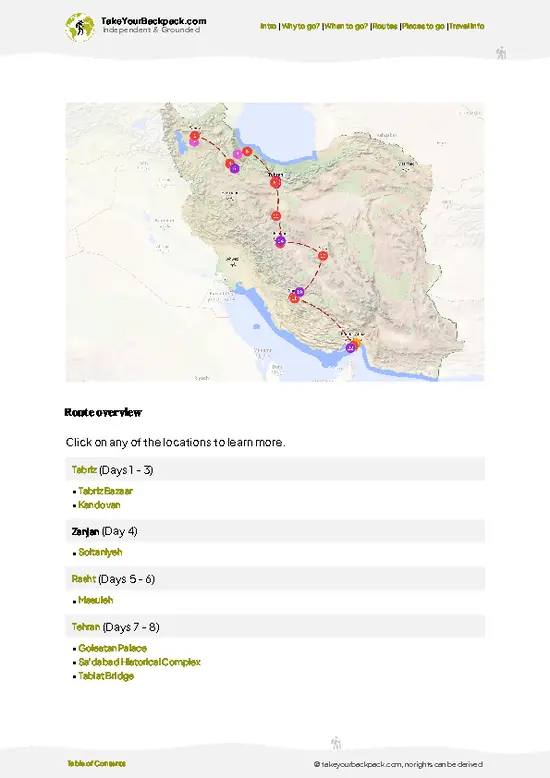
  • Getting There: Take a bus or shared taxi from Tehran to the city of Amol, then catch a local taxi or another bus to Polour. It’s about a 3 to 4-hour journey in total.

Major Landmarks Along the Route:
  • Base Camp: The most popular base camp is the Bargah Sefid hut, located at around 4,200 meters (13,800 feet). It’s a good spot to rest and acclimatize.
  • Hot Springs: Near the base camp, you might find some natural hot springs, perfect for relaxing after a long day of hiking.
  • The Summit: The summit offers breathtaking panoramic views of the surrounding Alborz mountain range and, on clear days, even glimpses of the Caspian Sea.

Type of Terrain and Scenery: The trail varies significantly. You’ll start in lush green areas with wildflowers, then transition to rocky paths and volcanic terrain as you gain elevation. The scenery is stunning, featuring dramatic landscapes, craggy peaks, and, of course, the iconic summit of Damavand itself, often capped with snow.

Typical Vegetation and Wildlife:
  • Vegetation: Lower elevations are rich in diverse flora, including various wildflowers and shrubs. As you ascend, the vegetation thins out, giving way to hardy alpine plants.
  • Wildlife: Keep an eye out for wildlife like foxes, eagles, and even the elusive Persian leopard, though they’re more likely to be spotted at lower elevations.

This trail is not just a hike; it’s an experience steeped in natural beauty and cultural significance. Just remember to pack plenty of water, snacks, and layers—weather can change quickly up there!
⚠️ Hiking info can sometimes be outdated or inaccurate. Before you hit the trail, check the latest conditions with locals. If you do spot anything that's off, I'd love to hear from you, so I can update it for fellow travelers.

🛡️ SafetySafety Tips and Common Scams in Mount Damavand

Mount Damavand offers a thrilling challenge, but it’s not without its quirks. Weather can shift on a dime. One moment, you’re basking in sunshine; the next, clouds roll in, bringing wind and chill. Layer up and be ready to adapt.

The trail is well-marked, but don’t let that fool you. Steep sections demand focus, especially as you gain altitude. Your legs will burn, but that’s part of the game. Keep a steady pace; it’s not a race. Hydration is key, so sip often, especially as you climb higher.

Wildlife is generally shy, but you might spot a mountain goat or two. Keep your distance and don’t feed them; they’re part of the ecosystem, not your hiking buddies.

First-timers often underestimate the altitude. Acclimatize properly; give yourself time to adjust. A solid pair of boots is essential … read more 👉
Mount Damavand offers a thrilling challenge, but it’s not without its quirks. Weather can shift on a dime. One moment, you’re basking in sunshine; the next, clouds roll in, bringing wind and chill. Layer up and be ready to adapt.

The trail is well-marked, but don’t let that fool you. Steep sections demand focus, especially as you gain altitude. Your legs will burn, but that’s part of the game. Keep a steady pace; it’s not a race. Hydration is key, so sip often, especially as you climb higher.

Wildlife is generally shy, but you might spot a mountain goat or two. Keep your distance and don’t feed them; they’re part of the ecosystem, not your hiking buddies.

First-timers often underestimate the altitude. Acclimatize properly; give yourself time to adjust. A solid pair of boots is essential for grip on rocky terrain. Embrace the grind, and when you finally reach that summit, the view will make every step worth it.

Other Iranian hikes near Mount Damavand

Explore more nearby:


💡 Not sure where to go next?
Create a personalized itinerary for Iran including Mount Damavand and the places that fit your trip.

Generate my itinerary

👉 Discover all hikes

Or checkout all Iran has to offer (think cities, towns, villages, national parks, hikes, beaches, festivals)
Country photo of Iran

We 💚 feedbackWhat to keep in mind

Climbing Mount Damavand is like stepping into a raw, untamed world. The air thins, your legs burn, but the summit view? It’s a punch to the gut—in the best way. You’ll find yourself surrounded by a sea of peaks, and that moment of triumph is worth every ounce of effort. Just be ready for the weather to turn on a dime; it’s as moody as a cat. Pack layers and embrace the unpredictability. Trust me, the cold beer at the base camp tastes like victory.

✍️ Help improve this page!
The information on this page is based on in-depth research, insights shared by experienced travelers, and feedback from the local travel community in Iran. While every effort is made to keep the information accurate and current, conditions can change — so if you spot anything incorrect or outdated, please get in touch.


🙋‍♂️ Give feedback

👋 Meet the founderWho’s Behind Take Your Backpack?

Johan, backpacker and founder of TakeYourBackpackHi, I’m Johan (Netherlands 🇳🇱), the creator of TakeYourBackpack. Over the past decade, I’ve backpacked through 80+ countries across six continents, gaining extensive experience with independent travel, long-term trips, and overland routes.

This site is built on a combination of firsthand travel experience and carefully curated insights from other backpackers. Many guides are based on places I’ve personally visited, while others bring together tips, observations, and practical advice shared by trusted travelers I’ve met along the way.

The goal is to provide realistic, experience-driven guidance — not generic itineraries — so you can explore destinations with better context, clearer expectations, and more confidence.

Get full Iran guide •
Instant download • 121 highlights • Full Offline guide