×
Dingle Way

Ireland🇮🇪 | hikesDingle Waycoastal bluffs, sandy coves, Gaelic-speaking hamlets | things to do and best time to go

Explore Burren WayExplore Glendalough

Backpacking in Dingle Way
🏆 Top pickhike ranked #2
By Johan Kruseman 🇳🇱 | Updated May 20, 2026

You have to decide one thing before you touch the Dingle Way: are you walking the whole loop or cherry‑picking the best coastal sections and skipping the road grinds? That choice shapes your entire trip. The Dingle Way circles the Dingle Peninsula in County Kerry, out on Ireland’s southwest edge, where the land just hurls itself into the Atlantic. It’s about 170–180 km, usually a week or so on foot, with rolling days broken by one big, honest climb over Mount Brandon’s shoulder. The payoff is fierce: cliffline Atlantic views, long beaches that feel almost empty, and evenings in pubs where your socks steam by the fire. The downside is real too: more tarmac and farm track than purists like, plus some wet, boggy slogs. It’s easy to reach the start in Tralee by bus or train, and compared with the nearby Kerry Way, Dingle is shorter, wilder at the edges, and more about sea than mountains.

Discover everything you want to know in the 📖 Ireland Travel Guide.
Best time to go: April - October
Duration: 7 to 9 days
Distance: 179 kilometers
Total ascent: 3,200 meters
Loading the map 🌍
CLICK TO FILTER
city
town
village
unique site
national park
hike
beach
attraction
festival
region
SHOW COUNTRY’S BESTSHOW ALL

✨ Why go?
Ranked #2 hike in Ireland
What makes this hike worth hiking

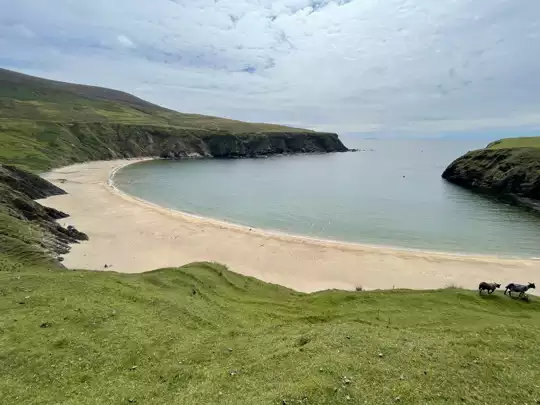
The Dingle Way is a magnet for backpackers craving a mix of challenge and reward. Picture this: rugged cliffs plunging into the Atlantic, rolling green hills, and quaint villages that feel like stepping into a postcard. The scenery-to-effort ratio is off the charts. You’ll sweat a bit, but every uphill grind leads to jaw-dropping views that make your heart race in a good way.

Getting there is a breeze. Public transport connects you to the trailhead, so you can hop on a bus and dive right into the adventure. Plus, it’s budget-friendly. You can camp or find cozy hostels without breaking the bank.

What’s fantastic is the flexible distances. Whether you want a leisurely stroll or a full-on trek, you can tailor your days. This makes it easy to slot the Dingle Way into a longer backpacking route … read more 👉
The Dingle Way is a magnet for backpackers craving a mix of challenge and reward. Picture this: rugged cliffs plunging into the Atlantic, rolling green hills, and quaint villages that feel like stepping into a postcard. The scenery-to-effort ratio is off the charts. You’ll sweat a bit, but every uphill grind leads to jaw-dropping views that make your heart race in a good way.

Getting there is a breeze. Public transport connects you to the trailhead, so you can hop on a bus and dive right into the adventure. Plus, it’s budget-friendly. You can camp or find cozy hostels without breaking the bank.

What’s fantastic is the flexible distances. Whether you want a leisurely stroll or a full-on trek, you can tailor your days. This makes it easy to slot the Dingle Way into a longer backpacking route across Ireland.

After a day on the trail, nothing beats that first cold beer in a local pub, swapping stories with fellow travelers. The Dingle Way isn’t just a hike; it’s an experience that lingers long after you’ve left.
Get the complete Travel Guide for Ireland
Everything organized for offline planning — routes, highlights, costs & tips

See what’s inside 👉

Get the Travel Guide -

💡 HighlightsPlaces and moments you shouldn't skip

  • Slea Head & Dunmore Head — The classic Dingle postcard: jagged cliffs, sea stacks and sweeping views of the Great Blasket Islands. The trail here feels dramatic and exposed in the best way — big Atlantic light, roaring surf, and the sense you’re at the edge of Ireland; brilliant for photos and whale-or-dolphin spotting if you’re lucky.
  • Gallarus Oratory — A tiny, perfectly dry-stone ”beehive” church that somehow survived a thousand years of Atlantic weather. It’s a short, atmospheric detour that connects the walk to Ireland’s early Christian past and makes for a quiet picnic spot with serious old-stone vibes.
  • Mount Brandon — A broad, wild ridge that gives you mountain-and-sea panoramas you don’t get on many coastal trails. It’s rugged, often windswept and supremely rewarding at sunrise
read more 👉
  • Slea Head & Dunmore Head — The classic Dingle postcard: jagged cliffs, sea stacks and sweeping views of the Great Blasket Islands. The trail here feels dramatic and exposed in the best way — big Atlantic light, roaring surf, and the sense you’re at the edge of Ireland; brilliant for photos and whale-or-dolphin spotting if you’re lucky.
  • Gallarus Oratory — A tiny, perfectly dry-stone ”beehive” church that somehow survived a thousand years of Atlantic weather. It’s a short, atmospheric detour that connects the walk to Ireland’s early Christian past and makes for a quiet picnic spot with serious old-stone vibes.
  • Mount Brandon — A broad, wild ridge that gives you mountain-and-sea panoramas you don’t get on many coastal trails. It’s rugged, often windswept and supremely rewarding at sunrise or when the clouds clear — my personal favorite for the scale and solitude you can find up there.
  • Conor Pass — The steep, hairpin road/pass that drops you into massive sweeping views of Brandon Bay and the surrounding peaks. Walking the viewpoints here has a mini-vertigo thrill and the scenery is starkly different from the low-lying beaches — raw and cinematic.
  • Inch Strand & Ventry Bay — A huge golden beach and tidal flats that act like a calm counterpoint to the cliffs: long, flat walking, seal and wader sightings, and easy camping or an evening beer in a nearby Gaeltacht village. It’s a brilliant low-effort stroll after a few hard days on rocky ground.
Spotted a mistake or missing something? Contact us.

Things to do around Dingle Way

Ratings based on Tripadvisor reviews. When you book through this link, you support our work at no extra cost to you.

🌤️ When to go?Weather, crowds, and seasonal trade-offs


  • Weather: Spring and early autumn offer the best balance—mild rain and wind, but fewer storms than winter. Summer can be wet but warmer, while winter’s cold and damp make the trails slippery and less inviting.

  • Temperature: From May to September, expect highs around 15-20°C (59-68°F). Early spring and late autumn dip closer to 5-10°C (41-50°F), demanding warmer layers and a tougher mindset.

  • Daylight Hours: Long summer days stretch up to 17 hours of light, giving you more time to push miles and soak in views. Winter shrinks daylight to about 8 hours—enough, but it forces an earlier stop.

  • Crowds: July and August bring the busiest trails and packed B&Bs. Shoulder seasons like May-June and September offer quieter paths and a more intimate connection with the landscape.

  • Seasonal Activities:
read more 👉

  • Weather: Spring and early autumn offer the best balance—mild rain and wind, but fewer storms than winter. Summer can be wet but warmer, while winter’s cold and damp make the trails slippery and less inviting.

  • Temperature: From May to September, expect highs around 15-20°C (59-68°F). Early spring and late autumn dip closer to 5-10°C (41-50°F), demanding warmer layers and a tougher mindset.

  • Daylight Hours: Long summer days stretch up to 17 hours of light, giving you more time to push miles and soak in views. Winter shrinks daylight to about 8 hours—enough, but it forces an earlier stop.

  • Crowds: July and August bring the busiest trails and packed B&Bs. Shoulder seasons like May-June and September offer quieter paths and a more intimate connection with the landscape.

  • Seasonal Activities: Summer festivals and local markets add color and energy to stops along the way. Off-season, you’ll find fewer distractions but also fewer open pubs and shops.

  • Price Fluctuations: Accommodation and transport costs spike in peak summer. Booking in shoulder seasons can save you a chunk of cash without sacrificing much in experience.


Pro-tip: Aim for late May or early September—cool enough to avoid sweat-drenched misery, warm enough to enjoy long days, and quiet enough to hear the wind and waves without a crowd drowning them out.


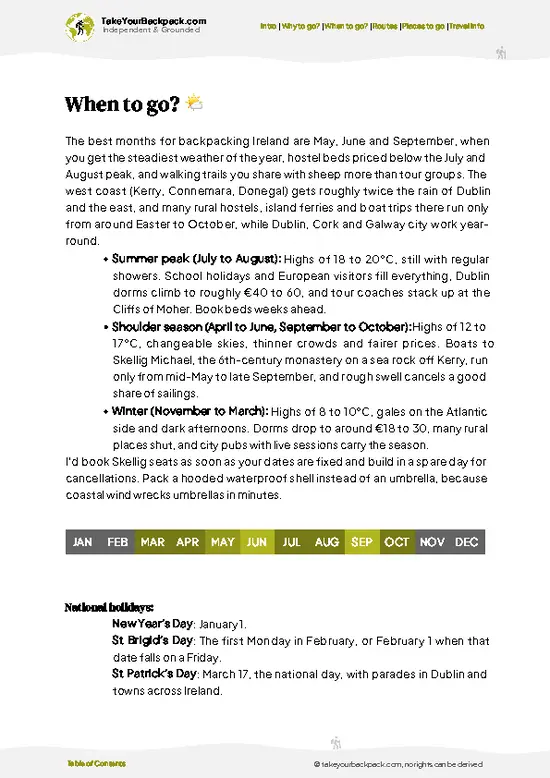
source: climatestotravel.comJANJanuary: below average for travelingFEBFebruary: below average for travelingMARMarch: fair for travelingAPRApril: good for travelingMAYMay: excellent for travelingJUNJune: highly recommended for travelingJULJuly: good for travelingAUGAugust: good for travelingSEPSeptember: excellent for travelingOCTOctober: highly recommended for travelingNOVNovember: fair for travelingDECDecember: below average for traveling
Ireland - the Dingle Way

✈️ The backpacker research shortcutIreland Travel Guide

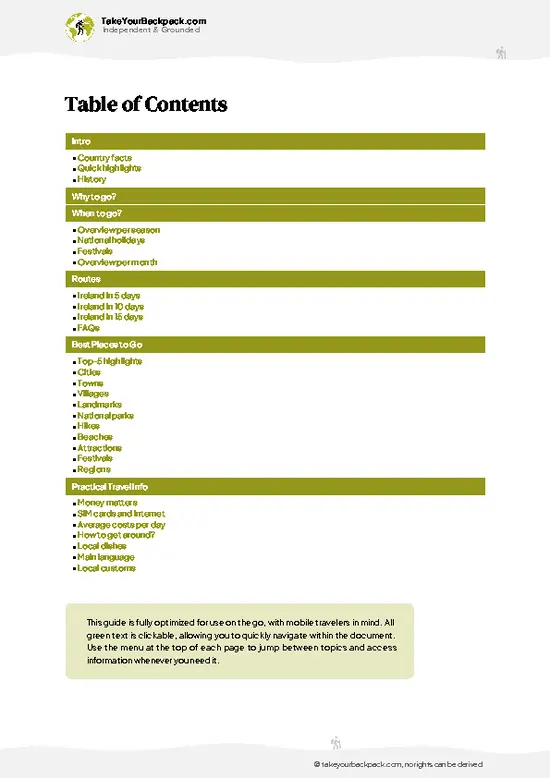
An offline-friendly backpacking guide with optimized travel routes, ranked highlights, transport advice, and the best areas to stay.
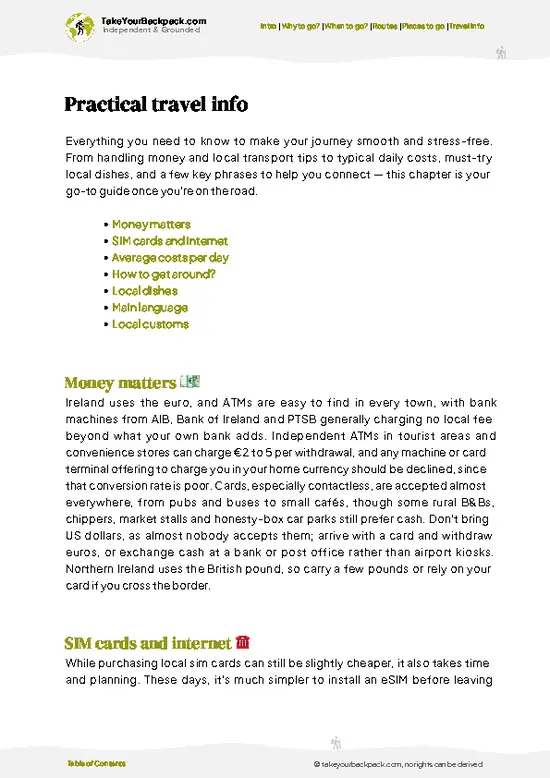
example page 0 from our offline Travel Guide for Irelandexample page 1 from our offline Travel Guide for Irelandexample page 2 from our offline Travel Guide for Irelandexample page 3 from our offline Travel Guide for Irelandexample page 4 from our offline Travel Guide for Irelandexample page 5 from our offline Travel Guide for Irelandexample page 6 from our offline Travel Guide for Irelandexample page 7 from our offline Travel Guide for Ireland
The digital guide (378 pages) contains:
104 highlights, ranked by travel appeal
Optimized 5, 10 & 15-day travel routes
Cities, national parks, beaches, historical sites, ...
How to get around
Offline-friendly for travel without Wi-Fi
👉 Click to see all 30+ guide features

📅 Plan smarter in minutes, not weeks
Month by month travel advice
Festivals & national holidays
Budget expectations

🗺️ Go to the right places, skip the overrated ones
Honest pros & cons of destinations
Top hikes, parks & viewpoints
Lesser-known places most travelers miss
Clear “worth it vs skip it” guidance

🛏️ Travel smoothly without rookie mistakes
Best areas to stay
Transport systems explained simply
Common scams & safety advice
SIM cards, money & practical tips

🌍 Understand the country, not just visit it
Culture & traditions
Local customs
Festivals worth planning around
Traveler-friendly historical context
Insights that make places more meaningful

📱 Built for real travel conditions
Fully downloadable PDF
Works completely offline
Optimized for phone use
Useful in remote areas & buses
Everything in one place
Save weeks of stressful planning
Get instant access to the full guide directly. 30-day money-back guarantee.


Sent to your inbox immediately after payment • 100% Secure Checkout
Best Backpacking Travel Advisor 2025 tourism awardBest Backpacking
Travel Advisor
2025
What others say about Take Your Backpack Guides:
⭐⭐⭐⭐⭐
Fantastic, amazing amount of information!
⭐⭐⭐⭐⭐
My goodness this is amazing, it's what I've been looking for hats off too you!
⭐⭐⭐⭐⭐
I think this is absolutely BRILLIANT
⭐⭐⭐⭐
Very complete and informative. It's still missing places, but I gotta to commend you
⭐⭐⭐⭐⭐
This is truly amazing, thank you, can't wait to explore it with my kids!
⭐⭐⭐⭐⭐
Awesome resource, thank you!
⭐⭐⭐⭐⭐
This is amazing! Can't wait to explore the ones I haven't seen
⭐⭐⭐⭐
I love this! Well done, great idea.
⭐⭐⭐⭐⭐
Thanks for taking the time to make this gem!
⭐⭐⭐⭐⭐
This might be the best website I've ever seen.
⭐⭐⭐⭐⭐
Congratulations, and thank you so much for your work; it's incredibly valuable.
⭐⭐⭐⭐
In all seriousness I think you did a great job pointing out the important spots
⭐⭐⭐⭐⭐
10/10 very good
⭐⭐⭐⭐⭐
As someone who's only just starting to visit regularly this is awesome, thank you.
⭐⭐⭐⭐
Thank you very much! I'm going to visit my dad, it's going to be very useful!
⭐⭐⭐⭐⭐
This is really cool! We'll be travelling for the first time and this definitely come in handy.
⭐⭐⭐⭐⭐
You are now our minister of culture, congratulations 👨‍💼
⭐⭐⭐⭐⭐
Just wanted to tell you that this is a pearl! Going to follow your recommendations.
⭐⭐⭐⭐⭐
This is so cool. I'll definitely be using the resource for my travels soon.
⭐⭐⭐⭐⭐
This is very impressive! Good work.
⭐⭐⭐⭐⭐
This is an amazing and informative site. Very well done!

🛏️ Where to stay?Best areas to stay in Ireland

If you enjoy meeting fellow travelers, consider choosing hostels with high ratings for atmosphere. On the other hand, if you prefer having your own space, a hotel might be a better option.

🥾 Hike detailsRoute, distance, and difficulty explained

Total Distance: The Dingle Way stretches about 179 kilometers (111 miles) in total, making it a decent trek for those looking to immerse themselves in the Irish countryside.

Estimated Duration: Most hikers take around 8 to 10 days to complete the trail, depending on pace and how much time you spend soaking in the scenery or visiting local pubs.

Difficulty Level: Generally rated as moderate, the trail has its challenging sections, especially with some steep climbs and uneven terrain. But it’s manageable for anyone with a reasonable level of fitness.

Starting Point: The trail kicks off in Tralee. … read more 👉
Total Distance: The Dingle Way stretches about 179 kilometers (111 miles) in total, making it a decent trek for those looking to immerse themselves in the Irish countryside.

Estimated Duration: Most hikers take around 8 to 10 days to complete the trail, depending on pace and how much time you spend soaking in the scenery or visiting local pubs.

Difficulty Level: Generally rated as moderate, the trail has its challenging sections, especially with some steep climbs and uneven terrain. But it’s manageable for anyone with a reasonable level of fitness.

Starting Point: The trail kicks off in Tralee. You can get there via public transport by taking a train or bus from Dublin or Cork. The bus service is quite frequent and drops you right in the town center.

Major Landmarks Along the Route:
  • Tralee Bay: A stunning bay that sets the tone for the coastal views ahead.
  • Dingle Town: A vibrant town with colorful buildings, great food, and music.
  • Slea Head: Offers breathtaking views of the Blasket Islands and is a great spot for photos.
  • Conor Pass: One of the highest mountain passes in Ireland, providing panoramic views.

Type of Terrain and Scenery: Expect a mix of rugged coastline, rolling hills, and lush green fields. The trail meanders through rocky paths, sandy beaches, and occasionally, some asphalt roads. The scenery is nothing short of spectacular, with dramatic cliffs and serene landscapes.

Typical Vegetation and Wildlife: You’ll encounter a variety of flora, including wildflowers, ferns, and gorse. Keep your eyes peeled for local wildlife like rabbits, foxes, and a wide array of bird species. If you’re lucky, you might even spot some seals along the coast.

This trail offers a genuine slice of Ireland, perfect for those who want to experience its natural beauty and local culture. Just remember to pack some good snacks and maybe a rain jacket—because, well, it is Ireland!
⚠️ Hiking info can sometimes be outdated or inaccurate. Before you hit the trail, check the latest conditions with locals. If you do spot anything that's off, I'd love to hear from you, so I can update it for fellow travelers.

🛡️ SafetySafety Tips and Common Scams in Dingle Way

The Dingle Way is a feast for the senses, but it demands respect. Weather can shift in an instant; one moment you’re basking in sun, the next, you’re dodging rain. Dress in layers and keep a waterproof jacket handy.

The terrain varies—some stretches are flat and forgiving, while others challenge your footing with steep ascents and rocky paths. Pay attention to your navigation; the trail is well-marked, but a few tricky turns can catch you off guard.

Wildlife is part of the charm. You might spot sheep or even a curious fox. Keep your distance and don’t feed them; they’re part of the landscape, not your lunch.

Timing is key. Early mornings offer solitude and stunning light, but be mindful of the fading daylight. Carry a headlamp just in case. With the right preparation, the Dingle Way … read more 👉
The Dingle Way is a feast for the senses, but it demands respect. Weather can shift in an instant; one moment you’re basking in sun, the next, you’re dodging rain. Dress in layers and keep a waterproof jacket handy.

The terrain varies—some stretches are flat and forgiving, while others challenge your footing with steep ascents and rocky paths. Pay attention to your navigation; the trail is well-marked, but a few tricky turns can catch you off guard.

Wildlife is part of the charm. You might spot sheep or even a curious fox. Keep your distance and don’t feed them; they’re part of the landscape, not your lunch.

Timing is key. Early mornings offer solitude and stunning light, but be mindful of the fading daylight. Carry a headlamp just in case. With the right preparation, the Dingle Way rewards you with breathtaking views and that first cold pint at the end of the day.

Other Irish hikes near Dingle Way

Explore more nearby:

  • Kerry Way—mountain passes, bogland trails, lakeside stretches| 58 km away
  • Sheep’s Head Way—narrow peninsula, Atlantic cliffs, quiet villages| 73 km away
  • Burren Way—limestone pavements, rare wildflowers, ancient tombs| 129 km away

👉 Discover all hikes

Or checkout all Ireland has to offer (think cities, towns, villages, national parks, hikes, beaches, festivals)
Country photo of Ireland

We 💚 feedbackIs it worth it?

The Dingle Way is a feast for the senses. Picture rugged cliffs crashing against the Atlantic, the salty breeze filling your lungs, and the thrill of spotting a dolphin in the bay. But be ready for the weather; it can turn on a dime. One moment you’re basking in sun, the next you’re dodging rain. Embrace the unpredictability, and you’ll find that every drop adds to the adventure. It’s all part of the charm.

✈️ When did I visit Ireland?
Ireland was the last country of my 1,5 year travel around the world trip, which was july 2016. In July 2023 I visited Ireland again.

✍️ Help improve this page!
The information on this page is based on my own backpacking experience in Ireland, supplemented with up-to-date research and feedback from other travelers. Travel details can change, so if you notice anything outdated or incomplete, feel free to let me know.


🙋‍♂️ Give feedback

👋 Meet the founderWho’s Behind Take Your Backpack?

Johan, backpacker and founder of TakeYourBackpackHi, I’m Johan (Netherlands 🇳🇱), the creator of TakeYourBackpack. Over the past decade, I’ve backpacked through 80+ countries across six continents, gaining extensive experience with independent travel, long-term trips, and overland routes.

This site is built on a combination of firsthand travel experience and carefully curated insights from other backpackers. Many guides are based on places I’ve personally visited, while others bring together tips, observations, and practical advice shared by trusted travelers I’ve met along the way.

The goal is to provide realistic, experience-driven guidance — not generic itineraries — so you can explore destinations with better context, clearer expectations, and more confidence.

Get full Ireland guide •
Instant download • 104 highlights • Full Offline guide