×

Ireland🇮🇪 | best hikesWhere to Find the 6 Best hikes in Ireland

Hikes in Ireland rarely require a summit bid or a permit, just a waterproof you trust and a flexible attitude toward views. Trails run from mountain ridges and sea-cliff paths to long-distance waymarked routes, mostly free to walk, with the odd parking or visitor-center fee. The west coast (Kerry, Connemara, Donegal) is wilder and emptier, though public transport thins out fast. The east, around Dublin and Wicklow, is easy to reach by bus and busy at weekends. Independent travelers can stitch it together, provided they accept that the sky has opinions.

By Johan Kruseman 🇳🇱 | Updated October 18, 2026
Explore the best beaches in Ireland

Why go?Understanding Their Importance

Ireland has no big mountains, yet it delivers dramatic walking because the land meets the Atlantic at every angle. Peaks top out around 1,040 meters, but they rise from near sea level, so the climbs feel bigger than the numbers suggest. Centuries of farming, famine-era roads and monastic paths left a web of old tracks, and the waymarked National Waymarked Trails network ties many of them together, with the Wicklow Way and Kerry Way the best known.

The climate is the main character. The Atlantic weather brings rain on most days of the year in the west, plus mist that can erase a summit view in ten minutes. That same moisture makes the hills green and the bogs spongy, so waterproof boots are not optional.

Before choosing Ireland, know that land access works differently from Scotland. Much … read more 👉
Ireland has no big mountains, yet it delivers dramatic walking because the land meets the Atlantic at every angle. Peaks top out around 1,040 meters, but they rise from near sea level, so the climbs feel bigger than the numbers suggest. Centuries of farming, famine-era roads and monastic paths left a web of old tracks, and the waymarked National Waymarked Trails network ties many of them together, with the Wicklow Way and Kerry Way the best known.

The climate is the main character. The Atlantic weather brings rain on most days of the year in the west, plus mist that can erase a summit view in ten minutes. That same moisture makes the hills green and the bogs spongy, so waterproof boots are not optional.

Before choosing Ireland, know that land access works differently from Scotland. Much of the countryside is privately owned farmland, with no general right to roam, so stick to marked routes and close gates behind you. Trails are lightly signed compared to the Alps, and mountain rescue volunteers handle callouts. Pubs at trailheads are a real infrastructure feature, and an excellent one.
Behind the Scenes of Selection
The list of best hikes in Ireland is created based on scenery, challenge, trail quality, landmarks, and overall enjoyment. If you feel a hike is missing in this list, please let us know.

When to go?Best Time to Visit Ireland for hikes

Best Months for Walking: May to September is the best window, with long daylight (up to about 17 hours in June), average highs of 15 to 20°C and the driest odds of the year, with April and May often the driest stretch in the west. Dry is relative. Even in July, expect rain on roughly one day in two along the Atlantic coast, and annual rainfall of 1,000 to 1,400 mm in western uplands versus 700 to 800 mm around Dublin.

Shoulder Seasons and Peak Crowds: April, May and September to early October are the shoulder seasons. Temperatures run 8 to 15°C, hostel and B&B prices drop by roughly 15 to 30 percent compared with July and August, and the trails thin out. Kerry and Connemara feel noticeably calmer then. Peak summer pushes accommodation up in Killarney, Galway and Dingle, and weekends in the … read more 👉
Best Months for Walking: May to September is the best window, with long daylight (up to about 17 hours in June), average highs of 15 to 20°C and the driest odds of the year, with April and May often the driest stretch in the west. Dry is relative. Even in July, expect rain on roughly one day in two along the Atlantic coast, and annual rainfall of 1,000 to 1,400 mm in western uplands versus 700 to 800 mm around Dublin.

Shoulder Seasons and Peak Crowds: April, May and September to early October are the shoulder seasons. Temperatures run 8 to 15°C, hostel and B&B prices drop by roughly 15 to 30 percent compared with July and August, and the trails thin out. Kerry and Connemara feel noticeably calmer then. Peak summer pushes accommodation up in Killarney, Galway and Dingle, and weekends in the Wicklow Mountains near Dublin get busy.

Winter: From November to February, days shrink to about 7 to 8 hours of light, temperatures sit at 3 to 9°C, and high ground can hold snow, wind and cloud. Some seasonal hostels, boat services and cafés near trailheads close between October and March. Winter walking is possible on low routes, but the schedule is dictated by sunset, which arrives around 4:30 pm in December.

hike hoppingTips for Visiting Multiple Destinations

How Long to Allow: A trip combining several hikes in Ireland needs 10 to 14 days, which allows for the weather to ruin at least two of them. Ireland is small, but the roads are not fast. Drive times of 3 to 5 hours between Dublin and the southwest or west are normal, and buses and trains between regional towns are slower still.

Which Regions Pair Well: The east (Dublin and Wicklow) pairs easily with the southwest (Kerry and Cork) by train to Killarney via Mallow, then local buses. Galway works as a hub for Connemara and the Aran Islands, and Donegal sits in a separate northwest pocket reached via Sligo or Derry. A sensible direction is Dublin first, then south and west, finishing in Galway or Sligo and flying or taking an Expressway bus back. Plan 2 to 3 days per region, with at least one … read more 👉
How Long to Allow: A trip combining several hikes in Ireland needs 10 to 14 days, which allows for the weather to ruin at least two of them. Ireland is small, but the roads are not fast. Drive times of 3 to 5 hours between Dublin and the southwest or west are normal, and buses and trains between regional towns are slower still.

Which Regions Pair Well: The east (Dublin and Wicklow) pairs easily with the southwest (Kerry and Cork) by train to Killarney via Mallow, then local buses. Galway works as a hub for Connemara and the Aran Islands, and Donegal sits in a separate northwest pocket reached via Sligo or Derry. A sensible direction is Dublin first, then south and west, finishing in Galway or Sligo and flying or taking an Expressway bus back. Plan 2 to 3 days per region, with at least one slack day for rain.

Common Planning Mistakes: The classic error is cramming Kerry, Connemara and Donegal into one week on a map that looks tiny. Another is booking every night in advance, which leaves no room to swap a hike for a sunny window. Rural bus services can run only once or twice a day, and some do not run on Sundays. Choose a base for two or three nights, keep the plan loose, and treat travel days as travel days.

The ListMust-Visit hikes in Ireland

1 Wicklow Way

upland forests, granite ridges, remote valleys

Follow winding trails through dense woodland and open moor, passing isolated farmsteads and the ever-changing contours of the Wicklow Mountains.

ireland-hike-wicklow-way
© Google |

2 Kerry Way

mountain passes, bogland trails, lakeside stretches

Traverse varied terrain from high passes to low-lying shores, encountering ever-changing scenery and the quiet expanse of Ireland’s southwest.

3 Dingle Way

coastal bluffs, sandy coves, Gaelic-speaking hamlets

Circle the Dingle Peninsula on foot, experiencing shifting seascapes, traditional culture, and the rhythm of rural life along the Atlantic edge.

Ireland - the Dingle Way

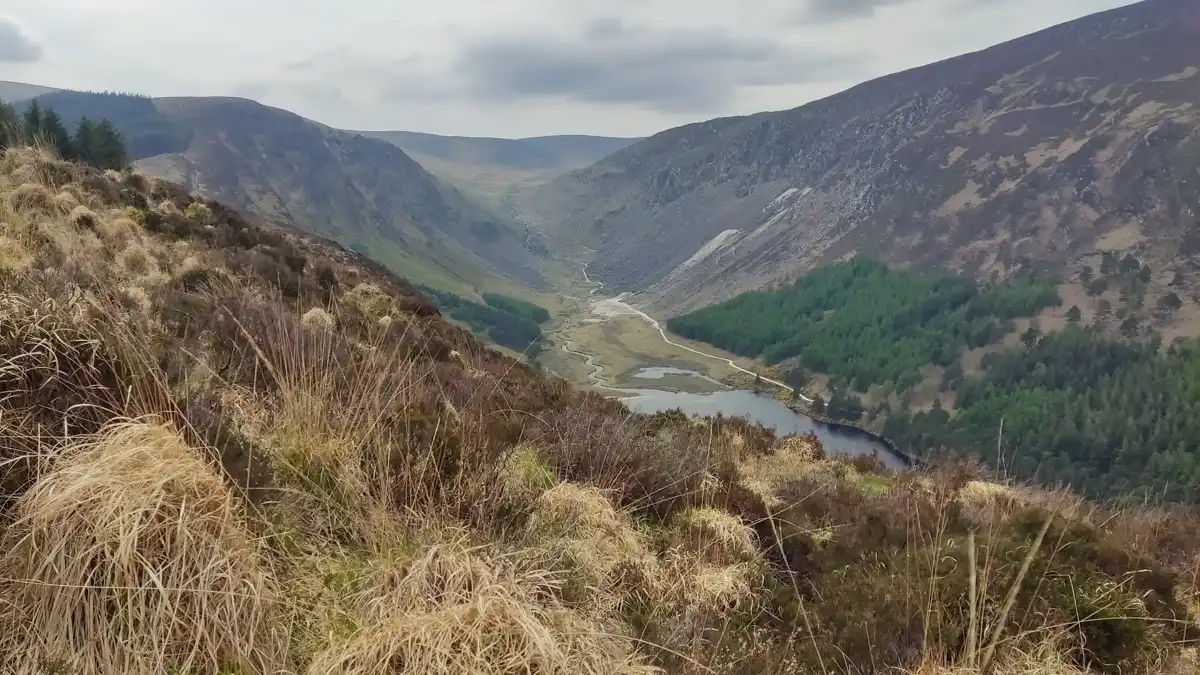
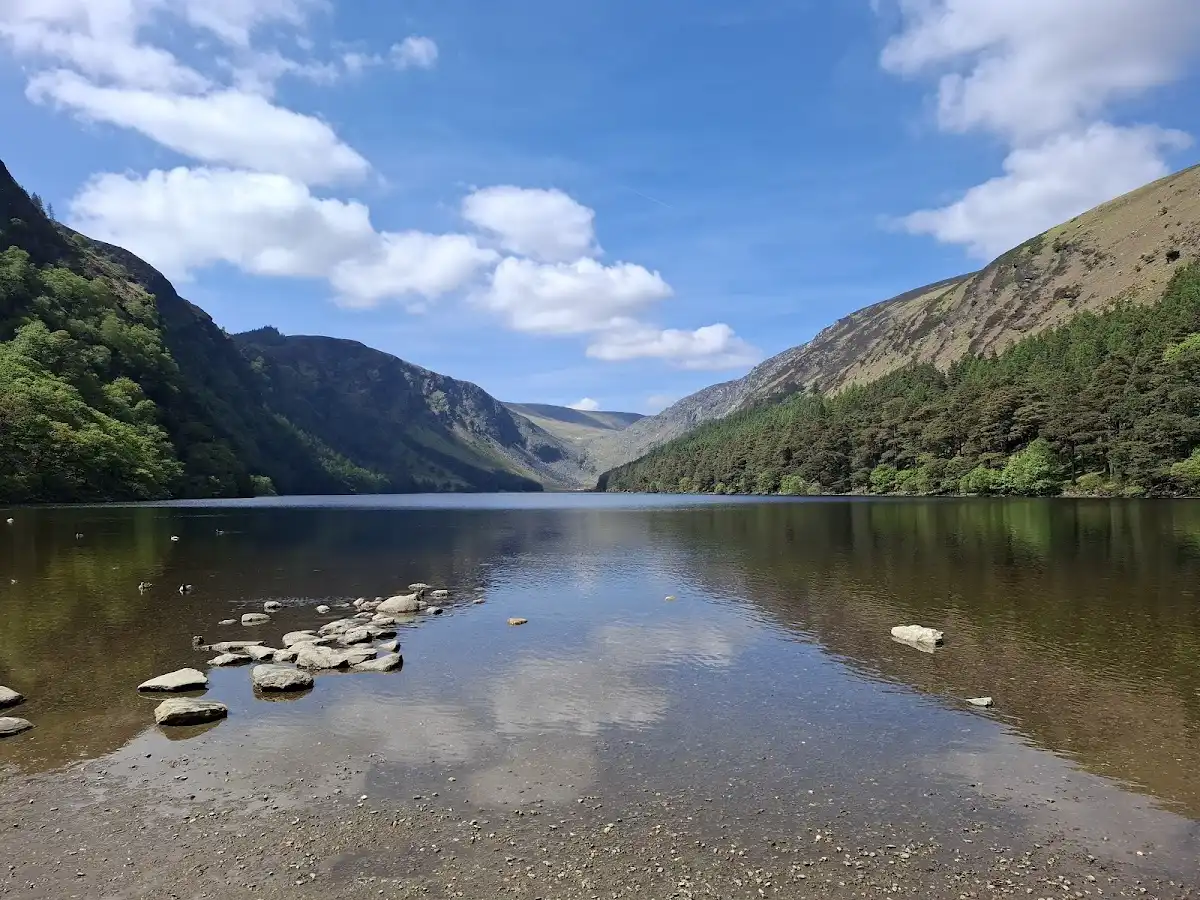
4 Glendalough

glacial lakes, monastic ruins, wooded slopes

Climb above twin lakes and through ancient woodland, exploring early Christian sites and the tranquil heart of a glacial valley.

ireland-hike-glendalough
© Google | Jelle Hogervorst

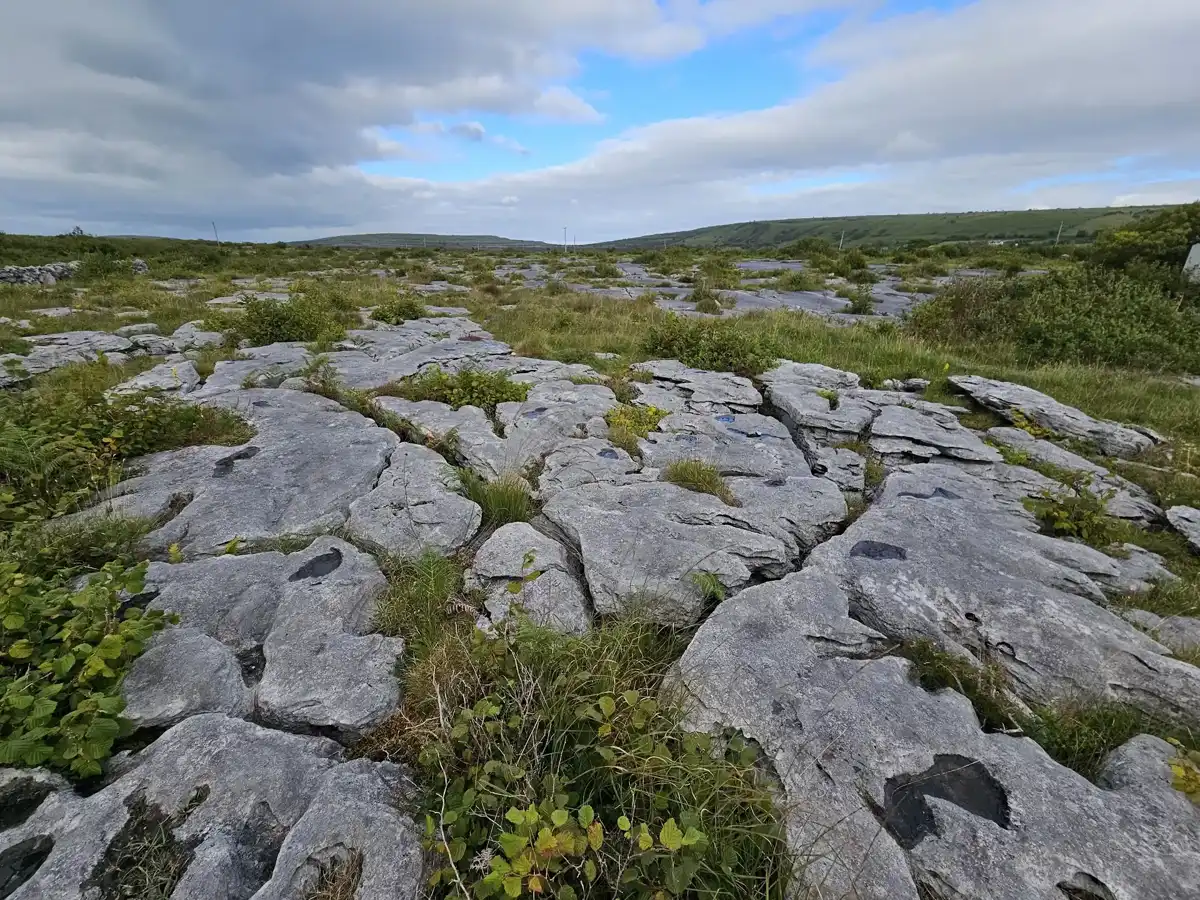
5 Burren Way

limestone pavements, rare wildflowers, ancient tombs

Walk across a stark, rocky landscape shaped by millennia, discovering unique plant life and archaeological remnants scattered across the Burren.

ireland-hike-burren-way
© Google | Ilana Merlis

6 Sheep’s Head Way

narrow peninsula, Atlantic cliffs, quiet villages

Trace a rugged coastal route where the land narrows to sea, encountering windswept headlands and the solitude of small rural communities.

ireland-hike-sheeps-head-way
© Google |
Loading the map 🌍

Expert viewTips and Advice from Travelers

How Many Hikes to Plan: Three to five hikes is the right number for a trip of one to two weeks. Ireland’s weather cancels or shortens roughly one in three walks, and a bus that runs once a day punishes overbooking. Pick one big ridge or coastal day per region and keep the rest of your days loose. You end up with a summit in clear air, not four in cloud.

Matching Hike Type to Travel Style: Budget travelers and first-timers should prioritize waymarked day walks near towns, where hostels, buses and pubs are close. Confident navigators will get more from open mountain routes and cliff paths in Kerry, Connemara or Donegal, where the trail is a boot-worn line through heather and bog and the reward is empty ridges and a view over the Atlantic. Long-distance routes like the Wicklow Way suit those … read more 👉
How Many Hikes to Plan: Three to five hikes is the right number for a trip of one to two weeks. Ireland’s weather cancels or shortens roughly one in three walks, and a bus that runs once a day punishes overbooking. Pick one big ridge or coastal day per region and keep the rest of your days loose. You end up with a summit in clear air, not four in cloud.

Matching Hike Type to Travel Style: Budget travelers and first-timers should prioritize waymarked day walks near towns, where hostels, buses and pubs are close. Confident navigators will get more from open mountain routes and cliff paths in Kerry, Connemara or Donegal, where the trail is a boot-worn line through heather and bog and the reward is empty ridges and a view over the Atlantic. Long-distance routes like the Wicklow Way suit those with 5 to 9 days who like a daily rhythm of walking, a hot meal and a bed.

What It Costs: Most trails are free. Expect US$55 to 90 a day for hostel dorms (€25 to 40), supermarket food, a pub meal and local buses. Add a few euros for parking or a visitor-center fee, typically €5 to 10, and ferry tickets to islands at about €20 to 35 return. A guide for a group day on harder terrain costs roughly €150 to 300 split among the group, and is worth it in poor visibility. Realistically, a two-week walking trip lands at US$900 to 1,500 excluding flights, and more if you rent a car (€40 to 80 a day).

Safety and Local Etiquette: Weather turns fast. Carry a full waterproof shell, a map and a charged phone with the offline route, and pack a warm layer even in July. Cloud can drop to ankle height in minutes on high ground, and bogs swallow boots, so test the ground before committing. In an emergency, call 112 and ask for Mountain Rescue. Cliff edges are often unfenced and gusts can be strong, so keep well back.

Farmland is working land. Close gates, keep dogs on leads near sheep (lambing runs roughly February to May), and use stiles rather than climbing walls. Many routes cross private land by landowner agreement, so stay on the marked path. A friendly greeting to farmers and walkers is standard, and a pint afterward is the traditional way to say thanks to the weather for holding off.

✈️ The backpacker research shortcutIreland Travel Guide

An offline-friendly backpacking guide with optimized travel routes, ranked highlights, transport advice, and the best areas to stay.
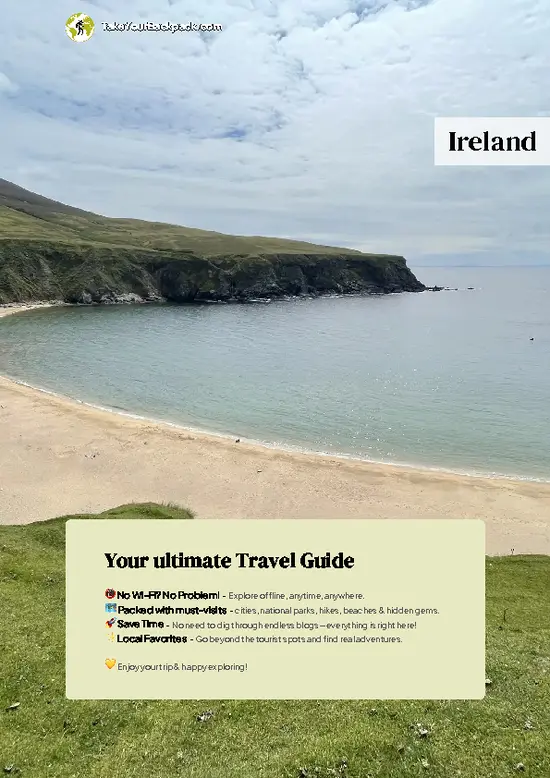
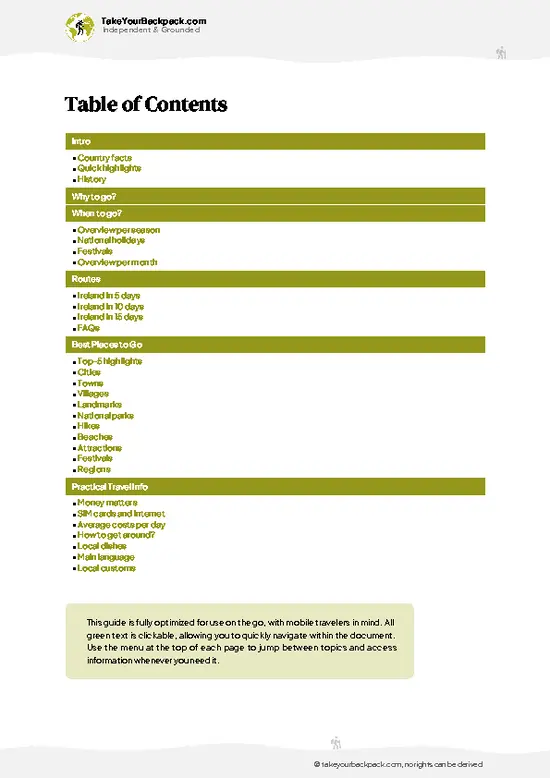
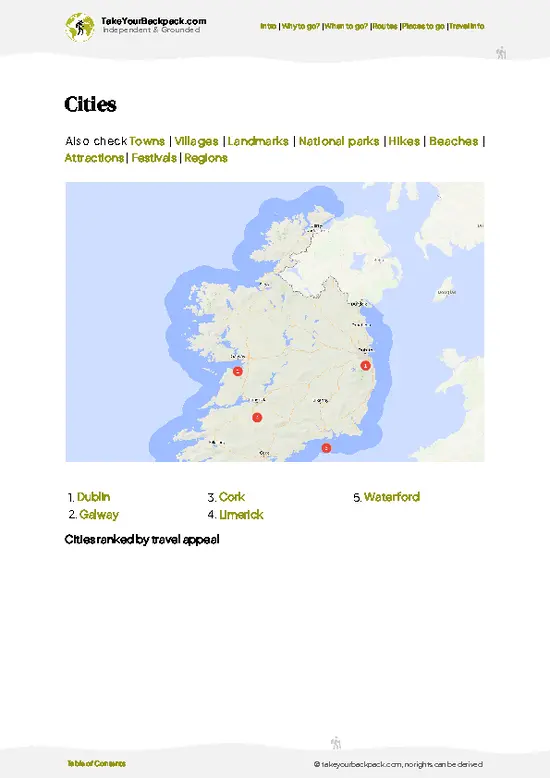
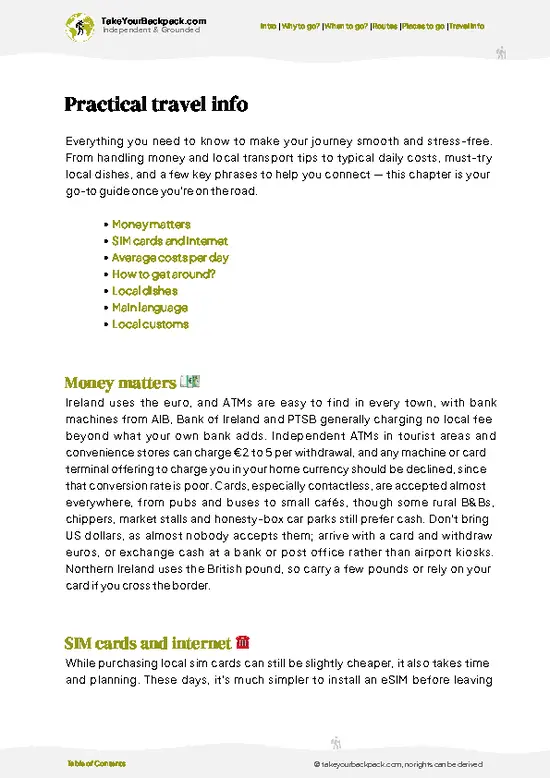
example page 0 from our offline Travel Guide for Ireland
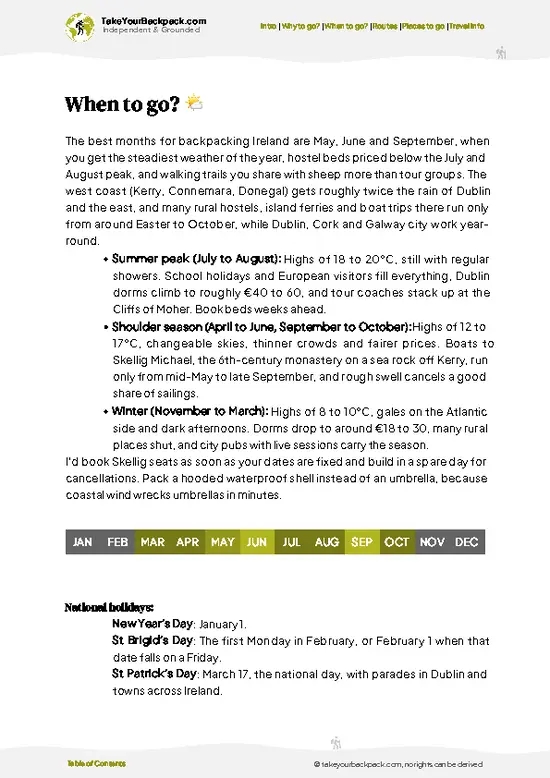
example page 1 from our offline Travel Guide for Ireland
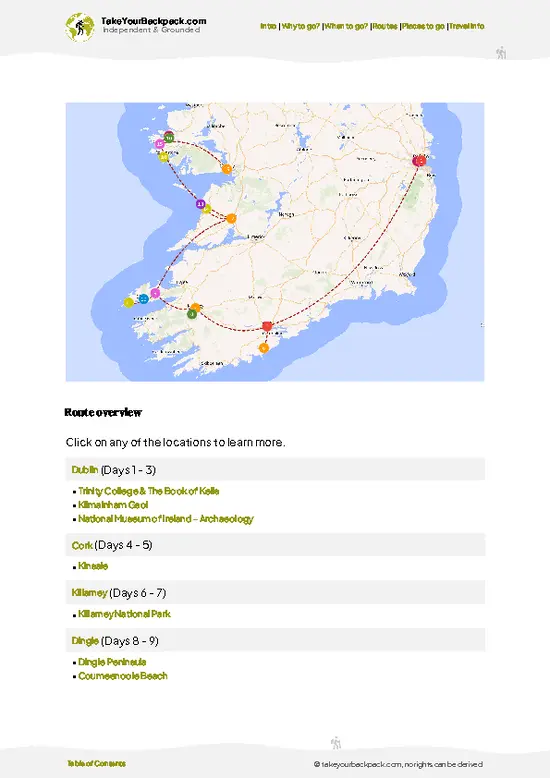
example page 2 from our offline Travel Guide for Ireland
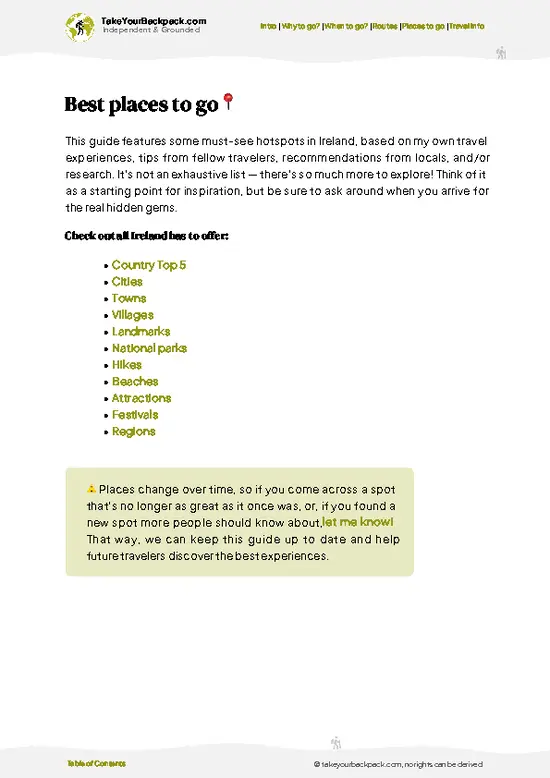
example page 3 from our offline Travel Guide for Ireland
example page 4 from our offline Travel Guide for Ireland
example page 5 from our offline Travel Guide for Ireland
example page 6 from our offline Travel Guide for Ireland
example page 7 from our offline Travel Guide for Ireland
The digital guide (366 pages) contains:
✅ 103 highlights, ranked by travel appeal
✅ Optimized 5, 10 & 15-day travel routes
✅ Cities, national parks, landmarks, beaches
✅ How to get around
✅ Offline-friendly for travel without Wi-Fi
👉 Click to see all 30+ guide features

📅 Plan smarter in minutes, not weeks
✅ Month by month travel advice
✅ Festivals & national holidays
✅ Budget expectations

🗺️ Go to the right places, skip the overrated ones
✅ Honest pros & cons of destinations
✅ Top hikes, parks & viewpoints
✅ Lesser-known places most travelers miss
✅ Clear “worth it vs skip it” guidance

🛏️ Travel smoothly without rookie mistakes
✅ Best areas to stay
✅ Transport systems explained simply
✅ Common scams & safety advice
✅ SIM cards, money & practical tips

🌍 Understand the country, not just visit it
✅ Culture & traditions
✅ Local customs
✅ Festivals worth planning around
✅ Traveler-friendly historical context
✅ Insights that make places more meaningful

📱 Built for real travel conditions
✅ Fully downloadable PDF
✅ Works completely offline
✅ Optimized for phone use
✅ Useful in remote areas & buses
✅ Everything in one place
Stop searching, start planning
Get instant access to your full guide. 30‑day money-back guarantee.
+ Add another guide for just

By proceeding you agree to our terms.
Sent to your inbox immediately after payment • 100% Secure Checkout
Best Backpacking Travel Advisor 2025 tourism awardBest Backpacking
Travel Advisor
2025
What others say about Take Your Backpack Guides:
⭐⭐⭐⭐⭐
Fantastic, amazing amount of information!
⭐⭐⭐⭐⭐
My goodness this is amazing, it's what I've been looking for hats off too you!
⭐⭐⭐⭐⭐
I think this is absolutely BRILLIANT
⭐⭐⭐⭐
Very complete and informative. It's still missing places, but I gotta to commend you
⭐⭐⭐⭐⭐
This is truly amazing, thank you, can't wait to explore it with my kids!
⭐⭐⭐⭐⭐
Awesome resource, thank you!
⭐⭐⭐⭐⭐
This is amazing! Can't wait to explore the ones I haven't seen
⭐⭐⭐⭐
I love this! Well done, great idea.
⭐⭐⭐⭐⭐
Thanks for taking the time to make this gem!
⭐⭐⭐⭐⭐
This might be the best website I've ever seen.
⭐⭐⭐⭐⭐
Congratulations, and thank you so much for your work; it's incredibly valuable.
⭐⭐⭐⭐
In all seriousness I think you did a great job pointing out the important spots
⭐⭐⭐⭐⭐
10/10 very good
⭐⭐⭐⭐⭐
As someone who's only just starting to visit regularly this is awesome, thank you.
⭐⭐⭐⭐
Thank you very much! I'm going to visit my dad, it's going to be very useful!
⭐⭐⭐⭐⭐
This is really cool! We'll be travelling for the first time and this definitely come in handy.
⭐⭐⭐⭐⭐
You are now our minister of culture, congratulations 👨‍💼
⭐⭐⭐⭐⭐
Just wanted to tell you that this is a pearl! Going to follow your recommendations.
⭐⭐⭐⭐⭐
This is so cool. I'll definitely be using the resource for my travels soon.
⭐⭐⭐⭐⭐
This is very impressive! Good work.
⭐⭐⭐⭐⭐
This is an amazing and informative site. Very well done!

🛏️ Where to stay?Top Areas to Stay

Hostels are easy to find in Ireland, with dorm beds running roughly €30 to €60 a night in Dublin and €20 to €35 in smaller cities, plus a network of independent hostels along the west coast. In Dublin, Temple Bar puts you on top of the pubs and walkable to Trinity College, though weekend noise and premium prices are part of the deal, while the area around O’Connell Street and Smithfield north of the Liffey costs less and sits near the Busáras coach station but feels rougher late at night. Galway’s Latin Quarter is compact, lively and full of live music until late, and central Cork around St Patrick’s Street keeps you close to the English Market and the pubs without Dublin prices.

If you enjoy … read more 👉
Hostels are easy to find in Ireland, with dorm beds running roughly €30 to €60 a night in Dublin and €20 to €35 in smaller cities, plus a network of independent hostels along the west coast. In Dublin, Temple Bar puts you on top of the pubs and walkable to Trinity College, though weekend noise and premium prices are part of the deal, while the area around O’Connell Street and Smithfield north of the Liffey costs less and sits near the Busáras coach station but feels rougher late at night. Galway’s Latin Quarter is compact, lively and full of live music until late, and central Cork around St Patrick’s Street keeps you close to the English Market and the pubs without Dublin prices.

If you enjoy meeting fellow travelers, consider choosing hostels with high ratings for atmosphere. On the other hand, if you prefer having your own space, a hotel might be a better option.

IrelandDiscover the Country

👋 Meet the founderWho’s Behind Take Your Backpack?

Johan, backpacker and founder of TakeYourBackpackHi, I’m Johan (Netherlands 🇳🇱), the creator of TakeYourBackpack. Over the past 3 decades, I’ve backpacked through 90+ countries across six continents, gaining extensive experience with independent travel, long-term trips, and overland routes.

This site is built on a combination of firsthand travel experience and carefully curated insights from other backpackers. Many guides are based on places I’ve personally visited, while others bring together tips, observations, and practical advice shared by trusted travelers I’ve met along the way.

The goal is to provide realistic, experience-driven guidance — not generic itineraries — so you can explore destinations with better context, clearer expectations, and more confidence.