×

Ireland🇮🇪 | national parksConnemara National Parkbogland, quartzite peaks, Connemara ponies | things to do and best time to go

Explore Burren National ParkExplore Glenveagh National Park

Backpacking in Connemara
🏆 Top picknational park ranked #3
By Johan Kruseman 🇳🇱 | Updated September 4, 2026

Your first real decision in Connemara National Park is simple but important: do you just hike Diamond Hill and leave, or do you slow down and treat the park as your base for a couple of days. That choice decides whether Connemara is a quick postcard stop or the backbone of your west-of-Ireland trip. The park sits in County Galway, on Ireland’s Atlantic side, a short hop from the village of Letterfrack and the wider Connemara region.

For backpackers, it’s low-cost and low-drama: no entrance fee, well-marked trails, big Atlantic views, bogs, and hardy Connemara ponies. The downside is patchy public transport, no wild camping allowed inside the park, and limited budget beds in Letterfrack that book out in summer. Compared with Killarney National Park, Connemara feels emptier, rougher, and less polished—fewer castles and tour buses, more wind, rain, and space to think. I go to Killarney for variety; I go to Connemara when I want the landscape to do most of the talking.

Discover everything you want to know in the 📖 Ireland Travel Guide.


Get your Ireland guide
101 ranked highlights, routes & tips, works offline (362 pages)
Loading the map 🌍
CLICK TO FILTER
cities
towns
villages
landmarks
national parks
hikes
beaches
attractions
festivals
regions
SHOW COUNTRY’S BESTSHOW ALL

✨ Why go?
Ranked #3 national park in Ireland
What makes it a must-see national park

Backpackers flock to Connemara National Park for its blend of independent exploration and stunning landscapes. The park’s varied trails cater to all levels, from leisurely strolls to challenging hikes. This diversity allows you to tailor your experience, whether you’re chasing panoramic views or seeking solitude among the heather.

Budget-conscious travelers appreciate the camping options and nearby hostels, which keep costs down while providing a base for adventure. You can pitch a tent under the stars or find a cozy spot to recharge after a day on the trails.

Self-guided exploration is the name of the game here. The park is designed for those who want to set their own pace, making it ideal for backpackers who prefer to avoid the constraints of guided tours. You can wander the rugged terrain, … read more 👉
Backpackers flock to Connemara National Park for its blend of independent exploration and stunning landscapes. The park’s varied trails cater to all levels, from leisurely strolls to challenging hikes. This diversity allows you to tailor your experience, whether you’re chasing panoramic views or seeking solitude among the heather.

Budget-conscious travelers appreciate the camping options and nearby hostels, which keep costs down while providing a base for adventure. You can pitch a tent under the stars or find a cozy spot to recharge after a day on the trails.

Self-guided exploration is the name of the game here. The park is designed for those who want to set their own pace, making it ideal for backpackers who prefer to avoid the constraints of guided tours. You can wander the rugged terrain, take in the sights, and truly connect with the wild without feeling rushed.

Just be aware of the weather; it can change quickly. Prepare for rain, and you’ll preserve your energy and budget for the moments that truly matter.
Want to include Connemara National Park in your Ireland route?
Create a personalized Ireland itinerary that includes Connemara National Park and the places that fit your trip — based on your travel style, budget, and available time. Get your route in seconds.

Generate my trip

💡 HighlightsKey sights and experiences for travelers

  • Diamond Hill — The park’s signature ridge walk: a well-constructed trail that climbs through bog and heath to panoramic vistas of the Twelve Bens, the Atlantic and scattered lakes. It’s short enough for a day-hike but gives proper mountain views; steep in parts, rocky underfoot, and wildly rewarding. (Personal favorite.)
  • Twelve Bens panorama — Not a single spot but the sweeping mountain skyline you see from many points in the park. The jagged peaks are a photographer’s dream and a magnet for hillwalkers who want dramatic, ever-changing light on quartzite ridges.
  • Blanket bogs and peatlands — Vast, low-lying expanses of peat with cotton-grass and sphagnum moss that store carbon and shape the landscape. These bogs feel ancient and otherworldly; they’re great for quiet walks and to learn about
read more 👉
  • Diamond Hill — The park’s signature ridge walk: a well-constructed trail that climbs through bog and heath to panoramic vistas of the Twelve Bens, the Atlantic and scattered lakes. It’s short enough for a day-hike but gives proper mountain views; steep in parts, rocky underfoot, and wildly rewarding. (Personal favorite.)
  • Twelve Bens panorama — Not a single spot but the sweeping mountain skyline you see from many points in the park. The jagged peaks are a photographer’s dream and a magnet for hillwalkers who want dramatic, ever-changing light on quartzite ridges.
  • Blanket bogs and peatlands — Vast, low-lying expanses of peat with cotton-grass and sphagnum moss that store carbon and shape the landscape. These bogs feel ancient and otherworldly; they’re great for quiet walks and to learn about Ireland’s unique upland ecology.
  • Native oak woodlands and boardwalks — Small pockets of wet oak and ash around the visitor centre with easy trails and boardwalk sections. Lovely in spring for lichens and ferns, and an accessible slice of Atlantic woodland that contrasts the open bog and mountains.
  • Connemara ponies — Spot these hardy, friendly ponies grazing on the slopes and lowlands—an iconic part of the park’s character. They’re semi-wild, often relaxed around people, and a charming reminder of how livestock and landscape have coexisted here for centuries.
  • Lakes and glacial-formed corries — Small lakes and tarns tucked into glacial hollows, especially visible from higher trails like Diamond Hill. They add brilliant blues and mirror-reflections to the stark stone and peat, perfect for a rest-and-stare break.
  • Birdlife and raptors — Expect meadow pipits, skylarks and, if you’re lucky, sightings of seabirds or a peregrine or merlin hunting the cliffs and corries. Birdwatching here rewards patience more than fancy kit—bring binoculars and a quiet voice.
Spotted a mistake or missing something? Contact us.

Things to do around Connemara National Park

Ratings based on Tripadvisor reviews. When you book through this link, you support our work at no extra cost to you.

🌤️ When to go?Seasonal considerations and timing


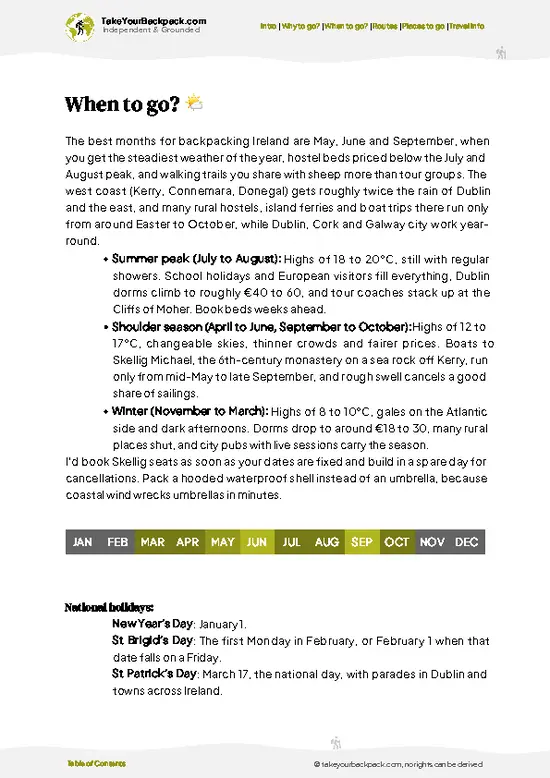
  • Weather: Connemara’s weather is famously unpredictable. Summers (June to August) bring the driest spells but expect rain any time. Winters are wet and windy, often discouraging for backpackers seeking dry trails.

  • Temperature: Summer highs hover around 15-20°C (59-68°F), comfortable for hiking without overheating. Winters dip to 2-8°C (36-46°F), which can feel raw with wind and rain, making outdoor plans tougher.

  • Daylight Hours: Long summer days offer up to 17 hours of light in June, ideal for extended hikes. By winter, daylight shrinks to about 8 hours, limiting your window for safe trekking.

  • Crowds: Peak summer draws the most visitors, especially July and August weekends. Early June and September see fewer people, giving you more solitude on popular trails.

  • Seasonal Activities:
read more 👉

  • Weather: Connemara’s weather is famously unpredictable. Summers (June to August) bring the driest spells but expect rain any time. Winters are wet and windy, often discouraging for backpackers seeking dry trails.

  • Temperature: Summer highs hover around 15-20°C (59-68°F), comfortable for hiking without overheating. Winters dip to 2-8°C (36-46°F), which can feel raw with wind and rain, making outdoor plans tougher.

  • Daylight Hours: Long summer days offer up to 17 hours of light in June, ideal for extended hikes. By winter, daylight shrinks to about 8 hours, limiting your window for safe trekking.

  • Crowds: Peak summer draws the most visitors, especially July and August weekends. Early June and September see fewer people, giving you more solitude on popular trails.

  • Seasonal Activities: Summer is prime for wildflower spotting and birdwatching. Autumn brings a quieter landscape with changing colors but fewer guided tours or visitor services.

  • Price Fluctuations: Accommodation and transport costs spike in July and August. Booking outside these months can save you a noticeable chunk of your budget.


Pro-tip: Aim for late May or early September—weather is decent, daylight generous, and you dodge the worst of the crowds and price hikes.


source: climatestotravel.comJANJanuary: below average for travelingFEBFebruary: below average for travelingMARMarch: fair for travelingAPRApril: good for travelingMAYMay: highly recommended for travelingJUNJune: highly recommended for travelingJULJuly: good for travelingAUGAugust: good for travelingSEPSeptember: highly recommended for travelingOCTOctober: good for travelingNOVNovember: fair for travelingDECDecember: below average for traveling
ireland-national-park-connemara-national-park
© Google | Karan Rao

✈️ The backpacker research shortcutIreland Travel Guide

An offline-friendly backpacking guide with optimized travel routes, ranked highlights, transport advice, and the best areas to stay.
example page 0 from our offline Travel Guide for Ireland
example page 1 from our offline Travel Guide for Ireland
example page 2 from our offline Travel Guide for Ireland
example page 3 from our offline Travel Guide for Ireland
example page 4 from our offline Travel Guide for Ireland
example page 5 from our offline Travel Guide for Ireland
example page 6 from our offline Travel Guide for Ireland
example page 7 from our offline Travel Guide for Ireland
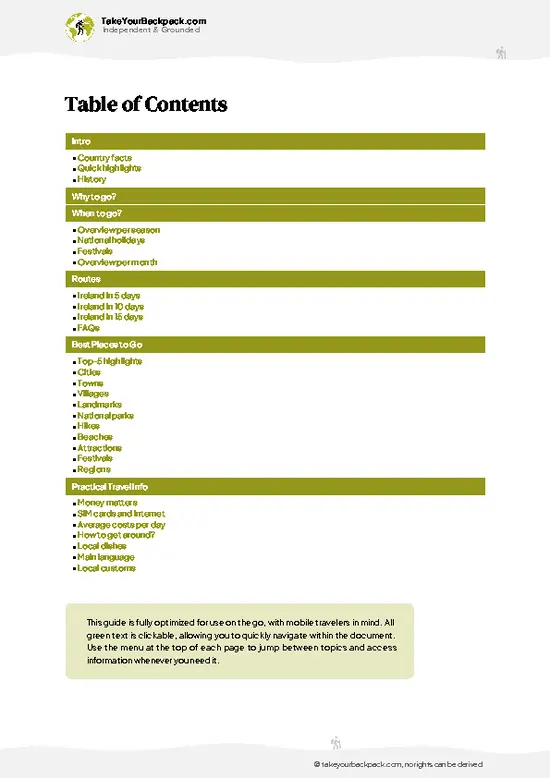
The digital guide (362 pages) contains:
101 highlights, ranked by travel appeal
Optimized 5, 10 & 15-day travel routes
Cities, national parks, landmarks, beaches
How to get around
Offline-friendly for travel without Wi-Fi
👉 Click to see all 30+ guide features

📅 Plan smarter in minutes, not weeks
Month by month travel advice
Festivals & national holidays
Budget expectations

🗺️ Go to the right places, skip the overrated ones
Honest pros & cons of destinations
Top hikes, parks & viewpoints
Lesser-known places most travelers miss
Clear “worth it vs skip it” guidance

🛏️ Travel smoothly without rookie mistakes
Best areas to stay
Transport systems explained simply
Common scams & safety advice
SIM cards, money & practical tips

🌍 Understand the country, not just visit it
Culture & traditions
Local customs
Festivals worth planning around
Traveler-friendly historical context
Insights that make places more meaningful

📱 Built for real travel conditions
Fully downloadable PDF
Works completely offline
Optimized for phone use
Useful in remote areas & buses
Everything in one place
Save weeks of stressful planning
Get instant access to your full guide. 30‑day money-back guarantee.
+ Add another guide for just US$7.80

By proceeding you agree to our terms.
Sent to your inbox immediately after payment • 100% Secure Checkout
Best Backpacking Travel Advisor 2025 tourism awardBest Backpacking
Travel Advisor
2025
What others say about Take Your Backpack Guides:
⭐⭐⭐⭐⭐
Fantastic, amazing amount of information!
⭐⭐⭐⭐⭐
My goodness this is amazing, it's what I've been looking for hats off too you!
⭐⭐⭐⭐⭐
I think this is absolutely BRILLIANT
⭐⭐⭐⭐
Very complete and informative. It's still missing places, but I gotta to commend you
⭐⭐⭐⭐⭐
This is truly amazing, thank you, can't wait to explore it with my kids!
⭐⭐⭐⭐⭐
Awesome resource, thank you!
⭐⭐⭐⭐⭐
This is amazing! Can't wait to explore the ones I haven't seen
⭐⭐⭐⭐
I love this! Well done, great idea.
⭐⭐⭐⭐⭐
Thanks for taking the time to make this gem!
⭐⭐⭐⭐⭐
This might be the best website I've ever seen.
⭐⭐⭐⭐⭐
Congratulations, and thank you so much for your work; it's incredibly valuable.
⭐⭐⭐⭐
In all seriousness I think you did a great job pointing out the important spots
⭐⭐⭐⭐⭐
10/10 very good
⭐⭐⭐⭐⭐
As someone who's only just starting to visit regularly this is awesome, thank you.
⭐⭐⭐⭐
Thank you very much! I'm going to visit my dad, it's going to be very useful!
⭐⭐⭐⭐⭐
This is really cool! We'll be travelling for the first time and this definitely come in handy.
⭐⭐⭐⭐⭐
You are now our minister of culture, congratulations 👨‍💼
⭐⭐⭐⭐⭐
Just wanted to tell you that this is a pearl! Going to follow your recommendations.
⭐⭐⭐⭐⭐
This is so cool. I'll definitely be using the resource for my travels soon.
⭐⭐⭐⭐⭐
This is very impressive! Good work.
⭐⭐⭐⭐⭐
This is an amazing and informative site. Very well done!

🛏️ Where to stay?Where staying makes the most sense

For backpackers heading to Connemara National Park, the options for staying nearby are solid but require a bit of savvy. Inside the park, there aren’t formal accommodations like hotels or hostels. Instead, you’ll find a few campsites, which can be a great way to immerse yourself in the rugged landscape. The Letterfrack campsite is a popular choice, offering basic facilities and a chance to wake up surrounded by nature.

If you prefer a roof over your head, the nearby village of Letterfrack has a couple of hostels and guesthouses. The Connemara National Park Hostel is a reliable spot, with a friendly … read more 👉
For backpackers heading to Connemara National Park, the options for staying nearby are solid but require a bit of savvy. Inside the park, there aren’t formal accommodations like hotels or hostels. Instead, you’ll find a few campsites, which can be a great way to immerse yourself in the rugged landscape. The Letterfrack campsite is a popular choice, offering basic facilities and a chance to wake up surrounded by nature.

If you prefer a roof over your head, the nearby village of Letterfrack has a couple of hostels and guesthouses. The Connemara National Park Hostel is a reliable spot, with a friendly vibe and easy access to trails. It’s a good base for exploring the park without breaking the bank.

Further afield, the town of Clifden is about a 20-minute drive away. It has more options, from budget B&Bs to mid-range hotels. Just be aware that prices can spike during peak season, so booking in advance is wise.

Keep an eye out for hidden costs, like parking fees or extra charges for amenities. These can add up quickly, so plan accordingly to keep your budget intact for the experiences that truly matter.

👛 Costs (as of 4 September 2026)How expensive it really is

Visiting Connemara National Park in Ireland is relatively straightforward, but there are a few costs to keep in mind to avoid surprises.

Entry to the park is free. That’s a win for your budget. However, if you plan to park your vehicle, expect to pay around €5 for a day. This fee helps maintain the park’s facilities and trails.

Guided tours are available for those who want a deeper dive into the area’s history and ecology. Prices for these tours typically range from €30 to €60 per person, depending on the length and inclusivity of the experience.

If you’re considering accommodation nearby, options vary widely. A budget hostel can cost around €25 per night, while mid-range hotels might charge between €100 and €150. For a more luxurious stay, expect to pay upwards of €200.

Food costs can … read more 👉
Visiting Connemara National Park in Ireland is relatively straightforward, but there are a few costs to keep in mind to avoid surprises.

Entry to the park is free. That’s a win for your budget. However, if you plan to park your vehicle, expect to pay around €5 for a day. This fee helps maintain the park’s facilities and trails.

Guided tours are available for those who want a deeper dive into the area’s history and ecology. Prices for these tours typically range from €30 to €60 per person, depending on the length and inclusivity of the experience.

If you’re considering accommodation nearby, options vary widely. A budget hostel can cost around €25 per night, while mid-range hotels might charge between €100 and €150. For a more luxurious stay, expect to pay upwards of €200.

Food costs can also add up. A meal at a casual restaurant will generally run you about €15 to €25. If you’re looking to save, consider packing a picnic or cooking if your accommodation allows it.

Keep these costs in mind to ensure you have the energy and funds for the experiences that truly matter in this stunning landscape.


source: connemaranationalpark.ie
⚠️ Prices can change and everyone travels differently, so take this as a rough guide. Hope it helps you plan your adventure!

🥾 TrailsExploring Connemara: trails, terrain, and views

Connemara National Park is a gem for hikers, offering some stunning views that’ll make your Instagram followers a bit jealous. The park features a mix of rugged mountains, serene lakes, and sprawling bogs, all wrapped up in that classic Irish charm. Wildlife enthusiasts will love spotting deer, rare birds, and maybe even a fox or two if they’re lucky.

There are a few designated trails that cater to different skill levels. One of the standout options is the Blue Route, which is perfect for a leisurely day out.
  • Length: 2 km
  • Estimated Duration: 1 hour
  • Difficulty Level: Easy
  • Key Features: Scenic views
read more 👉
Connemara National Park is a gem for hikers, offering some stunning views that’ll make your Instagram followers a bit jealous. The park features a mix of rugged mountains, serene lakes, and sprawling bogs, all wrapped up in that classic Irish charm. Wildlife enthusiasts will love spotting deer, rare birds, and maybe even a fox or two if they’re lucky.

There are a few designated trails that cater to different skill levels. One of the standout options is the Blue Route, which is perfect for a leisurely day out.
  • Length: 2 km
  • Estimated Duration: 1 hour
  • Difficulty Level: Easy
  • Key Features: Scenic views of the Twelve Bens mountain range, wildflowers, and a chance to see local wildlife.
  • Terrain: Well-maintained paths, mostly flat with some gentle inclines.

For those looking for something a bit more challenging, the Green Route offers a taste of adventure.
  • Length: 5 km
  • Estimated Duration: 2-3 hours
  • Difficulty Level: Moderate
  • Key Features: Stunning vistas, a mix of forested areas and open moorland.
  • Terrain: Uneven paths, some rocky sections, and a few steeper climbs.

Getting to the park is pretty straightforward. Public transport options are available, with buses running from Galway, making it accessible for budget travelers. Just be prepared for potential crowds during peak tourist season, especially in the summer months. Entrance to the park is free, which is a nice bonus for those watching their wallets. Just remember to pack some snacks and enjoy the scenery!
⚠️ Hiking info can sometimes be outdated or inaccurate. Before you hit the trail, check the latest conditions with locals. If you do spot anything that's off, I'd love to hear from you, so I can update it for fellow travelers.

🛡️ SafetyTraveler Safety Guide

Connemara National Park is generally welcoming for hikers, but a few realities can enhance your experience. Weather can shift quickly; layers are your best friend. A sunny morning can turn into a chilly drizzle by noon, so pack a waterproof jacket and be ready to adjust your plans.

The terrain varies. Some trails are gentle, while others can be steep and rocky. Good footwear is essential—think sturdy boots with grip. Navigation is straightforward, but keep an eye on trail markers, especially in foggy conditions.

Wildlife is part of the charm here. You might spot sheep or even a deer, but keep your distance. Feeding animals disrupts their natural behavior and can lead to unwanted encounters.

Finally, don’t underestimate the power of pacing. Take breaks to enjoy the views and stay hydrated. … read more 👉
Connemara National Park is generally welcoming for hikers, but a few realities can enhance your experience. Weather can shift quickly; layers are your best friend. A sunny morning can turn into a chilly drizzle by noon, so pack a waterproof jacket and be ready to adjust your plans.

The terrain varies. Some trails are gentle, while others can be steep and rocky. Good footwear is essential—think sturdy boots with grip. Navigation is straightforward, but keep an eye on trail markers, especially in foggy conditions.

Wildlife is part of the charm here. You might spot sheep or even a deer, but keep your distance. Feeding animals disrupts their natural behavior and can lead to unwanted encounters.

Finally, don’t underestimate the power of pacing. Take breaks to enjoy the views and stay hydrated. By preparing for these practical aspects, you’ll preserve your energy and budget for the moments that truly matter.

FAQFrequently asked questions about Connemara

1 to 2 days is sufficient to explore Connemara National Park thoroughly. This allows time to hike the main trails, including the 7 km Diamond Hill loop, and enjoy the visitor center. Longer stays are optional for deeper exploration or nearby attractions.
Yes, you can visit Connemara National Park without a car. Local bus services run from Galway to Letterfrack, the village near the park entrance. From Letterfrack, the park is within walking distance, making it accessible for non-drivers.
No entrance fee or permit is required to enter Connemara National Park. The park is open year-round, and access to trails and facilities is free. Donations are appreciated but not mandatory.
⚠️ Things can change over time, so always validate details locally before you go.

Other Irish national parks near Connemara

Explore more nearby:


💡 Not sure where to go next?
Create a personalized itinerary for Ireland including Connemara and the places that fit your trip.

Generate my itinerary

👉 Discover all national parks

Or checkout all Ireland has to offer (think cities, towns, villages, national parks, hikes, beaches, festivals)
Country photo of Ireland

We 💚 feedbackParting advice and final tips

Connemara National Park is a wild beauty that pulls you in with its rugged landscapes and rich wildlife. You’ll feel a sense of freedom on those trails. But be ready for the weather; it can shift from sunshine to rain in minutes. Pack layers and waterproof gear to keep your spirits high. Embrace the unpredictability—it’s part of the adventure. Just don’t let a little drizzle dampen your experience; the park’s magic thrives in every condition.

✈️ When did I visit Ireland?
Ireland was the last country of my 1,5 year travel around the world trip, which was july 2016. In July 2023 I visited Ireland again.

✍️ Help improve this page!
The information on this page is based on my own backpacking experience in Ireland, supplemented with up-to-date research and feedback from other travelers. Travel details can change, so if you notice anything outdated or incomplete, feel free to let me know.


🙋‍♂️ Give feedback

👋 Meet the founderWho’s Behind Take Your Backpack?

Johan, backpacker and founder of TakeYourBackpackHi, I’m Johan (Netherlands 🇳🇱), the creator of TakeYourBackpack. Over the past decade, I’ve backpacked through 80+ countries across six continents, gaining extensive experience with independent travel, long-term trips, and overland routes.

This site is built on a combination of firsthand travel experience and carefully curated insights from other backpackers. Many guides are based on places I’ve personally visited, while others bring together tips, observations, and practical advice shared by trusted travelers I’ve met along the way.

The goal is to provide realistic, experience-driven guidance — not generic itineraries — so you can explore destinations with better context, clearer expectations, and more confidence.

Get full Ireland guide •
Instant download • 101 highlights • Full Offline guide