×

Israel🇮🇱 | regionsSamarian Hillsterraced slopes, olive groves, hilltop villages | things to do and best time to go

Explore Negev DesertExplore Golan Heights

Backpacking in Samarian Hills
👌 Worth visitingregion ranked #3
By Johan Kruseman 🇳🇱 | Updated September 4, 2026

Most people only realize on their last day in the Samarian Hills that this is where you can stretch a single bus ride into three days of hiking, homestays, and ancient sites for the price of one Tel Aviv brunch. The Samarian Hills sit in the central highlands of Israel, between Tel Aviv’s coastal sprawl and the Jordan Valley, overlapping what many maps label as the northern West Bank. For backpackers, it’s a trade: fewer hostels and trickier transport, but way more authenticity and lower day-to-day costs than Jerusalem or the Galilee. You get terraced hills, olive groves, biblical-era ruins, and Palestinian and Israeli communities side by side, instead of souvenir gauntlets and tour buses. Towns like Nablus feel raw, busy, and real, with cheap food and strong coffee, but buses are patchy and hitchhiking or shared taxis become part of the game. It’s not polished; it’s memorable because you have to work for it.

Discover everything you want to know in the 📖 Israel Travel Guide.
Safety warning

The current risk level for Israel is high. Check the advice before going.


Get your Israel guide
81 ranked highlights, routes & tips, works offline (299 pages)
Loading the map 🌍
CLICK TO FILTER
cities
towns
villages
landmarks
national parks
hikes
beaches
attractions
festivals
regions
SHOW COUNTRY’S BESTSHOW ALL

✨ Why go?
Ranked #3 region in Israel
Reasons people choose to visit here

The Samarian Hills in Israel are a backpacker’s playground, offering a unique blend of landscapes and experiences that make every moment count. You can hike through rolling hills, explore ancient ruins, and wander through olive groves, all without the hassle of constant relocation. This region is a transport dream; you can easily hop on a bus or rent a bike to access various trails and towns.

What’s the kicker? You get to mix nature and culture seamlessly. Spend your mornings trekking through breathtaking scenery, then dive into local markets in the afternoon. The slower pace allows you to soak in the rich history and vibrant communities.

Plus, the variety here is unmatched. One day you’re scaling a hill for panoramic views, the next you’re sipping coffee in a quaint village. This flexibility … read more 👉
The Samarian Hills in Israel are a backpacker’s playground, offering a unique blend of landscapes and experiences that make every moment count. You can hike through rolling hills, explore ancient ruins, and wander through olive groves, all without the hassle of constant relocation. This region is a transport dream; you can easily hop on a bus or rent a bike to access various trails and towns.

What’s the kicker? You get to mix nature and culture seamlessly. Spend your mornings trekking through breathtaking scenery, then dive into local markets in the afternoon. The slower pace allows you to soak in the rich history and vibrant communities.

Plus, the variety here is unmatched. One day you’re scaling a hill for panoramic views, the next you’re sipping coffee in a quaint village. This flexibility means you can tailor your adventure to fit your vibe, whether you’re seeking solitude or social interaction. Embrace the high-value experiences that make the Samarian Hills a must-visit.
Want to include Samarian Hills in your Israel route?
Create a personalized Israel itinerary that includes Samarian Hills and the places that fit your trip — based on your travel style, budget, and available time. Get your route in seconds.

Generate my trip

💡 HighlightsWhat this place is best known for

  • Mount Gerizim & Kiryat Luza (Samaritan community) — The only place in the world where the small Samaritan community still lives and prays on its sacred mountain. You can walk the summit paths, see the reconstructed Samaritan synagogue and tiny museum, and talk to people who keep ancient liturgical traditions and cuisine alive — a cultural experience unique to this ridge.
  • Sebastia Archaeological Park — Ruins layered across millennia: a Hellenistic/Herodian acropolis, Roman forum and columns, Crusader-era remains and Ottoman towers. It’s one of those places where you can stroll among massive stones and really feel how this spot dominated the Samarian hills for ancient kingdoms.
  • Tell Balata (ancient Shechem) — A working archaeological tell with visible city walls, streets and a small on-site
read more 👉
  • Mount Gerizim & Kiryat Luza (Samaritan community) — The only place in the world where the small Samaritan community still lives and prays on its sacred mountain. You can walk the summit paths, see the reconstructed Samaritan synagogue and tiny museum, and talk to people who keep ancient liturgical traditions and cuisine alive — a cultural experience unique to this ridge.
  • Sebastia Archaeological Park — Ruins layered across millennia: a Hellenistic/Herodian acropolis, Roman forum and columns, Crusader-era remains and Ottoman towers. It’s one of those places where you can stroll among massive stones and really feel how this spot dominated the Samarian hills for ancient kingdoms.
  • Tell Balata (ancient Shechem) — A working archaeological tell with visible city walls, streets and a small on-site display. It’s the landscape that makes it special: the tell sits above the valley between Gerizim and Ebal, so you get both the archaeology and the geographic context of the biblical city in one visit.
  • Nablus Old City — souq, kunafa & Nabulsi soap workshops — Not a generic market: Nablus has its own food culture (the kunafa here is a must-try), centuries-old soap-making pits, narrow alleys and rooftop views. Hanging out in the souq, sampling street food and watching traditional craftsmen is an immersive slice of Samarian daily life.
  • Wadi Qana Nature Reserve (hidden gem) — personal favorite — A surprisingly lush valley of springs, rock pools, terraced orchards and quiet picnic spots that most guidebooks skip. Local families swim and cook here; the geology, old mills and tiny villages make for easy day hikes and cooling dips in summer. Perfect for low-effort nature time that feels authentic to the hills.
  • Mount Ebal archaeological site (hidden gem) — A stark, rugged ridge opposite Gerizim with an unusual Iron Age stone altar and scattered ruins. Fewer visitors come here, so you get sweeping views of the Samarian landscape and a chance to wander relatively undisturbed among ancient stones — great for contemplative walks and photography.
  • Burqin Church (St. George) (hidden gem) — One of the oldest surviving church buildings in the region, tucked into a small Galilean/ northern-Samarian village setting. It’s modest but atmospheric: old fresco fragments, pilgrim graffiti and a quiet courtyard — a good detour from the busier religious circuit.
  • Tell Dothan (Tel Dothan) — An archaeological mound with a long sequence of settlement layers and a classic “valley well” setting. It’s a good spot to combine a short hike, olive grove views and some straightforward on-site interpretation about the region’s Bronze-to-Iron Age continuity.
  • Deir Istiya terraces & local olive-press visits (hidden gem) — The hills around Deir Istiya are full of old stone terraces and small family groves. In season you can watch or join olive picking, visit a village press and taste fresh-pressed oil — a hands-on rural experience that isn’t staged for tourists and really shows how the Samarian hills feed themselves.
  • Jenin Old City & surrounding tells — Northern Samaria’s market rhythms, roadside Palestinian bakeries and the lesser-known tells around Jenin make for a different pace: more raw, more local, and often overlooked by casual visitors. Walk the lanes, try the local breads, and use one of the hilltop tells as a short hike for wide views over the northern valleys.
Spotted a mistake or missing something? Contact us.

Things to do near Samarian Hills

Ratings based on Tripadvisor reviews. When you book through this link, you support our work at no extra cost to you.

⌛️ 5 daysHow to make the most of Samarian Hills

Day 1: Ein Gedi
Start your adventure in Ein Gedi, a lush oasis on the western shore of the Dead Sea. The transport here is straightforward; take a bus from Jerusalem. This sets the tone for your trip—easy access to stunning landscapes. Spend the day hiking the trails, where waterfalls and wildlife await. The heat can be intense, so start early. The reward? A refreshing dip in the Dead Sea afterward.

Day 2: Masada
From Ein Gedi, it’s a short bus ride to Masada. This iconic fortress is best tackled at sunrise. The cable car is convenient, but if you’re feeling adventurous, hike the Snake Path. The views are worth the effort. You’ll feel the weight of history as you explore the ruins. The transport here is reliable, but be mindful of the last bus back to Ein Gedi.

Day 3: Mitzpe Ramon … read more 👉
Day 1: Ein Gedi
Start your adventure in Ein Gedi, a lush oasis on the western shore of the Dead Sea. The transport here is straightforward; take a bus from Jerusalem. This sets the tone for your trip—easy access to stunning landscapes. Spend the day hiking the trails, where waterfalls and wildlife await. The heat can be intense, so start early. The reward? A refreshing dip in the Dead Sea afterward.

Day 2: Masada
From Ein Gedi, it’s a short bus ride to Masada. This iconic fortress is best tackled at sunrise. The cable car is convenient, but if you’re feeling adventurous, hike the Snake Path. The views are worth the effort. You’ll feel the weight of history as you explore the ruins. The transport here is reliable, but be mindful of the last bus back to Ein Gedi.

Day 3: Mitzpe Ramon
Now, you’ll need to shift gears. Take a bus to Mitzpe Ramon, a bit longer but totally worth it. This is where the Negev Desert opens up, offering a different vibe. Spend the day exploring the Ramon Crater. The desert’s silence is a stark contrast to the previous days. Grab a local meal at a small eatery; it’s a chance to mingle with locals.

Day 4: Off-Path Reward: Avdat
Take a detour to Avdat, an ancient Nabatean city. It’s a bit off the main route, but the ruins are hauntingly beautiful. You’ll feel like you’ve stepped back in time. The bus connections are decent, but check schedules. This adds depth to your understanding of the region.

Day 5: Back to Jerusalem
Wrap up your trip by heading back to Jerusalem. Reflect on the journey as you travel. The bus ride offers a chance to soak in the landscapes one last time.

If you can only pick one day, make it Day 2 at Masada. The combination of history, breathtaking views, and the early morning hike is the essence of what makes this region special. It’s a day that will stick with you long after you leave.
Turn your Samarian Hills visit into an Israel adventure
Build a complete Israel route with Samarian Hills, hidden gems, must-see destinations, and realistic travel times included.

Generate my trip

🌤️ When to go?Seasonal considerations and timing


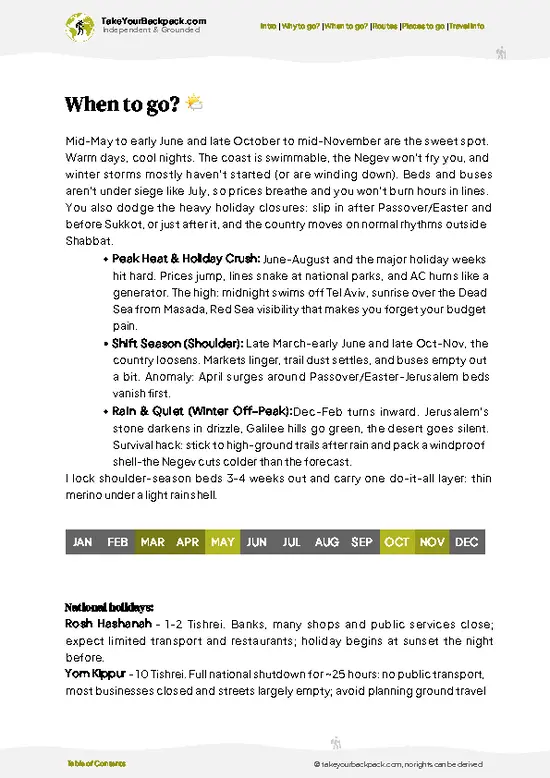
  • Weather: Spring (March to May) and autumn (September to November) are your sweet spots. Temperatures hover between 15-25°C (59-77°F), perfect for hiking without frying or freezing. Summer can scorch you with highs over 35°C (95°F), while winter nights dip close to 5°C (41°F), which can be a shock if you’re unprepared.

  • Daylight Hours: Longer days in spring and autumn mean more hiking time—up to 12 hours of light. Winter shortens your window to around 9 hours, so plan your treks accordingly to avoid being caught on trails after dark.

  • Crowds: Peak season is spring, especially around Passover and Easter, when locals and tourists flood the hills. Autumn sees fewer visitors, giving you more breathing room on trails and at campsites.

  • Seasonal Activities: Spring bursts with wildflowers and
read more 👉

  • Weather: Spring (March to May) and autumn (September to November) are your sweet spots. Temperatures hover between 15-25°C (59-77°F), perfect for hiking without frying or freezing. Summer can scorch you with highs over 35°C (95°F), while winter nights dip close to 5°C (41°F), which can be a shock if you’re unprepared.

  • Daylight Hours: Longer days in spring and autumn mean more hiking time—up to 12 hours of light. Winter shortens your window to around 9 hours, so plan your treks accordingly to avoid being caught on trails after dark.

  • Crowds: Peak season is spring, especially around Passover and Easter, when locals and tourists flood the hills. Autumn sees fewer visitors, giving you more breathing room on trails and at campsites.

  • Seasonal Activities: Spring bursts with wildflowers and bird migrations—nature’s own show. Autumn offers grape harvest festivals nearby, a cultural bonus if you time it right. Summer’s heat limits outdoor events, and winter can bring occasional rain, dampening plans.

  • Price Fluctuations: Expect higher prices for accommodations and guided tours in spring due to demand. Autumn offers better deals and more availability. Winter is the cheapest but comes with trade-offs in weather and daylight.


Pro-tip: Arrive just before the spring rush or linger into late autumn to snag the best weather, fewer crowds, and wallet-friendly rates—like a local who knows the rhythm of the hills.


source: climatestotravel.comJANJanuary: fair for travelingFEBFebruary: fair for travelingMARMarch: highly recommended for travelingAPRApril: excellent for travelingMAYMay: excellent for travelingJUNJune: fair for travelingJULJuly: below average for travelingAUGAugust: below average for travelingSEPSeptember: highly recommended for travelingOCTOctober: excellent for travelingNOVNovember: highly recommended for travelingDECDecember: fair for traveling
when-to-go

✈️ The backpacker research shortcutIsrael Travel Guide

An offline-friendly backpacking guide with optimized travel routes, ranked highlights, transport advice, and the best areas to stay.
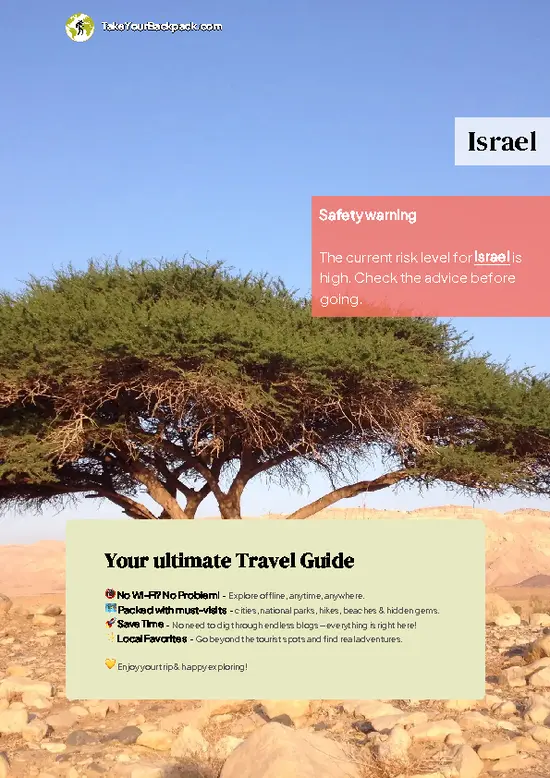
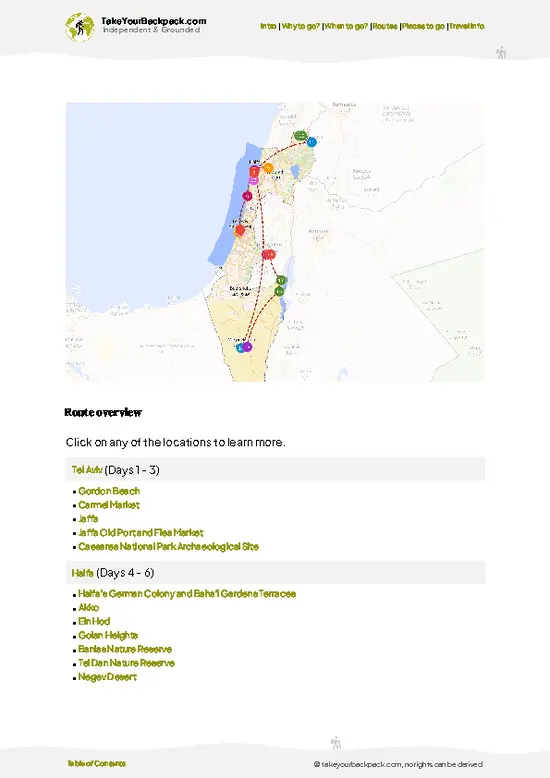
example page 0 from our offline Travel Guide for Israel
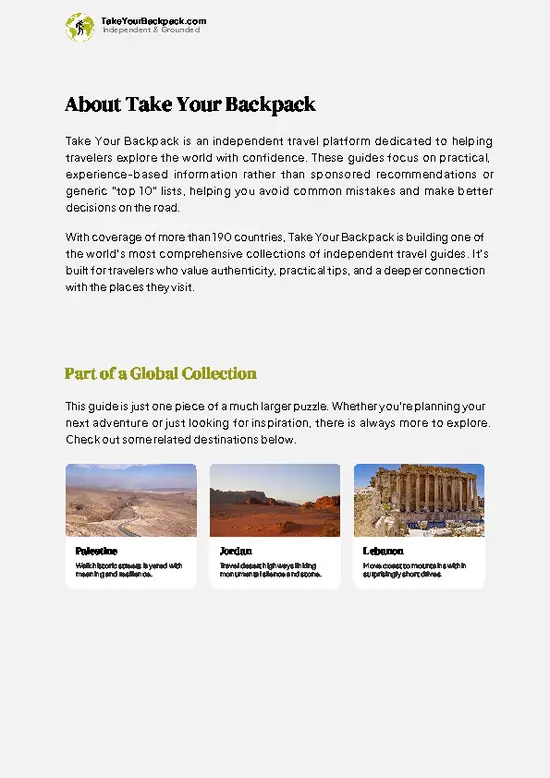
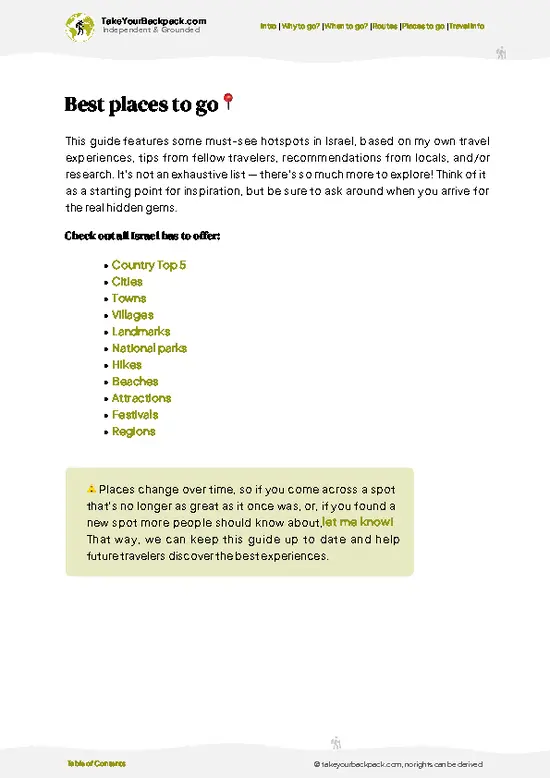
example page 1 from our offline Travel Guide for Israel
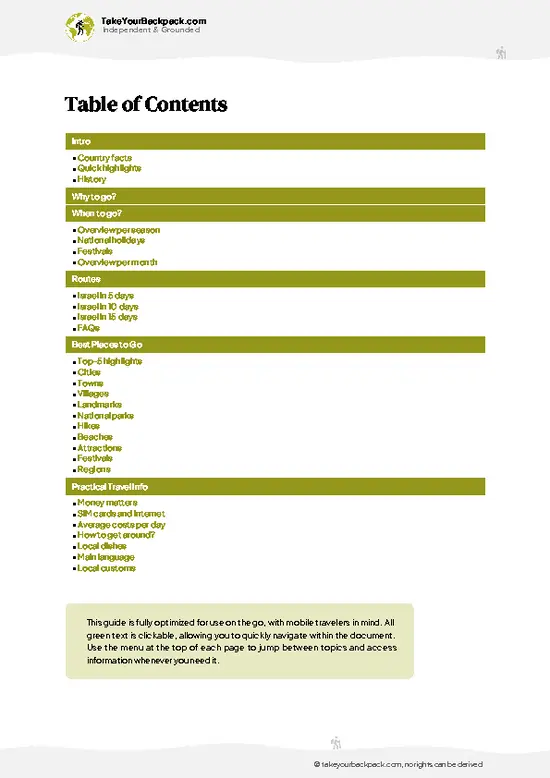
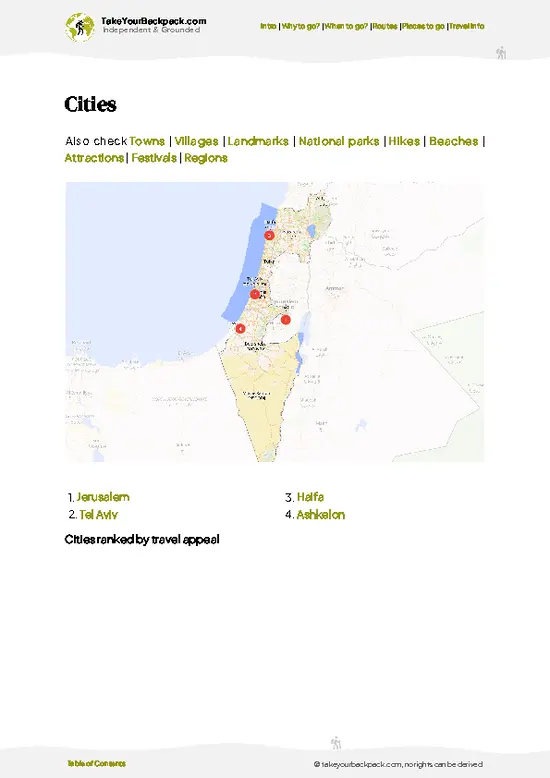
example page 2 from our offline Travel Guide for Israel
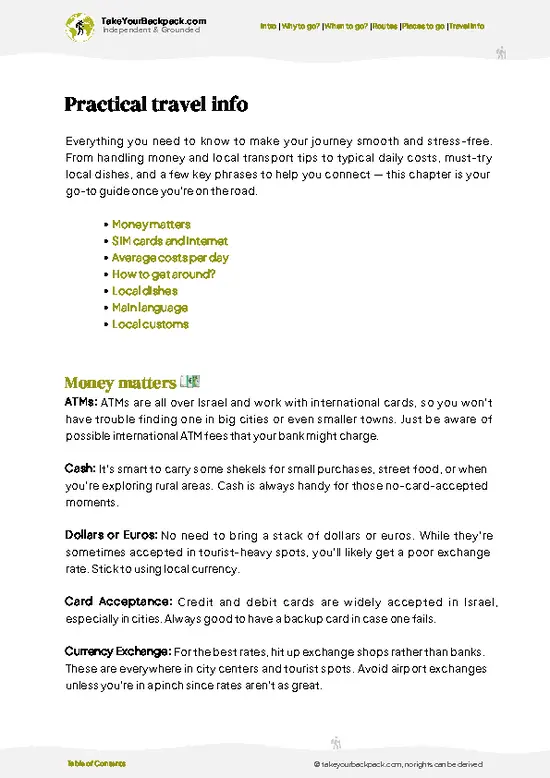
example page 3 from our offline Travel Guide for Israel
example page 4 from our offline Travel Guide for Israel
example page 5 from our offline Travel Guide for Israel
example page 6 from our offline Travel Guide for Israel
example page 7 from our offline Travel Guide for Israel
The digital guide (299 pages) contains:
81 highlights, ranked by travel appeal
Optimized 5, 10 & 15-day travel routes
Cities, national parks, landmarks, beaches
How to get around
Offline-friendly for travel without Wi-Fi
👉 Click to see all 30+ guide features

📅 Plan smarter in minutes, not weeks
Month by month travel advice
Festivals & national holidays
Budget expectations

🗺️ Go to the right places, skip the overrated ones
Honest pros & cons of destinations
Top hikes, parks & viewpoints
Lesser-known places most travelers miss
Clear “worth it vs skip it” guidance

🛏️ Travel smoothly without rookie mistakes
Best areas to stay
Transport systems explained simply
Common scams & safety advice
SIM cards, money & practical tips

🌍 Understand the country, not just visit it
Culture & traditions
52 Essential phrases & customs
Festivals worth planning around
Traveler-friendly historical context
Insights that make places more meaningful

📱 Built for real travel conditions
Fully downloadable PDF
Works completely offline
Optimized for phone use
Useful in remote areas & buses
Everything in one place
Save weeks of stressful planning
Get instant access to your full guide. 30‑day money-back guarantee.
+ Add another guide for just US$7.80

By proceeding you agree to our terms.
Sent to your inbox immediately after payment • 100% Secure Checkout
Best Backpacking Travel Advisor 2025 tourism awardBest Backpacking
Travel Advisor
2025
What others say about Take Your Backpack Guides:
⭐⭐⭐⭐⭐
Fantastic, amazing amount of information!
⭐⭐⭐⭐⭐
My goodness this is amazing, it's what I've been looking for hats off too you!
⭐⭐⭐⭐⭐
I think this is absolutely BRILLIANT
⭐⭐⭐⭐
Very complete and informative. It's still missing places, but I gotta to commend you
⭐⭐⭐⭐⭐
This is truly amazing, thank you, can't wait to explore it with my kids!
⭐⭐⭐⭐⭐
Awesome resource, thank you!
⭐⭐⭐⭐⭐
This is amazing! Can't wait to explore the ones I haven't seen
⭐⭐⭐⭐
I love this! Well done, great idea.
⭐⭐⭐⭐⭐
Thanks for taking the time to make this gem!
⭐⭐⭐⭐⭐
This might be the best website I've ever seen.
⭐⭐⭐⭐⭐
Congratulations, and thank you so much for your work; it's incredibly valuable.
⭐⭐⭐⭐
In all seriousness I think you did a great job pointing out the important spots
⭐⭐⭐⭐⭐
10/10 very good
⭐⭐⭐⭐⭐
As someone who's only just starting to visit regularly this is awesome, thank you.
⭐⭐⭐⭐
Thank you very much! I'm going to visit my dad, it's going to be very useful!
⭐⭐⭐⭐⭐
This is really cool! We'll be travelling for the first time and this definitely come in handy.
⭐⭐⭐⭐⭐
You are now our minister of culture, congratulations 👨‍💼
⭐⭐⭐⭐⭐
Just wanted to tell you that this is a pearl! Going to follow your recommendations.
⭐⭐⭐⭐⭐
This is so cool. I'll definitely be using the resource for my travels soon.
⭐⭐⭐⭐⭐
This is very impressive! Good work.
⭐⭐⭐⭐⭐
This is an amazing and informative site. Very well done!

🛏️ Where to stay?Best areas and accommodation options

The Samarian Hills are a treasure trove for backpackers seeking a blend of history, culture, and community. Start in Nablus. This city buzzes with life, and its vibrant markets are a feast for the senses. You’ll find locals eager to share stories over a cup of strong Arabic coffee. The Old City is a maze of narrow streets, perfect for wandering and discovering hidden eateries.

Next, consider Zababdeh. This lesser-known village offers a genuine slice of Palestinian life. It’s safe, welcoming, and you’ll likely find yourself invited to a family meal. The pace is slower here, allowing you to soak … read more 👉
The Samarian Hills are a treasure trove for backpackers seeking a blend of history, culture, and community. Start in Nablus. This city buzzes with life, and its vibrant markets are a feast for the senses. You’ll find locals eager to share stories over a cup of strong Arabic coffee. The Old City is a maze of narrow streets, perfect for wandering and discovering hidden eateries.

Next, consider Zababdeh. This lesser-known village offers a genuine slice of Palestinian life. It’s safe, welcoming, and you’ll likely find yourself invited to a family meal. The pace is slower here, allowing you to soak in the surroundings without the tourist rush.

Don’t overlook Ramallah. It’s a hub for young travelers, with a lively arts scene and plenty of cafes where you can connect with fellow backpackers. The nightlife is surprisingly vibrant, making it easy to meet new friends.

Each of these spots offers a unique experience, balancing comfort and social interaction. You’ll sacrifice some touristy conveniences, but the trade-off is rich, authentic experiences that will stick with you long after you leave. Choose wisely, and you’ll walk away with stories worth sharing.

🚌 Getting aroundHow to get around Samarian Hills

The Samarian Hills pulse with a rhythm that feels both ancient and alive. Here, the landscape is a patchwork of rolling hills, olive groves, and timeworn paths that invite exploration. Forget rigid schedules; this is a place where intuition reigns. You’ll find locals chatting over coffee, their laughter echoing through the valleys, while the scent of fresh bread wafts from nearby bakeries. The transport options here reflect that vibe—flexible, sometimes chaotic, but always full of character. You’ll need to embrace the flow, balancing time, money, and comfort as you navigate this stunning region.


  • Shared Taxis (Sherut): These are your best bet for budget travel. They run frequently, usually from early morning until around midnight, and cost about 30-50 shekels per ride. Expect a cozy squeeze
read more 👉
The Samarian Hills pulse with a rhythm that feels both ancient and alive. Here, the landscape is a patchwork of rolling hills, olive groves, and timeworn paths that invite exploration. Forget rigid schedules; this is a place where intuition reigns. You’ll find locals chatting over coffee, their laughter echoing through the valleys, while the scent of fresh bread wafts from nearby bakeries. The transport options here reflect that vibe—flexible, sometimes chaotic, but always full of character. You’ll need to embrace the flow, balancing time, money, and comfort as you navigate this stunning region.


  • Shared Taxis (Sherut): These are your best bet for budget travel. They run frequently, usually from early morning until around midnight, and cost about 30-50 shekels per ride. Expect a cozy squeeze with fellow travelers, but they’ll get you from point A to B faster than a bus.


  • Buses: The bus system is reliable and covers most towns in the Samarian Hills. Fares range from 10 to 30 shekels depending on the distance. Buses run roughly every 30-60 minutes, but check the schedule ahead of time to avoid long waits. Comfort varies, but you’ll get a local experience.


  • Rental Cars: If you crave freedom, renting a car is the way to go. Prices start around 200 shekels per day. This option gives you the flexibility to explore hidden spots at your own pace, but be prepared for winding roads and occasional parking challenges.


  • Bicycles: For the adventurous spirit, renting a bike can be a fantastic way to soak in the scenery. Daily rentals are about 100 shekels. The hills can be steep, but the fresh air and stunning views make every pedal worth it.


  • Walking: Don’t underestimate the power of your own two feet. Many trails wind through the hills, connecting villages and historical sites. It’s free, and you’ll discover the region’s soul in a way that no vehicle can match.


For a tactical tip: download a local navigation app that works offline. This will save you time and frustration when figuring out your next move. Embrace the spontaneity, and let the Samarian Hills reveal their secrets at your own pace.

🍲 FoodEating & Drinking in Samarian Hills

In the Samarian Hills, food is a celebration of local flavors and traditions. You can’t miss the lamb kebabs, grilled to perfection and bursting with spices. Pair them with tabbouleh, a refreshing salad that balances the richness of the meat. The pita bread here is a revelation—soft, warm, and perfect for scooping up every last bite.

For drinks, seek out arak, a local anise-flavored spirit that’s best enjoyed with friends. It’s often served with a splash of water, turning it a milky white. If you’re in the mood for something lighter, grab a freshly squeezed pomegranate juice from a street vendor. The sweet-tart flavor is a refreshing antidote to the warm sun.

When it comes to dining, embrace the markets. They’re alive with chatter and the aroma of spices. Grab a seat at a casual café where … read more 👉
In the Samarian Hills, food is a celebration of local flavors and traditions. You can’t miss the lamb kebabs, grilled to perfection and bursting with spices. Pair them with tabbouleh, a refreshing salad that balances the richness of the meat. The pita bread here is a revelation—soft, warm, and perfect for scooping up every last bite.

For drinks, seek out arak, a local anise-flavored spirit that’s best enjoyed with friends. It’s often served with a splash of water, turning it a milky white. If you’re in the mood for something lighter, grab a freshly squeezed pomegranate juice from a street vendor. The sweet-tart flavor is a refreshing antidote to the warm sun.

When it comes to dining, embrace the markets. They’re alive with chatter and the aroma of spices. Grab a seat at a casual café where locals gather, or dive into the street food scene—think falafel that’s crispy on the outside and fluffy inside, served with a drizzle of tahini.

Etiquette is simple: share your food and enjoy the company. Meals are often communal, so don’t hesitate to dig in with your hands. It’s all about connection here, and that’s what makes the experience truly special.

FAQCommon questions from travelers

3 to 4 days are sufficient to explore the main sites of the Samarian Hills, including hiking trails and historical landmarks. This allows time to visit places like Nablus, Sebastia, and the Mount Gerizim area. Additional days may be needed for deeper exploration or cultural experiences.
Getting around the Samarian Hills without a car is possible using local minibuses (sheruts) and shared taxis, which connect major towns and villages. Walking and hiking are also common for exploring specific sites and trails, but public transport options can be limited and schedules irregular.
The Samarian Hills are known for their rich biblical history, ancient ruins, and olive groves. The area includes significant archaeological sites like Sebastia and religious landmarks such as Mount Gerizim, making it a key destination for history and culture enthusiasts.
⚠️ Things can change over time, so always validate details locally before you go.

Other Israeli regions near Samarian Hills

Explore more nearby:

  • Golan Heights—volcanic hills, waterfalls, border viewpoints| 143 km away
  • Negev Desert—crater landscapes, Bedouin camps, arid plateaus| 160 km away

💡 Not sure where to go next?
Create a personalized itinerary for Israel including Samarian Hills and the places that fit your trip.

Generate my itinerary

👉 Discover all regions

Or checkout all Israel has to offer (think cities, towns, villages, national parks, hikes, beaches, festivals)
Country photo of Israel

We 💚 feedbackFinal thoughts on visiting Samarian Hills

The Samarian Hills are a treasure trove of history and breathtaking views. Picture yourself wandering ancient paths, feeling the weight of millennia beneath your boots. But here’s the catch: the terrain can be rugged, and some trails demand a solid level of fitness. If you’re not up for a workout, you might miss out on the best spots. Embrace the challenge, and you’ll find the rewards are absolutely worth it.

✈️ When did I visit Israel?
In October 2013 I visited Israel and the Westbank.

✍️ Help improve this page!
The information on this page is based on my own backpacking experience in Israel, supplemented with up-to-date research and feedback from other travelers. Travel details can change, so if you notice anything outdated or incomplete, feel free to let me know.


🙋‍♂️ Give feedback

👋 Meet the founderWho’s Behind Take Your Backpack?

Johan, backpacker and founder of TakeYourBackpackHi, I’m Johan (Netherlands 🇳🇱), the creator of TakeYourBackpack. Over the past decade, I’ve backpacked through 80+ countries across six continents, gaining extensive experience with independent travel, long-term trips, and overland routes.

This site is built on a combination of firsthand travel experience and carefully curated insights from other backpackers. Many guides are based on places I’ve personally visited, while others bring together tips, observations, and practical advice shared by trusted travelers I’ve met along the way.

The goal is to provide realistic, experience-driven guidance — not generic itineraries — so you can explore destinations with better context, clearer expectations, and more confidence.

Get full Israel guide •
Instant download • 81 highlights • Full Offline guide