v2.webp)
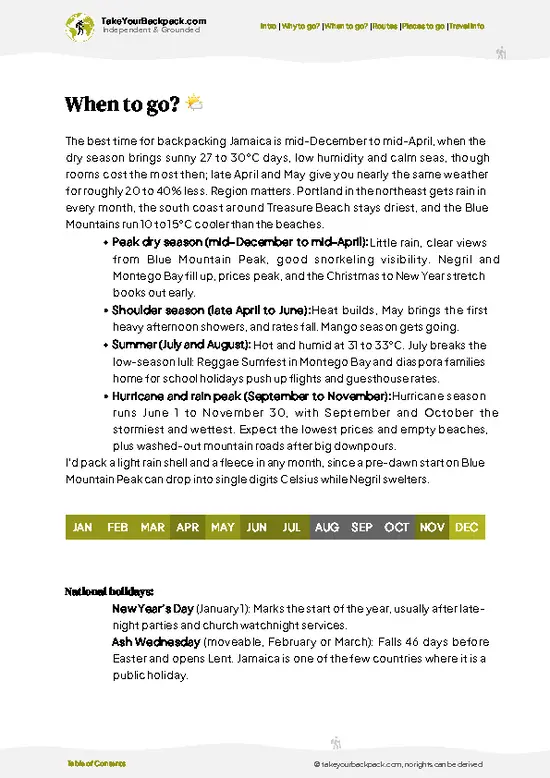
- Spanish Town Square (the Parade): The historic heart of the old capital, framed by Georgian buildings and the Rodney Memorial, a marble and bronze tribute to Admiral Rodney under a columned dome. Go in the morning when the light is soft and the square is calm. Free, 45 minutes to 1 hour.
- Cathedral of St. Jago de la Vega: The Anglican cathedral is among the oldest in the Caribbean, with a building dating to the early 1700s and memorial plaques inside for early colonial governors and planters. Visit on a weekday morning or after a Sunday service. Free, with a small donation welcome, 20 to 30 minutes.
- Old King’s House ruins and the Jamaica People’s Museum of Craft and Technology: The governor’s residence burned in the 1920s and only its facade stands, while the museum in the old stables shows tools,
- Spanish Town Square (the Parade): The historic heart of the old capital, framed by Georgian buildings and the Rodney Memorial, a marble and bronze tribute to Admiral Rodney under a columned dome. Go in the morning when the light is soft and the square is calm. Free, 45 minutes to 1 hour.
- Cathedral of St. Jago de la Vega: The Anglican cathedral is among the oldest in the Caribbean, with a building dating to the early 1700s and memorial plaques inside for early colonial governors and planters. Visit on a weekday morning or after a Sunday service. Free, with a small donation welcome, 20 to 30 minutes.
- Old King’s House ruins and the Jamaica People’s Museum of Craft and Technology: The governor’s residence burned in the 1920s and only its facade stands, while the museum in the old stables shows tools, crafts and early technology. Go before lunch. Around US$2 to 4, 45 minutes.
- Old Iron Bridge over the Rio Cobre: Cast in England and set in place around 1801, it is often described as one of the oldest iron bridges in the Americas. Come in the late afternoon for the best photos of the river and the ironwork. Free, 20 minutes.
- Phillippo Baptist Church: Built in the 1820s by the missionary James Phillippo, who campaigned against slavery, it is a key monument of Jamaica’s emancipation story. Sunday services are the best time for singing and atmosphere. Free, with a donation expected, 20 to 30 minutes.
Spotted a mistake or missing something? Contact us.

Private Transport to River Tubing or Rafting and Blue Hole combo

Jamaica Best Water Falls Tour,Mobay Bay to Dunn's River/Blue Hole

Blue Hole and Dunn's River Tour (Entrance Fees Not Included)

Blue Hole Tour From Ocho Rios

Blue Hole and River Tubing Combo from Falmouth

Ocho Rios Blue Hole and Rio Nuevo Rafting Tour
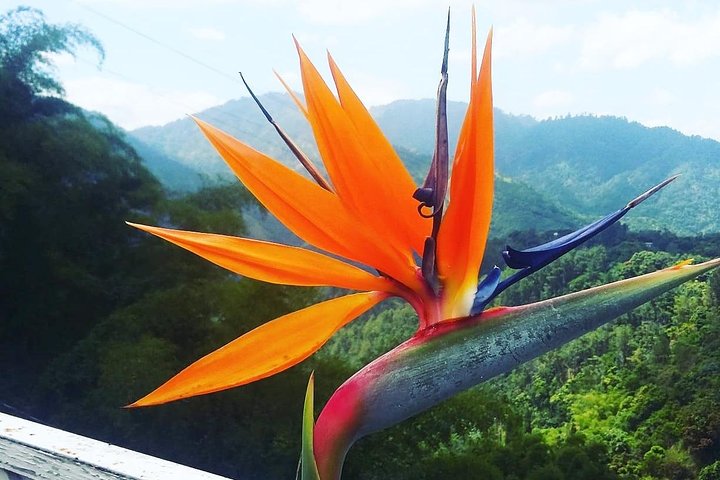
Blue Mountain Path Finder

Reggae Roots Tour: Explore the Legacy of Bunny Lee

Private Guided Group Full-Day Water Tour fr Kingston to Portland


 Best Backpacking
.jpg) Hi, I’m Johan (Netherlands 🇳🇱), the creator of TakeYourBackpack. Over the past 3 decades, I’ve backpacked through 90+ countries across six continents, gaining extensive experience with independent travel, long-term trips, and overland routes.
Hi, I’m Johan (Netherlands 🇳🇱), the creator of TakeYourBackpack. Over the past 3 decades, I’ve backpacked through 90+ countries across six continents, gaining extensive experience with independent travel, long-term trips, and overland routes.