×

Kazakhstan🇰🇿 | townsShurail hub, bazaar, cannabis fields | things to do and best time to go

Explore AyagozExplore Zaysan

Backpacking in Shu
👌 Worth visitingtown ranked #14
By Johan Kruseman 🇳🇱 | Updated June 10, 2026

Everyone talks about Shu as “that train junction to Almaty or Bishkek,” but the tracks are the least interesting thing about it for a backpacker. What matters more is how Shu, in southern Kazakhstan’s Jambyl Region near the Kyrgyz border, slows you down between big hops. The air smells of dust and sunflower husks, streets are flat and walkable, and life moves at a sideways shuffle rather than a sprint. It’s not pretty like Taraz or buzzy like Almaty; it’s a functional, slightly scruffy pause button. You come here because trains and marshrutkas fan out in every direction, because you want a cheap guesthouse, simple laghman in a café where everyone stares for two minutes then goes back to their tea, and because it’s calm enough to repack your bag and your brain. There’s a small market, a few tree-lined streets, and not much nightlife; you’ll likely be the only foreigner, which can feel either wonderfully real or mildly isolating. Safety is mostly about watching traffic and your valuables at the station, not about danger in the streets. As a base it’s limited, but as a low-cost, low-drama transit stop with a faint, dusty charm, Shu quietly earns its place on the route.

Discover everything you want to know in the 📖 Kazakhstan Travel Guide.
Loading the map 🌍
CLICK TO FILTER
cities
towns
villages
landmarks
national parks
hikes
beaches
attractions
festivals
regions
SHOW COUNTRY’S BESTSHOW ALL

✨ Why go?
Ranked #14 town in Kazakhstan
What makes it a must-see town

Shu, Kazakhstan, serves as a gateway for backpackers seeking adventure and authenticity. Its proximity to stunning hikes in the nearby mountains makes it a perfect launchpad for those eager to explore. The local guesthouses and small-scale hostels offer a cozy atmosphere, where you can swap stories with fellow travelers over a bowl of hearty plov. The streets are walkable, inviting you to meander through local markets and sample street food that bursts with flavor. While many pass through quickly, a few linger to soak in the friendly vibe and connect with locals. This town attracts slow travelers and solo adventurers who appreciate a mix of cultural immersion and natural beauty without the distractions of a bustling nightlife.
Want to include Shu in your Kazakhstan route?
Create a personalized Kazakhstan itinerary that includes Shu and the places that fit your trip — based on your travel style, budget, and available time. Get your route in seconds.

Generate my trip

💡 HighlightsPlaces and moments you shouldn't skip

  • Shu Railway Station — The town’s beating heart and one of Central Asia’s important junctions where trains split toward Bishkek and the rest of Kazakhstan; great for trainspotting, catching long-distance services, and seeing the real logistics of cross-border rail travel.
  • Shu River banks — A simple but genuine riverside stretch that locals use for walks, fishing, and watching sunsets; offers a calm contrast to the bustle around the station and a taste of everyday life in the town.
  • Shu Central Market (station bazaar) — The practical, bustling market area serving travelers and residents with fresh produce, breads, snacks, and basic travel gear; excellent for sampling ordinary Kazakh food and interacting with locals.
A few nearby, visitable highlights for day trips are the historic city of … read more 👉
  • Shu Railway Station — The town’s beating heart and one of Central Asia’s important junctions where trains split toward Bishkek and the rest of Kazakhstan; great for trainspotting, catching long-distance services, and seeing the real logistics of cross-border rail travel.
  • Shu River banks — A simple but genuine riverside stretch that locals use for walks, fishing, and watching sunsets; offers a calm contrast to the bustle around the station and a taste of everyday life in the town.
  • Shu Central Market (station bazaar) — The practical, bustling market area serving travelers and residents with fresh produce, breads, snacks, and basic travel gear; excellent for sampling ordinary Kazakh food and interacting with locals.
A few nearby, visitable highlights for day trips are the historic city of Taraz (mausoleums and regional museums) and Bishkek in Kyrgyzstan (city markets, museums and parks), both easily reached from Shu.
Spotted a mistake or missing something? Contact us.

🏘️ NeighborhoodsKey areas and districts to know

Shu, Kazakhstan, offers a unique blend of culture and adventure, making it a fascinating stop for backpackers. Here’s how to navigate its neighborhoods:

Central Shu: This is the heartbeat of the town. You’ll find local markets buzzing with vendors selling fresh produce and handmade goods. The vibe is lively yet manageable. Walkability is excellent, with most attractions within a short stroll. Affordable eateries line the streets, perfect for budget travelers. It’s ideal for short stays, as you can soak up the local atmosphere quickly.

Shu Park Area: A quieter escape, this neighborhood is perfect for those seeking a more relaxed pace. The park itself is a lovely spot for picnics or a leisurely walk. Accommodation here tends to be slightly pricier, but the tranquility is worth it. It’s less … read more 👉
Shu, Kazakhstan, offers a unique blend of culture and adventure, making it a fascinating stop for backpackers. Here’s how to navigate its neighborhoods:

Central Shu: This is the heartbeat of the town. You’ll find local markets buzzing with vendors selling fresh produce and handmade goods. The vibe is lively yet manageable. Walkability is excellent, with most attractions within a short stroll. Affordable eateries line the streets, perfect for budget travelers. It’s ideal for short stays, as you can soak up the local atmosphere quickly.

Shu Park Area: A quieter escape, this neighborhood is perfect for those seeking a more relaxed pace. The park itself is a lovely spot for picnics or a leisurely walk. Accommodation here tends to be slightly pricier, but the tranquility is worth it. It’s less about nightlife and more about enjoying nature, making it suitable for longer stays.

East Shu: This area is more residential, offering a glimpse into everyday life. It’s less touristy, which means lower prices and a more authentic experience. Public transport is accessible, but walking can be a bit of a trek. Great for those wanting to immerse themselves in local culture.

⌛️ 1 dayHow to make the most of one day

Shu, Kazakhstan, is a town that pulses with the spirit of the steppes. It’s not on every traveler’s radar, but that’s part of its charm. Here, you’ll find a blend of Soviet-era architecture and the warm hospitality of locals who are proud of their roots. The air carries a hint of fresh bread from nearby bakeries, and the landscape is a canvas of rolling hills and open skies.

Start your morning at the bustling local market. The vibrant colors of fresh produce and the scent of spices fill the air. Grab a traditional breakfast of baursak—fluffy fried dough balls that pair perfectly with sweet tea. Chat with vendors; their stories add depth to your experience.

In the afternoon, wander through the quiet streets of the old town. Visit the Shu River, where you can take a leisurely stroll along … read more 👉
Shu, Kazakhstan, is a town that pulses with the spirit of the steppes. It’s not on every traveler’s radar, but that’s part of its charm. Here, you’ll find a blend of Soviet-era architecture and the warm hospitality of locals who are proud of their roots. The air carries a hint of fresh bread from nearby bakeries, and the landscape is a canvas of rolling hills and open skies.

Start your morning at the bustling local market. The vibrant colors of fresh produce and the scent of spices fill the air. Grab a traditional breakfast of baursak—fluffy fried dough balls that pair perfectly with sweet tea. Chat with vendors; their stories add depth to your experience.

In the afternoon, wander through the quiet streets of the old town. Visit the Shu River, where you can take a leisurely stroll along the banks. This area is often overlooked by tourists, but it offers a peaceful escape and a chance to see local life unfold. Don’t miss the small art gallery tucked away in a residential neighborhood; it showcases local artists and their interpretations of Kazakh culture.

As evening falls, head to a local eatery for dinner. Try the plov, a hearty rice dish that’s a staple here. The atmosphere is lively, filled with laughter and the clinking of glasses. End your day by watching the sunset over the hills, a moment that makes the journey feel truly rewarding.
Turn your Shu visit into an Kazakhstan adventure
Build a complete Kazakhstan route with Shu, hidden gems, must-see destinations, and realistic travel times included.

Generate my trip

🌤️ When to go?Weather, crowds, and seasonal trade-offs


  • Topic: Weather and Temperature — Shu’s summers are warm but not oppressive, hovering around 20-25°C (68-77°F), perfect for hiking without overheating. Winters plunge below freezing, often -10°C (14°F) or colder, making trails icy and less accessible.

  • Topic: Daylight Hours — Late spring through early autumn offers long days, with up to 15 hours of light in June, giving you plenty of time to explore before dusk settles in.

  • Topic: Crowds — Peak season in summer sees more local tourists, especially on weekends, but Shu remains far from crowded compared to bigger cities, so you’ll still find quiet moments.

  • Topic: Seasonal Activities — Summer invites trekking and river adventures, while autumn’s crisp air brings vibrant foliage and harvest festivals, adding cultural flavor to your visit.
read more 👉

  • Topic: Weather and Temperature — Shu’s summers are warm but not oppressive, hovering around 20-25°C (68-77°F), perfect for hiking without overheating. Winters plunge below freezing, often -10°C (14°F) or colder, making trails icy and less accessible.

  • Topic: Daylight Hours — Late spring through early autumn offers long days, with up to 15 hours of light in June, giving you plenty of time to explore before dusk settles in.

  • Topic: Crowds — Peak season in summer sees more local tourists, especially on weekends, but Shu remains far from crowded compared to bigger cities, so you’ll still find quiet moments.

  • Topic: Seasonal Activities — Summer invites trekking and river adventures, while autumn’s crisp air brings vibrant foliage and harvest festivals, adding cultural flavor to your visit.

  • Topic: Price Fluctuations — Accommodation and transport costs rise slightly in summer, but off-season winter rates drop significantly, though with fewer services available.


Pro-tip: Aim for late spring or early autumn to catch mild weather, extended daylight, and fewer tourists—this balance unlocks the full Shu experience without the extremes.


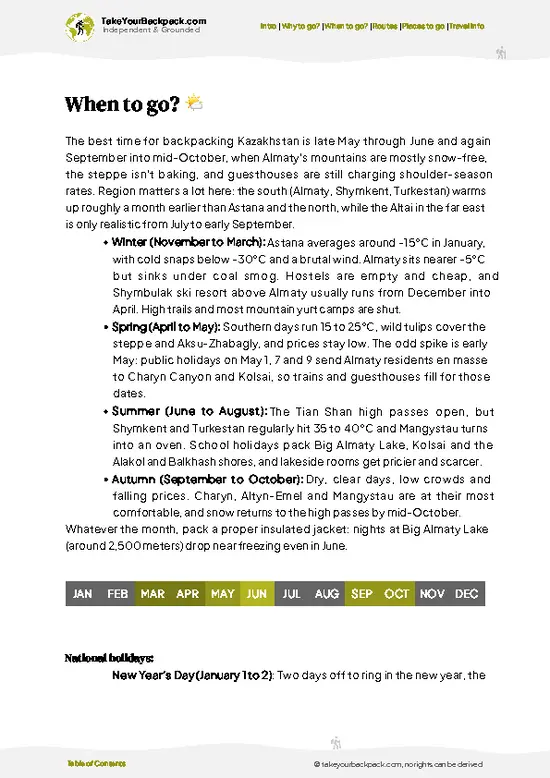
source: climatestotravel.comJANJanuary: below average for travelingFEBFebruary: below average for travelingMARMarch: fair for travelingAPRApril: highly recommended for travelingMAYMay: excellent for travelingJUNJune: excellent for travelingJULJuly: highly recommended for travelingAUGAugust: highly recommended for travelingSEPSeptember: excellent for travelingOCTOctober: highly recommended for travelingNOVNovember: fair for travelingDECDecember: below average for traveling
when-to-go

✈️ The backpacker research shortcutKazakhstan Travel Guide

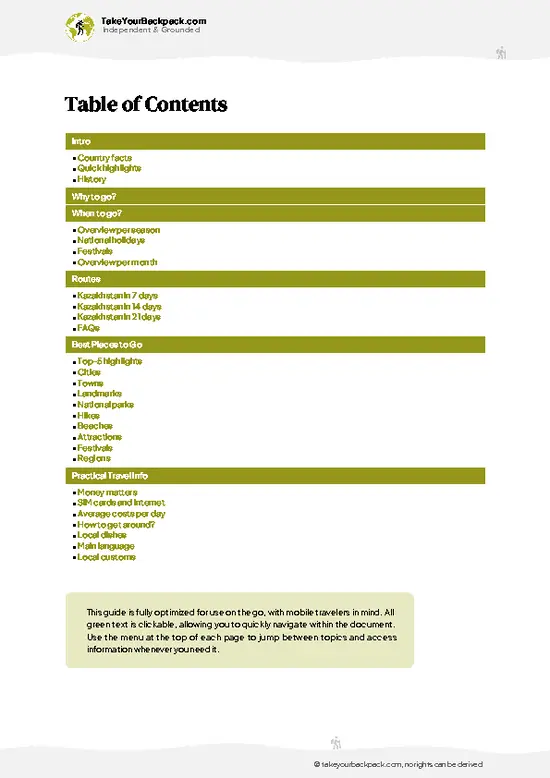
An offline-friendly backpacking guide with optimized travel routes, ranked highlights, transport advice, and the best areas to stay.
example page 0 from our offline Travel Guide for Kazakhstan
example page 1 from our offline Travel Guide for Kazakhstan
example page 2 from our offline Travel Guide for Kazakhstan
example page 3 from our offline Travel Guide for Kazakhstan
example page 4 from our offline Travel Guide for Kazakhstan
example page 5 from our offline Travel Guide for Kazakhstan
example page 6 from our offline Travel Guide for Kazakhstan
example page 7 from our offline Travel Guide for Kazakhstan
The digital guide (445 pages) contains:
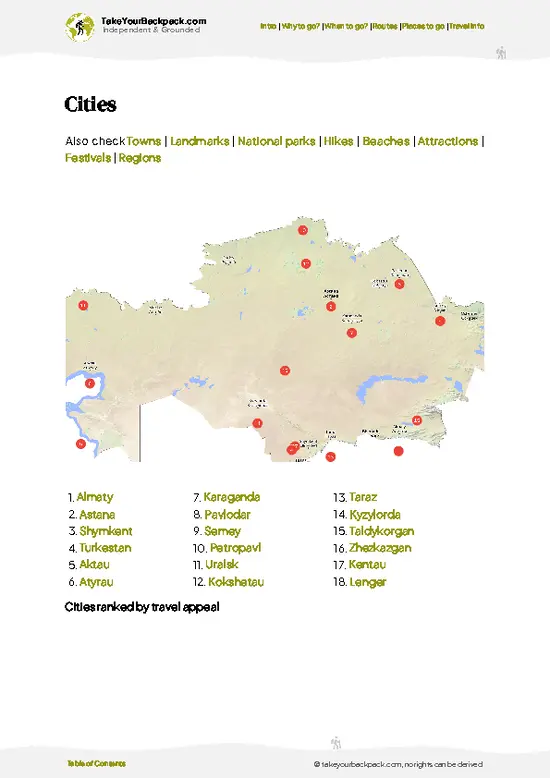
118 highlights, ranked by travel appeal
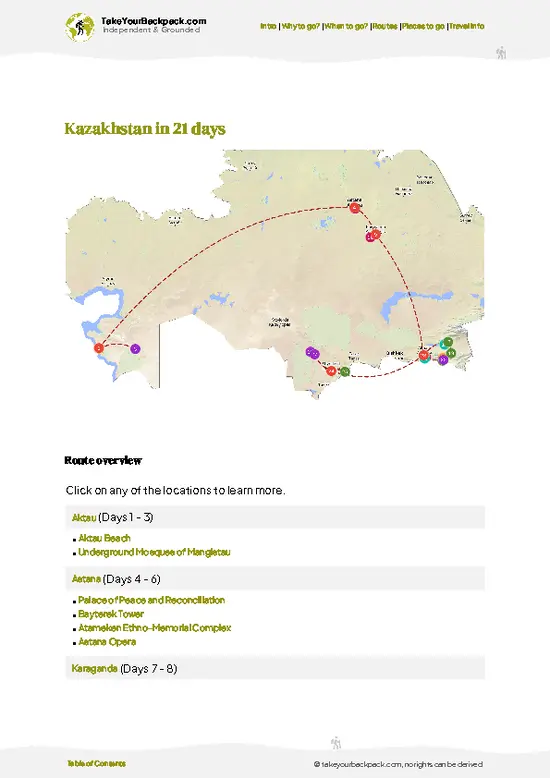
Optimized 7, 14 & 21-day travel routes
Cities, national parks, landmarks, beaches
How to get around
Offline-friendly for travel without Wi-Fi
👉 Click to see all 30+ guide features

📅 Plan smarter in minutes, not weeks
Month by month travel advice
Festivals & national holidays
Budget expectations

🗺️ Go to the right places, skip the overrated ones
Honest pros & cons of destinations
Top hikes, parks & viewpoints
Lesser-known places most travelers miss
Clear “worth it vs skip it” guidance

🛏️ Travel smoothly without rookie mistakes
Best areas to stay
Transport systems explained simply
Common scams & safety advice
SIM cards, money & practical tips

🌍 Understand the country, not just visit it
Culture & traditions
52 Essential phrases & customs
Festivals worth planning around
Traveler-friendly historical context
Insights that make places more meaningful

📱 Built for real travel conditions
Fully downloadable PDF
Works completely offline
Optimized for phone use
Useful in remote areas & buses
Everything in one place
Save weeks of stressful planning
Get instant access to your full guide. 30‑day money-back guarantee.


By proceeding you agree to our terms.
Sent to your inbox immediately after payment • 100% Secure Checkout
Best Backpacking Travel Advisor 2025 tourism awardBest Backpacking
Travel Advisor
2025
What others say about Take Your Backpack Guides:
⭐⭐⭐⭐⭐
Fantastic, amazing amount of information!
⭐⭐⭐⭐⭐
My goodness this is amazing, it's what I've been looking for hats off too you!
⭐⭐⭐⭐⭐
I think this is absolutely BRILLIANT
⭐⭐⭐⭐
Very complete and informative. It's still missing places, but I gotta to commend you
⭐⭐⭐⭐⭐
This is truly amazing, thank you, can't wait to explore it with my kids!
⭐⭐⭐⭐⭐
Awesome resource, thank you!
⭐⭐⭐⭐⭐
This is amazing! Can't wait to explore the ones I haven't seen
⭐⭐⭐⭐
I love this! Well done, great idea.
⭐⭐⭐⭐⭐
Thanks for taking the time to make this gem!
⭐⭐⭐⭐⭐
This might be the best website I've ever seen.
⭐⭐⭐⭐⭐
Congratulations, and thank you so much for your work; it's incredibly valuable.
⭐⭐⭐⭐
In all seriousness I think you did a great job pointing out the important spots
⭐⭐⭐⭐⭐
10/10 very good
⭐⭐⭐⭐⭐
As someone who's only just starting to visit regularly this is awesome, thank you.
⭐⭐⭐⭐
Thank you very much! I'm going to visit my dad, it's going to be very useful!
⭐⭐⭐⭐⭐
This is really cool! We'll be travelling for the first time and this definitely come in handy.
⭐⭐⭐⭐⭐
You are now our minister of culture, congratulations 👨‍💼
⭐⭐⭐⭐⭐
Just wanted to tell you that this is a pearl! Going to follow your recommendations.
⭐⭐⭐⭐⭐
This is so cool. I'll definitely be using the resource for my travels soon.
⭐⭐⭐⭐⭐
This is very impressive! Good work.
⭐⭐⭐⭐⭐
This is an amazing and informative site. Very well done!

🛏️ Where to stay?Choosing the right base

In Shu, the best spot for backpackers is the area around the central train station and the nearby market district. This zone hums with life—early mornings bring the scent of fresh bread and the chatter of vendors setting up stalls. It’s safe, thanks to steady foot traffic and local shopkeepers who keep an eye out. Hostels here are modest but reliable, offering a chance to meet fellow travelers swapping stories over shared meals or steaming cups of chai. Staying here means you’re plugged into the town’s pulse, with easy access to transport and affordable eats just steps away. Other parts of Shu … read more 👉
In Shu, the best spot for backpackers is the area around the central train station and the nearby market district. This zone hums with life—early mornings bring the scent of fresh bread and the chatter of vendors setting up stalls. It’s safe, thanks to steady foot traffic and local shopkeepers who keep an eye out. Hostels here are modest but reliable, offering a chance to meet fellow travelers swapping stories over shared meals or steaming cups of chai. Staying here means you’re plugged into the town’s pulse, with easy access to transport and affordable eats just steps away. Other parts of Shu feel quieter and less connected, which can leave solo travelers isolated. This neighborhood’s mix of practicality and social energy makes it the go-to for budget adventurers who want to feel part of the scene without sacrificing comfort or safety.

🚌 Getting aroundHow to get around Shu

Shu moves at its own rhythm—neither frantic nor sluggish, but a steady pulse that feels like the town itself breathes with the sun and wind. The streets hum with a mix of purposeful locals and curious travelers, where schedules exist but bend easily to the flow of daily life. You won’t find rigid timetables plastered everywhere, but the system is intuitive once you get the hang of it. The scent of fresh bread from corner bakeries mingles with the earthy aroma of the nearby river, guiding you through the town’s veins. This is a place where patience pays off, and a little local savvy turns every transit choice into a smoother, more immersive ride.


  • Walking: Shu’s compact center is best explored on foot. The cobblestone streets and narrow alleys invite slow discovery, with most key spots reachable
read more 👉
Shu moves at its own rhythm—neither frantic nor sluggish, but a steady pulse that feels like the town itself breathes with the sun and wind. The streets hum with a mix of purposeful locals and curious travelers, where schedules exist but bend easily to the flow of daily life. You won’t find rigid timetables plastered everywhere, but the system is intuitive once you get the hang of it. The scent of fresh bread from corner bakeries mingles with the earthy aroma of the nearby river, guiding you through the town’s veins. This is a place where patience pays off, and a little local savvy turns every transit choice into a smoother, more immersive ride.


  • Walking: Shu’s compact center is best explored on foot. The cobblestone streets and narrow alleys invite slow discovery, with most key spots reachable within 20 minutes. Walking costs nothing and lets you soak in the morning light filtering through chestnut trees.


  • Shared Minibuses: These are the backbone of local transit, running from dawn until about 9 PM. Fares hover around a dollar, and while they can get crowded, the windows slide open to catch the breeze and the town’s soundtrack. Routes aren’t posted, but locals will point you right.


  • Electric Scooters: For a quick, budget-friendly buzz, electric scooters are scattered around the main square. They cost about $0.15 per minute and zip you through the flatter parts of town in under 10 minutes. Perfect for when your feet need a break but you want to stay nimble.


  • Bicycle Rentals: Available from small shops near the market, bikes run about $5 per day. They’re sturdy and perfect for venturing beyond the center, where the scent of pine replaces the river’s musk. Early morning rides catch the soft golden light and fewer cars.


  • Local Buses: If you’re heading to the outskirts or neighboring villages, the local buses run on a loose schedule from 6 AM to 7 PM. Tickets cost around $2. They’re slower but offer a window into daily life outside the tourist trail, with stops that feel like a conversation with the countryside.

👛 Costs (as of 30 December 2024)Travel costs and budget guide for Shu

Backpacking in Shu, Kazakhstan, offers a straightforward, no-frills experience where your money stretches well if you know where to look. The town’s modest size and local pace mean you won’t be shelling out for flashy extras, but you’ll want to budget carefully to keep things smooth.
  • Dorm Accommodation: Expect to pay around $8 to $15 per night for a bed in a basic hostel or guesthouse. These places are simple—think clean beds, shared bathrooms, and a quiet atmosphere. The lighting is often soft, with natural light filtering through small windows, giving a calm, almost sleepy vibe to your stay.
  • Meals: Local eateries serve hearty, filling meals for $3 to $7. A typical breakfast might be fresh bread with cheese and tea, while lunch or dinner could be a bowl of lagman (noodle soup) or plov (rice
read more 👉
Backpacking in Shu, Kazakhstan, offers a straightforward, no-frills experience where your money stretches well if you know where to look. The town’s modest size and local pace mean you won’t be shelling out for flashy extras, but you’ll want to budget carefully to keep things smooth.
  • Dorm Accommodation: Expect to pay around $8 to $15 per night for a bed in a basic hostel or guesthouse. These places are simple—think clean beds, shared bathrooms, and a quiet atmosphere. The lighting is often soft, with natural light filtering through small windows, giving a calm, almost sleepy vibe to your stay.
  • Meals: Local eateries serve hearty, filling meals for $3 to $7. A typical breakfast might be fresh bread with cheese and tea, while lunch or dinner could be a bowl of lagman (noodle soup) or plov (rice with meat and vegetables). Street food options like samsa (meat pastries) hover around $1 to $2, perfect for quick bites. The aroma of spices and fresh bread fills the air, grounding you in the local rhythm.
  • Local Transport: Shu is small enough that walking covers most ground, but if you need a ride, minibuses and shared taxis cost about $0.30 to $0.50 per trip. The vehicles are often older models, rattling along dusty streets, windows down to catch the dry steppe air. This is the cheapest way to get around without rushing your pace.
  • Basic Activities/Entry Fees: Shu itself doesn’t have many paid attractions, but if you’re visiting nearby natural sites or museums, budget around $2 to $5 per entry. These places tend to be low-key, with modest facilities and a focus on local history or nature, offering a quiet, contemplative experience rather than tourist spectacle.
  • Miscellaneous Expenses: For essentials like bottled water, snacks, or phone credit, set aside $1 to $3 daily. Water is often sold in small plastic bottles, and the dry climate means you’ll want to stay hydrated. Phone credit is cheap and easy to top up at local kiosks, keeping you connected without breaking the bank.

All told, you’re looking at roughly $15 to $30 per day to cover the basics in Shu. This range keeps you comfortably independent without fuss, letting you soak in the slow, grounded pace of this Kazakh town without unnecessary splurges or surprises.
⚠️ Prices can change and everyone travels differently, so take this as a rough guide. Hope it helps you plan your adventure!

🚌 Day tripsExploring the surroundings

Shu, Kazakhstan, is a fantastic launchpad for day trips that offer a taste of the region’s rugged beauty and rich culture. Here are some standout excursions that every backpacker should consider.

Charyn Canyon
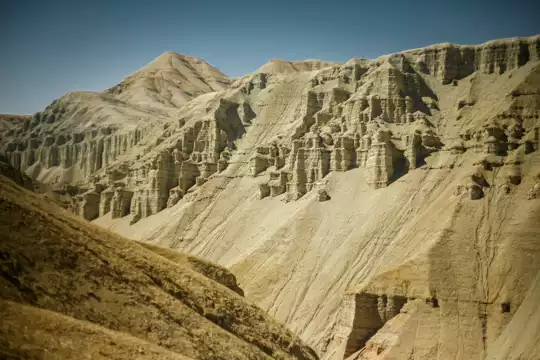
Just a couple of hours from Shu, Charyn Canyon is a breathtaking spectacle of red rock formations that feel like nature’s own art gallery. The hike along the canyon floor is about 3-4 hours round trip, and you’ll be rewarded with views that shift with the light, casting shadows that dance across the cliffs. Bring a packed lunch to enjoy while soaking in the silence, broken only by the wind. Budget around $10 for transport and snacks. Late spring or early fall is ideal, as summer can be scorching. A common mistake? Underestimating the sun—bring plenty of water and sunscreen.


Altyn-Emel read more 👉
Shu, Kazakhstan, is a fantastic launchpad for day trips that offer a taste of the region’s rugged beauty and rich culture. Here are some standout excursions that every backpacker should consider.

Charyn Canyon
Just a couple of hours from Shu, Charyn Canyon is a breathtaking spectacle of red rock formations that feel like nature’s own art gallery. The hike along the canyon floor is about 3-4 hours round trip, and you’ll be rewarded with views that shift with the light, casting shadows that dance across the cliffs. Bring a packed lunch to enjoy while soaking in the silence, broken only by the wind. Budget around $10 for transport and snacks. Late spring or early fall is ideal, as summer can be scorching. A common mistake? Underestimating the sun—bring plenty of water and sunscreen.


Altyn-Emel National Park
This park is a treasure trove of diverse landscapes, from the singing dunes to the lush valleys. It takes about 3 hours to reach the park, and you can spend the day hiking or simply marveling at the unique geological features. Expect to spend around $15 for entry and transport. The best time to visit is in the spring or early autumn when the temperatures are mild. Many first-timers miss the singing dunes—make sure to hike up and listen for the sound that gives them their name.


Turgen Waterfalls
A hidden delight, Turgen Waterfalls is about a 2-hour drive from Shu. The trail to the falls is a gentle ascent, perfect for a leisurely day out. The sound of rushing water is invigorating, and the mist feels refreshing on a hot day. Budget around $12 for transport and snacks. Late spring is particularly lovely, as the falls are at their fullest. A common pitfall is not checking the weather—rain can make the trail slippery, so sturdy shoes are a must.
Want to know what more Kazakhstan offers?
The Kazakhstan Travel Guide describes 118 highlights, from cities to national parks, from beaches to hikes

Get the Travel Guide -

🛡️ SafetyStaying Safe: What Travelers Should Know

Shu, Kazakhstan, is generally safe, but a few practical tips can enhance your experience. Stay aware in crowded markets; pickpockets occasionally lurk where excitement brews. If you’re solo, avoid dimly lit streets after dark; stick to well-traveled areas where the buzz of locals keeps the atmosphere lively.

While scams are rare, be cautious with unofficial taxi drivers; always agree on a fare beforehand to avoid surprises. The occasional street vendor might try to upsell, so know your prices. Carry yourself confidently, engage with locals, and embrace the vibrant culture. This approach not only keeps you safe but enriches your journey.

Other Kazakhstani towns near Shu

Explore more nearby:

  • Kapchagay—reservoir, casinos, summer beaches| 267 km away
  • Karatau—mountain backdrop, chemical plants, mineral springs| 271 km away
  • Balkhash—lakeside industry, copper smelters, split lake| 372 km away

💡 Not sure where to go next?
Create a personalized itinerary for Kazakhstan including Shu and the places that fit your trip.

Generate my itinerary

👉 Discover all towns

Or checkout all Kazakhstan has to offer (think cities, towns, villages, national parks, hikes, beaches, festivals)
Country photo of Kazakhstan

We 💚 feedbackWhat to keep in mind

Shu has a raw, unfiltered vibe that feels like stepping into a living postcard. The best surprise? The warmth of the locals; they’ll invite you in for tea and stories that linger long after you leave. Just a heads-up: the roads can be rough, so take it slow. Embrace the journey; the payoff is worth every bump.

✍️ Help improve this page!
The information on this page is based on in-depth research, insights shared by experienced travelers, and feedback from the local travel community in Kazakhstan. While every effort is made to keep the information accurate and current, conditions can change — so if you spot anything incorrect or outdated, please get in touch.


🙋‍♂️ Give feedback

👋 Meet the founderWho’s Behind Take Your Backpack?

Johan, backpacker and founder of TakeYourBackpackHi, I’m Johan (Netherlands 🇳🇱), the creator of TakeYourBackpack. Over the past decade, I’ve backpacked through 80+ countries across six continents, gaining extensive experience with independent travel, long-term trips, and overland routes.

This site is built on a combination of firsthand travel experience and carefully curated insights from other backpackers. Many guides are based on places I’ve personally visited, while others bring together tips, observations, and practical advice shared by trusted travelers I’ve met along the way.

The goal is to provide realistic, experience-driven guidance — not generic itineraries — so you can explore destinations with better context, clearer expectations, and more confidence.

Get full Kazakhstan guide •
Instant download • 118 highlights • Full Offline guide