v2.webp)
The Ottoman-Era House (Emin Gjiku Complex)
Forget sterile glass cases—this museum is a living, breathing artifact. The main draw is the 18th-century Emin Gjiku house itself, a rare survivor of Ottoman-era Pristina. Every creak of the floorboards and curve of the woodwork tells you more about Kosovo’s real history than any textbook. You’re not just looking at exhibits; you’re walking through the daily life of a wealthy Albanian family, from their private hammam to the guest rooms where deals and gossip flowed. It’s immersive, tactile, and a little bit voyeuristic—in the best way.
Traditional Costumes and Textiles
Instagram loves a good costume, but here’s the real deal: hand-embroidered wedding dresses, men’s vests bristling with silver thread, and everyday wear that’s anything but ordinary. … read more 👉
Forget sterile glass cases—this museum is a living, breathing artifact. The main draw is the 18th-century Emin Gjiku house itself, a rare survivor of Ottoman-era Pristina. Every creak of the floorboards and curve of the woodwork tells you more about Kosovo’s real history than any textbook. You’re not just looking at exhibits; you’re walking through the daily life of a wealthy Albanian family, from their private hammam to the guest rooms where deals and gossip flowed. It’s immersive, tactile, and a little bit voyeuristic—in the best way.
Traditional Costumes and Textiles
Instagram loves a good costume, but here’s the real deal: hand-embroidered wedding dresses, men’s vests bristling with silver thread, and everyday wear that’s anything but ordinary. … read more 👉
The Ottoman-Era House (Emin Gjiku Complex)
Forget sterile glass cases—this museum is a living, breathing artifact. The main draw is the 18th-century Emin Gjiku house itself, a rare survivor of Ottoman-era Pristina. Every creak of the floorboards and curve of the woodwork tells you more about Kosovo’s real history than any textbook. You’re not just looking at exhibits; you’re walking through the daily life of a wealthy Albanian family, from their private hammam to the guest rooms where deals and gossip flowed. It’s immersive, tactile, and a little bit voyeuristic—in the best way.
Traditional Costumes and Textiles
Instagram loves a good costume, but here’s the real deal: hand-embroidered wedding dresses, men’s vests bristling with silver thread, and everyday wear that’s anything but ordinary. These aren’t costumes for tourists—they’re the actual clothes people wore to mark life’s biggest moments. You’ll see the difference in the details: faded dyes, intricate beadwork, and the weight of fabric that was made to last generations. It’s a crash course in identity, pride, and the kind of craftsmanship that’s almost extinct.
Ethnographic Artifacts: Tools, Weapons, and Household Items
This isn’t the usual parade of “old stuff behind glass.” The museum’s collection of tools, weapons, and household gear is raw, practical, and sometimes a little brutal. You’ll find hand-forged axes, delicate coffee sets, and farming implements that look like they could still till a field. Each object is a window into how people survived, celebrated, and fought for their place in the world. There’s no sugarcoating here—just the honest, sometimes gritty reality of Balkan life.
The Tower House (Kulla)
If you want a taste of Kosovo’s wild side, step into the kulla—a fortified stone tower built for defense and family feuds. It’s part bunker, part family home, and all attitude. The thick walls and tiny windows aren’t just for show; they’re a reminder that life here was never easy, and hospitality sometimes meant keeping a rifle close at hand. Climb the stairs, feel the chill, and imagine what it took to keep your family safe in a world where borders and loyalties shifted overnight. This one’s my personal favorite—there’s nothing else like it in the Balkans.
Guided Storytelling (When Available)
Skip the audio guide and catch a real human if you can. The museum’s staff and occasional volunteers are passionate, opinionated, and refreshingly blunt about Kosovo’s tangled history. They’ll point out details you’d miss, share family stories, and—if you’re lucky—debunk a few myths about what it means to be Kosovar. It’s the difference between reading a Wikipedia page and having coffee with someone’s grandmother. If you want the real Kosovo, this is where you’ll find it.
Forget sterile glass cases—this museum is a living, breathing artifact. The main draw is the 18th-century Emin Gjiku house itself, a rare survivor of Ottoman-era Pristina. Every creak of the floorboards and curve of the woodwork tells you more about Kosovo’s real history than any textbook. You’re not just looking at exhibits; you’re walking through the daily life of a wealthy Albanian family, from their private hammam to the guest rooms where deals and gossip flowed. It’s immersive, tactile, and a little bit voyeuristic—in the best way.
Traditional Costumes and Textiles
Instagram loves a good costume, but here’s the real deal: hand-embroidered wedding dresses, men’s vests bristling with silver thread, and everyday wear that’s anything but ordinary. These aren’t costumes for tourists—they’re the actual clothes people wore to mark life’s biggest moments. You’ll see the difference in the details: faded dyes, intricate beadwork, and the weight of fabric that was made to last generations. It’s a crash course in identity, pride, and the kind of craftsmanship that’s almost extinct.
Ethnographic Artifacts: Tools, Weapons, and Household Items
This isn’t the usual parade of “old stuff behind glass.” The museum’s collection of tools, weapons, and household gear is raw, practical, and sometimes a little brutal. You’ll find hand-forged axes, delicate coffee sets, and farming implements that look like they could still till a field. Each object is a window into how people survived, celebrated, and fought for their place in the world. There’s no sugarcoating here—just the honest, sometimes gritty reality of Balkan life.
The Tower House (Kulla)
If you want a taste of Kosovo’s wild side, step into the kulla—a fortified stone tower built for defense and family feuds. It’s part bunker, part family home, and all attitude. The thick walls and tiny windows aren’t just for show; they’re a reminder that life here was never easy, and hospitality sometimes meant keeping a rifle close at hand. Climb the stairs, feel the chill, and imagine what it took to keep your family safe in a world where borders and loyalties shifted overnight. This one’s my personal favorite—there’s nothing else like it in the Balkans.
Guided Storytelling (When Available)
Skip the audio guide and catch a real human if you can. The museum’s staff and occasional volunteers are passionate, opinionated, and refreshingly blunt about Kosovo’s tangled history. They’ll point out details you’d miss, share family stories, and—if you’re lucky—debunk a few myths about what it means to be Kosovar. It’s the difference between reading a Wikipedia page and having coffee with someone’s grandmother. If you want the real Kosovo, this is where you’ll find it.
Spotted a mistake or missing something? Contact us.

From Skopje: Kosovo in a Day – Prishtina, Monastery & Bears

Discover Peja and Rugova Half-Day Tour

Peja Tour, Rugova Gorge and Drini waterfalls (combined)

Discover Highlights of Kosovo in 4 days tour!

Private Prizren Walking Tour with Local Guide – History & Culture

Prizren & Prishtina Private Tour – Culture, Views & History

Day tour of Prizren from Pristina; Semi - Private

Kosovo Tour One Day - combined

Pristina Airport Transfer

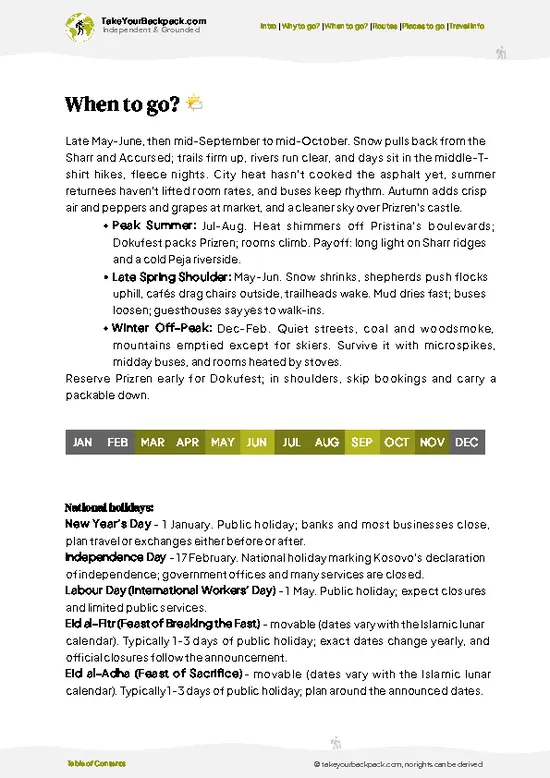


 Best Backpacking
.jpg) Hi, I’m Johan (Netherlands 🇳🇱), the creator of TakeYourBackpack. Over the past decade, I’ve backpacked through 80+ countries across six continents, gaining extensive experience with independent travel, long-term trips, and overland routes.
Hi, I’m Johan (Netherlands 🇳🇱), the creator of TakeYourBackpack. Over the past decade, I’ve backpacked through 80+ countries across six continents, gaining extensive experience with independent travel, long-term trips, and overland routes.