×

Kyrgyzstan🇰🇬 | festivalsOimo FestivalCarved ornament, textiles, ethnic design | things to do and best time to go

Explore Nomad GamesExplore World Nomad Games

Backpacking in Oimo
🏆 Top pickfestival ranked #3
By Johan Kruseman 🇳🇱 | Updated October 15, 2026

Look closely at the edge of a shyrdak and you’ll see that the pattern is a mirror pair. Two layers of contrasting felt are cut together and swapped, so one rug’s red ram’s horn is its twin’s white one. Oimo Festival, named for the Kyrgyz word for ornament, celebrates that craft in Bishkek, in northern Kyrgyzstan. Expect felt, embroidery and artisans working in front of you, with local families, designers and curious travelers instead of a party crowd. I once watched a woman beat a wool mat with a bundle of reeds, and the air smelled of warm lanolin and steam. Go early, carry small som notes, and walk a full lap before buying, since the first stall rarely has the best price. Card machines fail often, so bring cash. Confirm the venue the week before, because dates and locations shift.

Discover everything you want to know in the 📖 Kyrgyzstan Travel Guide.


example page 0 from our offline Travel Guide for Kyrgyzstan
example page 1 from our offline Travel Guide for Kyrgyzstan
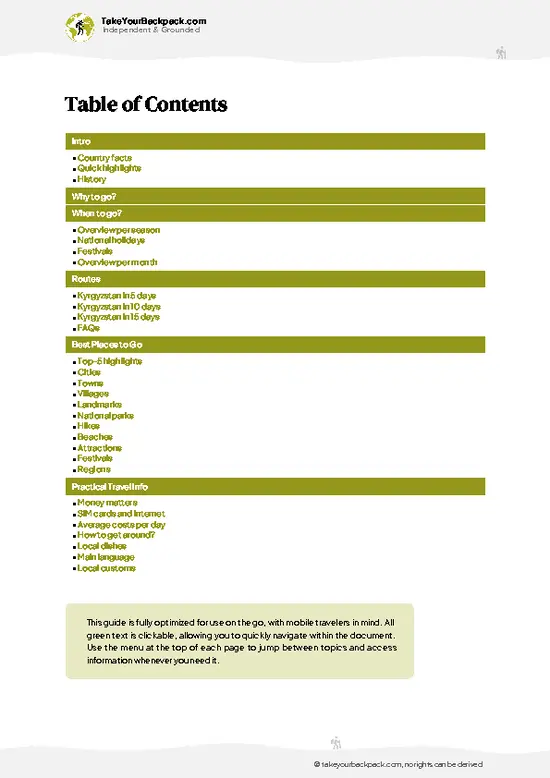
example page 2 from our offline Travel Guide for Kyrgyzstan
example page 3 from our offline Travel Guide for Kyrgyzstan
example page 4 from our offline Travel Guide for Kyrgyzstan
example page 5 from our offline Travel Guide for Kyrgyzstan
example page 6 from our offline Travel Guide for Kyrgyzstan
example page 7 from our offline Travel Guide for Kyrgyzstan
Loading the map 🌍
CLICK TO FILTER
cities
towns
villages
landmarks
national parks
hikes
beaches
attractions
festivals
regions
SHOW COUNTRY’S BESTSHOW ALL

✨ Why go?
Ranked #3 festival in Kyrgyzstan
What makes this festival worth celebrating

Backpackers build a Bishkek stopover around this event because it gives you the craft knowledge that makes the rest of Kyrgyzstan make sense. Once you’ve watched felt being rolled and cut, the yurt interiors you meet at Song-Kol or Kochkor stop being decoration and become something you can read. The social energy is relaxed. Makers like to talk, and a question about a motif often turns into a ten-minute lesson, sometimes with tea. It is a temporary community of weavers, designers and locals who simply show up to look. Costs are low compared with big music festivals. Entry is usually modest or free, a snack costs a few dollars, and a small embroidered item can be bought for less than a hostel dorm bed. It also fits longer routes neatly. Bishkek is the arrival hub, so you can attend before heading … read more 👉
Backpackers build a Bishkek stopover around this event because it gives you the craft knowledge that makes the rest of Kyrgyzstan make sense. Once you’ve watched felt being rolled and cut, the yurt interiors you meet at Song-Kol or Kochkor stop being decoration and become something you can read. The social energy is relaxed. Makers like to talk, and a question about a motif often turns into a ten-minute lesson, sometimes with tea. It is a temporary community of weavers, designers and locals who simply show up to look. Costs are low compared with big music festivals. Entry is usually modest or free, a snack costs a few dollars, and a small embroidered item can be bought for less than a hostel dorm bed. It also fits longer routes neatly. Bishkek is the arrival hub, so you can attend before heading to Issyk-Kul, or buy gifts here on your way out. Buying directly from makers means your money goes to the person who made the piece.

💡 HighlightsKey sights and experiences for travelers

  1. Shyrdak patterns: These are the pieced felt rugs where two colors are cut as mirror images and stitched together. Seeing a maker work the curves with a sharp blade explains why a single rug takes days. Look for the koshkar muyuz, the ram’s horn motif, which appears in many forms.
  2. Ala-kiyiz felt: Unlike a shyrdak, an ala-kiyiz is made by pressing dyed wool into the felt itself and rolling it up with a reed mat. The designs look softer and blurrier, and watching the rolling and pounding shows how much muscle goes into one piece.
  3. Ornamental embroidery: Kyrgyz needlework covers wall hangings, cushion covers and clothing, often in dense floral and geometric patterns. Ask makers about the tush kyiz, a traditional embroidered wall hanging, and you’ll often get the story of who it was made for.
  4. Live
… read more 👉
  1. Shyrdak patterns: These are the pieced felt rugs where two colors are cut as mirror images and stitched together. Seeing a maker work the curves with a sharp blade explains why a single rug takes days. Look for the koshkar muyuz, the ram’s horn motif, which appears in many forms.
  2. Ala-kiyiz felt: Unlike a shyrdak, an ala-kiyiz is made by pressing dyed wool into the felt itself and rolling it up with a reed mat. The designs look softer and blurrier, and watching the rolling and pounding shows how much muscle goes into one piece.
  3. Ornamental embroidery: Kyrgyz needlework covers wall hangings, cushion covers and clothing, often in dense floral and geometric patterns. Ask makers about the tush kyiz, a traditional embroidered wall hanging, and you’ll often get the story of who it was made for.
  4. Live artisan demonstrations: Hands-on sessions are the reason to attend instead of just browsing a shop. You see raw wool become felt, and many makers let visitors try a step. Arrive in the morning, when the demonstrations are fresher and the crowds are thinner.
  5. Buying direct from makers: Prices can be negotiated politely, and a small coaster or bag is an easier souvenir to carry than a rug. Ask about the wool and dyes. Handmade pieces usually cost noticeably more than the machine-made versions sold in the markets.
I would pick the live demonstrations first. Once you have watched wool become a mat, every other item on the list makes more sense, and the maker is right there to answer questions.
Spotted a mistake or missing something? Contact us.

Things to do near Oimo Festival

Ratings based on Tripadvisor reviews. When you book through this link, you support our work at no extra cost to you.

🌤️ When to go?When is the celebration of Oimo Festival?

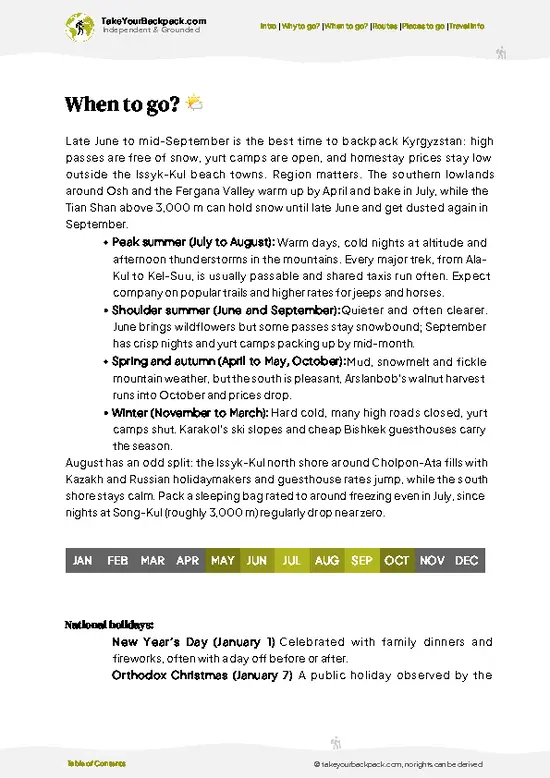
The Oimo Festival is usually held in Bishkek in late summer or early autumn (August to September), with the exact dates set by the organizers each year.
  • Late August: Days reach 28 to 34°C (82 to 93°F) and nights drop to 14 to 18°C (57 to 64°F). Daylight lasts about 13.5 hours, so outdoor sets run in warm evening light. Hotel prices in Bishkek rise modestly on festival weekends.
  • September: Highs of 20 to 27°C (68 to 81°F) and lows of 8 to 14°C (46 to 57°F) make daytime stages comfortable. Daylight shrinks to roughly 12 hours, and crowds thin as the summer holiday rush ends.
  • Shoulder Weeks Around the Festival: Add a few days for Ala-Archa gorge hikes or a trip to Issyk-Kul while the weather is dry and stable. Shared taxis and guesthouses are easier to book here than in July.
Book your bed once the … read more 👉
The Oimo Festival is usually held in Bishkek in late summer or early autumn (August to September), with the exact dates set by the organizers each year.
  • Late August: Days reach 28 to 34°C (82 to 93°F) and nights drop to 14 to 18°C (57 to 64°F). Daylight lasts about 13.5 hours, so outdoor sets run in warm evening light. Hotel prices in Bishkek rise modestly on festival weekends.
  • September: Highs of 20 to 27°C (68 to 81°F) and lows of 8 to 14°C (46 to 57°F) make daytime stages comfortable. Daylight shrinks to roughly 12 hours, and crowds thin as the summer holiday rush ends.
  • Shoulder Weeks Around the Festival: Add a few days for Ala-Archa gorge hikes or a trip to Issyk-Kul while the weather is dry and stable. Shared taxis and guesthouses are easier to book here than in July.
Book your bed once the dates are announced, since cheap central rooms go first on festival weekends.


source: climatestotravel.comJANJanuary: not recommended for travelingFEBFebruary: not recommended for travelingMARMarch: not recommended for travelingAPRApril: not recommended for travelingMAYMay: not recommended for travelingJUNJune: not recommended for travelingJULJuly: not recommended for travelingAUGAugust: not recommended for travelingSEPSeptember: excellent for travelingOCTOctober: not recommended for travelingNOVNovember: not recommended for travelingDECDecember: not recommended for traveling

✈️ The backpacker research shortcutKyrgyzstan Travel Guide

An offline-friendly backpacking guide with optimized travel routes, ranked highlights, transport advice, and the best areas to stay.
example page 0 from our offline Travel Guide for Kyrgyzstan
example page 1 from our offline Travel Guide for Kyrgyzstan
example page 2 from our offline Travel Guide for Kyrgyzstan
example page 3 from our offline Travel Guide for Kyrgyzstan
example page 4 from our offline Travel Guide for Kyrgyzstan
example page 5 from our offline Travel Guide for Kyrgyzstan
example page 6 from our offline Travel Guide for Kyrgyzstan
example page 7 from our offline Travel Guide for Kyrgyzstan
The digital guide (242 pages) contains:
✅ 73 highlights, ranked by travel appeal
✅ Optimized 5, 10 & 15-day travel routes
✅ Cities, national parks, landmarks, beaches
✅ How to get around
✅ Offline-friendly for travel without Wi-Fi
👉 Click to see all 30+ guide features

📅 Plan smarter in minutes, not weeks
✅ Month by month travel advice
✅ Festivals & national holidays
✅ Budget expectations

🗺️ Go to the right places, skip the overrated ones
✅ Honest pros & cons of destinations
✅ Top hikes, parks & viewpoints
✅ Lesser-known places most travelers miss
✅ Clear “worth it vs skip it” guidance

🛏️ Travel smoothly without rookie mistakes
✅ Best areas to stay
✅ Transport systems explained simply
✅ Common scams & safety advice
✅ SIM cards, money & practical tips

🌍 Understand the country, not just visit it
✅ Culture & traditions
✅ 52 Essential phrases & customs
✅ Festivals worth planning around
✅ Traveler-friendly historical context
✅ Insights that make places more meaningful

📱 Built for real travel conditions
✅ Fully downloadable PDF
✅ Works completely offline
✅ Optimized for phone use
✅ Useful in remote areas & buses
✅ Everything in one place
Stop searching, start planning
Get instant access to your full guide. 30‑day money-back guarantee.
+ Add another guide for just

By proceeding you agree to our terms.
Sent to your inbox immediately after payment • 100% Secure Checkout
Best Backpacking Travel Advisor 2025 tourism awardBest Backpacking
Travel Advisor
2025
What others say about Take Your Backpack Guides:
⭐⭐⭐⭐⭐
Fantastic, amazing amount of information!
⭐⭐⭐⭐⭐
My goodness this is amazing, it's what I've been looking for hats off too you!
⭐⭐⭐⭐⭐
I think this is absolutely BRILLIANT
⭐⭐⭐⭐
Very complete and informative. It's still missing places, but I gotta to commend you
⭐⭐⭐⭐⭐
This is truly amazing, thank you, can't wait to explore it with my kids!
⭐⭐⭐⭐⭐
Awesome resource, thank you!
⭐⭐⭐⭐⭐
This is amazing! Can't wait to explore the ones I haven't seen
⭐⭐⭐⭐
I love this! Well done, great idea.
⭐⭐⭐⭐⭐
Thanks for taking the time to make this gem!
⭐⭐⭐⭐⭐
This might be the best website I've ever seen.
⭐⭐⭐⭐⭐
Congratulations, and thank you so much for your work; it's incredibly valuable.
⭐⭐⭐⭐
In all seriousness I think you did a great job pointing out the important spots
⭐⭐⭐⭐⭐
10/10 very good
⭐⭐⭐⭐⭐
As someone who's only just starting to visit regularly this is awesome, thank you.
⭐⭐⭐⭐
Thank you very much! I'm going to visit my dad, it's going to be very useful!
⭐⭐⭐⭐⭐
This is really cool! We'll be travelling for the first time and this definitely come in handy.
⭐⭐⭐⭐⭐
You are now our minister of culture, congratulations 👨‍💼
⭐⭐⭐⭐⭐
Just wanted to tell you that this is a pearl! Going to follow your recommendations.
⭐⭐⭐⭐⭐
This is so cool. I'll definitely be using the resource for my travels soon.
⭐⭐⭐⭐⭐
This is very impressive! Good work.
⭐⭐⭐⭐⭐
This is an amazing and informative site. Very well done!

🛏️ Where to stay?How to pick the right area

Central Bishkek, within a 15-minute walk of Ala-Too Square, is the best base for the Oimo Festival. It puts you close to the felt and embroidery demonstrations, and you can reach everything by foot or a short marshrutka ride.
The streets around Chui Avenue and Erkindik Boulevard hold the highest concentration of backpacker-friendly guesthouses and dorm-style beds. This is where solo travelers meet each other, and shared kitchens and common rooms make it easy to find someone to join you at the festival. Prices for a dorm bed typically run US$8 to 15 a night. The area is well lit, has plenty of cafes … read more 👉
Central Bishkek, within a 15-minute walk of Ala-Too Square, is the best base for the Oimo Festival. It puts you close to the felt and embroidery demonstrations, and you can reach everything by foot or a short marshrutka ride.
The streets around Chui Avenue and Erkindik Boulevard hold the highest concentration of backpacker-friendly guesthouses and dorm-style beds. This is where solo travelers meet each other, and shared kitchens and common rooms make it easy to find someone to join you at the festival. Prices for a dorm bed typically run US$8 to 15 a night. The area is well lit, has plenty of cafes open late, and sees regular foot traffic, so walking back after dark feels comfortable.
The area near Osh Bazaar is a second option for travelers who want to spend less. Rooms and homestays here often cost US$10 to 20 for a private room, and you sit right next to the wool, felt and fabric stalls that feed local craft work. It is noisier and busier, so keep an eye on your bag in the market crowds.
If you prefer a quieter pace, look at the leafy residential streets south of Chui Avenue. Family-run homestays there give you home-cooked breakfast and a chance to chat with locals about felt traditions. Taxis from there to the festival cost only a couple of dollars.

👛 Costs (as of 15 October 2026)Typical daily expenses

Plan on roughly US$25 to 60 a day for the Oimo Festival, including a Bishkek bed and meals, since entry is usually low-cost or free.
CategoryBudget RangeLocal Reality
Festival ticketsFree to US$3Craft events in Bishkek commonly have free or token entry. Hands-on workshops can cost US$5 to 15 extra.
AccommodationUS$8 to 35Dorm beds run US$8 to 15, private guesthouse rooms US$20 to 35. Prices rise in July and August.
Local transportUS$1 to 6Marshrutkas and buses cost about 15 to 20 KGS per ride. Yandex Go taxis across town cost US$1.50 to 4.
Food & drinksUS$8 to 20Samsa costs about US$0.50 to 1. A canteen lunch is US$3 to 6, and a cafe dinner US$7 to 12. Tea is often under US$1.
Miscellaneous expensesUS$5 to 30Small felt items such as coasters or ornaments run US$3 to 15. Larger shyrdak rugs cost
… read more 👉
Plan on roughly US$25 to 60 a day for the Oimo Festival, including a Bishkek bed and meals, since entry is usually low-cost or free.
CategoryBudget RangeLocal Reality
Festival ticketsFree to US$3Craft events in Bishkek commonly have free or token entry. Hands-on workshops can cost US$5 to 15 extra.
AccommodationUS$8 to 35Dorm beds run US$8 to 15, private guesthouse rooms US$20 to 35. Prices rise in July and August.
Local transportUS$1 to 6Marshrutkas and buses cost about 15 to 20 KGS per ride. Yandex Go taxis across town cost US$1.50 to 4.
Food & drinksUS$8 to 20Samsa costs about US$0.50 to 1. A canteen lunch is US$3 to 6, and a cafe dinner US$7 to 12. Tea is often under US$1.
Miscellaneous expensesUS$5 to 30Small felt items such as coasters or ornaments run US$3 to 15. Larger shyrdak rugs cost US$100 and up. SIM data is about US$3 to 6 for a week.
Carry soms in cash for stalls and small purchases, as ATMs in central Bishkek are plentiful but many craft vendors do not take cards.
⚠️ Prices can change and everyone travels differently, so take this as a rough guide. Hope it helps you plan your adventure!

🍲 FoodEating & Drinking in Oimo

Expect the food at the Oimo Festival to follow Kyrgyz craft-fair habits: simple, hearty and eaten standing or sitting on a bench between demonstrations.
Look for samsa baked in clay ovens, flaky and filled with lamb and onion, usually 30 to 50 KGS each. Manty (steamed dumplings) and lagman (hand-pulled noodles in a spiced broth) are filling lunch options at nearby stalls. The boorsok, golden fried dough puffs, are an easy snack and fit the felt-and-textile theme as a traditional hospitality food.
For drinks, try kymyz (fermented mare’s milk), sour and fizzy, or maksym, a cool grain drink that is gentler on first-timers. Chai comes in small bowls and refills are normal. On a warm day, a cup of shoro is the most refreshing choice.
For authenticity, ask an artisan what they eat during long working … read more 👉
Expect the food at the Oimo Festival to follow Kyrgyz craft-fair habits: simple, hearty and eaten standing or sitting on a bench between demonstrations.
Look for samsa baked in clay ovens, flaky and filled with lamb and onion, usually 30 to 50 KGS each. Manty (steamed dumplings) and lagman (hand-pulled noodles in a spiced broth) are filling lunch options at nearby stalls. The boorsok, golden fried dough puffs, are an easy snack and fit the felt-and-textile theme as a traditional hospitality food.
For drinks, try kymyz (fermented mare’s milk), sour and fizzy, or maksym, a cool grain drink that is gentler on first-timers. Chai comes in small bowls and refills are normal. On a warm day, a cup of shoro is the most refreshing choice.
For authenticity, ask an artisan what they eat during long working days. Many will point you to a family-style meal, and you may get an invitation to share bread, which is always broken by hand and never cut with a knife.
Carry cash in soms, since small stalls rarely take cards. Portions are generous, so share a plate if you want to sample more. Queues form quickly at lunchtime, so eat before noon or after 2 pm.

FAQCommon questions from travelers

Oimo Festival has no fixed calendar date, and organizers usually announce each edition on social media a few weeks beforehand. It is held in Bishkek, the capital, which most travelers reach through Manas International Airport, about 30 km (30 to 45 minutes) from the center. Check the venue and opening hours the week before you go, and plan to arrive in the morning when artisans are at their freshest.
Entry is usually free or low-cost, but plan on roughly 500 to 2,000 Kyrgyz som (about US$6 to 24) for snacks, transport and small purchases. Small embroidered pieces and felt accessories commonly cost from about 300 to 3,000 som, while a full shyrdak rug can run into hundreds of dollars. A taxi within Bishkek via apps like Yandex Go typically costs 150 to 400 som, and a marshrutka ride is much cheaper.
Tickets are generally not required in advance for a craft-focused event like this, and you can usually pay at the door if there is any fee. Check the organizers’ social media for each edition, since format and entry rules can change. Carry cash in som because card machines are unreliable, and arrive before midday if you want space at the demonstration tables.
⚠️ Things can change over time, so always validate details locally before you go.

Other Kyrgyz festivals near Oimo

Explore more nearby:


💡 Not sure where to go next?
Create a personalized itinerary for Kyrgyzstan including Oimo and the places that fit your trip.

Generate my itinerary

👉 Discover all festivals

Or checkout all Kyrgyzstan has to offer (think cities, towns, villages, national parks, hikes, beaches, festivals)
Country photo of Kyrgyzstan

We 💚 feedbackFinal thoughts on celebrating the Oimo

Oimo is worth a morning in Bishkek because you leave knowing how to read a Kyrgyz rug, and you can buy from the person who made it. It won’t suit anyone chasing nightlife or big stages. The event is quiet and craft-focused, and if textiles bore you, you’ll finish in an hour. Go curious, bring cash, and pack light.

✈️ When did I visit Kyrgyzstan?
I started my 1.5 year travel around the world trip in June 2015 in Kyrgyzstan.

✍️ Help improve this page!
The information on this page is based on my own backpacking experience in Kyrgyzstan, supplemented with up-to-date research and feedback from other travelers. Travel details can change, so if you notice anything outdated or incomplete, feel free to let me know.


🙋‍♂️ Give feedback

👋 Meet the founderWho’s Behind Take Your Backpack?

Johan, backpacker and founder of TakeYourBackpackHi, I’m Johan (Netherlands 🇳🇱), the creator of TakeYourBackpack. Over the past 3 decades, I’ve backpacked through 90+ countries across six continents, gaining extensive experience with independent travel, long-term trips, and overland routes.

This site is built on a combination of firsthand travel experience and carefully curated insights from other backpackers. Many guides are based on places I’ve personally visited, while others bring together tips, observations, and practical advice shared by trusted travelers I’ve met along the way.

The goal is to provide realistic, experience-driven guidance — not generic itineraries — so you can explore destinations with better context, clearer expectations, and more confidence.