×

Lebanon🇱🇧 | regionsOuadi Qadisha (the Holy Valley)cliffside monasteries, cedar groves, deep gorges | things to do and best time to go

Explore Ramlieh Nature ReserveExplore Bcharre

Backpacking in Ouadi Qadisha (the Holy Valley)
UNESCO World Heritage site
🏆 Top pickregion ranked #1
By Johan Kruseman 🇳🇱 | Updated May 24, 2026

Your boots crunch on frost-hardened soil, breath fogging in the thin morning air, while church bells echo off cliffs that glow pink with first light. Somewhere below, a river murmurs under a tangle of walnut trees and stone terraces, and the smell of woodsmoke drifts up from a monastery clinging to the rock like it’s trying not to fall. This is Ouadi Qadisha, the Holy Valley, carved into the mountains of northern Lebanon above Tripoli and Bsharri.

For backpackers, it’s Lebanon on “quiet mode”: huge limestone walls, cave monasteries, cedar forests up the road, and barely a souvenir stand in sight. It’s cheaper than Beirut’s coast, but not dirt-cheap; guesthouses and rides between scattered villages add up, especially since public transport is thin and hitchhiking or shared taxis become your default. The vibe is devout, rural, and slow, more coffee-with-shepherds than cocktails-with-DJs, and way less showy than nearby coastal hubs. If you want nightlife, stay down by the sea; if you want to walk all day, eat home cooking, and sleep under cliffs full of history, you come here.

Discover everything you want to know in the 📖 Lebanon Travel Guide.
Safety warning

The current risk level for Lebanon is high. Check the advice before going.


Get your Lebanon guide
89 ranked highlights, routes & tips, works offline (331 pages)
Loading the map 🌍
CLICK TO FILTER
cities
towns
landmarks
national parks
hikes
beaches
attractions
festivals
regions
SHOW COUNTRY’S BESTSHOW ALL

✨ Why go?
Ranked #1 region in Lebanon
What sets this place apart

In the heart of Lebanon, Ouadi Qadisha (the Holy Valley) is a backpacker’s playground, and here’s why you’ll want to linger. First off, the variety of landscapes is jaw-dropping. You’ve got rugged mountains, lush valleys, and ancient monasteries all within a stone’s throw. This means you can soak in diverse experiences without the hassle of constant relocation.

Transport is a breeze. You can hop on a local bus or even hitch a ride with friendly locals, giving you that flexibility to explore at your own pace. Want to hike in the morning and sip coffee in a quaint village by noon? Go for it.

The real magic lies in the blend of nature and culture. You can trek through breathtaking trails and then dive into the rich history of the area, visiting centuries-old churches and learning about the … read more 👉
In the heart of Lebanon, Ouadi Qadisha (the Holy Valley) is a backpacker’s playground, and here’s why you’ll want to linger. First off, the variety of landscapes is jaw-dropping. You’ve got rugged mountains, lush valleys, and ancient monasteries all within a stone’s throw. This means you can soak in diverse experiences without the hassle of constant relocation.

Transport is a breeze. You can hop on a local bus or even hitch a ride with friendly locals, giving you that flexibility to explore at your own pace. Want to hike in the morning and sip coffee in a quaint village by noon? Go for it.

The real magic lies in the blend of nature and culture. You can trek through breathtaking trails and then dive into the rich history of the area, visiting centuries-old churches and learning about the local way of life. This is slow travel at its finest, allowing you to connect deeply with the land and its people.

So, if you’re after high-value experiences that don’t rush you, Ouadi Qadisha is where you’ll find your rhythm.
Want to include Ouadi Qadisha (the Holy Valley) in your Lebanon route?
Create a personalized Lebanon itinerary that includes Ouadi Qadisha (the Holy Valley) and the places that fit your trip — based on your travel style, budget, and available time. Get your route in seconds.

Generate my trip

💡 HighlightsPlaces and moments you shouldn't skip

  1. Deir Qannoubine (Qannoubine Monastery) — The historic heart of Maronite monastic life tucked into the valley’s cliffs. Stone cells, ancient manuscripts and cliffside architecture give a real sense of how monks carved a spiritual world out of escarpments; visiting feels like walking into 1,000 years of continuous devotion.
  2. Deir Qozhaya (Monastery of St. Anthony) — One of the valley’s oldest working monasteries, accessible by a dramatic descent. It’s famous for its old printing tradition, small museum-like rooms and an atmospheric library — a rare blend of living religion and tangible history right on the gorge edge.
  3. Rock-cut Hermitages and Cliff Churches — Scattered all along the gorge are tiny, hand-carved chapels and monk cells wedged into vertical rock faces. Some have fragments of frescoes,
read more 👉
  1. Deir Qannoubine (Qannoubine Monastery) — The historic heart of Maronite monastic life tucked into the valley’s cliffs. Stone cells, ancient manuscripts and cliffside architecture give a real sense of how monks carved a spiritual world out of escarpments; visiting feels like walking into 1,000 years of continuous devotion.
  2. Deir Qozhaya (Monastery of St. Anthony) — One of the valley’s oldest working monasteries, accessible by a dramatic descent. It’s famous for its old printing tradition, small museum-like rooms and an atmospheric library — a rare blend of living religion and tangible history right on the gorge edge.
  3. Rock-cut Hermitages and Cliff Churches — Scattered all along the gorge are tiny, hand-carved chapels and monk cells wedged into vertical rock faces. Some have fragments of frescoes, others simple niches and ropes for access; there’s nothing quite like crawling into a cliff niche and imagining the solitude of the hermits who lived there.
  4. Mar Lichaa Hermitage (Deir Mar Lichaa) — Hidden gem: a lesser-known cliff monastery often missed by buses and tour groups. Small, remote and quiet, it rewards the visitor with close-up cliff architecture and the sense of having the valley to yourself for an hour or two.
  5. Mar Elisha Monastery — Perched above the gorge with commanding views, this monastery is important historically and visually: stone staircases, old chapels and terraces that frame long vistas down into the valley — great for sunset light and photos without crowds.
  6. Kadisha Gorge river walk and natural pools — The valley floor has a cool microclimate: clear streams, shaded pools and lush vegetation you won’t expect in Lebanon’s mountains. A slow walk along the river is an immediate reminder that this is a living landscape, not just monuments on a map.
  7. Douma village (traditional mountain settlement) — Hidden gem: a compact stone village clinging to the slopes with old churches, narrow alleys and authentic local life. Fewer tourists stop here, so you’ll find genuine mountain hospitality, simple cafés and panoramic outlooks over the gorge.
  8. Ancient mule tracks and ridge hikes through the valley — The network of ancient trails between villages and monasteries is a highlight in itself. These paths cut through terraced fields, scraggly woods and cliffside ledges; hiking them gives you a real feel for how people moved and lived in the valley for centuries.
  9. Secluded frescoed chapels and stone-carved tombs — You’ll find intimate chapels with faded fresco fragments and small rock-cut tomb niches that speak to early-Christian practices unique to the valley. They’re not flashy, but they’re authentic and arresting in their solitude.
  10. Local mountain hospitality: valley guesthouses and homestays — Hidden gem: staying overnight in a family-run guesthouse or a simple monastic guest room is the best cultural payoff. You get home-cooked mountain food, quiet nights beneath stars and conversations with locals who’ll point out trails, little chapels and the best early-morning viewpoints.
Spotted a mistake or missing something? Contact us.

Things to do around Ouadi Qadisha (the Holy Valley)

Ratings based on Tripadvisor reviews. When you book through this link, you support our work at no extra cost to you.

⌛️ 5 daysHow to make the most of Ouadi Qadisha (the Holy Valley)

Day 1: Bcharre
Start your journey in Bcharre, the gateway to Ouadi Qadisha. This charming town is where you’ll find the famous Cedars of God. Arrive early to beat the crowds and soak in the ancient trees’ majesty. The transport here is straightforward; buses from Beirut take about three hours. Use this time to chat with locals or fellow travelers. They often have the best tips on where to eat or what to see.

Day 2: Qadisha Valley
Hike into the Qadisha Valley, a UNESCO World Heritage site. The trails are well-marked, but the real magic lies in the monasteries carved into the cliffs. You’ll need a full day for this, so pack a lunch. The valley’s transport options are limited, so plan to stay overnight in a local guesthouse. This is where you’ll truly feel the pulse of the region.

Day … read more 👉
Day 1: Bcharre
Start your journey in Bcharre, the gateway to Ouadi Qadisha. This charming town is where you’ll find the famous Cedars of God. Arrive early to beat the crowds and soak in the ancient trees’ majesty. The transport here is straightforward; buses from Beirut take about three hours. Use this time to chat with locals or fellow travelers. They often have the best tips on where to eat or what to see.

Day 2: Qadisha Valley
Hike into the Qadisha Valley, a UNESCO World Heritage site. The trails are well-marked, but the real magic lies in the monasteries carved into the cliffs. You’ll need a full day for this, so pack a lunch. The valley’s transport options are limited, so plan to stay overnight in a local guesthouse. This is where you’ll truly feel the pulse of the region.

Day 3: Tripoli
After a hearty breakfast, head to Tripoli. It’s about an hour’s drive, and the contrast is striking. The bustling souks and historic sites offer a different flavor of Lebanon. Spend the day exploring, then return to Bcharre for the night. This back-and-forth is worth it for the cultural immersion.

Day 4: Tannourine
Take a detour to Tannourine, known for its stunning landscapes and outdoor activities. The transport here can be tricky, but it’s a hidden treasure. Rent a bike or hike to the Tannourine Cedars Nature Reserve. The fresh air and breathtaking views are a refreshing change from the valley.

Day 5: The Must-Do Day: Qadisha Grotto
Wrap up your trip with a visit to the Qadisha Grotto. This is the crown jewel of the region. The cave system is awe-inspiring, and guided tours are available. The transport is easy; just hop on a local taxi. This day justifies your whole trip, offering a blend of adventure and history that encapsulates the spirit of Ouadi Qadisha.

The trade-off here is clear: invest your time in hiking and local experiences, and you’ll reap the rewards of authentic connections and stunning landscapes.
Turn your Ouadi Qadisha (the Holy Valley) visit into an Lebanon adventure
Build a complete Lebanon route with Ouadi Qadisha (the Holy Valley), hidden gems, must-see destinations, and realistic travel times included.

Generate my trip

🌤️ When to go?Weather, crowds, and seasonal trade-offs


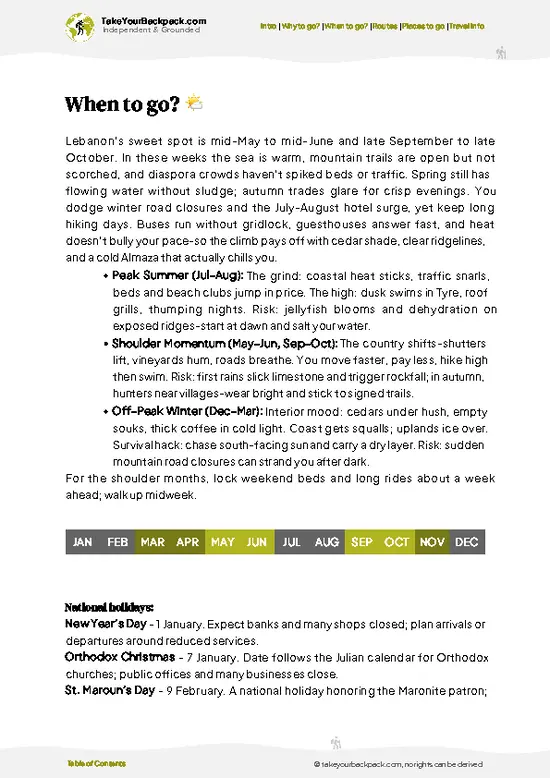
  • Weather: Spring (April to June) and fall (September to November) are your sweet spots. Temperatures hover between 15-25°C (59-77°F), perfect for hiking without melting or freezing. Summers scorch above 30°C (86°F), turning trails into ovens, while winters can be chilly and wet, especially in the valleys.

  • Daylight Hours: Spring and fall offer balanced daylight—about 10 to 12 hours—enough to explore without rushing but not so long that you burn out. Winter days shrink to 8-9 hours, cutting your adventure time, while summer days stretch to 14 hours, but heat can sap your energy.

  • Crowds: Peak tourist season hits summer, especially July and August, when locals and foreigners flock to cooler mountain spots. Spring and fall see fewer visitors, giving you more breathing room on trails and at
read more 👉

  • Weather: Spring (April to June) and fall (September to November) are your sweet spots. Temperatures hover between 15-25°C (59-77°F), perfect for hiking without melting or freezing. Summers scorch above 30°C (86°F), turning trails into ovens, while winters can be chilly and wet, especially in the valleys.

  • Daylight Hours: Spring and fall offer balanced daylight—about 10 to 12 hours—enough to explore without rushing but not so long that you burn out. Winter days shrink to 8-9 hours, cutting your adventure time, while summer days stretch to 14 hours, but heat can sap your energy.

  • Crowds: Peak tourist season hits summer, especially July and August, when locals and foreigners flock to cooler mountain spots. Spring and fall see fewer visitors, giving you more breathing room on trails and at historic sites.

  • Seasonal Activities: Spring bursts with wildflowers and flowing streams, ideal for nature lovers. Fall offers crisp air and harvest festivals in nearby villages, adding cultural flavor to your trek. Winter’s off-season means some guesthouses close, limiting options.

  • Price Fluctuations: Summer drives prices up—expect higher rates on lodging and guided tours. Shoulder seasons (spring and fall) offer better deals, especially midweek, letting you stretch your budget without sacrificing comfort.


Pro-tip: Aim for late April or early October—cool temps, fewer crowds, and local festivals that turn the valley into a living storybook. You’ll feel like you’ve slipped through a secret door.


source: climatestotravel.comJANJanuary: fair for travelingFEBFebruary: fair for travelingMARMarch: good for travelingAPRApril: excellent for travelingMAYMay: excellent for travelingJUNJune: highly recommended for travelingJULJuly: fair for travelingAUGAugust: fair for travelingSEPSeptember: excellent for travelingOCTOctober: excellent for travelingNOVNovember: highly recommended for travelingDECDecember: fair for traveling
lebanon-region-ouadi-qadisha-the-holy-valley
© Google |

✈️ The backpacker research shortcutLebanon Travel Guide

An offline-friendly backpacking guide with optimized travel routes, ranked highlights, transport advice, and the best areas to stay.
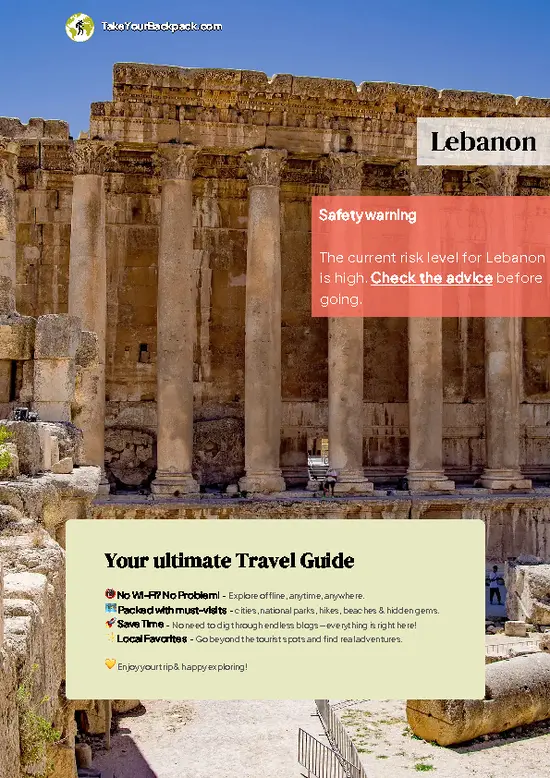
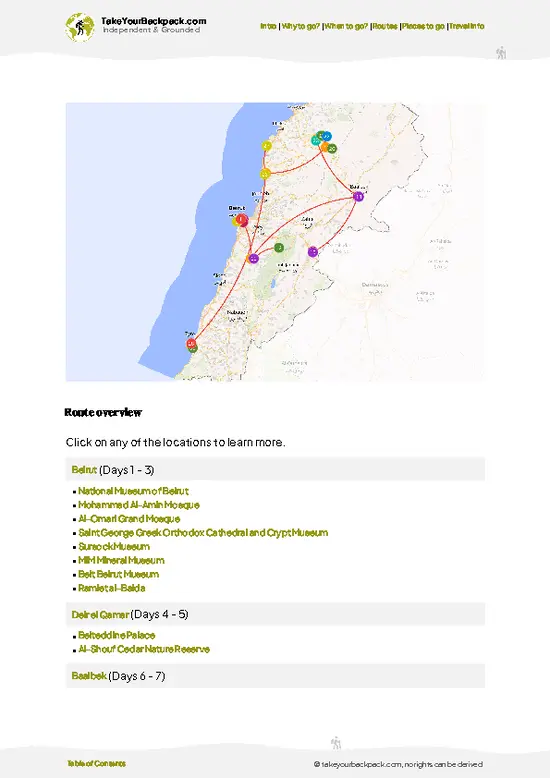
example page 0 from our offline Travel Guide for Lebanon
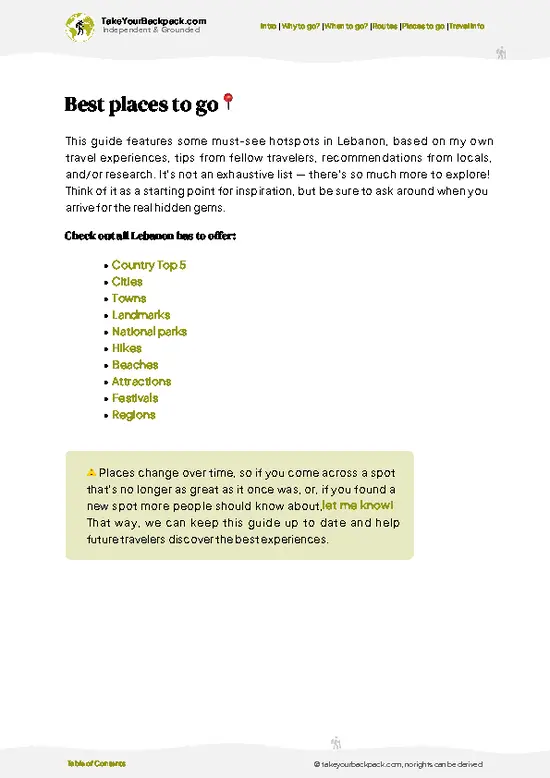
example page 1 from our offline Travel Guide for Lebanon
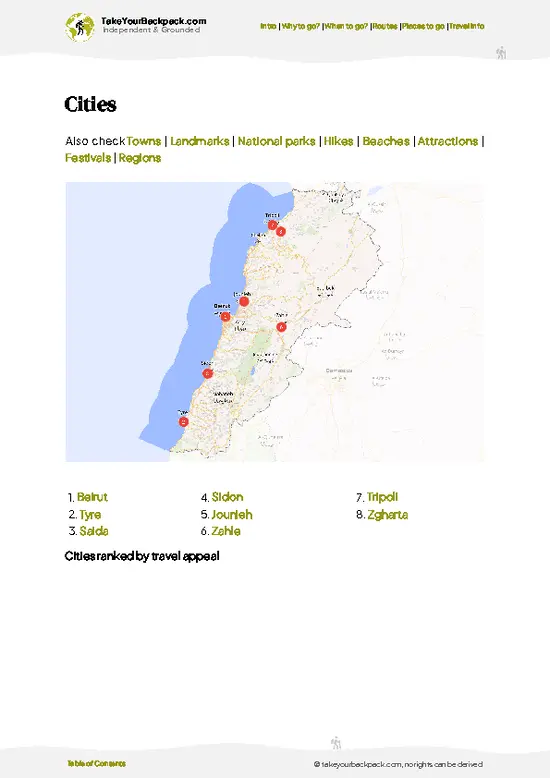
example page 2 from our offline Travel Guide for Lebanon
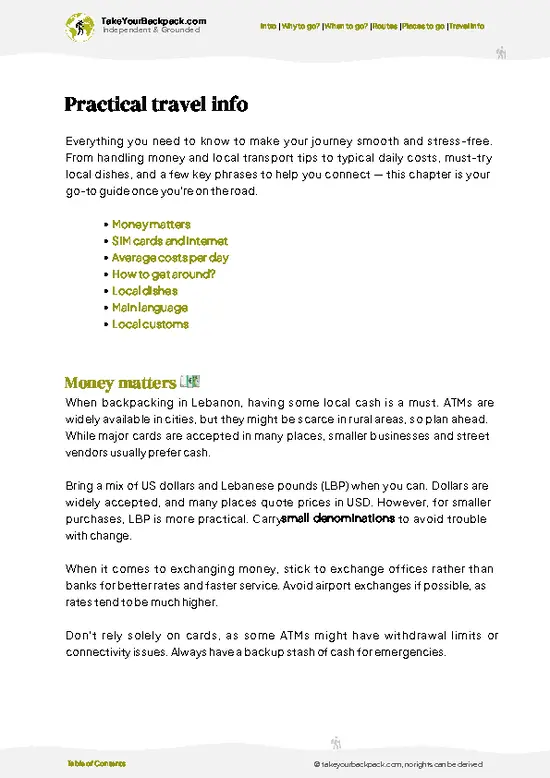
example page 3 from our offline Travel Guide for Lebanon
example page 4 from our offline Travel Guide for Lebanon
example page 5 from our offline Travel Guide for Lebanon
example page 6 from our offline Travel Guide for Lebanon
example page 7 from our offline Travel Guide for Lebanon
The digital guide (331 pages) contains:
89 highlights, ranked by travel appeal
Optimized 5, 10 & 15-day travel routes
Cities, national parks, landmarks, beaches
How to get around
Offline-friendly for travel without Wi-Fi
👉 Click to see all 30+ guide features

📅 Plan smarter in minutes, not weeks
Month by month travel advice
Festivals & national holidays
Budget expectations

🗺️ Go to the right places, skip the overrated ones
Honest pros & cons of destinations
Top hikes, parks & viewpoints
Lesser-known places most travelers miss
Clear “worth it vs skip it” guidance

🛏️ Travel smoothly without rookie mistakes
Best areas to stay
Transport systems explained simply
Common scams & safety advice
SIM cards, money & practical tips

🌍 Understand the country, not just visit it
Culture & traditions
52 Essential phrases & customs
Festivals worth planning around
Traveler-friendly historical context
Insights that make places more meaningful

📱 Built for real travel conditions
Fully downloadable PDF
Works completely offline
Optimized for phone use
Useful in remote areas & buses
Everything in one place
Save weeks of stressful planning
Get instant access to your full guide. 30‑day money-back guarantee.


By proceeding you agree to our terms.
Sent to your inbox immediately after payment • 100% Secure Checkout
Best Backpacking Travel Advisor 2025 tourism awardBest Backpacking
Travel Advisor
2025
What others say about Take Your Backpack Guides:
⭐⭐⭐⭐⭐
Fantastic, amazing amount of information!
⭐⭐⭐⭐⭐
My goodness this is amazing, it's what I've been looking for hats off too you!
⭐⭐⭐⭐⭐
I think this is absolutely BRILLIANT
⭐⭐⭐⭐
Very complete and informative. It's still missing places, but I gotta to commend you
⭐⭐⭐⭐⭐
This is truly amazing, thank you, can't wait to explore it with my kids!
⭐⭐⭐⭐⭐
Awesome resource, thank you!
⭐⭐⭐⭐⭐
This is amazing! Can't wait to explore the ones I haven't seen
⭐⭐⭐⭐
I love this! Well done, great idea.
⭐⭐⭐⭐⭐
Thanks for taking the time to make this gem!
⭐⭐⭐⭐⭐
This might be the best website I've ever seen.
⭐⭐⭐⭐⭐
Congratulations, and thank you so much for your work; it's incredibly valuable.
⭐⭐⭐⭐
In all seriousness I think you did a great job pointing out the important spots
⭐⭐⭐⭐⭐
10/10 very good
⭐⭐⭐⭐⭐
As someone who's only just starting to visit regularly this is awesome, thank you.
⭐⭐⭐⭐
Thank you very much! I'm going to visit my dad, it's going to be very useful!
⭐⭐⭐⭐⭐
This is really cool! We'll be travelling for the first time and this definitely come in handy.
⭐⭐⭐⭐⭐
You are now our minister of culture, congratulations 👨‍💼
⭐⭐⭐⭐⭐
Just wanted to tell you that this is a pearl! Going to follow your recommendations.
⭐⭐⭐⭐⭐
This is so cool. I'll definitely be using the resource for my travels soon.
⭐⭐⭐⭐⭐
This is very impressive! Good work.
⭐⭐⭐⭐⭐
This is an amazing and informative site. Very well done!

🛏️ Where to stay?How to pick the right area

When you’re diving into the Ouadi Qadisha region, your choice of where to stay can make or break your experience. Here are the top spots that scream “backpacker-friendly” while keeping you safe and social.

Start in Bcharre. This town is your gateway to the valley. It’s buzzing with fellow travelers and has a laid-back vibe. You’ll find cozy cafes where you can swap stories over a strong cup of Lebanese coffee. Plus, it’s close to the Cedars of God, a UNESCO site that’s worth the trek.

Next up, consider Qadisha Valley itself. Staying here puts you right in the heart of the action. The valley … read more 👉
When you’re diving into the Ouadi Qadisha region, your choice of where to stay can make or break your experience. Here are the top spots that scream “backpacker-friendly” while keeping you safe and social.

Start in Bcharre. This town is your gateway to the valley. It’s buzzing with fellow travelers and has a laid-back vibe. You’ll find cozy cafes where you can swap stories over a strong cup of Lebanese coffee. Plus, it’s close to the Cedars of God, a UNESCO site that’s worth the trek.

Next up, consider Qadisha Valley itself. Staying here puts you right in the heart of the action. The valley is dotted with ancient monasteries and hiking trails. You’ll feel like you’ve stepped back in time. The locals are welcoming, and you’ll often find impromptu gatherings around campfires.

Don’t overlook Tripoli, just a short ride away. It’s a bustling city with a rich history and a vibrant street life. The markets are alive with colors and scents, and you can easily meet other travelers. Plus, it’s a budget-friendly option with plenty of affordable eateries.

Each of these spots offers a unique flavor of the region, making your journey not just a trip, but an adventure. Choose wisely, and you’ll soak in the essence of Lebanon.

🚌 Getting aroundHow to get around Ouadi Qadisha (the Holy Valley)

The Ouadi Qadisha, or Holy Valley, is a realm where time feels fluid, and schedules are more like suggestions than rules. Picture this: sun-drenched cliffs, ancient monasteries clinging to the rock face, and the sound of a babbling brook weaving through the valley. Here, the rhythm is dictated by the landscape and the locals, not by rigid timetables. You’ll find that getting around is less about precision and more about embracing the moment. Whether you’re hopping on a shared taxi or wandering down a dusty path, the journey is as much a part of the experience as the destination itself.


  • Shared Taxis: These are your best bet for budget travel. They run frequently, especially from nearby towns like Bsharri to the valley. Expect to pay around 5,000 to 10,000 LBP ($3-$6) per ride. Just flag one
read more 👉
The Ouadi Qadisha, or Holy Valley, is a realm where time feels fluid, and schedules are more like suggestions than rules. Picture this: sun-drenched cliffs, ancient monasteries clinging to the rock face, and the sound of a babbling brook weaving through the valley. Here, the rhythm is dictated by the landscape and the locals, not by rigid timetables. You’ll find that getting around is less about precision and more about embracing the moment. Whether you’re hopping on a shared taxi or wandering down a dusty path, the journey is as much a part of the experience as the destination itself.


  • Shared Taxis: These are your best bet for budget travel. They run frequently, especially from nearby towns like Bsharri to the valley. Expect to pay around 5,000 to 10,000 LBP ($3-$6) per ride. Just flag one down, and you’ll be off—no need for a schedule, as they leave when full.


  • Private Taxis: If you want a bit more comfort and flexibility, private taxis are available. Prices can range from 20,000 to 50,000 LBP ($13-$30) depending on your destination. They’re faster and can take you directly to your desired spot, but you’ll need to negotiate the fare upfront.


  • Walking: This isn’t just a mode of transport; it’s a way to soak in the valley’s beauty. Trails connect many of the key sites, like the Qadisha Grotto and the Monastery of St. Anthony. It’s free, and you’ll discover hidden spots that taxis can’t reach. Just be prepared for some steep climbs!


  • Local Buses: While less common, local buses do operate between major towns. They’re cheap, usually around 2,000 LBP ($1.30), but schedules can be erratic. If you have time to spare, this can be a fun way to mingle with locals.


  • Rental Cars: For those who want to explore at their own pace, renting a car is an option. Prices start around $30 per day. Just be aware that roads can be narrow and winding, so a bit of driving experience is a plus.


Master Tactical Tip: Always ask locals for the best times to catch shared taxis or buses. They’ll know the sweet spots when the vehicles are most likely to be full and ready to roll. Embrace the chaos, and you’ll find your way through this enchanting valley like a pro.

🍲 FoodWhat to Eat & Drink

In the **Ouadi Qadisha**, food is a celebration of the land. Picture this: fresh **tabbouleh**, bursting with parsley and mint, or **kibbeh**, a savory blend of bulgur and spiced meat, served with a drizzle of olive oil. Don’t skip the **moujadara**, a hearty mix of lentils and rice, topped with caramelized onions. Each bite tells a story of the valley’s rich agricultural heritage.

For a true local experience, hit up the **markets**. Stalls overflow with vibrant produce, and the air is thick with the scent of spices. Grab a **manakish**—a flatbread topped with za’atar—at a street vendor, and enjoy it while mingling with locals. Cafés dot the landscape, where you can sip **arak**, the anise-flavored spirit, alongside a plate of **meze**—small dishes perfect for sharing.

Dining here is communal. … read more 👉
In the **Ouadi Qadisha**, food is a celebration of the land. Picture this: fresh **tabbouleh**, bursting with parsley and mint, or **kibbeh**, a savory blend of bulgur and spiced meat, served with a drizzle of olive oil. Don’t skip the **moujadara**, a hearty mix of lentils and rice, topped with caramelized onions. Each bite tells a story of the valley’s rich agricultural heritage.

For a true local experience, hit up the **markets**. Stalls overflow with vibrant produce, and the air is thick with the scent of spices. Grab a **manakish**—a flatbread topped with za’atar—at a street vendor, and enjoy it while mingling with locals. Cafés dot the landscape, where you can sip **arak**, the anise-flavored spirit, alongside a plate of **meze**—small dishes perfect for sharing.

Dining here is communal. Expect to see families gathered around large tables, sharing food and laughter. When invited to join, it’s polite to accept. Remember, meals can stretch for hours, so settle in and savor the moment.

Embrace the slower pace, and let the flavors of Ouadi Qadisha linger on your palate. This isn’t just food; it’s a taste of the valley’s soul.

Other destinations worth considering

Ouadi Qadisha (the Holy Valley) isn’t the only highlight in Lebanon. Explore all what Lebanon has to offer.
Country photo of Lebanon

We 💚 feedbackWhat to keep in mind

You’ll feel the pulse of history in Ouadi Qadisha. The air is thick with stories, and the ancient monasteries are a breathtaking surprise. Don’t rush; take your time wandering the trails. The best views come after a little sweat. But here’s the insider tip: visit early in the morning or late afternoon. The light is magic, and the crowds are thin. Just watch your step—some paths can be tricky. Embrace the moment; it’s a place that whispers secrets to those who listen.

✍️ Help improve this page!
The information on this page is based on in-depth research, insights shared by experienced travelers, and feedback from the local travel community in Lebanon. While every effort is made to keep the information accurate and current, conditions can change — so if you spot anything incorrect or outdated, please get in touch.


🙋‍♂️ Give feedback

👋 Meet the founderWho’s Behind Take Your Backpack?

Johan, backpacker and founder of TakeYourBackpackHi, I’m Johan (Netherlands 🇳🇱), the creator of TakeYourBackpack. Over the past decade, I’ve backpacked through 80+ countries across six continents, gaining extensive experience with independent travel, long-term trips, and overland routes.

This site is built on a combination of firsthand travel experience and carefully curated insights from other backpackers. Many guides are based on places I’ve personally visited, while others bring together tips, observations, and practical advice shared by trusted travelers I’ve met along the way.

The goal is to provide realistic, experience-driven guidance — not generic itineraries — so you can explore destinations with better context, clearer expectations, and more confidence.

Get full Lebanon guide •
Instant download • 89 highlights • Full Offline guide