


- Quick note on sources: Reliable public info about “Al-Mazraq Al-Aswad” under that exact name is scarce. The items below are the most likely and useful highlights based on Libyan coastal and desert reserves — good starting points, but check local guides or rangers for specifics and access.
- Coastal cliffs and sand-dune coastline: Dramatic junctions where Mediterranean surf meets Saharan sand — great for sunset hikes, dune scrambling, and finding small tidal pools full of life. Simple routes often lead to lonely viewpoints with big skies.
- Salt marshes and seasonal wetlands: Shallow lagoons and salt flats that attract migratory waders; when water’s present you can expect flocks of terns, herons, and sometimes flamingos. Best for birding at dawn and with a cheap pair of binoculars.
- Wadi systems
- Quick note on sources: Reliable public info about “Al-Mazraq Al-Aswad” under that exact name is scarce. The items below are the most likely and useful highlights based on Libyan coastal and desert reserves — good starting points, but check local guides or rangers for specifics and access.
- Coastal cliffs and sand-dune coastline: Dramatic junctions where Mediterranean surf meets Saharan sand — great for sunset hikes, dune scrambling, and finding small tidal pools full of life. Simple routes often lead to lonely viewpoints with big skies.
- Salt marshes and seasonal wetlands: Shallow lagoons and salt flats that attract migratory waders; when water’s present you can expect flocks of terns, herons, and sometimes flamingos. Best for birding at dawn and with a cheap pair of binoculars.
- Wadi systems and canyon hikes: Dry riverbeds cut into the landscape that open into unexpectedly cool, shady stretches. Short day hikes here can reveal hidden pools, pockets of greenery, and interesting rock textures — good for exploring off the beaten path.
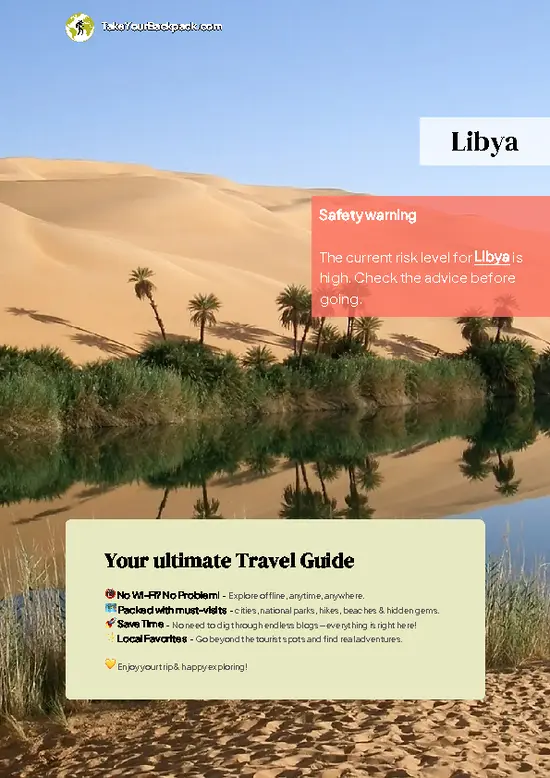
- Oasis springs and palm groves: Scattered springs that sustain small oases and date palms — perfect shady spots to rest, refill water (after proper treatment) and watch birds or lizards that congregate around the moisture.
- Desert flora and seasonal blooms: Tough little plants, halophytes and acacias that color the plains after rare rains. If you’re there after a wet winter, the carpets of seasonal flowers are a quiet, unexpected show and great for macro photography.
- Wildlife watching: gazelles, Barbary sheep and raptors: Early morning and late evening are prime for spotting Dorcas gazelles, possible Barbary sheep on rocky slopes, and kestrels or larger raptors circling thermals. Bring patience — sightings usually come to those who move slowly.
- Lookout points and simple hiking trails: Ridgelines and dune crests offering wide panoramas of sea, desert and sky. Trails are often unmarked; basic navigation skills and a map/compass (or offline GPS) make these routes rewarding for low-budget trekkers and overnight camps.
Spotted a mistake or missing something? Contact us.

 Best Backpacking

 Hi, I’m Johan (Netherlands 🇳🇱), the creator of TakeYourBackpack. Over the past 3 decades, I’ve backpacked through 90+ countries across six continents, gaining extensive experience with independent travel, long-term trips, and overland routes.