×

Libya🇱🇾 | national parksWadi El Kuflimestone gorges, seasonal rivers, endemic plant life, dramatic cliffs | things to do and best time to go

Explore Tadrart AcacusExplore Al-Ghiran Nature Reserve

Backpacking in Wadi El Kuf
By Johan Kruseman 🇳🇱 | Updated October 15, 2026

Forget the Instagram myth: Wadi El Kuf is not a lush, endless oasis. It’s a rugged, semi-arid canyon system in northeastern Libya, about halfway between Al Bayda and Marj. The national park’s main draw is its raw, sculpted limestone cliffs and the rare sight of green—mostly after winter rains. Hikers get a mix of easy rim walks and more technical scrambles, but trails are barely marked and signage is almost nonexistent. Wildlife is shy and sparse; you might spot Barbary sheep or a flash of a raptor, but don’t expect a safari. Accessibility is a headache—public transport is unreliable, and you’ll need your own wheels or a local driver. Entrance fees are low, but so are facilities: no official campsites, patchy cell service, and basic guesthouses at best. Compared to Libya’s Jebel Akhdar or the Saharan parks, Wadi El Kuf is quieter, less developed, and better for solitude than spectacle.

Discover everything you want to know in the 📖 Libya Travel Guide.
Safety warning

The current risk level for Libya is high. Check the advice before going.


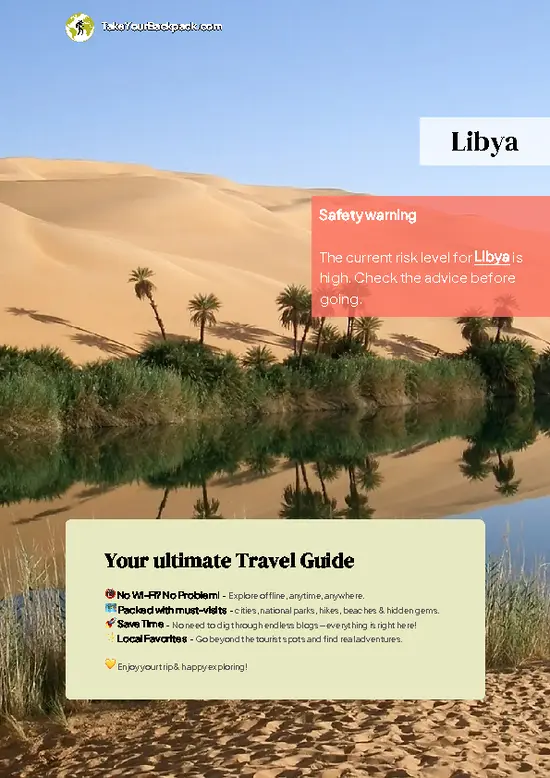
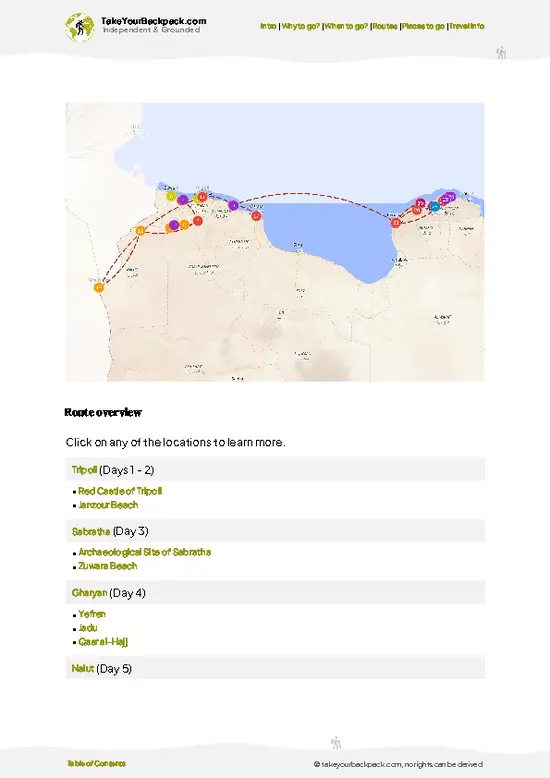
example page 0 from our offline Travel Guide for Libya
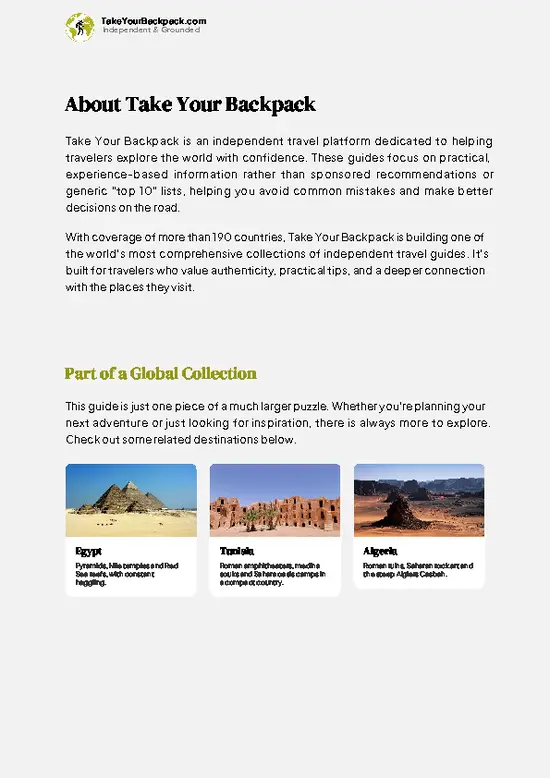
example page 1 from our offline Travel Guide for Libya
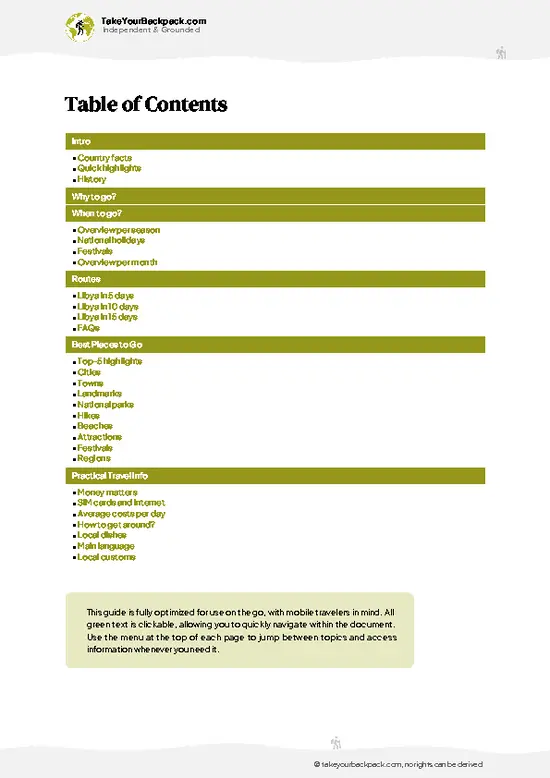
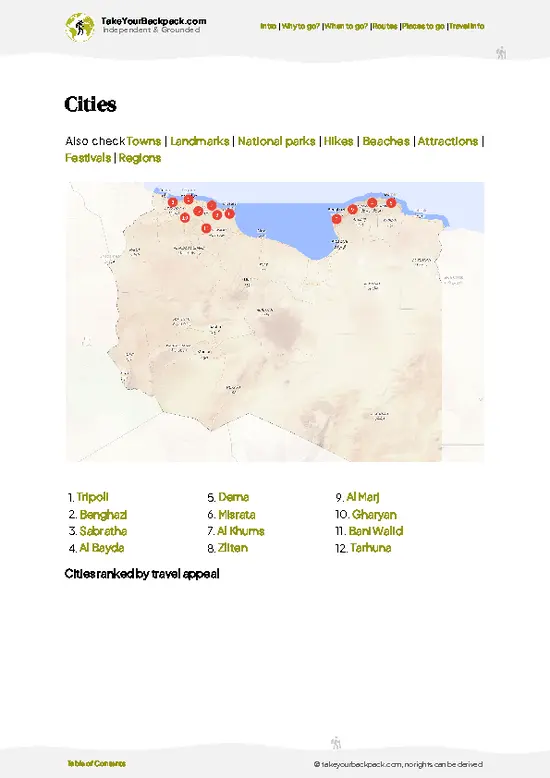
example page 2 from our offline Travel Guide for Libya
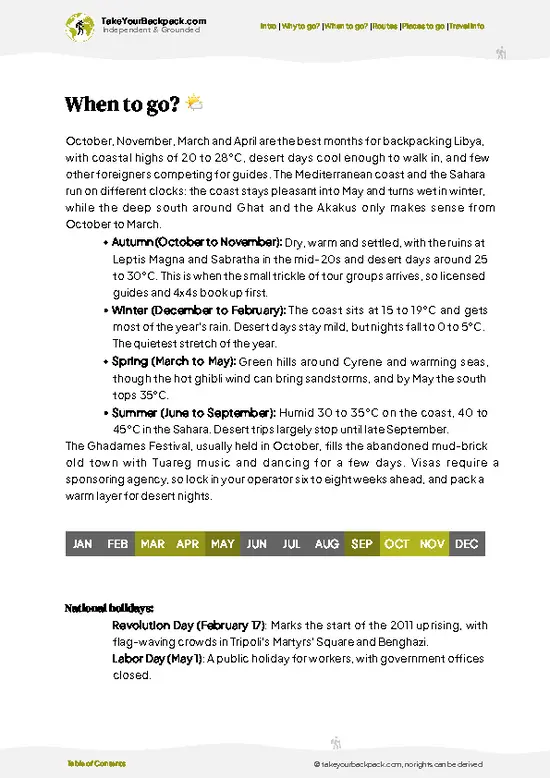
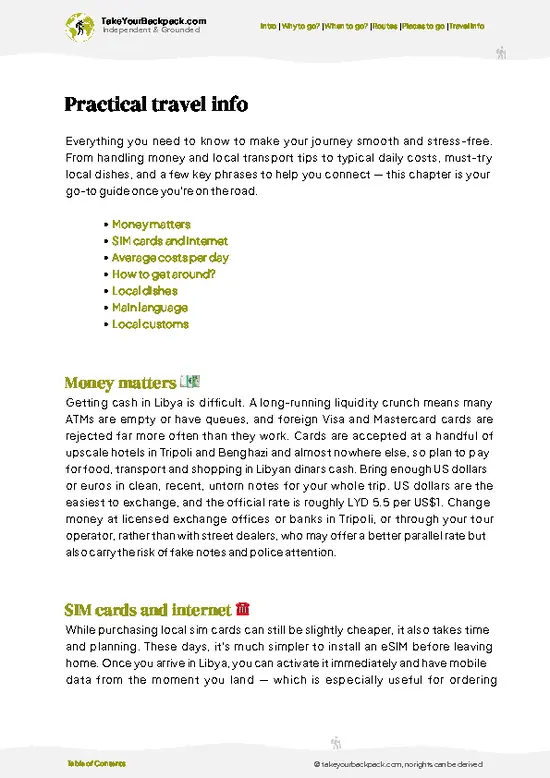
example page 3 from our offline Travel Guide for Libya
example page 4 from our offline Travel Guide for Libya
example page 5 from our offline Travel Guide for Libya
example page 6 from our offline Travel Guide for Libya
example page 7 from our offline Travel Guide for Libya
Loading the map 🌍
CLICK TO FILTER
cities
towns
landmarks
national parks
hikes
beaches
attractions
festivals
regions
SHOW COUNTRY’S BESTSHOW ALL

✨ Why go?
Ranked #99 national park in Libya
What makes this national park worth exploring

Wadi El Kuf in Libya attracts backpackers for several compelling reasons. First, independent exploration is a major draw. The park’s trails are well-marked, allowing you to navigate without a guide. This freedom lets you soak in the stunning landscapes at your own pace.

Budget-conscious travelers appreciate the camping and hostel options nearby. You can pitch a tent under the stars or find a cozy spot in a local hostel without breaking the bank. This affordability means you can allocate more of your budget to experiences rather than accommodation.

The variety of trails caters to different skill levels, from leisurely walks to more challenging hikes. Whether you’re a novice or a seasoned trekker, there’s something for everyone.

Wadi El Kuf is particularly suited for self-guided travelers. … read more 👉
Wadi El Kuf in Libya attracts backpackers for several compelling reasons. First, independent exploration is a major draw. The park’s trails are well-marked, allowing you to navigate without a guide. This freedom lets you soak in the stunning landscapes at your own pace.

Budget-conscious travelers appreciate the camping and hostel options nearby. You can pitch a tent under the stars or find a cozy spot in a local hostel without breaking the bank. This affordability means you can allocate more of your budget to experiences rather than accommodation.

The variety of trails caters to different skill levels, from leisurely walks to more challenging hikes. Whether you’re a novice or a seasoned trekker, there’s something for everyone.

Wadi El Kuf is particularly suited for self-guided travelers. While tours are available, the park’s layout encourages you to forge your own path. This autonomy enhances the experience, allowing you to connect with the environment in a way that structured tours often miss. Embrace the adventure, and let Wadi El Kuf reveal its secrets at your own pace.

💡 HighlightsMust-see experiences and standout moments

  • The Gorge and Sheer Cliffs — A jaw-dropping limestone canyon carved deep into the plateau, with sheer walls that change color through the day. Walk the rim or peer over several safe viewpoints to appreciate the scale and the layers of rock exposed by millennia of erosion.
  • Wadi El Kuf Bridge & Scenic Road — The road that snakes into the wadi and the dramatic bridge spanning the ravine are highlights in their own right; great for photos and a little roadside adrenaline. The viewpoints along the road are perfect for sunset and for watching how light sculpts the canyon.
  • Rim and Descent Hiking Trails — Trails range from short rim walks to steeper descents into the canyon floor, offering different perspectives and difficulty levels. Bring good shoes — the terrain can be rocky — and expect rewarding
… read more 👉
  • The Gorge and Sheer Cliffs — A jaw-dropping limestone canyon carved deep into the plateau, with sheer walls that change color through the day. Walk the rim or peer over several safe viewpoints to appreciate the scale and the layers of rock exposed by millennia of erosion.
  • Wadi El Kuf Bridge & Scenic Road — The road that snakes into the wadi and the dramatic bridge spanning the ravine are highlights in their own right; great for photos and a little roadside adrenaline. The viewpoints along the road are perfect for sunset and for watching how light sculpts the canyon.
  • Rim and Descent Hiking Trails — Trails range from short rim walks to steeper descents into the canyon floor, offering different perspectives and difficulty levels. Bring good shoes — the terrain can be rocky — and expect rewarding views, quiet spots, and a real sense of remoteness.
  • Seasonal Springs and Pools — After rains you’ll find trickling streams and small pools tucked into the canyon bottom, a surprise in an otherwise dry landscape. These pockets of water attract wildlife and create lush micro-habitats—best visited in spring when they’re fullest.
  • Birdwatching and Raptors — The wadi’s cliffs and thermal updrafts make it a magnet for raptors and migrating birds. Even casual birders will notice kestrels, buzzards, and other cliff-loving species soaring overhead, especially during migration seasons.
  • Spring Wildflowers and Native Shrubland — In spring the plateau and canyon edges light up with wildflowers and fragrant Mediterranean scrub, which softens the rugged scenery and offers nice colors for photos. It’s a short season, but worth timing a visit for if you like plants or photography.
  • Caves, Rock Formations, and Fossil-bearing Limestone — Look for small caves, honeycombed cliff faces, and interesting karst features in the limestone; the rock here preserves a long geological history. Bring a headlamp if you plan to poke into shallow caves, but be respectful and avoid disturbing fragile formations.
Spotted a mistake or missing something? Contact us.

🌤️ When to go?Seasonal considerations and timing

  • Weather: Wadi El Kuf experiences a Mediterranean climate with hot, dry summers and mild, wetter winters. Summer temperatures often soar above 35°C (95°F), making hiking exhausting and dehydration a real risk. Spring and autumn offer more manageable heat, with highs around 20-25°C (68-77°F), ideal for long treks.
  • Temperature: Winter nights can dip to 5°C (41°F), so pack layers if you visit between December and February. Daytime temperatures in spring and autumn hover comfortably between 15-25°C (59-77°F), perfect for backpacking without overheating or freezing.
  • Daylight Hours: Expect longer days from April to September, with up to 14 hours of daylight. This extends your hiking window but also means hotter afternoons. Shorter winter days limit exploration time but offer cooler conditions.
… read more 👉
  • Weather: Wadi El Kuf experiences a Mediterranean climate with hot, dry summers and mild, wetter winters. Summer temperatures often soar above 35°C (95°F), making hiking exhausting and dehydration a real risk. Spring and autumn offer more manageable heat, with highs around 20-25°C (68-77°F), ideal for long treks.
  • Temperature: Winter nights can dip to 5°C (41°F), so pack layers if you visit between December and February. Daytime temperatures in spring and autumn hover comfortably between 15-25°C (59-77°F), perfect for backpacking without overheating or freezing.
  • Daylight Hours: Expect longer days from April to September, with up to 14 hours of daylight. This extends your hiking window but also means hotter afternoons. Shorter winter days limit exploration time but offer cooler conditions.
  • Crowds: The park sees few tourists year-round, but spring attracts local visitors during holidays. Avoid weekends if you want solitude; weekdays are quieter, letting you experience the landscape without interruptions.
  • Seasonal Activities: Spring is the best time for wildflower spotting and birdwatching. Summer’s heat restricts activity mostly to early mornings or late afternoons. Winter rains can make some trails slippery but also bring lush greenery.
  • Price Fluctuations: Accommodation and transport costs remain stable year-round due to low tourism volume. However, local guides may charge more during spring holidays when demand slightly rises.
Pro-tip: Plan your visit for late March to early May or late September to early November to balance comfortable temperatures, extended daylight, and minimal crowds—saving your energy and budget for the park’s best moments.


source: climatestotravel.comJANJanuary: good for travelingFEBFebruary: good for travelingMARMarch: highly recommended for travelingAPRApril: excellent for travelingMAYMay: excellent for travelingJUNJune: fair for travelingJULJuly: below average for travelingAUGAugust: below average for travelingSEPSeptember: highly recommended for travelingOCTOctober: excellent for travelingNOVNovember: highly recommended for travelingDECDecember: good for traveling
when-to-go

✈️ The backpacker research shortcutLibya Travel Guide

An offline-friendly backpacking guide with optimized travel routes, ranked highlights, transport advice, and the best areas to stay.
example page 0 from our offline Travel Guide for Libya
example page 1 from our offline Travel Guide for Libya
example page 2 from our offline Travel Guide for Libya
example page 3 from our offline Travel Guide for Libya
example page 4 from our offline Travel Guide for Libya
example page 5 from our offline Travel Guide for Libya
example page 6 from our offline Travel Guide for Libya
example page 7 from our offline Travel Guide for Libya
The digital guide (205 pages) contains:
✅ 45 highlights, ranked by travel appeal
✅ Optimized 5, 10 & 15-day travel routes
✅ Cities, national parks, landmarks, beaches
✅ How to get around
✅ Offline-friendly for travel without Wi-Fi
👉 Click to see all 30+ guide features

📅 Plan smarter in minutes, not weeks
✅ Month by month travel advice
✅ Festivals & national holidays
✅ Budget expectations

🗺️ Go to the right places, skip the overrated ones
✅ Honest pros & cons of destinations
✅ Top hikes, parks & viewpoints
✅ Lesser-known places most travelers miss
✅ Clear “worth it vs skip it” guidance

🛏️ Travel smoothly without rookie mistakes
✅ Best areas to stay
✅ Transport systems explained simply
✅ Common scams & safety advice
✅ SIM cards, money & practical tips

🌍 Understand the country, not just visit it
✅ Culture & traditions
✅ 52 Essential phrases & customs
✅ Festivals worth planning around
✅ Traveler-friendly historical context
✅ Insights that make places more meaningful

📱 Built for real travel conditions
✅ Fully downloadable PDF
✅ Works completely offline
✅ Optimized for phone use
✅ Useful in remote areas & buses
✅ Everything in one place
Stop searching, start planning
Get instant access to your full guide. 30‑day money-back guarantee.
+ Add another guide for just

By proceeding you agree to our terms.
Sent to your inbox immediately after payment • 100% Secure Checkout
Best Backpacking Travel Advisor 2025 tourism awardBest Backpacking
Travel Advisor
2025
What others say about Take Your Backpack Guides:
⭐⭐⭐⭐⭐
Fantastic, amazing amount of information!
⭐⭐⭐⭐⭐
My goodness this is amazing, it's what I've been looking for hats off too you!
⭐⭐⭐⭐⭐
I think this is absolutely BRILLIANT
⭐⭐⭐⭐
Very complete and informative. It's still missing places, but I gotta to commend you
⭐⭐⭐⭐⭐
This is truly amazing, thank you, can't wait to explore it with my kids!
⭐⭐⭐⭐⭐
Awesome resource, thank you!
⭐⭐⭐⭐⭐
This is amazing! Can't wait to explore the ones I haven't seen
⭐⭐⭐⭐
I love this! Well done, great idea.
⭐⭐⭐⭐⭐
Thanks for taking the time to make this gem!
⭐⭐⭐⭐⭐
This might be the best website I've ever seen.
⭐⭐⭐⭐⭐
Congratulations, and thank you so much for your work; it's incredibly valuable.
⭐⭐⭐⭐
In all seriousness I think you did a great job pointing out the important spots
⭐⭐⭐⭐⭐
10/10 very good
⭐⭐⭐⭐⭐
As someone who's only just starting to visit regularly this is awesome, thank you.
⭐⭐⭐⭐
Thank you very much! I'm going to visit my dad, it's going to be very useful!
⭐⭐⭐⭐⭐
This is really cool! We'll be travelling for the first time and this definitely come in handy.
⭐⭐⭐⭐⭐
You are now our minister of culture, congratulations 👨‍💼
⭐⭐⭐⭐⭐
Just wanted to tell you that this is a pearl! Going to follow your recommendations.
⭐⭐⭐⭐⭐
This is so cool. I'll definitely be using the resource for my travels soon.
⭐⭐⭐⭐⭐
This is very impressive! Good work.
⭐⭐⭐⭐⭐
This is an amazing and informative site. Very well done!

🛏️ Where to stay?Best areas and accommodation options

Wadi El Kuf is a stunning national park in Libya, but finding the right place to stay can be tricky. There aren’t many accommodations directly inside the park. Most backpackers opt for nearby towns like Al Marj or the city of Benghazi, which are your best bets for budget-friendly options.

In Al Marj, you’ll find a few guesthouses and budget hotels that cater to travelers. They offer basic amenities and a chance to connect with locals. Prices are reasonable, and the hospitality is genuine. It’s a good base for day trips into the park.

Benghazi, while a bit further away, has more options, including … read more 👉
Wadi El Kuf is a stunning national park in Libya, but finding the right place to stay can be tricky. There aren’t many accommodations directly inside the park. Most backpackers opt for nearby towns like Al Marj or the city of Benghazi, which are your best bets for budget-friendly options.

In Al Marj, you’ll find a few guesthouses and budget hotels that cater to travelers. They offer basic amenities and a chance to connect with locals. Prices are reasonable, and the hospitality is genuine. It’s a good base for day trips into the park.

Benghazi, while a bit further away, has more options, including hostels and budget hotels. It’s a larger city, so you’ll find more amenities, but be prepared for a longer commute to the park.

Keep in mind that transportation can be a challenge. Public transport is limited, so consider renting a car or arranging a local guide. This will save you time and energy, allowing you to focus on exploring the park’s breathtaking landscapes.

Plan ahead, and you’ll preserve your budget and energy for the moments that truly matter in Wadi El Kuf.

👛 Costs (as of 15 October 2026)What things cost and how to budget

Visiting Wadi El Kuf in Libya can be a rewarding experience, but it’s essential to be aware of the costs involved to avoid any surprises.

Entry fees to the park typically range from €5 to €10. This fee grants you access to the stunning landscapes and hiking trails. However, if you plan to camp overnight, expect to pay an additional €10 to €20 for camping permits.

Transportation is another factor. If you’re driving, fuel costs can vary, but budget around €1.20 per liter. If you’re relying on local transport, a taxi from nearby towns may cost between €30 and €50, depending on the distance.

Food is relatively affordable. Meals at local eateries can range from €5 to €15. If you prefer to self-cater, grocery prices are reasonable, but stock up in larger towns before heading to the park.

Lastly, … read more 👉
Visiting Wadi El Kuf in Libya can be a rewarding experience, but it’s essential to be aware of the costs involved to avoid any surprises.

Entry fees to the park typically range from €5 to €10. This fee grants you access to the stunning landscapes and hiking trails. However, if you plan to camp overnight, expect to pay an additional €10 to €20 for camping permits.

Transportation is another factor. If you’re driving, fuel costs can vary, but budget around €1.20 per liter. If you’re relying on local transport, a taxi from nearby towns may cost between €30 and €50, depending on the distance.

Food is relatively affordable. Meals at local eateries can range from €5 to €15. If you prefer to self-cater, grocery prices are reasonable, but stock up in larger towns before heading to the park.

Lastly, consider the cost of a local guide. Hiring one can enhance your experience, with rates typically between €30 and €60 for a day. This investment can provide valuable insights and ensure you don’t miss key sights.

Being aware of these costs will help you manage your budget effectively, allowing you to focus on enjoying the natural beauty of Wadi El Kuf without unnecessary stress.
⚠️ Prices can change and everyone travels differently, so take this as a rough guide. Hope it helps you plan your adventure!

🥾 TrailsScenic routes and wildlife spotting in Wadi El Kuf

Wadi El Kuf is a hidden gem in Libya, offering a mix of stunning landscapes and diverse wildlife. The terrain is a mix of rocky paths, steep cliffs, and lush greenery, making it a feast for the eyes. You’ll find everything from dramatic gorges to serene valleys, and if you’re lucky, you might spot some native wildlife like foxes or various birds. The trails can be a bit challenging, especially if you’re not used to the rugged terrain, but the views are totally worth it.

One of the main trails here is the Wadi El Kuf Trail. Here are the details:
  • Length: 10 km
  • Estimated Duration: 4-5 hours
  • Difficulty
… read more 👉
Wadi El Kuf is a hidden gem in Libya, offering a mix of stunning landscapes and diverse wildlife. The terrain is a mix of rocky paths, steep cliffs, and lush greenery, making it a feast for the eyes. You’ll find everything from dramatic gorges to serene valleys, and if you’re lucky, you might spot some native wildlife like foxes or various birds. The trails can be a bit challenging, especially if you’re not used to the rugged terrain, but the views are totally worth it.

One of the main trails here is the Wadi El Kuf Trail. Here are the details:
  • Length: 10 km
  • Estimated Duration: 4-5 hours
  • Difficulty Level: Moderate
  • Key Features: Stunning canyon views, diverse flora and fauna, and ancient rock formations
  • Terrain: Rocky paths, steep inclines, and some slippery sections

Getting to Wadi El Kuf isn’t too tricky. You can catch a bus or a shared taxi from nearby towns, and the journey offers some nice scenery along the way. It’s not overly crowded, which is a plus if you’re looking for a bit of solitude. As for an entrance fee, it’s generally low, but it’s always good to check ahead since things can change. Just pack some water and snacks, and you’re set for an unforgettable adventure!
⚠️ Hiking info can sometimes be outdated or inaccurate. Before you hit the trail, check the latest conditions with locals. If you do spot anything that's off, I'd love to hear from you, so I can update it for fellow travelers.

🛡️ SafetyStaying Safe: What Travelers Should Know

Wadi El Kuf offers a relatively straightforward hiking experience, but a few practical considerations can enhance your adventure. The weather can shift quickly, especially in spring and autumn. Be prepared for sudden temperature drops or unexpected rain. Layering is key; pack a lightweight waterproof jacket and thermal base layers.

The terrain varies, with some steep sections and rocky paths. Good footwear is essential—sturdy hiking boots with grip will keep you stable on uneven ground. Navigation is generally clear, but a map or GPS device can help you stay oriented, especially if you wander off the main trails.

Wildlife encounters are rare, but it’s wise to respect the local fauna. Keep a safe distance from any animals you spot, and don’t feed them.

Lastly, hydration is crucial. Carry … read more 👉
Wadi El Kuf offers a relatively straightforward hiking experience, but a few practical considerations can enhance your adventure. The weather can shift quickly, especially in spring and autumn. Be prepared for sudden temperature drops or unexpected rain. Layering is key; pack a lightweight waterproof jacket and thermal base layers.

The terrain varies, with some steep sections and rocky paths. Good footwear is essential—sturdy hiking boots with grip will keep you stable on uneven ground. Navigation is generally clear, but a map or GPS device can help you stay oriented, especially if you wander off the main trails.

Wildlife encounters are rare, but it’s wise to respect the local fauna. Keep a safe distance from any animals you spot, and don’t feed them.

Lastly, hydration is crucial. Carry enough water, as sources can be sparse. By preparing for these realities, you’ll preserve your energy and budget for the moments that truly matter in this stunning landscape.

FAQCommon questions from travelers

2 to 3 days are sufficient to explore Wadi El Kuf thoroughly, including hiking and sightseeing. The main attractions can be covered within this timeframe, allowing time for rest and travel between sites.
No, visiting Wadi El Kuf without a car is very difficult. Public transportation options are limited, and the terrain requires a vehicle for access to key areas within the park.
There is no official entrance fee or permit required to visit Wadi El Kuf. However, it is advisable to check locally for any recent changes or regulations before your trip.
⚠️ Things can change over time, so always validate details locally before you go.

Other Libyan national parks near Wadi El Kuf

Explore more nearby:


💡 Not sure where to go next?
Create a personalized itinerary for Libya including Wadi El Kuf and the places that fit your trip.

Generate my itinerary

👉 Discover all national parks

Or checkout all Libya has to offer (think cities, towns, villages, national parks, hikes, beaches, festivals)
Country photo of Libya

We 💚 feedbackKey takeaways before you go

Wadi El Kuf is a place that breathes adventure. The vibe is raw and unfiltered, with locals who genuinely welcome you. Don’t miss the stunning views from the cliffs; they’ll take your breath away. But here’s the catch: the roads can be rough, so a sturdy vehicle is a must. Bring plenty of water, too—this isn’t the place to run low. Embrace the unexpected, and you’ll find moments that stick with you long after you leave.

✍️ Help improve this page!
The information on this page is based on in-depth research, insights shared by experienced travelers, and feedback from the local travel community in Libya. While every effort is made to keep the information accurate and current, conditions can change — so if you spot anything incorrect or outdated, please get in touch.


🙋‍♂️ Give feedback

👋 Meet the founderWho’s Behind Take Your Backpack?

Johan, backpacker and founder of TakeYourBackpackHi, I’m Johan (Netherlands 🇳🇱), the creator of TakeYourBackpack. Over the past 3 decades, I’ve backpacked through 90+ countries across six continents, gaining extensive experience with independent travel, long-term trips, and overland routes.

This site is built on a combination of firsthand travel experience and carefully curated insights from other backpackers. Many guides are based on places I’ve personally visited, while others bring together tips, observations, and practical advice shared by trusted travelers I’ve met along the way.

The goal is to provide realistic, experience-driven guidance — not generic itineraries — so you can explore destinations with better context, clearer expectations, and more confidence.