×

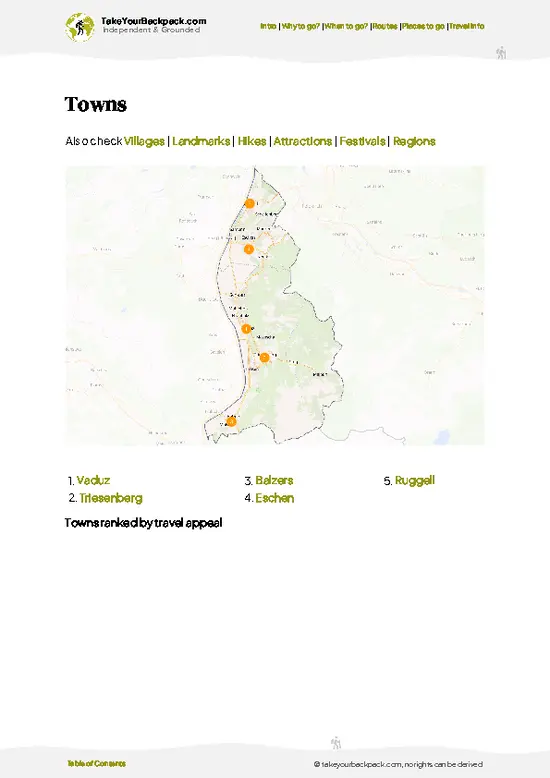
Liechtenstein🇱🇮 | townsRuggellReed boardwalks, bird reserve, Rhine levee, drainage canal | things to do and best time to go

Explore EschenExplore Vaduz Castle

Backpacking in Ruggell
👀 For curious travelerstown ranked #5
By Johan Kruseman 🇳🇱 | Updated November 6, 2026

Ruggell is the northernmost municipality in Liechtenstein, a flat village on the Rhine floodplain, and the capital Vaduz is a separate town about 12 km south. Plenty of people arrive expecting Alpine drama, but the peaks are a distant backdrop here and the real interest is water, birds and quiet. I would give Ruggell a half day, not a week. The Ruggeller Riet nature reserve is the part that deserves your time: wooden boardwalks and drainage channels through reed and wet meadow, best in the early morning when birdsong is loudest. The Rhine dam path suits a long, easy walk or ride. Skip the idea of nightlife, because there are no hostels and evenings are silent, so most backpackers sleep in Vaduz or Buchs across the border and come by bus, which is simple. You won’t meet many fellow travelers. What you will meet is a Rhine dam at dusk with swallows skimming the water.

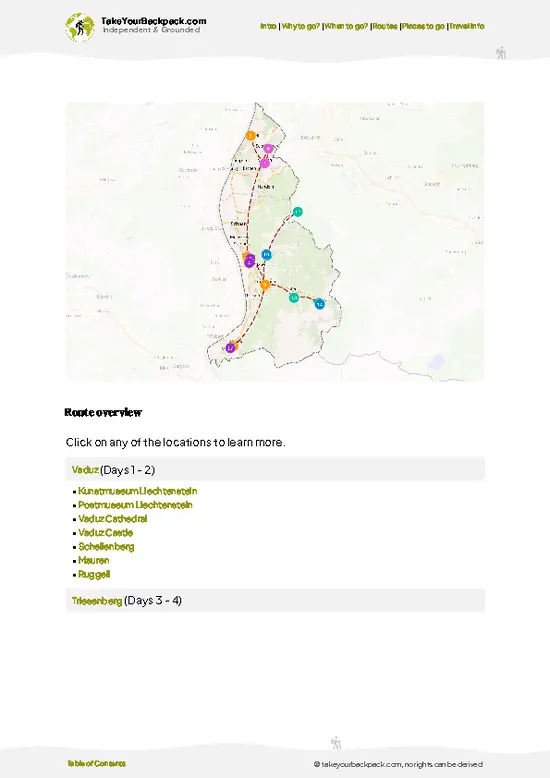
Part of Backpacking in Liechtenstein: all 25 places on one map, with routes and the best time to go.
Discover everything you want to know in the 📖 Liechtenstein Travel Guide.
Loading the map 🌍
CLICK TO FILTER
towns
villages
landmarks
hikes
attractions
festivals
regions
SHOW COUNTRY’S BESTSHOW ALL

✨ Why go?
Ranked #5 town in Liechtenstein
Why visitors keep coming back

Ruggell works for slow travelers who want to see the flat, wet, bird-filled side of Liechtenstein that most itineraries skip. The main draw is the Ruggeller Riet, the country’s largest remaining wetland, where marked paths and boardwalks cross reeds and meadows without any climbing. Cyclists get a second reason: the car-free levee path along the Rhine and the straight canal tracks make for easy riding with Austria and Switzerland a pedal away. Most people stay a night or two at most, and that is the right length. Evenings are silent, so solo travelers hoping to meet others should look to Vaduz or Feldkirch instead. Photographers, birders, cyclists and anyone recovering from a run of busy hostel dorms will be happy here. Hikers chasing summits will not. Think of Ruggell as the quiet base for … read more 👉
Ruggell works for slow travelers who want to see the flat, wet, bird-filled side of Liechtenstein that most itineraries skip. The main draw is the Ruggeller Riet, the country’s largest remaining wetland, where marked paths and boardwalks cross reeds and meadows without any climbing. Cyclists get a second reason: the car-free levee path along the Rhine and the straight canal tracks make for easy riding with Austria and Switzerland a pedal away. Most people stay a night or two at most, and that is the right length. Evenings are silent, so solo travelers hoping to meet others should look to Vaduz or Feldkirch instead. Photographers, birders, cyclists and anyone recovering from a run of busy hostel dorms will be happy here. Hikers chasing summits will not. Think of Ruggell as the quiet base for the border country, with a cheap, simple local bakery or two to keep you fed.

💡 HighlightsThe experiences that define the visit

  1. Ruggeller Riet: The largest wetland reserve in Liechtenstein and the reason to come. Boardwalks and gravel paths cross reeds, ponds and meadows, with herons, lapwings and in season migrating waders. Go early morning in spring or autumn. Free, 1.5 to 3 hours.
  2. Rhine levee path: A raised, car-free path along the river on the Swiss border, with open views across the valley floor to the Swiss and Austrian hills. Good on foot or by bike, best in the late afternoon. Free, 1 to 2 hours.
  3. Binnenkanal walk: The straight drainage canal that runs through the valley, lined with poplars and fields. It is flat, quiet and shaded in places, and it ties the reserve to the villages. Free, about 1 hour.
  4. Ruggell village center and church of St. Fridolin: A small stroll past farmhouses and the neo-Gothic parish church,
… read more 👉
  1. Ruggeller Riet: The largest wetland reserve in Liechtenstein and the reason to come. Boardwalks and gravel paths cross reeds, ponds and meadows, with herons, lapwings and in season migrating waders. Go early morning in spring or autumn. Free, 1.5 to 3 hours.
  2. Rhine levee path: A raised, car-free path along the river on the Swiss border, with open views across the valley floor to the Swiss and Austrian hills. Good on foot or by bike, best in the late afternoon. Free, 1 to 2 hours.
  3. Binnenkanal walk: The straight drainage canal that runs through the valley, lined with poplars and fields. It is flat, quiet and shaded in places, and it ties the reserve to the villages. Free, about 1 hour.
  4. Ruggell village center and church of St. Fridolin: A small stroll past farmhouses and the neo-Gothic parish church, which gives a feel for how people live in this farming village. Mornings are calmest. Free, 20 to 30 minutes.
  5. Gampriner Seelein: A small lake just south of the village border in neighboring Gamprin, a protected nature reserve where swimming is not allowed, good for a quiet picnic nearby. Free, about an hour, best in warm months.
In Ruggell, every item here costs nothing, so the only spending is on a coffee or bread from a local shop. From here, Schaan, Vaduz with its castle viewpoints and the Austrian town of Feldkirch make easy day trips.
Spotted a mistake or missing something? Contact us.

Things to do near Ruggell

Ratings based on Tripadvisor reviews. When you book through this link, you support our work at no extra cost to you.

🏘️ NeighborhoodsHow different areas shape the experience

Ruggell is Liechtenstein’s northernmost municipality, a flat, quiet stretch along the Rhine, and you can cover all of it on foot or by bike in an afternoon.
  • Village center (Dorf): Around the parish church of St. Fridolin you get the quiet core: a bakery, a few gasthaus-style restaurants and a small supermarket. Stop here for a coffee and a pastry, then move on. Nightlife is essentially nil, so plan to eat early.
  • Ruggeller Riet: This is the reason to come. It is the largest nature reserve in the country, a wetland of reeds, meadows and birdwatching spots just west of the village. Go early in the morning or around dusk when the birds are active and the paths are empty. Bring waterproof shoes after rain, because the trails turn soft.
  • Rhine dam path: The raised embankment along the river is the best
… read more 👉
Ruggell is Liechtenstein’s northernmost municipality, a flat, quiet stretch along the Rhine, and you can cover all of it on foot or by bike in an afternoon.
  • Village center (Dorf): Around the parish church of St. Fridolin you get the quiet core: a bakery, a few gasthaus-style restaurants and a small supermarket. Stop here for a coffee and a pastry, then move on. Nightlife is essentially nil, so plan to eat early.
  • Ruggeller Riet: This is the reason to come. It is the largest nature reserve in the country, a wetland of reeds, meadows and birdwatching spots just west of the village. Go early in the morning or around dusk when the birds are active and the paths are empty. Bring waterproof shoes after rain, because the trails turn soft.
  • Rhine dam path: The raised embankment along the river is the best flat walking and cycling route here. It runs straight to Switzerland and Austria, and you can wander over a footbridge to cross borders for a snack. Evenings are lovely with a picnic from the village shop.
  • Industrial zone (Gewerbegebiet): Factories and warehouses sit on the edge of town. Skip it entirely, there is nothing to see or eat.

⌛️ 1 dayWhat you can realistically do in a day

Ruggell is best done slowly on foot, with a bicycle if you want to stretch the loops, and a long lazy break at midday when the fields get warm.
7:30 AM, Ruggeller Riet: Start at the reserve while the birds are active and the air is cool. Take the boardwalks and gravel paths through reeds and meadows, and stop at the quiet corners to listen. Allow about two hours without hurrying.
10:00 AM, Village center: Walk back to the center for a coffee and something baked at a local café or bakery. Look at the farmhouses and the parish church of St. Fridolin, then sit for a bit and let the village wake up.
12:00 PM, Binnenkanal: Follow the straight canal path under the poplars. It is flat, a little shaded and almost empty, and a lesser-known stretch where you may spot herons and hear only wind in the fields. … read more 👉
Ruggell is best done slowly on foot, with a bicycle if you want to stretch the loops, and a long lazy break at midday when the fields get warm.
7:30 AM, Ruggeller Riet: Start at the reserve while the birds are active and the air is cool. Take the boardwalks and gravel paths through reeds and meadows, and stop at the quiet corners to listen. Allow about two hours without hurrying.
10:00 AM, Village center: Walk back to the center for a coffee and something baked at a local café or bakery. Look at the farmhouses and the parish church of St. Fridolin, then sit for a bit and let the village wake up.
12:00 PM, Binnenkanal: Follow the straight canal path under the poplars. It is flat, a little shaded and almost empty, and a lesser-known stretch where you may spot herons and hear only wind in the fields.
2:00 PM, Lunch break: Take a long pause with a simple lunch at a local restaurant or a picnic by the water, and rest through the warmest hours.
3:30 PM, Rhine levee path: Climb the embankment and walk or ride along the river on the border with Switzerland. The open view across the valley is the day’s widest, and the path is easy underfoot.
6:00 PM, Gampriner Seelein: Finish with a quiet sit by the small lake in neighboring Gamprin, then head back by bus or on foot before dark.

🌤️ When to go?Choosing the right time of year

The best time for Ruggell is May to September, when paths are dry and the wetland is full of life.
  • Summer (June to August): Highs reach 22 to 27°C (72 to 81°F), days are long and the dam path is ideal for cycling. Expect occasional afternoon thunderstorms, and prices in Liechtenstein run highest now.
  • Autumn (September to November): Temperatures fall from 18°C (64°F) to around 8°C (46°F). Mornings can bring Rhine fog, and the reeds turn gold. Crowds are thin.
  • Winter (December to February): Lows of -3 to 1°C (27 to 34°F) and short, gray days. The village is very quiet, and the bird reserve is muted, though bargains on rooms appear in nearby towns.
  • Spring (March to May): Warming from 8 to 18°C (46 to 64°F), with migrating birds arriving in the Riet and some muddy trails.
Aim for May or September for … read more 👉
The best time for Ruggell is May to September, when paths are dry and the wetland is full of life.
  • Summer (June to August): Highs reach 22 to 27°C (72 to 81°F), days are long and the dam path is ideal for cycling. Expect occasional afternoon thunderstorms, and prices in Liechtenstein run highest now.
  • Autumn (September to November): Temperatures fall from 18°C (64°F) to around 8°C (46°F). Mornings can bring Rhine fog, and the reeds turn gold. Crowds are thin.
  • Winter (December to February): Lows of -3 to 1°C (27 to 34°F) and short, gray days. The village is very quiet, and the bird reserve is muted, though bargains on rooms appear in nearby towns.
  • Spring (March to May): Warming from 8 to 18°C (46 to 64°F), with migrating birds arriving in the Riet and some muddy trails.
Aim for May or September for mild weather, fewer visitors and the best birdwatching.


source: climatestotravel.comJANJanuary: fair for travelingFEBFebruary: fair for travelingMARMarch: good for travelingAPRApril: highly recommended for travelingMAYMay: excellent for travelingJUNJune: highly recommended for travelingJULJuly: highly recommended for travelingAUGAugust: highly recommended for travelingSEPSeptember: excellent for travelingOCTOctober: highly recommended for travelingNOVNovember: good for travelingDECDecember: fair for traveling
when-to-go

✈️ The backpacker research shortcutLiechtenstein Travel Guide

What the free pages can't give you: ready-made routes, every place ranked, and it works offline. All in 1 guide.
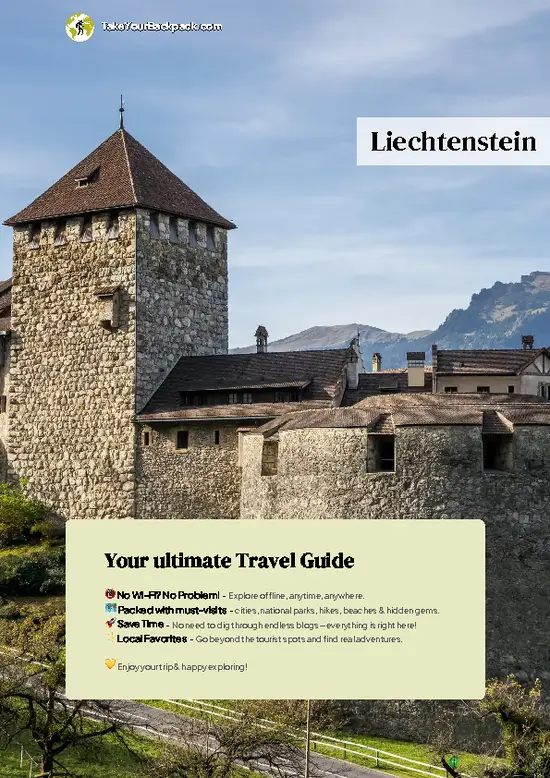
example page 0 from our offline Travel Guide for Liechtenstein
example page 1 from our offline Travel Guide for Liechtenstein
example page 2 from our offline Travel Guide for Liechtenstein
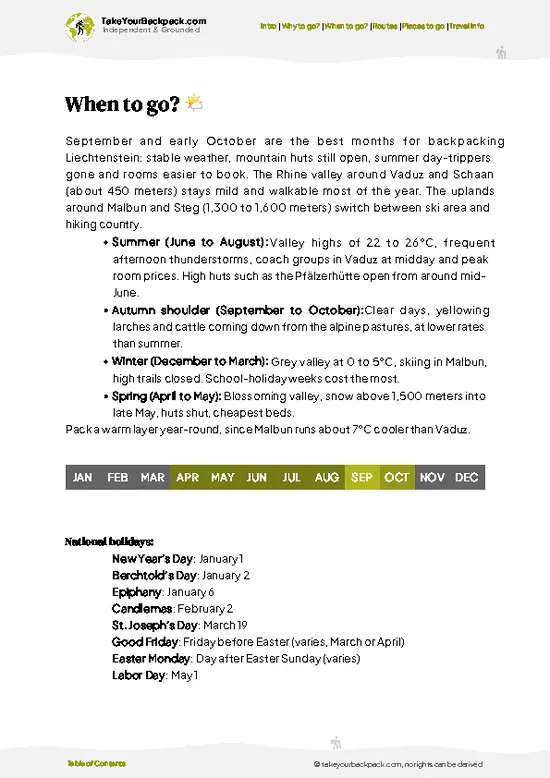
example page 3 from our offline Travel Guide for Liechtenstein
example page 4 from our offline Travel Guide for Liechtenstein
example page 5 from our offline Travel Guide for Liechtenstein
example page 6 from our offline Travel Guide for Liechtenstein
example page 7 from our offline Travel Guide for Liechtenstein
The digital guide (106 pages) contains:-page digital guide:
✅ Ready-made 2, 3 & 5-day routes
✅ All 25 places ranked, so you skip the overrated ones
✅ Works offline, all in 1 guide
✅ Cities, national parks, landmarks, beaches
✅ How to get around
👉 Click to see all 30+ guide features

📅 Plan smarter in minutes, not weeks
✅ Month by month travel advice
✅ Festivals & national holidays
✅ Budget expectations

🗺️ Go to the right places, skip the overrated ones
✅ Honest pros & cons of destinations
✅ Top hikes, parks & viewpoints
✅ Lesser-known places most travelers miss
✅ Clear “worth it vs skip it” guidance

🛏️ Travel smoothly without rookie mistakes
✅ Best areas to stay
✅ Transport systems explained simply
✅ Common scams & safety advice
✅ SIM cards, money & practical tips

🌍 Understand the country, not just visit it
✅ Culture & traditions
✅ 52 Essential phrases & customs
✅ Festivals worth planning around
✅ Traveler-friendly historical context
✅ Insights that make places more meaningful

📱 Built for real travel conditions
✅ Fully downloadable PDF
✅ Works completely offline
✅ Optimized for phone use
✅ Useful in remote areas & buses
✅ All in 1 guide
Stop searching, start planning
Get instant access to your full guide. 30‑day money-back guarantee.


By proceeding you agree to our terms.
Sent to your inbox immediately after payment • 100% Secure Checkout
Best Backpacking Travel Advisor 2025 tourism awardBest Backpacking
Travel Advisor
2025
What others say about Take Your Backpack Guides:
⭐⭐⭐⭐⭐
Fantastic, amazing amount of information!
⭐⭐⭐⭐⭐
My goodness this is amazing, it's what I've been looking for hats off too you!
⭐⭐⭐⭐⭐
I think this is absolutely BRILLIANT
⭐⭐⭐⭐
Very complete and informative. It's still missing places, but I gotta to commend you
⭐⭐⭐⭐⭐
This is truly amazing, thank you, can't wait to explore it with my kids!
⭐⭐⭐⭐⭐
Awesome resource, thank you!
⭐⭐⭐⭐⭐
This is amazing! Can't wait to explore the ones I haven't seen
⭐⭐⭐⭐
I love this! Well done, great idea.
⭐⭐⭐⭐⭐
Thanks for taking the time to make this gem!
⭐⭐⭐⭐⭐
This might be the best website I've ever seen.
⭐⭐⭐⭐⭐
Congratulations, and thank you so much for your work; it's incredibly valuable.
⭐⭐⭐⭐
In all seriousness I think you did a great job pointing out the important spots
⭐⭐⭐⭐⭐
10/10 very good
⭐⭐⭐⭐⭐
As someone who's only just starting to visit regularly this is awesome, thank you.
⭐⭐⭐⭐
Thank you very much! I'm going to visit my dad, it's going to be very useful!
⭐⭐⭐⭐⭐
This is really cool! We'll be travelling for the first time and this definitely come in handy.
⭐⭐⭐⭐⭐
You are now our minister of culture, congratulations 👨‍💼
⭐⭐⭐⭐⭐
Just wanted to tell you that this is a pearl! Going to follow your recommendations.
⭐⭐⭐⭐⭐
This is so cool. I'll definitely be using the resource for my travels soon.
⭐⭐⭐⭐⭐
This is very impressive! Good work.
⭐⭐⭐⭐⭐
This is an amazing and informative site. Very well done!

🛏️ Where to stay?Best areas and accommodation options

The best budget move is to sleep in Schaan or Vaduz and visit Ruggell, or to stay across the border in Buchs or Feldkirch.
Ruggell itself has very few beds, mostly small guesthouses and private rooms, and no real hostel scene. Liechtenstein as a whole is expensive, so Swiss and Austrian neighbors usually bring the better prices.
Schaan is the practical pick in the country. It has the main rail connection and the best bus links, with services running to Ruggell roughly every half hour on weekdays. It is calm at night and very safe, though do not expect noise or a party scene.
Vaduz has the most choice … read more 👉
The best budget move is to sleep in Schaan or Vaduz and visit Ruggell, or to stay across the border in Buchs or Feldkirch.
Ruggell itself has very few beds, mostly small guesthouses and private rooms, and no real hostel scene. Liechtenstein as a whole is expensive, so Swiss and Austrian neighbors usually bring the better prices.
Schaan is the practical pick in the country. It has the main rail connection and the best bus links, with services running to Ruggell roughly every half hour on weekdays. It is calm at night and very safe, though do not expect noise or a party scene.
Vaduz has the most choice and is walkable, but evenings are quiet and rooms cost more.
Feldkirch in Austria offers a livelier old town, more eateries and cheaper beds, and it is about 15 to 20 minutes by bus. Buchs SG is close to the Rhine bridge and has a train station with connections across Switzerland. Both are well lit and easy for solo travelers at night.
Book ahead for summer weekends, since the small supply of beds fills fast.

🚌 Getting aroundMoving around without the hassle

Ruggell has no bus fare worth memorizing in advance, because LIEmobil sells a single bus ticket and a day ticket at machines and from the driver, and you can also pay by card or phone app on most routes. The village sits at the northern tip of Liechtenstein, flat as a table and crossed by farm lanes, so most backpackers walk or cycle and only use buses to leave. Traffic is light, and the buses run on a tidy clock timetable.
  • Walking: Free, and the best way to see the village. The center around the St. Fridolin parish church takes ten minutes to cross, and the paths toward the Rhine and the Gampriner Seelein nature reserve (look, but no swimming) are level and quiet. Skip the idea of walking to Vaduz; at roughly 12 km (7.5 miles) one way, it is a long, dull stretch beside the road.
  • LIEmobil buses:
… read more 👉
Ruggell has no bus fare worth memorizing in advance, because LIEmobil sells a single bus ticket and a day ticket at machines and from the driver, and you can also pay by card or phone app on most routes. The village sits at the northern tip of Liechtenstein, flat as a table and crossed by farm lanes, so most backpackers walk or cycle and only use buses to leave. Traffic is light, and the buses run on a tidy clock timetable.
  • Walking: Free, and the best way to see the village. The center around the St. Fridolin parish church takes ten minutes to cross, and the paths toward the Rhine and the Gampriner Seelein nature reserve (look, but no swimming) are level and quiet. Skip the idea of walking to Vaduz; at roughly 12 km (7.5 miles) one way, it is a long, dull stretch beside the road.
  • LIEmobil buses: The practical link to Schaan, Vaduz and the Swiss border towns. Buses leave roughly every 30 minutes on weekdays, thinning out in the evening and on Sundays. Buy the day ticket if you plan two or more hops, since single tickets add up. Screenshot the timetable before you set out, as stops in small villages are easy to miss.
  • Bicycle: The smartest choice here. The Rhine dam path runs right past Ruggell, giving you a flat, car-free ride south toward Vaduz in about 50 to 60 minutes, or into Switzerland and Austria. Rental shops are scarce in the village, so plan to pick up a bike in Schaan or Vaduz, usually around €20 to 30 for a day. Go in the morning, when the dam is empty and the Alpine peaks are sharpest.
  • Train via Schaan-Vaduz or Buchs: Ruggell has no station. The nearest useful rail connections are in Switzerland and Austria, and a bus plus a short train ride gets you to Zurich in about 1.5 to 2 hours. Worth doing in daylight; the evening links are patchy, so I would not leave the return to chance.

👛 Costs (as of 6 November 2026)How expensive it really is

Ruggell is a pricey place for backpackers, and a realistic day costs about €70 to 115 in high season. Liechtenstein uses the Swiss franc, so you pay in francs, but the figures here are in euros.
CategoryBudget RangeLocal Reality
Dorm accommodation€35 to 50Ruggell itself has almost no hostel beds, so many travelers sleep in Vaduz, Schaan or across the border in Switzerland or Austria, where beds are cheaper.
Meals€25 to 35Supermarket picnics and bakery lunches keep costs down. A sit-down main course runs €18 to 28.
Local transport€5 to 10A bus ticket or a day ticket covers the country. Cycling the Rhine dam is free if you already have a bike.
Basic activities/entry fees€0 to 10Walking, the dam path and the nature reserve cost nothing. Museums in Vaduz charge modest entry fees.
Miscellaneous expenses€5
… read more 👉
Ruggell is a pricey place for backpackers, and a realistic day costs about €70 to 115 in high season. Liechtenstein uses the Swiss franc, so you pay in francs, but the figures here are in euros.
CategoryBudget RangeLocal Reality
Dorm accommodation€35 to 50Ruggell itself has almost no hostel beds, so many travelers sleep in Vaduz, Schaan or across the border in Switzerland or Austria, where beds are cheaper.
Meals€25 to 35Supermarket picnics and bakery lunches keep costs down. A sit-down main course runs €18 to 28.
Local transport€5 to 10A bus ticket or a day ticket covers the country. Cycling the Rhine dam is free if you already have a bike.
Basic activities/entry fees€0 to 10Walking, the dam path and the nature reserve cost nothing. Museums in Vaduz charge modest entry fees.
Miscellaneous expenses€5 to 10Coffee, water, laundry and a SIM or data top-up.
Total Daily Budget€70 to 115Upper end applies in high season.
Buy groceries in the supermarket and eat your main meal at midday, when lunch menus are cheaper than dinner.


source: liechtenstein.li
⚠️ Prices can change and everyone travels differently, so take this as a rough guide. Hope it helps you plan your adventure!

🚌 Day tripsExploring the surroundings

Ruggell works well as a quiet base for day trips because buses and the Rhine cycle path put Vaduz, Switzerland and Austria all within an hour or so.
Vaduz:
The capital is the obvious outing and deserves a half day. You get the castle view from below, the Kunstmuseum and the pedestrian center, all compact. The bus takes about 30 to 40 minutes and a return costs roughly €5 to 8 if you use a day ticket. Visit on a clear morning; the castle itself is closed to the public, which trips up first-timers who climb the hill expecting a tour.
👉 Explore Vaduz
Feldkirch:
This Austrian medieval town is only 10 to 15 minutes by bus or about 40 minutes by bike from Ruggell. The old town gates, arcaded lanes and the Schattenburg castle make it more atmospheric than anything in Liechtenstein. Plan €10 to 20 with … read more 👉
Ruggell works well as a quiet base for day trips because buses and the Rhine cycle path put Vaduz, Switzerland and Austria all within an hour or so.
Vaduz:
The capital is the obvious outing and deserves a half day. You get the castle view from below, the Kunstmuseum and the pedestrian center, all compact. The bus takes about 30 to 40 minutes and a return costs roughly €5 to 8 if you use a day ticket. Visit on a clear morning; the castle itself is closed to the public, which trips up first-timers who climb the hill expecting a tour.
👉 Explore Vaduz
Feldkirch:
This Austrian medieval town is only 10 to 15 minutes by bus or about 40 minutes by bike from Ruggell. The old town gates, arcaded lanes and the Schattenburg castle make it more atmospheric than anything in Liechtenstein. Plan €10 to 20 with a coffee and a light lunch. Spring through early autumn is best, and Saturday market mornings are the liveliest. Bring your passport or ID card, which many forget since the border feels invisible.

Buchs and Werdenberg:
Across the Rhine, Werdenberg is Switzerland’s smallest town, a single street of wooden houses beside a small lake and castle. The trip takes about 40 to 60 minutes with a bus and a short train hop, and costs around €10 to 16 return. Swiss prices are higher, so pack a picnic. It looks best in late spring and autumn.

Schaan and the Rhine dam:
For a free outing, cycle or walk the dam toward Schaan, taking in meadows, Alpine views and few other people. Allow 2 to 3 hours each way on foot, less by bike. Summer mornings are cooler, and the mistake is heading out without water, as shops are sparse along the route.

🛡️ SafetyStaying Safe: What Travelers Should Know

Ruggell is very safe, and the biggest hazards you will meet are bicycles and weather. Liechtenstein has some of the lowest crime in Europe, so walking at night in the village is normal and comfortable, including for solo travelers. Streets are quiet after dark and poorly lit on the edges, so carry a small flashlight on the dam path and the Riet trails.
Scams are essentially absent. The most common annoyance is missing the last bus, which leaves you with an expensive taxi, so check timetables. Cyclists share the dam path with walkers, so keep to one side. After heavy rain the marshland trails turn muddy and slippery, and fog can reduce visibility in autumn. Leave valuables out of sight in a parked bike or car as basic habit. Border crossings to Switzerland and Austria are informal, but carry your passport or ID.

FAQFrequently asked questions about Ruggell

Ruggell suits a short, quiet stay of one night or a few hours, mainly for walkers and cyclists. You get the Rhine dam path, the Gampriner Seelein nature reserve (no swimming) and the St. Fridolin parish church, all within about 2 to 3 hours of easy wandering. Sightseers wanting museums and castles will find more in Vaduz, around 12 km away.
One day is plenty for Ruggell, and two nights is the most it deserves as a base. Allow 2 to 3 hours for the village and the reserve, then spend a second day on the Rhine cycle path or a bus trip to Vaduz, about 30 to 40 minutes away. Hikers who want mountain trails should head south rather than stay longer in Ruggell.
Yes, Ruggell can be done as a day trip from Vaduz, Feldkirch or Buchs, and it takes only about 15 to 40 minutes by bus or bike. Buses run roughly every 30 minutes on weekdays, less often on evenings and Sundays, and a day ticket keeps costs low. Cyclists from Feldkirch can follow the Rhine dam in about 40 minutes, so a half-day visit is realistic.
⚠️ Things can change over time, so always validate details locally before you go.

Other Liechtensteiner towns near Ruggell

Explore more nearby:

  • Eschen—Eschnerberg ridge trail, orchard lanes, church tower, border-side calm| 4 km away
  • Vaduz—Städtle street, castle gate, modern art box, passport stamp| 11 km away
  • Triesenberg—Walser heritage, terrace village, Masescha hamlet, high meadows| 14 km away

💡 Not sure where to go next?
Create a personalized itinerary for Liechtenstein including Ruggell and the places that fit your trip.

Generate my itinerary

👉 Discover all towns

Or checkout all Liechtenstein has to offer (think cities, towns, villages, national parks, hikes, beaches, festivals)
Country photo of Liechtenstein

We 💚 feedbackIs it worth it?

Ruggell hides its best asset in plain sight: the border is just a field edge, so a short walk or ride puts you in Austria without any fuss. Bring your passport anyway, plus a rain jacket, because the valley floor turns damp fast. I would skip the afternoon and give the reserve your early morning instead.

✍️ Help improve this page!
The information on this page is based on in-depth research, insights shared by experienced travelers, and feedback from the local travel community in Liechtenstein. While every effort is made to keep the information accurate and current, conditions can change — so if you spot anything incorrect or outdated, please get in touch.


🙋‍♂️ Give feedback

👋 Meet the founderWho’s Behind Take Your Backpack?

Johan, backpacker and founder of TakeYourBackpackHi, I’m Johan (Netherlands 🇳🇱), the creator of TakeYourBackpack. Over the past 30 years, I’ve backpacked through 88 countries across six continents, gaining extensive experience with independent travel, long-term trips, and overland routes.

This site is built on a combination of firsthand travel experience and carefully curated insights from other backpackers. Many guides are based on places I’ve personally visited, while others bring together tips, observations, and practical advice shared by trusted travelers I’ve met along the way.

The goal is to provide realistic, experience-driven guidance — not generic itineraries — so you can explore destinations with better context, clearer expectations, and more confidence.