×

Lithuania🇱🇹 | best landmarksEssential 3 landmarks to Explore in Lithuania

Landmarks in Lithuania are mostly compact, historic and lightly crowded, with few queues outside Vilnius. The Baltic coast and the Curonian Spit draw summer visitors, while Kaunas, Trakai and the Hill of Crosses sit within a short bus or train ride of the capital. Entry is usually cheap, and independent travel by bus is easy. The rural east and south require more planning.

By Johan Kruseman 🇳🇱 | Updated October 19, 2026
Explore the best national parks in Lithuania

Why go?Key Factors That Shape the Experience

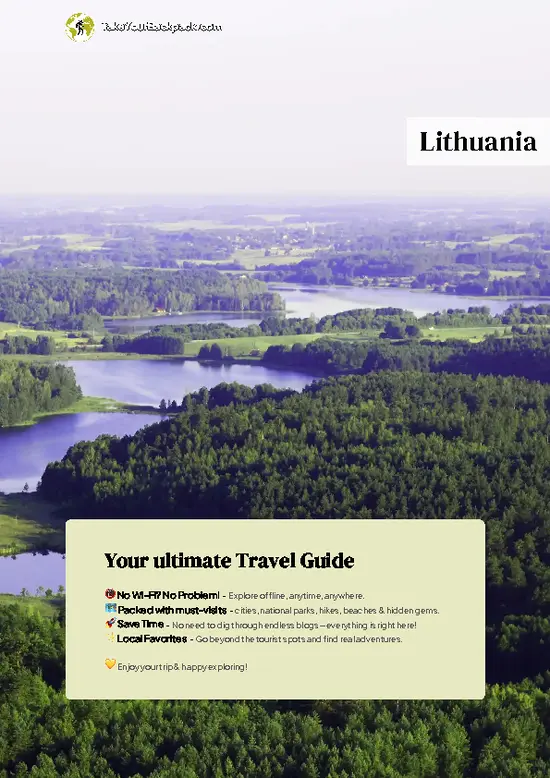
Lithuania was the center of one of medieval Europe’s largest states, then spent long periods under Polish, Russian, Soviet and Nazi rule. The result is a country where Gothic and Baroque architecture, wooden villages, pagan-rooted sites and Soviet-era remnants sit within a few hours of each other. Its flat, forested terrain and short distances make visiting many places simple, and its Baltic location gives it a coastal dune landscape found nowhere else in the region.

Travelers should know that landmarks here are modest in scale compared with Western Europe. Expect brick castles, churches and memorials rather than monumental structures. Much of the story is about suppressed identity and resistance, so context from museums or guides adds a lot. Many sites are small, rural and seasonal, with … read more 👉
Lithuania was the center of one of medieval Europe’s largest states, then spent long periods under Polish, Russian, Soviet and Nazi rule. The result is a country where Gothic and Baroque architecture, wooden villages, pagan-rooted sites and Soviet-era remnants sit within a few hours of each other. Its flat, forested terrain and short distances make visiting many places simple, and its Baltic location gives it a coastal dune landscape found nowhere else in the region.

Travelers should know that landmarks here are modest in scale compared with Western Europe. Expect brick castles, churches and memorials rather than monumental structures. Much of the story is about suppressed identity and resistance, so context from museums or guides adds a lot. Many sites are small, rural and seasonal, with limited English signage outside the main cities. Distances are short, but public transport thins out quickly away from the main corridors.
How the List Was Created
The list of best unique sites in Lithuania is created based on history or culture, wow factor, atmosphere, quirks, and memorability. If you feel a unique site is missing in this list, please let us know.

When to go?Seasonal Guide to Visiting

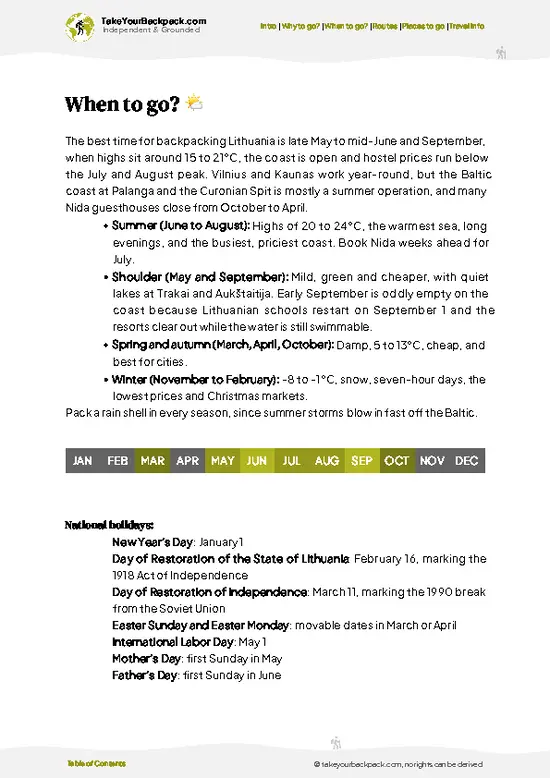
Best months and seasons: The best months for landmarks in Lithuania are May to September, when daytime temperatures run about 15 to 25°C, daylight lasts up to 17 hours in June and most castles, museums and coastal sites keep full hours. July and August are warmest and busiest, especially along the Baltic coast and the Curonian Spit, where accommodation prices can rise 30 to 60 percent.

Shoulder and winter periods: May, early June and September bring thinner crowds, lower prices and mild days around 12 to 20°C, though rain showers are common. October is cool and damp. From November to March temperatures hover around 0°C or below, daylight shrinks to about 7 hours in December, and some rural sites and seasonal attractions shorten hours or close. Coastal areas are windy and quiet in winter, … read more 👉
Best months and seasons: The best months for landmarks in Lithuania are May to September, when daytime temperatures run about 15 to 25°C, daylight lasts up to 17 hours in June and most castles, museums and coastal sites keep full hours. July and August are warmest and busiest, especially along the Baltic coast and the Curonian Spit, where accommodation prices can rise 30 to 60 percent.

Shoulder and winter periods: May, early June and September bring thinner crowds, lower prices and mild days around 12 to 20°C, though rain showers are common. October is cool and damp. From November to March temperatures hover around 0°C or below, daylight shrinks to about 7 hours in December, and some rural sites and seasonal attractions shorten hours or close. Coastal areas are windy and quiet in winter, and many Curonian Spit facilities reduce service. Cities such as Vilnius and Kaunas stay open year-round.

unique site hoppingOptimizing Your Multi-Stop Itinerary

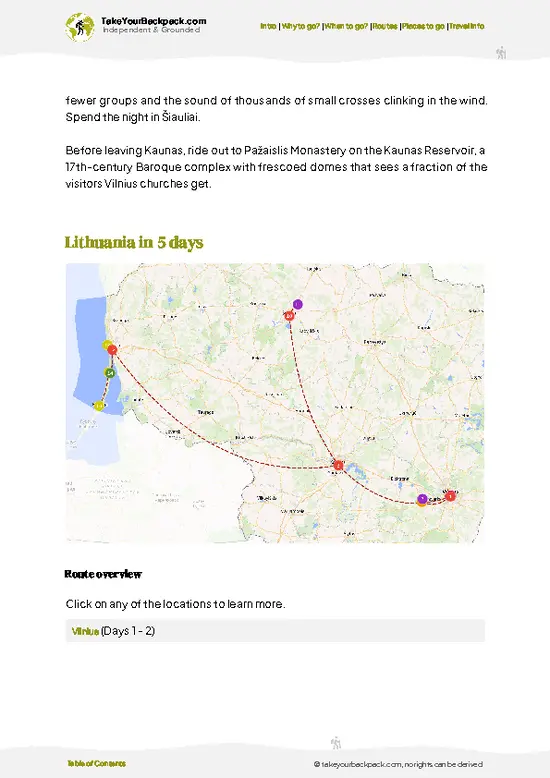
How many days to allow: A trip combining several landmarks in Lithuania needs 7 to 10 days, since distances are short but rural connections are slow. Most travelers start in Vilnius, add a half-day trip to the nearby lake region, then head west to Kaunas, about 1.5 hours by train or bus. From there the route continues north to Šiauliai, or west to Klaipėda and the Curonian Spit, around 3 to 3.5 hours by bus from Kaunas.

Time per stop and pacing: Allow 2 to 4 hours for smaller sites, a full day for Vilnius or Kaunas, and 1 to 2 days on the coast. Direction matters less than avoiding backtracking, so move in one arc, either Vilnius to coast or the reverse.

Common mistakes include underestimating rural bus gaps, where services may run only a few times daily, and cramming three or more distant … read more 👉
How many days to allow: A trip combining several landmarks in Lithuania needs 7 to 10 days, since distances are short but rural connections are slow. Most travelers start in Vilnius, add a half-day trip to the nearby lake region, then head west to Kaunas, about 1.5 hours by train or bus. From there the route continues north to Šiauliai, or west to Klaipėda and the Curonian Spit, around 3 to 3.5 hours by bus from Kaunas.

Time per stop and pacing: Allow 2 to 4 hours for smaller sites, a full day for Vilnius or Kaunas, and 1 to 2 days on the coast. Direction matters less than avoiding backtracking, so move in one arc, either Vilnius to coast or the reverse.

Common mistakes include underestimating rural bus gaps, where services may run only a few times daily, and cramming three or more distant sites into one day. Check timetables first, base yourself in hubs and consider renting a car for the north.

The ListMust-Visit landmarks in Lithuania

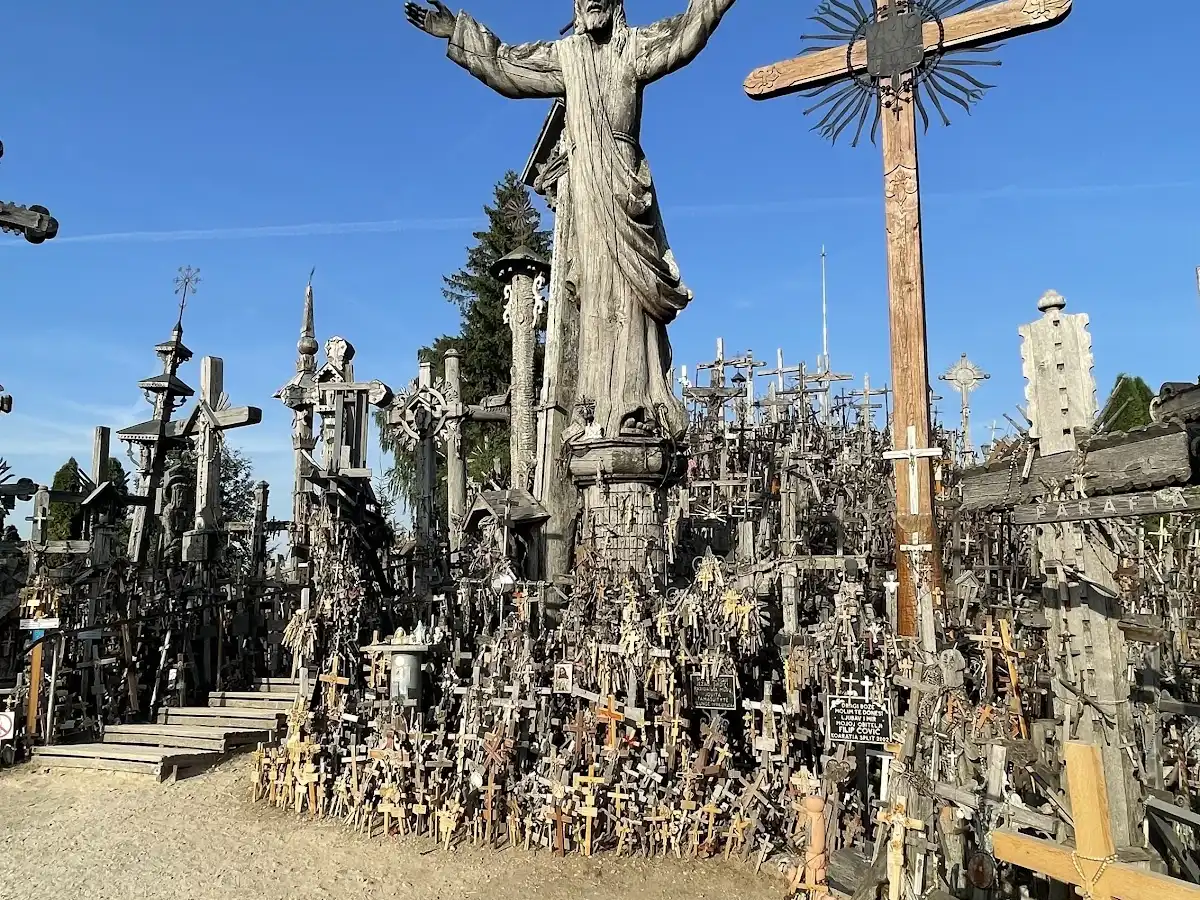
1 Hill of Crosses

hill of crosses, pilgrimage site, folk devotion

Witness thousands of crosses clustered on a windswept rise, each left by visitors marking personal stories, faith, and resilience.

lithuania-unique-site-hill-of-crosses
© Google |

2 Kernavė

ancient hillforts, archaeological reserve, river valley

Walk among grassy mounds where Baltic tribes once gathered, tracing early Lithuanian history in a landscape shaped by centuries of settlement.

lithuania-unique-site-kernave
© Google | Daumantas Kviklys

3 Užutrakis Manor

neoclassical palace, landscaped park, lakeside views

Stroll through formal gardens and tree-lined avenues, pausing to admire tranquil water vistas and ornate interiors reflecting aristocratic tastes.

Loading the map 🌍

Expert viewExpert Commentary on landmarks

How many landmarks to visit: Plan on 4 to 6 landmarks over a week. Lithuanian sites are compact and often take only 1 to 3 hours, but the travel between them, especially in rural areas, takes the real time. More than one significant stop per day usually means rushing for little gain.

Prioritizing by travel style: History-focused travelers should favor Soviet-era and wartime memorials, which need context and often have the best guided tours. Those who like architecture should concentrate on castles and old towns. Nature and quiet seekers will get more from coastal and forest landmarks, which cost almost nothing beyond transport. Mix one major site with one smaller rural stop rather than stacking similar ones.

Budget: A backpacker can manage on US$40 to 70 a day (about €35 to 65), including … read more 👉
How many landmarks to visit: Plan on 4 to 6 landmarks over a week. Lithuanian sites are compact and often take only 1 to 3 hours, but the travel between them, especially in rural areas, takes the real time. More than one significant stop per day usually means rushing for little gain.

Prioritizing by travel style: History-focused travelers should favor Soviet-era and wartime memorials, which need context and often have the best guided tours. Those who like architecture should concentrate on castles and old towns. Nature and quiet seekers will get more from coastal and forest landmarks, which cost almost nothing beyond transport. Mix one major site with one smaller rural stop rather than stacking similar ones.

Budget: A backpacker can manage on US$40 to 70 a day (about €35 to 65), including hostel dorm beds at €15 to 30, local meals and buses. Entry fees are modest: most castles and museums charge €3 to 12, while many memorials and churches are free or donation-based. Guided tours run roughly €10 to 25 per person in groups, and private guides cost €60 to 120. Intercity buses and trains cost about €5 to 15 per leg. The Curonian Spit charges a small per-person or per-vehicle fee, usually in the low single-digit euros, with higher rates in summer.

Safety and cultural considerations: Lithuania is very safe, with low violent crime. Watch for pickpockets in Vilnius old town in summer, and for ticks in forests from spring to autumn. Dress modestly in working churches, and keep voices low. At Holocaust and Soviet repression sites, photography may be restricted, and humor or casual poses are considered disrespectful. Carry cash for small rural sites, since card terminals are not universal. Some places close on Mondays or Tuesdays, and winter hours are shorter. Greeting people in Lithuanian, even a simple “labas”, is appreciated, though English is widely spoken among younger people.

✈️ The backpacker research shortcutLithuania Travel Guide

An offline-friendly backpacking guide with optimized travel routes, ranked highlights, transport advice, and the best areas to stay.
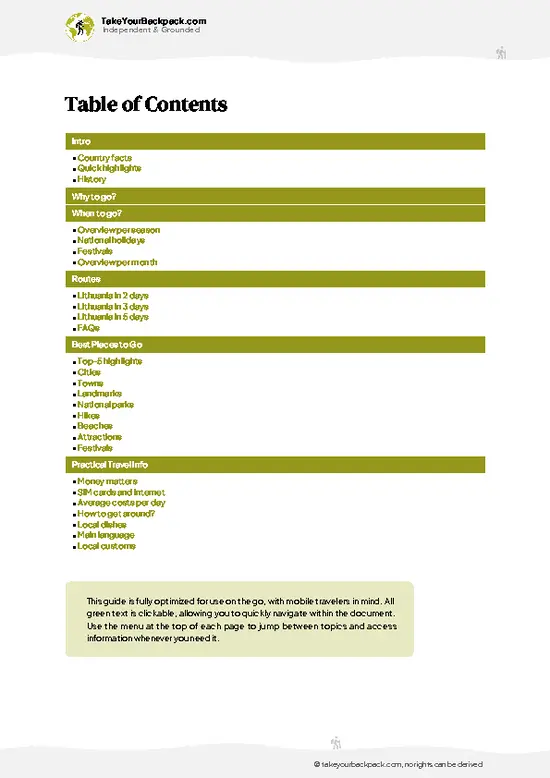
example page 0 from our offline Travel Guide for Lithuania
example page 1 from our offline Travel Guide for Lithuania
example page 2 from our offline Travel Guide for Lithuania
example page 3 from our offline Travel Guide for Lithuania
example page 4 from our offline Travel Guide for Lithuania
example page 5 from our offline Travel Guide for Lithuania
example page 6 from our offline Travel Guide for Lithuania
example page 7 from our offline Travel Guide for Lithuania
The digital guide (269 pages) contains:
✅ 69 highlights, ranked by travel appeal
✅ Optimized 2, 3 & 5-day travel routes
✅ Cities, national parks, landmarks, beaches
✅ How to get around
✅ Offline-friendly for travel without Wi-Fi
👉 Click to see all 30+ guide features

📅 Plan smarter in minutes, not weeks
✅ Month by month travel advice
✅ Festivals & national holidays
✅ Budget expectations

🗺️ Go to the right places, skip the overrated ones
✅ Honest pros & cons of destinations
✅ Top hikes, parks & viewpoints
✅ Lesser-known places most travelers miss
✅ Clear “worth it vs skip it” guidance

🛏️ Travel smoothly without rookie mistakes
✅ Best areas to stay
✅ Transport systems explained simply
✅ Common scams & safety advice
✅ SIM cards, money & practical tips

🌍 Understand the country, not just visit it
✅ Culture & traditions
✅ 52 Essential phrases & customs
✅ Festivals worth planning around
✅ Traveler-friendly historical context
✅ Insights that make places more meaningful

📱 Built for real travel conditions
✅ Fully downloadable PDF
✅ Works completely offline
✅ Optimized for phone use
✅ Useful in remote areas & buses
✅ Everything in one place
Stop searching, start planning
Get instant access to your full guide. 30‑day money-back guarantee.
+ Add another guide for just

By proceeding you agree to our terms.
Sent to your inbox immediately after payment • 100% Secure Checkout
Best Backpacking Travel Advisor 2025 tourism awardBest Backpacking
Travel Advisor
2025
What others say about Take Your Backpack Guides:
⭐⭐⭐⭐⭐
Fantastic, amazing amount of information!
⭐⭐⭐⭐⭐
My goodness this is amazing, it's what I've been looking for hats off too you!
⭐⭐⭐⭐⭐
I think this is absolutely BRILLIANT
⭐⭐⭐⭐
Very complete and informative. It's still missing places, but I gotta to commend you
⭐⭐⭐⭐⭐
This is truly amazing, thank you, can't wait to explore it with my kids!
⭐⭐⭐⭐⭐
Awesome resource, thank you!
⭐⭐⭐⭐⭐
This is amazing! Can't wait to explore the ones I haven't seen
⭐⭐⭐⭐
I love this! Well done, great idea.
⭐⭐⭐⭐⭐
Thanks for taking the time to make this gem!
⭐⭐⭐⭐⭐
This might be the best website I've ever seen.
⭐⭐⭐⭐⭐
Congratulations, and thank you so much for your work; it's incredibly valuable.
⭐⭐⭐⭐
In all seriousness I think you did a great job pointing out the important spots
⭐⭐⭐⭐⭐
10/10 very good
⭐⭐⭐⭐⭐
As someone who's only just starting to visit regularly this is awesome, thank you.
⭐⭐⭐⭐
Thank you very much! I'm going to visit my dad, it's going to be very useful!
⭐⭐⭐⭐⭐
This is really cool! We'll be travelling for the first time and this definitely come in handy.
⭐⭐⭐⭐⭐
You are now our minister of culture, congratulations 👨‍💼
⭐⭐⭐⭐⭐
Just wanted to tell you that this is a pearl! Going to follow your recommendations.
⭐⭐⭐⭐⭐
This is so cool. I'll definitely be using the resource for my travels soon.
⭐⭐⭐⭐⭐
This is very impressive! Good work.
⭐⭐⭐⭐⭐
This is an amazing and informative site. Very well done!

🛏️ Where to stay?Where to Stay in Lithuania

Lithuania has plenty of hostels and budget guesthouses, with dorm beds in Vilnius typically running €12 to €25 a night and private rooms from about €35. In the capital, the Old Town puts you within walking distance of the churches, bars and cafés but can be noisy on weekend nights, the Naujamiestis area near the train and bus stations is cheaper and handy for early departures though less atmospheric, and Užupis is quieter and arty with fewer beds to choose from. In Kaunas, staying in the Old Town or along Laisvės alėja keeps you central and close to nightlife, while Klaipėda’s Old Town is the practical base for ferries to the Curonian Spit and stays calm after dark.

If you enjoy meeting fellow … read more 👉
Lithuania has plenty of hostels and budget guesthouses, with dorm beds in Vilnius typically running €12 to €25 a night and private rooms from about €35. In the capital, the Old Town puts you within walking distance of the churches, bars and cafés but can be noisy on weekend nights, the Naujamiestis area near the train and bus stations is cheaper and handy for early departures though less atmospheric, and Užupis is quieter and arty with fewer beds to choose from. In Kaunas, staying in the Old Town or along Laisvės alėja keeps you central and close to nightlife, while Klaipėda’s Old Town is the practical base for ferries to the Curonian Spit and stays calm after dark.

If you enjoy meeting fellow travelers, consider choosing hostels with high ratings for atmosphere. On the other hand, if you prefer having your own space, a hotel might be a better option.

LithuaniaMore of Lithuania

👋 Meet the founderWho’s Behind Take Your Backpack?

Johan, backpacker and founder of TakeYourBackpackHi, I’m Johan (Netherlands 🇳🇱), the creator of TakeYourBackpack. Over the past 3 decades, I’ve backpacked through 90+ countries across six continents, gaining extensive experience with independent travel, long-term trips, and overland routes.

This site is built on a combination of firsthand travel experience and carefully curated insights from other backpackers. Many guides are based on places I’ve personally visited, while others bring together tips, observations, and practical advice shared by trusted travelers I’ve met along the way.

The goal is to provide realistic, experience-driven guidance — not generic itineraries — so you can explore destinations with better context, clearer expectations, and more confidence.