×

Lithuania🇱🇹 | national parksCuronian Spit National Parksand dunes, Baltic Sea, drifting forests | things to do and best time to go

Explore Aukstaitija National ParkExplore Dzukija National Park

Backpacking in Curonian Spit
🏆 Top picknational park ranked #1
By Johan Kruseman 🇳🇱 | Updated May 21, 2026

Most summaries sell Curonian Spit National Park as endless wild dunes, but the surprising reality for backpackers is how regulated and settled it feels: long stretches are off-limits, and you’re rarely far from a village, a paved road, or a “no walking on dunes” sign. The park runs along Lithuania’s Baltic coast, on the narrow sandbar between Klaipėda and the Russian border. For backpackers, it’s a low-effort, medium-reward destination: easy waymarked forest and coastal paths, mellow cycling, birdlife, and moody sea-and-pine scenery, but no real sense of wilderness or big summit payoff. Access is simple from Klaipėda, yet ferry and park fees, plus higher prices in Nida and other villages, quietly eat into a tight budget. Wild camping is banned and official sites or guesthouses cost more than inland hostels. Compared with Aukštaitija or Žemaitija National Parks, the Curonian Spit is more curated, more expensive, and less adventurous, but also more logistically painless.

Discover everything you want to know in the 📖 Lithuania Travel Guide.
Loading the map 🌍
CLICK TO FILTER
cities
towns
villages
landmarks
national parks
hikes
beaches
attractions
festivals
SHOW COUNTRY’S BESTSHOW ALL

✨ Why go?
Ranked #1 national park in Lithuania
Why Curonian Spit should be on your travel list

Curonian Spit National Park in Lithuania is a backpacker’s dream for several reasons. First, independent exploration is the name of the game here. You can wander the sandy dunes and pine forests at your own pace, soaking in the unique landscapes without the constraints of a tour group.

Budget-conscious travelers will appreciate the camping options and hostels nearby. These accommodations keep costs low, allowing you to save your funds for experiences that matter, like sampling local cuisine or renting a bike to explore the coastline.

The trail variety is another draw. Whether you’re in the mood for a leisurely stroll along the beach or a more challenging hike through the woods, there’s something for everyone. This flexibility makes it easy to tailor your adventure to your energy levels … read more 👉
Curonian Spit National Park in Lithuania is a backpacker’s dream for several reasons. First, independent exploration is the name of the game here. You can wander the sandy dunes and pine forests at your own pace, soaking in the unique landscapes without the constraints of a tour group.

Budget-conscious travelers will appreciate the camping options and hostels nearby. These accommodations keep costs low, allowing you to save your funds for experiences that matter, like sampling local cuisine or renting a bike to explore the coastline.

The trail variety is another draw. Whether you’re in the mood for a leisurely stroll along the beach or a more challenging hike through the woods, there’s something for everyone. This flexibility makes it easy to tailor your adventure to your energy levels and interests.

Curonian Spit is particularly suited for self-guided travelers. The well-marked trails and accessible information make navigation straightforward. You won’t need to rely on a guide to appreciate the park’s beauty. Just pack your gear, and you’re ready to dive into an authentic experience that won’t break the bank.
Want to include Curonian Spit National Park in your Lithuania route?
Create a personalized Lithuania itinerary that includes Curonian Spit National Park and the places that fit your trip — based on your travel style, budget, and available time. Get your route in seconds.

Generate my trip

💡 HighlightsMust-see experiences and standout moments

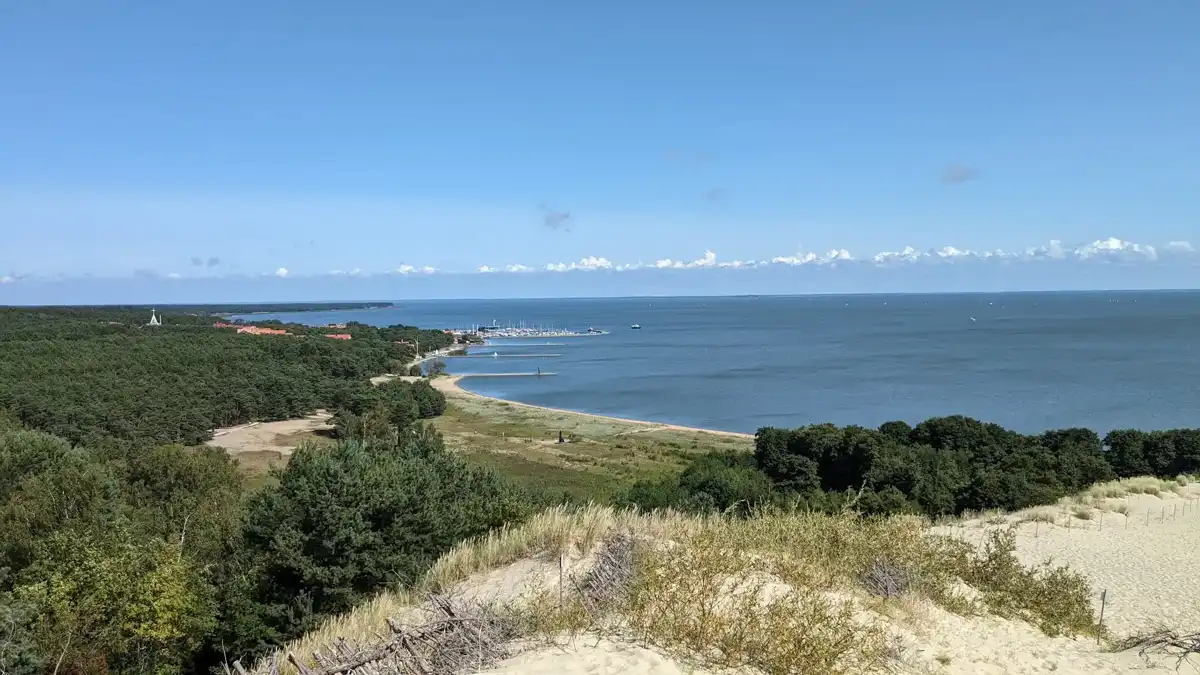
  • Parnidis Dune and Sundial (near Nida): A short but steep climb up a massive dune leads to a wooden observation deck and a stone sundial — panoramic views of the Curonian Lagoon on one side and the Baltic on the other. Great at sunrise or sunset; you’ll feel like you’re on top of the world (and a very sandy one).
  • Dead Dunes (Mirusios kopos): Open, wind-swept sand plains that look almost lunar. These moving dunes are stark, dramatic and perfect for photos or a quiet walk where the only footprints are yours — and the occasional kid sliding down on a board.
  • Nida village and Thomas Mann House: Charming wooden fishermen’s cottages, narrow lanes and dunes pressing close to town. The Thomas Mann summer house (now a small museum) gives a slice of cultural history tucked into the natural landscape.
read more 👉
  • Parnidis Dune and Sundial (near Nida): A short but steep climb up a massive dune leads to a wooden observation deck and a stone sundial — panoramic views of the Curonian Lagoon on one side and the Baltic on the other. Great at sunrise or sunset; you’ll feel like you’re on top of the world (and a very sandy one).
  • Dead Dunes (Mirusios kopos): Open, wind-swept sand plains that look almost lunar. These moving dunes are stark, dramatic and perfect for photos or a quiet walk where the only footprints are yours — and the occasional kid sliding down on a board.
  • Nida village and Thomas Mann House: Charming wooden fishermen’s cottages, narrow lanes and dunes pressing close to town. The Thomas Mann summer house (now a small museum) gives a slice of cultural history tucked into the natural landscape.
  • Juodkrantė and the Hill of Witches (Raganų Kalnas): A pine-forested ridge dotted with dozens of wooden witch carvings along a short walking trail. It’s equal parts folklore, art and forest walk — atmospheric, especially on a breezy afternoon.
  • Curonian Lagoon shoreline & fishing villages (Pervalka, Preila): Low, wide lagoon shores with tranquil water, long sunsets and traditional fishing vibes. These quieter spots are perfect for watching waterbirds, paddling, or just slowing down with a picnic.
  • Bird migration and observatories: The spit is a major migratory corridor — spring and autumn bring huge numbers of passerines and raptors. Bring binoculars; local ringing stations and simple observation points make it one of Europe’s best small-scale birdwatching sites.
  • Pine-forest and coastal trails for hiking & cycling: A network of marked trails and boardwalks threads between villages, dunes and forest. Routes range from short strolls to full-day rides; cycling is fast and fun, and the trails keep you close to the best views without trampling fragile habitats.
Spotted a mistake or missing something? Contact us.
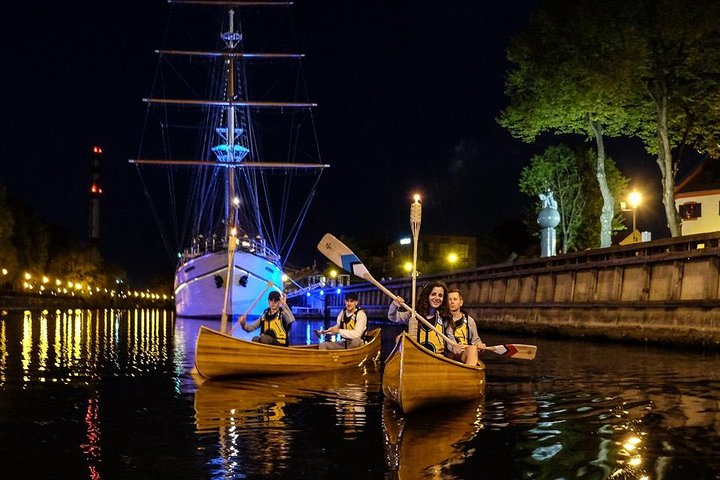
Things to do near Curonian Spit National Park

Ratings based on Tripadvisor reviews. When you book through this link, you support our work at no extra cost to you.

🌤️ When to go?Weather, crowds, and seasonal trade-offs


  • Weather: The Curonian Spit experiences a maritime climate, meaning summers are mild and winters can be quite cold. From June to August, expect temperatures around 17-22°C (63-72°F), ideal for hiking and beach activities. Outside this window, rain and wind increase, especially in autumn and early spring, which can dampen your plans.

  • Temperature: Summer days hover comfortably between 17-22°C (63-72°F), but nights can drop to 10°C (50°F), so pack layers. Winter temperatures often fall below freezing, making backpacking less practical unless you’re prepared for snow and ice.

  • Daylight Hours: In summer, daylight stretches to about 17 hours, giving you plenty of time to explore. Winter days shrink to around 6 hours, limiting hiking opportunities and making early starts essential.

  • Crowds: July and
read more 👉

  • Weather: The Curonian Spit experiences a maritime climate, meaning summers are mild and winters can be quite cold. From June to August, expect temperatures around 17-22°C (63-72°F), ideal for hiking and beach activities. Outside this window, rain and wind increase, especially in autumn and early spring, which can dampen your plans.

  • Temperature: Summer days hover comfortably between 17-22°C (63-72°F), but nights can drop to 10°C (50°F), so pack layers. Winter temperatures often fall below freezing, making backpacking less practical unless you’re prepared for snow and ice.

  • Daylight Hours: In summer, daylight stretches to about 17 hours, giving you plenty of time to explore. Winter days shrink to around 6 hours, limiting hiking opportunities and making early starts essential.

  • Crowds: July and August bring the highest visitor numbers, especially on weekends, which can make popular spots feel cramped. Late spring (May) and early autumn (September) offer a quieter experience without sacrificing decent weather.

  • Seasonal Activities: Summer is prime for swimming, cycling, and birdwatching. Autumn brings vibrant foliage and fewer tourists but cooler weather. Winter is best avoided unless you’re after solitude and prepared for harsh conditions.

  • Price Fluctuations: Accommodation and transport costs peak in July and August. Booking in shoulder seasons like May or September can save you money and still deliver good weather.


Pro-tip: Aim for late May or early September to dodge crowds and high prices while enjoying pleasant weather and extended daylight—perfect for stretching your legs without stretching your budget.


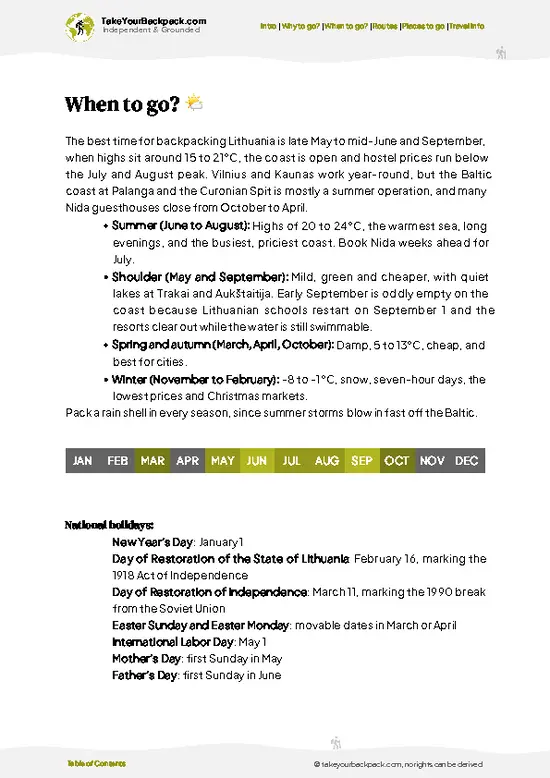
source: climatestotravel.comJANJanuary: below average for travelingFEBFebruary: below average for travelingMARMarch: fair for travelingAPRApril: fair for travelingMAYMay: highly recommended for travelingJUNJune: excellent for travelingJULJuly: highly recommended for travelingAUGAugust: highly recommended for travelingSEPSeptember: highly recommended for travelingOCTOctober: good for travelingNOVNovember: fair for travelingDECDecember: below average for traveling

✈️ The backpacker research shortcutLithuania Travel Guide

An offline-friendly backpacking guide with optimized travel routes, ranked highlights, transport advice, and the best areas to stay.
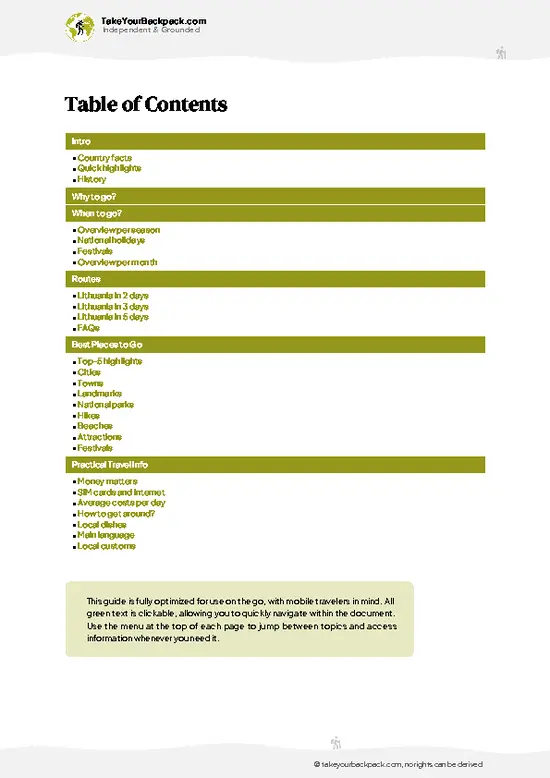
example page 0 from our offline Travel Guide for Lithuania
example page 1 from our offline Travel Guide for Lithuania
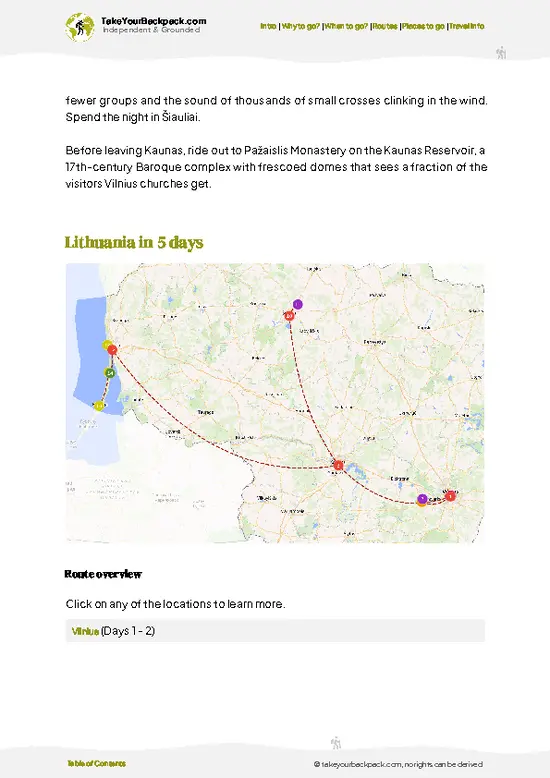
example page 2 from our offline Travel Guide for Lithuania
example page 3 from our offline Travel Guide for Lithuania
example page 4 from our offline Travel Guide for Lithuania
example page 5 from our offline Travel Guide for Lithuania
example page 6 from our offline Travel Guide for Lithuania
example page 7 from our offline Travel Guide for Lithuania
The digital guide (285 pages) contains:
72 highlights, ranked by travel appeal
Optimized 2, 3 & 5-day travel routes
Cities, national parks, landmarks, beaches
How to get around
Offline-friendly for travel without Wi-Fi
👉 Click to see all 30+ guide features

📅 Plan smarter in minutes, not weeks
Month by month travel advice
Festivals & national holidays
Budget expectations

🗺️ Go to the right places, skip the overrated ones
Honest pros & cons of destinations
Top hikes, parks & viewpoints
Lesser-known places most travelers miss
Clear “worth it vs skip it” guidance

🛏️ Travel smoothly without rookie mistakes
Best areas to stay
Transport systems explained simply
Common scams & safety advice
SIM cards, money & practical tips

🌍 Understand the country, not just visit it
Culture & traditions
52 Essential phrases & customs
Festivals worth planning around
Traveler-friendly historical context
Insights that make places more meaningful

📱 Built for real travel conditions
Fully downloadable PDF
Works completely offline
Optimized for phone use
Useful in remote areas & buses
Everything in one place
Save weeks of stressful planning
Get instant access to your full guide. 30‑day money-back guarantee.


By proceeding you agree to our terms.
Sent to your inbox immediately after payment • 100% Secure Checkout
Best Backpacking Travel Advisor 2025 tourism awardBest Backpacking
Travel Advisor
2025
What others say about Take Your Backpack Guides:
⭐⭐⭐⭐⭐
Fantastic, amazing amount of information!
⭐⭐⭐⭐⭐
My goodness this is amazing, it's what I've been looking for hats off too you!
⭐⭐⭐⭐⭐
I think this is absolutely BRILLIANT
⭐⭐⭐⭐
Very complete and informative. It's still missing places, but I gotta to commend you
⭐⭐⭐⭐⭐
This is truly amazing, thank you, can't wait to explore it with my kids!
⭐⭐⭐⭐⭐
Awesome resource, thank you!
⭐⭐⭐⭐⭐
This is amazing! Can't wait to explore the ones I haven't seen
⭐⭐⭐⭐
I love this! Well done, great idea.
⭐⭐⭐⭐⭐
Thanks for taking the time to make this gem!
⭐⭐⭐⭐⭐
This might be the best website I've ever seen.
⭐⭐⭐⭐⭐
Congratulations, and thank you so much for your work; it's incredibly valuable.
⭐⭐⭐⭐
In all seriousness I think you did a great job pointing out the important spots
⭐⭐⭐⭐⭐
10/10 very good
⭐⭐⭐⭐⭐
As someone who's only just starting to visit regularly this is awesome, thank you.
⭐⭐⭐⭐
Thank you very much! I'm going to visit my dad, it's going to be very useful!
⭐⭐⭐⭐⭐
This is really cool! We'll be travelling for the first time and this definitely come in handy.
⭐⭐⭐⭐⭐
You are now our minister of culture, congratulations 👨‍💼
⭐⭐⭐⭐⭐
Just wanted to tell you that this is a pearl! Going to follow your recommendations.
⭐⭐⭐⭐⭐
This is so cool. I'll definitely be using the resource for my travels soon.
⭐⭐⭐⭐⭐
This is very impressive! Good work.
⭐⭐⭐⭐⭐
This is an amazing and informative site. Very well done!

🛏️ Where to stay?Choosing the right base

Curonian Spit National Park is a unique slice of nature, and finding the right place to stay can make or break your experience. Inside the park, accommodations are limited but not non-existent. The small village of Nida is your best bet. It offers a range of options from cozy guesthouses to hostels. Staying here puts you right at the heart of the park, with easy access to the dunes and the Baltic Sea.

If Nida feels a bit too touristy or pricey, consider the nearby town of Juodkrantė. It’s quieter and has a few budget-friendly guesthouses. You’ll still be close enough to the park’s highlights … read more 👉
Curonian Spit National Park is a unique slice of nature, and finding the right place to stay can make or break your experience. Inside the park, accommodations are limited but not non-existent. The small village of Nida is your best bet. It offers a range of options from cozy guesthouses to hostels. Staying here puts you right at the heart of the park, with easy access to the dunes and the Baltic Sea.

If Nida feels a bit too touristy or pricey, consider the nearby town of Juodkrantė. It’s quieter and has a few budget-friendly guesthouses. You’ll still be close enough to the park’s highlights without the crowds.

Another option is to stay in Klaipėda, the nearest city. It’s about a 30-minute drive to the park entrance. While it’s more urban, you’ll find a wider range of accommodations and dining options. Just be mindful of transportation costs and time if you plan to explore the park extensively.

Avoid the temptation of overpriced hotels in tourist hotspots. Instead, look for local stays that offer character and a genuine connection to the area. This way, you preserve your budget and energy for the real adventures waiting in the park.

👛 Costs (as of 3 June 2026)Travel costs and budget guide for Curonian Spit

Curonian Spit National Park in Lithuania is a unique destination, but it’s essential to be aware of the costs involved to avoid surprises.

Entry fees to the park are around €5 per person for adults. Children under 7 typically enter for free, while those aged 7 to 18 may pay a reduced fee of about €2. If you’re planning to visit with a group, there are discounts available, so check ahead.

Parking can be a hidden cost. Expect to pay around €3 to €5 for a day’s parking, depending on the location. If you’re using public transport, a bus ride from Klaipėda to the park costs about €2 to €3 one way.

Accommodation varies widely. You can find budget hostels starting at €15 per night, while mid-range hotels may charge between €50 and €100. For a more unique experience, consider renting a cabin or … read more 👉
Curonian Spit National Park in Lithuania is a unique destination, but it’s essential to be aware of the costs involved to avoid surprises.

Entry fees to the park are around €5 per person for adults. Children under 7 typically enter for free, while those aged 7 to 18 may pay a reduced fee of about €2. If you’re planning to visit with a group, there are discounts available, so check ahead.

Parking can be a hidden cost. Expect to pay around €3 to €5 for a day’s parking, depending on the location. If you’re using public transport, a bus ride from Klaipėda to the park costs about €2 to €3 one way.

Accommodation varies widely. You can find budget hostels starting at €15 per night, while mid-range hotels may charge between €50 and €100. For a more unique experience, consider renting a cabin or guesthouse, which can range from €60 to €150 per night, depending on the season.

Food prices are reasonable. A meal at a local restaurant will typically set you back €10 to €20. If you opt for self-catering, grocery prices are similar to those in Western Europe.

Plan for additional costs like guided tours, which can range from €20 to €50 per person, depending on the length and type of tour. Renting bikes or kayaks for exploring the area will also add to your budget, with prices around €10 to €25 per day.

Being aware of these costs will help you manage your budget effectively, allowing you to focus on enjoying the stunning landscapes and unique wildlife of Curonian Spit National Park.


source: visitneringa.com
⚠️ Prices can change and everyone travels differently, so take this as a rough guide. Hope it helps you plan your adventure!

🥾 TrailsExploring Curonian Spit: trails, terrain, and views

The Curonian Spit National Park is a hidden gem in Lithuania, offering a unique blend of stunning coastal views, lush forests, and shifting sand dunes. The terrain is a mix of flat paths along the beach and more challenging routes through dense woodland, making it accessible for various skill levels. Wildlife enthusiasts will appreciate the diverse bird species, especially during migration seasons, while the occasional deer or fox might make an appearance.

One of the standout trails is the Curonian Spit Trail, which is a must-do for any hiker. Here are the details:
  • Length: 62 km
  • Estimated Duration:
read more 👉
The Curonian Spit National Park is a hidden gem in Lithuania, offering a unique blend of stunning coastal views, lush forests, and shifting sand dunes. The terrain is a mix of flat paths along the beach and more challenging routes through dense woodland, making it accessible for various skill levels. Wildlife enthusiasts will appreciate the diverse bird species, especially during migration seasons, while the occasional deer or fox might make an appearance.

One of the standout trails is the Curonian Spit Trail, which is a must-do for any hiker. Here are the details:
  • Length: 62 km
  • Estimated Duration: 3-4 days (depending on pace)
  • Difficulty Level: Moderate
  • Key Features: Breathtaking views of the Baltic Sea, picturesque fishing villages, and the famous dancing dunes.
  • Terrain: A mix of sandy paths, forest trails, and coastal routes.

Getting to the park is pretty straightforward. Public transport options include buses from major cities like Klaipėda, which is a short ride away. Just keep in mind that it can get a bit crowded during peak summer months, especially around popular spots like Nida. As for entrance fees, there’s typically a small charge for accessing certain areas of the park, but it’s worth it for the scenery and tranquility you’ll find.
⚠️ Hiking info can sometimes be outdated or inaccurate. Before you hit the trail, check the latest conditions with locals. If you do spot anything that's off, I'd love to hear from you, so I can update it for fellow travelers.

🛡️ SafetyStaying Safe: What Travelers Should Know

Curonian Spit National Park is generally a welcoming place for backpackers, but a few realities can enhance your experience. The weather can shift quickly, especially near the coast. Be prepared for sudden gusts or rain, even in summer. Layer your clothing and pack a lightweight, waterproof jacket to stay comfortable.

The terrain is mostly flat, making navigation straightforward, but watch for sandy sections that can slow you down. Footing can be tricky near the dunes, so sturdy footwear is essential. While there are no significant river crossings, you might encounter muddy patches after rain, so keep an eye on your route.

Wildlife is part of the charm here. You might spot deer or various bird species. Respect their space; observe from a distance and avoid feeding them.

First-timers often … read more 👉
Curonian Spit National Park is generally a welcoming place for backpackers, but a few realities can enhance your experience. The weather can shift quickly, especially near the coast. Be prepared for sudden gusts or rain, even in summer. Layer your clothing and pack a lightweight, waterproof jacket to stay comfortable.

The terrain is mostly flat, making navigation straightforward, but watch for sandy sections that can slow you down. Footing can be tricky near the dunes, so sturdy footwear is essential. While there are no significant river crossings, you might encounter muddy patches after rain, so keep an eye on your route.

Wildlife is part of the charm here. You might spot deer or various bird species. Respect their space; observe from a distance and avoid feeding them.

First-timers often underestimate the importance of timing. Start your hikes early to avoid the heat and crowds. Carry enough water and snacks to keep your energy up. With these tips, you’ll be set to enjoy the park’s beauty without unnecessary stress.

Other Lithuanian national parks near Curonian Spit

Explore more nearby:


💡 Not sure where to go next?
Create a personalized itinerary for Lithuania including Curonian Spit and the places that fit your trip.

Generate my itinerary

👉 Discover all national parks

Or checkout all Lithuania has to offer (think cities, towns, villages, national parks, hikes, beaches, festivals)
Country photo of Lithuania

We 💚 feedbackWhat to keep in mind

Curonian Spit National Park has a unique vibe that feels like stepping into a different world. The shifting dunes and tranquil forests are a breath of fresh air. Don’t miss the local fish markets; the smoked eel is a delightful surprise. Just be aware that the weather can change quickly, so pack layers. It’s easy to get lost in the beauty, but keep an eye on your time—sunsets here are worth every second. Enjoy the quiet moments; they’re what make this place special.

✍️ Help improve this page!
The information on this page is based on in-depth research, insights shared by experienced travelers, and feedback from the local travel community in Lithuania. While every effort is made to keep the information accurate and current, conditions can change — so if you spot anything incorrect or outdated, please get in touch.


🙋‍♂️ Give feedback

👋 Meet the founderWho’s Behind Take Your Backpack?

Johan, backpacker and founder of TakeYourBackpackHi, I’m Johan (Netherlands 🇳🇱), the creator of TakeYourBackpack. Over the past decade, I’ve backpacked through 80+ countries across six continents, gaining extensive experience with independent travel, long-term trips, and overland routes.

This site is built on a combination of firsthand travel experience and carefully curated insights from other backpackers. Many guides are based on places I’ve personally visited, while others bring together tips, observations, and practical advice shared by trusted travelers I’ve met along the way.

The goal is to provide realistic, experience-driven guidance — not generic itineraries — so you can explore destinations with better context, clearer expectations, and more confidence.

Get full Lithuania guide •
Instant download • 72 highlights • Full Offline guide