
- Remich promenade & Moselle river cruises — The little town everyone stops in for a reason: a shady riverside promenade, cafés spilling onto the quay and small boat operators offering one- to two-hour cruises that put the vineyards, bridges and villages into context. It’s an easy, low-cost way to feel the valley’s rhythm and see the terraces from the water.
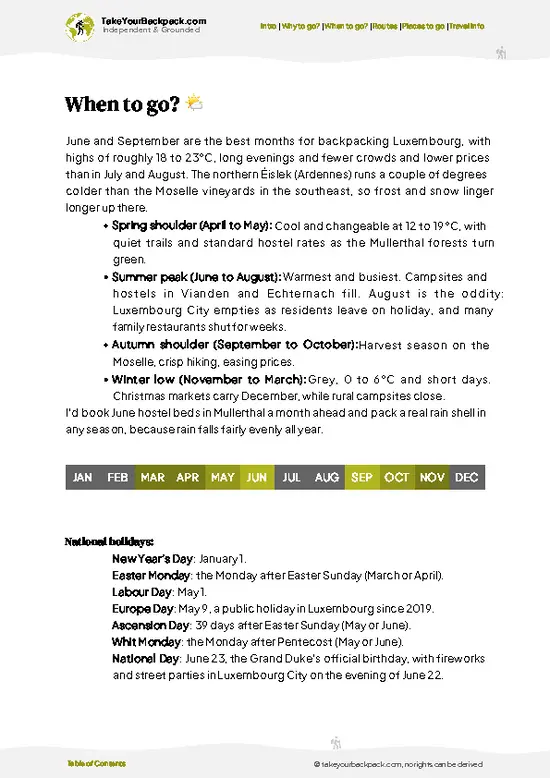
- Haff Réimech (Remerschen) nature reserve — Hidden gem: a reed-fringed lagoon and flat wetland just off the Moselle that’s brilliant for birdwatching, quiet walks and wildflower season. Locals go here for sunrise, not selfies—the silence and the dragonflies are the real draw.
- Ehnen wine village and viticultural trails — Hidden gem: a compact, characterful village where lanes run straight into vines. You can wander between tiny presses,
- Remich promenade & Moselle river cruises — The little town everyone stops in for a reason: a shady riverside promenade, cafés spilling onto the quay and small boat operators offering one- to two-hour cruises that put the vineyards, bridges and villages into context. It’s an easy, low-cost way to feel the valley’s rhythm and see the terraces from the water.
- Haff Réimech (Remerschen) nature reserve — Hidden gem: a reed-fringed lagoon and flat wetland just off the Moselle that’s brilliant for birdwatching, quiet walks and wildflower season. Locals go here for sunrise, not selfies—the silence and the dragonflies are the real draw.
- Ehnen wine village and viticultural trails — Hidden gem: a compact, characterful village where lanes run straight into vines. You can wander between tiny presses, tasting tables and medieval stonework without the crowds, then join the local vineyard footpaths that loop up into quiet terraces.
- Wormeldange’s steep vineyard terraces — The Moselle’s steep slopes are the reason Luxembourg punches above its weight for Riesling and Auxerrois. Wormeldange gives you the classic terraced-vine views and short, rewarding hikes that feel like walking inside a wine label—only with better sampling opportunities at the end.
- Family wine cellars and domaine tastings — Forget corporate tasting rooms: the Moselle Valley is dotted with family domaines where you can taste regional varieties (Elbling, Auxerrois, Riesling, Pinot) straight from small cellars. Ask to book a cellar tasting or turn up during harvest season for a more hands-on feel.
- Château de Stadtbredimus and riverside park — Hidden gem: a tidy riverside castle and grounds that sit right on the Moselle, quieter than the big-name fortresses and great for a picnic, a wander through old trees and taking in local history without the tourist swarm.
- Bech-Kleinmacher village & vineyard walks — A small, authentic village with narrow streets that open onto vineyard paths and viewpoints. It’s the kind of place where you’ll pass grape pickers or stumble on a roadside cellar door—simple, local and hard to replicate outside the Moselle culture.
- The Moselle cycle route (riverside bike paths) — Smooth, mostly-flat cycling along the river connects town to town and lets you hop from tasting room to terrace viewpoint in one afternoon. Bring a lock and stop for a cold bottle beside the water—way more efficient (and cheaper) than taxis.
- Grevenmacher riverside & wine market atmosphere — The town is a good base for exploring vineyards and has a pleasant riverside stretch, bakeries and seasonal wine markets where locals meet. It’s less stage-managed than the headline wine towns, so you get a truer slice of everyday Moselle life.
- Small ferry crossings and pedestrian bridges — The short local ferries and footbridges that hop across the Moselle are a low-key highlight: cheap, practical and oddly scenic. Use them to stitch together hikes or bike loops into Germany/Belgium border views, and enjoy the fact that each crossing brings a new lineup of vineyards and village faces.
Spotted a mistake or missing something? Contact us.

 Best Backpacking
 Hi, I’m Johan (Netherlands 🇳🇱), the creator of TakeYourBackpack. Over the past 3 decades, I’ve backpacked through 90+ countries across six continents, gaining extensive experience with independent travel, long-term trips, and overland routes.