×

Macau🇲🇴 | landmarksKuan Tai Templered pillars, warrior deity, folk rituals | things to do and best time to go

Explore A-Ma TempleExplore Macao Tower

Backpacking in Kuan Tai Temple
👀 For curious travelersunique site ranked #11
By Johan Kruseman 🇳🇱 | Updated October 15, 2026

Incense smoke curls into your eyes as a fist-sized drum thuds somewhere behind you, and a local uncle in flip-flops steps past to light three sticks with the precision of muscle memory. You’re in Kuan Tai Temple, tucked in the old streets of Rua de São Paulo in Macau’s historic core, a short wander uphill from the tourist crush around the Ruins of St. Paul’s. This place is small, cheap or free to enter, and absolutely not a grand, jaw-drop temple; the wow-factor is in the grit, the soot-black beams, the fortune slips, and the quiet locals actually praying. It can feel cramped, hard to photograph without being rude, and you’ll be done in 20-30 minutes, but for backpackers chasing real, lived-in culture instead of casino neon, Kuan Tai Temple hits far harder than its size suggests.

Discover everything you want to know in the 📖 Macau Travel Guide.


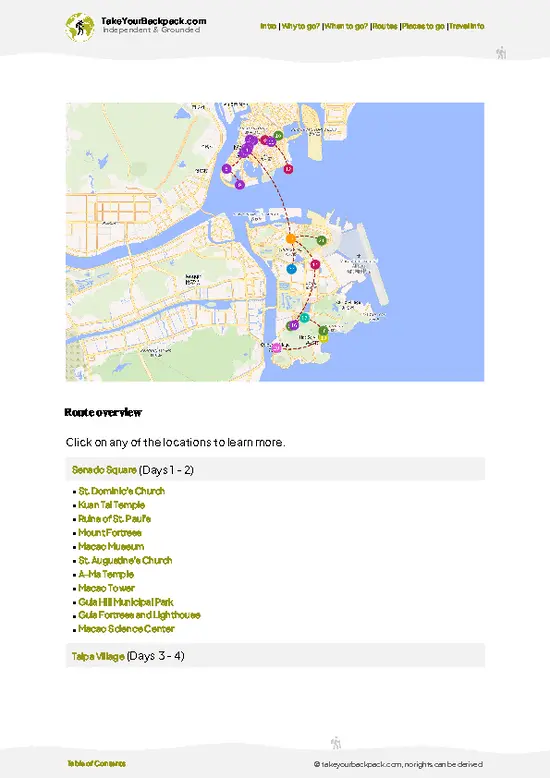
example page 0 from our offline Travel Guide for Macau
example page 1 from our offline Travel Guide for Macau
example page 2 from our offline Travel Guide for Macau
example page 3 from our offline Travel Guide for Macau
example page 4 from our offline Travel Guide for Macau
example page 5 from our offline Travel Guide for Macau
example page 6 from our offline Travel Guide for Macau
example page 7 from our offline Travel Guide for Macau
Loading the map 🌍
CLICK TO FILTER
towns
villages
landmarks
national parks
hikes
beaches
attractions
festivals
regions
SHOW COUNTRY’S BESTSHOW ALL

✨ Why go?
Ranked #11 unique site in Macau
Reasons people choose to visit here

Kuan Tai Temple in Macau isn’t just another stop on the tourist trail; it’s a breath of fresh air amid the chaos. Yes, you’ll encounter crowds, but that’s part of the experience. This temple, dedicated to the God of War, offers a glimpse into local spirituality that’s often overshadowed by flashy casinos.

The cost? Free. You can wander through its intricate carvings and vibrant colors without spending a dime. It’s a perfect pit stop if you’re exploring the historic center or heading to the nearby A-Ma Temple.

What makes it worth your time? The authenticity. You’ll see locals lighting incense and offering prayers, giving you a taste of real life in Macau. It’s a moment of peace that contrasts sharply with the city’s hustle. Trust me, this is where the real magic happens.

💡 HighlightsTop highlights of Kuan Tai Temple

  • Main Statue of Kuan Tai: The towering, red-faced warrior figure dominates the main hall — a classic image of Guan Yu in full armor that draws crowds for its intense presence and the sense of protection and loyalty it represents.
  • Ceramic Roof Figures and Dragons: Up close you can see the glazed ceramic ridge decorations and tiny sculpted dragons — southern Chinese temple craftsmanship that pops with color and detail against Macau’s skyline.
  • Painted Beams and Wood Carvings: Look up at the beams and panels for hand-painted scenes and finely carved woodwork — these are where local artisans’ skill and storytelling really show through.
  • Hanging Incense Coils and Atmosphere: The slow-turning incense coils and drifting smoke create a moody, photogenic space; the scent and low light are half the
… read more 👉
  • Main Statue of Kuan Tai: The towering, red-faced warrior figure dominates the main hall — a classic image of Guan Yu in full armor that draws crowds for its intense presence and the sense of protection and loyalty it represents.
  • Ceramic Roof Figures and Dragons: Up close you can see the glazed ceramic ridge decorations and tiny sculpted dragons — southern Chinese temple craftsmanship that pops with color and detail against Macau’s skyline.
  • Painted Beams and Wood Carvings: Look up at the beams and panels for hand-painted scenes and finely carved woodwork — these are where local artisans’ skill and storytelling really show through.
  • Hanging Incense Coils and Atmosphere: The slow-turning incense coils and drifting smoke create a moody, photogenic space; the scent and low light are half the experience (and great for atmospheric snaps).
  • Bronze Censer, Bells and Ritual Objects: The huge bronze censer in the courtyard, plus bells and ceremonial weapons inside, give a tangible feel for the temple’s ritual life — they aren’t just decorative, they’re used.
  • Couplets, Plaques and Donor Inscriptions: The wooden couplets and stone/metal plaques list donors and blessings — reading them gives insight into the temple’s community role and the people who kept it running over generations.
  • Festivals and Lion Dances: When the temple marks Guan Yu’s birthday or local festivals it comes alive with lion dances, offerings and processions — the best time to feel the cultural heartbeat and join the crowd.
Spotted a mistake or missing something? Contact us.

🌤️ When to go?Choosing the right time of year

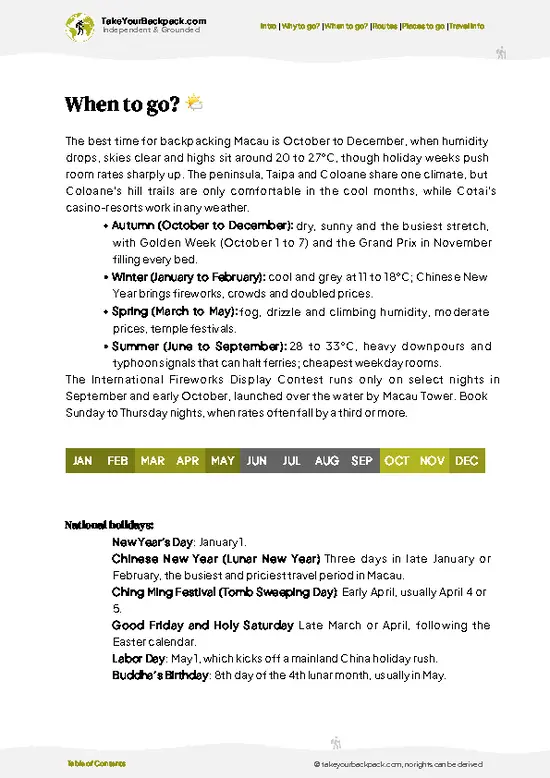
  • Weather: Macau’s subtropical climate means summers (June to August) are hot and sticky, often hitting 28-32°C (82-90°F) with heavy rain. Not ideal for wandering temple grounds. Spring (March to May) and autumn (September to November) offer mild, dry weather perfect for exploring without sweating buckets.
  • Temperature: Winters are mild, around 12-18°C (54-64°F), but can feel chilly in the damp air. Spring and autumn hover comfortably between 18-25°C (64-77°F), making temple visits pleasant and less rushed.
  • Daylight Hours: Longer days from April to September give you more time to soak in the temple’s details and surrounding streets before dusk. Shorter winter days mean less daylight for sightseeing.
  • Crowds: Weekends and public holidays pack the temple with tourists and locals alike, especially
… read more 👉
  • Weather: Macau’s subtropical climate means summers (June to August) are hot and sticky, often hitting 28-32°C (82-90°F) with heavy rain. Not ideal for wandering temple grounds. Spring (March to May) and autumn (September to November) offer mild, dry weather perfect for exploring without sweating buckets.
  • Temperature: Winters are mild, around 12-18°C (54-64°F), but can feel chilly in the damp air. Spring and autumn hover comfortably between 18-25°C (64-77°F), making temple visits pleasant and less rushed.
  • Daylight Hours: Longer days from April to September give you more time to soak in the temple’s details and surrounding streets before dusk. Shorter winter days mean less daylight for sightseeing.
  • Crowds: Weekends and public holidays pack the temple with tourists and locals alike, especially during Chinese New Year and the Mid-Autumn Festival. Visiting on a weekday morning cuts through the noise and lines.
  • Seasonal Activities: Festivals bring vibrant rituals and incense smoke that add depth to the experience but also crowd the space. If you want the spiritual buzz without the crush, skip peak festival days.
  • Price Fluctuations: Macau’s accommodation and transport costs spike during major festivals and weekends. Planning your visit in the shoulder seasons can save you a decent chunk of cash.
Pro-tip: Aim for a weekday in late spring or early autumn—cool, calm, and cost-effective—so you get the temple’s soul without the tourist swarm or sweat.


source: climatestotravel.comJANJanuary: good for travelingFEBFebruary: good for travelingMARMarch: highly recommended for travelingAPRApril: excellent for travelingMAYMay: excellent for travelingJUNJune: fair for travelingJULJuly: fair for travelingAUGAugust: fair for travelingSEPSeptember: excellent for travelingOCTOctober: excellent for travelingNOVNovember: highly recommended for travelingDECDecember: good for traveling
when-to-go

✈️ The backpacker research shortcutMacau Travel Guide

An offline-friendly backpacking guide with optimized travel routes, ranked highlights, transport advice, and the best areas to stay.
example page 0 from our offline Travel Guide for Macau
example page 1 from our offline Travel Guide for Macau
example page 2 from our offline Travel Guide for Macau
example page 3 from our offline Travel Guide for Macau
example page 4 from our offline Travel Guide for Macau
example page 5 from our offline Travel Guide for Macau
example page 6 from our offline Travel Guide for Macau
example page 7 from our offline Travel Guide for Macau
The digital guide (126 pages) contains:
✅ 33 highlights, ranked by travel appeal
✅ Optimized 2, 3 & 5-day travel routes
✅ Cities, national parks, landmarks, beaches
✅ How to get around
✅ Offline-friendly for travel without Wi-Fi
👉 Click to see all 30+ guide features

📅 Plan smarter in minutes, not weeks
✅ Month by month travel advice
✅ Festivals & national holidays
✅ Budget expectations

🗺️ Go to the right places, skip the overrated ones
✅ Honest pros & cons of destinations
✅ Top hikes, parks & viewpoints
✅ Lesser-known places most travelers miss
✅ Clear “worth it vs skip it” guidance

🛏️ Travel smoothly without rookie mistakes
✅ Best areas to stay
✅ Transport systems explained simply
✅ Common scams & safety advice
✅ SIM cards, money & practical tips

🌍 Understand the country, not just visit it
✅ Culture & traditions
✅ 52 Essential phrases & customs
✅ Festivals worth planning around
✅ Traveler-friendly historical context
✅ Insights that make places more meaningful

📱 Built for real travel conditions
✅ Fully downloadable PDF
✅ Works completely offline
✅ Optimized for phone use
✅ Useful in remote areas & buses
✅ Everything in one place
Stop searching, start planning
Get instant access to your full guide. 30‑day money-back guarantee.
+ Add another guide for just

By proceeding you agree to our terms.
Sent to your inbox immediately after payment • 100% Secure Checkout
Best Backpacking Travel Advisor 2025 tourism awardBest Backpacking
Travel Advisor
2025
What others say about Take Your Backpack Guides:
⭐⭐⭐⭐⭐
Fantastic, amazing amount of information!
⭐⭐⭐⭐⭐
My goodness this is amazing, it's what I've been looking for hats off too you!
⭐⭐⭐⭐⭐
I think this is absolutely BRILLIANT
⭐⭐⭐⭐
Very complete and informative. It's still missing places, but I gotta to commend you
⭐⭐⭐⭐⭐
This is truly amazing, thank you, can't wait to explore it with my kids!
⭐⭐⭐⭐⭐
Awesome resource, thank you!
⭐⭐⭐⭐⭐
This is amazing! Can't wait to explore the ones I haven't seen
⭐⭐⭐⭐
I love this! Well done, great idea.
⭐⭐⭐⭐⭐
Thanks for taking the time to make this gem!
⭐⭐⭐⭐⭐
This might be the best website I've ever seen.
⭐⭐⭐⭐⭐
Congratulations, and thank you so much for your work; it's incredibly valuable.
⭐⭐⭐⭐
In all seriousness I think you did a great job pointing out the important spots
⭐⭐⭐⭐⭐
10/10 very good
⭐⭐⭐⭐⭐
As someone who's only just starting to visit regularly this is awesome, thank you.
⭐⭐⭐⭐
Thank you very much! I'm going to visit my dad, it's going to be very useful!
⭐⭐⭐⭐⭐
This is really cool! We'll be travelling for the first time and this definitely come in handy.
⭐⭐⭐⭐⭐
You are now our minister of culture, congratulations 👨‍💼
⭐⭐⭐⭐⭐
Just wanted to tell you that this is a pearl! Going to follow your recommendations.
⭐⭐⭐⭐⭐
This is so cool. I'll definitely be using the resource for my travels soon.
⭐⭐⭐⭐⭐
This is very impressive! Good work.
⭐⭐⭐⭐⭐
This is an amazing and informative site. Very well done!

🛏️ Where to stay?How to pick the right area

Staying near Kuan Tai Temple in Macau? You’ll want to focus on the neighborhoods that balance safety, social vibes, and affordability.

Start with the area around Senado Square. It’s buzzing with energy and close to the temple, making it a prime spot for backpackers. You’ll find a mix of budget accommodations and local eateries. Plus, the street performances and markets create a lively atmosphere that’s perfect for solo travelers looking to connect.

Another solid choice is the Rua do Campo area. It’s a bit quieter but still within walking distance to the temple. Here, you can find guesthouses … read more 👉
Staying near Kuan Tai Temple in Macau? You’ll want to focus on the neighborhoods that balance safety, social vibes, and affordability.

Start with the area around Senado Square. It’s buzzing with energy and close to the temple, making it a prime spot for backpackers. You’ll find a mix of budget accommodations and local eateries. Plus, the street performances and markets create a lively atmosphere that’s perfect for solo travelers looking to connect.

Another solid choice is the Rua do Campo area. It’s a bit quieter but still within walking distance to the temple. Here, you can find guesthouses that offer a more local experience, often run by friendly families.

Avoid the tourist traps near the Cotai Strip; they’re overpriced and lack the authentic charm you’re after. Stick to these neighborhoods for a genuine taste of Macau’s culture without breaking the bank.

👛 Costs (as of 15 October 2026)Typical daily expenses

Visiting Kuan Tai Temple in Macau offers a blend of spirituality and culture, but it comes with its own set of costs. Here’s a breakdown to help you navigate your budget effectively.
  • Entry Fee: The temple is free to enter, which is a huge plus. You can wander through the serene spaces without spending a dime. Just be respectful; this is a place of worship, not a photo op.
  • Transportation: Getting to the temple can vary. If you’re taking a bus, expect to pay around €1-€2 (or $1-$2). Taxis are more convenient but will set you back about €10-€15 ($10-$15) from major hotels. If you’re feeling adventurous, walking from nearby attractions is a great way to soak in the local vibe.
  • Food and Drink: After your visit, you might want to grab a bite. Local eateries offer meals for about €5-€15 ($5-$15). Street
… read more 👉
Visiting Kuan Tai Temple in Macau offers a blend of spirituality and culture, but it comes with its own set of costs. Here’s a breakdown to help you navigate your budget effectively.
  • Entry Fee: The temple is free to enter, which is a huge plus. You can wander through the serene spaces without spending a dime. Just be respectful; this is a place of worship, not a photo op.
  • Transportation: Getting to the temple can vary. If you’re taking a bus, expect to pay around €1-€2 (or $1-$2). Taxis are more convenient but will set you back about €10-€15 ($10-$15) from major hotels. If you’re feeling adventurous, walking from nearby attractions is a great way to soak in the local vibe.
  • Food and Drink: After your visit, you might want to grab a bite. Local eateries offer meals for about €5-€15 ($5-$15). Street food is a fantastic option too, with snacks around €1-€3 ($1-$3). Don’t miss out on trying some traditional dishes!
  • Souvenirs: If you’re looking to take something home, budget around €5-€20 ($5-$20) for small trinkets or religious items. The temple itself has a few shops, but prices can be higher than in local markets.
  • Guided Tours: If you want a deeper understanding of the temple’s history, consider a guided tour. Prices range from €15-€30 ($15-$30) depending on the length and inclusivity of the experience. It’s worth it for the insights you’ll gain.

Keep these costs in mind as you plan your visit. The temple’s atmosphere and cultural significance make it a worthwhile stop, even amidst the hustle of Macau.


source: macaotourism.gov.mo
⚠️ Prices can change and everyone travels differently, so take this as a rough guide. Hope it helps you plan your adventure!

FAQCommon questions from travelers

Kuan Tai Temple is a historic Taoist temple in Macau dedicated to the god of war, Kuan Tai. It was built in 1627 and is one of the oldest temples in the region, known for its intricate decorations and cultural significance.
You need about 30 to 45 minutes to visit Kuan Tai Temple, enough time to explore the main hall, admire the detailed carvings, and take photos. The temple is compact but rich in history and art.
To get to Kuan Tai Temple, take a bus or taxi to the Macau Peninsula, near the A-Ma Temple area. It is located about 2 kilometers from the city center, easily reachable by a 10-minute taxi ride or a 20-minute walk from Senado Square.
⚠️ Things can change over time, so always validate details locally before you go.

Other Macanese landmarks near Kuan Tai Temple

Explore more nearby:


💡 Not sure where to go next?
Create a personalized itinerary for Macau including Kuan Tai Temple and the places that fit your trip.

Generate my itinerary

👉 Discover all landmarks

Or checkout all Macau has to offer (think cities, towns, villages, national parks, hikes, beaches, festivals)
Country photo of Macau

We 💚 feedbackWhat to keep in mind

Kuan Tai Temple isn’t just another stop on the tourist trail. It’s a slice of serenity amid Macau’s chaos. The incense wafts through the air, grounding you in the moment. Don’t miss the intricate carvings—they’re a stunning surprise. Just be ready for crowds, especially during festivals. Go early for a quieter experience; it’s worth it.

✍️ Help improve this page!
The information on this page is based on in-depth research, insights shared by experienced travelers, and feedback from the local travel community in Macau. While every effort is made to keep the information accurate and current, conditions can change — so if you spot anything incorrect or outdated, please get in touch.


🙋‍♂️ Give feedback

👋 Meet the founderWho’s Behind Take Your Backpack?

Johan, backpacker and founder of TakeYourBackpackHi, I’m Johan (Netherlands 🇳🇱), the creator of TakeYourBackpack. Over the past 3 decades, I’ve backpacked through 90+ countries across six continents, gaining extensive experience with independent travel, long-term trips, and overland routes.

This site is built on a combination of firsthand travel experience and carefully curated insights from other backpackers. Many guides are based on places I’ve personally visited, while others bring together tips, observations, and practical advice shared by trusted travelers I’ve met along the way.

The goal is to provide realistic, experience-driven guidance — not generic itineraries — so you can explore destinations with better context, clearer expectations, and more confidence.