×

Madagascar🇲🇬 | festivalsFamadihanaAncestor reburial, family gatherings, silk shrouds | things to do and best time to go

Explore Madajazzcar FestivalExplore Festival des Baleines

Backpacking in Famadihana
🏆 Top pickfestival ranked #1
By Johan Kruseman 🇳🇱 | Updated July 19, 2026

If you’re chasing a sanitized, Instagram-perfect festival—skip Famadihana. This isn’t a parade for tourists or a spectacle staged for your camera roll. But if you’re the kind of backpacker who thrives on raw, kinetic energy and wants to feel the pulse of Madagascar beyond the postcard, Famadihana will test and reward you. You’ll find it in the highland villages around Antsirabe and Ambositra, deep in the red-dust heart of the central plateau.

Famadihana is the “turning of the bones”—a family-driven ritual where ancestors are exhumed, rewrapped, and celebrated with pounding drums, accordion riffs, and a swirl of dancing relatives. The air is thick with sweat, smoke, and the kind of joy that’s earned, not bought. Outsiders are tolerated if you’re respectful, but you’re not the audience; you’re a witness. The festival can last a day or stretch into a weekend, depending on the family. It’s not for everyone, but if you want to understand Madagascar’s soul, this is where you start.

Discover everything you want to know in the 📖 Madagascar Travel Guide.
Loading the map 🌍
CLICK TO FILTER
cities
towns
villages
landmarks
national parks
hikes
beaches
attractions
festivals
regions
SHOW COUNTRY’S BESTSHOW ALL

✨ Why go?
Ranked #1 festival in Madagascar
What makes it a must-see festival

Backpackers flock to Madagascar for Famadihana, a festival that’s more than just a date on the calendar; it’s a celebration of life and a chance to dive deep into local culture. This unique event, where families unearth their ancestors to dance with them, creates a temporary community that pulses with social energy. You’re not just a spectator; you’re part of something vibrant and alive.

Planning your route around Famadihana isn’t just smart; it’s essential. The festival offers an affordable alternative to pricier cultural events elsewhere, making it a budget-friendly highlight. Plus, it fits seamlessly into longer travel plans, allowing you to explore Madagascar’s stunning landscapes and rich biodiversity before or after the festivities.

By timing your visit for Famadihana, you’re not … read more 👉
Backpackers flock to Madagascar for Famadihana, a festival that’s more than just a date on the calendar; it’s a celebration of life and a chance to dive deep into local culture. This unique event, where families unearth their ancestors to dance with them, creates a temporary community that pulses with social energy. You’re not just a spectator; you’re part of something vibrant and alive.

Planning your route around Famadihana isn’t just smart; it’s essential. The festival offers an affordable alternative to pricier cultural events elsewhere, making it a budget-friendly highlight. Plus, it fits seamlessly into longer travel plans, allowing you to explore Madagascar’s stunning landscapes and rich biodiversity before or after the festivities.

By timing your visit for Famadihana, you’re not just ticking off a box; you’re immersing yourself in a tradition that connects you to the heart of Madagascar. This is where the journey transforms into an experience, and every moment counts.
Want to include Famadihana in your Madagascar route?
Create a personalized Madagascar itinerary that includes Famadihana and the places that fit your trip — based on your travel style, budget, and available time. Get your route in seconds.

Generate my trip

💡 HighlightsThe experiences that define the visit

  1. The turning of the bones — reburial and rewrapping: Families respectfully exhume ancestors, clean and dress the remains in fresh cloth, then physically carry them in procession. It’s intimate and raw — a literal, tactile way of renewing family ties that you won’t see anywhere else. (Personal favorite: the mix of reverence and celebration is unforgettable.)
  2. Live music, call-and-response singing and communal dancing: Drums, singing and rhythmic clapping drive the whole event; people of all ages join in step, sometimes circling graves or parading through the village. The energy turns ritual into a full-body experience — infectious and joyful even for visitors.
  3. Big communal feasts and open hospitality: Food is central — families pool resources for large meals where neighbors, friends and distant
read more 👉
  1. The turning of the bones — reburial and rewrapping: Families respectfully exhume ancestors, clean and dress the remains in fresh cloth, then physically carry them in procession. It’s intimate and raw — a literal, tactile way of renewing family ties that you won’t see anywhere else. (Personal favorite: the mix of reverence and celebration is unforgettable.)
  2. Live music, call-and-response singing and communal dancing: Drums, singing and rhythmic clapping drive the whole event; people of all ages join in step, sometimes circling graves or parading through the village. The energy turns ritual into a full-body experience — infectious and joyful even for visitors.
  3. Big communal feasts and open hospitality: Food is central — families pool resources for large meals where neighbors, friends and distant kin eat together. Sharing plates and toasts break down social distance; expect generous portions, lots of rice and meat, and people insisting you sit and eat.
  4. Storytelling, speeches and genealogy work: Elders publicly recount family history, name ancestors and tell stories that stitch generations together. Those speeches can be emotional and funny, and they’re how cultural memory is taught and preserved — a living archive in person.
  5. Atmosphere of joyful mourning and renewal: The overall mood blends mourning with celebration — laughter, tears, drumming and ritual actions aimed at reconnecting the living and the dead. It’s communal, colorful, noisy, and hopeful — a cultural worldview made visible.
Spotted a mistake or missing something? Contact us.

🌤️ When to go?When is the celebration of Famadihana?


  • Topic: Weather – Famadihana usually happens during the dry season, from May to October. This means less mud, fewer mosquitoes, and more reliable hiking conditions. Rain can turn roads into quagmires, so avoid the wet season (November to April) unless you want to wrestle with logistics.

  • Topic: Temperature – Expect daytime highs around 20-25°C (68-77°F) in the highlands where Famadihana is celebrated. Nights can dip to 10°C (50°F), so pack layers. The cool, crisp air keeps you energized for long days of trekking and dancing.

  • Topic: Daylight Hours – From May to October, Madagascar enjoys roughly 11 to 12 hours of daylight. This gives you ample time to soak in ceremonies and explore nearby villages without rushing.

  • Topic: Crowds – Famadihana is a local event, not a tourist spectacle.
read more 👉

  • Topic: Weather – Famadihana usually happens during the dry season, from May to October. This means less mud, fewer mosquitoes, and more reliable hiking conditions. Rain can turn roads into quagmires, so avoid the wet season (November to April) unless you want to wrestle with logistics.

  • Topic: Temperature – Expect daytime highs around 20-25°C (68-77°F) in the highlands where Famadihana is celebrated. Nights can dip to 10°C (50°F), so pack layers. The cool, crisp air keeps you energized for long days of trekking and dancing.

  • Topic: Daylight Hours – From May to October, Madagascar enjoys roughly 11 to 12 hours of daylight. This gives you ample time to soak in ceremonies and explore nearby villages without rushing.

  • Topic: Crowds – Famadihana is a local event, not a tourist spectacle. Visiting during the dry season means you’ll encounter fewer international tourists but more Malagasy families gathering, which is exactly what you want for authenticity.

  • Topic: Seasonal Activities – The dry season aligns with other cultural events and easier access to remote areas. You can combine Famadihana with hikes in the surrounding highlands or visits to local markets bustling with fresh produce and crafts.

  • Topic: Price Fluctuations – Prices for accommodation and transport spike slightly during the dry season due to increased demand. Booking early can lock in better rates, but the trade-off is worth it to avoid the chaos of the rainy season.


Pro-tip: Time your visit for June to September—cool, dry, and alive with local energy—so you spend less time battling weather and more time diving into the dance.


source: climatestotravel.comJANJanuary: not recommended for travelingFEBFebruary: not recommended for travelingMARMarch: not recommended for travelingAPRApril: not recommended for travelingMAYMay: highly recommended for travelingJUNJune: highly recommended for travelingJULJuly: highly recommended for travelingAUGAugust: highly recommended for travelingSEPSeptember: highly recommended for travelingOCTOctober: highly recommended for travelingNOVNovember: not recommended for travelingDECDecember: not recommended for traveling

✈️ The backpacker research shortcutMadagascar Travel Guide

An offline-friendly backpacking guide with optimized travel routes, ranked highlights, transport advice, and the best areas to stay.
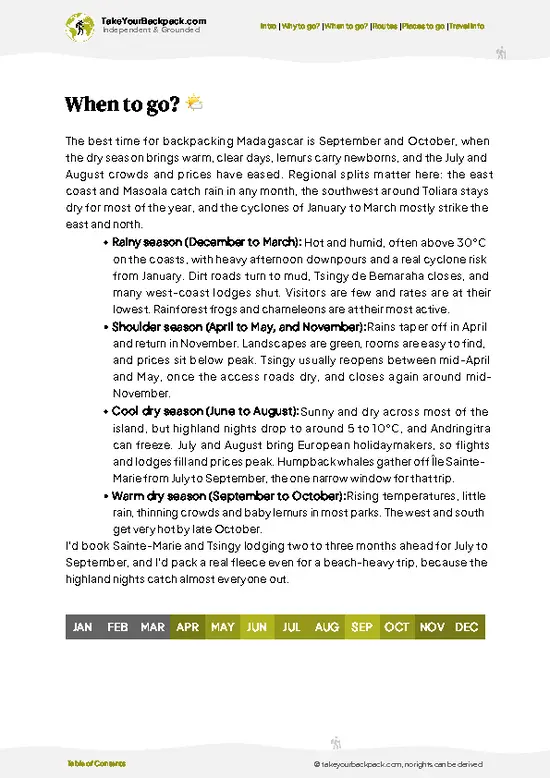
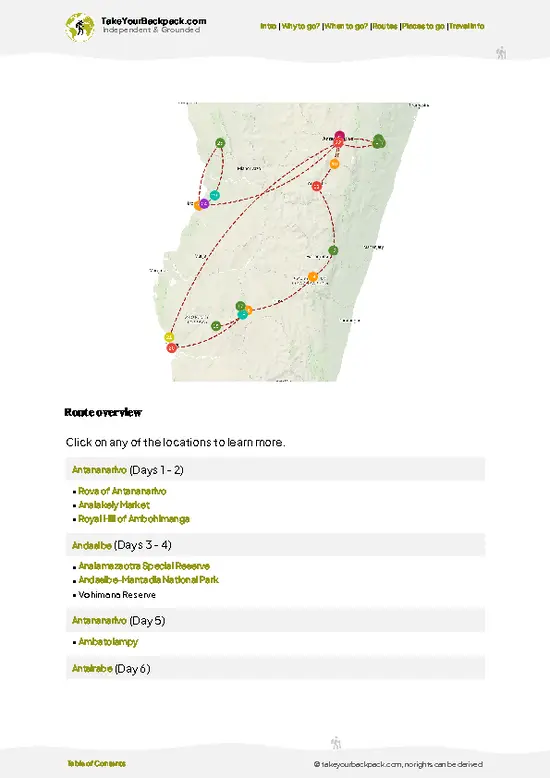
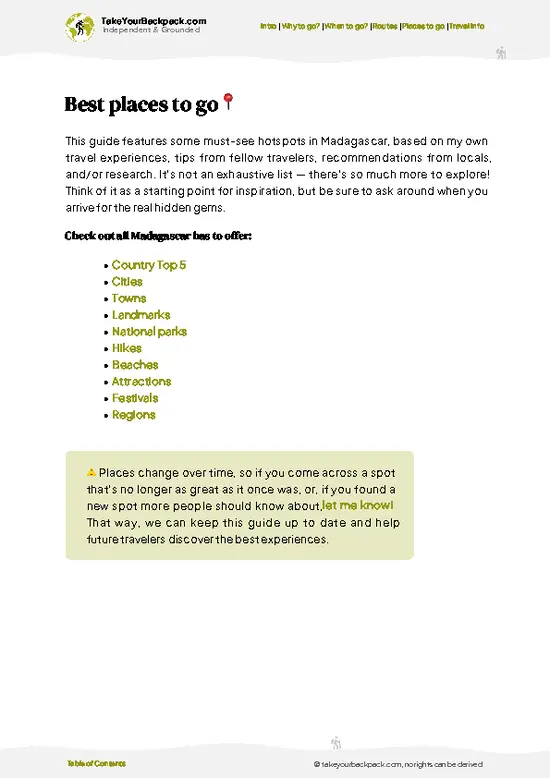
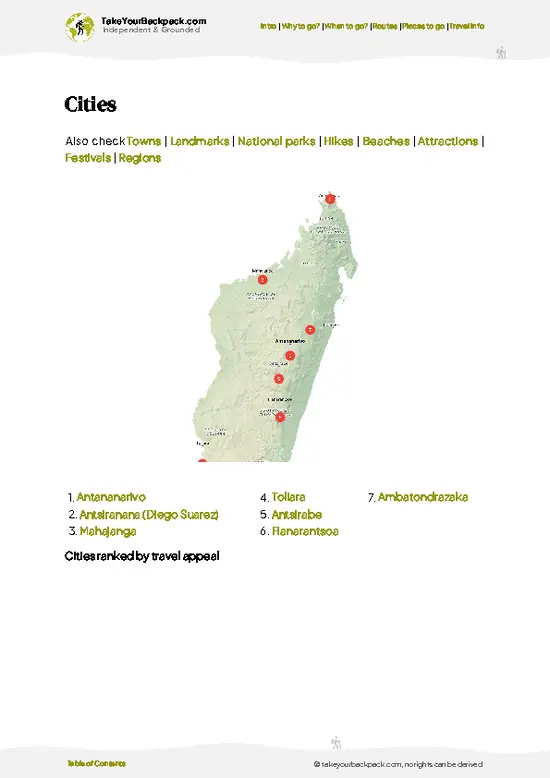
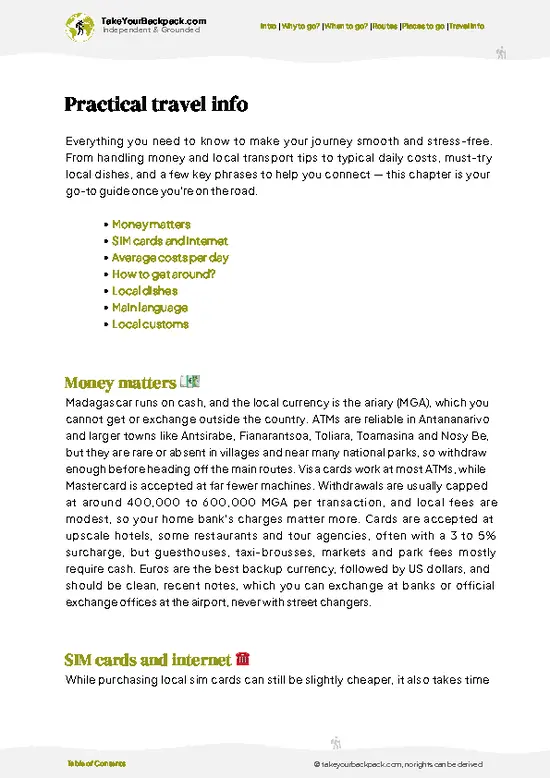
example page 0 from our offline Travel Guide for Madagascar
example page 1 from our offline Travel Guide for Madagascar
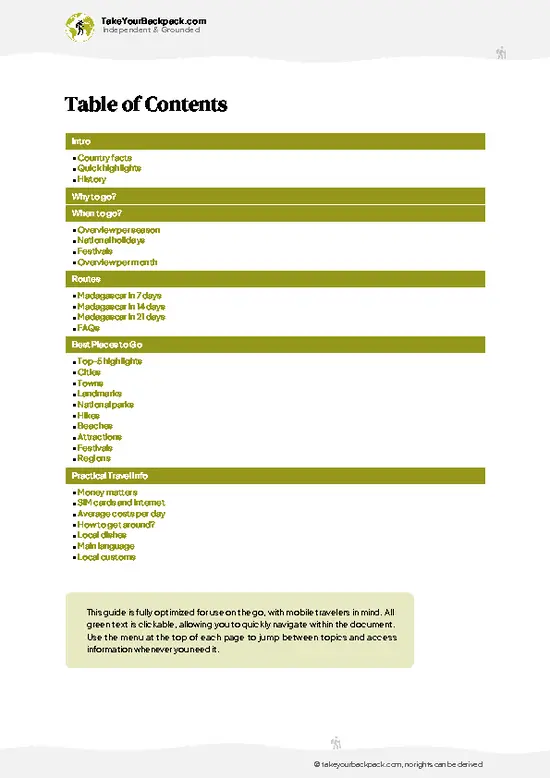
example page 2 from our offline Travel Guide for Madagascar
example page 3 from our offline Travel Guide for Madagascar
example page 4 from our offline Travel Guide for Madagascar
example page 5 from our offline Travel Guide for Madagascar
example page 6 from our offline Travel Guide for Madagascar
example page 7 from our offline Travel Guide for Madagascar
The digital guide (418 pages) contains:
110 highlights, ranked by travel appeal
Optimized 7, 14 & 21-day travel routes
Cities, national parks, landmarks, beaches
How to get around
Offline-friendly for travel without Wi-Fi
👉 Click to see all 30+ guide features

📅 Plan smarter in minutes, not weeks
Month by month travel advice
Festivals & national holidays
Budget expectations

🗺️ Go to the right places, skip the overrated ones
Honest pros & cons of destinations
Top hikes, parks & viewpoints
Lesser-known places most travelers miss
Clear “worth it vs skip it” guidance

🛏️ Travel smoothly without rookie mistakes
Best areas to stay
Transport systems explained simply
Common scams & safety advice
SIM cards, money & practical tips

🌍 Understand the country, not just visit it
Culture & traditions
52 Essential phrases & customs
Festivals worth planning around
Traveler-friendly historical context
Insights that make places more meaningful

📱 Built for real travel conditions
Fully downloadable PDF
Works completely offline
Optimized for phone use
Useful in remote areas & buses
Everything in one place
Save weeks of stressful planning
Get instant access to your full guide. 30‑day money-back guarantee.


By proceeding you agree to our terms.
Sent to your inbox immediately after payment • 100% Secure Checkout
Best Backpacking Travel Advisor 2025 tourism awardBest Backpacking
Travel Advisor
2025
What others say about Take Your Backpack Guides:
⭐⭐⭐⭐⭐
Fantastic, amazing amount of information!
⭐⭐⭐⭐⭐
My goodness this is amazing, it's what I've been looking for hats off too you!
⭐⭐⭐⭐⭐
I think this is absolutely BRILLIANT
⭐⭐⭐⭐
Very complete and informative. It's still missing places, but I gotta to commend you
⭐⭐⭐⭐⭐
This is truly amazing, thank you, can't wait to explore it with my kids!
⭐⭐⭐⭐⭐
Awesome resource, thank you!
⭐⭐⭐⭐⭐
This is amazing! Can't wait to explore the ones I haven't seen
⭐⭐⭐⭐
I love this! Well done, great idea.
⭐⭐⭐⭐⭐
Thanks for taking the time to make this gem!
⭐⭐⭐⭐⭐
This might be the best website I've ever seen.
⭐⭐⭐⭐⭐
Congratulations, and thank you so much for your work; it's incredibly valuable.
⭐⭐⭐⭐
In all seriousness I think you did a great job pointing out the important spots
⭐⭐⭐⭐⭐
10/10 very good
⭐⭐⭐⭐⭐
As someone who's only just starting to visit regularly this is awesome, thank you.
⭐⭐⭐⭐
Thank you very much! I'm going to visit my dad, it's going to be very useful!
⭐⭐⭐⭐⭐
This is really cool! We'll be travelling for the first time and this definitely come in handy.
⭐⭐⭐⭐⭐
You are now our minister of culture, congratulations 👨‍💼
⭐⭐⭐⭐⭐
Just wanted to tell you that this is a pearl! Going to follow your recommendations.
⭐⭐⭐⭐⭐
This is so cool. I'll definitely be using the resource for my travels soon.
⭐⭐⭐⭐⭐
This is very impressive! Good work.
⭐⭐⭐⭐⭐
This is an amazing and informative site. Very well done!

🛏️ Where to stay?Choosing the right base

When you’re gearing up for the Famadihana festival in Madagascar, your choice of stay can make or break the experience. Head to Antananarivo, the capital, where the energy is palpable. This bustling city is a hub for backpackers, offering a mix of vibrant markets and lively streets. Look for areas near Avenue de l’Indépendance; it’s a social hotspot where you can meet fellow travelers and share stories over a local meal.

Don’t overlook the town of Ambositra, known for its artisan crafts and welcoming vibe. It’s a bit quieter but perfect for soaking in the local culture before the festival kicks … read more 👉
When you’re gearing up for the Famadihana festival in Madagascar, your choice of stay can make or break the experience. Head to Antananarivo, the capital, where the energy is palpable. This bustling city is a hub for backpackers, offering a mix of vibrant markets and lively streets. Look for areas near Avenue de l’Indépendance; it’s a social hotspot where you can meet fellow travelers and share stories over a local meal.

Don’t overlook the town of Ambositra, known for its artisan crafts and welcoming vibe. It’s a bit quieter but perfect for soaking in the local culture before the festival kicks off. Staying here gives you a chance to connect with locals and other backpackers, all while enjoying the stunning landscapes.

Safety is key, so stick to well-populated areas and trust your instincts. Avoid places that feel isolated, especially at night. By choosing the right spots, you’ll conserve your energy and budget for the real magic of Famadihana—celebrating life and reconnecting with loved ones. Embrace the journey, and let the festival unfold around you!

👛 Costs (as of 24 October 2025)What things cost and how to budget

The Famadihana festival in Madagascar is a vibrant celebration, but navigating costs can feel like a maze. Here’s how to keep your budget in check while soaking in the experience.
  • Festival Tickets: Entry to the Famadihana festivities typically ranges from €5 to €20 ($5 to $22). Prices can vary based on the specific location and the family hosting the event. Some families may charge a small fee to cover costs, while others might invite you in for free. Always ask politely before joining in.
  • Accommodation: Expect to pay between €10 and €30 ($11 to $33) per night for budget options like guesthouses or hostels. If you want a bit more comfort, mid-range hotels can cost between €30 and €70 ($33 to $77). Book ahead, especially during the festival, as places fill up fast.
  • Local Transport: Getting around
read more 👉
The Famadihana festival in Madagascar is a vibrant celebration, but navigating costs can feel like a maze. Here’s how to keep your budget in check while soaking in the experience.
  • Festival Tickets: Entry to the Famadihana festivities typically ranges from €5 to €20 ($5 to $22). Prices can vary based on the specific location and the family hosting the event. Some families may charge a small fee to cover costs, while others might invite you in for free. Always ask politely before joining in.
  • Accommodation: Expect to pay between €10 and €30 ($11 to $33) per night for budget options like guesthouses or hostels. If you want a bit more comfort, mid-range hotels can cost between €30 and €70 ($33 to $77). Book ahead, especially during the festival, as places fill up fast.
  • Local Transport: Getting around can be done cheaply. Local taxis or “taxi-brousse” (shared minivans) usually cost between €1 and €5 ($1 to $5) for short distances. For longer trips, budget around €10 to €20 ($11 to $22). Always confirm prices before hopping in to avoid surprises.
  • Food & Drinks: Street food is your best friend here. Meals can be as low as €2 to €5 ($2 to $5). If you opt for restaurants, expect to pay between €5 and €15 ($5 to $17) for a decent meal. Don’t forget to try the local rum; it’s often less than €2 ($2) a glass!
  • Miscellaneous Expenses: Set aside about €10 to €30 ($11 to $33) for souvenirs, tips, or unexpected costs. This could include small gifts for hosts or contributions to local traditions. Always carry some cash, as card payments aren’t widely accepted.

Keep these figures in mind to navigate the festival without breaking the bank. Prioritize experiences over expenses, and you’ll find the true spirit of Famadihana waiting for you.


source: madagascar-tourisme.com
⚠️ Prices can change and everyone travels differently, so take this as a rough guide. Hope it helps you plan your adventure!

🍲 FoodLocal Flavors for Backpackers

At the Famadihana festival in Madagascar, food and drink are as vibrant as the celebrations themselves. You’ll find local specialties like romazava, a hearty beef stew simmered with greens, and akoho sy voanio, chicken cooked in coconut milk. Street stalls burst with the aroma of sambos, crispy pastries stuffed with spiced meat or vegetables, perfect for snacking as you mingle.

Don’t miss the chance to sip on ranon’apango, a refreshing rice water drink that’s a staple here. It’s not just about quenching thirst; it’s about soaking in the culture. For a real taste of authenticity, try the koba, a sweet treat made from ground peanuts and rice flour, wrapped in banana leaves.

Festival etiquette is key. Be prepared to share food; it’s a sign of goodwill. Lines can be long, so patience is your … read more 👉
At the Famadihana festival in Madagascar, food and drink are as vibrant as the celebrations themselves. You’ll find local specialties like romazava, a hearty beef stew simmered with greens, and akoho sy voanio, chicken cooked in coconut milk. Street stalls burst with the aroma of sambos, crispy pastries stuffed with spiced meat or vegetables, perfect for snacking as you mingle.

Don’t miss the chance to sip on ranon’apango, a refreshing rice water drink that’s a staple here. It’s not just about quenching thirst; it’s about soaking in the culture. For a real taste of authenticity, try the koba, a sweet treat made from ground peanuts and rice flour, wrapped in banana leaves.

Festival etiquette is key. Be prepared to share food; it’s a sign of goodwill. Lines can be long, so patience is your ally. Cash is king here; many stalls won’t accept cards, so stock up on local currency. Serving sizes can be generous, so don’t hesitate to ask for smaller portions if you want to sample more. Embrace the chaos and savor every bite!

Other Malagasy festivals near Famadihana

Explore more nearby:


💡 Not sure where to go next?
Create a personalized itinerary for Madagascar including Famadihana and the places that fit your trip.

Generate my itinerary

👉 Discover all festivals

Or checkout all Madagascar has to offer (think cities, towns, villages, national parks, hikes, beaches, festivals)
Country photo of Madagascar

We 💚 feedbackParting advice and final tips

Famadihana is a wild celebration of life and death, where you’ll dance with locals and feel the pulse of Madagascar’s culture. But be ready: the logistics can be a headache. Limited transport options and unpredictable schedules can drain your energy. Embrace the chaos, though; it’s part of the adventure. Focus on the connections you make and the stories you’ll gather. That’s where the real magic lies.

✈️ When did I visit Madagascar?
Madagascar I went backpacking in October 2019. With a friend I rented a 4WD and drove around the southern part of Madagascar.

✍️ Help improve this page!
The information on this page is based on my own backpacking experience in Madagascar, supplemented with up-to-date research and feedback from other travelers. Travel details can change, so if you notice anything outdated or incomplete, feel free to let me know.


🙋‍♂️ Give feedback

👋 Meet the founderWho’s Behind Take Your Backpack?

Johan, backpacker and founder of TakeYourBackpackHi, I’m Johan (Netherlands 🇳🇱), the creator of TakeYourBackpack. Over the past decade, I’ve backpacked through 80+ countries across six continents, gaining extensive experience with independent travel, long-term trips, and overland routes.

This site is built on a combination of firsthand travel experience and carefully curated insights from other backpackers. Many guides are based on places I’ve personally visited, while others bring together tips, observations, and practical advice shared by trusted travelers I’ve met along the way.

The goal is to provide realistic, experience-driven guidance — not generic itineraries — so you can explore destinations with better context, clearer expectations, and more confidence.

Get full Madagascar guide •
Instant download • 110 highlights • Full Offline guide