×

Malawi🇲🇼 | regionsLikoma Islandcathedral architecture, sandy bays, local markets | things to do and best time to go

Explore Vwaza Marsh Wildlife ReserveExplore Sapitwa Peak

Backpacking in Likoma Island
🌟 Highlightregion ranked #1
By Johan Kruseman 🇳🇱 | Updated June 2, 2026

Picture this: you’re in Malawi, staring at a map, and you have to decide—do you cough up for the pricey, once-a-day ferry to Likoma Island, or do you brave the slow, unpredictable local boats and save your cash for grilled chambo and sundowners? This is the classic Likoma trade-off: time versus money versus comfort, and it matters because every hour and kwacha counts when you’re chasing real adventure, not just ticking boxes.

Likoma Island floats in Lake Malawi, closer to Mozambique than Malawi’s mainland, but it’s pure Malawian soul—think baobab-dotted beaches, cathedral spires, and barefoot kids playing football at sunset. For backpackers, Likoma is a paradox: it’s remote enough to dodge the package-tour crowd, but not so wild you’ll be eating instant noodles in a tent. The island’s got charm—clear water, friendly locals, a handful of lodges, and a pace that makes you forget what day it is. It’s not as action-packed as Nkhata Bay or as wild as Nyika Plateau, but that’s the point. Likoma is for those who want to swap FOMO for hammock time, and who value authenticity over convenience.

Discover everything you want to know in the 📖 Malawi Travel Guide.


Get your Malawi guide
87 ranked highlights, routes & tips, works offline (355 pages)
Loading the map 🌍
CLICK TO FILTER
cities
towns
villages
landmarks
national parks
hikes
beaches
attractions
festivals
regions
SHOW COUNTRY’S BESTSHOW ALL

✨ Why go?
Ranked #1 region in Malawi
Reasons people choose to visit here

On Likoma Island, backpackers find a sweet spot where time, money, and comfort align beautifully. This isn’t just another stop; it’s a microcosm of Malawi’s diverse landscapes. You can hike through lush forests, chill on pristine beaches, and explore local villages without the hassle of constant relocation.

Transport here is surprisingly flexible. You can hop on a ferry or rent a bike, giving you the freedom to explore at your own pace. This means you can savor the slow travel experience, soaking in the culture and natural beauty without feeling rushed.

What’s more, you get to mix nature and culture seamlessly. Spend your mornings hiking to stunning viewpoints, then dive into the local scene in the afternoon, tasting traditional dishes and chatting with friendly locals.

The trade-off? … read more 👉
On Likoma Island, backpackers find a sweet spot where time, money, and comfort align beautifully. This isn’t just another stop; it’s a microcosm of Malawi’s diverse landscapes. You can hike through lush forests, chill on pristine beaches, and explore local villages without the hassle of constant relocation.

Transport here is surprisingly flexible. You can hop on a ferry or rent a bike, giving you the freedom to explore at your own pace. This means you can savor the slow travel experience, soaking in the culture and natural beauty without feeling rushed.

What’s more, you get to mix nature and culture seamlessly. Spend your mornings hiking to stunning viewpoints, then dive into the local scene in the afternoon, tasting traditional dishes and chatting with friendly locals.

The trade-off? You might spend a bit more time here, but the rich experiences you gain are worth every minute. You’re not just a tourist; you’re part of the island’s rhythm, making memories that linger long after you leave.
Want to include Likoma Island in your Malawi route?
Create a personalized Malawi itinerary that includes Likoma Island and the places that fit your trip — based on your travel style, budget, and available time. Get your route in seconds.

Generate my trip

💡 HighlightsKey sights and experiences for travelers

  • St. Peter’s Cathedral (the stone cathedral) — A bona fide showstopper: a huge early-20th-century Anglican cathedral built from local stone with carved woodwork and stained glass. It’s not just pretty — the scale and the craftsmanship on this tiny island are unusual and give a real sense of the missionary-era history that shaped Likoma.
  • Main jetty & daily fish market — The working heart of the island where boats land, fish are gutted on the wharf and locals haggle for the day’s catch. It’s raw, sensory and great for breakfast-after-arrival: buy fresh chambo straight off the boat and watch the island’s rhythm in motion.
  • East-coast coral snorkel circuit — A short boat ride from the jetty takes you to coral gardens teeming with cichlids unique to Lake Malawi. The visibility is excellent, reefs
read more 👉
  • St. Peter’s Cathedral (the stone cathedral) — A bona fide showstopper: a huge early-20th-century Anglican cathedral built from local stone with carved woodwork and stained glass. It’s not just pretty — the scale and the craftsmanship on this tiny island are unusual and give a real sense of the missionary-era history that shaped Likoma.
  • Main jetty & daily fish market — The working heart of the island where boats land, fish are gutted on the wharf and locals haggle for the day’s catch. It’s raw, sensory and great for breakfast-after-arrival: buy fresh chambo straight off the boat and watch the island’s rhythm in motion.
  • East-coast coral snorkel circuit — A short boat ride from the jetty takes you to coral gardens teeming with cichlids unique to Lake Malawi. The visibility is excellent, reefs are shallow and colourful, and the underwater life here is a defining local attraction you won’t replicate on a seaside beach.
  • Sandy bays and quiet swimming beaches — Scattered small bays with soft sand and waist-deep clear water; perfect for slow afternoons, reading, or a picnic. Because Likoma is compact, beaches never feel crowded and each bay has its own character depending on wind and reef protection.
  • Mission compound & old graveyard — The cluster of mission-era buildings beside the cathedral and the nearby graves tell the human history of the island: how long-term missionaries and local communities lived, married and made this place their home. It’s quietly evocative and easy to walk through.
  • Village walks: lanes and household kitchens — Wander the narrow lanes of the island’s villages to see everyday life up close — cooking on charcoal, people repairing nets, children playing. Many hosts are happy to show you how they smoke fish or cook nsima; it’s the best way to learn local food and routines.
  • Sunset viewpoint on the west cliffs — A short hike up from the western shoreline rewards you with a panoramic sunset over the lake and Mozambique across the water. Bring a small torch and a bottle of something; the light on the water here is worth the small effort.
  • Hidden gem — Dawn canoe trip with local fishermen — Join fishermen at first light in a dugout canoe to set nets and haul in catches. It’s intimate, hands-on and usually missed by day-trippers. You’ll learn local techniques and often eat the freshest breakfast possible.
  • Hidden gem — Family-run kitchen and homestay meals — Seek out a humble family homestay for an evening meal. These are not glossy tourist dinners but real household cooking: fresh lake fish, vegetables from island gardens, and stories. Delicious, cheap and culturally rich.
  • Hidden gem — Secluded coral-sheltered cove for mellow snorkeling — A small, often-empty cove tucked away from the main beaches where the water is glassy and the fish are fearless. Locals use it for swimming and teaching kids to snorkel; visitors who find it get a peaceful slice of island life and great underwater viewing without the crowds.
Spotted a mistake or missing something? Contact us.

⌛️ 5 daysWhat you can realistically do in a week

Day 1: Likoma Island

Start your adventure by hopping on a ferry from the mainland to Likoma Island. This is your gateway to a slower pace, where time feels like it’s been dialed back. The ferry ride is about three hours, but it’s worth every minute. You’ll be greeted by the island’s stunning shores and the warm smiles of locals. Settle into your accommodation and take a stroll along the beach. The island’s charm is in its simplicity, and you’ll want to soak it all in.

Day 2: Chizumulu Island

Take a short boat ride to Chizumulu Island. This is where you can truly escape the hustle. The island is small, so you can explore it on foot. The beaches are pristine, and the vibe is laid-back. Spend your day swimming and lounging, but don’t miss the chance to chat with fishermen about their daily … read more 👉
Day 1: Likoma Island

Start your adventure by hopping on a ferry from the mainland to Likoma Island. This is your gateway to a slower pace, where time feels like it’s been dialed back. The ferry ride is about three hours, but it’s worth every minute. You’ll be greeted by the island’s stunning shores and the warm smiles of locals. Settle into your accommodation and take a stroll along the beach. The island’s charm is in its simplicity, and you’ll want to soak it all in.

Day 2: Chizumulu Island

Take a short boat ride to Chizumulu Island. This is where you can truly escape the hustle. The island is small, so you can explore it on foot. The beaches are pristine, and the vibe is laid-back. Spend your day swimming and lounging, but don’t miss the chance to chat with fishermen about their daily catch. Their stories are a window into the local culture. This detour is an off-path reward that adds depth to your experience without straying far from your base.

Day 3: Likoma Island Exploration

Return to Likoma and dive deeper. Visit St. Peter’s Cathedral, a stunning piece of architecture that tells the island’s history. The local markets are a feast for the senses—colors, sounds, and flavors collide. Grab some street food; it’s cheap and delicious. This day is about immersing yourself in the local rhythm, and you’ll find that the slower pace allows for richer experiences.

Day 4: Relaxation and Reflection

Take a breather. Spend this day at your accommodation, enjoying the views and reflecting on your journey. Read a book, journal, or simply watch the sunset. This is your time to recharge before the final push. You’ll appreciate the beauty around you even more after a day of rest.

Day 5: Departure

As you prepare to leave, take one last stroll along the beach. The ferry back to the mainland will feel bittersweet. This trip is about savoring moments, and you’ll leave with a deeper connection to the land and its people. The must-do day? Day 2 on Chizumulu Island. It’s the heart of your adventure, where you’ll find the essence of Malawi’s charm.
Turn your Likoma Island visit into an Malawi adventure
Build a complete Malawi route with Likoma Island, hidden gems, must-see destinations, and realistic travel times included.

Generate my trip

🌤️ When to go?Weather, crowds, and seasonal trade-offs


  • Topic: Weather – The dry season from May to October is your best bet. Expect clear skies and minimal rain, perfect for exploring without soggy boots or canceled boat rides. The wet season (November to April) brings heavy rains, making trails slippery and mosquito activity spike.

  • Topic: Temperature – During the dry months, daytime highs hover around 25-28°C (77-82°F), with nights cooling to a comfortable 15-18°C (59-64°F). The wet season heats up to 30°C+ (86°F+), and humidity can make it feel sticky and exhausting.

  • Topic: Daylight Hours – Near the equator, daylight is steady year-round, roughly 12 hours a day. But during the dry season, clearer skies mean you get more usable daylight for hiking and swimming without the threat of sudden downpours.

  • Topic: Crowds – Likoma Island is off
read more 👉

  • Topic: Weather – The dry season from May to October is your best bet. Expect clear skies and minimal rain, perfect for exploring without soggy boots or canceled boat rides. The wet season (November to April) brings heavy rains, making trails slippery and mosquito activity spike.

  • Topic: Temperature – During the dry months, daytime highs hover around 25-28°C (77-82°F), with nights cooling to a comfortable 15-18°C (59-64°F). The wet season heats up to 30°C+ (86°F+), and humidity can make it feel sticky and exhausting.

  • Topic: Daylight Hours – Near the equator, daylight is steady year-round, roughly 12 hours a day. But during the dry season, clearer skies mean you get more usable daylight for hiking and swimming without the threat of sudden downpours.

  • Topic: Crowds – Likoma Island is off the beaten path, but the dry season attracts more travelers. You’ll find a livelier vibe and better social opportunities, but book accommodations early to avoid last-minute price hikes.

  • Topic: Seasonal Activities – Dry season unlocks snorkeling and diving in Lake Malawi’s clear waters, plus easier trekking. Wet season limits outdoor activities but offers lush landscapes if you’re into photography or birdwatching.

  • Topic: Price Fluctuations – Expect higher prices from June to August when demand peaks. Shoulder months (May and September-October) offer a sweet spot: fewer crowds, decent weather, and better deals on lodging and tours.


Pro-tip: Arrive in late May or early September to snag the best weather, fewer tourists, and wallet-friendly rates—like a local who knows when to skip the rush.


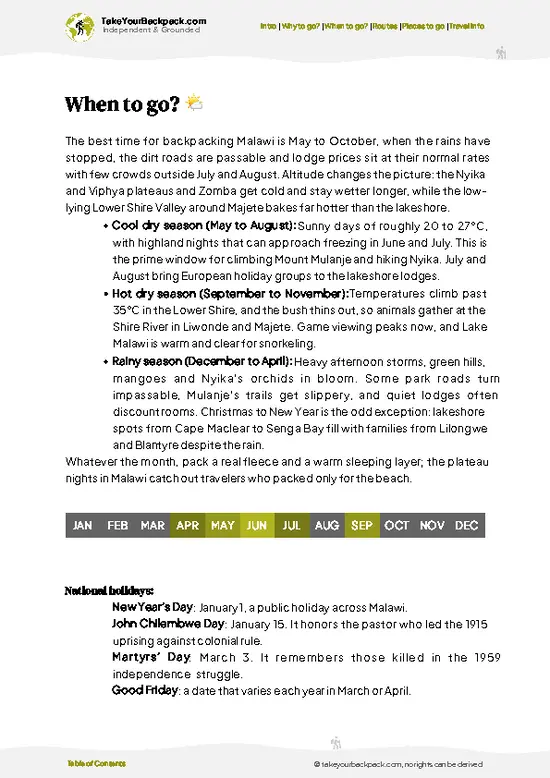
source: climatestotravel.comJANJanuary: fair for travelingFEBFebruary: fair for travelingMARMarch: fair for travelingAPRApril: fair for travelingMAYMay: highly recommended for travelingJUNJune: highly recommended for travelingJULJuly: highly recommended for travelingAUGAugust: highly recommended for travelingSEPSeptember: highly recommended for travelingOCTOctober: highly recommended for travelingNOVNovember: fair for travelingDECDecember: fair for traveling
when-to-go

✈️ The backpacker research shortcutMalawi Travel Guide

An offline-friendly backpacking guide with optimized travel routes, ranked highlights, transport advice, and the best areas to stay.
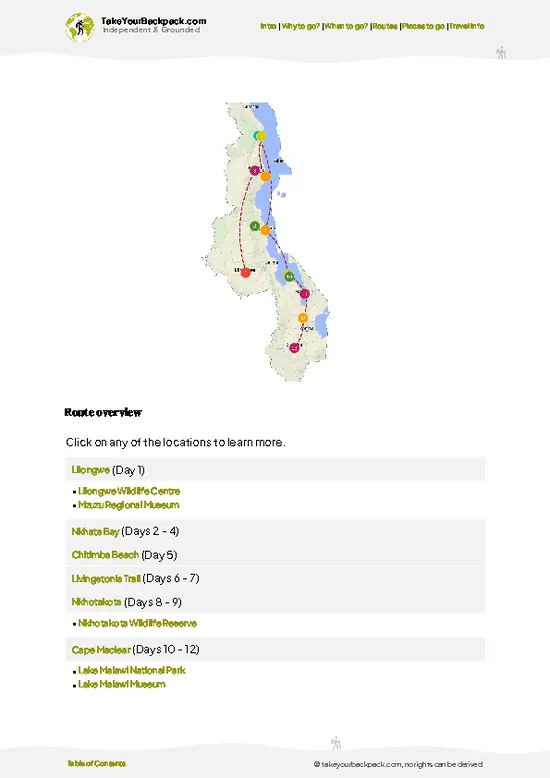
example page 0 from our offline Travel Guide for Malawi
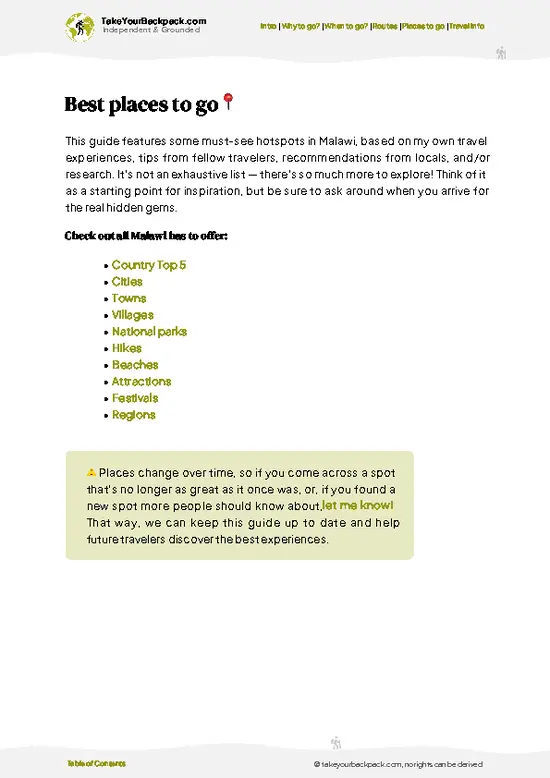
example page 1 from our offline Travel Guide for Malawi
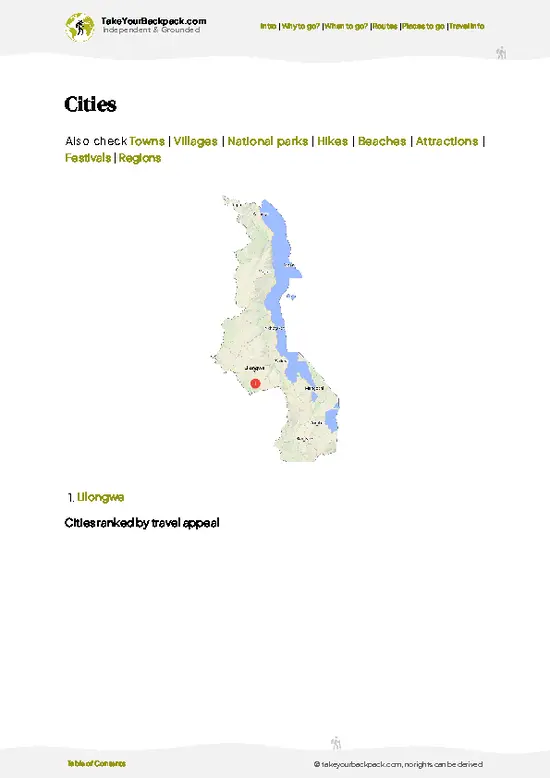
example page 2 from our offline Travel Guide for Malawi
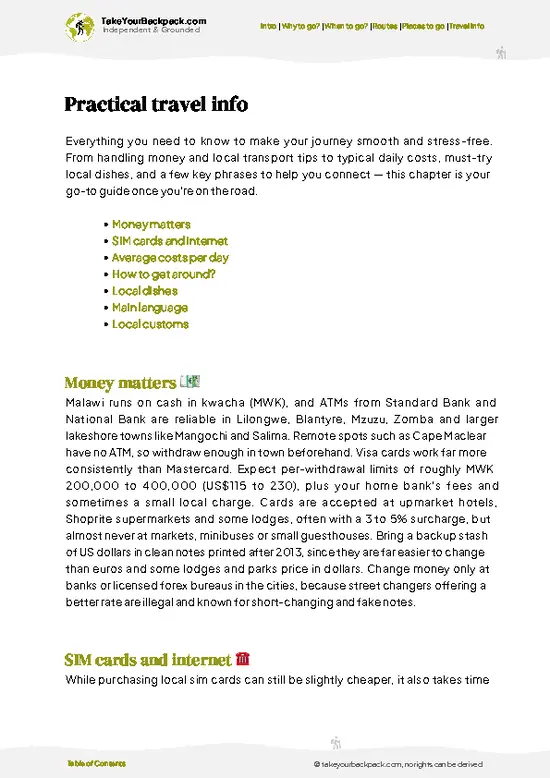
example page 3 from our offline Travel Guide for Malawi
example page 4 from our offline Travel Guide for Malawi
example page 5 from our offline Travel Guide for Malawi
example page 6 from our offline Travel Guide for Malawi
example page 7 from our offline Travel Guide for Malawi
The digital guide (355 pages) contains:
87 highlights, ranked by travel appeal
Optimized 5, 10 & 15-day travel routes
Cities, national parks, landmarks, beaches
How to get around
Offline-friendly for travel without Wi-Fi
👉 Click to see all 30+ guide features

📅 Plan smarter in minutes, not weeks
Month by month travel advice
Festivals & national holidays
Budget expectations

🗺️ Go to the right places, skip the overrated ones
Honest pros & cons of destinations
Top hikes, parks & viewpoints
Lesser-known places most travelers miss
Clear “worth it vs skip it” guidance

🛏️ Travel smoothly without rookie mistakes
Best areas to stay
Transport systems explained simply
Common scams & safety advice
SIM cards, money & practical tips

🌍 Understand the country, not just visit it
Culture & traditions
52 Essential phrases & customs
Festivals worth planning around
Traveler-friendly historical context
Insights that make places more meaningful

📱 Built for real travel conditions
Fully downloadable PDF
Works completely offline
Optimized for phone use
Useful in remote areas & buses
Everything in one place
Save weeks of stressful planning
Get instant access to your full guide. 30‑day money-back guarantee.


By proceeding you agree to our terms.
Sent to your inbox immediately after payment • 100% Secure Checkout
Best Backpacking Travel Advisor 2025 tourism awardBest Backpacking
Travel Advisor
2025
What others say about Take Your Backpack Guides:
⭐⭐⭐⭐⭐
Fantastic, amazing amount of information!
⭐⭐⭐⭐⭐
My goodness this is amazing, it's what I've been looking for hats off too you!
⭐⭐⭐⭐⭐
I think this is absolutely BRILLIANT
⭐⭐⭐⭐
Very complete and informative. It's still missing places, but I gotta to commend you
⭐⭐⭐⭐⭐
This is truly amazing, thank you, can't wait to explore it with my kids!
⭐⭐⭐⭐⭐
Awesome resource, thank you!
⭐⭐⭐⭐⭐
This is amazing! Can't wait to explore the ones I haven't seen
⭐⭐⭐⭐
I love this! Well done, great idea.
⭐⭐⭐⭐⭐
Thanks for taking the time to make this gem!
⭐⭐⭐⭐⭐
This might be the best website I've ever seen.
⭐⭐⭐⭐⭐
Congratulations, and thank you so much for your work; it's incredibly valuable.
⭐⭐⭐⭐
In all seriousness I think you did a great job pointing out the important spots
⭐⭐⭐⭐⭐
10/10 very good
⭐⭐⭐⭐⭐
As someone who's only just starting to visit regularly this is awesome, thank you.
⭐⭐⭐⭐
Thank you very much! I'm going to visit my dad, it's going to be very useful!
⭐⭐⭐⭐⭐
This is really cool! We'll be travelling for the first time and this definitely come in handy.
⭐⭐⭐⭐⭐
You are now our minister of culture, congratulations 👨‍💼
⭐⭐⭐⭐⭐
Just wanted to tell you that this is a pearl! Going to follow your recommendations.
⭐⭐⭐⭐⭐
This is so cool. I'll definitely be using the resource for my travels soon.
⭐⭐⭐⭐⭐
This is very impressive! Good work.
⭐⭐⭐⭐⭐
This is an amazing and informative site. Very well done!

🛏️ Where to stay?Best areas and accommodation options

Likoma Island is a backpacker’s paradise, but choosing where to stay can make or break your experience.

Start with Chizumulu Island, just a short boat ride away. It’s quieter but has a tight-knit community vibe. You’ll find friendly locals and fellow travelers eager to share stories over a sunset by the lake. The beaches here are less crowded, giving you that serene escape while still being social.

Then there’s Likoma Town, the island’s bustling hub. This is where the action is. You’ll find markets filled with local crafts and food stalls serving up mouthwatering dishes. It’s safe and lively, … read more 👉
Likoma Island is a backpacker’s paradise, but choosing where to stay can make or break your experience.

Start with Chizumulu Island, just a short boat ride away. It’s quieter but has a tight-knit community vibe. You’ll find friendly locals and fellow travelers eager to share stories over a sunset by the lake. The beaches here are less crowded, giving you that serene escape while still being social.

Then there’s Likoma Town, the island’s bustling hub. This is where the action is. You’ll find markets filled with local crafts and food stalls serving up mouthwatering dishes. It’s safe and lively, perfect for solo travelers looking to connect. Plus, you can easily hop on a boat to explore nearby beaches or take a dip in the crystal-clear waters.

Don’t overlook Nkhata Bay on the mainland. While not on the island, it’s a popular launch point for trips to Likoma. The backpacker scene is vibrant, with plenty of opportunities to meet fellow adventurers. The bay’s laid-back atmosphere is perfect for unwinding after a day of exploration.

Each area offers a unique flavor of Malawi. Choose wisely, and you’ll find the right balance of time, money, and comfort, making your journey truly special.

🚌 Getting aroundMoving around without the hassle

Likoma Island is a slice of paradise where time feels fluid, and schedules are more of a suggestion than a rule. Picture this: the sun dips low, casting golden hues over the lake, while the sound of laughter and chatter fills the air. Locals hop on and off boats, their movements dictated by the rhythm of the waves rather than a strict timetable. Here, you’ll find a delightful chaos that invites you to embrace spontaneity. It’s not about rushing from one spot to another; it’s about soaking in the moment and letting the island’s charm guide you.

Now, let’s break down your transport options. Here’s what you need to know to navigate Likoma Island like a pro:


  • Ferry: The main ferry operates between Likoma Island and the mainland, with departures typically at 8 AM and 2 PM. Expect to pay around
read more 👉
Likoma Island is a slice of paradise where time feels fluid, and schedules are more of a suggestion than a rule. Picture this: the sun dips low, casting golden hues over the lake, while the sound of laughter and chatter fills the air. Locals hop on and off boats, their movements dictated by the rhythm of the waves rather than a strict timetable. Here, you’ll find a delightful chaos that invites you to embrace spontaneity. It’s not about rushing from one spot to another; it’s about soaking in the moment and letting the island’s charm guide you.

Now, let’s break down your transport options. Here’s what you need to know to navigate Likoma Island like a pro:


  • Ferry: The main ferry operates between Likoma Island and the mainland, with departures typically at 8 AM and 2 PM. Expect to pay around $5 for a one-way ticket. It’s a scenic ride, taking about 2-3 hours, but comfort can vary, so grab a seat early.


  • Speedboat: For those who want to skip the wait, speedboats are available, usually leaving when they’re full. Prices hover around $15, and the journey is a brisk 1 hour. It’s a thrilling ride, but be prepared for a splash or two!


  • Bicycle Rentals: A fantastic way to explore the island at your own pace. Rentals cost about $5 per day. You’ll find plenty of spots to pedal along the lakeshore, and the locals are friendly, often waving as you pass by.


  • Tuk-Tuks: These three-wheeled wonders are perfect for short distances. Fares are negotiable, typically around $2-3 for a ride. They’re a fun way to zip around, but make sure to agree on a price before hopping in.


  • Walking: Don’t underestimate the power of your own two feet. The island is small, and many attractions are within walking distance. It’s free, and you’ll get to soak in the sights and sounds up close.


Here’s your master tactical tip: always ask locals about the best times to catch the ferry or speedboat. They know the ins and outs, and you might just score a ride that’s not on the official schedule. Embrace the flow, and let the island reveal its secrets to you.

🍲 FoodWhat to Eat & Drink

On Likoma Island, food is a celebration of local flavors and community. You can’t visit without trying nsima, a staple made from maize flour, often served with a rich, spicy sauce or grilled fish caught fresh from Lake Malawi. The tilapia here is legendary; it’s grilled to perfection, smoky and tender, often paired with a side of sautéed greens.

For a true local experience, head to the markets. The bustling stalls are filled with vibrant produce, and the air is thick with the smell of grilled street food. You’ll find vendors selling samosas and mandazi—sweet, fried doughnuts that are perfect for a quick snack. Don’t miss the chance to sip on Chibuku, a traditional beer made from fermented maize. It’s an acquired taste, but it’s a rite of passage for any backpacker.

Dining here is relaxed. … read more 👉
On Likoma Island, food is a celebration of local flavors and community. You can’t visit without trying nsima, a staple made from maize flour, often served with a rich, spicy sauce or grilled fish caught fresh from Lake Malawi. The tilapia here is legendary; it’s grilled to perfection, smoky and tender, often paired with a side of sautéed greens.

For a true local experience, head to the markets. The bustling stalls are filled with vibrant produce, and the air is thick with the smell of grilled street food. You’ll find vendors selling samosas and mandazi—sweet, fried doughnuts that are perfect for a quick snack. Don’t miss the chance to sip on Chibuku, a traditional beer made from fermented maize. It’s an acquired taste, but it’s a rite of passage for any backpacker.

Dining here is relaxed. Expect to share tables and stories with locals, and don’t be surprised if you’re invited to join in a meal. Etiquette is simple: eat with your right hand, and if you’re offered food, it’s polite to accept. This isn’t just about filling your stomach; it’s about connecting with the island’s heart and soul. So dive in, savor every bite, and soak up the communal vibe.

Ideas for continuing your journey

Likoma Island isn’t the only highlight in Malawi. Explore all what Malawi has to offer.
Country photo of Malawi

We 💚 feedbackParting advice and final tips

Likoma Island feels like stepping into a postcard, but it’s the vibe that hooks you. The locals are warm, and the sunsets? Pure magic. Don’t miss the chance to explore the island’s hidden beaches; they’re often empty and perfect for a quiet moment. Just a heads-up: the roads can be rough, so pack light and be ready for a bit of a bumpy ride. Embrace the slow pace; it’s part of the charm. You’ll leave with stories that linger long after you’ve returned home.

✍️ Help improve this page!
The information on this page is based on in-depth research, insights shared by experienced travelers, and feedback from the local travel community in Malawi. While every effort is made to keep the information accurate and current, conditions can change — so if you spot anything incorrect or outdated, please get in touch.


🙋‍♂️ Give feedback

👋 Meet the founderWho’s Behind Take Your Backpack?

Johan, backpacker and founder of TakeYourBackpackHi, I’m Johan (Netherlands 🇳🇱), the creator of TakeYourBackpack. Over the past decade, I’ve backpacked through 80+ countries across six continents, gaining extensive experience with independent travel, long-term trips, and overland routes.

This site is built on a combination of firsthand travel experience and carefully curated insights from other backpackers. Many guides are based on places I’ve personally visited, while others bring together tips, observations, and practical advice shared by trusted travelers I’ve met along the way.

The goal is to provide realistic, experience-driven guidance — not generic itineraries — so you can explore destinations with better context, clearer expectations, and more confidence.

Get full Malawi guide •
Instant download • 87 highlights • Full Offline guide