×

Malawi🇲🇼 | townsNkhata BayBackpacker coves, cichlid diving, dugout paddling, steep lakeside town | things to do and best time to go

Explore Likoma IslandExplore Dedza

Backpacking in Nkhata Bay
🏆 Top picktown ranked #1
By Johan Kruseman 🇳🇱 | Updated October 22, 2026

Dugout canoes are hauled up onto the little beach beside the Nkhata Bay market, and the fishermen who paddle them out at dusk carry lamps to draw the usipa (small sardine-like fish) from the dark water. Nkhata Bay sits on the western shore of Lake Malawi, in the north of Malawi, and it is the lake’s backpacker hub. The town itself is steep, dusty and noisy with minibuses, with a crowded market and a few cracked concrete streets. The payoff is the water: clear, warm and good for swimming off rocky platforms, with kayaks and snorkel gear at every lodge. Hostels sit on the coves on both sides of the bay, so evenings are social, with shared tables, fire pits and drumming. It is easy to meet people. Getting here means a long winding road from the main highway, and power cuts are normal. Slow travelers, divers and solo backpackers will love it. Anyone who wants sights, polish or reliable schedules will not.

Discover everything you want to know in the 📖 Malawi Travel Guide.


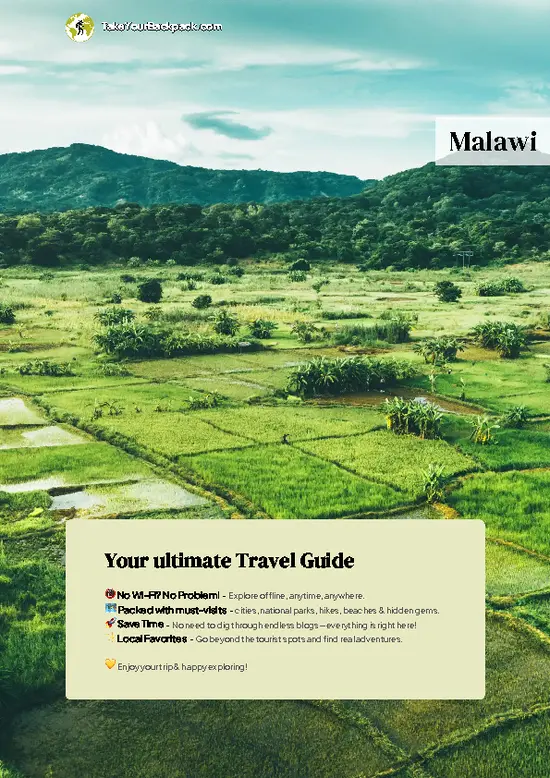
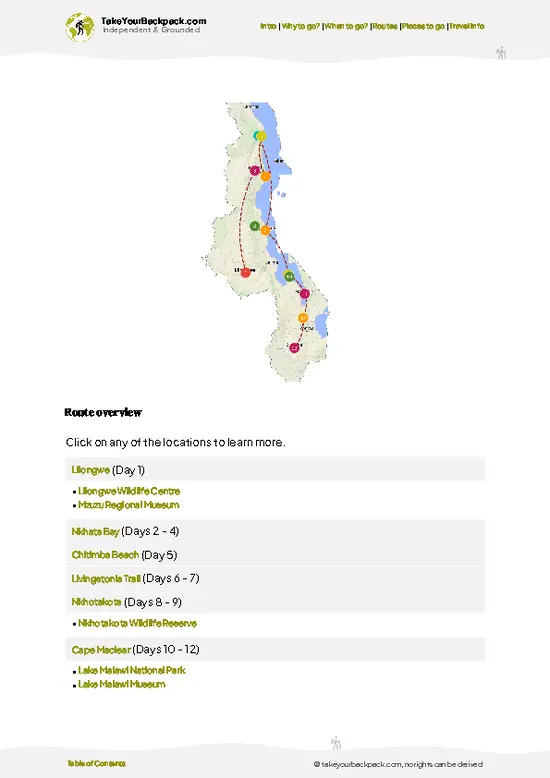
example page 0 from our offline Travel Guide for Malawi
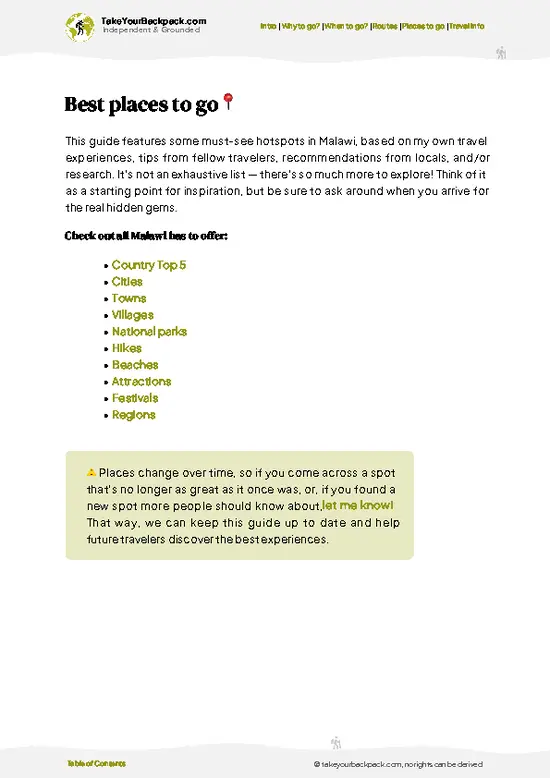
example page 1 from our offline Travel Guide for Malawi
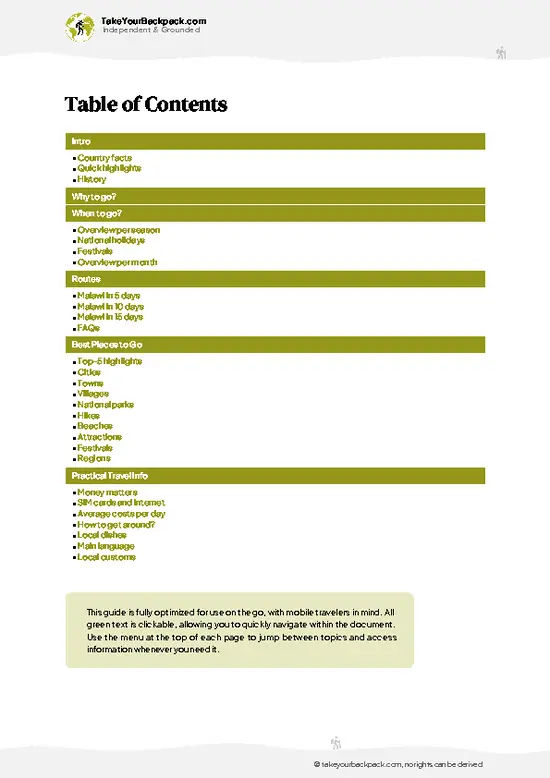
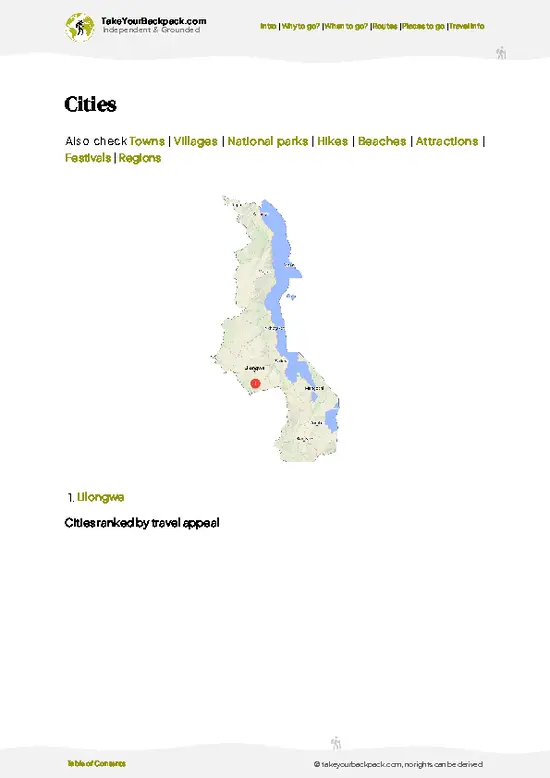
example page 2 from our offline Travel Guide for Malawi
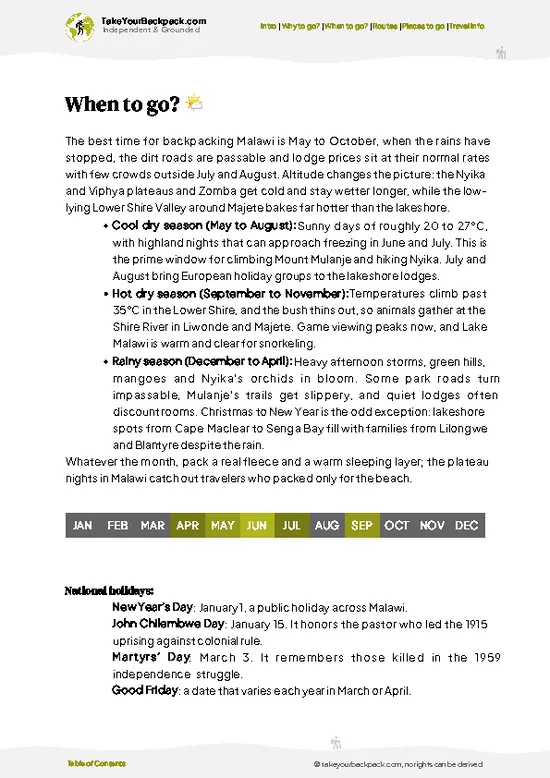
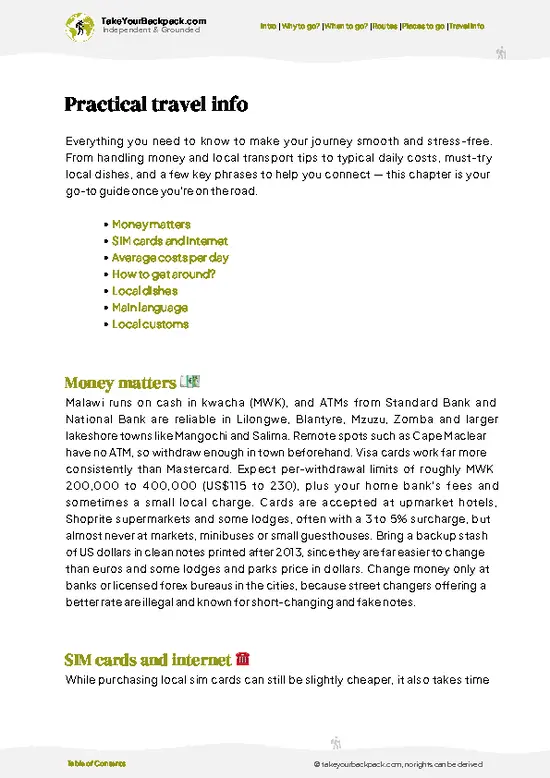
example page 3 from our offline Travel Guide for Malawi
example page 4 from our offline Travel Guide for Malawi
example page 5 from our offline Travel Guide for Malawi
example page 6 from our offline Travel Guide for Malawi
example page 7 from our offline Travel Guide for Malawi
Loading the map 🌍
CLICK TO FILTER
cities
towns
villages
national parks
hikes
beaches
attractions
festivals
regions
SHOW COUNTRY’S BESTSHOW ALL

✨ Why go?
Ranked #1 town in Malawi
Why visitors keep coming back

Nkhata Bay works because it gives you the lake without the hassle of an organized resort. Most travelers arrive planning two nights and end up staying five or more, which is the usual pattern here. The reason is the coves: lodges perch on rocky points, and you can swim from your own jetty, then paddle a dugout to a fishing village across the water. The Chikale Beach side is the easiest for a sandy afternoon, while the rocky coves suit snorkeling among colorful cichlids, fish found only in Lake Malawi. Food is the second draw. Grilled chambo (a local lake fish) with chips and tomato sauce costs little at beachfront shacks, and the Nkhata Bay market sells fruit, bread and fried snacks. The social side is easy, since dorms and shared dinners put solo travelers in conversation within an hour. … read more 👉
Nkhata Bay works because it gives you the lake without the hassle of an organized resort. Most travelers arrive planning two nights and end up staying five or more, which is the usual pattern here. The reason is the coves: lodges perch on rocky points, and you can swim from your own jetty, then paddle a dugout to a fishing village across the water. The Chikale Beach side is the easiest for a sandy afternoon, while the rocky coves suit snorkeling among colorful cichlids, fish found only in Lake Malawi. Food is the second draw. Grilled chambo (a local lake fish) with chips and tomato sauce costs little at beachfront shacks, and the Nkhata Bay market sells fruit, bread and fried snacks. The social side is easy, since dorms and shared dinners put solo travelers in conversation within an hour. Hikers can walk up into the surrounding hills for views over the bay. It suits slow travelers, solo backpackers and divers best. If you need nightlife beyond a lodge bar, plan a short stop instead.

💡 HighlightsWhat this place is best known for

  1. Nkhata Bay Market and Waterfront: This is the town’s best-known spot, a tight, loud grid of stalls selling tomatoes, dried usipa, bananas, secondhand clothes and chitenje cloth. Go in the morning when the fish arrives. Entry is free, and an hour is plenty.
  2. Chikale Beach: The sandy beach on the edge of town, lined with canoes and fishing nets, with a few simple lodges. It is good for a swim and for watching the fishermen at dusk. Afternoons are best. It is free, and you can easily spend 2 to 3 hours.
  3. Snorkeling and diving the bay: Dive centers in the cove offer open-water courses and fun dives among cichlids and rocky drop-offs. Mornings have the best visibility. Snorkeling gear rental is about US$3 to 6, and a fun dive costs roughly US$40 to 60. Allow 2 to 4 hours.
  4. Dugout canoe and kayak trips:
… read more 👉
  1. Nkhata Bay Market and Waterfront: This is the town’s best-known spot, a tight, loud grid of stalls selling tomatoes, dried usipa, bananas, secondhand clothes and chitenje cloth. Go in the morning when the fish arrives. Entry is free, and an hour is plenty.
  2. Chikale Beach: The sandy beach on the edge of town, lined with canoes and fishing nets, with a few simple lodges. It is good for a swim and for watching the fishermen at dusk. Afternoons are best. It is free, and you can easily spend 2 to 3 hours.
  3. Snorkeling and diving the bay: Dive centers in the cove offer open-water courses and fun dives among cichlids and rocky drop-offs. Mornings have the best visibility. Snorkeling gear rental is about US$3 to 6, and a fun dive costs roughly US$40 to 60. Allow 2 to 4 hours.
  4. Dugout canoe and kayak trips: Lodges rent kayaks and arrange paddles with local fishermen to nearby coves and villages. Early morning is calm. Expect about US$5 to 15, for 1 to 3 hours.
  5. Hill viewpoints above the bay: Short climbs on dirt paths behind town give a view of the bay and its islands. Go early or late to avoid the heat. It is free and takes 1 to 2 hours.
From Nkhata Bay, popular day trips include Mayoka and Usisya villages by boat, the tea estates near Chombe, and Likoma Island by ferry for longer stays. Diving requires booking ahead with a dive center, while the rest can be arranged on the day.
Spotted a mistake or missing something? Contact us.

🏘️ NeighborhoodsKey areas and districts to know

Nkhata Bay is small enough to cover on foot, but its areas feel different, so split your time between the harbor flats, the hillside lanes and the beaches along the lake road.
  • Town Center and Market: A tight grid of stalls and shops climbing from the main road, loud with minibus touts, radios and women calling out prices for tomatoes, dried usipa fish and secondhand clothes. It's hot, dusty and crowded on market mornings, and you leave with a bag of sweet bananas and a feel for real local life. Fully walkable.
  • Harbor and Fishing Beach: Wooden dugouts are pulled onto the sand, nets dry on the rocks, and the smell of woodsmoke and fresh chambo hangs over everything. Boys dive off the jetty at midday. Grab grilled fish from a stall and watch the Ilala ferry's arrival day unfold. A flat five-minute
… read more 👉
Nkhata Bay is small enough to cover on foot, but its areas feel different, so split your time between the harbor flats, the hillside lanes and the beaches along the lake road.
  • Town Center and Market: A tight grid of stalls and shops climbing from the main road, loud with minibus touts, radios and women calling out prices for tomatoes, dried usipa fish and secondhand clothes. It's hot, dusty and crowded on market mornings, and you leave with a bag of sweet bananas and a feel for real local life. Fully walkable.
  • Harbor and Fishing Beach: Wooden dugouts are pulled onto the sand, nets dry on the rocks, and the smell of woodsmoke and fresh chambo hangs over everything. Boys dive off the jetty at midday. Grab grilled fish from a stall and watch the Ilala ferry's arrival day unfold. A flat five-minute walk from the center.
  • Chikale Beach: A broad sandy bay just north of town with calm shallows, a few lakeside bars and a quiet that arrives by late afternoon. Swimming here is easy, and you get a sunset over water flat as tin. Walkable, about 20 minutes, or a short motorbike hop.
  • Mayoka and the Southern Lake Road: Rocky coves, steep stairs and jungle-like gardens spread along the lakeshore. Evenings bring drumming, campfires and reggae from lodge bars. Expect uneven paths, mosquitoes and some steep climbs, in return for snorkeling over bright cichlids right off the rocks. Walkable to the nearest coves, but the farther ones suit a pickup truck taxi.
  • Hillside Residential Streets: Red-dirt lanes lined with mango trees, goats and small churches. Cooking fires and children's voices fill the air at dusk. Hot to climb, but views back over the bay make it worth the sweat.

⌛️ 1 dayHow to make the most of one day

7:00 AM, Nkhata Bay Harbour
Start where the day starts: the waterfront, where fishermen paddle in with the night’s catch of chambo and usipa and women spread the fish on racks to dry. Stand on the concrete jetty with a cup of sweet tea from a roadside seller. You get the town’s working heart before any café opens.

8:30 AM, Breakfast at Mayoka Village
Walk or take a short bike taxi up the lakeshore road to the Mayoka area, where the cafés sit right on the rocks. Order eggs, fresh bread and strong Malawian coffee, then watch the water turn from gray to clear blue. Fish eagles call from the trees.

10:00 AM, Swim and Snorkel at Chikale Beach
Chikale is the town’s sandy beach, a short walk from the center. The water is soft and warm and you can wade out among the cichlids. Go early, before the sun … read more 👉
7:00 AM, Nkhata Bay Harbour
Start where the day starts: the waterfront, where fishermen paddle in with the night’s catch of chambo and usipa and women spread the fish on racks to dry. Stand on the concrete jetty with a cup of sweet tea from a roadside seller. You get the town’s working heart before any café opens.

8:30 AM, Breakfast at Mayoka Village
Walk or take a short bike taxi up the lakeshore road to the Mayoka area, where the cafés sit right on the rocks. Order eggs, fresh bread and strong Malawian coffee, then watch the water turn from gray to clear blue. Fish eagles call from the trees.

10:00 AM, Swim and Snorkel at Chikale Beach
Chikale is the town’s sandy beach, a short walk from the center. The water is soft and warm and you can wade out among the cichlids. Go early, before the sun gets harsh and before the beach fills with local children. Bring your own mask if you have one.

12:30 PM, Lunch at the Central Market
Cut back into town and wander the market stalls, where tomatoes, mangoes, dried fish and secondhand clothes are stacked in tight rows. Eat a plate of nsima with grilled fish from one of the small food stands. It is loud, smoky and very good value.

2:30 PM, Paddle a Dugout Canoe Beyond the Bay
This is the part off the standard circuit. Ask at your guesthouse for a local fisherman to take you in a dugout along the rocky shore to a quiet cove. The wood creaks, the lake is glassy in the afternoon, and you see the cliffs from water level. Agree on the price and the time before you step in.

5:00 PM, Sundowner on the Rocks
Return to the lakeshore and claim a rock or a terrace seat facing west over the water. The hills across the bay go dark, and the first lanterns of the night fishing boats appear on the lake.

7:00 PM, Dinner and a Slow Evening
Finish with a guesthouse dinner, usually fresh fish with rice, and a cold Carlsberg Green. Travelers drift between the lakefront bars, so you will meet people easily. Walk back by headlamp, since the paths are unlit.

🌤️ When to go?Best time to visit Nkhata Bay

May to August is the most comfortable window for Nkhata Bay, with dry days and cooler nights.
  • Cool Dry Season (May to August): Days reach 24 to 28°C (75 to 82°F) and nights drop to 14 to 18°C (57 to 64°F). Lake water stays swimmable, and the southeast trade wind (mwera) can whip up chop and make boats rough. Daylight runs roughly 11.5 to 12 hours.
  • Hot Dry Season (September to November): Temperatures climb to 28 to 34°C (82 to 93°F), humidity rises and the water is warmest. Visibility for snorkeling and diving is at its best, and crowds thin out after August, with room prices often negotiable.
  • Rainy Season (December to April): Heavy afternoon downpours and storms, 24 to 30°C (75 to 86°F), with lush green hills and mosquitoes in force. Dirt roads turn slick, and some lodges drop prices by 10 to
… read more 👉
May to August is the most comfortable window for Nkhata Bay, with dry days and cooler nights.
  • Cool Dry Season (May to August): Days reach 24 to 28°C (75 to 82°F) and nights drop to 14 to 18°C (57 to 64°F). Lake water stays swimmable, and the southeast trade wind (mwera) can whip up chop and make boats rough. Daylight runs roughly 11.5 to 12 hours.
  • Hot Dry Season (September to November): Temperatures climb to 28 to 34°C (82 to 93°F), humidity rises and the water is warmest. Visibility for snorkeling and diving is at its best, and crowds thin out after August, with room prices often negotiable.
  • Rainy Season (December to April): Heavy afternoon downpours and storms, 24 to 30°C (75 to 86°F), with lush green hills and mosquitoes in force. Dirt roads turn slick, and some lodges drop prices by 10 to 30 percent.
  • Holidays: Late December and July bring more Malawian and overland groups, so beds fill faster and prices edge up.
Aim for September or early October if you want warm water, empty beaches and bargaining power.


source: climatestotravel.comJANJanuary: fair for travelingFEBFebruary: fair for travelingMARMarch: fair for travelingAPRApril: fair for travelingMAYMay: highly recommended for travelingJUNJune: highly recommended for travelingJULJuly: excellent for travelingAUGAugust: excellent for travelingSEPSeptember: excellent for travelingOCTOctober: highly recommended for travelingNOVNovember: fair for travelingDECDecember: fair for traveling
when-to-go

✈️ The backpacker research shortcutMalawi Travel Guide

An offline-friendly backpacking guide with optimized travel routes, ranked highlights, transport advice, and the best areas to stay.
example page 0 from our offline Travel Guide for Malawi
example page 1 from our offline Travel Guide for Malawi
example page 2 from our offline Travel Guide for Malawi
example page 3 from our offline Travel Guide for Malawi
example page 4 from our offline Travel Guide for Malawi
example page 5 from our offline Travel Guide for Malawi
example page 6 from our offline Travel Guide for Malawi
example page 7 from our offline Travel Guide for Malawi
The digital guide (263 pages) contains:
✅ 65 highlights, ranked by travel appeal
✅ Optimized 5, 10 & 15-day travel routes
✅ Cities, national parks, landmarks, beaches
✅ How to get around
✅ Offline-friendly for travel without Wi-Fi
👉 Click to see all 30+ guide features

📅 Plan smarter in minutes, not weeks
✅ Month by month travel advice
✅ Festivals & national holidays
✅ Budget expectations

🗺️ Go to the right places, skip the overrated ones
✅ Honest pros & cons of destinations
✅ Top hikes, parks & viewpoints
✅ Lesser-known places most travelers miss
✅ Clear “worth it vs skip it” guidance

🛏️ Travel smoothly without rookie mistakes
✅ Best areas to stay
✅ Transport systems explained simply
✅ Common scams & safety advice
✅ SIM cards, money & practical tips

🌍 Understand the country, not just visit it
✅ Culture & traditions
✅ 52 Essential phrases & customs
✅ Festivals worth planning around
✅ Traveler-friendly historical context
✅ Insights that make places more meaningful

📱 Built for real travel conditions
✅ Fully downloadable PDF
✅ Works completely offline
✅ Optimized for phone use
✅ Useful in remote areas & buses
✅ Everything in one place
Stop searching, start planning
Get instant access to your full guide. 30‑day money-back guarantee.
+ Add another guide for just

By proceeding you agree to our terms.
Sent to your inbox immediately after payment • 100% Secure Checkout
Best Backpacking Travel Advisor 2025 tourism awardBest Backpacking
Travel Advisor
2025
What others say about Take Your Backpack Guides:
⭐⭐⭐⭐⭐
Fantastic, amazing amount of information!
⭐⭐⭐⭐⭐
My goodness this is amazing, it's what I've been looking for hats off too you!
⭐⭐⭐⭐⭐
I think this is absolutely BRILLIANT
⭐⭐⭐⭐
Very complete and informative. It's still missing places, but I gotta to commend you
⭐⭐⭐⭐⭐
This is truly amazing, thank you, can't wait to explore it with my kids!
⭐⭐⭐⭐⭐
Awesome resource, thank you!
⭐⭐⭐⭐⭐
This is amazing! Can't wait to explore the ones I haven't seen
⭐⭐⭐⭐
I love this! Well done, great idea.
⭐⭐⭐⭐⭐
Thanks for taking the time to make this gem!
⭐⭐⭐⭐⭐
This might be the best website I've ever seen.
⭐⭐⭐⭐⭐
Congratulations, and thank you so much for your work; it's incredibly valuable.
⭐⭐⭐⭐
In all seriousness I think you did a great job pointing out the important spots
⭐⭐⭐⭐⭐
10/10 very good
⭐⭐⭐⭐⭐
As someone who's only just starting to visit regularly this is awesome, thank you.
⭐⭐⭐⭐
Thank you very much! I'm going to visit my dad, it's going to be very useful!
⭐⭐⭐⭐⭐
This is really cool! We'll be travelling for the first time and this definitely come in handy.
⭐⭐⭐⭐⭐
You are now our minister of culture, congratulations 👨‍💼
⭐⭐⭐⭐⭐
Just wanted to tell you that this is a pearl! Going to follow your recommendations.
⭐⭐⭐⭐⭐
This is so cool. I'll definitely be using the resource for my travels soon.
⭐⭐⭐⭐⭐
This is very impressive! Good work.
⭐⭐⭐⭐⭐
This is an amazing and informative site. Very well done!

🛏️ Where to stay?How to pick the right area

The lakeshore south of the harbor, along the Mayoka and Chikale road, is the best area for a budget bed in Nkhata Bay. Dorms and camping spots cluster here, usually with lake access, shared kitchens and common areas full of other travelers, so meeting people is effortless. Beds in this zone are generally the cheapest on the page, and many places let you pitch a tent for less.

Noise depends on the spot. The cove lodges can run loud with music and drumming on weekend nights, while quieter pockets sit a few minutes further along the road. Bring earplugs if you sleep lightly. Paths between lodges … read more 👉
The lakeshore south of the harbor, along the Mayoka and Chikale road, is the best area for a budget bed in Nkhata Bay. Dorms and camping spots cluster here, usually with lake access, shared kitchens and common areas full of other travelers, so meeting people is effortless. Beds in this zone are generally the cheapest on the page, and many places let you pitch a tent for less.

Noise depends on the spot. The cove lodges can run loud with music and drumming on weekend nights, while quieter pockets sit a few minutes further along the road. Bring earplugs if you sleep lightly. Paths between lodges are uneven and steeply stepped, and some are unlit, so carry a headlamp after dark and walk in pairs where you can.

The second option is the area near the town center and market. Cheaper guesthouses are tucked behind the main road, handy for early minibuses to Mzuzu and for ATMs and supplies. It lacks the lake atmosphere and can be noisy from dawn with traffic and radios, but it saves you a taxi at 5 am. Transport links are strongest here, as everything leaves from the stand. Book ahead in July and late December, when overland groups fill the beds.

🚌 Getting aroundGetting around like a local

Taking the minibus to Mzuzu without checking the departure time costs people the most hours, because vehicles leave only when full and a late arrival can mean waiting half a day. Nkhata Bay itself is compact, hilly and walkable, with a few steep lanes that will test your calves. Traffic is light, but the main road through town is a noisy mix of trucks, bikes and minibuses. Public transport out of town is frequent in the morning and thins out sharply after about 3 pm.
  • Walking: Free, and the best way to cover the center, harbor and nearby coves. Paths turn to red mud in the rains and the climbs are steep, but you pass fishermen mending nets and children waving from doorways, and you get the best views of the bay.
  • Minibus: The main way to Mzuzu (about 1 to 1.5 hours, US$2 to 3) and onward along
… read more 👉
Taking the minibus to Mzuzu without checking the departure time costs people the most hours, because vehicles leave only when full and a late arrival can mean waiting half a day. Nkhata Bay itself is compact, hilly and walkable, with a few steep lanes that will test your calves. Traffic is light, but the main road through town is a noisy mix of trucks, bikes and minibuses. Public transport out of town is frequent in the morning and thins out sharply after about 3 pm.
  • Walking: Free, and the best way to cover the center, harbor and nearby coves. Paths turn to red mud in the rains and the climbs are steep, but you pass fishermen mending nets and children waving from doorways, and you get the best views of the bay.
  • Minibus: The main way to Mzuzu (about 1 to 1.5 hours, US$2 to 3) and onward along the lakeshore. Buses leave from the busy stand near the market, packed with sacks, chickens and loud radio music. Go early, ideally before 10 am, and keep your daypack on your lap. You get cheap, genuine contact with local people.
  • Bicycle taxi and motorbike taxi (kabanza and boda): Short hops around town cost US$0.50 to 2. Bicycle taxis crawl uphill with a padded rear seat, while motorbikes whine up the lanes. Agree the fare first, and you get a quick, breezy ride to Chikale or the harbor with the lake glinting below.
  • Pickup taxi: A shared or private pickup serves the farther lodges and coves, costing roughly US$3 to 10 depending on distance and bargaining. The ride is bouncy and dusty, with a view of the bay opening at every turn.
  • Ilala ferry: The lake steamer calls here on its weekly route, with fares between US$10 and 40 depending on class and destination. Schedules slip often, so confirm at the harbor. You get slow, deck-level days with water, hills and village canoes sliding by.

👛 Costs (as of 22 October 2026)Typical daily expenses

Nkhata Bay costs around US$19 to 44 per day for a backpacker, with lakeside dorms and local meals keeping spending low.
CategoryBudget RangeLocal Reality
Dorm accommodationUS$6 to 12 (high season)Lakeside lodges offer dorms and camping; low season can be US$4 to 8 and private rooms start around US$15.
MealsUS$6 to 12Nsima with fish or beans at local spots runs US$1.50 to 3; lodge meals cost US$4 to 8.
Local transportUS$1 to 4Bicycle and motorbike taxis cost US$0.50 to 2 per hop; minibus to Mzuzu is US$2 to 3.
Basic activities/entry feesUS$3 to 10Snorkeling gear rental is cheap, while canoe trips and diving cost more.
Miscellaneous expensesUS$3 to 6Drinks, water, snacks, data and sunscreen; a Malawian beer is about US$1 to 2.
Total Daily BudgetUS$19 to 44Roughly US$32 on a typical day.
Eating at the … read more 👉
Nkhata Bay costs around US$19 to 44 per day for a backpacker, with lakeside dorms and local meals keeping spending low.
CategoryBudget RangeLocal Reality
Dorm accommodationUS$6 to 12 (high season)Lakeside lodges offer dorms and camping; low season can be US$4 to 8 and private rooms start around US$15.
MealsUS$6 to 12Nsima with fish or beans at local spots runs US$1.50 to 3; lodge meals cost US$4 to 8.
Local transportUS$1 to 4Bicycle and motorbike taxis cost US$0.50 to 2 per hop; minibus to Mzuzu is US$2 to 3.
Basic activities/entry feesUS$3 to 10Snorkeling gear rental is cheap, while canoe trips and diving cost more.
Miscellaneous expensesUS$3 to 6Drinks, water, snacks, data and sunscreen; a Malawian beer is about US$1 to 2.
Total Daily BudgetUS$19 to 44Roughly US$32 on a typical day.
Eating at the market and harbor stalls instead of lodge restaurants can save you US$3 to 5 a day. Pay in kwacha, and withdraw cash in Mzuzu or town ATMs, which sometimes run dry.
⚠️ Prices can change and everyone travels differently, so take this as a rough guide. Hope it helps you plan your adventure!

🚌 Day tripsEasy escapes and nearby places

Nkhata Bay works well as a base because most excursions are half-day or full-day affairs reached by minibus, boat or pickup, with no need to sleep elsewhere.Chikale Beach and Snorkeling Bays: Walk or take a short motorbike ride to calm sandy shallows and rocky coves where cichlids flash in clear water. Budget about US$0 to 10 including gear rental and a drink. Go between September and November for the best visibility. First-timers often forget reef-safe sun protection and burn on the water.

Nkhata Bay Dugout Canoe Trip to Villages: Local paddlers take you along the shore to fishing settlements where you see net mending, cooking and school life. Expect 3 to 5 hours and US$10 to 25 per group, depending on bargaining. Calm mornings are best because the afternoon wind roughens the water. Agree … read more 👉
Nkhata Bay works well as a base because most excursions are half-day or full-day affairs reached by minibus, boat or pickup, with no need to sleep elsewhere.Chikale Beach and Snorkeling Bays: Walk or take a short motorbike ride to calm sandy shallows and rocky coves where cichlids flash in clear water. Budget about US$0 to 10 including gear rental and a drink. Go between September and November for the best visibility. First-timers often forget reef-safe sun protection and burn on the water.

Nkhata Bay Dugout Canoe Trip to Villages: Local paddlers take you along the shore to fishing settlements where you see net mending, cooking and school life. Expect 3 to 5 hours and US$10 to 25 per group, depending on bargaining. Calm mornings are best because the afternoon wind roughens the water. Agree the price and route before boarding.

Mzuzu: The regional city is 1 to 1.5 hours by minibus (US$2 to 3 each way) and has a large market, banks with reliable ATMs and good coffee from the Viphya highlands. Go in the morning and return by mid-afternoon, as the last minibuses thin out. A common mistake is leaving too late and paying for a private taxi back, which can cost US$30 or more.

Chintheche: South along the lakeshore, this long beach strip has a quieter, wider shoreline and a few lodges serving lunch with water views. Minibuses take about 45 minutes to 1 hour (US$1.50 to 3). Visit from May to October when the roads are dry. Allow a full day with transport waits.

Vwaza Marsh Wildlife Reserve: Elephants, hippos and plenty of birdlife make a long full-day outing, with the trip normally arranged through a local operator for US$60 to 120 per person. Dry season, June to October, offers the best game viewing. Start before dawn, because the drive is long.
👉 Explore Vwaza Marsh Wildlife Reserve

🛡️ SafetySafety Tips and Common Scams in Nkhata Bay

Nkhata Bay is relaxed and broadly safe, and most problems are petty ones. Opportunistic theft of phones and cameras left on beaches or in unlocked dorm rooms is the most common issue, so use lockers and keep valuables out of sight while swimming. At night, the steep lakeside paths between lodges are dark and uneven, so carry a headlamp, avoid walking alone after drinking and take a motorbike or pickup for longer stretches. Solo travelers, including women, generally find the lodges sociable and easy, though stick to well-used paths after dark.

You will meet persistent touts at the minibus stand and boat offers on the beach. A firm, friendly no works, and agreeing prices before any ride or tour avoids the usual arguments. Some vendors may quote tourist prices, so ask a lodge staff member what … read more 👉
Nkhata Bay is relaxed and broadly safe, and most problems are petty ones. Opportunistic theft of phones and cameras left on beaches or in unlocked dorm rooms is the most common issue, so use lockers and keep valuables out of sight while swimming. At night, the steep lakeside paths between lodges are dark and uneven, so carry a headlamp, avoid walking alone after drinking and take a motorbike or pickup for longer stretches. Solo travelers, including women, generally find the lodges sociable and easy, though stick to well-used paths after dark.

You will meet persistent touts at the minibus stand and boat offers on the beach. A firm, friendly no works, and agreeing prices before any ride or tour avoids the usual arguments. Some vendors may quote tourist prices, so ask a lodge staff member what a fair figure is. Swimming is generally safe, but strong winds can roughen the lake, and the standing water by the shore carries a bilharzia risk, so ask locals which spots are used for swimming. Use mosquito repellent and a net at dusk.

FAQTraveler FAQ

Nkhata Bay is worth a proper stay, not a stopover, because the lakeshore swimming, snorkeling and kayaking around the bay keep most backpackers longer than planned. Water is clear enough to see rock-dwelling cichlids from the surface, and the town’s market and Mayoka-side waterfront life add a local texture most Lake Malawi stops lack. It sits roughly 3 to 4 hours by road from Mzuzu, so many travelers reach it only as a break on the lake route and then stay several nights. Dorm beds run about US$6 to 12, so a longer stay is easy on the wallet.
Plan 3 to 5 days in Nkhata Bay if you want to swim, snorkel, try a dugout canoe trip and walk to nearby villages at an unhurried pace. A 2-night stay covers the town, market and a snorkel session, but it feels rushed once the lake starts working on you. Add 1 to 2 days for Chikale Beach or a boat out to Likoma Island plans, and a further day for the Vipya plateau and Mzuzu on the way in or out. Many backpackers end up with a week, especially on volunteer or diving courses.
Nkhata Bay can be done as a day trip from Mzuzu, about 50 kilometers away, with minibuses taking roughly 1 to 1.5 hours for US$2 to 4 each way. That gives you time for a swim, lunch and a walk through the market before the last minibuses leave in the late afternoon. A day trip from Lilongwe or Blantyre is unrealistic, since the drive from Lilongwe alone takes 6 to 7 hours one way. Sleeping at least one night on the lake is the better plan, so you catch the evening light and the quiet after the minibuses stop.
⚠️ Things can change over time, so always validate details locally before you go.

Other Malawian towns near Nkhata Bay

Explore more nearby:

  • Ekwendeni—Scottish mission, CCAP choirs, Viphya foothills, M1 craft stalls| 53 km away
  • Rumphi—Nyika gateway, smoked-fish market, bicycle taxis, dawn bus depot| 81 km away
  • Mzimba—Ngoni culture, Tumbuka market talk, colonial boma, farmland paths| 83 km away

💡 Not sure where to go next?
Create a personalized itinerary for Malawi including Nkhata Bay and the places that fit your trip.

Generate my itinerary

👉 Discover all towns

Or checkout all Malawi has to offer (think cities, towns, villages, national parks, hikes, beaches, festivals)
Country photo of Malawi

We 💚 feedbackParting advice and final tips

Nkhata Bay pairs well with Mzuzu and the Nyika Plateau to the north, or with Kande and Cape Maclear along the lake to the south. I would give it at least three nights, because the road in is slow and the lake rewards lingering. Bring a headlamp for power cuts, and skip the rush.

✍️ Help improve this page!
The information on this page is based on in-depth research, insights shared by experienced travelers, and feedback from the local travel community in Malawi. While every effort is made to keep the information accurate and current, conditions can change — so if you spot anything incorrect or outdated, please get in touch.


🙋‍♂️ Give feedback

👋 Meet the founderWho’s Behind Take Your Backpack?

Johan, backpacker and founder of TakeYourBackpackHi, I’m Johan (Netherlands 🇳🇱), the creator of TakeYourBackpack. Over the past 3 decades, I’ve backpacked through 90+ countries across six continents, gaining extensive experience with independent travel, long-term trips, and overland routes.

This site is built on a combination of firsthand travel experience and carefully curated insights from other backpackers. Many guides are based on places I’ve personally visited, while others bring together tips, observations, and practical advice shared by trusted travelers I’ve met along the way.

The goal is to provide realistic, experience-driven guidance — not generic itineraries — so you can explore destinations with better context, clearer expectations, and more confidence.