
×

Maldives🇲🇻 | festivalsEid al-Adhaanimal sacrifice, charity, shared meals | things to do and best time to go

Explore Eid al-FitrExplore Independence Day

Backpacking in Eid al-Adha
🏆 Top pickfestival ranked #2
By Johan Kruseman 🇳🇱 | Updated October 15, 2026

Years ago, Eid al-Adha in the Maldives felt almost entirely local: quiet island mosques, family feasts, kids in new clothes, and a few playful street games while guesthouses stayed mostly empty. Today, backpackers actually bump into it: more organized bodu beru drum circles, staged cultural shows, and island councils timing events so visitors can watch without derailing local prayers. Eid al-Adha happens everywhere in the Maldives, but as a traveler you’ll feel it most on inhabited islands like Malé, Hulhumalé, and the more relaxed local islands with guesthouses. Expect pounding bodu beru rhythms, devotional recitations, football matches, and community games rather than a wild party scene. The crowd is almost entirely Maldivian families, with a handful of curious travelers on the edges. It’s short and intense—mainly one big day plus a couple of slower follow-ups—and worth it if you want culture over nightlife and can handle things closing or shifting around prayer times.

Discover everything you want to know in the 📖 Maldives Travel Guide.


example page 0 from our offline Travel Guide for Maldives
example page 1 from our offline Travel Guide for Maldives
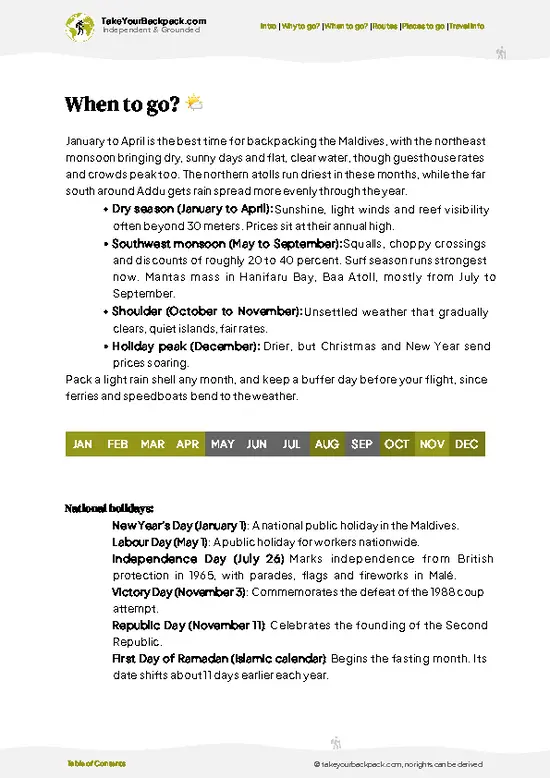
example page 2 from our offline Travel Guide for Maldives
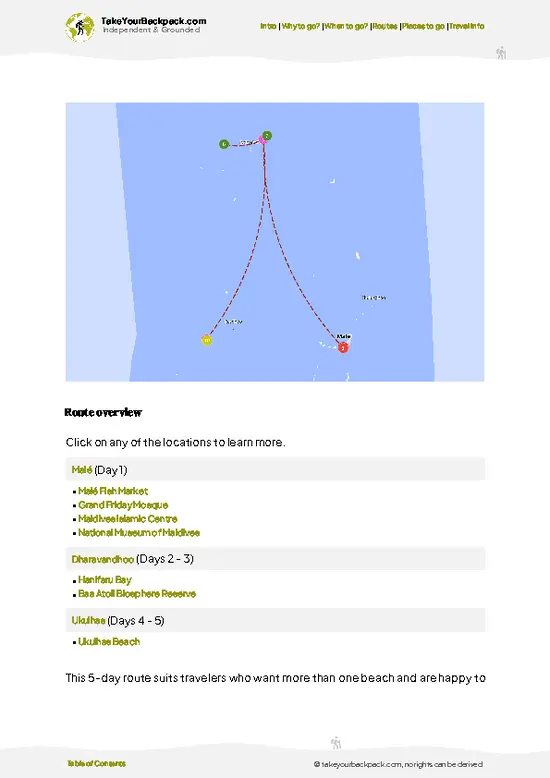
example page 3 from our offline Travel Guide for Maldives
example page 4 from our offline Travel Guide for Maldives
example page 5 from our offline Travel Guide for Maldives
example page 6 from our offline Travel Guide for Maldives
example page 7 from our offline Travel Guide for Maldives
Loading the map 🌍
CLICK TO FILTER
cities
towns
villages
landmarks
national parks
beaches
attractions
festivals
regions
SHOW COUNTRY’S BESTSHOW ALL

✨ Why go?
Ranked #2 festival in Maldives
What makes this festival worth celebrating

Backpackers flock to the Maldives during Eid al-Adha for a reason. This festival isn’t just a date on the calendar; it’s a social energy explosion. Imagine vibrant gatherings where locals come together, sharing food, laughter, and stories. You’re not just a spectator; you’re part of a temporary community that pulses with life.

Planning your route around this festival means diving deep into cultural immersion. You’ll witness traditional rituals, taste local dishes, and feel the warmth of hospitality. This isn’t just sightseeing; it’s an experience that enriches your journey. Plus, compared to similar events worldwide, the Maldives offers affordability without sacrificing authenticity. You can enjoy the festivities without breaking the bank.

Integrating Eid al-Adha into your travel plans also … read more 👉
Backpackers flock to the Maldives during Eid al-Adha for a reason. This festival isn’t just a date on the calendar; it’s a social energy explosion. Imagine vibrant gatherings where locals come together, sharing food, laughter, and stories. You’re not just a spectator; you’re part of a temporary community that pulses with life.

Planning your route around this festival means diving deep into cultural immersion. You’ll witness traditional rituals, taste local dishes, and feel the warmth of hospitality. This isn’t just sightseeing; it’s an experience that enriches your journey. Plus, compared to similar events worldwide, the Maldives offers affordability without sacrificing authenticity. You can enjoy the festivities without breaking the bank.

Integrating Eid al-Adha into your travel plans also makes sense logistically. It can serve as a vibrant anchor point in your itinerary, allowing you to explore the islands before and after the celebrations. This way, you preserve your energy and budget for the moments that truly matter, ensuring your adventure is both exhilarating and meaningful. Don’t miss out on this chance to connect with the heart of Maldivian culture!

💡 HighlightsPlaces and moments you shouldn't skip

  • Eid prayer and morning gatherings — The day kicks off with a big, early congregational prayer at the local mosque or an open field. On small islands everyone turns up in their best clothes, there’s a calm, communal energy and sometimes the sea breeze threading through the crowd — great for quietly observing how tightly knit island life is (and for getting a real sense of the rhythm of Maldivian community life).
  • Qurbani (sacrifice) and meat-sharing customs — The sacrificial ritual is central: an animal is slaughtered according to Islamic practice and the meat is distributed to family, friends and the needy. In the Maldives this becomes very visible and communal — whole neighborhoods chip in, food gets cooked and shared on the spot, and generosity is the point. It’s a living example of festival
… read more 👉
  • Eid prayer and morning gatherings — The day kicks off with a big, early congregational prayer at the local mosque or an open field. On small islands everyone turns up in their best clothes, there’s a calm, communal energy and sometimes the sea breeze threading through the crowd — great for quietly observing how tightly knit island life is (and for getting a real sense of the rhythm of Maldivian community life).
  • Qurbani (sacrifice) and meat-sharing customs — The sacrificial ritual is central: an animal is slaughtered according to Islamic practice and the meat is distributed to family, friends and the needy. In the Maldives this becomes very visible and communal — whole neighborhoods chip in, food gets cooked and shared on the spot, and generosity is the point. It’s a living example of festival charity rather than a staged event.
  • Home feasts and traditional cooking — Expect big, meat-forward family meals with curries, grills and special sweets. Visiting a local home (if invited) is the fastest route to honest Maldivian hospitality — nothing exotic, just flavourful, home-cooked food and people who genuinely want to share. For a budget traveler, these home visits beat any restaurant for authenticity.
  • Bodu Beru drumming and island performances — Traditional drumming, singing and dancing often accompany Eid celebrations, especially in community gatherings and evening parties. The steady, hypnotic rhythms of bodu beru and the communal dancing are uniquely Maldivian and infectious — you’ll feel the island’s cultural heartbeat right there.
  • Street markets, new clothes and the evening buzz — Around Eid you’ll see pop-up stalls selling fresh sweets, garments and festive trinkets, especially in Malé and larger islands. Streets light up, neighbors visit one another, kids run around in new outfits — it’s a good time to wander, pick up a simple souvenir or just soak up the friendly, celebratory atmosphere (remember to dress modestly and ask before photographing people).
Spotted a mistake or missing something? Contact us.

🌤️ When to go?When is the celebration of Eid al-Adha?

  • Topic: Weather - Eid al-Adha shifts with the lunar calendar, often landing during the Maldives’ dry season (December to April) or the wet season (May to November). Dry season means clear skies and calm seas, perfect for island hopping. Wet season brings humidity, sporadic downpours, and rougher waters, which can slow your pace and soak your gear.
  • Topic: Temperature - Expect tropical warmth year-round, hovering between 27°C and 31°C (81°F to 88°F). The heat is steady, but humidity spikes during the wet season, making every step feel heavier. Dry season’s lower humidity keeps you moving without the constant sweat.
  • Topic: Daylight Hours - Daylight stays consistent, roughly 11 to 12 hours daily. Early mornings and late afternoons offer cooler, softer light—prime time for trekking beaches or
… read more 👉
  • Topic: Weather - Eid al-Adha shifts with the lunar calendar, often landing during the Maldives’ dry season (December to April) or the wet season (May to November). Dry season means clear skies and calm seas, perfect for island hopping. Wet season brings humidity, sporadic downpours, and rougher waters, which can slow your pace and soak your gear.
  • Topic: Temperature - Expect tropical warmth year-round, hovering between 27°C and 31°C (81°F to 88°F). The heat is steady, but humidity spikes during the wet season, making every step feel heavier. Dry season’s lower humidity keeps you moving without the constant sweat.
  • Topic: Daylight Hours - Daylight stays consistent, roughly 11 to 12 hours daily. Early mornings and late afternoons offer cooler, softer light—prime time for trekking beaches or diving without frying under the midday sun.
  • Topic: Crowds - Eid al-Adha draws local celebrations but not massive tourist crowds. However, if it coincides with peak dry season, resorts and guesthouses fill fast, pushing prices and limiting last-minute options.
  • Topic: Seasonal Activities - Dry season unlocks snorkeling, diving, and boat tours with crystal-clear visibility. Wet season can dampen water activities but offers lush island landscapes and fewer tourists, ideal for those who prefer solitude over splash.
  • Topic: Price Fluctuations - Prices spike during dry season and around Eid itself due to local demand and tourist influx. Booking early or targeting the shoulder months around Eid can save you cash and energy, letting you focus on the experience, not the expense.
Pro-tip: Time your trip to catch Eid al-Adha during the dry season’s shoulder months—balance perfect weather, manageable crowds, and wallet-friendly rates to keep your energy high for every adventure.


source: climatestotravel.comJANJanuary: highly recommended for travelingFEBFebruary: highly recommended for travelingMARMarch: highly recommended for travelingAPRApril: highly recommended for travelingMAYMay: highly recommended for travelingJUNJune: highly recommended for travelingJULJuly: highly recommended for travelingAUGAugust: highly recommended for travelingSEPSeptember: highly recommended for travelingOCTOctober: highly recommended for travelingNOVNovember: highly recommended for travelingDECDecember: highly recommended for traveling

✈️ The backpacker research shortcutMaldives Travel Guide

An offline-friendly backpacking guide with optimized travel routes, ranked highlights, transport advice, and the best areas to stay.
example page 0 from our offline Travel Guide for Maldives
example page 1 from our offline Travel Guide for Maldives
example page 2 from our offline Travel Guide for Maldives
example page 3 from our offline Travel Guide for Maldives
example page 4 from our offline Travel Guide for Maldives
example page 5 from our offline Travel Guide for Maldives
example page 6 from our offline Travel Guide for Maldives
example page 7 from our offline Travel Guide for Maldives
The digital guide (177 pages) contains:
✅ 42 highlights, ranked by travel appeal
✅ Optimized 2, 3 & 5-day travel routes
✅ Cities, national parks, landmarks, beaches
✅ How to get around
✅ Offline-friendly for travel without Wi-Fi
👉 Click to see all 30+ guide features

📅 Plan smarter in minutes, not weeks
✅ Month by month travel advice
✅ Festivals & national holidays
✅ Budget expectations

🗺️ Go to the right places, skip the overrated ones
✅ Honest pros & cons of destinations
✅ Top hikes, parks & viewpoints
✅ Lesser-known places most travelers miss
✅ Clear “worth it vs skip it” guidance

🛏️ Travel smoothly without rookie mistakes
✅ Best areas to stay
✅ Transport systems explained simply
✅ Common scams & safety advice
✅ SIM cards, money & practical tips

🌍 Understand the country, not just visit it
✅ Culture & traditions
✅ 52 Essential phrases & customs
✅ Festivals worth planning around
✅ Traveler-friendly historical context
✅ Insights that make places more meaningful

📱 Built for real travel conditions
✅ Fully downloadable PDF
✅ Works completely offline
✅ Optimized for phone use
✅ Useful in remote areas & buses
✅ Everything in one place
Stop searching, start planning
Get instant access to your full guide. 30‑day money-back guarantee.
+ Add another guide for just

By proceeding you agree to our terms.
Sent to your inbox immediately after payment • 100% Secure Checkout
Best Backpacking Travel Advisor 2025 tourism awardBest Backpacking
Travel Advisor
2025
What others say about Take Your Backpack Guides:
⭐⭐⭐⭐⭐
Fantastic, amazing amount of information!
⭐⭐⭐⭐⭐
My goodness this is amazing, it's what I've been looking for hats off too you!
⭐⭐⭐⭐⭐
I think this is absolutely BRILLIANT
⭐⭐⭐⭐
Very complete and informative. It's still missing places, but I gotta to commend you
⭐⭐⭐⭐⭐
This is truly amazing, thank you, can't wait to explore it with my kids!
⭐⭐⭐⭐⭐
Awesome resource, thank you!
⭐⭐⭐⭐⭐
This is amazing! Can't wait to explore the ones I haven't seen
⭐⭐⭐⭐
I love this! Well done, great idea.
⭐⭐⭐⭐⭐
Thanks for taking the time to make this gem!
⭐⭐⭐⭐⭐
This might be the best website I've ever seen.
⭐⭐⭐⭐⭐
Congratulations, and thank you so much for your work; it's incredibly valuable.
⭐⭐⭐⭐
In all seriousness I think you did a great job pointing out the important spots
⭐⭐⭐⭐⭐
10/10 very good
⭐⭐⭐⭐⭐
As someone who's only just starting to visit regularly this is awesome, thank you.
⭐⭐⭐⭐
Thank you very much! I'm going to visit my dad, it's going to be very useful!
⭐⭐⭐⭐⭐
This is really cool! We'll be travelling for the first time and this definitely come in handy.
⭐⭐⭐⭐⭐
You are now our minister of culture, congratulations 👨‍💼
⭐⭐⭐⭐⭐
Just wanted to tell you that this is a pearl! Going to follow your recommendations.
⭐⭐⭐⭐⭐
This is so cool. I'll definitely be using the resource for my travels soon.
⭐⭐⭐⭐⭐
This is very impressive! Good work.
⭐⭐⭐⭐⭐
This is an amazing and informative site. Very well done!

🛏️ Where to stay?Where staying makes the most sense

In the Maldives during Eid al-Adha, you want to be where the action is, but also where you can connect with fellow travelers. Head to Malé, the bustling capital. It’s a hub of culture and energy, especially during the festival. You’ll find vibrant markets and local eateries where you can dive into traditional dishes. Plus, the social scene is alive, making it easy to meet other backpackers.

Next, consider Thulusdhoo. This island is known for its surf breaks and laid-back vibe. It’s a favorite among budget travelers, offering guesthouses that foster a communal atmosphere. You can swap stories … read more 👉
In the Maldives during Eid al-Adha, you want to be where the action is, but also where you can connect with fellow travelers. Head to Malé, the bustling capital. It’s a hub of culture and energy, especially during the festival. You’ll find vibrant markets and local eateries where you can dive into traditional dishes. Plus, the social scene is alive, making it easy to meet other backpackers.

Next, consider Thulusdhoo. This island is known for its surf breaks and laid-back vibe. It’s a favorite among budget travelers, offering guesthouses that foster a communal atmosphere. You can swap stories with fellow adventurers while enjoying the stunning sunsets. The local celebrations during Eid add a unique flavor to your stay, with community feasts and festivities.

Don’t overlook Maafushi either. This island is a backpacker’s paradise, with affordable accommodations and a friendly atmosphere. You’ll find plenty of opportunities for snorkeling and exploring nearby sandbanks. The Eid celebrations here are intimate and welcoming, giving you a chance to experience local customs up close.

Stay smart, stay social, and let the Maldives surprise you.

👛 Costs (as of 15 October 2026)How expensive it really is

Eid al-Adha in the Maldives is a vibrant experience, but navigating the costs can feel like a maze. Here’s a breakdown to keep your budget intact while you soak in the festivities.
  • Festival Tickets: Entry to local celebrations is often free, but some events may charge a small fee. Expect to pay around €5 to €20 ($5 to $22) for special performances or activities. Keep an eye out for community events that are open to everyone.
  • Accommodation: Prices vary widely. Guesthouses start at about €30 to €50 ($33 to $55) per night, while mid-range hotels can range from €70 to €150 ($77 to $165). Book early to secure a spot, especially during the festival, as places fill up fast.
  • Local Transport: Ferries between islands are your best bet, costing around €1 to €5 ($1 to $5.50) each way. If you’re on a larger
… read more 👉
Eid al-Adha in the Maldives is a vibrant experience, but navigating the costs can feel like a maze. Here’s a breakdown to keep your budget intact while you soak in the festivities.
  • Festival Tickets: Entry to local celebrations is often free, but some events may charge a small fee. Expect to pay around €5 to €20 ($5 to $22) for special performances or activities. Keep an eye out for community events that are open to everyone.
  • Accommodation: Prices vary widely. Guesthouses start at about €30 to €50 ($33 to $55) per night, while mid-range hotels can range from €70 to €150 ($77 to $165). Book early to secure a spot, especially during the festival, as places fill up fast.
  • Local Transport: Ferries between islands are your best bet, costing around €1 to €5 ($1 to $5.50) each way. If you’re on a larger island, expect to pay about €10 to €20 ($11 to $22) for a taxi ride. Renting a bike can be a fun and economical option, usually around €5 ($5.50) per day.
  • Food & Drinks: Street food is a steal, with meals costing between €2 to €5 ($2.20 to $5.50). Dining in local restaurants will set you back about €10 to €20 ($11 to $22) for a full meal. Don’t forget to budget for drinks; a local beer is around €3 to €5 ($3.30 to $5.50), while water is often just €1 ($1.10).
  • Miscellaneous Expenses: This includes souvenirs, tips, and any unexpected costs. Set aside about €20 to €50 ($22 to $55) for extras. It’s wise to have a cushion for spontaneous adventures or last-minute purchases.

Planning ahead will help you dodge hidden costs and keep your energy focused on enjoying the festival.


source: visitmaldives.com
⚠️ Prices can change and everyone travels differently, so take this as a rough guide. Hope it helps you plan your adventure!

🍲 FoodLocal Flavors for Backpackers

At the Eid al-Adha festival in the Maldives, food is a vibrant celebration of community and tradition. Expect to see heaps of grilled meats, especially lamb and beef, sizzling away at stalls. The aroma of mas huni, a tuna salad mixed with coconut and onion, wafts through the air, inviting you to dig in. Don’t miss out on biryani, a fragrant rice dish layered with spices and tender meat, perfect for sharing.

The festival atmosphere is electric, with locals gathering around long tables, sharing dishes and stories. Etiquette is key here; it’s customary to share your food, so don’t hesitate to offer a taste of what you’ve got. Lines can get long, especially for the popular dishes, so be patient and enjoy the buzz of excitement around you.

When it comes to drinks, fresh coconut water is a must. … read more 👉
At the Eid al-Adha festival in the Maldives, food is a vibrant celebration of community and tradition. Expect to see heaps of grilled meats, especially lamb and beef, sizzling away at stalls. The aroma of mas huni, a tuna salad mixed with coconut and onion, wafts through the air, inviting you to dig in. Don’t miss out on biryani, a fragrant rice dish layered with spices and tender meat, perfect for sharing.

The festival atmosphere is electric, with locals gathering around long tables, sharing dishes and stories. Etiquette is key here; it’s customary to share your food, so don’t hesitate to offer a taste of what you’ve got. Lines can get long, especially for the popular dishes, so be patient and enjoy the buzz of excitement around you.

When it comes to drinks, fresh coconut water is a must. It’s refreshing and hydrating, perfect for the tropical heat. Some stalls might offer traditional sweet drinks, but cash is king here; not all vendors accept cards. Serving sizes can vary, so be prepared to sample a bit of everything. This festival isn’t just about the food; it’s about the connections you make and the flavors you savor together.

FAQCommon questions from travelers

Eid al-Adha takes place on the 10th day of Dhu al-Hijjah, the 12th month of the Islamic lunar calendar, which shifts about 10-12 days earlier each year in the Gregorian calendar. It usually lasts for 3 to 4 days in the Maldives.
Attending Eid al-Adha celebrations in the Maldives is generally free as it is a public religious holiday. Costs may arise from personal expenses like food, transportation, or special events, but there is no fixed entry fee.
No, you do not need tickets in advance to participate in Eid al-Adha celebrations in the Maldives. The events are public and community-based, with open access to prayers and festivities.
⚠️ Things can change over time, so always validate details locally before you go.

Other Maldivian festivals near Eid al-Adha

Explore more nearby:


💡 Not sure where to go next?
Create a personalized itinerary for Maldives including Eid al-Adha and the places that fit your trip.

Generate my itinerary

👉 Discover all festivals

Or checkout all Maldives has to offer (think cities, towns, villages, national parks, hikes, beaches, festivals)
Country photo of Maldives

We 💚 feedbackKey takeaways before you go

Eid al-Adha in the Maldives is electric. Picture the vibrant prayers echoing through the islands, followed by feasts that turn into joyous gatherings. The best surprise? Locals inviting you to share their meals—don’t hesitate! But here’s the catch: book your accommodations early. Prices can skyrocket last minute, and you don’t want to miss out on that beachfront view. Embrace the spirit, savor the flavors, and let the island rhythm carry you. This isn’t just a trip; it’s an experience that’ll linger long after you leave.

✍️ Help improve this page!
The information on this page is based on in-depth research, insights shared by experienced travelers, and feedback from the local travel community in Maldives. While every effort is made to keep the information accurate and current, conditions can change — so if you spot anything incorrect or outdated, please get in touch.


🙋‍♂️ Give feedback

👋 Meet the founderWho’s Behind Take Your Backpack?

Johan, backpacker and founder of TakeYourBackpackHi, I’m Johan (Netherlands 🇳🇱), the creator of TakeYourBackpack. Over the past 3 decades, I’ve backpacked through 90+ countries across six continents, gaining extensive experience with independent travel, long-term trips, and overland routes.

This site is built on a combination of firsthand travel experience and carefully curated insights from other backpackers. Many guides are based on places I’ve personally visited, while others bring together tips, observations, and practical advice shared by trusted travelers I’ve met along the way.

The goal is to provide realistic, experience-driven guidance — not generic itineraries — so you can explore destinations with better context, clearer expectations, and more confidence.