×

Maldives🇲🇻 | citiesMaledense cityscape, local markets, mosques, harbor life | things to do and best time to go

Explore Ukulhas BeachExplore National Day

Backpacking in Male
🏆 Top pickcity ranked #1
By Johan Kruseman 🇳🇱 | Updated September 4, 2026

Everyone says they “do” Malé for the airport and speedboats to the resorts, then brag about the overwater bungalows. That’s not the real decision you’re making. What matters more is how much time, money, and comfort you’re willing to trade for a quick hit of Maldivian city life before you disappear to the islands. Malé sits in the central atoll cluster of the Maldives, a dense little capital crammed onto its own island, ringed by sea walls and ferries.

For backpackers, it’s intense but interesting. You get mosques, the Friday Mosque and Islamic Centre, the fish market, Republic Square, and a few small museums that actually explain the country you’re about to island-hop through. It’s cheap by Maldivian standards, not cheap by Southeast Asia standards. Walking is easy, traffic is chaotic, and nightlife is muted by local alcohol laws. It’s safer and more urban than resort islands, less relaxed than nearby Hulhumalé, and feels more like a compressed South Asian port than a beach escape.

Discover everything you want to know in the 📖 Maldives Travel Guide.


Get your Maldives guide
46 ranked highlights, routes & tips, works offline (192 pages)
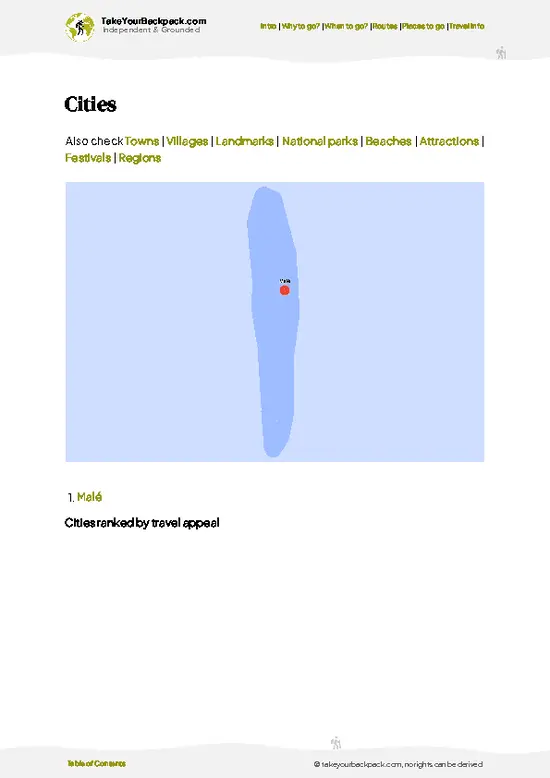
Loading the map 🌍
CLICK TO FILTER
cities
towns
villages
landmarks
national parks
hikes
beaches
attractions
festivals
regions
SHOW COUNTRY’S BESTSHOW ALL

✨ Why go?
Ranked #1 city in Maldives
Why Male should be on your travel list

Backpackers flock to Male for a mix of practicality and local flavor. This city serves as a basecamp for day trips to the stunning atolls, making it a strategic stop on your Maldives journey. You’ll find a range of hostels that cater to budget travelers, offering a chance to meet fellow adventurers and share stories over a cheap meal. The food scene is a delightful surprise, with local eateries serving up fresh seafood and traditional dishes that won’t break the bank.

Walkability is a major plus; you can easily explore the bustling markets and vibrant streets on foot. While Male isn’t known for a wild nightlife, there are plenty of laid-back bars where you can unwind after a day of exploring. Plus, the city’s compact size means you won’t waste time commuting, allowing you to soak in the local … read more 👉
Backpackers flock to Male for a mix of practicality and local flavor. This city serves as a basecamp for day trips to the stunning atolls, making it a strategic stop on your Maldives journey. You’ll find a range of hostels that cater to budget travelers, offering a chance to meet fellow adventurers and share stories over a cheap meal. The food scene is a delightful surprise, with local eateries serving up fresh seafood and traditional dishes that won’t break the bank.

Walkability is a major plus; you can easily explore the bustling markets and vibrant streets on foot. While Male isn’t known for a wild nightlife, there are plenty of laid-back bars where you can unwind after a day of exploring. Plus, the city’s compact size means you won’t waste time commuting, allowing you to soak in the local culture.

If you’re looking for a place that balances affordability with authentic experiences, Male fits the bill. It’s not just a stopover; it’s a chance to dive into the heart of Maldivian life before heading to the more remote islands.
Want to include Male in your Maldives route?
Create a personalized Maldives itinerary that includes Male and the places that fit your trip — based on your travel style, budget, and available time. Get your route in seconds.

Generate my trip

💡 HighlightsKey sights and experiences for travelers

  • Grand Friday Mosque / Islamic Centre — The big golden-domed mosque that defines Malé’s skyline; striking modern Islamic architecture, a lovely library and community hub. Even if you can’t join a prayer, the exterior and nearby courtyard give a strong sense of the island’s religious life and civic pride.
  • Hukuru Miskiy (Old Friday Mosque) — A 17th-century coral-stone mosque with intricate carvings and an old cemetery tucked into Sultan Park. It’s one of the best places to see traditional Maldivian craftsmanship and a tangible link to pre-modern island history.
  • National Museum — Compact but meaty: royal thrones, ancient coral grave markers, old coins and artifacts that tell the story of the Maldives before tourism. Good place to orient yourself to local history; try to go early to avoid crowds
read more 👉
  • Grand Friday Mosque / Islamic Centre — The big golden-domed mosque that defines Malé’s skyline; striking modern Islamic architecture, a lovely library and community hub. Even if you can’t join a prayer, the exterior and nearby courtyard give a strong sense of the island’s religious life and civic pride.
  • Hukuru Miskiy (Old Friday Mosque) — A 17th-century coral-stone mosque with intricate carvings and an old cemetery tucked into Sultan Park. It’s one of the best places to see traditional Maldivian craftsmanship and a tangible link to pre-modern island history.
  • National Museum — Compact but meaty: royal thrones, ancient coral grave markers, old coins and artifacts that tell the story of the Maldives before tourism. Good place to orient yourself to local history; try to go early to avoid crowds and heat.
  • Sultan Park & the Royal Cemetery — Shaded banyans, quiet paths and the green lung beside the mosque and museum. Great for a slow, reflective wander and to see the historical heart of the island away from the traffic and stalls.
  • Mulee’aage (Presidential Palace) — Handsome colonial-era architecture and an iconic yellow façade right in the center of the city. You can’t usually go inside, but the building and its immediate surroundings are worth photographing and people-watching.
  • Malé Fish Market & Harbor — Early-morning fish auctions, a lively harbor full of dhonis, and rows of freshly caught tuna. Loud, raw and very local — go at dawn for the real show and to see how seafood moves from boat to plate here.
  • Local Market & Majeedhee Magu — The island’s main shopping strip and adjacent market where you’ll find fruits, vegetables, snacks, local snacks, small craft stalls and cheap gear. It’s the best place to feel everyday Malé life and pick up souvenirs without a resort mark-up.
  • Artificial Beach — A man-made stretch of sand and picnic spots that locals use for swimming, soccer and sunset hangs. Not a tropical getaway, but a genuine slice of local leisure — bring a towel and stay for evening food stalls and sunset views.
  • National Art Gallery — Small exhibitions of contemporary and traditional Maldivian art and rotating shows by local artists. Good for a cooler, quieter cultural stop and a peek at what island creatives are making now.
  • Jumhooree Maidhaan (Republic Square) & Marine Drive — The civic heart and open green used for rallies, festivals and cricket; the adjoining seafront promenade is handy for short walks, boat watching and sunrise/sunset photos. It’s where official Malé life and casual social life meet on concrete and sand.
Nearby day-trip options include Hulhumalé (the reclaimed island with beaches and cafes), the short ferry hop to Villingili for quiet parks, and inhabited islands like Maafushi or dive/snorkel sites such as Banana Reef a short boat ride away.
Spotted a mistake or missing something? Contact us.

Things to do in Male

Ratings based on Tripadvisor reviews. When you book through this link, you support our work at no extra cost to you.

🏘️ NeighborhoodsUnderstanding the local layout

Male, the bustling capital of the Maldives, offers a unique blend of local culture and backpacker practicality. Here’s a breakdown of key neighborhoods to help you navigate your stay.

Henveiru: This area is the heartbeat of Male. It’s lively, with plenty of cafes and shops. Prices are moderate, making it a solid choice for budget travelers. Walkability is excellent; you can easily explore on foot. Nightlife is vibrant but not overwhelming, perfect for those who want to unwind after a day of sightseeing. Ideal for both short and longer stays.

Maafannu: Known for its quieter vibe, Maafannu is a great escape from the hustle. It has a mix of local eateries and small markets, keeping costs low. Walkability is good, but you might want to use a bike for longer distances. This area is more suited … read more 👉
Male, the bustling capital of the Maldives, offers a unique blend of local culture and backpacker practicality. Here’s a breakdown of key neighborhoods to help you navigate your stay.

Henveiru: This area is the heartbeat of Male. It’s lively, with plenty of cafes and shops. Prices are moderate, making it a solid choice for budget travelers. Walkability is excellent; you can easily explore on foot. Nightlife is vibrant but not overwhelming, perfect for those who want to unwind after a day of sightseeing. Ideal for both short and longer stays.

Maafannu: Known for its quieter vibe, Maafannu is a great escape from the hustle. It has a mix of local eateries and small markets, keeping costs low. Walkability is good, but you might want to use a bike for longer distances. This area is more suited for longer stays, as it offers a more residential feel, making it easier to settle in.

Galolhu: This neighborhood is a bit more upscale, with higher prices reflecting its amenities. It’s walkable, but you might find yourself relying on local transport for longer distances. The nightlife here is more subdued, catering to those looking for a relaxed evening. Best for short stays if you want a taste of a more polished Male.

Villingili: Technically an island, but just a short ferry ride away, Villingili offers a laid-back atmosphere. Prices are slightly higher due to its island charm. It’s walkable, and the ferry access makes it easy to hop back to Male. Perfect for a short getaway, especially if you want a beach vibe without leaving the capital.

⌛️ 1 daySeeing the highlights in 24 hours

Male, the bustling capital of the Maldives, is a vibrant mix of culture, history, and local life. While most travelers flock to the idyllic resorts, Male offers a unique glimpse into Maldivian life, with its colorful buildings, lively markets, and rich heritage. Spending a day here is like peeling back the layers of an onion; each layer reveals something new and delightful.

Start your morning at the Fish Market, where the air is thick with the scent of the ocean and the sounds of vendors calling out their fresh catches. Grab a traditional breakfast of mas huni—tuna mixed with coconut and onion—at a nearby café. It’s a local favorite and will fuel you for the day ahead. After breakfast, stroll through the narrow streets of the Hen’dhune neighborhood, where you can admire the intricate wooden … read more 👉
Male, the bustling capital of the Maldives, is a vibrant mix of culture, history, and local life. While most travelers flock to the idyllic resorts, Male offers a unique glimpse into Maldivian life, with its colorful buildings, lively markets, and rich heritage. Spending a day here is like peeling back the layers of an onion; each layer reveals something new and delightful.

Start your morning at the Fish Market, where the air is thick with the scent of the ocean and the sounds of vendors calling out their fresh catches. Grab a traditional breakfast of mas huni—tuna mixed with coconut and onion—at a nearby café. It’s a local favorite and will fuel you for the day ahead. After breakfast, stroll through the narrow streets of the Hen’dhune neighborhood, where you can admire the intricate wooden carvings and vibrant street art that tell stories of the island’s past.

In the afternoon, head to the Maldives Islamic Centre, an architectural marvel with its golden dome and intricate designs. It’s a peaceful spot to soak in the local culture. Just a short walk away is the Old Friday Mosque, built from coral stone, where you can appreciate the craftsmanship that has stood the test of time. For a less touristy experience, visit the National Museum, tucked away in Sultan Park. Here, you’ll find artifacts that narrate the history of the Maldives, offering a deeper understanding of this island nation.

As the sun begins to set, make your way to the waterfront promenade. Grab a fresh coconut from a street vendor and watch the locals gather for evening prayers. For dinner, seek out a small eatery in the Maafannu neighborhood, where you can indulge in a plate of garudhiya, a traditional fish soup, while mingling with friendly locals.

By the end of the day, you’ll have tasted the essence of Male—its flavors, sights, and sounds—leaving you with memories that linger long after you’ve left.
Turn your Male visit into an Maldives adventure
Build a complete Maldives route with Male, hidden gems, must-see destinations, and realistic travel times included.

Generate my trip

🌤️ When to go?Seasonal considerations and timing


  • Topic: Weather – The Maldives has a tropical climate with two main seasons. The dry season from November to April offers clear skies and minimal rain, ideal for outdoor activities. The wet season, May to October, brings frequent showers and higher humidity, which can disrupt plans but also cools things down.

  • Topic: Temperature – Temperatures hover between 27°C and 32°C (81°F to 90°F) year-round. The dry season feels more comfortable due to lower humidity, while the wet season can feel hotter and stickier despite similar temperatures.

  • Topic: Daylight Hours – Daylight is consistent, roughly 11 to 12 hours daily, with sunrise around 6 AM and sunset near 6 PM. This stability means you won’t lose daylight for exploring, regardless of when you visit.

  • Topic: Crowds – Peak tourist season
read more 👉

  • Topic: Weather – The Maldives has a tropical climate with two main seasons. The dry season from November to April offers clear skies and minimal rain, ideal for outdoor activities. The wet season, May to October, brings frequent showers and higher humidity, which can disrupt plans but also cools things down.

  • Topic: Temperature – Temperatures hover between 27°C and 32°C (81°F to 90°F) year-round. The dry season feels more comfortable due to lower humidity, while the wet season can feel hotter and stickier despite similar temperatures.

  • Topic: Daylight Hours – Daylight is consistent, roughly 11 to 12 hours daily, with sunrise around 6 AM and sunset near 6 PM. This stability means you won’t lose daylight for exploring, regardless of when you visit.

  • Topic: Crowds – Peak tourist season aligns with the dry months, especially December to March, when resorts and flights fill up. Visiting just before or after this window means fewer tourists and a more relaxed vibe.

  • Topic: Seasonal Activities – Dry season is prime for diving, snorkeling, and water sports with excellent visibility. The wet season offers surfing opportunities with bigger swells but less predictable conditions.

  • Topic: Price Fluctuations – Prices spike during the dry season, particularly around holidays. The wet season sees significant discounts on accommodation and activities, making it a budget-friendly choice if you can handle occasional rain.


Pro-tip: Aim for the shoulder months—late April or early November—to balance good weather, manageable crowds, and better prices, turning timing into your secret weapon for a high-value Maldives experience.


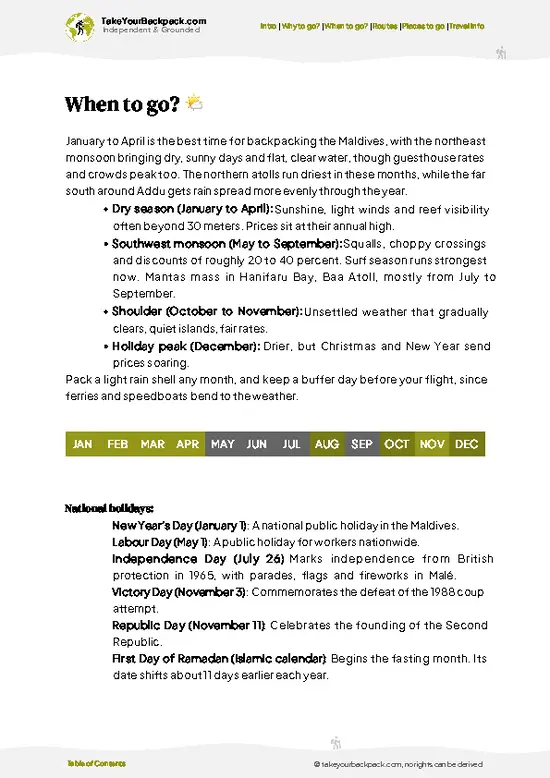
source: climatestotravel.comJANJanuary: excellent for travelingFEBFebruary: excellent for travelingMARMarch: excellent for travelingAPRApril: highly recommended for travelingMAYMay: fair for travelingJUNJune: fair for travelingJULJuly: fair for travelingAUGAugust: fair for travelingSEPSeptember: fair for travelingOCTOctober: fair for travelingNOVNovember: highly recommended for travelingDECDecember: excellent for traveling
maldives-city-male
© Google |

✈️ The backpacker research shortcutMaldives Travel Guide

An offline-friendly backpacking guide with optimized travel routes, ranked highlights, transport advice, and the best areas to stay.
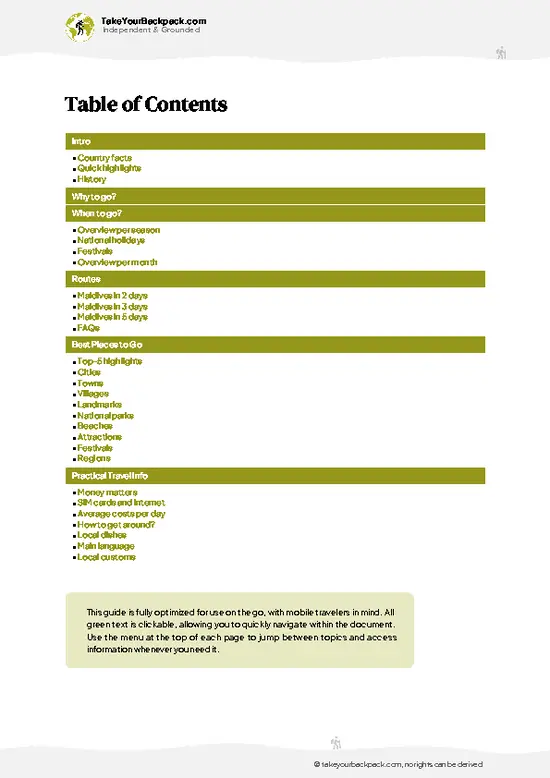
example page 0 from our offline Travel Guide for Maldives
example page 1 from our offline Travel Guide for Maldives
example page 2 from our offline Travel Guide for Maldives
example page 3 from our offline Travel Guide for Maldives
example page 4 from our offline Travel Guide for Maldives
example page 5 from our offline Travel Guide for Maldives
example page 6 from our offline Travel Guide for Maldives
example page 7 from our offline Travel Guide for Maldives
The digital guide (192 pages) contains:
46 highlights, ranked by travel appeal
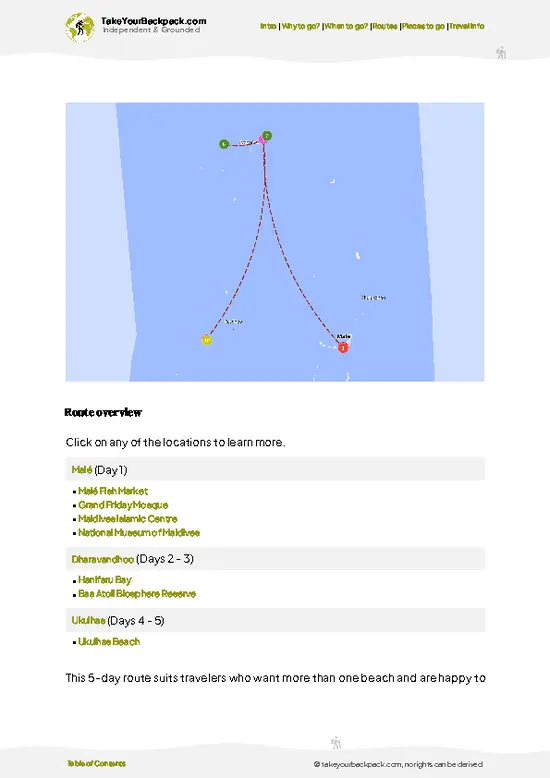
Optimized 2, 3 & 5-day travel routes
Cities, national parks, landmarks, beaches
How to get around
Offline-friendly for travel without Wi-Fi
👉 Click to see all 30+ guide features

📅 Plan smarter in minutes, not weeks
Month by month travel advice
Festivals & national holidays
Budget expectations

🗺️ Go to the right places, skip the overrated ones
Honest pros & cons of destinations
Top hikes, parks & viewpoints
Lesser-known places most travelers miss
Clear “worth it vs skip it” guidance

🛏️ Travel smoothly without rookie mistakes
Best areas to stay
Transport systems explained simply
Common scams & safety advice
SIM cards, money & practical tips

🌍 Understand the country, not just visit it
Culture & traditions
52 Essential phrases & customs
Festivals worth planning around
Traveler-friendly historical context
Insights that make places more meaningful

📱 Built for real travel conditions
Fully downloadable PDF
Works completely offline
Optimized for phone use
Useful in remote areas & buses
Everything in one place
Save weeks of stressful planning
Get instant access to your full guide. 30‑day money-back guarantee.
+ Add another guide for just US$7.80

By proceeding you agree to our terms.
Sent to your inbox immediately after payment • 100% Secure Checkout
Best Backpacking Travel Advisor 2025 tourism awardBest Backpacking
Travel Advisor
2025
What others say about Take Your Backpack Guides:
⭐⭐⭐⭐⭐
Fantastic, amazing amount of information!
⭐⭐⭐⭐⭐
My goodness this is amazing, it's what I've been looking for hats off too you!
⭐⭐⭐⭐⭐
I think this is absolutely BRILLIANT
⭐⭐⭐⭐
Very complete and informative. It's still missing places, but I gotta to commend you
⭐⭐⭐⭐⭐
This is truly amazing, thank you, can't wait to explore it with my kids!
⭐⭐⭐⭐⭐
Awesome resource, thank you!
⭐⭐⭐⭐⭐
This is amazing! Can't wait to explore the ones I haven't seen
⭐⭐⭐⭐
I love this! Well done, great idea.
⭐⭐⭐⭐⭐
Thanks for taking the time to make this gem!
⭐⭐⭐⭐⭐
This might be the best website I've ever seen.
⭐⭐⭐⭐⭐
Congratulations, and thank you so much for your work; it's incredibly valuable.
⭐⭐⭐⭐
In all seriousness I think you did a great job pointing out the important spots
⭐⭐⭐⭐⭐
10/10 very good
⭐⭐⭐⭐⭐
As someone who's only just starting to visit regularly this is awesome, thank you.
⭐⭐⭐⭐
Thank you very much! I'm going to visit my dad, it's going to be very useful!
⭐⭐⭐⭐⭐
This is really cool! We'll be travelling for the first time and this definitely come in handy.
⭐⭐⭐⭐⭐
You are now our minister of culture, congratulations 👨‍💼
⭐⭐⭐⭐⭐
Just wanted to tell you that this is a pearl! Going to follow your recommendations.
⭐⭐⭐⭐⭐
This is so cool. I'll definitely be using the resource for my travels soon.
⭐⭐⭐⭐⭐
This is very impressive! Good work.
⭐⭐⭐⭐⭐
This is an amazing and informative site. Very well done!

🛏️ Where to stay?Where staying makes the most sense

Male’s compact size means your choice of neighborhood is less about distance and more about atmosphere and convenience. For backpackers, the best area to base yourself is the central district around Majeedhee Magu and the nearby streets. This zone is the city’s heartbeat—safe, walkable, and buzzing with local life. It’s where you’ll find the most budget-friendly hostels, guesthouses, and small cafés that cater to solo travelers and backpackers looking to connect without breaking the bank.

Compared to the quieter residential edges or the government-heavy administrative zones, this central area … read more 👉
Male’s compact size means your choice of neighborhood is less about distance and more about atmosphere and convenience. For backpackers, the best area to base yourself is the central district around Majeedhee Magu and the nearby streets. This zone is the city’s heartbeat—safe, walkable, and buzzing with local life. It’s where you’ll find the most budget-friendly hostels, guesthouses, and small cafés that cater to solo travelers and backpackers looking to connect without breaking the bank.

Compared to the quieter residential edges or the government-heavy administrative zones, this central area offers a social vibe that’s hard to beat. You’re close to the ferry terminal, which is crucial for hopping to nearby islands, and the local markets where you can grab cheap eats and fresh coconuts. The streets here are lively but manageable, so you won’t feel overwhelmed by crowds or noise.

Other parts of Male, like the more upscale Hulhumale or the industrial docks, don’t offer the same backpacker-friendly mix of affordability and social opportunities. Hulhumale is newer and cleaner but leans toward resort-style stays, which can inflate costs and isolate you from the local pulse. The docks are functional but not inviting for overnight stays.

In short, the central Male district around Majeedhee Magu nails the balance: it’s safe, social, and budget-smart. You sacrifice a bit of luxury and quiet for access to the city’s core energy and the backpacker community, which is exactly the trade-off that makes your stay both practical and memorable.

🚌 Getting aroundTransportation options and practical tips

Male moves at a pace that’s a curious mix of island time and urban urgency. It’s not a city where you’ll find clocks dictating every step, but neither is it a free-for-all. The rhythm here is shaped by tides, ferry schedules, and the ebb and flow of tourists and locals alike. You’ll quickly learn that time is a flexible currency—sometimes you spend it waiting, sometimes you save it by choosing the right route or mode of transport. Comfort is often sacrificed for speed or price, but knowing the trade-offs lets you play the system like a pro. Here’s how to navigate Male’s transit options with your budget and sanity intact.


  • Walking: The most straightforward and cost-free way to get around Male’s compact city center. It’s a flat, easy stroll between most points of interest, taking 10-20 minutes
read more 👉
Male moves at a pace that’s a curious mix of island time and urban urgency. It’s not a city where you’ll find clocks dictating every step, but neither is it a free-for-all. The rhythm here is shaped by tides, ferry schedules, and the ebb and flow of tourists and locals alike. You’ll quickly learn that time is a flexible currency—sometimes you spend it waiting, sometimes you save it by choosing the right route or mode of transport. Comfort is often sacrificed for speed or price, but knowing the trade-offs lets you play the system like a pro. Here’s how to navigate Male’s transit options with your budget and sanity intact.


  • Walking: The most straightforward and cost-free way to get around Male’s compact city center. It’s a flat, easy stroll between most points of interest, taking 10-20 minutes max. No schedules, no fares, just your own pace and the chance to soak in the local street life. Ideal if you’re light on time and heavy on curiosity.


  • Public Bus: Runs from early morning (around 6:30 AM) until about 10 PM. Fares are dirt cheap—usually under $1 USD per ride. Buses cover the main routes but can get crowded and slow during rush hours. Comfort is basic; expect standing room and occasional delays. Best for budget travelers who don’t mind a bit of hustle and want to stretch their money.


  • Ferry to Hulhumale: A crucial link if you’re staying or exploring beyond Male. Ferries depart roughly every 30 minutes from 6 AM to 11 PM. Tickets cost about $1.50 USD and the ride takes 15 minutes. It’s a smooth, scenic trip that’s faster and cheaper than taxis or speedboats. Comfort is moderate—open-air seating with some shade, but no luxury.


  • Taxi: Available 24/7 but pricey compared to other options, with fares starting around $5 USD for short trips within Male. Taxis offer door-to-door convenience and air conditioning, which can be a relief in the tropical heat. The trade-off is cost and occasional traffic delays. Use taxis strategically when time is tight or you’re hauling heavy gear.


  • Speedboat Transfers: Mostly for island hopping or reaching resorts, these are fast but expensive—often $20 USD or more per trip. They run on fixed schedules but can be booked privately for flexibility. Comfort is high, with cushioned seats and shelter from the sun. This is the splurge option when you want to save time and travel in style.


Understanding these options is like decoding Male’s pulse. You’re balancing time, money, and comfort in a way that suits your trip’s priorities. Walk when you want to absorb the city’s texture without spending a dime. Hop on a bus or ferry to stretch your budget while still moving efficiently. Call a taxi or speedboat when your schedule demands speed or ease. Each choice shapes your experience, turning logistics into a strategic game you’re winning.

👛 Costs (as of 4 September 2026)How expensive it really is

Backpacking in Male, Maldives, is a unique challenge where your choices around time, money, and comfort shape the entire experience. Here’s the breakdown of what you’re really paying for each day.
  • Dorm Accommodation (High Season): Expect to pay around $25 to $40 per night. High season drives prices up due to demand, and dorms here are basic but clean, often with shared bathrooms and limited amenities.
  • Dorm Accommodation (Off-Season): Prices drop to about $15 to $25 per night. Off-season means fewer tourists, so you can snag better deals, but some places might close or reduce services.
  • Meals: Budget around $10 to $20 daily if you stick to local eateries and street food. Western-style meals or dining in tourist spots can push this higher, but local cafes offer filling options at a fraction
read more 👉
Backpacking in Male, Maldives, is a unique challenge where your choices around time, money, and comfort shape the entire experience. Here’s the breakdown of what you’re really paying for each day.
  • Dorm Accommodation (High Season): Expect to pay around $25 to $40 per night. High season drives prices up due to demand, and dorms here are basic but clean, often with shared bathrooms and limited amenities.
  • Dorm Accommodation (Off-Season): Prices drop to about $15 to $25 per night. Off-season means fewer tourists, so you can snag better deals, but some places might close or reduce services.
  • Meals: Budget around $10 to $20 daily if you stick to local eateries and street food. Western-style meals or dining in tourist spots can push this higher, but local cafes offer filling options at a fraction of the cost.
  • Local Transport: Getting around Male itself is cheap—roughly $1 to $3 per ride on public ferries or local buses. Walking is also a solid option given the city’s compact size.
  • City Transport Pass: Male doesn’t have a formal city transport pass system. Instead, plan for individual fares or occasional taxi rides, which can cost $3 to $7 depending on distance and time of day.
  • Basic Activities/Entry Fees: Most cultural sites and small museums charge minimal fees, around $2 to $5. Snorkeling or day trips to nearby islands start at about $20 but can climb quickly if you want guided tours or equipment rentals.
  • Miscellaneous Expenses: Budget $5 to $10 for essentials like bottled water, snacks, or small souvenirs. Internet cafes or SIM cards for data run about $10 to $15 for a decent package.

Male’s daily backpacking budget typically falls between $50 and $80, depending on season and your appetite for comfort versus scrappiness. You’re trading off higher accommodation costs and island-specific transport quirks against the chance to experience a city that’s a gateway to some of the world’s most exclusive island escapes. Understanding these trade-offs lets you decide where to tighten the belt and where to splurge for maximum value.


source: visitmaldives.com
⚠️ Prices can change and everyone travels differently, so take this as a rough guide. Hope it helps you plan your adventure!

🚌 Day tripsWhere to go beyond the main area

Using Male as your base for day trips opens up a world of adventure in the Maldives. You can easily explore stunning islands, vibrant marine life, and local culture without breaking the bank or sacrificing comfort.

**Snorkeling at Maafushi**
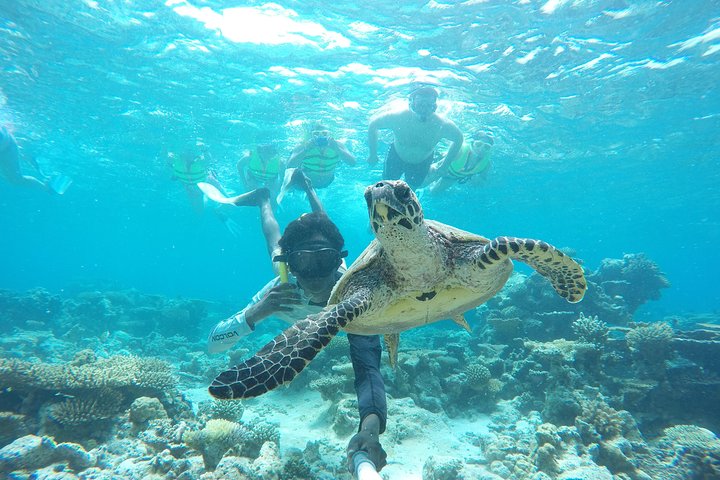
Just a short 30-minute ferry ride from Male, Maafushi is a backpacker’s paradise. The island offers pristine beaches and some of the best snorkeling spots in the region. You can rent gear for around $10 and dive into crystal-clear waters teeming with colorful fish and coral. The local vibe is friendly, and you can grab a meal at a beachside café for about $5. Avoid the mistake of sticking to the crowded areas; venture to the less-traveled parts of the island for a more authentic experience.
👉 Explore Maafushi

**Cultural Day in Thulusdhoo**
Only … read more 👉
Using Male as your base for day trips opens up a world of adventure in the Maldives. You can easily explore stunning islands, vibrant marine life, and local culture without breaking the bank or sacrificing comfort.

**Snorkeling at Maafushi**
Just a short 30-minute ferry ride from Male, Maafushi is a backpacker’s paradise. The island offers pristine beaches and some of the best snorkeling spots in the region. You can rent gear for around $10 and dive into crystal-clear waters teeming with colorful fish and coral. The local vibe is friendly, and you can grab a meal at a beachside café for about $5. Avoid the mistake of sticking to the crowded areas; venture to the less-traveled parts of the island for a more authentic experience.
👉 Explore Maafushi

**Cultural Day in Thulusdhoo**
Only 40 minutes by ferry, Thulusdhoo is rich in local culture and history. Known for its surf breaks, it’s also a great spot to learn about traditional Maldivian life. You can visit local workshops, try your hand at fishing, or simply stroll through the village. Costs are minimal—around $15 for transport and meals. The best time to visit is during the surf season from April to October, but be mindful of local customs, especially during Ramadan. Many first-timers miss out on the cultural nuances; take the time to chat with locals.
👉 Explore Thulusdhoo

**Island Hopping to Gulhi**
Gulhi is just a 20-minute boat ride away and is perfect for a laid-back day. The island is small but offers stunning beaches and a chance to experience local life. You can rent a bike for about $5 and explore at your own pace. The total cost for the day, including food and transport, will be around $20. The best time to go is during the dry season from November to April. A common mistake is underestimating the sun; bring sunscreen and stay hydrated.


**Diving at Kuda Giri**
For those looking to dive, Kuda Giri is a must-visit spot just 30 minutes from Male. This dive site features a beautiful wreck and vibrant marine life. Expect to pay around $60 for a guided dive, including gear rental. The best time for diving is from November to April, when visibility is at its peak. Many first-timers forget to check dive certifications; make sure you’re prepared to dive safely.


**Exploring the Capital**
Don’t overlook Male itself! Spend a day wandering through the bustling markets, visiting the National Museum, and enjoying street food. You can easily spend under $20 for a full day of exploration. The best time to visit is early morning or late afternoon to avoid the heat. A common mistake is rushing through; take your time to soak in the local atmosphere.
👉 Explore Male
Want to know what more Maldives offers?
The Maldives Travel Guide describes 46 highlights, from cities to national parks, from beaches to hikes

Get the Travel Guide -

🍲 FoodLocal Cuisine & Drinks

In the heart of **Malé**, the culinary scene pulses with life. Dive into **Mas Huni**, a breakfast staple made from tuna, coconut, and onion, served with flatbread. The flavors are fresh and vibrant, a perfect start to your day. For lunch, seek out **Garudhiya**, a fish soup that’s simple yet packed with umami, often enjoyed with rice and lime.

Street food is where the magic happens. Stroll through local markets, where vendors serve up **samosas** and **bajiya**—spicy snacks that are crispy and addictive. The air is thick with the scent of frying dough and spices, pulling you in like a siren’s call.

When it comes to drinks, don’t miss out on **coconut water** straight from the shell. It’s refreshing and hydrating, ideal for the tropical heat. If you’re feeling adventurous, try **Raa**, … read more 👉
In the heart of **Malé**, the culinary scene pulses with life. Dive into **Mas Huni**, a breakfast staple made from tuna, coconut, and onion, served with flatbread. The flavors are fresh and vibrant, a perfect start to your day. For lunch, seek out **Garudhiya**, a fish soup that’s simple yet packed with umami, often enjoyed with rice and lime.

Street food is where the magic happens. Stroll through local markets, where vendors serve up **samosas** and **bajiya**—spicy snacks that are crispy and addictive. The air is thick with the scent of frying dough and spices, pulling you in like a siren’s call.

When it comes to drinks, don’t miss out on **coconut water** straight from the shell. It’s refreshing and hydrating, ideal for the tropical heat. If you’re feeling adventurous, try **Raa**, a traditional Maldivian drink made from fermented coconut sap.

Dining here is often communal. Expect to share dishes and stories, fostering a sense of connection. Remember, eating with your hands is common, so embrace the experience. In Malé, food is more than sustenance; it’s a celebration of culture and community.

🛡️ SafetyStaying Safe: What Travelers Should Know

Male is generally safe, but like any city, it has its quirks. When wandering the streets, especially in the bustling market areas, keep your belongings close. Pickpocketing isn’t rampant, but it can happen in crowded spots.

If you’re traveling solo, be mindful of your surroundings, particularly at night. The city is well-lit, but stick to main roads and avoid quieter alleys after dark.

Scams are rare, but be cautious of overly friendly locals offering unsolicited help or guiding you to specific shops. They might expect a commission, which can inflate prices. Always ask for prices upfront, especially in markets.

Annoyances can include aggressive street vendors and the occasional stray dog. A firm “no, thank you” usually does the trick.

Overall, maintain a confident demeanor. Trust your … read more 👉
Male is generally safe, but like any city, it has its quirks. When wandering the streets, especially in the bustling market areas, keep your belongings close. Pickpocketing isn’t rampant, but it can happen in crowded spots.

If you’re traveling solo, be mindful of your surroundings, particularly at night. The city is well-lit, but stick to main roads and avoid quieter alleys after dark.

Scams are rare, but be cautious of overly friendly locals offering unsolicited help or guiding you to specific shops. They might expect a commission, which can inflate prices. Always ask for prices upfront, especially in markets.

Annoyances can include aggressive street vendors and the occasional stray dog. A firm “no, thank you” usually does the trick.

Overall, maintain a confident demeanor. Trust your instincts, and you’ll navigate Male with ease. Enjoy the vibrant life around you; it’s part of the experience.

FAQTraveler FAQ

2 to 3 days are sufficient to explore Male. This allows time to visit key sites like the Maldives Islamic Centre, the local fish market, and the National Museum. You can also enjoy the waterfront and local cafes within this timeframe.
Yes, Male is generally safe for solo backpackers. The city has low crime rates and a friendly local population, but standard precautions like avoiding poorly lit areas at night are advised. Solo travelers should respect local customs, especially regarding dress and behavior.
Male is known for its vibrant local culture and as the political and economic hub of the Maldives. It is famous for landmarks like the 17th-century Hukuru Miskiy mosque and the colorful fish market. The city also serves as the main gateway to the Maldives' famous island resorts.
⚠️ Things can change over time, so always validate details locally before you go.

Other destinations worth considering

Male isn’t the only highlight in Maldives. Explore all what Maldives has to offer.
Country photo of Maldives

We 💚 feedbackKey takeaways before you go

When you hit the Maldives, don’t just chase the overwater bungalows. Dive into local life. The real magic is in the small islands. You’ll find vibrant markets and friendly faces that make you feel at home. A surprise? The food—fresh fish grilled to perfection. But a heads-up: some resorts can feel a bit isolating. Balance your time between luxury and local charm. That’s where the true experience lies. Trust me, it’s worth the effort.

✍️ Help improve this page!
The information on this page is based on in-depth research, insights shared by experienced travelers, and feedback from the local travel community in Maldives. While every effort is made to keep the information accurate and current, conditions can change — so if you spot anything incorrect or outdated, please get in touch.


🙋‍♂️ Give feedback

👋 Meet the founderWho’s Behind Take Your Backpack?

Johan, backpacker and founder of TakeYourBackpackHi, I’m Johan (Netherlands 🇳🇱), the creator of TakeYourBackpack. Over the past decade, I’ve backpacked through 80+ countries across six continents, gaining extensive experience with independent travel, long-term trips, and overland routes.

This site is built on a combination of firsthand travel experience and carefully curated insights from other backpackers. Many guides are based on places I’ve personally visited, while others bring together tips, observations, and practical advice shared by trusted travelers I’ve met along the way.

The goal is to provide realistic, experience-driven guidance — not generic itineraries — so you can explore destinations with better context, clearer expectations, and more confidence.

Get full Maldives guide •
Instant download • 46 highlights • Full Offline guide