v2.webp)
- Prinz Eugen Wreck: The German heavy cruiser survived the war, was used in the Bikini atomic tests, then was towed here and capsized in 1946. At low tide the stern and propellers stick out of the water off Carlson Island, and divers explore the hull below. Dive access depends on permission.
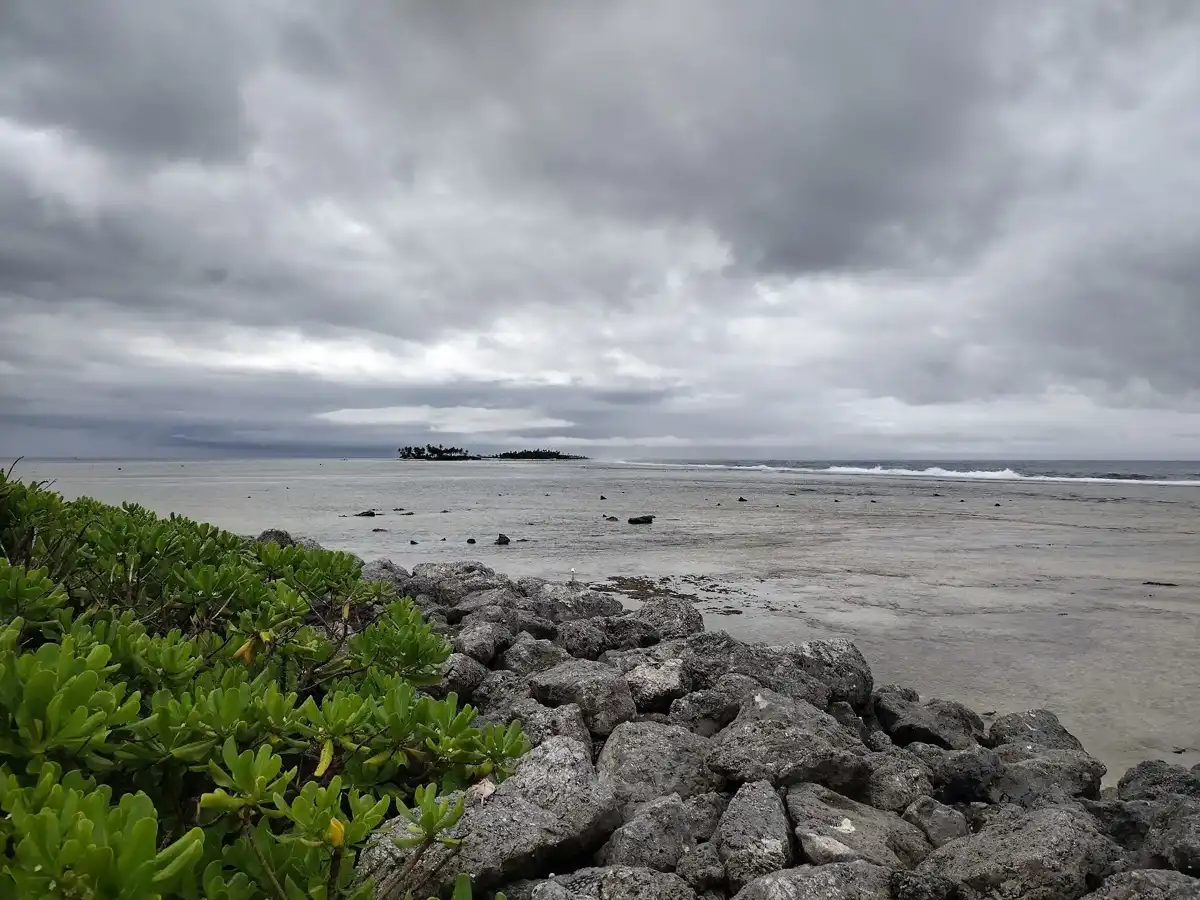
- Kwajalein Lagoon: Among the largest enclosed lagoons in the world, it is a wide shallow basin ringed by more than 90 islets. The color shifts from milky green over the sand to deep blue near the passes, and reef sharks and rays patrol the edges.
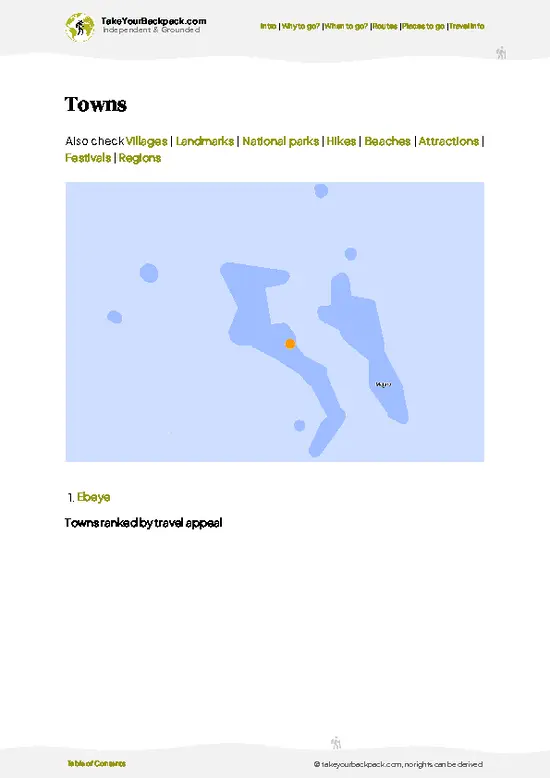
- Ebeye Island: The main Marshallese community on the atoll is tiny, crowded and loud. Walk the main road past shops, churches and basketball courts, and watch the ferries come and go with workers. It is the best place to meet locals.
- Roi-Namur: In the north, this twin
- Prinz Eugen Wreck: The German heavy cruiser survived the war, was used in the Bikini atomic tests, then was towed here and capsized in 1946. At low tide the stern and propellers stick out of the water off Carlson Island, and divers explore the hull below. Dive access depends on permission.
- Kwajalein Lagoon: Among the largest enclosed lagoons in the world, it is a wide shallow basin ringed by more than 90 islets. The color shifts from milky green over the sand to deep blue near the passes, and reef sharks and rays patrol the edges.
- Ebeye Island: The main Marshallese community on the atoll is tiny, crowded and loud. Walk the main road past shops, churches and basketball courts, and watch the ferries come and go with workers. It is the best place to meet locals.
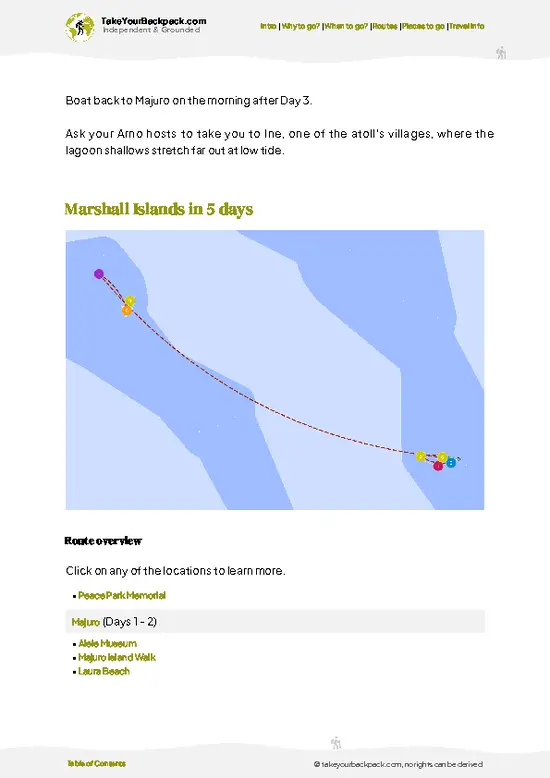
- Roi-Namur: In the north, this twin island still carries Japanese bunkers and a concrete communications building from the 1944 fighting. It is part of the military range, so visits depend on sponsorship, but the history is some of the best preserved in the region.
- Kwajalein Island: The largest island hosts the Reagan Test Site, where missiles launched from California land in the lagoon. Here lie old battle sites and memorials to the 1944 invasion. Entry requires a military sponsor.
- Outer Islet Villages: Smaller islands such as Ennylabegan, home to a small Marshallese community, show the older rhythm of the atoll, with copra, thatch and fishing canoes. They are reached by local boat, and a respectful visit with a local host is the right way to arrive.
- Missile Splash Zone Views: Test launches land in the lagoon, and when the range is active, Ebeye residents see the streaks overhead. It is a surreal sight beside coconut palms.
Spotted a mistake or missing something? Contact us.
 Best Backpacking
.jpg) Hi, I’m Johan (Netherlands 🇳🇱), the creator of TakeYourBackpack. Over the past 3 decades, I’ve backpacked through 90+ countries across six continents, gaining extensive experience with independent travel, long-term trips, and overland routes.
Hi, I’m Johan (Netherlands 🇳🇱), the creator of TakeYourBackpack. Over the past 3 decades, I’ve backpacked through 90+ countries across six continents, gaining extensive experience with independent travel, long-term trips, and overland routes.