×

Mauritania🇲🇷 | regionsAdrar Regionrocky plateaus, ancient caravan towns, desert oases, prehistoric art | things to do and best time to go

Explore Adrar PlateauExplore Akjoujt

Backpacking in Adrar Region
🏆 Top pickregion ranked #1
By Johan Kruseman 🇳🇱 | Updated September 3, 2026

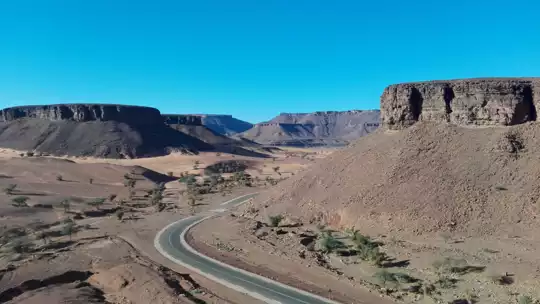
A decade ago, Adrar was the kind of place where you could wander into a tea tent and end up riding a camel with a local family by sunset—no tour groups, no Instagrammers, just raw desert and the kind of silence that makes you hear your own heartbeat. Fast forward to today: the region is still remote by any standard, but word’s gotten out. Backpackers now swap stories over gritty coffee in Atar, and the odd overlander convoy rumbles through, but you’ll rarely feel crowded. Adrar sits in north-central Mauritania, a sweep of ochre plateaus, ancient ksars like Chinguetti (think: sand-blasted libraries and minaret silhouettes at dusk), and the kind of Saharan scenery that makes you forget the outside world exists. It’s cheaper than Nouakchott, less polished than Banc d’Arguin’s coast, and a thousand times more authentic than the tourist-magnet oases of Tagant. Transport is slow, roads are rough, but the trade-off is real: you get wild landscapes, genuine hospitality, and a sense of discovery that’s vanishing fast elsewhere.

Discover everything you want to know in the 📖 Mauritania Travel Guide.
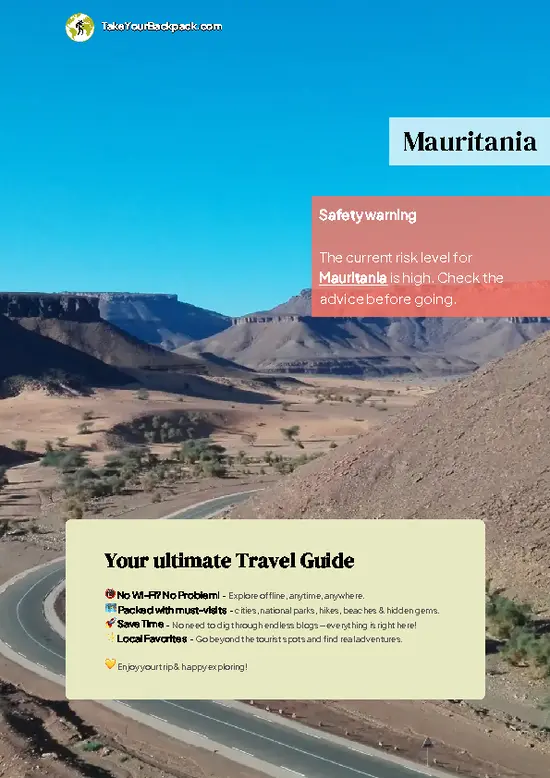
Safety warning

The current risk level for Mauritania is high. Check the advice before going.


Get your Mauritania guide
59 ranked highlights, routes & tips, works offline (258 pages)
Loading the map 🌍
CLICK TO FILTER
cities
towns
villages
landmarks
national parks
hikes
beaches
attractions
festivals
regions
SHOW COUNTRY’S BESTSHOW ALL

✨ Why go?
Ranked #1 region in Mauritania
Reasons people choose to visit here

The Adrar Region in Mauritania is a backpacker’s playground, offering a unique blend of landscapes and experiences that make it a must-visit. Picture this: vast sand dunes, rugged mountains, and ancient oases all within reach. You can soak in the diversity without the hassle of constant relocation.

Transport here is surprisingly flexible. You can hop on a shared taxi or rent a 4x4 to explore at your own pace. This means you can linger longer in places that captivate you, whether it’s the mysterious petroglyphs at Ouadane or the vibrant markets in Atar.

What’s more, the Adrar allows for a seamless mix of nature and culture. You can trek through stunning landscapes by day and immerse yourself in local traditions by night. This slow travel approach not only enriches your experience but also … read more 👉
The Adrar Region in Mauritania is a backpacker’s playground, offering a unique blend of landscapes and experiences that make it a must-visit. Picture this: vast sand dunes, rugged mountains, and ancient oases all within reach. You can soak in the diversity without the hassle of constant relocation.

Transport here is surprisingly flexible. You can hop on a shared taxi or rent a 4x4 to explore at your own pace. This means you can linger longer in places that captivate you, whether it’s the mysterious petroglyphs at Ouadane or the vibrant markets in Atar.

What’s more, the Adrar allows for a seamless mix of nature and culture. You can trek through stunning landscapes by day and immerse yourself in local traditions by night. This slow travel approach not only enriches your experience but also deepens your connection to the region.

So, if you’re after a trip that balances adventure with authenticity, the Adrar Region is where you want to be. Embrace the trade-offs of time, money, and comfort here, and you’ll walk away with stories that stick.
Want to include Adrar Region in your Mauritania route?
Create a personalized Mauritania itinerary that includes Adrar Region and the places that fit your trip — based on your travel style, budget, and available time. Get your route in seconds.

Generate my trip

💡 HighlightsDon't-miss highlights and experiences

  • Chinguetti old town — One of the Sahara’s most atmospheric medieval trading towns: winding mud-brick alleys, a compact medina and an austere sandstone mosque sitting like a bookend to centuries of trans-Saharan caravan life. It’s the feel of a living Saharan citadel more than any single monument.
  • Terjit Oasis (palm spring) — A cool, palm-shaded pool tucked into a narrow wadi just off the Atar road. Locals picnic here, you can dip your feet after a long drive, and the contrast between the green grotto and the surrounding ochre rock is pure desert relief.
  • Guelb er Richat (the Richat Structure) — The “Eye of the Sahara” is best appreciated on a ground hike around its rim and layered bands: a geological wonder with surreal concentric terraces that feel nowhere else on Earth. Great for photography,
read more 👉
  • Chinguetti old town — One of the Sahara’s most atmospheric medieval trading towns: winding mud-brick alleys, a compact medina and an austere sandstone mosque sitting like a bookend to centuries of trans-Saharan caravan life. It’s the feel of a living Saharan citadel more than any single monument.
  • Terjit Oasis (palm spring) — A cool, palm-shaded pool tucked into a narrow wadi just off the Atar road. Locals picnic here, you can dip your feet after a long drive, and the contrast between the green grotto and the surrounding ochre rock is pure desert relief.
  • Guelb er Richat (the Richat Structure) — The “Eye of the Sahara” is best appreciated on a ground hike around its rim and layered bands: a geological wonder with surreal concentric terraces that feel nowhere else on Earth. Great for photography, short hikes and geology nerding without needing an airplane.
  • Amogjar Plateau petroglyphs — Hidden gem: scattered Neolithic rock engravings and painted panels in weathered outcrops. They’re quieter than the big sites, intimate to visit with a local guide and give a real sense of the human landscape before the dunes took over.
  • Ouadane ksar and ruins — An evocative caravan town partly reclaimed by sand: stone ruins, a ruined citadel feel, and nearby dunes that remind you this used to be a vital stop on trade routes. Great for slow wandering and imagining caravan traffic under starry skies.
  • Azougui ruins and Almoravid traces — Hidden gem: little-visited ruins and the site associated with early Almoravid activity. It’s a compact archaeological patch that rewards anyone curious about the medieval political geography of the Sahara — often visited only by those who go off the beaten track.
  • Erg Amatlich dunes — Big Saharan dunes within easy reach of Atar/Chinguetti for camping, climbing and stargazing. Sunrise and moonlit dune walks are addictive here; you’ll get classic desert solitude and the kind of silence city folk don’t believe is real.
  • Atar market and palm-grove quarter — Local life on display: the weekly souk, small cafés, date sellers and craftspeople. It’s where you pick up basic travel necessities, barter for textiles or simply watch daily desert commerce. Real people, real bargains, zero souvenir-shop sheen.
  • Aoujeft village and surrounding wadis — Hidden gem: a low-key town with a slow-moving market and immediate access to scenic wadi drives and small palm groves. It’s a good overnight stop to hear local stories, try simple home cooking and avoid the tourist crush.
  • Tifoujar Pass viewpoint and nearby escarpments — A dramatic rim where the plateau drops toward the desert; short walks from the road open to grand vistas of layered rock, distant sand seas and surprisingly photogenic cliffs. Best at golden hour for long shadows and wide skies.
Spotted a mistake or missing something? Contact us.

Things to do near Adrar Region

Ratings based on Tripadvisor reviews. When you book through this link, you support our work at no extra cost to you.

⌛️ 5 daysHow to make the most of Adrar Region

Day 1: Atar
Welcome to Atar, the gateway to the Adrar Region. You’ll want to spend your first day here to acclimate and gather supplies. The transport system is a bit sparse, so getting your bearings is crucial. Atar has a few decent guesthouses and local eateries where you can fuel up on traditional Mauritanian fare. Spend the afternoon exploring the bustling market. It’s a sensory overload—spices, textiles, and the chatter of locals. This is your chance to blend in and soak up the vibe before heading deeper into the desert.

Day 2: Chinguetti
From Atar, hop on a shared taxi to Chinguetti, a UNESCO World Heritage site. The ride takes about two hours, and the landscape shifts dramatically. Chinguetti is famous for its ancient libraries and stunning sand dunes. Spend the day wandering through … read more 👉
Day 1: Atar
Welcome to Atar, the gateway to the Adrar Region. You’ll want to spend your first day here to acclimate and gather supplies. The transport system is a bit sparse, so getting your bearings is crucial. Atar has a few decent guesthouses and local eateries where you can fuel up on traditional Mauritanian fare. Spend the afternoon exploring the bustling market. It’s a sensory overload—spices, textiles, and the chatter of locals. This is your chance to blend in and soak up the vibe before heading deeper into the desert.

Day 2: Chinguetti
From Atar, hop on a shared taxi to Chinguetti, a UNESCO World Heritage site. The ride takes about two hours, and the landscape shifts dramatically. Chinguetti is famous for its ancient libraries and stunning sand dunes. Spend the day wandering through the narrow streets and visiting the libraries. Don’t miss the sunset over the dunes; it’s a sight that’ll stick with you. The transport here is limited, so plan to stay overnight.

Day 3: Ouadane
Next, take a taxi to Ouadane, about an hour away. This town is less touristy, giving you a more authentic experience. The ruins here are fascinating, and you can hike around the area. The pace slows down, allowing you to appreciate the history and the stark beauty of the landscape. Grab a local meal and chat with the residents; they often have stories that’ll enrich your journey.

Day 4: Terjit
On day four, make your way to Terjit, a hidden oasis about two hours from Ouadane. This is your Off-Path Reward. The lush palm trees and cool water are a refreshing contrast to the arid surroundings. Spend the day relaxing, swimming, and enjoying the tranquility. It’s a perfect spot to recharge before your final push.

Day 5: Back to Atar
Return to Atar for your last day. This is where you can reflect on your journey and pick up any last-minute souvenirs. The transport back is straightforward, but make sure to leave early to avoid any delays. The must-do experience here is visiting the local cafes and chatting with fellow travelers about their adventures. It’s the perfect way to wrap up your trip, sharing stories and laughter over mint tea.
Turn your Adrar Region visit into an Mauritania adventure
Build a complete Mauritania route with Adrar Region, hidden gems, must-see destinations, and realistic travel times included.

Generate my trip

🌤️ When to go?Best time to visit Adrar Region


  • Topic: Weather - The Adrar Region is a desert beast—scorching dry heat dominates most of the year. The sweet spot is between November and February when temperatures drop to a manageable 20-25°C (68-77°F) during the day, making trekking and exploring doable without frying your brain.

  • Topic: Temperature - Daytime highs in peak summer can soar past 45°C (113°F), which is brutal for backpacking. Nights, however, can plummet to near freezing in winter, so pack layers if you’re camping under the stars.

  • Topic: Daylight Hours - Expect roughly 11 to 12 hours of daylight year-round, but winter days are shorter, meaning you’ll want to start early to maximize your hike time and avoid the afternoon heat.

  • Topic: Crowds - This isn’t a tourist hotspot, but the cooler months see a trickle of adventure
read more 👉

  • Topic: Weather - The Adrar Region is a desert beast—scorching dry heat dominates most of the year. The sweet spot is between November and February when temperatures drop to a manageable 20-25°C (68-77°F) during the day, making trekking and exploring doable without frying your brain.

  • Topic: Temperature - Daytime highs in peak summer can soar past 45°C (113°F), which is brutal for backpacking. Nights, however, can plummet to near freezing in winter, so pack layers if you’re camping under the stars.

  • Topic: Daylight Hours - Expect roughly 11 to 12 hours of daylight year-round, but winter days are shorter, meaning you’ll want to start early to maximize your hike time and avoid the afternoon heat.

  • Topic: Crowds - This isn’t a tourist hotspot, but the cooler months see a trickle of adventure travelers and nomads. Visiting off-peak means near solitude, but you’ll miss the occasional cultural gatherings that happen in the cooler season.

  • Topic: Seasonal Activities - Winter months bring local festivals and camel races—rare chances to tap into authentic desert life. Summer is mostly about survival, so plan accordingly if you want cultural immersion.

  • Topic: Price Fluctuations - Expect prices for guides and accommodations to spike slightly in the cooler months when demand rises. Off-season, you can negotiate hard, but be ready for the harsh climate trade-off.


Pro-tip: Arrive just before the cool season kicks in—late October to early November—to catch the desert waking up from its brutal summer nap, scoring better prices and perfect weather before the crowd trickles in.


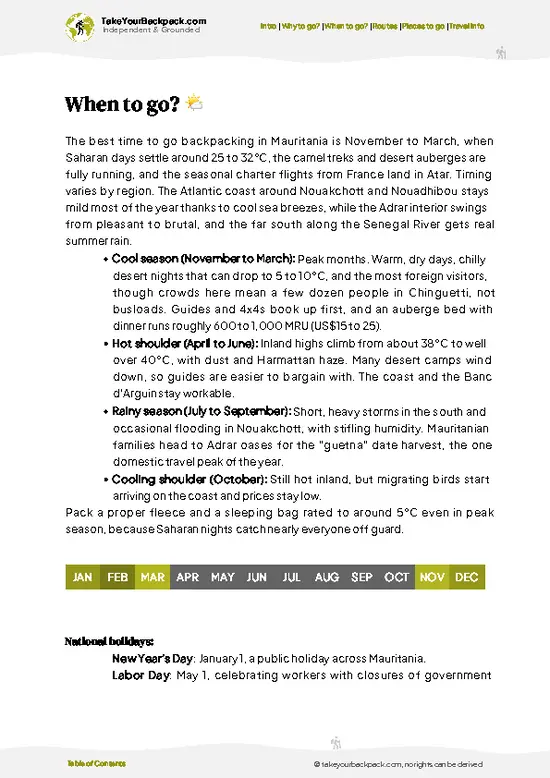
source: climatestotravel.comJANJanuary: excellent for travelingFEBFebruary: excellent for travelingMARMarch: good for travelingAPRApril: fair for travelingMAYMay: below average for travelingJUNJune: below average for travelingJULJuly: below average for travelingAUGAugust: below average for travelingSEPSeptember: fair for travelingOCTOctober: good for travelingNOVNovember: highly recommended for travelingDECDecember: excellent for traveling
when-to-go

✈️ The backpacker research shortcutMauritania Travel Guide

An offline-friendly backpacking guide with optimized travel routes, ranked highlights, transport advice, and the best areas to stay.
example page 0 from our offline Travel Guide for Mauritania
example page 1 from our offline Travel Guide for Mauritania
example page 2 from our offline Travel Guide for Mauritania
example page 3 from our offline Travel Guide for Mauritania
example page 4 from our offline Travel Guide for Mauritania
example page 5 from our offline Travel Guide for Mauritania
example page 6 from our offline Travel Guide for Mauritania
example page 7 from our offline Travel Guide for Mauritania
The digital guide (258 pages) contains:
59 highlights, ranked by travel appeal
Optimized 5, 10 & 15-day travel routes
Cities, national parks, landmarks, beaches
How to get around
Offline-friendly for travel without Wi-Fi
👉 Click to see all 30+ guide features

📅 Plan smarter in minutes, not weeks
Month by month travel advice
Festivals & national holidays
Budget expectations

🗺️ Go to the right places, skip the overrated ones
Honest pros & cons of destinations
Top hikes, parks & viewpoints
Lesser-known places most travelers miss
Clear “worth it vs skip it” guidance

🛏️ Travel smoothly without rookie mistakes
Best areas to stay
Transport systems explained simply
Common scams & safety advice
SIM cards, money & practical tips

🌍 Understand the country, not just visit it
Culture & traditions
52 Essential phrases & customs
Festivals worth planning around
Traveler-friendly historical context
Insights that make places more meaningful

📱 Built for real travel conditions
Fully downloadable PDF
Works completely offline
Optimized for phone use
Useful in remote areas & buses
Everything in one place
Save weeks of stressful planning
Get instant access to your full guide. 30‑day money-back guarantee.
+ Add another guide for just US$7.80

By proceeding you agree to our terms.
Sent to your inbox immediately after payment • 100% Secure Checkout
Best Backpacking Travel Advisor 2025 tourism awardBest Backpacking
Travel Advisor
2025
What others say about Take Your Backpack Guides:
⭐⭐⭐⭐⭐
Fantastic, amazing amount of information!
⭐⭐⭐⭐⭐
My goodness this is amazing, it's what I've been looking for hats off too you!
⭐⭐⭐⭐⭐
I think this is absolutely BRILLIANT
⭐⭐⭐⭐
Very complete and informative. It's still missing places, but I gotta to commend you
⭐⭐⭐⭐⭐
This is truly amazing, thank you, can't wait to explore it with my kids!
⭐⭐⭐⭐⭐
Awesome resource, thank you!
⭐⭐⭐⭐⭐
This is amazing! Can't wait to explore the ones I haven't seen
⭐⭐⭐⭐
I love this! Well done, great idea.
⭐⭐⭐⭐⭐
Thanks for taking the time to make this gem!
⭐⭐⭐⭐⭐
This might be the best website I've ever seen.
⭐⭐⭐⭐⭐
Congratulations, and thank you so much for your work; it's incredibly valuable.
⭐⭐⭐⭐
In all seriousness I think you did a great job pointing out the important spots
⭐⭐⭐⭐⭐
10/10 very good
⭐⭐⭐⭐⭐
As someone who's only just starting to visit regularly this is awesome, thank you.
⭐⭐⭐⭐
Thank you very much! I'm going to visit my dad, it's going to be very useful!
⭐⭐⭐⭐⭐
This is really cool! We'll be travelling for the first time and this definitely come in handy.
⭐⭐⭐⭐⭐
You are now our minister of culture, congratulations 👨‍💼
⭐⭐⭐⭐⭐
Just wanted to tell you that this is a pearl! Going to follow your recommendations.
⭐⭐⭐⭐⭐
This is so cool. I'll definitely be using the resource for my travels soon.
⭐⭐⭐⭐⭐
This is very impressive! Good work.
⭐⭐⭐⭐⭐
This is an amazing and informative site. Very well done!

🛏️ Where to stay?Best areas and accommodation options

In the Adrar Region of Mauritania, your choice of where to stay can make or break your experience. Let’s dive into the spots that’ll keep your wallet happy and your spirit soaring.

Start in Atar, the gateway to the Sahara. This town buzzes with backpackers and locals alike. The market scene is vibrant, and you’ll find plenty of opportunities to mingle over mint tea. Timing is key; visit on a Saturday for the bustling weekly market. It’s a social hub where you can score local crafts and fresh produce.

Next, consider Chinguetti, a UNESCO World Heritage site. This ancient town is steeped in history … read more 👉
In the Adrar Region of Mauritania, your choice of where to stay can make or break your experience. Let’s dive into the spots that’ll keep your wallet happy and your spirit soaring.

Start in Atar, the gateway to the Sahara. This town buzzes with backpackers and locals alike. The market scene is vibrant, and you’ll find plenty of opportunities to mingle over mint tea. Timing is key; visit on a Saturday for the bustling weekly market. It’s a social hub where you can score local crafts and fresh produce.

Next, consider Chinguetti, a UNESCO World Heritage site. This ancient town is steeped in history and offers a unique vibe. Stay near the old mosque for a taste of the past. The sunsets here are legendary, and the starry nights? Pure magic. It’s quieter, so if you’re looking for a reflective moment, this is your spot.

Don’t overlook Ouadane, a bit off the beaten path but worth the trek. It’s a ghost town with a haunting beauty. You’ll find a few fellow travelers, and the camaraderie is palpable. The ruins tell stories, and the landscape is a photographer’s dream.

Each of these places offers a blend of safety, social interaction, and a taste of local culture. Choose wisely, and you’ll walk away with stories that last a lifetime.

🚌 Getting aroundHow to get around Adrar Region

The Adrar Region of Mauritania is a wild dance of sand and sky, where the rhythm of travel is dictated more by the sun than by any rigid schedule. Here, the flow is less about timetables and more about intuition. You’ll find yourself navigating a landscape that shifts as quickly as the dunes, where the journey is as much about the experience as the destination. Expect a blend of chaotic charm and rugged beauty, where every ride is an adventure and every stop is a chance to connect with the heart of the Sahara.


  • Shared Taxis (Taxi-Brousse): These are your go-to for budget travel. They run between major towns like Atar and Chinguetti, usually starting around 7 AM and continuing until the last passenger is on board. Expect to pay about 1,500 to 2,500 MRU ($4-$7) for a ride, which can take 2-4
read more 👉
The Adrar Region of Mauritania is a wild dance of sand and sky, where the rhythm of travel is dictated more by the sun than by any rigid schedule. Here, the flow is less about timetables and more about intuition. You’ll find yourself navigating a landscape that shifts as quickly as the dunes, where the journey is as much about the experience as the destination. Expect a blend of chaotic charm and rugged beauty, where every ride is an adventure and every stop is a chance to connect with the heart of the Sahara.


  • Shared Taxis (Taxi-Brousse): These are your go-to for budget travel. They run between major towns like Atar and Chinguetti, usually starting around 7 AM and continuing until the last passenger is on board. Expect to pay about 1,500 to 2,500 MRU ($4-$7) for a ride, which can take 2-4 hours depending on the route and stops. Comfort is basic, but the camaraderie is real.


  • Private Taxis: If you’re looking for speed and a bit more comfort, private taxis are available. They can be hired for about 10,000 MRU ($28) for a half-day trip. They’re faster, often leaving when you’re ready, but be prepared to negotiate. This option is great if you’re traveling with a group or want to explore off the beaten path.


  • 4x4 Rentals: For the adventurous soul, renting a 4x4 gives you the freedom to roam. Prices start around 30,000 MRU ($85) per day, and you can go wherever the sand takes you. Just remember, fuel stations can be sparse, so plan your route wisely. This is the ultimate way to discover the hidden oases and ancient ruins at your own pace.


  • Bus Services: While not the most common, there are bus services connecting larger towns. They’re infrequent and can be a bit of a gamble, but if you catch one, it’s usually around 1,000 MRU ($2.80) for a longer journey. Just be ready for delays and a local experience that’s as authentic as it gets.


  • Walking: Don’t underestimate the power of your own two feet. In smaller towns, walking is often the best way to soak in the local culture. It’s free, and you’ll stumble upon sights that no taxi can reach.


For a master tactical tip: always chat with locals about transport options. They’ll have the inside scoop on the best times to travel and any unofficial routes that might save you time or money. Embrace the unpredictability; it’s part of the adventure!

🍲 FoodLocal Flavors for Backpackers

In the Adrar Region, food is a celebration of flavors and community. You can’t visit without trying couscous, a staple that’s often served with a rich, spiced stew. The grains are fluffy, soaking up the savory juices, while chunks of tender meat and vegetables add depth. Don’t miss out on mechoui, whole roasted lamb, which is a feast for the senses. The smoky aroma wafts through the air, drawing you in like a moth to a flame.

For a true local experience, hit the markets. The bustling stalls are alive with chatter and the scent of spices. Grab some bissara, a thick fava bean soup, from a street vendor. It’s hearty, warming, and perfect for a quick bite. Pair it with khobz, traditional bread, to soak up every last drop.

When it comes to drinks, try attaya, the local mint tea. It’s not just … read more 👉
In the Adrar Region, food is a celebration of flavors and community. You can’t visit without trying couscous, a staple that’s often served with a rich, spiced stew. The grains are fluffy, soaking up the savory juices, while chunks of tender meat and vegetables add depth. Don’t miss out on mechoui, whole roasted lamb, which is a feast for the senses. The smoky aroma wafts through the air, drawing you in like a moth to a flame.

For a true local experience, hit the markets. The bustling stalls are alive with chatter and the scent of spices. Grab some bissara, a thick fava bean soup, from a street vendor. It’s hearty, warming, and perfect for a quick bite. Pair it with khobz, traditional bread, to soak up every last drop.

When it comes to drinks, try attaya, the local mint tea. It’s not just a beverage; it’s a ritual. The way it’s poured from a height creates a frothy top, and each sip is a refreshing burst of sweetness.

Dining here is communal. Expect to share dishes, and remember to eat with your right hand—it’s a sign of respect. Embrace the slow pace; meals are meant to be savored, not rushed. This isn’t just food; it’s a doorway into the heart of Mauritania.

FAQCommon questions from travelers

5 to 7 days are ideal to explore the Adrar Region thoroughly. This allows time to visit key sites like the ancient ksars, the Richat Structure, and the desert landscapes. Traveling in cooler months from November to February is recommended due to extreme heat in summer.
Getting around the Adrar Region without a car is challenging but possible using local shared taxis and occasional camel rides. Public transport is limited and infrequent, so planning ahead is essential. Walking between close sites is common, but distances can be long and terrain tough.
The Adrar Region is known for its dramatic desert landscapes, ancient rock art, and historic fortified villages called ksars. It also features the Richat Structure, a prominent circular geological formation visible from space. The area is a cultural hub for nomadic Moorish tribes.
⚠️ Things can change over time, so always validate details locally before you go.

Expanding your trip beyond this stop

Adrar Region isn’t the only highlight in Mauritania. Explore all what Mauritania has to offer.
Country photo of Mauritania

We 💚 feedbackKey takeaways before you go

The Adrar Region is a wild, sun-baked canvas of ochre and gold. You’ll feel the pulse of ancient trade routes in the air. Don’t miss the sunset at Chinguetti; it’s a spectacle that’ll etch itself in your memory. But here’s the scoop: the heat can be relentless. Hydrate like it’s your job, and don’t underestimate the power of a good hat. Embrace the slow pace; it’s part of the charm. You’re not just visiting; you’re stepping into a story that’s been unfolding for centuries.

✍️ Help improve this page!
The information on this page is based on in-depth research, insights shared by experienced travelers, and feedback from the local travel community in Mauritania. While every effort is made to keep the information accurate and current, conditions can change — so if you spot anything incorrect or outdated, please get in touch.


🙋‍♂️ Give feedback

👋 Meet the founderWho’s Behind Take Your Backpack?

Johan, backpacker and founder of TakeYourBackpackHi, I’m Johan (Netherlands 🇳🇱), the creator of TakeYourBackpack. Over the past decade, I’ve backpacked through 80+ countries across six continents, gaining extensive experience with independent travel, long-term trips, and overland routes.

This site is built on a combination of firsthand travel experience and carefully curated insights from other backpackers. Many guides are based on places I’ve personally visited, while others bring together tips, observations, and practical advice shared by trusted travelers I’ve met along the way.

The goal is to provide realistic, experience-driven guidance — not generic itineraries — so you can explore destinations with better context, clearer expectations, and more confidence.

Get full Mauritania guide •
Instant download • 59 highlights • Full Offline guide