v2.webp)
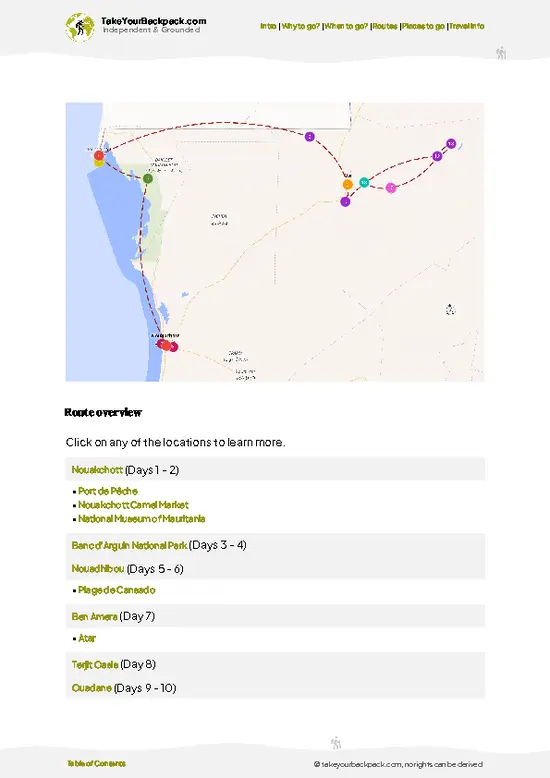
- The old ksar and its stone alleys: This is the main reason to come. Tichit’s historic quarter is a maze of dark, dry-laid stone houses with carved wooden doors, narrow lanes and walls that glow ochre in low light. Some doorways are half buried by sand, which tells you more about the climate than any sign could. Go early, when the stone is cool and women are sweeping courtyards. Entry is free; a local guide for the quarter runs about US$8 to 20. Allow 1.5 to 2 hours.
- The old mosque and its square minaret: Built from the same local stone as the surrounding houses, the mosque and its tapering square minaret anchor the quarter and show the Saharan style shared with Ouadane and Chinguetti. Non-Muslims generally admire it from outside, so photograph from the lanes and respect prayer times. Late afternoon
- The old ksar and its stone alleys: This is the main reason to come. Tichit’s historic quarter is a maze of dark, dry-laid stone houses with carved wooden doors, narrow lanes and walls that glow ochre in low light. Some doorways are half buried by sand, which tells you more about the climate than any sign could. Go early, when the stone is cool and women are sweeping courtyards. Entry is free; a local guide for the quarter runs about US$8 to 20. Allow 1.5 to 2 hours.
- The old mosque and its square minaret: Built from the same local stone as the surrounding houses, the mosque and its tapering square minaret anchor the quarter and show the Saharan style shared with Ouadane and Chinguetti. Non-Muslims generally admire it from outside, so photograph from the lanes and respect prayer times. Late afternoon gives the best side light. Free to look; allow 30 to 45 minutes.
- The palm grove, wells and dune edge: Below the stone village, date palms and small garden plots are watered from hand-dug wells, and beyond them the dunes begin. The walk takes you from shade and the sound of running water to open, rippled sand in a few minutes. Climb a dune just before dusk, when the air cools and the village goes quiet. It is free; a guide or host is useful for finding the wells and gardens, at roughly US$5 to 10. Allow 1 to 2 hours.
Spotted a mistake or missing something? Contact us.

 Best Backpacking
.jpg) Hi, I’m Johan (Netherlands 🇳🇱), the creator of TakeYourBackpack. Over the past 3 decades, I’ve backpacked through 90+ countries across six continents, gaining extensive experience with independent travel, long-term trips, and overland routes.
Hi, I’m Johan (Netherlands 🇳🇱), the creator of TakeYourBackpack. Over the past 3 decades, I’ve backpacked through 90+ countries across six continents, gaining extensive experience with independent travel, long-term trips, and overland routes.