×

Mauritius🇲🇺 | best regionsDiscover the Best regions Across Mauritius

Mauritius is small enough to cross in about two hours, yet its regions feel like different islands. The north and the west are lively and pricier, the south and the east are quieter and cheaper. For independent travel, the real question is whether you want a beach bar nearby or a local bus and a village market.

By Johan Kruseman 🇳🇱 | Updated October 23, 2026
Explore the best cities in Mauritius

Why go?Why These region Stand Out

Mauritius suits region-hopping because everything is compact, the bus network reaches nearly every coast and town, and volcanic geography splits the island into clear zones. A central plateau cools the air, while mountains and coral reefs shape sheltered lagoons on some coasts and wind-lashed cliffs on others. The trade winds blow from the southeast, so the wetter and windier side differs from the calmer, drier side.

Culture adds another layer. Indian, African, Chinese and French roots meet in language, food and festivals, so a town can change its soundtrack and menu within a short ride. Know before you go that distances are small but traffic near Port Louis is heavy, buses slow down at rush hour, and the best beaches are often tied to resorts. Public access exists, but you need to look for it.
Our Approach to Ranking
The list of best regions in Mauritius is created based on landscapes, local culture, attractions, vibes, and overall appeal. If you feel a region is missing in this list, please let us know.

When to go?When to Plan Your Trip

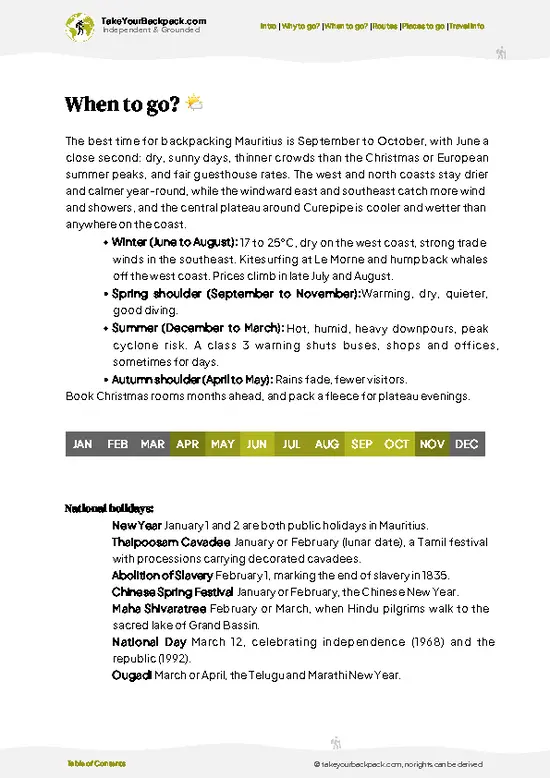
Best months and shoulder seasons: May to December is the best window, with dry, cooler weather of roughly 18 to 26°C on the coasts and lower humidity. October and November are the sweet spot, with fewer crowds and lower prices than December.
Wet season and peak periods: January to April is hot and humid, with temperatures of 28 to 33°C, heavier rain, and a cyclone risk, especially February and March. Prices can drop by 20 to 40 percent then, but squalls and rough seas can spoil sailing and snorkeling. December and January holidays push guesthouse rates up. The south and east see more wind and rain from June to August, while the north and west stay milder and sunnier, so pick the coast to match the month.

region hoppingOptimizing Your Multi-Stop Itinerary

How many days to plan: A trip linking several regions needs 7 to 10 days. Fewer than 6 means too much time on buses and not enough on the ground.
Direction and pacing: Group neighboring coasts together, for example north with west, or south with east, and use the Port Louis and Mahébourg bus stations as your hinges. Start at the airport side, then loop around the island in one direction rather than zigzagging. Allow 2 to 3 nights per stop. Most transfers take 1 to 2.5 hours, but buses often need a change in Port Louis or Curepipe, so budget half a day.
Planning mistakes: Travelers often cram in five bases, underestimate rush hour near Port Louis, and move on Sundays when buses thin out. Choose three bases, travel before 8 a.m. or after 10 a.m., and keep one flexible day for weather.

The ListMust-Visit regions in Mauritius

1 Bel Ombre

Casuarina beach, Valriche forest, basalt cliffs, Souillac coast

Walk from a calm reef-sheltered beach to forest trails, hexagonal-basalt waterfalls and wave-battered cliffs along a quiet southern shore with few crowds.

Loading the map 🌍

Expert viewPro Tips for Exploring the Best

How many regions to visit: I recommend three. That gives you two or three nights each, enough to settle, rent a bike or scooter, and eat where locals do. Four or more costs you transfer time and cash for little gain, and one alone misses how different the island's coasts and interior are.
Choosing by travel style: Beach and snorkeling fans get the most from a lagoon-side coast, but it costs more, with guesthouses at US$45 to 80 a night. Hikers and budget travelers get better value inland or on quieter coasts, where rooms run US$25 to 45 and street food is a few dollars. If you only want nightlife and cafes, the busier coast is worth the premium. Mixing one of each gives the best balance of cost, time and comfort.
Budget: Plan on US$40 to 70 a day for a shared-room or simple guesthouse traveler … read more 👉
How many regions to visit: I recommend three. That gives you two or three nights each, enough to settle, rent a bike or scooter, and eat where locals do. Four or more costs you transfer time and cash for little gain, and one alone misses how different the island's coasts and interior are.
Choosing by travel style: Beach and snorkeling fans get the most from a lagoon-side coast, but it costs more, with guesthouses at US$45 to 80 a night. Hikers and budget travelers get better value inland or on quieter coasts, where rooms run US$25 to 45 and street food is a few dollars. If you only want nightlife and cafes, the busier coast is worth the premium. Mixing one of each gives the best balance of cost, time and comfort.
Budget: Plan on US$40 to 70 a day for a shared-room or simple guesthouse traveler who eats local, uses buses and picks one paid activity. Buses cost about Rs 30 to 100 a ride (roughly US$0.70 to 2), taxis for short hops Rs 500 to 1,500. Boat trips and guided hikes run US$30 to 70 per person. Public beaches are free, but national park sites and some waterfalls and viewpoints may charge small fees. Rental scooters cost around US$20 to 30 a day.
Safety and culture: Mauritius is among Africa's safest destinations, but petty theft on beaches happens, so keep valuables out of sight. Currents beyond the reef and near gaps in it can be strong, and some beaches have no lifeguard. Dress modestly in temples and mosques, remove shoes, and ask before photographing worshippers. Sunscreen should be reef-safe, and drivers keep left, so scooter riders should take care on narrow roads and in sudden rain.

✈️ The backpacker research shortcutMauritius Travel Guide

An offline-friendly backpacking guide with optimized travel routes, ranked highlights, transport advice, and the best areas to stay.
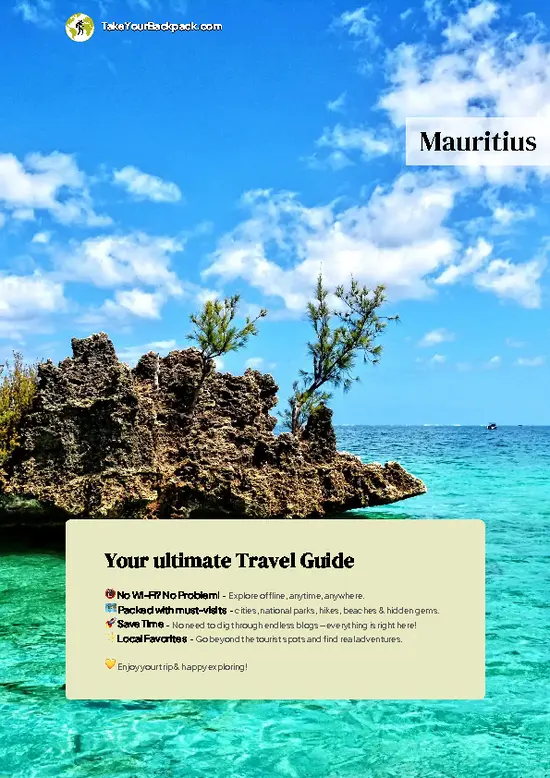
example page 0 from our offline Travel Guide for Mauritius
example page 1 from our offline Travel Guide for Mauritius
example page 2 from our offline Travel Guide for Mauritius
example page 3 from our offline Travel Guide for Mauritius
example page 4 from our offline Travel Guide for Mauritius
example page 5 from our offline Travel Guide for Mauritius
example page 6 from our offline Travel Guide for Mauritius
example page 7 from our offline Travel Guide for Mauritius
The digital guide (246 pages) contains:
✅ 65 highlights, ranked by travel appeal
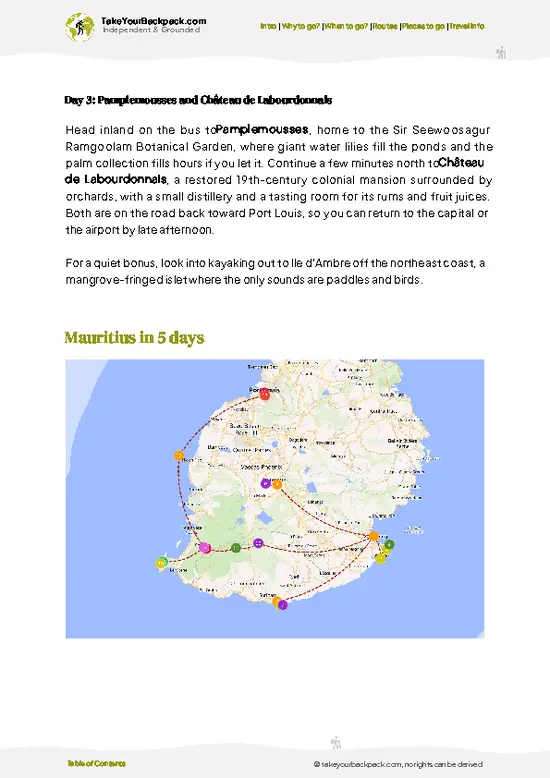
✅ Optimized 2, 3 & 5-day travel routes
✅ Cities, national parks, landmarks, beaches
✅ How to get around
✅ Offline-friendly for travel without Wi-Fi
👉 Click to see all 30+ guide features

📅 Plan smarter in minutes, not weeks
✅ Month by month travel advice
✅ Festivals & national holidays
✅ Budget expectations

🗺️ Go to the right places, skip the overrated ones
✅ Honest pros & cons of destinations
✅ Top hikes, parks & viewpoints
✅ Lesser-known places most travelers miss
✅ Clear “worth it vs skip it” guidance

🛏️ Travel smoothly without rookie mistakes
✅ Best areas to stay
✅ Transport systems explained simply
✅ Common scams & safety advice
✅ SIM cards, money & practical tips

🌍 Understand the country, not just visit it
✅ Culture & traditions
✅ 52 Essential phrases & customs
✅ Festivals worth planning around
✅ Traveler-friendly historical context
✅ Insights that make places more meaningful

📱 Built for real travel conditions
✅ Fully downloadable PDF
✅ Works completely offline
✅ Optimized for phone use
✅ Useful in remote areas & buses
✅ Everything in one place
Stop searching, start planning
Get instant access to your full guide. 30‑day money-back guarantee.
+ Add another guide for just

By proceeding you agree to our terms.
Sent to your inbox immediately after payment • 100% Secure Checkout
Best Backpacking Travel Advisor 2025 tourism awardBest Backpacking
Travel Advisor
2025
What others say about Take Your Backpack Guides:
⭐⭐⭐⭐⭐
Fantastic, amazing amount of information!
⭐⭐⭐⭐⭐
My goodness this is amazing, it's what I've been looking for hats off too you!
⭐⭐⭐⭐⭐
I think this is absolutely BRILLIANT
⭐⭐⭐⭐
Very complete and informative. It's still missing places, but I gotta to commend you
⭐⭐⭐⭐⭐
This is truly amazing, thank you, can't wait to explore it with my kids!
⭐⭐⭐⭐⭐
Awesome resource, thank you!
⭐⭐⭐⭐⭐
This is amazing! Can't wait to explore the ones I haven't seen
⭐⭐⭐⭐
I love this! Well done, great idea.
⭐⭐⭐⭐⭐
Thanks for taking the time to make this gem!
⭐⭐⭐⭐⭐
This might be the best website I've ever seen.
⭐⭐⭐⭐⭐
Congratulations, and thank you so much for your work; it's incredibly valuable.
⭐⭐⭐⭐
In all seriousness I think you did a great job pointing out the important spots
⭐⭐⭐⭐⭐
10/10 very good
⭐⭐⭐⭐⭐
As someone who's only just starting to visit regularly this is awesome, thank you.
⭐⭐⭐⭐
Thank you very much! I'm going to visit my dad, it's going to be very useful!
⭐⭐⭐⭐⭐
This is really cool! We'll be travelling for the first time and this definitely come in handy.
⭐⭐⭐⭐⭐
You are now our minister of culture, congratulations 👨‍💼
⭐⭐⭐⭐⭐
Just wanted to tell you that this is a pearl! Going to follow your recommendations.
⭐⭐⭐⭐⭐
This is so cool. I'll definitely be using the resource for my travels soon.
⭐⭐⭐⭐⭐
This is very impressive! Good work.
⭐⭐⭐⭐⭐
This is an amazing and informative site. Very well done!

🛏️ Where to stay?Top Areas to Stay

Backpacking Mauritius means few true dorm hostels, but budget guesthouses, family-run pensions and self-catering studios are common, typically around Rs 1,200 to 2,500 (€25 to 50) a night for a double. Grand Baie in the north has the widest choice, the island’s liveliest bars and easy boat trips, though it’s the most built-up stretch, while Flic en Flac on the west coast pairs a long public beach and sunset views with a calmer evening scene. For quiet and a more local feel, Mahébourg sits 15 minutes from the airport near the southeast lagoon, and La Gaulette puts you close to Le Morne’s kitesurfing and hiking, but both go silent after dark and need buses or a scooter to reach much else.

If you … read more 👉
Backpacking Mauritius means few true dorm hostels, but budget guesthouses, family-run pensions and self-catering studios are common, typically around Rs 1,200 to 2,500 (€25 to 50) a night for a double. Grand Baie in the north has the widest choice, the island’s liveliest bars and easy boat trips, though it’s the most built-up stretch, while Flic en Flac on the west coast pairs a long public beach and sunset views with a calmer evening scene. For quiet and a more local feel, Mahébourg sits 15 minutes from the airport near the southeast lagoon, and La Gaulette puts you close to Le Morne’s kitesurfing and hiking, but both go silent after dark and need buses or a scooter to reach much else.

If you enjoy meeting fellow travelers, consider choosing hostels with high ratings for atmosphere. On the other hand, if you prefer having your own space, a hotel might be a better option.

MauritiusDiscover the Country

👋 Meet the founderWho’s Behind Take Your Backpack?

Johan, backpacker and founder of TakeYourBackpackHi, I’m Johan (Netherlands 🇳🇱), the creator of TakeYourBackpack. Over the past 3 decades, I’ve backpacked through 90+ countries across six continents, gaining extensive experience with independent travel, long-term trips, and overland routes.

This site is built on a combination of firsthand travel experience and carefully curated insights from other backpackers. Many guides are based on places I’ve personally visited, while others bring together tips, observations, and practical advice shared by trusted travelers I’ve met along the way.

The goal is to provide realistic, experience-driven guidance — not generic itineraries — so you can explore destinations with better context, clearer expectations, and more confidence.